My Sweet Honeydew (A Cappella)

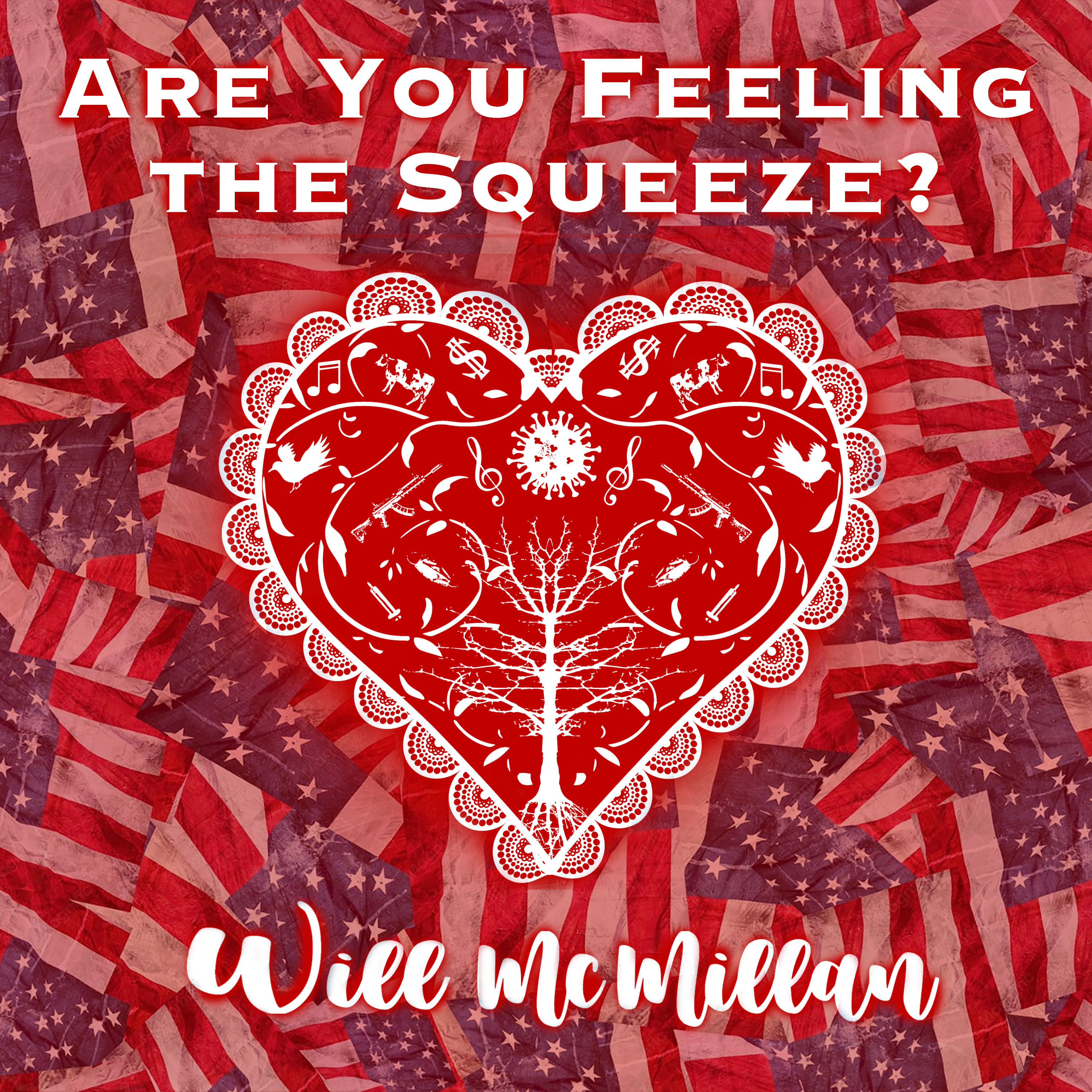
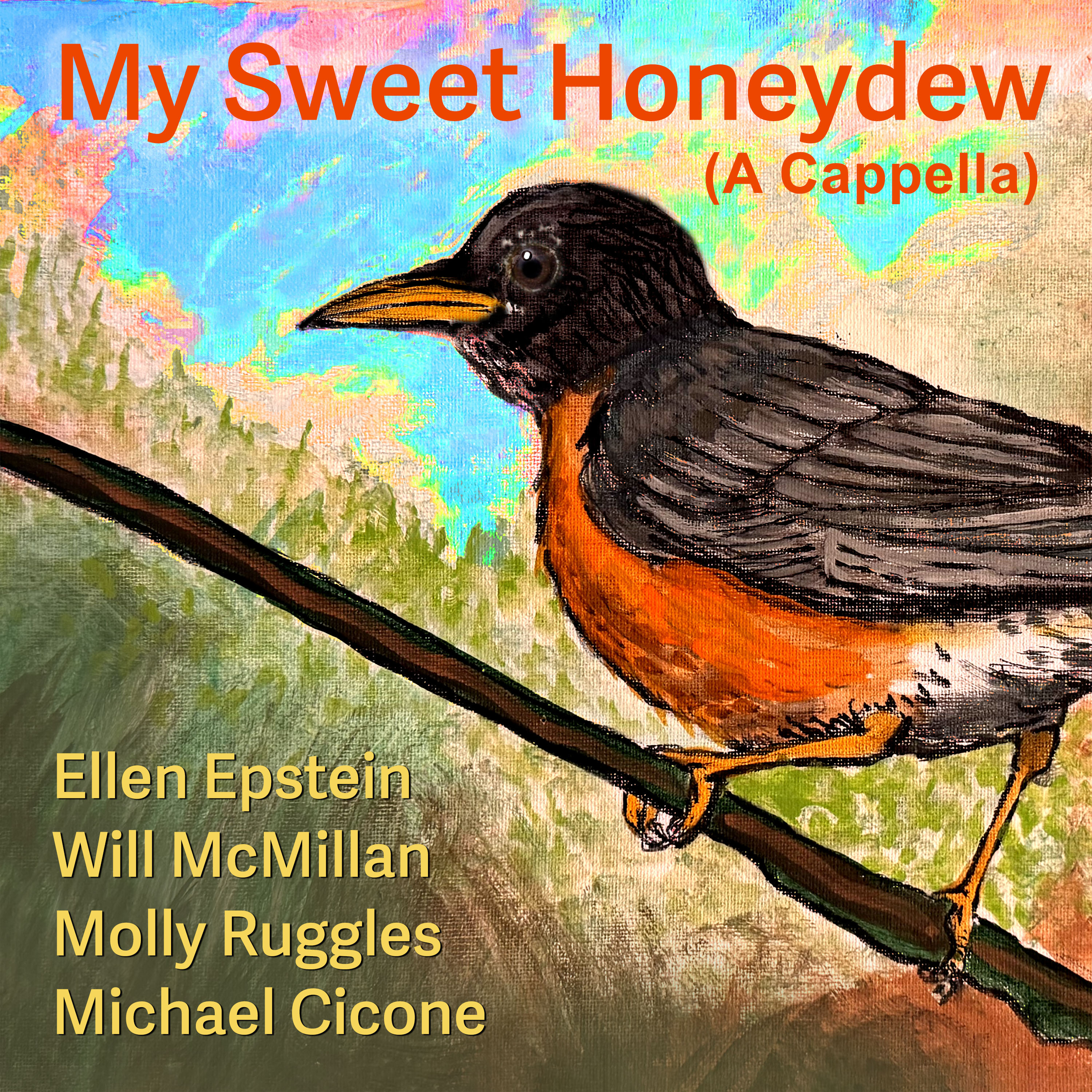
Graphic Design By Stephen C. Fischer

I hope you are well as you read this blog post!

Today I have been inspired by the aphorism “Insanity is doing the same thing over and over again and expecting different results.”

You may have seen it on posters, coffee mugs, etc. — attributed to Albert Einstein.

But according to an online search, there is little evidence that Einstein ever said it.

Instead I learned that a writer — Rita Mae Brown — created this quotation and attributed it to a fictional character in her 1983 book Sudden Death.

Thank you, Ms. Brown!

I think about this aphorism when I am reminded that one is supposed to budget an equal amount of money to market/promote/advertise one’s product as one has spent creating it in the first place.

Yikes!

I have never done this.

Other than maintaining my website, pitching a few songs to music bloggers, and writing this blog, I have spent very little money to promote my music.

However, this particular piece of marketing advice comes up fairly often when I am reading books/articles and watching videos about how to navigate the business of making music in the 21st century.

Now I must pause for a moment for a digression…

Over the past thirty years, I have observed that the music business — like life itself — is always changing and evolving.

So it is virtually impossible to do the same thing over and over again for more than a year or two.

And as a result of personal computers entering our daily lives, we have to keep endlessly learning the latest versions of many different programs/applications — as well as updating our hardware and software.

So as much as I would love to be able to do the same thing over and over again — while drafting new songs using Apple’s GarageBand or making videos using Apple’s iMovie, for example — I am forced to learn the latest updates (and alleged improvements) in order to continue making music.

Deep breath in.

Deep breath out.

This has always seemed to me to be a huge waste of time AND money in order to make a few tech company owners, tech company employees and tech company stockholders rich.

Graphic Design by Stephen C. Fischer

I keep hoping to find a research study which would document the billions of hours which we human beings have wasted in the process of learning — and re-learning…and learning yet again — how to use various computer programs.

I would also like to find studies which explore the cumulative toll on our mental health due to the Sisyphean frustration of having to update and re-learn so many basic tasks/skills on an ongoing basis.

Another deep breath in.

And deep breath out.

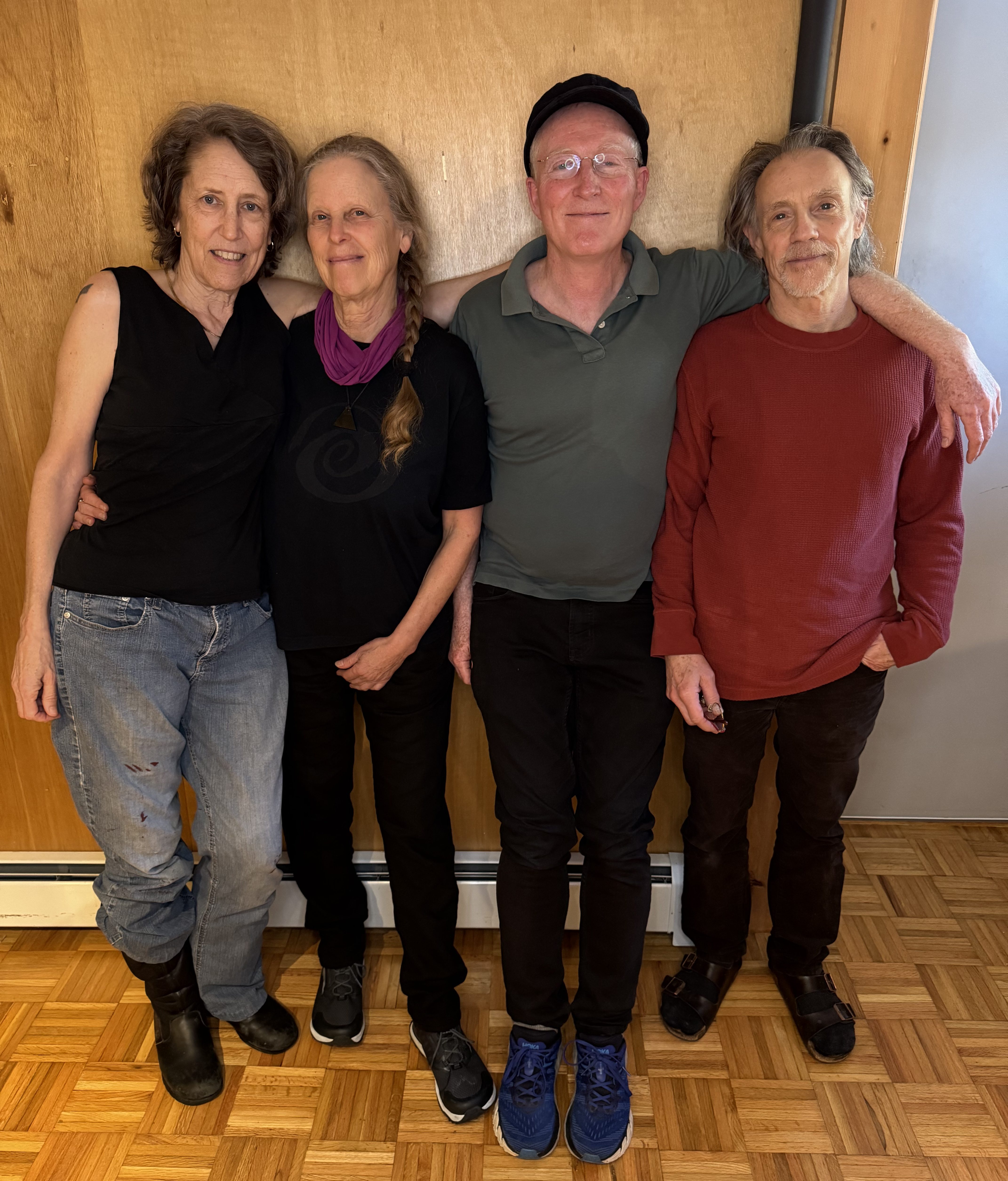
So I am happy to report that my friends Molly Ruggles, Ellen Epstein, Michael Cicone and I went in a pre-industrial — and some might even say late-Paleolithic — direction with our most recent song release which we recorded a cappella.

You may remember an earlier version of “My Sweet Honeydew” (recorded with pianist Doug Hammer) which I featured in a blog post from January 8, 2022.

You are welcome to click here and visit — or re-visit — that blog post if you are so inclined.

A couple of years ago singer/songwriter/pianist Molly Ruggles took my original version, added an entirely new section of music + lyrics, and then arranged it for four voices to perform a cappella.

Our new version is in the player at the beginning of this blog post.

You may recognize Molly as a vital part of my trio recordings with Carole Bundy.

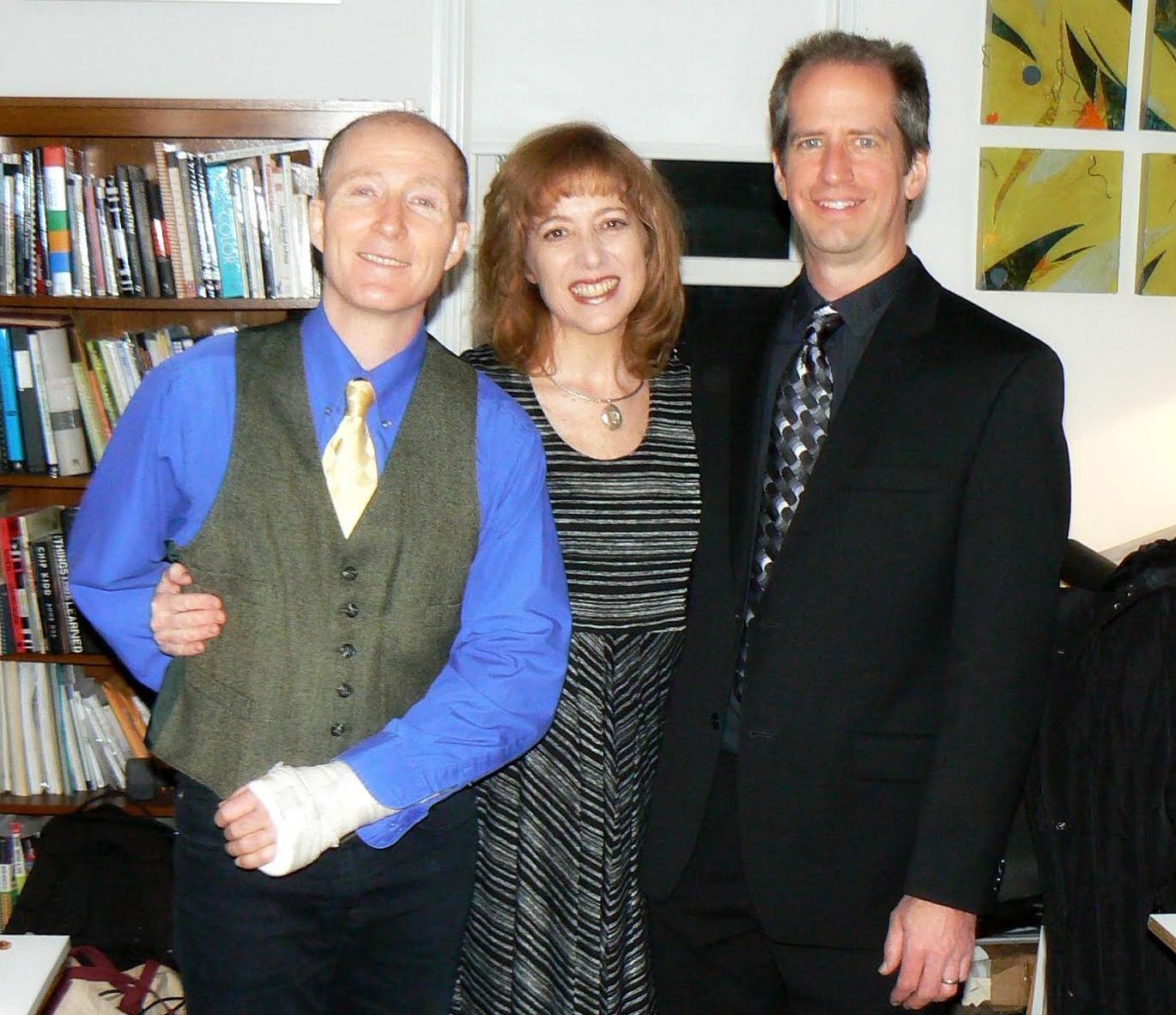
Molly, Ellen, Will & Michael (Photo by Doug Hammer)

I have known the other two singers on this recording — Ellen and Michael — for decades.

If you are a fan of contemporary folk music, you may be familiar with them as part of a musical trio with singer/songwriter/guitarist Cindy Kallet for forty-five years.

Ellen and Michael have released three beloved CDs of music with Cindy as well as appearing on many of her solo recording projects.

So I feel very honored and excited that they agreed to be part of this recording!

Now I will circle back to the aphorism that “Insanity is doing the same thing over and over again and expecting different results.”

Molly and I are doing something new with this recording.

We have hired a fellow singer-songwriter, Erik Balkey, to help us promote it to folk radio programs/stations around the USA.

Erik puts together compilation CDs of new recordings every two months and sends them to a couple hundred folk DJs and program directors.

We were surprised — and pleased — to learn that he chose “My Sweet Honeydew (A Cappella)” to lead off the second CD in his July/August promotional compilation.

If you happen to listen to a folk program in your neighborhood — or maybe far away from your neighborhood via an internet radio station — please let me know.

Then I will check and see if Erik sent his July/August promotional CDs — including “My Sweet Honeydew (A Cappella)” — to your favorite station/program.

It will be interesting to see what does — or doesn’t — unfold regarding airplay for our song this summer…

Another deep breath in.

And deep breath out.

Thank you to Erik Balkey for his radio outreach.

Thank you to Doug Hammer for his collaborative production skills (and spontaneous photographic impulses).

Image by congerdesign from Pixabay

Thank you to Stephen C. Fischer for his graphic design gifts.

Thank you to Molly Ruggles for creating this new version of my song.

Thank you to Molly and Michael and Ellen for learning, performing and then recording it.

And thank YOU for reading and listening to yet another blog post from/by me.

One final deep breath in.

And deep breath out.

P.S. You are welcome to stream “My Sweet Honeydew (A Cappella) on your favorite digital music platform by clicking here.

This Heart Of Mine…

Image by xiSerge from Pixabay

Thank you to everyone who continues to explore my blog even though I have not been posting a lot lately.

It is very exciting — and satisfying — to check my stats and see the many different blog posts people have visited during the past week.

One blog post which gets a surprising (to me) amount of traffic is about the composer Harry Warren.

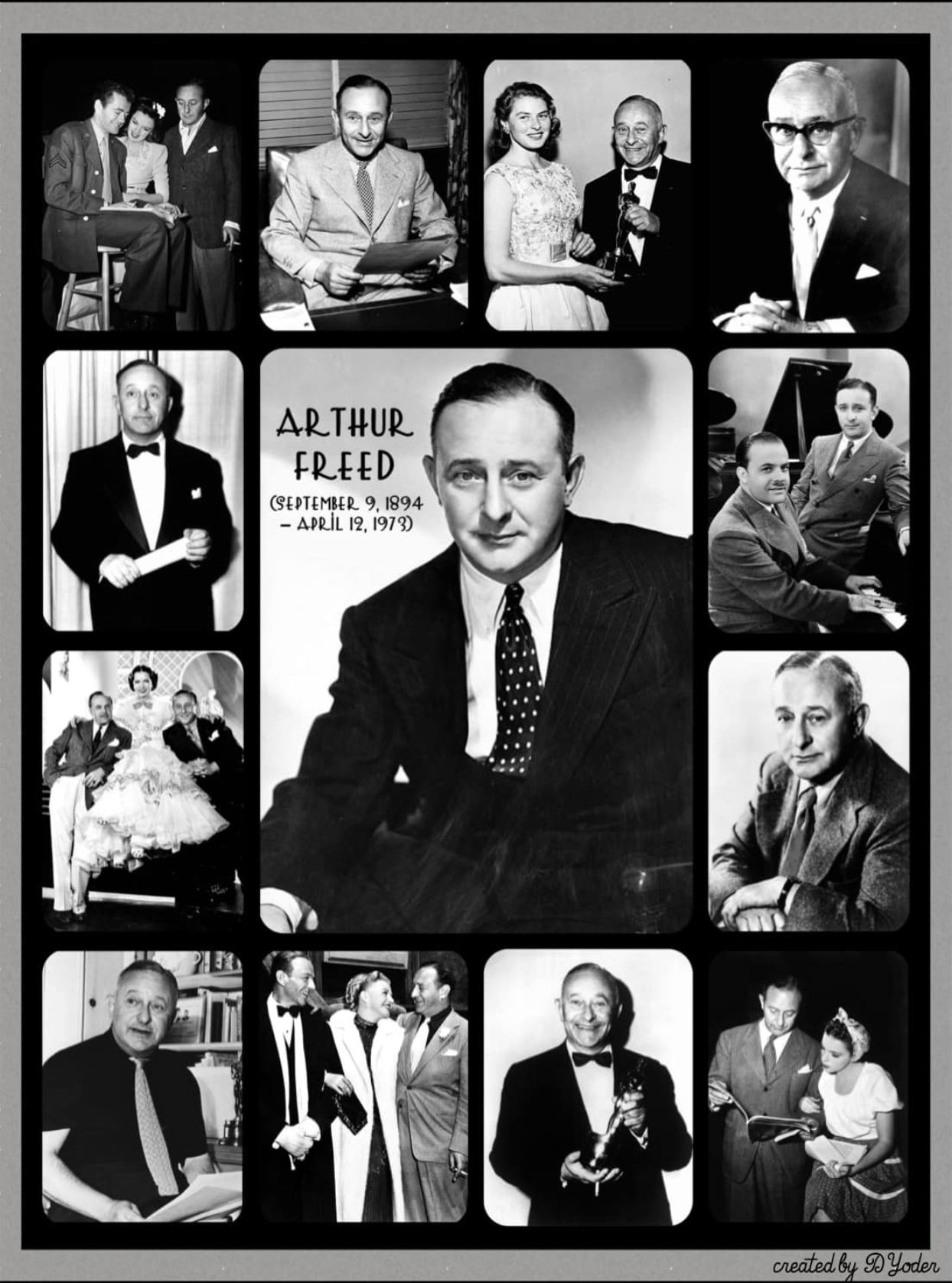
He wrote the music for the song in the player at the beginning of this blog post along with lyricist Arthur Freed.

You can click here if you are curious to learn more about Harry Warren by reading my extremely loooong blog post from eight years ago (which also includes recordings of several of his hit songs).

Mr. Warren and Mr. Freed wrote “This Heart Of Mine” for a 1944 Metro-Goldwyn-Mayer (MGM) musical called the ZIEGFELD FOLLIES which starred Fred Astaire.

I think I first heard it sung by Judy Garland, who recorded it the following year for Decca Records.

Arthur Freed also wrote the lyrics for a bunch of other hit songs — such as “Singing In The Rain,” “You Are My Lucky Star,” and “Make ‘Em Laugh.”

You can click here to check out his Wikipedia page if you are curious to learn more about him.

I haven’t read any biographies about him (yet) but according to Wikipedia, he lived a fascinating life.

Composite Images of Arthur Freed by Diane Yoder

He was born in South Carolina in 1894, and ended up attending a very prestigious prep school in New Hampshire — Phillips Exeter Academy. I am guessing he was probably one of very few Jewish students on campus — and according to Wikipedia, he became interested in writing poetry there.

After prep school Mr. Freed ended up in Chicago and performed with early versions of the Marx Brothers act (!!!) in vaudeville.

He also wrote special material for them, which led to co-writing enough successful songs that Hollywood beckoned…and he was hired to write songs for early MGM musicals.

After many years at MGM, Freed transitioned from songwriter to producer, working (as an uncredited associate producer ) on THE WIZARD OF OZ and then officially producing his first movie, BABES IN ARMS.

Both of these films, as you probably know, starred Judy Garland.

Mr. Freed went on to produce many more of Garland’s movies including LITTLE NELLIE KELLY, FOR ME AND MY GAL, THE CLOCK, and MEET ME IN ST. LOUIS — which is where she met her second husband, the director Vincente Minnelli, whom Freed had brought from New York City to work at MGM.

According to Wikipedia, Freed hired great talent and then gave them free rein to do their thing — whether it was choreography, costumes, set design, songwriting, direction, etc.

He also gave himself free rein to do some very odd and abusive things, such as exposing his penis to a young Shirley Temple when she came for a visit to discuss doing a movie at MGM — and making sexual advances towards her mother as well.

Temple wrote about this incident in her autobiography — and apparently Mr. Freed experienced no censure as a result of his horrible behavior…

Deep breath in.

Image by Miroslav Kaclík from Pixabay

Deep breath out.

This reminds me of the ongoing conversations about Michael Jackson’s artistic and personal legacies…

Does one discard and avoid the music/art/products made by someone who does horrible things to other beings?

One of Mr. Freed’s most famous movies is SINGING IN THE RAIN, which re-used a bunch of his early hit songs.

Do we stop delighting in the the extraordinary dancing and singing of this movie because the producer was at times a perverse, abusive creep?

Perhaps this is something each one of us must decide for herself/himself…

I apologize for veering into this intense psychological and ethical territory.

I thought this blog post would be more light-hearted — to match the mood of the song.

However, human life is many-layered… full of contradictions, fallibility and mistakes.

Thank you to the (sometimes very flawed) songwriters who have given us wonderful music to lift our spirits year after year after year.

Graphic Design by Stephen C. Fischer

Thank you to pianist/producer Doug Hammer for his tremendous collaborative gifts.

Thank you to graphic designer Stephen C. Fischer for his ongoing work on behalf of my music.

Thank you to the photographers at Pixabay and to Diane Yoder for her composite image of Arthur Freed.

And thank YOU for reading and listening to another one of my blog posts.

If you’d care to stream this song — and maybe even “like” it — on your favorite music streaming platform, you are welcome to click here.

And you are always welcome to visit my website — and sign up for my very sporadic and under-utilized emailing list — by clicking here.

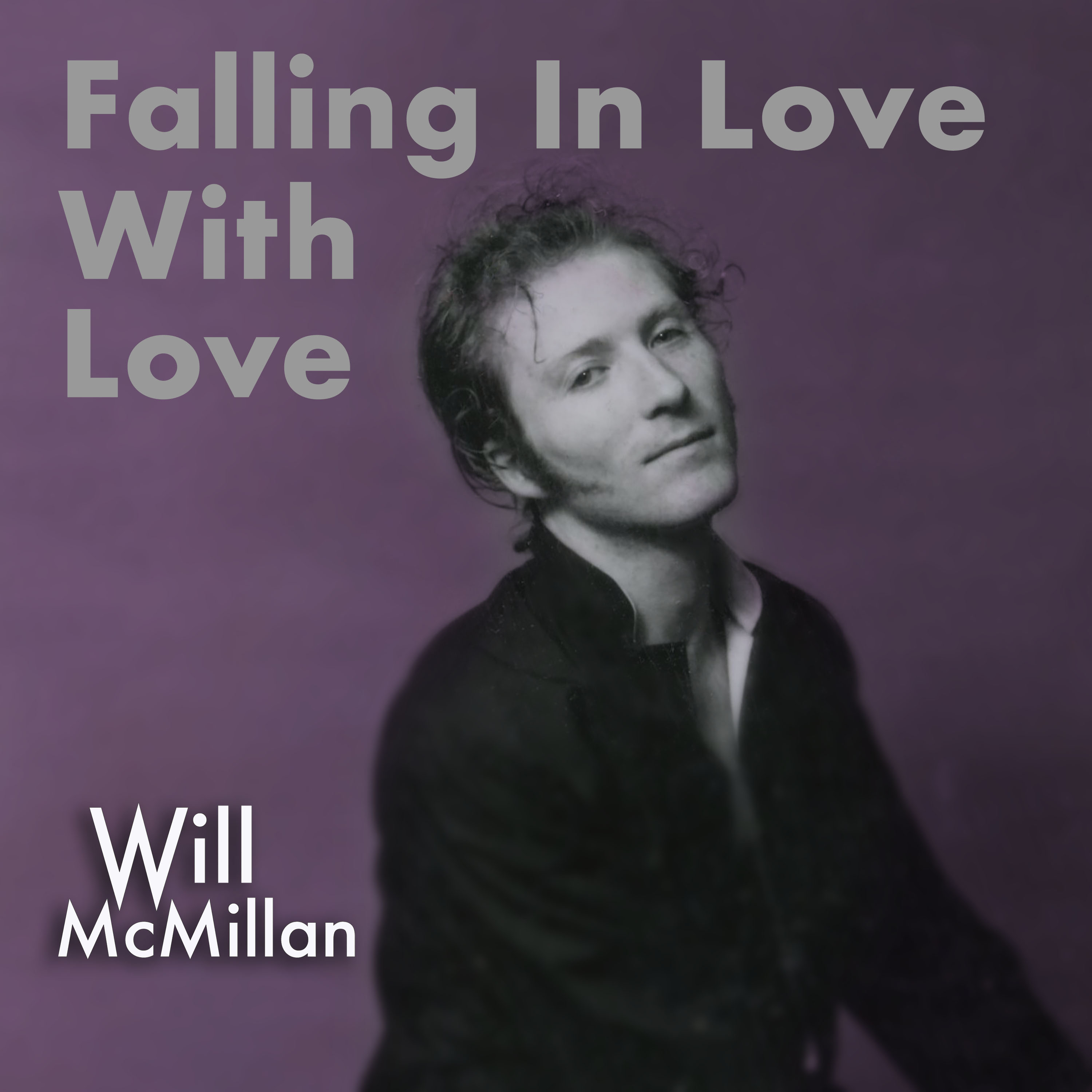
Falling In Love With Love…

Greetings from East Arlington, MA — just outside of Boston in the USA!

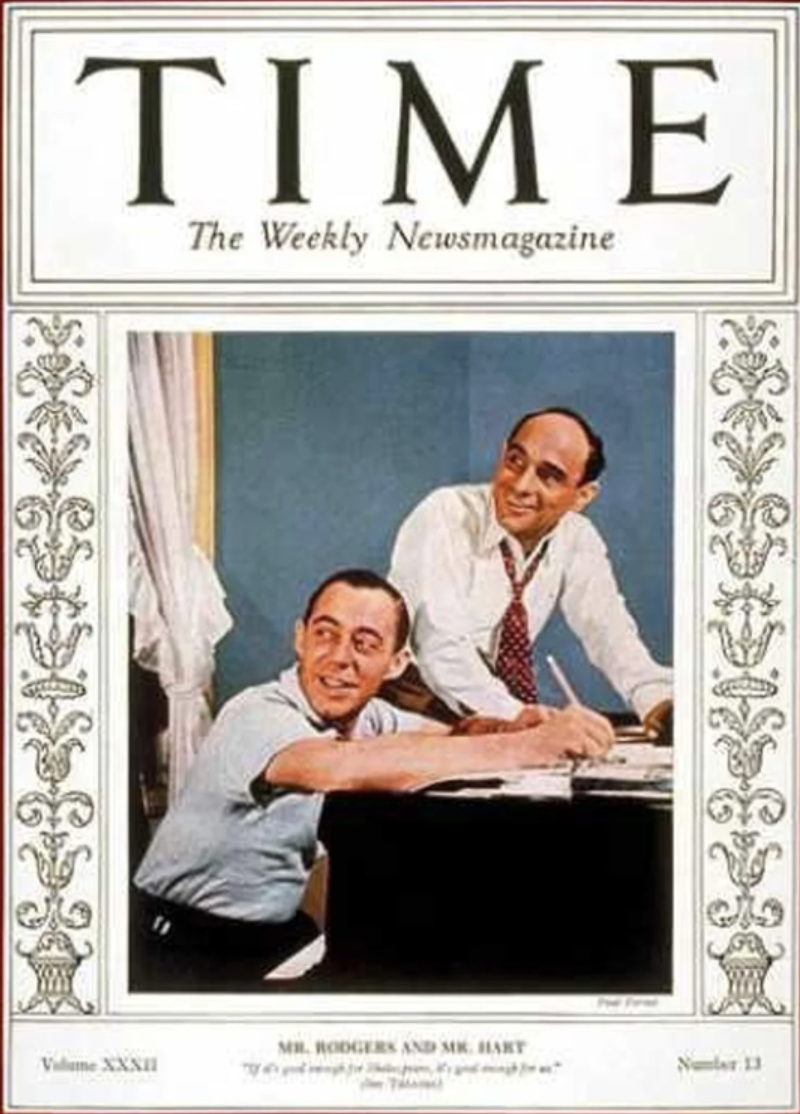
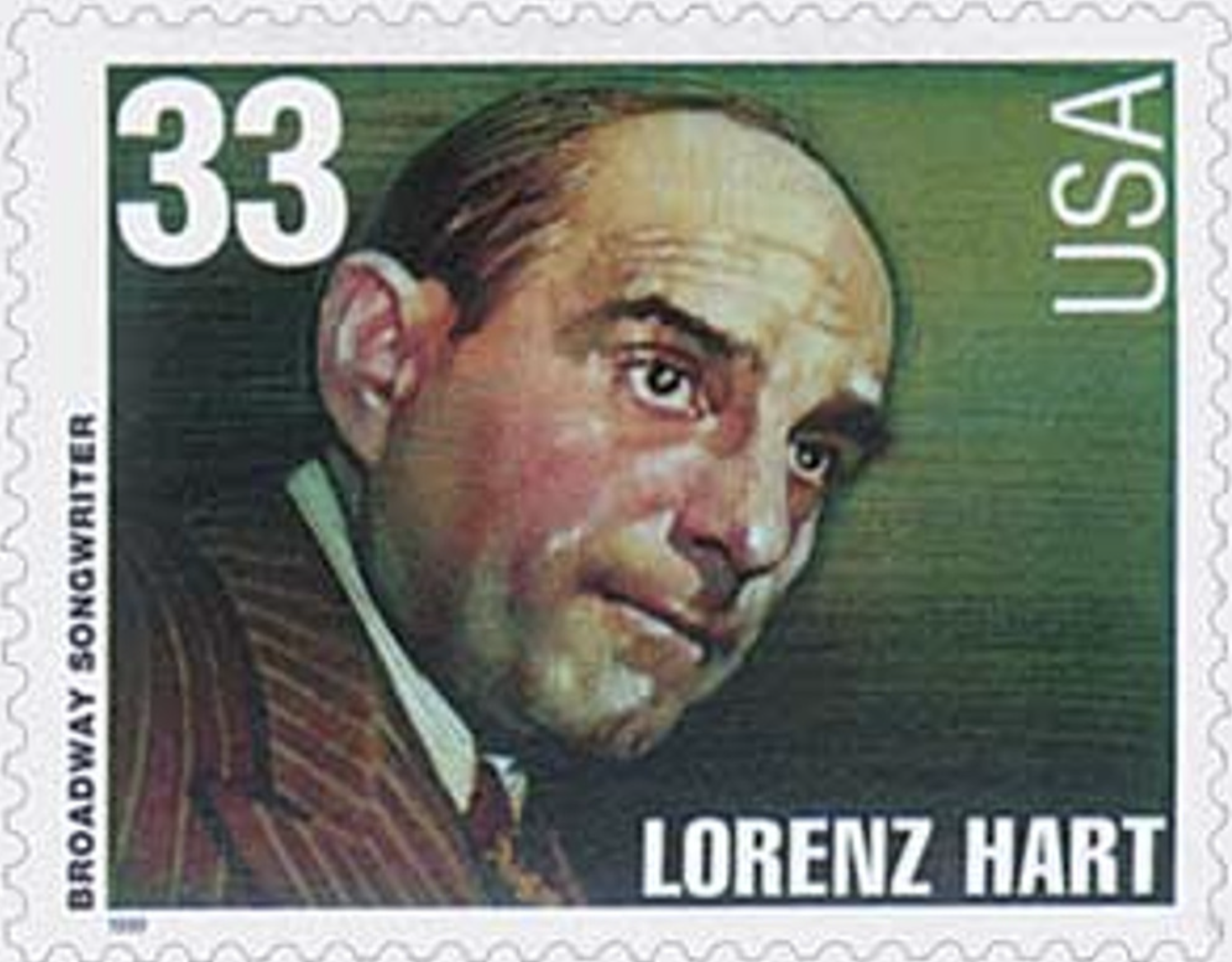
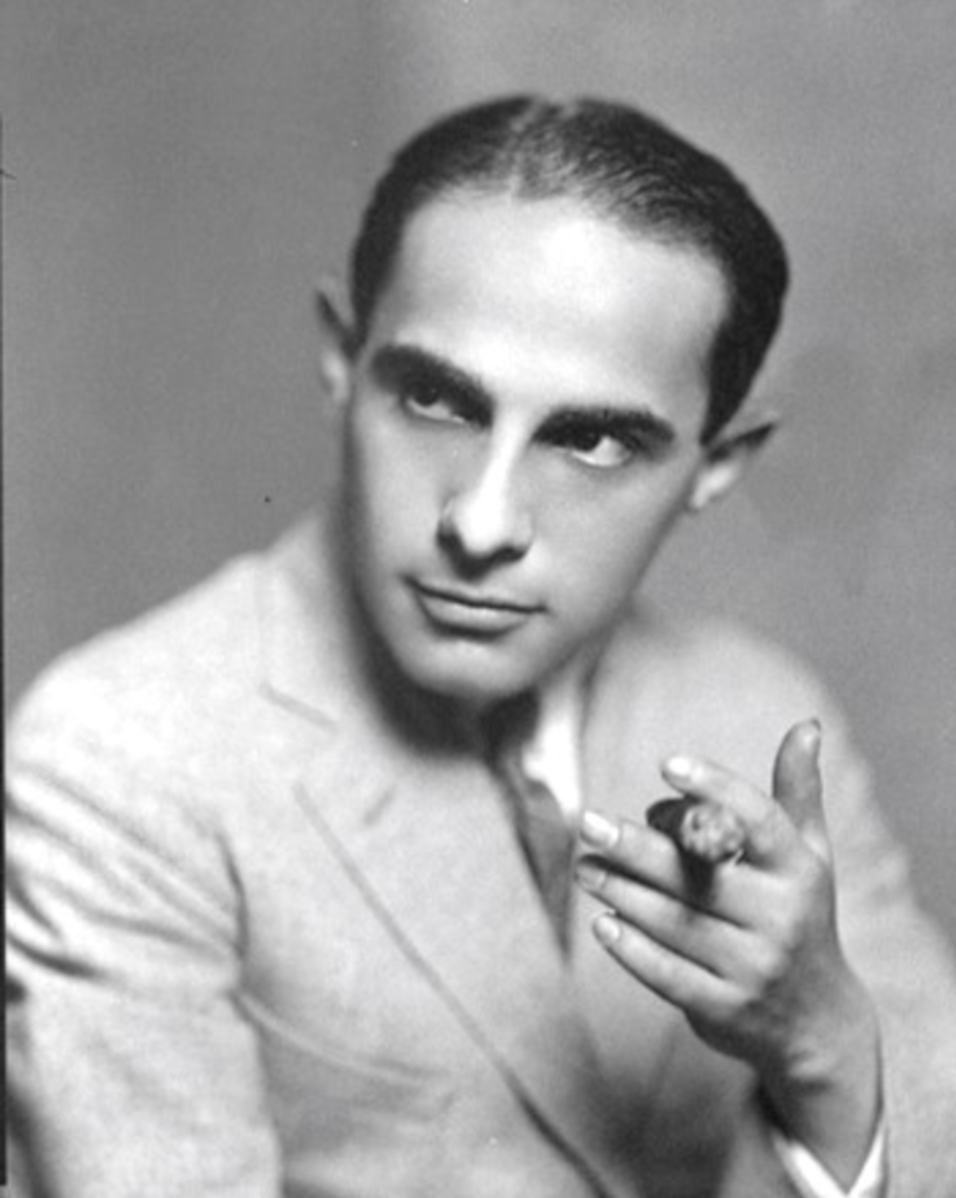
Today I am featuring a beautiful song with lyrics by Lorenz Hart and music by Richard Rodgers.

As this TIME Magazine cover attests, they were a very potent musical and cultural force in the early-middle 20th century.

And I am very happy that a recent movie — BLUE MOON (made by the wonderful director Richard Linklater and starring Ethan Hawke as Larry Hart) — has renewed interest in Hart’s life and musical legacy.

Here’s a link to a great article in The Hollywood Reporter about making the film if you are curious.

It turns out that BLUE MOON was a decade-long labor of love which was filmed on a beautifully re-created version of Sardi’s — a famous bar/restaurant in Manhattan’s theatre district.

Reading the article brought tears to my eyes.

You can also click here to read a blog post I wrote about Larry Hart exactly ten years ago if you are even more curious.

And I once wrote a blog post about two of his and Rodgers’ hit songs — “You Took Advantage Of Me” and “I Could Write A Book” — which you can read by clicking here.

Not mentioned in the BLUE MOON movie is how devoted Hart was to his mother — with whom he lived his entire life.

Hart’s mother died around the same time that OKLAHOMA (the first musical his decades-long collaborator Rodgers created with another lyricist — their mutual friend Oscar Hammerstein II) opened on Broadway.

So he was grieving this huge familial loss simultaneously with the at-least-partial loss of his friendship AND professional relationship with Rodgers.

Deep breath in.

Deep breath out.

And I had forgotten (until I re-read my blog post from ten years ago) that Mr. Hart had also begun a collaboration about underground freedom fighters in France with a composer who had recently escaped from Nazi-occupied Europe.

So, as an American-born Jew whose parents had emigrated to NYC in the late 19th century from Germany, he also may have also been feeling a significant amount of grief, rage, despair, terror, and “there but for the grace of G-d” empathy for the millions of Jews still remaining in Europe.

And let’s not forget that American Nazis were holding huge rallies at places like Madison Square Garden during this time as well!

Yet another deep breath in.

And deep breath out.

I don’t know how much it was public knowledge that LGBTQ folks were being sent to Nazi death camps, but I am guessing that theater people — such as composer Kurt Weill, who had managed to escape from Berlin to Paris to Manhattan — had plenty of heart-breaking anecdotes to share about the fates of their previous artistic partners who happened to be LGBTQ and/or Jewish and/or Roma.

All of this was also not mentioned in BLUE MOON. although Mr. Hawke and Mr. Linklater and some of the other actors such as Andrew Scott apparently did a lot of research before they began filming the movie — so I am guessing that they had most/all of this information influencing the subtexts of their acting performances.

And another deep breath in.

And deep breath out.

There are certainly some powerful parallels with what was happening leading up to Larry’s death in 1943 and what is currently unfolding here in the USA.

One thing I wrote about in my blog post from ten years ago — and which BLUE MOON does explore — is the paradox of Larry Hart (a somewhat closeted gay man) falling in love with and proposing to women.

And the song “Falling In Love With Love” may illuminate some of Hart’s thoughts and feeling on this topic/phenomenon/tendency.

What do YOU think?

Thank you to Doug Hammer for his exquisite piano playing and comprehensive production skills.

Thank you to John Childress (and his collaborator at the time named Laurel, I think…) for taking this photo many years ago when I still had plenty of hair.

Thank you to Stephen C. Fischer for his lovely graphic design work.

And thank YOU for reading and listening to another one of my blog posts.

You can click here to stream “Falling In Love With Love” on Pandora, YouTube, Apple Music, etc. if the spirit moves you.

And you are also always welcome to visit my website: WillSings.com.

There’s all sorts of info and music there — and you could join my email list of you are so inclined.

Under My Umbrella

Image by wal_172619 from Pixabay

Autumn has arrived in New England.

Deep breath in.

Deep breath out.

Autumn is probably my least favorite season.

Partly this is because I do not like being cold.

Partly this is because I do not like the shorter days.

And partly this is because I do not like being reminded that everything dies in the end.

I do however like being reminded of how amazing mother nature is — creating a system of fully recyclable and compostable solar collectors in the form of LEAVES!

Hurrah for leaves and photosynthesis!

Image by Chu Viết Đôn from Pixabay

I wrote the first version of “Under My Umbrella” while camping in North Truro on Cape Cod.

Then my friend Molly Ruggles wrote a new bridge section — which is the version she and I and our friend Carole Bundy recorded (in the player above).

You can click here to read — or re-read depending upon how long you’ve been following my blog — a short post from 9/10/24 which features the earlier (pre-Molly) version of this song.

And here is a link to the Molly, Will & Carole version in case you might be willing to play/like/share it on your favorite music streaming platform.

We recorded it with me, Carole and Molly singing plus Molly playing Doug Hammer’s Schimmel grand piano in his studio north of Boston, MA.

Thank you to Doug for his excellent engineering and music production skills.

Thank you to Molly for writing a new bridge and also a bunch of lovely harmonies for all of us to sing.

Photo by Rada Ruggles

Thank you to Molly for playing piano AND for designing our graphics.

Thank you to the gifted and generous photographers at Pixabay.

And thank YOU for reading and listening to another of my blog posts!

I remain very grateful for our wonderful WordPress community.

Deep breath in.

And deep breath out.

Don’t Blame Me…

Image by Thomas Wolter from Pixabay

Greetings!

I hope this blog post finds you well.

My most recent song release — “Don’t Blame Me” — was co-written by Dorothy Fields and Jimmy McHugh.

I wrote a long blog post about Ms. Fields on October 1, 2017 which you can read (or re-read) by clicking here if you are curious.

The more I have learned about her, the more I admire her. 

And the more I perform her songs , the more I savor the ease, wit and humor in her lyrics.

Image by Thomas Wolter from Pixabay

Dorothy Fields was an extremely successful lyricist and librettist in a very male-dominated entertainment industry.

She was friends with — and sometimes collaborated with — all of the songwriters in the Golden Era of Popular Song including Richard Rodgers, Larry Hart, Oscar Hammerstein, Jerome Kern, Cole Porter, Irving Berlin, and the list (of male songwriters) goes on and on…

She had hits from the 1920s to the 1970s — and did not get discouraged (as many of her male colleagues did) when rock-n-roll began to displace her songs from the hit parade.

Image by Thomas Wolter from Pixabay

Instead she started working with a much younger composer, Cy Coleman, and had one of her biggest hits — the musical Sweet Charity — when she was 62 years old.

I, as a late-blooming songwriter, find her to be very inspirational.

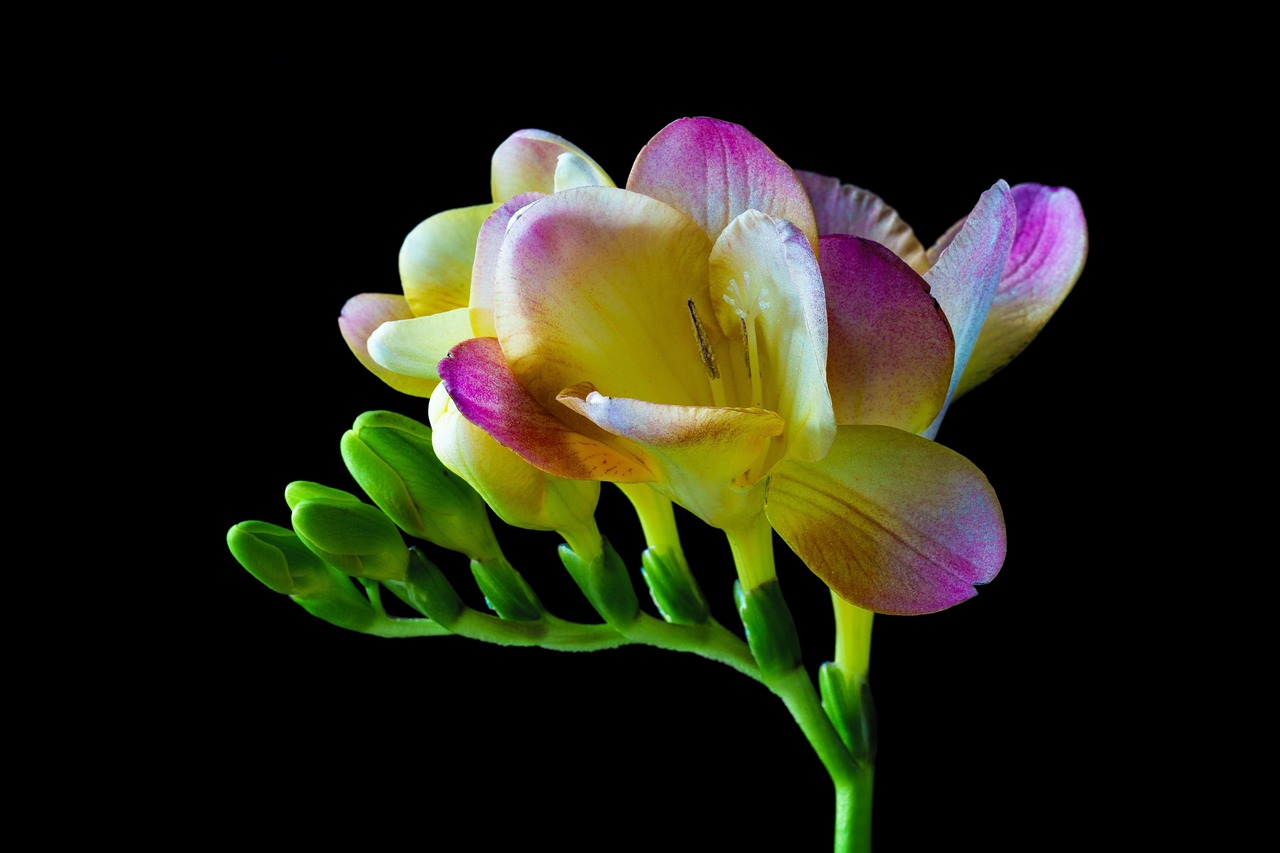
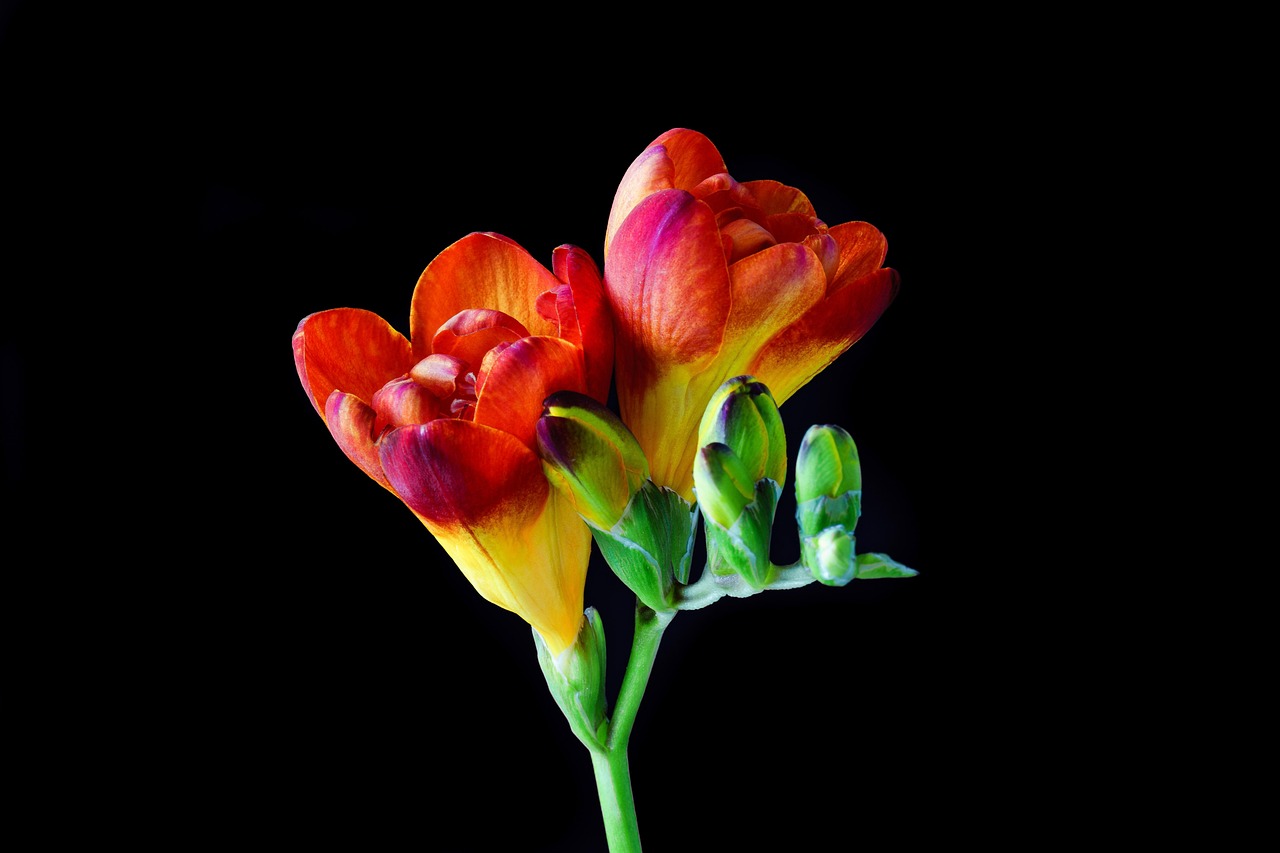
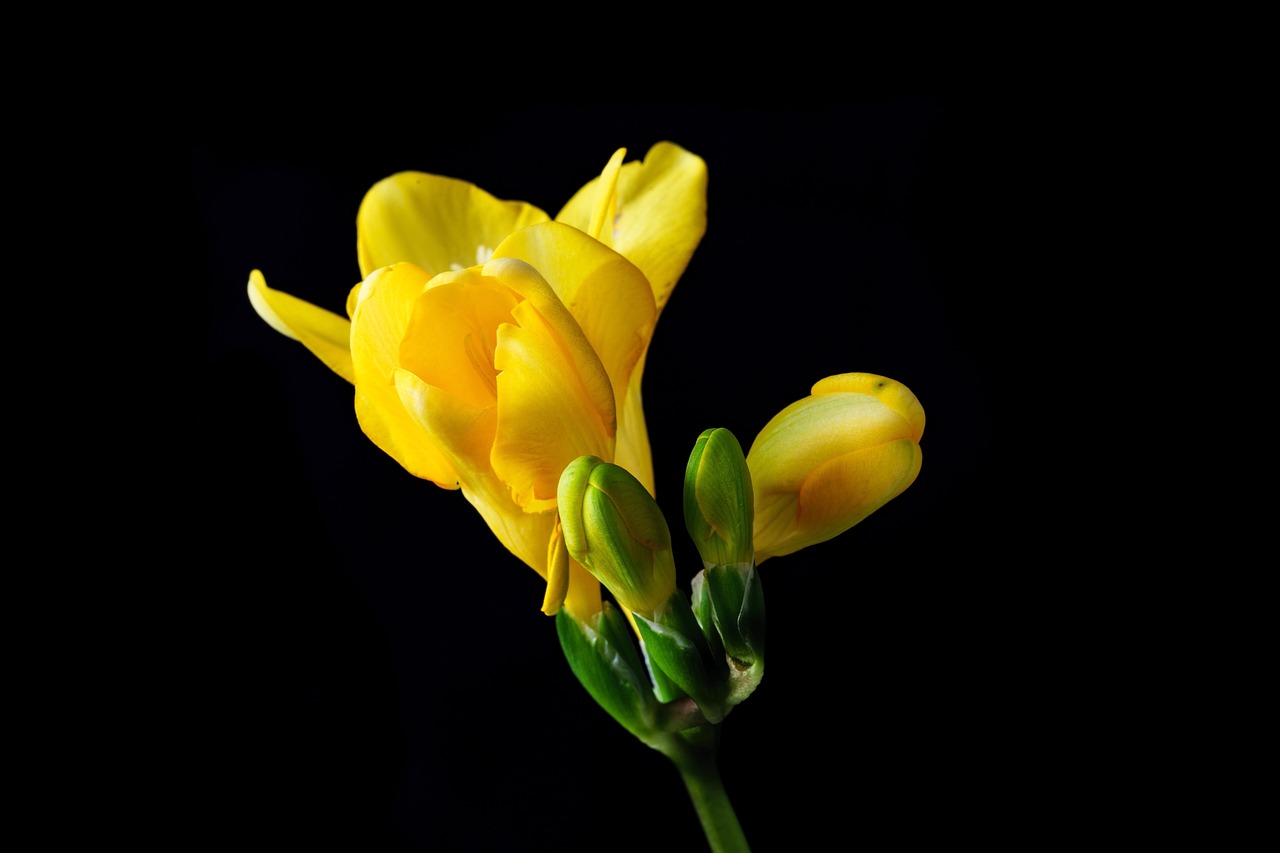
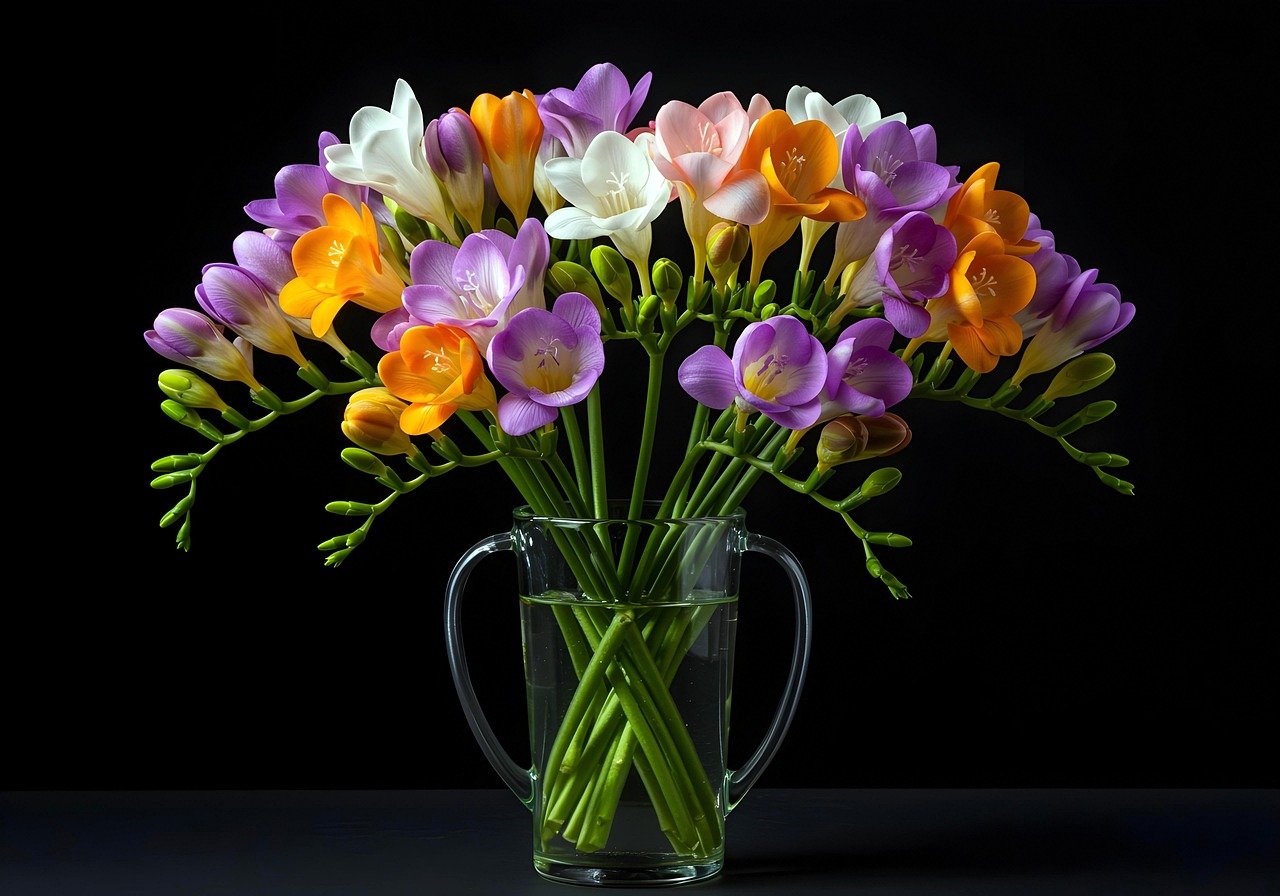
I have chosen freesia for this post because I imagine she would have enjoyed their delicious fragrance ‚ and because they always seem very elegant to me.

According to her biographers, she was always very well-dressed (one grandparent was a tailor…) with separate closets for hats, shoes, active wear, evening wear, etc.

Here’s a streaming link for “Don’t Blame Me.”

Thank you to the glorious photographers at Pixabay.

Image by Alicja from Pixabay

Thank you to Doug Hammer for playing piano while simultaneously recording him and me on “Don’t Blame Me.”

And thank YOU for reading another one of my blog posts.

Here is a bouquet of freesia for your efforts!

Deep breath in.

And deep breath out.

What a fragrance!

Throwback Thursday (#6)

Image by Younggeun KIm from Pixabay

One of my favorite perennials is the Bleeding Heart.

Their flowers are like origami.

How does Mother Nature manage to create such an extraordinary variety of shapes and colors out of a such a limited selection of amino acids (adenine, guanine, cytosine, and thymine) in plant — as well as our own — DNA?

And how do the plant cells unfold in such complicated and exquisite patterns?

Today’s Throwback Thursday heads back to a November 9, 2013 blog post about how people who sing with other people — especially in choirs when they are encouraged to breath together during certain sections of the music — can end up aligning their heart beats.

Image by Younggeun KIm from Pixabay

You can click here to read more about this fascinating topic if you are curious.

It is another reminder that singing — and singing with other human beings — can be a very healthy and uplifting thing to do.

Deep breath in.

Deep breath out.

I am most familiar with the pink + white varieties of bleeding heart, but occasionally I have seen a completely white variant in a neighbor’s garden.

It is very elegant — but I miss the pink/red part of the blossoms…

Thank you to the talented and generous photographers at Pixabay.

Thank you to Mother Nature, who keeps doing her thing regardless or in spite of the mess we humans are making in our own lives.

And thank YOU for reading yet another one of my blog posts!

Another deep breath in.

Image by Frauke Riether from Pixabay

And deep breath out.

You are always welcome to visit my musical web site — willsings.com.

And you can find me singing on various streaming platforms by searching for “Will McMillan featuring Doug Hammer.”

Mulligan Stew

Image by ivabalk from Pixabay

Today’s song is a sassy tour de force with lyrics by Lorenz Hart and music by Richard Rodgers.

I love the introductory verse, which mentions “Mulligan Stew,” the “Beaux Arts Ball,” and “Noël Cad” a.k.a. Noël Coward.

Many songs from the 20s, 30s and 40s include references to specific people, places, products and events — thus functioning as historic 20th century time capsules for 21st century listeners.

A) Mulligan Stew, I learned from Wikipedia, is an Irish-inspired recipe for a soup or stew made from whatever food items one can round up.

It was also known as “Hobo Stew” during the early part of the 20th century in the USA.

I feel a special affinity for Mulligan Stew, because it appears to be very similar to the endless soup I like to make during the winter months.

Image by u_0bpc2hin from Pixabay

I start with cut up carrots, potatoes, sweet potatoes, and onions — plus a frozen chicken thigh — and boil all the ingredients until the chicken is cooked and the carrots are starting to lose their crunch.

Then I add some cut-up garlic, fresh ginger, salt, pepper and whatever additional spices — curry powder? thyme? turmeric? one of Trader Joe’s multi-spice blends? — call out to me from the shelf.

Then I eat it for about a week — refrigerating it each night and adding more water plus additional ingredients — leeks? parsnips? kale? mushrooms? squash? rice? tomatoes? okra? tofu? canned beans? frozen artichoke hearts? leftover Chinese food? — on a daily basis before cooking it some more.

Yum!

B) Noël Coward, as you may already know, was a multi-hyphenate powerhouse — an actor-playwright-composer-director-singer from England who died in 1973 after a long and very successful career.

I have only learned and performed one of his songs — “If Love Were All” — which was part of Judy Garland’s repertoire.

But I have a Noël Coward songbook in my basement music library which probably deserves more attention in the future.

C) Wikipedia tells us that “The Beaux-Arts Ball… is the annual costume ball traditionally given by the students of the École nationale supérieure des Beaux-Arts in Paris in the spring…on the rue Bonaparte overlooking the Seine… Its reputation for high style, nudity, wild antics, and cross-dressing encouraged imitators in American cities. In 1931, in New York, famous architects dressed up as their buildings and today, many American architecture schools hold similar costume balls.”

I am guessing that the one in New York in 1931 is the Beaux Arts Ball to which Larry Hart is referring in his lyrics.

They sound like very creative and somewhat outrageous events!

Image by rautsonakshik0 from Pixabay

I am happy to share that my streaming numbers have been rising on Spotify and on Pandora (which are the only two music streaming platforms I currently monitor) — so a BIG THANK YOU to anyone and everyone who have given one of my songs a listen!

I have become more and more of a Pandora fan in recent months, even though their music is only accessible in the USA (and not globally like Spotify).

I use their free option, which means that I have to listen to ads every few songs — which I often mute.

And I use a similar free option on Spotify and YouTube Music.

Even though Pandora’s parent company, SiriusXM, has been laying off large numbers of staff in recent months, the core group of people at Pandora who offer customer service and training to independent musicians like me has — so far — remained intact.

What I particularly love about Pandora is that they do not use chatbots to communicate with independent musicians like me.

Image by jyleen21 from Pixabay

Real live Pandora staff offer free training sessions via Zoom each month to encourage musicians to take advantage of their free promotional strategies which can help songs find new listeners.

I tried one strategy — creating a featured track — and the song I featured received hundreds more streams as a result.

Of course, you probably remember that all of the music streaming companies pay only fractions of a cent per stream to recording artists and songwriters like me…

But I have released 58 songs during the past 4 years, and many of these songs have each been streamed over 1000 times on Spotify and Pandora — although less often on YouTube, Apple, Amazon, and other digital music platforms…

And all of those fractions of cents DO have the potential to add up to something substantial.

So I remain hopeful that my persistence will pay off as the months and years go by — as long as we have a functioning internet, a functioning economy and a functioning democracy…

Deep breath in.

Deep breath out.

Thank you to Doug Hammer for playing his beautiful Schimmel piano on this recording and for being very patient while we mixed and mastered it.

Thank you to Stephen C. Fischer for his elegant graphic design.

Thank you to Larry Hart and Dick Rodgers for their extraordinary songwriting partnership.

Thank you to the talented and generous photographers at Pixabay.

And a final thank you to YOU for making it to the end of another one of my blog posts!

You are always welcome to click here and listen to “The Lady Is A Tramp” on various streaming platforms.

When Your Heart Is Full Of Love…

Image by Jill Wellington from Pixabay

Valentine’s Day is on the horizon.

I have chosen to honor it with a sweet song by Frank Loesser which was nominated for an Academy Award in 1952.

Mr. Loesser wrote it for Danny Kaye to perform in a movie about the Danish writer Hans Christian Anderson.

According to Mr. Loesser’s daughter, he did not think highly of this song, and sometimes even used it as an example of songwriting to avoid.

But I love it.

Frank Loesser

Mr. Loesser began his songwriting career as a lyricist and co-wrote a bunch of great songs in the 1930s and 1940s including “Heart and Soul” and “Two Sleepy People” (both with Hoagy Carmichael), “I Don’t Want To Walk Without You” (with Jule Styne) and “See What The Boys In The Back Room Will Have” (with Friedrich Hollaender).

The first hit song for which he wrote both words and music was “Praise The Lord And Pass The Ammunition” during WWII.

Loesser ended up writing words and music for the songs in WHERE’S CHARLEY, GUYS AND DOLLS, THE MOST HAPPY FELLA, and HOW TO SUCCEED IN BUSINESS WITHOUT REALLY TRYING (along with a few less successful undertakings).

Some hits from those shows include “Once In Love With Amy,” “Luck Be A Lady,” “I Love You A Bushel and A Peck,” “If I Were A Bell,” “I’ve Never Been In Love Before,” “Somebody, Somewhere,” “Standing On The Corner,” “Joey, Joey, Joey,” “I Believe In You,” and “Brotherhood of Man.”

Mr. Loesser also continued writing songs which were used in movies such as “Baby, It’s Cold Outside,” “Let’s Get Lost,” “Inchworm,” and “Spring Will Be A Little Late This Year.”

And he wrote a few songs which became pop hits without any connection to Broadway or Hollywood, including “What Are You Doing New Year’s Eve?” and “I’d Like To Get You On A Slow Boat To China.”

Danny Kaye, his wife Sylvia Fine, arranger Billy May and Frank Loesser

I have long loved his song “Thumbelina” — and am very happy with this peppy version which Doug Hammer and I recorded quite spontaneously a few years ago when I was putting together an hour-long program of songs written or co-written by Frank Loesser.

I had been thinking I might use it in a Valentine’s-Day-inspired blog post, and then fellow blogger Jennie F. left the following comment regarding my blog post last month:

“Nature is as wondrous as music. Your (hyacinth) bulb flower(ing) says it all… Stay warm, and remember the words of Hans Christian Andersen, “Where words fail, music speaks.”

That coincidence/synchronicity sealed the deal.

Deep breath in.

Deep breath out.

Barley (I think?) photo by Frauke Riether from Pixabay

I had forgotten the exact plot synopsis of THUMBELINA (which I first read as a child), but Wikipedia refreshed my memory:

“Thumbelina is about a tiny girl and her adventures with marriage-minded toads, moles, and cockchafers. She successfully avoids their intentions before falling in love with a flower-fairy prince just her size.”

I had also forgotten that Thumbelina comes into being as a result of the actions of a woman who — longing for a child — plants a barleycorn seed.

Thumbelina then emerges from a barleycorn flower… and the adventure of her life begins.

As a Music Together teacher, I particularly resonate with Mr. Loesser’s lyrical admonition that Thumbelina dance and sing — since that is exactly what I do three mornings per week with a delightful crew of small children + the grown ups (parents, grandparents, and nannies) who love them.

Illustration by Thomas Vilhelm Pederson from original publication of THUMBELINA in 1835

By the time I bike (or take the bus) to class, vacuum the karate studio (the floor of which accumulates a surprising.amount of hair, clipped toenails, cookie fragments, dust etc. plus sand and salt during the winter months), hide the punching bags and karate trophies behind a wall of rolling screens, set up a boombox and instruments, change into my teaching — rather than biking/cleaning/snow shoveling — clothes, welcome families, lead a 45-50 minute class, chat with families after class, and then put away all the stuff I set up an hour earlier, I do not earn very much money per hour.

But the sweetness, playfulness, joy, humor, love and sense of connectedness I experience with my families each week is always a balm for my soul.

And there’s no way to put a price on that!

Leading Music Together classes helps me get out of bed in the morning AND reassures me that the human world is not an irredeemably f–ked up mess about which I can do nothing to help.

And sometimes one of the small humans in my class is inspired to give me a hug at the end of class.

Illustration from a 1914 edition of Han Christian Anderson’s Fairy Tales

When this happens, I feel like I am being visited be an angelic being who is offering me unadulterated love, comfort and gratitude.

It is such an honor to receive one of their hugs.

And sometimes I am offered a hug by one of the grownups in class, too — which I also appreciate and savor.

Another deep breath in.

And deep breath out.

These little children are a big reason why I ride my old and raggedy-looking bike rather than drive a car, why I rarely buy new clothes, and why I never travel (especially via airplanes) simply for the sake of going someplace new or warm or trendy.

I live a downwardly mobile life so that the children in my classes might be able to live an ever-so-slightly less chaotic and terrifying life due to the myriad ways that climate change is affecting all of us here on planet earth.

Yet another deep breath in.

And deep breath out.

Another radiant hyacinth bulb from Trader Joe’s

I end this blog post with some of my favorite quotations by the Dalai Lama.

“Our prime purpose in life is to help others. And if you can’t help them, at least don’t hurt them.”

“In our present circumstances, no on can afford to assume that someone else will solve their problems. Every individual has a responsibility to help guide our global family in the right direction. Good wishes are not sufficient; we must become actively engaged.”

“When you are discontent, you always want more, more, more. Your desire can never be satisfied. But when you practice contentment, you can say to yourself, “Oh, yes — I already have everything that I really need.”

“We can live without religion and meditation, but we cannot survive without affection.”

“The problems we face today — violent conflicts, destruction of nature, poverty, hunger and so on — are human-created problems which can be resolved through human effort, understanding and the development of a sense of sisterhood and brotherhood. We need to cultivate a universal responsibility for one another and for the planet we share.”

“As people alive today, we must consider future generations. A clean environment is a human right like any other. It is therefore part of our responsibility towards others to ensure that the world we pass on is as healthy, if not healthier, than we found it.”

“This generation has a responsibility to re-shape the world. Start the task even if it will not be fulfilled in your lifetime. Even if it seems hopeless now, never give up. Offer a positive vision, with enthusiasm and joy, and an optimistic outlook.”

“Happiness is not something ready made. It comes from your own actions.”

“Be kind whenever possible. It is always possible.”

THANK YOU for making it to the end of another one of my blog posts.

Thank you to Doug Hammer for his spritely piano accompaniment and his expert musical production skills.

Thank you to Stephen C. Fischer for his graphic design (and to the professional photographer in NYC who took this photo of me many decades ago…)

Thank you to Hans Christian Anderson for creating the story of Thumbelina and to Frank Loesser for creating his song “Thumbelina.”

Thank you to the wonderful photographers at Pixabay.

Thank you to the Dalai Lama for his wisdom and inspiration.

Image by svklimkin from Pixabay

And thank you to everyone who has streamed my music on Youtube, Pandora, Spotify, Apple Music, Tidal, Deezer, etc.

Every stream — and especially every thumbs up and/or inclusion in a playlist — helps to improve the likelihood that the clever algorithms of these streaming services will share my music with new listeners.

And you can click here to stream “Thumbelina” if the spirit moves you.

And as always, I welcome any comments below!

Something’s Gotta Give

Thank you to all the folks who continue to visit my blog despite the long gaps between new posts.

I just re-read my last one (written right after our most recent national elections).

It’s pretty grim.

Now we all bear witness to how the campaign promises — and threats — do or don’t become reality in the upcoming days, weeks, months and years.

Deep breath in.

Deep breath out.

Johnny Mercer by William Gottlieb (late 1940s…)

Today’s blog post aims to be a little lighter in tone and features a song for which Johnny Mercer wrote both the melody and lyrics.

Most of the time, Mr. Mercer wrote the lyrics to other people’s melodies.

For example, he co-created “Skylark” with Hoagy Carmichael, “Come Rain or Come Shine” with Harold Arlen, “Hooray For Hollywood” with Richard Whiting, “Jeepers Creepers” with Harry Warren, and “Moon River” with Henry Mancini.

Other songs he co-wrote include “You Must Have Been A Beautiful Baby,” “In The Cool, Cool, Cool Of The Evening,” “Anyplace I Hang My Hat Is Home,” “One For My Baby (And One More For The Road),” “That Old Black Magic,” “On The Atchison, Topeka And The Santa Fe,” “Too Marvelous For Words,” “Autumn Leaves,” “Blues In The Night,” and “I’m Old Fashioned.”

And there are even more hits in his extraordinary catalog of songs — which you can skim by clicking here if you are curious.

Mr. Mercer was a Southerner, born on November 18, 1909 in Savannah, Georgia. From the 1930s to the 1960s he co-wrote over a thousand songs — for movies and for Broadway shows — and was nominated for 19 Academy Awards, winning four Oscars for best original song.

Fred Astaire (Publicity Photo for DADDY LONG LEGS)

And if it wasn’t enough to write or co-write so many great songs, Johnny also had a successful career as a recording artist himself.

And he co-founded Capital Records.

Yowza!

According to some biographers, he could also be a very mean drunk who developed a reputation for sending beautiful — and apologetic — flower arrangements to people whom he’d insulted at parties the previous night.

He wrote “Something’s Gotta Give” in the 1950s for Fred Astaire to sing in a movie called DADDY LONG LEGS which co-starred a very young Leslie Caron as his eventual love interest.

I am not a fan of 50+ year-old leading men romancing much younger women in movies (or in real life for that matter), but this stereotypical, male chauvinist theme shows no sign of being banished from popular culture.

However, DADDY LONG LEGS did give us a very upbeat song with a few lovely turns of phrase — such as “some heavenly star-spangled night…”

And I realized — after I recorded it — that this song also reminds me of the likelihood that many somethings are gonna give in the upcoming days and weeks and months and years here on planet earth.

Blooming Hyacinth

Another deep breath in.

And deep breath out.

I am planning to release a new recording — some originals and some covers — on a monthly basis for the rest of 2025.

And I am hoping to keep my blog posts shorter — and somewhat sweeter — than in previous years.

Here’s a lovely hyacinth bulb, which I bought at our local Trader Joe’s, blooming in my dining room.

I continue to be amazed at how an unpretentious, brownish bulb can — given some water and sunlight — differentiate itself into a vivid green stalk and lavish pink blossoms.

How is it possible?!

It is miraculous — and currently very aromatic!

Yet another deep breath in.

And deep breath out.

I will end with one more recent photograph — this one taken by my older sister of our younger sister’s culinary handiwork at a family gathering earlier this month.

Yum!!!

Eggs Benedict with new asparagus

The eggs were provided by a flock of black Australorp hens whom my sisters take care of on their farm (along with Icelandic sheep, a dog and several cats).

It turns out that chickens are astoundingly attuned to daylight.

As soon as the winter solstice happens each year, egg production by my sisters’ flock begins to rise (having tapered off during the autumn…)

And as soon as the sun starts to go down each day, all of my sisters’ chickens troop back inside their coop and start to roost for the night.

You will probably not be surprised to learn that commercial egg-producing companies (if I am remembering correctly) take advantage of this sensitivity and manipulate the light their hens experience each day to maximize egg production.

One more deep breath in.

And deep breath out.

Thank you for reading and listening to another one of my blog posts.

Thank you to Doug Hammer for his splendid piano accompaniment — on his glorious Schimmel grand piano — and for his expert musical production skills.

Thank you to Stephen C. Fischer for his graphic design (and to the professional photographer in NYC who took this photo of me many decades ago…)

Thank you to Johnny Mercer for writing this song — and to Fred Astaire for inspiring him to write it.

And thank you to anyone who is moved to stream my recording of “Something’s Gotta Give” on Youtube, Pandora, Spotify, Apple Music, Tidal, Deezer, etc. by clicking here.

Every stream — and especially every thumbs up — helps to improve the likelihood that the mysterious algorithms of these various streaming services will share my music with new listeners!

And as always, I welcome any comments below!

The Power Of Love?

Image by Annette Meyer from Pixabay

I hope you are well as you read this blog post.

Outside where I live in Massachusetts, leaves are changing color and falling to the ground.

Inside I am sitting on our couch under a layer of blankets and writing in the middle of the night.

I woke up to go to the bathroom and now am unable to fall asleep,

All my brain wants to do is think about potentially catastrophic things which may start unfolding in 2025 as a result of our recent national election.

Before I continue this blog post, I am going to pause and acknowledge any readers who may be excited and happy about recent election results.

I do not want to rain on your parade, and I hope that you are savoring your victories.

Image by Anja from Pixabay

Deep breath in.

Deep breath out.

However, if you are a reader who is feeling less excited and hopeful about the future as a result of last week’s election, my heart goes out to you.

Although I have decided not to read about politics and interact with the media for the time being, my brain — especially when I am lying awake in the middle of the night — keeps remembering things that are likely to be impacted in the next four years:

NATO — and the safety of all the countries bordering Russia…

The health of women I love — and the health of women I will never meet — due to new restrictions about what decisions they and their healthcare providers are allowed to make about their own bodies…

Image by Joe from Pixabay

Social security — which I have paid into since I was three years old and which I was planning to start collecting in three years time…

Medicare/Medicaid and other health insurance options — for millions of Americans and for me.

The cost of anything we don’t make or grow in the USA — due to potential new tariffs.

The cost of anything we DO make or grow in the USA — due to the potential prosecution/expulsion of many people who currently harvest our produce, work in our slaughterhouses and meat-packing plants, labor in our restaurants, work on our construction sites, landscape our properties, mow our lawns, blow our leaves, etc. etc. etc.

My two nephews — one approaching draft-age and the other one still eligible to be drafted if we find ourselves in a situation where we need to expand our (already vast) military capabilities.

Image by Wolfgang_Hasselmann from Pixabay

Long term — and potentially irreversible — environmental consequences due to potential deregulation of rules which currently protect the entire web of life here on planet earth.

Our access and ability to vote, our access to education, our access to public healthcare in the event of another epidemic…

The list goes on and on.

I don’t understand how love and respect factor into any of the above.

I don’t understand how love and respect can withstand — much less overcome — the forces which spread disinformation, which lie, which aim to divide us, which value power and money over honesty and decency.

I hesitate to call those forces evil, but I have been reminded more and more in recent months about a book I read a long time ago by M. Scott Peck called THE PEOPLE OF THE LIE.

As the group mind at Wikipedia summarizes:

According to Peck, an evil person:

  • is consistently self-deceiving, with the intent of avoiding guilt and maintaining a self-image of perfection
  • deceives others as a consequence of their own self-deception
  • projects his or her evils and sins onto very specific targets (scapegoats) while being apparently normal with everyone else
  • commonly hates with the pretense of love, for the purposes of self-deception as much as deception of others
  • abuses political (emotional) power (“the imposition of one’s will upon others by overt or covert coercion” (Peck, 1978/1992, p298[7]))
  • maintains a high level of respectability, and lies incessantly to do so
  • is consistent in his or her sins.
  • is unable to think from the viewpoint of their victim
  • has a covert intolerance to criticism and other forms of narcissistic injury

Most evil people realize the evil deep within themselves, but are unable to tolerate the pain of introspection, or admit to themselves that they are evil. Thus, they constantly run away from their evil by putting themselves in a position of moral superiority and putting the focus of evil on others. Evil is an extreme form of what Peck, in THE ROAD LESS TRAVELED, calls a character and personality disorder.”

Image by Peter H from Pixabay

The group mind of Wikipedia also describes Peck’s understanding of love in his previous book, THE ROAD LESS TRAVELED:

“Love is not a feeling, it is an activity and an investment — ‘The will to extend one’s self for the purpose of nurturing one’s own or another’s spiritual growth’ (Peck, 1978/1992, p85). Peck expands on the work of Thomas Aquinas over 700 years ago, that love is primarily actions towards nurturing the spiritual growth of another.”

I welcome any insights into the power of love and how it does — or doesn’t — impact our current political situation here in the USA (as well as how love and respect may impact other patterns unfolding here on planet earth).

Please leave a comment if you are so inspired.

I end with a link to this heartful song at the beginning of this blog post in case you might like to listen to it on a streaming platform, add it to a playlist, or share it with a friend.

Image by StockSnap from Pixabay

It was written by Lynn Ahrens and Stephen Flaherty, a delicious songwriting team who helped to create the musicals RAGTIME, SEUSSICAL, ONCE ON THIS ISLAND and A MAN OF NO IMPORTANCE (which is where “Love Who You Love” comes from) among many other projects.

I initially featured this song in a blog post I wrote in August 2015 which you can read by clicking here if you are curious.

Thank you to Ahrens and Flaherty for writing “Love Who You Love.”

Thank you to Doug Hammer and Mike Callahan for playing so beautifully on this recording of it.

Thank you to Gretje Ferguson for taking this photo many years ago.

Photo by Gretje Ferguson + Graphic Design by Stephen C. Fischer @ DigitalFisch

Thank you to Stephen Fischer for creating this graphic design using Gretje’s photo.

Thank you to the wonderful and generous photographers at Pixabay.

Thank you to all of the folks who helped to create the internet and WordPress so that I can share my thoughts and music with you.

And thank YOU for reading and listening to another one of my blog posts.

I welcome any comments below.