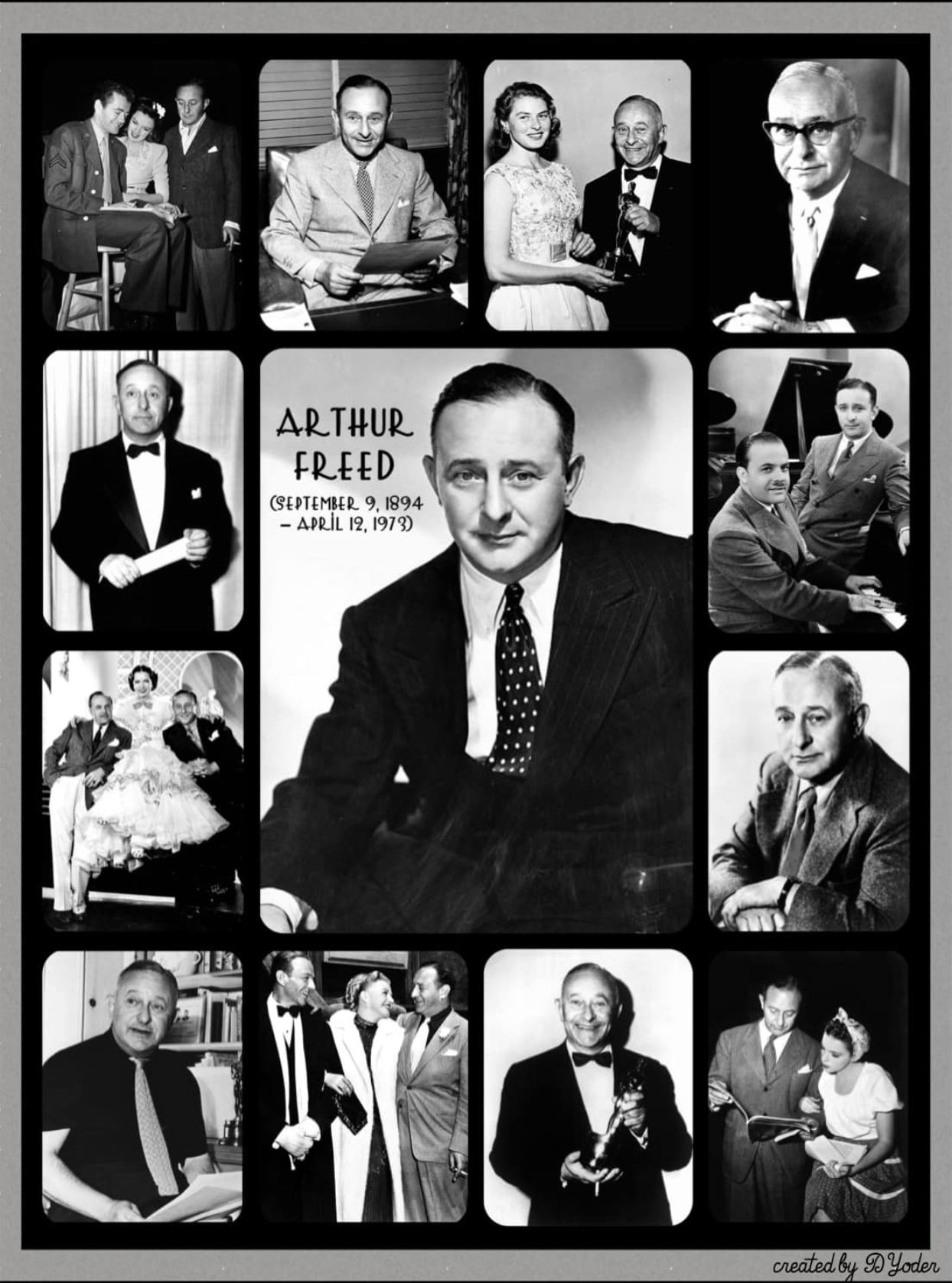
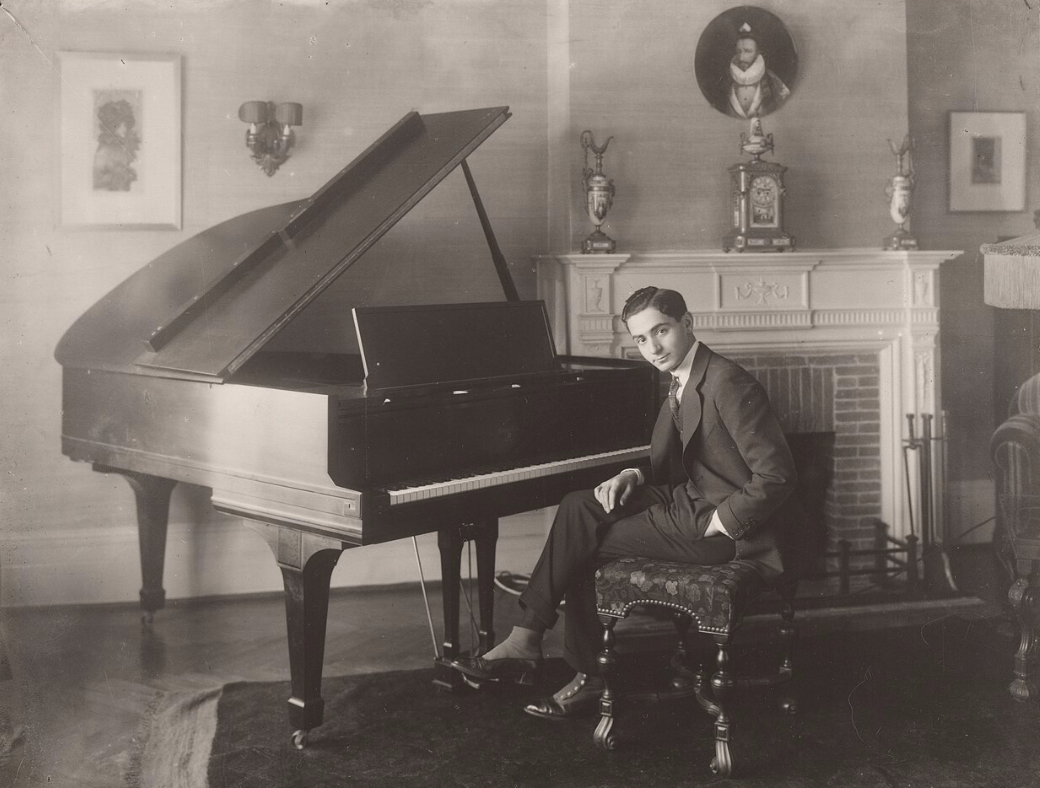
Mr. Warren and Mr. Freed wrote “This Heart Of Mine” for a 1944 Metro-Goldwyn-Mayer (MGM) musical called the ZIEGFELD FOLLIES which starred Fred Astaire.
I think I first heard it sung by Judy Garland, who recorded it the following year for Decca Records.
Arthur Freed also wrote the lyrics for a bunch of other hit songs — such as “Singing In The Rain,” “You Are My Lucky Star,” and “Make ‘Em Laugh.”
I haven’t read any biographies about him (yet) but according to Wikipedia, he lived a fascinating life.
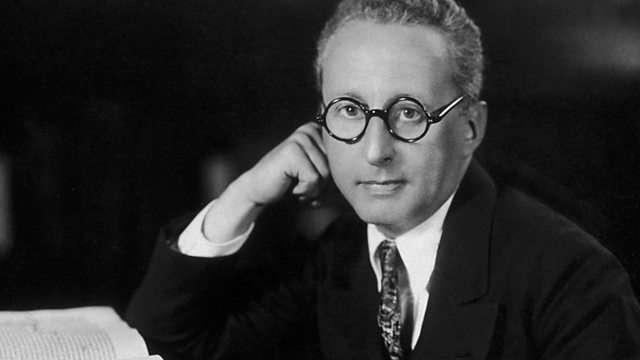
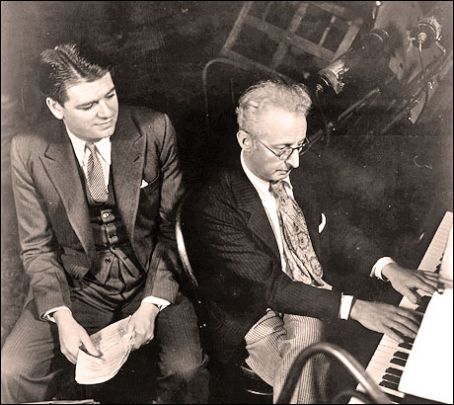
Composite Images of Arthur Freed by Diane Yoder
He was born in South Carolina in 1894, and ended up attending a very prestigious prep school in New Hampshire — Phillips Exeter Academy. I am guessing he was probably one of very few Jewish students on campus — and according to Wikipedia, he became interested in writing poetry there.
After prep school Mr. Freed ended up in Chicago and performed with early versions of the Marx Brothers act (!!!) in vaudeville.
He also wrote special material for them, which led to co-writing enough successful songs that Hollywood beckoned…and he was hired to write songs for early MGM musicals.
After many years at MGM, Freed transitioned from songwriter to producer, working (as an uncredited associate producer ) on THE WIZARD OF OZ and then officially producing his first movie, BABES IN ARMS.
Both of these films, as you probably know, starred Judy Garland.
Mr. Freed went on to produce many more of Garland’s movies including LITTLE NELLIE KELLY, FOR ME AND MY GAL, THE CLOCK, and MEET ME IN ST. LOUIS — which is where she met her second husband, the director Vincente Minnelli, whom Freed had brought from New York City to work at MGM.
According to Wikipedia, Freed hired great talent and then gave them free rein to do their thing — whether it was choreography, costumes, set design, songwriting, direction, etc.
He also gave himself free rein to do some very odd and abusive things, such as exposing his penis to a young Shirley Temple when she came for a visit to discuss doing a movie at MGM — and making sexual advances towards her mother as well.
Temple wrote about this incident in her autobiography — and apparently Mr. Freed experienced no censure as a result of his horrible behavior…
Not the woman in Greek mythology whose wedding gift/jar/box released evil sprits upon the world — along with Elpis aka Hope (“a single blessing to ease mankind’s suffering” according to a Greek mythology website I found online).
And not the jewelry company.
I am a fan of the music streaming company named Pandora.
However, I am also aware that the mythology of Pandora IS quite resonant right now.
Some days it does indeed feel like a bunch of evil spirits are ravaging our neighborhoods, our country, other countries, and our planet.
Thank goodness for Elpis ie: hope!
I had completely forgotten this crucial part of the myth — that the gods give us hope as an antidote/counterbalance to all of the evil spirits released by Pandora.
Deep breath in.
Deep breath out.
According to the Greek mythology website mentioned above, Elpis/hope is often depicted as a young woman carrying flowers — hence the flower images in this post.
And music can inspire a sense of hopefulness in many of us — so maybe Pandora isn’t a horrible name for a music streaming company after all.
Now you may be wondering why I am choosing in this blog post to praise the music streaming company named Pandora?
It is because they have been the most consistent beacon of helpfulness and humanity I have encountered during my five-year foray into the business of streaming music.
Although they are currently part of a larger company, Sirius/XM, their cultural norms of accessibility and friendliness have not (yet) been contaminated/eliminated in a short-sighted quest for increased profit.
I love that all of the Pandora staff members with whom I have interacted are themselves musicians — and many of them use Pandora to share their own music with the world.
I have been told that Pandora listeners are located only in the USA.
But apparently some people around the world are clever enough to use a VPN — a virtual private network which, according to NordVPN “protects your internet connection and privacy online (by creating) an encrypted tunnel for your data.”
If you use a VPN, you can stream music via Pandora from anywhere there is internet service on planet earth (if I am understanding this VPN option correctly).
I think using a VPN also allows for some privacy regarding one’s internet history — which might be wise for more of us to consider using?
Anyways, back to Pandora…
The Pandora staff have created a bunch of free promotional tools which musicians like me can use — such as creating personalized audio messages to share with one’s listeners.
One can also feature a particular song for up to two months at a stretch (six times per year…)
And every month Pandora offers two free training sessions via Zoom, which allow independent musicians to learn how to use their promotional tools and — more importantly — to build relationships with real human beings.
This is the crucial piece that so many companies seem to have completely devalued in recent years.
Many (if not most) of us human beings want to build relationships with the people in our daily lives — whether it’s our mail carrier, or a teller at our local bank, or the staff at our local grocery store, or the folks who run our favorite restaurant, or the doctors/nurses/staff at our local hospital, etc. etc. etc.
Chatbots may save money, but they do not help to build actual human relationships.
And it’s actual human relationships which tend to create a foundation of customer loyalty.
Another deep breath in.
And deep breath out.
As regular readers of my blog are well aware, there is a steep learning curve when one starts releasing music to be streamed via companies like Pandora, Apple Music, YouTube, Spotify, Tidal, Amazon Music, etc.
In addition to recording a song, mixing it and then mastering it, one also needs to get a graphic designed for it, select a company to distribute it (I use CD Baby), register it with the Copyright Office in Washington DC, and then enter it into one’s account at various organizations which collect money for the use of one’s song — including ASCAP, SoundExchange, Songtrust and the Mechanical Licensing Collective.
CD Baby used to have wonderful customer service until it was bought by another company which made a lot of changes…
And now the company which bought CD Baby — Downtown Music — is being sold to Universal Music Group (one of the three largest music conglomerates) after they were given permission from a European tribunal weighing the anti-trust implications of such a purchase.
G-d only knows what changes this purchase will bring into the lives of tens of thousands of independent musicians like me who currently use CD Baby to distribute our music…
Maybe UMG will use some of their enormous clout on our behalf?
Maybe they will improve customer service at CD Baby?
Or maybe they will find new ways to cheat, fleece and otherwise take advantage of us?
Time will tell…
Yet another deep breath in.
And deep breath out.
I can attest to the effectiveness of Pandora’s promotional tools.
My total streams on Pandora recently surpassed 200,000.
So I will continue to use these promotional tools AND will continue to remain grateful for Pandora’s terrific staff.
The song I included at the beginning of this blog post was written for a show called FUNNY FACE which starred Fred Astaire and his older sister Adele in the1920s.
I attempted to release this version, which I recorded with pianist Doug Hammer, last year.
But CD Baby mysteriously messed up the metadata attached to the recording — listing Doug as a primary artist rather than a featured artist — and he asked me to remove it from distribution so that it wouldn’t confuse the fan base (much larger than mine) he has built for his solo piano compositions.
Sadly, I have been unable to get any definitive answer from the customer service staff at CD Baby about how this mistake happened in the first place and whether I’ll ever be able to re-release it with the correct designation (featured artist not primary artist) for Doug.
Thank you to the Gershwin brothers for writing it in the first place.
Thank you to Pixabay for the lovely photos of spring flowers.
And thank YOU for reading and listening to another one of my blog posts.
You are always welcome to visit my website — willsings.com — if you are curious to learn more about my musical life here on planet earth.
I’ve begun a new postcard-writing campaign with a bunch of people in my neighborhood.
We are reminding Wisconsin voters that they have an important Supreme Court election coming up on April 7th.
It’s a small task.
But doing something — anything — to withstand/offset the chaotic cyclone of destruction being unleashed by our current political leadership helps me stay connected to a tiny sense of Elpis/Hope.
If we scratch the surface of almost any cultural artifact — in this case a song written in the late 1920s by Irving Berlin — it is very likely that we will discover layers of herstory/history which have been buried, misplaced, overlooked or otherwise airbrushed out of the picture.
Wikipedia informs me that Irving Berlin wrote his original version of this song in May 1927, and it was first included in a 1930 movie — when “talkies” were an exciting new technology.
“The title derives from an (African-American) slang expression ‘to put on the Ritz’ — meaning to dress very fashionably — (which) was inspired by the opulent Ritz Hotel in London.”
And Mr. Berlin’s first set of lyrics do indeed describe very well-dressed African-Americans strolling on Lenox Avenue in Harlem…
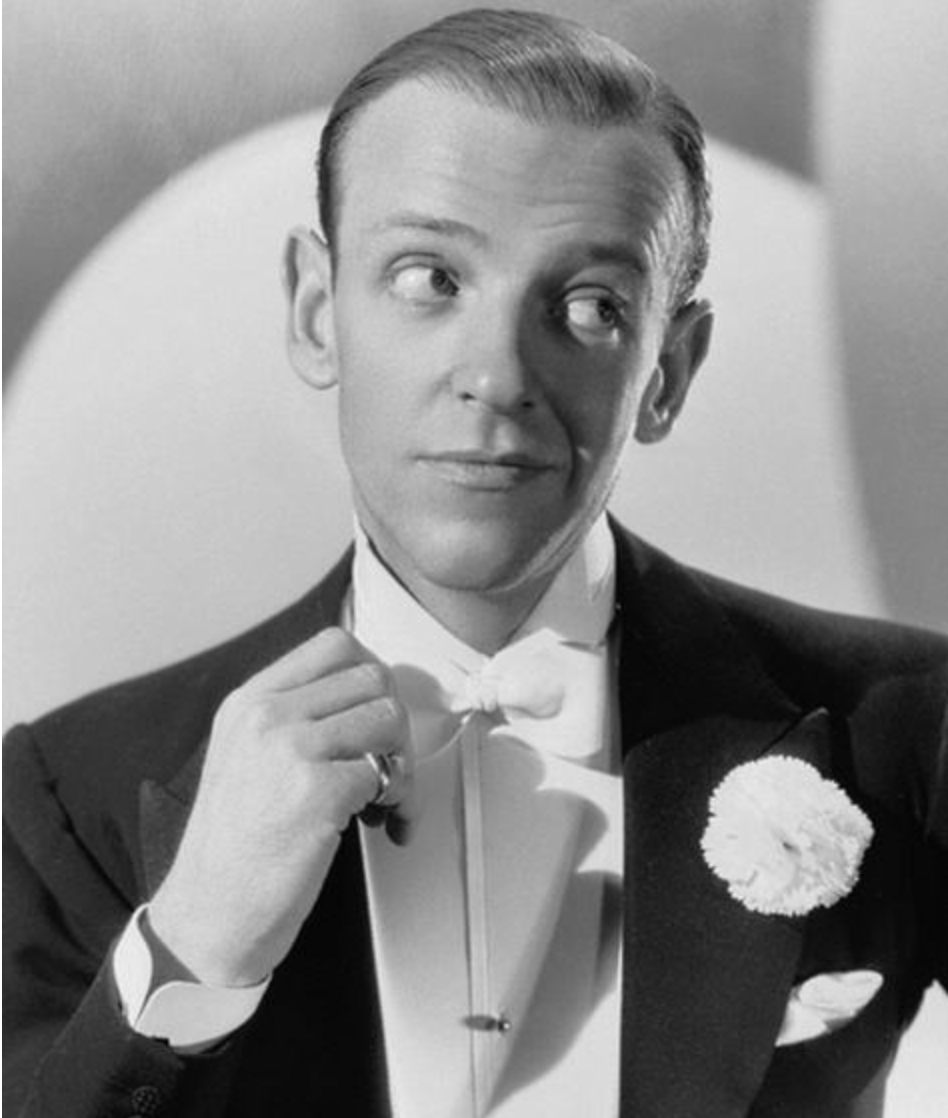
Fred Astaire (Wikimedia Commons)
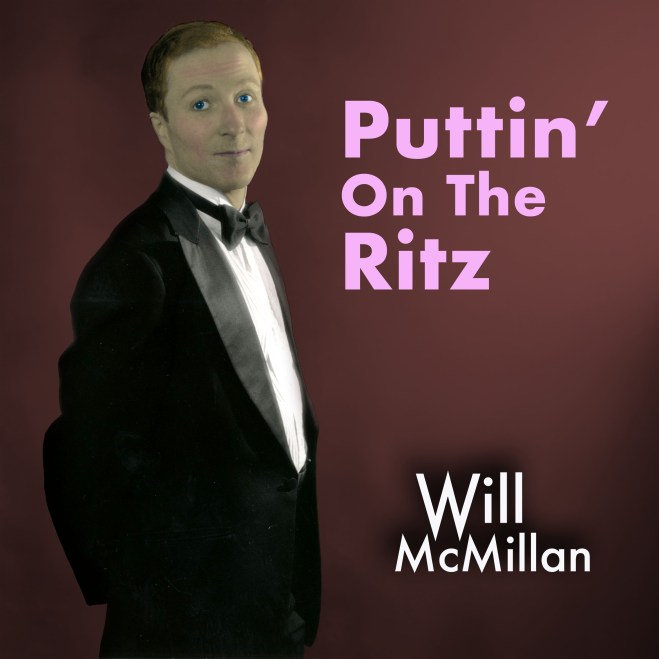
However, when Fred Astaire performed “Puttin’ On The Ritz” in the 1946 movie BLUE SKIES, Mr. Berlin re-wrote the lyrics to become the version which I recorded with Doug Hammer playing his Schimmel grand piano.
“Lenox Avenue” became “Fifth Avenue,” and “Spangled gowns upon the bevy/Of high browns from down the levy — all misfits” become “Different types who wear a day coat/Pants with stripes and cutaway coat — perfect fits.”
This appears to be yet another example of how African-American culture inspires — and then gets appropriated and re-purposed to earn money for non-African-Americans.
Deep breath in.
Deep breath out.
And here I go, continuing this sad cultural practice, by recording my own version with Doug!
We did this when I was creating an hour-long program of songs written for — or made famous by — Fred Astaire.
This version is the second or third take Doug and I recorded — and it’s a great example of how spontaneous and playful our creative process can be when we are both “in the zone” together.
Although there are a few more winter holiday favorites written by Jewish songwriters which I would like to record with Doug, we never got around to doing that in 2025… so I have released “Puttin’ On The Ritz” in December as a nod to upcoming New Year’s Eve festivities…
If you’d like to stream it via Pandora, Apple Music, YouTube, etc, you can click here.
Thank you to all the folks who continue to visit my blog despite the long gaps between new posts.
I just re-read my last one (written right after our most recent national elections).
It’s pretty grim.
Now we all bear witness to how the campaign promises — and threats — do or don’t become reality in the upcoming days, weeks, months and years.
Deep breath in.
Deep breath out.
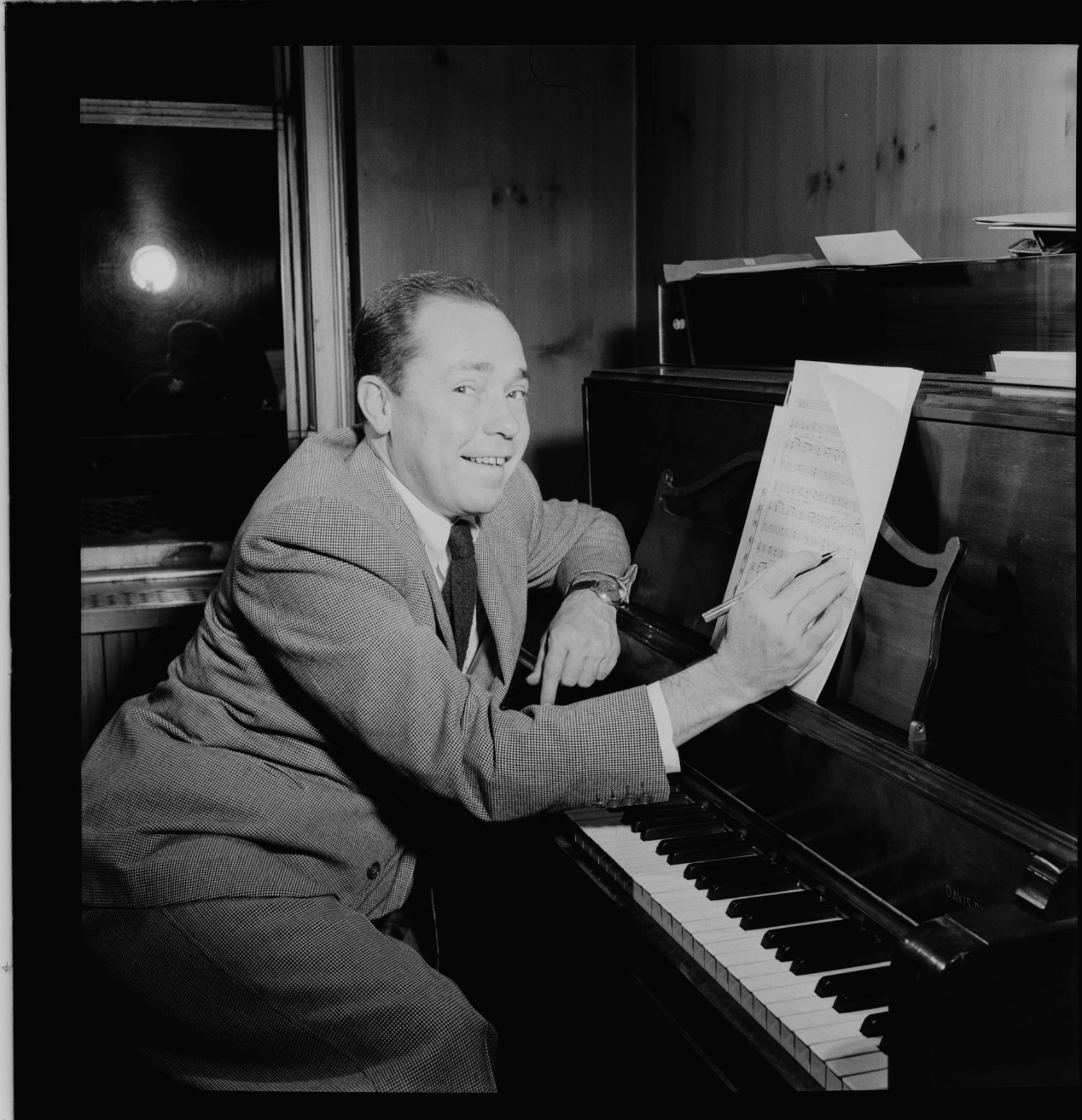
Johnny Mercer by William Gottlieb (late 1940s…)
Today’s blog post aims to be a little lighter in tone and features a song for which Johnny Mercer wrote both the melody and lyrics.
Most of the time, Mr. Mercer wrote the lyrics to other people’s melodies.
For example, he co-created “Skylark” with Hoagy Carmichael, “Come Rain or Come Shine” with Harold Arlen, “Hooray For Hollywood” with Richard Whiting, “Jeepers Creepers” with Harry Warren, and “Moon River” with Henry Mancini.
Other songs he co-wrote include “You Must Have Been A Beautiful Baby,” “In The Cool, Cool, Cool Of The Evening,” “Anyplace I Hang My Hat Is Home,” “One For My Baby (And One More For The Road),” “That Old Black Magic,” “On The Atchison, Topeka And The Santa Fe,” “Too Marvelous For Words,” “Autumn Leaves,” “Blues In The Night,” and “I’m Old Fashioned.”
Mr. Mercer was a Southerner, born on November 18, 1909 in Savannah, Georgia. From the 1930s to the 1960s he co-wrote over a thousand songs — for movies and for Broadway shows — and was nominated for 19 Academy Awards, winning four Oscars for best original song.
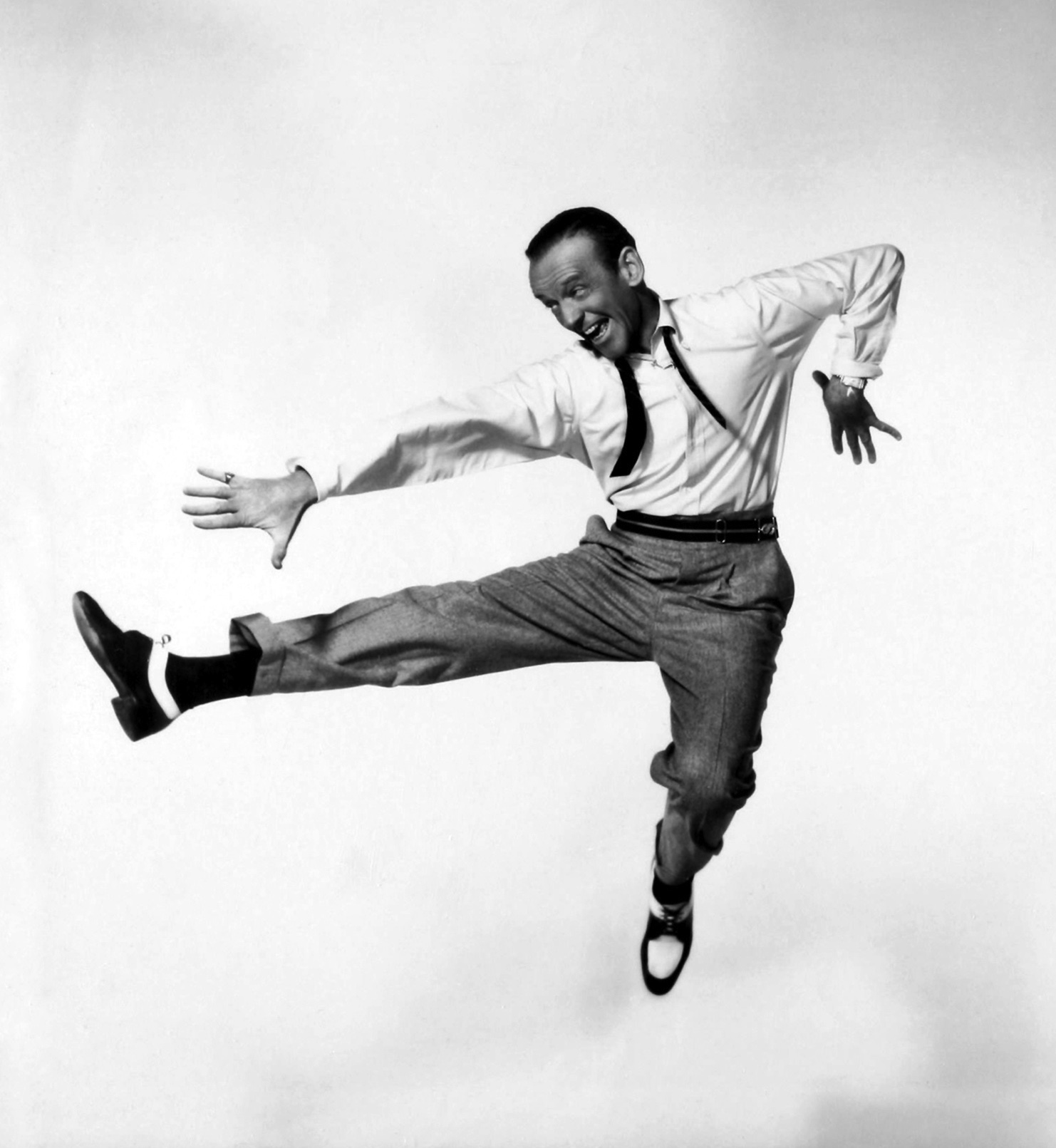
Fred Astaire (Publicity Photo for DADDY LONG LEGS)
And if it wasn’t enough to write or co-write so many great songs, Johnny also had a successful career as a recording artist himself.
And he co-founded Capital Records.
Yowza!
According to some biographers, he could also be a very mean drunk who developed a reputation for sending beautiful — and apologetic — flower arrangements to people whom he’d insulted at parties the previous night.
He wrote “Something’s Gotta Give” in the 1950s for Fred Astaire to sing in a movie called DADDY LONG LEGS which co-starred a very young Leslie Caron as his eventual love interest.
I am not a fan of 50+ year-old leading men romancing much younger women in movies (or in real life for that matter), but this stereotypical, male chauvinist theme shows no sign of being banished from popular culture.
However, DADDY LONG LEGS did give us a very upbeat song with a few lovely turns of phrase — such as “some heavenly star-spangled night…”
And I realized — after I recorded it — that this song also reminds me of the likelihood that many somethings are gonna give in the upcoming days and weeks and months and years here on planet earth.
Blooming Hyacinth
Another deep breath in.
And deep breath out.
I am planning to release a new recording — some originals and some covers — on a monthly basis for the rest of 2025.
And I am hoping to keep my blog posts shorter — and somewhat sweeter — than in previous years.
Here’s a lovely hyacinth bulb, which I bought at our local Trader Joe’s, blooming in my dining room.
I continue to be amazed at how an unpretentious, brownish bulb can — given some water and sunlight — differentiate itself into a vivid green stalk and lavish pink blossoms.
How is it possible?!
It is miraculous — and currently very aromatic!
Yet another deep breath in.
And deep breath out.
I will end with one more recent photograph — this one taken by my older sister of our younger sister’s culinary handiwork at a family gathering earlier this month.
Yum!!!
Eggs Benedict with new asparagus
The eggs were provided by a flock of black Australorp hens whom my sisters take care of on their farm (along with Icelandic sheep, a dog and several cats).
It turns out that chickens are astoundingly attuned to daylight.
As soon as the winter solstice happens each year, egg production by my sisters’ flock begins to rise (having tapered off during the autumn…)
And as soon as the sun starts to go down each day, all of my sisters’ chickens troop back inside their coop and start to roost for the night.
You will probably not be surprised to learn that commercial egg-producing companies (if I am remembering correctly) take advantage of this sensitivity and manipulate the light their hens experience each day to maximize egg production.
One more deep breath in.
And deep breath out.
Thank you for reading and listening to another one of my blog posts.
Thank you to Doug Hammer for his splendid piano accompaniment — on his glorious Schimmel grand piano — and for his expert musical production skills.
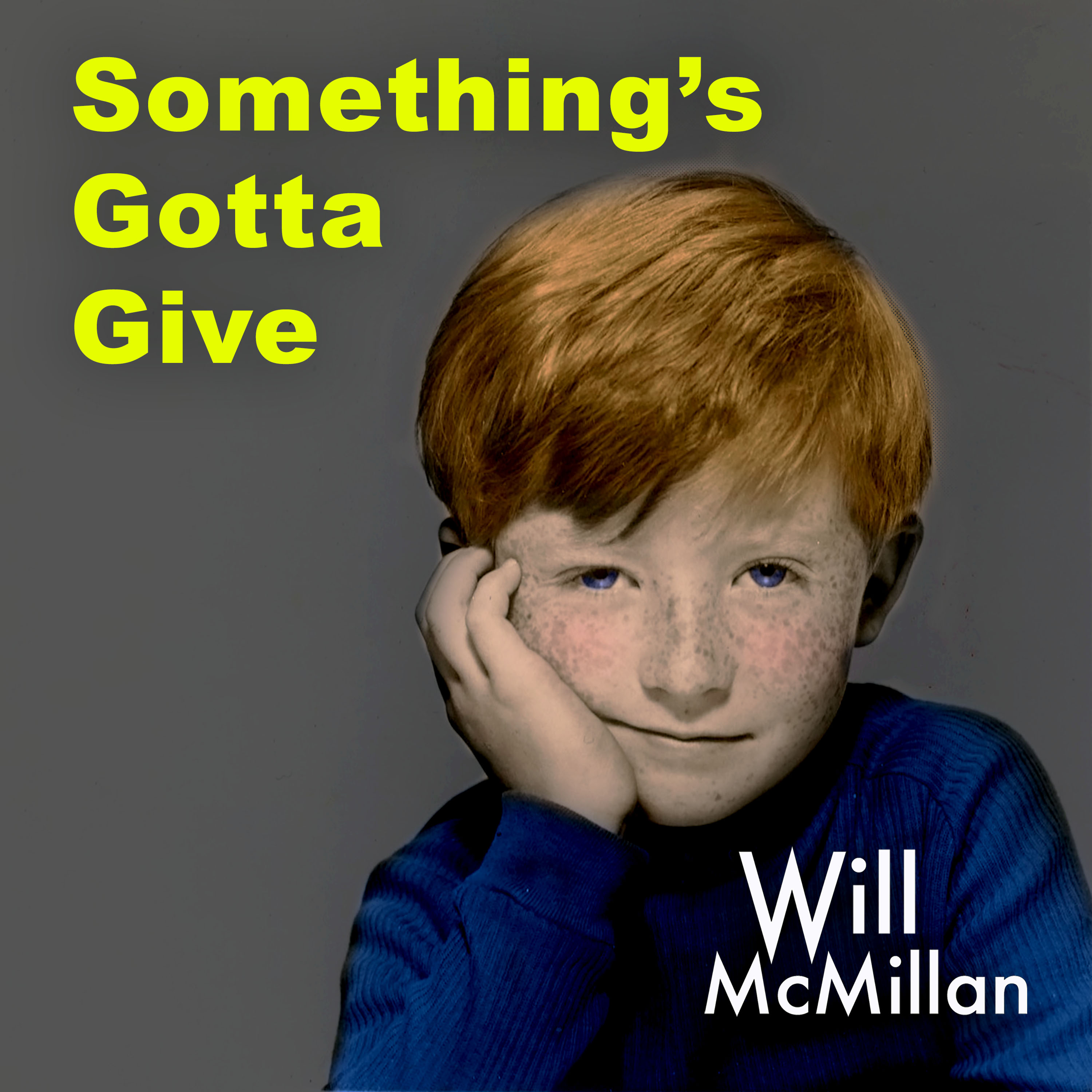
Thank you to Stephen C. Fischer for his graphic design (and to the professional photographer in NYC who took this photo of me many decades ago…)
Thank you to Johnny Mercer for writing this song — and to Fred Astaire for inspiring him to write it.
And thank you to anyone who is moved to stream my recording of “Something’s Gotta Give” on Youtube, Pandora, Spotify, Apple Music, Tidal, Deezer, etc. by clicking here.
Every stream — and especially every thumbs up — helps to improve the likelihood that the mysterious algorithms of these various streaming services will share my music with new listeners!
It was a very worthwhile AND affordable undertaking — only $100 for 25+ hours of instruction which included many opportunities to ask questions and get help.
I came away from the learning experience with many new ideas… and a few reservations.
The first thing I liked about this training course was the opportunity to spend time with a hundred other musicians from around the world who also wanted to learn how to expand THEIR listening audiences.
I felt both reassured and inspired to see that I am not the only musician with challenges, questions, concerns, anxieties, insecurities, ambivalences and dreams.
The man leading the ten-day course was himself a musician who had formed a band with several high school classmates and toured around the USA for several years.
They ended up working with very good producers, recording a bunch of powerful songs, selling tens of thousands of CDS, gaining millions of views on Youtube, and becoming successful without the services of a manager or a record label.
Then he got married (to someone he met as a result of his band’s performances), started having children, and realized that he didn’t want to tour any more.
He wanted to stay home with his burgeoning family.
So he began coaching other musicians on how to increase THEIR musical audiences and advance THEIR careers.
And he appears to be successful doing this as well…
Another deep breath in.
And deep breath out.
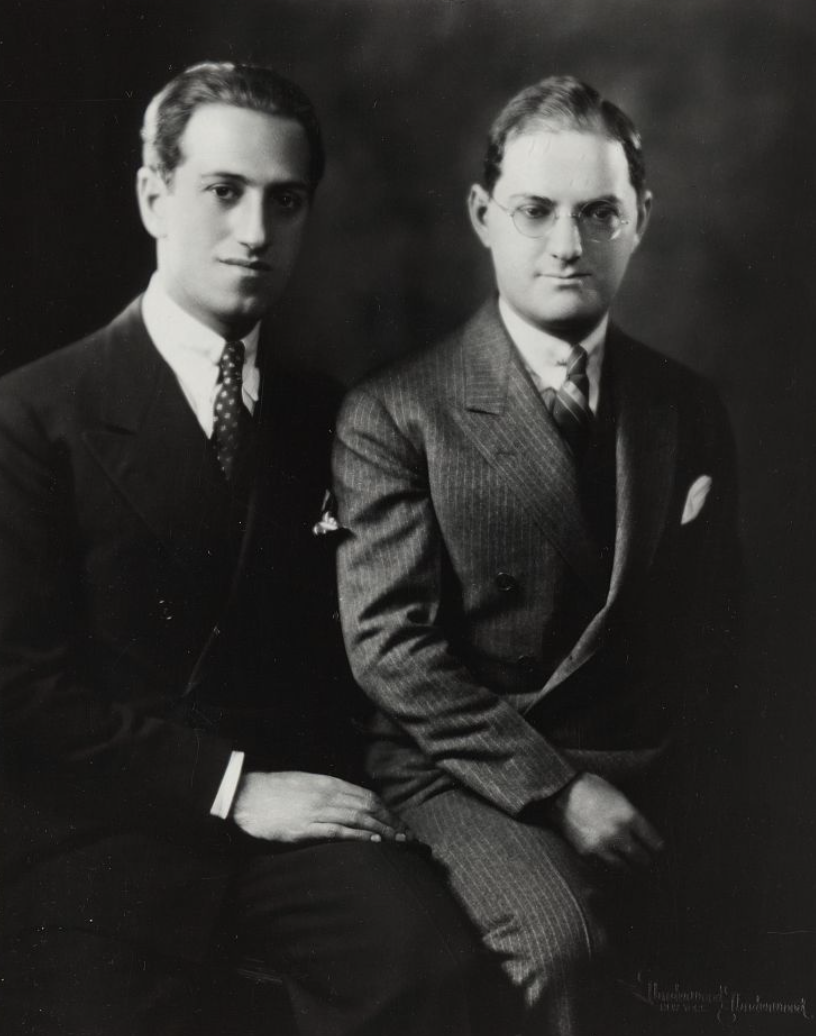
Photo of George and Ira Gershwin from the Library of Congress
This whole process reminded me of a classic song written by the Gershwin Brothers in 1927 — “Nice Work If You Can Get It” — which was one of nine songs Ira and George created for the movie A Damsel In Distress, which starred Fred Astaire, Joan Fontaine, George Burns and Gracie Allen.
It was also one of the last songs George finished before he died — much too young at the age of 38 — in 1937 (as Hitler rose to power in Germany and opened the Buchenwald concentration camp near the city of Weimar…)
All of the the successful Jewish songwriters, performers, directors, producers, designers, movie moguls, etc. were very aware of what was unfolding in Europe in the 1930s…
Jewish composer Kurt Weill — one of the Gershwins’ peers — for example, had fled from Germany to Paris in 1933 and then moved to New York City in 1935.
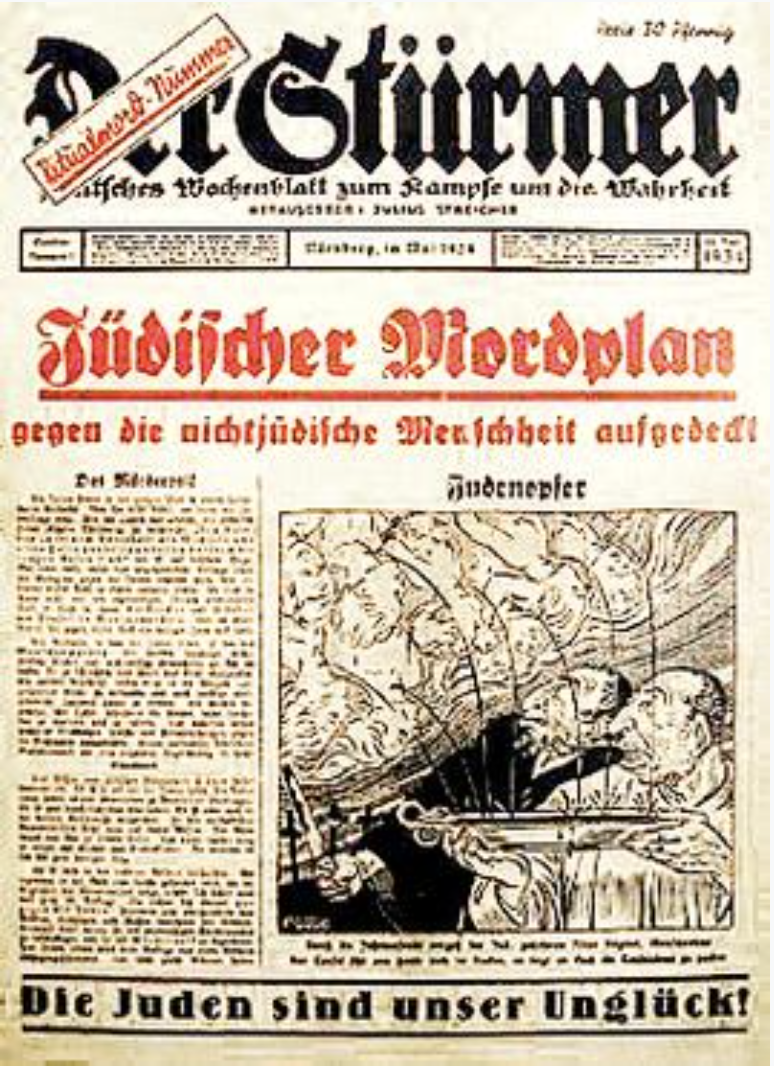
Anti-Jewish German Newspaper courtesy of WIkimedia
I can only imagine how ambivalent the Gershwins, Harold Arlen, Yip Harburg, Irving Berlin, RIchard Rodgers, Larry Hart and their Jewish friends and co-workers must have felt about their extraordinary success in America while Europe was hurtling into war and genocide.
Fred Astaire (whom some biographers claim had partial Jewish ancestry which he chose not to share with the public during his lifetime) was the first person to perform “Nice Work If You Can Get It.”
I wonder if Ira’s lyrics might have been inspired in part by the opulent lifestyle he and his brother and their family were enjoying in Hollywood at the time — living in big houses with swimming pools and tennis courts and huge lawns (perfect for fancy parties under rented tents) — while much of the world was still struggling to dig its way out of the Great Depression.
Life is full of strange historical juxtapositions…
Yet another deep breath in.
And deep breath out.
Let’s return to my recent ten-day course in music marketing.
All of us participants wanted to learn how to share our musical gifts with more people.
And the guy leading the course was showing us how…while simultaneously grooming us to want to sign up for even more coaching.
I became increasingly aware during the ten-day-process that he and his excellent support team were both educating us AND laying the groundwork to pitch us more intensive/expensive coaching opportunities at the end of our time together.
I found myself simultaneously admiring their marketing system AND being somewhat repulsed by it.
The first step involves reaching out to potential new fans using short (20-30 second) videos which one can make using one’s cell phone.
Then for as little as $3 per day one pays Facebook to share these videos with Facebook users who have in some way indicated that they are fans of a particular genre of music (such as reggae, hip hop, pop, rock, R&B, folk, musical theater, etc) and/or a particular recording artist (such as Ella Fitzgerald, The Eurythmics, James Taylor, Coldplay, Earth, Wind & Fire, Rosemary Clooney, Bob Marley, etc.)
Then one begins interacting via FB Messenger with the folks who respond to one’s ads by sharing a link to one’s own songs — and if they like THAT, one continues interacting with them to get a better sense of their musical taste, if they have ever gone to a live concert, if they have ever bought merchandise (such as T-shirts, hoodies, a mug, a poster, a CD, a magnet), if they have ever supported the career of a favorite musical artist with monthly donations, etc.
All of this seems OK and possibly quite exciting — especially if total strangers from around the world respond favorably to one’s marketing outreach and genuinely like one’s music.
On the final day of the training, however, some of the woman musicians started sharing about interactions with new fans which had begun well and then turned into scary stalker situations.
One person in England, in fact, was in the midst of talking with lawyers and protective services while she was simultaneously participating in our ten-day training program.
Argh!!!
The shiny, happy, everyone-can-learn-how-to-increase-one’s-fanbase-using-these-simple-practices vibe of the training sessions became much more nuanced and grounded and real.
Another deep breath in.
And deep breath out.
Having had a few days to reflect upon the training session, I have concluded that sharing authentic interactions with people who like one’s music seems do-able and not-too-morally-bankrupt (although the astounding and somewhat terrifying amount of data that Facebook collects about each one of us in order to be able to sell these specifically-targeted ads is something that deserves much more discussion and regulation…)
However, if one is successful in jumpstarting these authentic conversations with new fans (with whom one is careful not to share too much personal information such as street addresses or phone numbers so that they are less likely to become stalkers…) via FB Messenger and continues to run ads, eventually one becomes unable to keep up with all of these human interactions…
So the next step — not taught in our ten-day workshop but available as a much-more-expensive coaching opportunity — is how to automate one’s responses using chatbot programs.
Would new fans understand that they are interacting with very sophisticated, well-programmed chatbots?
Or would they think they are actually interacting with me?
And does this transform an authentic interaction with another human being into yet another cynical marketing campaign/ploy?
I am currently thinking a lot about this potential developmental step in my career.
And I am also realizing how many of the music industry people whose free videos I have watched on YouTube are using a similar chatbot-powered system to interact with me in a seemingly authentic way when I leave grateful comments on their websites.
Hmmm.
How misled have I felt after realizing that I have been getting auto-generated “thank you” messages from them after giving them my email address?
A little…
And then how disappointed/exploited have I felt when I have started to receive a chatty barrage of pre-programmed email messages from them inviting me to continue to interact with them (and eventually sign up for some sort of in-depth, paid, educational experience they are offering)?
But it doesn’t stop me from continuing to learn from them via their free YouTube videos.
So maybe potential new music fans (who have only interacted with a chatbot version of me) would be remain similarly engaged with my music if they found some authentic value from it?
My final misgiving about this generous ten-day training program was that it never mentioned climate change and the environmental impact of using email and Facebook and Spotify/Pandora/YouTube/Amazon/Apple/Etc to share one’s music with the rest of the world.
The training session existed in a bubble of denial untouched by the increasing reverberations of climate change.
And it was being led by a late twenty-something (or early thirty-something?) father of two small children whom I hope is giving SOME thought to the future on behalf of his daughter and son…
What have your experiences been with marketing to other human beings… and with being the target of marketing by other human beings (and/or their chatbots)?
What are your thoughts and feelings about the environmental impact of our amazing digital communications?
You are always welcome to visit my website, and you can find me singing (with Doug Hammer playing his Schimmel grand piano) on Spotify, Pandora, Apple Musicand other digital music platforms.
It was originally written for a 1931 revue called The Band Wagon — which was notable for being one of the last times that Fred Astaire and his sister Adele performed together on Broadway.
The lyrics feel like an existential poem to me.
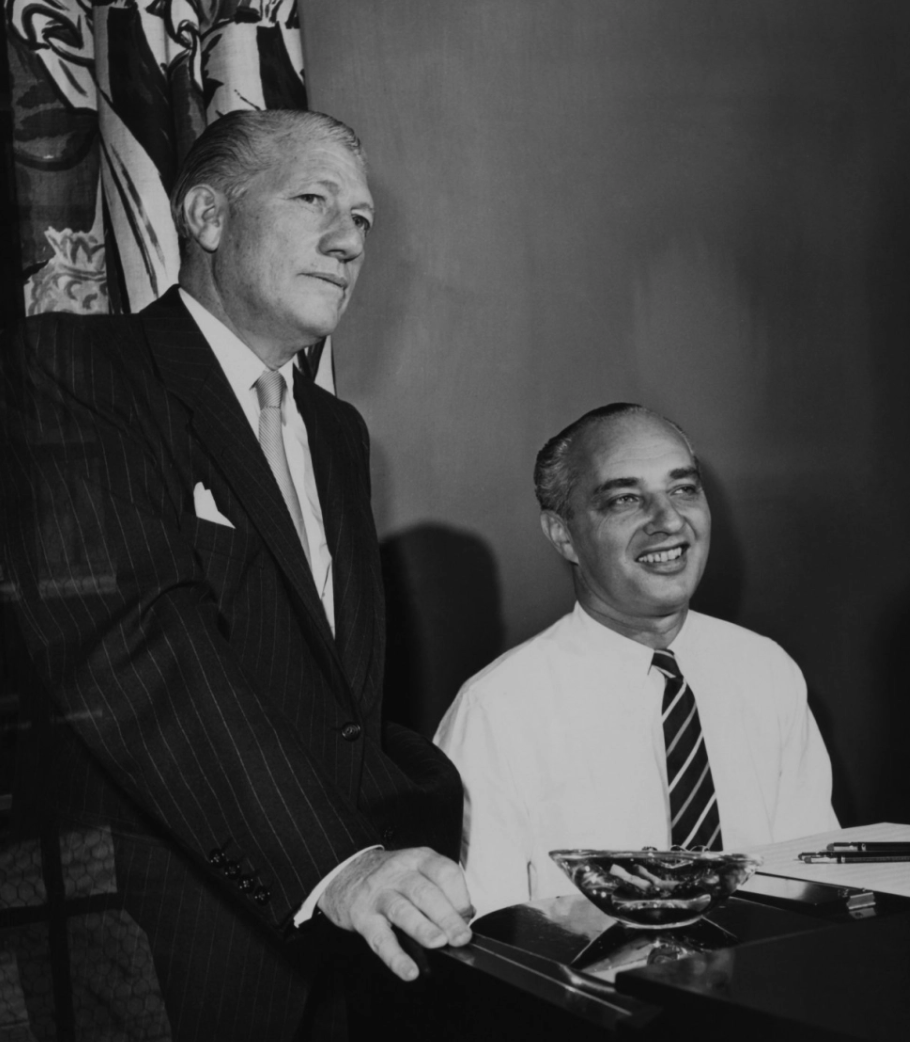
Howard Dietz and Arthur Schwartz
They were written by Howard Dietz — who also co-wrote the script for The Band Wagon with George S. Kaufman — plus music by Arthur Schwartz.
Dietz went on to become the head of public relations at MGM movie studios.
He is reputed to have chosen their lion logo as well as their motto: Ars Gratia Artis (art for art’s sake).
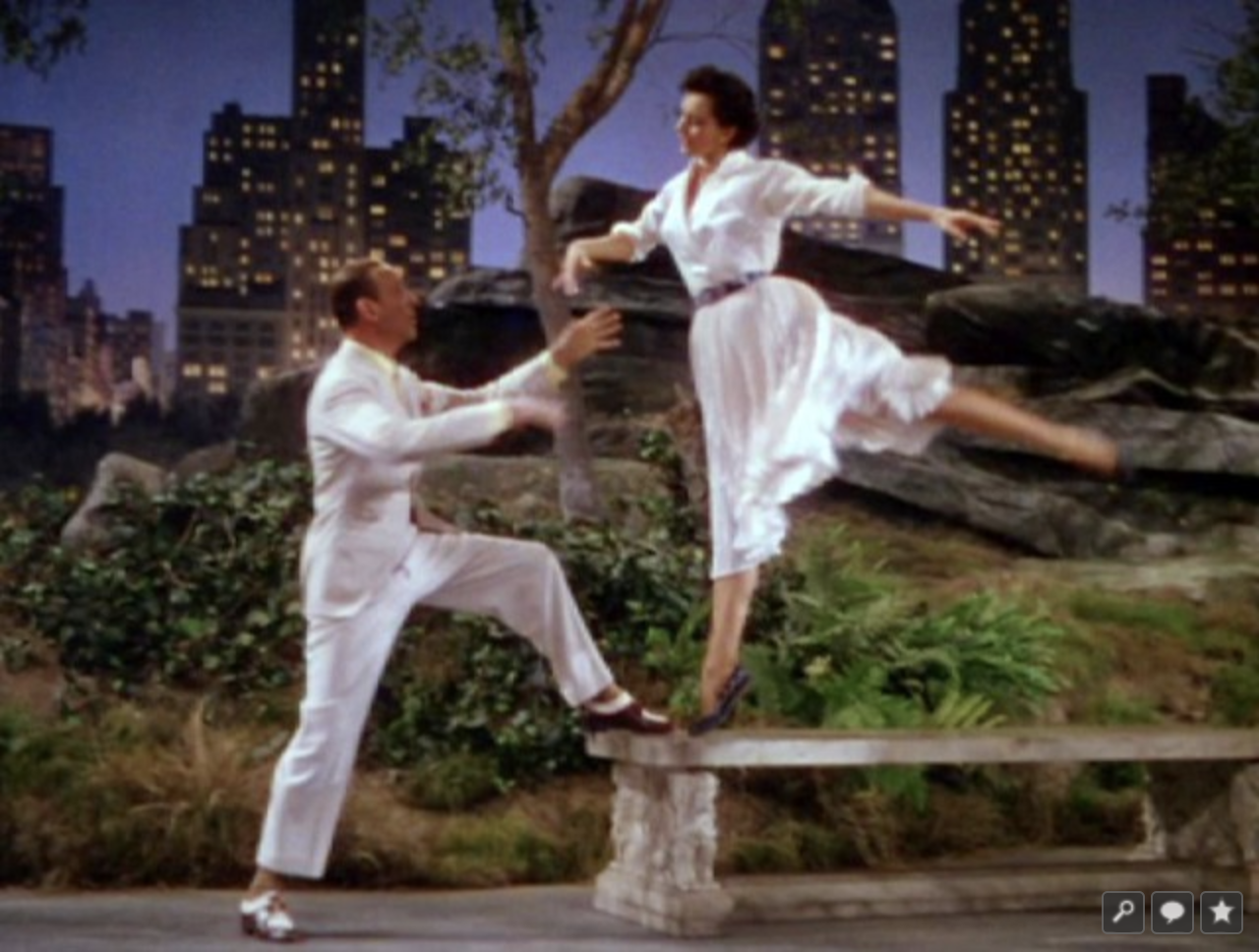
While based in MGM’s New York office, he wrote co-wrote songs for decades with Arthur Schwartz, including “That’s Entertainment” for MGM’s film version of The Band Wagon in 1953 — which again featured Fred Astaire, who performed with Cyd Charisse while…”Dancing In The Dark.”
Fred Astaire and Cyd Charisse
The message of the song seems particularly appropriate in the days leading up to a very important national election here in the USA.
I have been limiting my exposure to radio and TV because most of the news is simply very high-octane speculation.
However, I was happy to learn that early voter turnout is very high.
People are engaged with the political process!
But I am also concerned that gun/ammunition sales are very high (although I have been told this often happens when gun-using folks in the USA fear a Democratic victory which might lead to future firearm regulations…)
The state of our democracy can seem very dark these days — with our president repeatedly saying that he may not honor the results of our upcoming election while simultaneously casting seeds of doubt about the voting process itself.
And he continues to hold large public rallies during a health pandemic — after one of which his ally (and former presidential candidate) Herman Cain died from COVID-19.
All the while hospitals in cities around the United States fill up to capacity…
And nurses, EMTs, and doctors — who are working 12 hour shifts day in and day out to save the lives of their fellow citizens — continue to plead with us to wear our face masks, wash our hands, and maintain our social distancing…
I am truly amazed by our health care workers’ dedication, selflessness, and love for their fellow human beings.
I am amazed that they show up for work — day after day and night after night — while putting their own lives AND the lives of their loved ones at risk for catching this virus.
I am amazed that they treat the folks who deny the threat of Covid-19 and refuse to wear a mask with as much compassion as they treat the folks who wore a mask and still got sick.
What they are doing is astounding.
I don’t have adjectives to describe how I feel about the virus-deniers.
Or at least adjectives that I want to put into print.
I do sometimes wonder if the extreme dysfunction unfolding in our country is a symptom of mother nature getting serious about reducing the number of human beings who now live on (and some might say over-run and infest) planet earth…
Denying the science of how a virus spreads and multiplies — exponentially! — is a form of madness which has already killed hundreds of thousands of people here in the USA…
I see it as being very similar to denying the science of climate change.
One can deny it all one wants…
Yet the scientific processes — such as the fact that a virus can spread exponentially if unchecked and will swiftly overwhelm the staff of your local hospital — will continue to unfold whether one denies the scientific realities or not.
The fact that our earth’s atmosphere is changing due to our human (mis)use of fossil fuels since the start of the industrial era is also undeniable.
In fact I recently saw a reprint of an article from the early 20th century in which scientists described and predicted how our increasing use of fossil fuels would alter the earth’s atmosphere.
Some people have been aware of this challenge for generations!
The fact that climate change is increasing the severity of storms, increasing the frequency of forest fires, and changing the patterns of how ecosystems around the planet do (or don’t) stay in balance is undeniable.
It’s all over the news in the USA.
It’s what hundreds if not thousands of scientists have been warning about for decades.
Will we as a species continue to deny it is happening?
Will we continue to live our lives as if nothing huge and profound is changing?
Continue to drive our SUVs and pickup trucks as many miles as we (or our credit cards) can afford?
Continue to travel as much as our budgets (or credit cards) will allow?
Continue to refuse to put solar arrays on our roofs?
Continue to consume more resources than can be sustainably grown/harvested/produced here on planet earth?
Fundamental patterns and cycles here on planet earth will continue to tip out of balance regardless of what our leaders may or may not be saying.
There are scientific processes and realities at work which can’t be denied or spun or ignored until they go away.
Deep breath in.
Deep breath out.
It is indeed an extraordinary time to be alive…
I hope and trust that we will persevere.
That enough people will wake up to the realities of science.
That enough people will realize that wearing a mask and continuing to practice social distancing is in fact a very loving and respectful thing to do for one’s self, for one’s family, for one’s co-workers, for one’s neighborhood, and for all the folks who risk their lives working at one’s local hospital.
And that we can continue to dance through this period of darkness, keeping a sense of love and light and fairness and respect burning in our hearts as we cast our ballots.
Thank you to Howard Dietz and Arthur Schwartz for writing this song during another very challenging era in our country’s history…
Thank you to pianist Doug Hammer for making music and recording music with me for the past 20+ years AND then for fixing and mixing songs with me from his home studio via Zoom in recent months.
Thank you to all the photographers at Pixabay for these glorious images.
And thank YOU for reading and listening to another one of my blog posts!
I truly treasure our community of WordPress bloggers and readers and commenters…
I am not sure if I would have loved him had I had the opportunity to meet him, but I am very grateful he co-wrote so many wonderful songs.
Jerome David Kern was short and a very snappy dresser.
He loved the color green — including wearing bright green, custom-tailored trousers.
He could be quite critical and bossy — and he did not suffer fools gladly.
He was also very funny with friends.
And he knew bird calls well — and was sometimes melodically inspired by them.
Kern was the composer whom George Gershwin and Harold Arlen — and many other composers of what we now call the Great American Songbook — looked up to and strived to emulate.
He was older than they were, having been born in New York City on January 27, 1885 — the youngest of seven children (four of whom died before the age of six…)
His family moved from apartment to apartment around Manhattan before settling into a house across the river in Newark, New Jersey, which is where Jerry went to high school and where he began writing songs for musical events.
His nickname in high school was “Romie.”
Kern’s first job in the music business was doing accounts payable and accounts receivable for a music publishing company run by the uncle of a friend.
He rose to become a song plugger, eventually earning a shift at Wanamaker’s, which was one of the first — and very grandest — department stores in New York City.
He proved to be a savvy businessman, investing money he received as an inheritance in his early 20s to become a shareholder in the second music publishing company he worked for, TB Harms.
Harms started getting Jerry’s songs interpolated into musical productions.
I learned from reading various Kern biographies that in the early days of musical theater, it was very common for individual songs to be added to a show by another composer.
These interpolated songs could freshen up a show during a long run — and also provided great opportunities for unknown and up-and-coming songwriters.
Harms let him work as a rehearsal pianist for Broadway reviews and shows, which he did on and off for ten years.
Being a rehearsal pianist meant that Kern became well-acquainted with the movers and shakers in the New York theater world — and it also meant he could be on hand to help create a new number if needed.
He also was allowed to accompany singers on short tours, which provided more opportunities to incorporate Harms and/or Kern tunes into their performances as needed.
I was surprised to learn that Kern was very well acquainted with the theater world in London.
Part of the reason Jerry went to London so many times as a young man was to check on TB Harms’ publishing partners in England.
He saw all of the latest shows and schmoozed as many London theater people as possible, pitching his songs for interpolation into London shows as well.
This is when he first met the author, humorist and lyricist P. G. “Plum” Wodehouse, with whom he began collaborating on songs in 1906.
Nine years later — when Wodehouse was living in New York — Kern introduced him to librettist Guy Bolton, who became one of Kern and Wodehouse’s lifelong friends.
Kern and Bolton had worked together on a musical called Nobody Home which was presented at the intimate, 300-seat Princess Theatre. Wodehouse contributed some lyrics to their next Princess musical, Very Good Eddie, and officially joined their creative team for Oh, Boy! — which ran for 463 performances (and according to Wikipedia was one of the first American musicals to have a successful London run).
The three men collaborated upon what became a very successful series of musical comedies — most of them presented at the Princess Theatre — during and after the First World War.
These shows were inspirational to many songwriters and librettists, partly because the songs and dances and script were well integrated to advance the storyline of the show.
And no songs by other writers were arbitrarily interpolated into the plot!
In an interview following the success of Oh, Boy, Kern explained, “It is my opinion that the musical numbers should carry on the action of the play, and should be representative of the personalities of the characters who sing them….Songs must be suited to the action and mood of the play.”
Kern collaborated with a wide variety of lyricists during his long career on Broadway and in Hollywood.
One of my favorite songs, “I’m Old Fashioned” was written with lyricist Johnny Mercer for a 1942 film called You Were Never Lovelier, which paired Fred Astaire with Rita Hayworth.
Partly as a result of a dear friend’s uncle giving me a Kern songbook when I left college, I became aware of Kern’s body of work early in my singing life.
I recorded three Kern songs with jazz pianist and composer Steve Sweeting when Steve lived above an ice cream store in Brighton, MA — “I’m Old Fashioned,” The Way You Look Tonight,” and “Smoke Gets In Your Eyes” — which I have included in this blog post.
Jerome Kern was very successful during the 1910’s and 20’s on Broadway and in London.
In fact one newspaper at the time estimated that he was earning as much as $5000 (which would be the equivalent of $63,000 in 2016) each WEEK from sheet music and ticket sales.
He created what is considered to be his masterwork, Show Boat, in 1927 in collaboration with lyricist/librettist Oscar Hammerstein II and producer Florenz Ziegfeld.
Ziegfeld had made his reputation with huge revues on Broadway filled with beautiful chorus girls, extravagant costumes, and colossal sets.
Thus many people were surprised that he agreed to produce Show Boat — which featured an integrated cast of black and white performers and dove deeply into painful human phenomena including prejudice, gambling and alcoholism (which were not the usual topics for a night’s entertainment on Broadway).
Ziegfeld, in fact, remained very doubtful about the success of Show Boat — postponing the start of production several times.
Although this was very frustrating to Jerry and Oscar, it also gave them extra time to fine-tune their songs and script before casting and rehearsals finally began.
Many of Kern’s Broadway musicals were adapted into movies, including Show Boat — which was filmed three different times — and his 1933 hit Roberta, with a book and lyrics by Otto Harbach.
The Broadway cast included many performers who went on to become stars including Fred MacMurray and Bob Hope — and Roberta also introduced the musical gem “Smoke Gets In Your Eyes.”
Along with many other Broadway songwriters, Kern moved with his family to California during the 1930s.
Although the Great Depression was in full swing, the movie industry was making lots of money.
Mr. Kern wrote “The Way You Look Tonight” with another favorite collaborator — lyricist/librettist Dorothy Fields — for the film Swing Time, where it was introduced by Fred Astaire and Ginger Rodgers, who in this movie was cast as a dance instructor.
“The Way You Look Tonight” won Best Song in a Motion Picture in 1936.
Dorothy Fields later remarked, “The first time Jerry played the melody for me I went out and started to cry. The release absolutely killed me. I couldn’t stop, it was so beautiful.”
In addition to being a composer, Kern was also a collector.
He started collecting books when he first visited London in his early 20s, and ten years later had amassed a collection which — when he auctioned it off in 1929 — earned him almost two million dollars (which would be worth more than $27 million dollars in 2016).
He also collected real estate, antique silver and furniture.
The home he built in Bronxville, NY (north of New York City) was decorated with beautiful paintings, Colonial, Jacobean and Italian furniture, rare vases, lamps with Buddha bases, and books which he had bought during his travels to Europe and around the USA.
And whatever he became curious about, he would soon become an expert in.
As a small example of this, when they were living in Bronxville, Kern and his wife Eva took a trip with their neighbors, Mr. and Mrs. Nathan Newman, to Canada to visit an asbestos plant that Mr. Newman owned.
Jerry asked lots of questions and was particularly concerned about the large amounts of asbestos waste.
After they got home, he did some independent research and wrote a 40-page report — detailing several possible uses for the wasted asbestos — which he gave to his neighbor.
After the huge success of Show Boat in 1927, Kern developed the habit of playing “Old Man River” the last thing before he left his house on a trip and the first thing upon arriving back home.
In fact, during his final trip to New York City from California in 1945 — when he was overseeing yet another revival of Show Boat with Hammerstein and beginning work on a new show with lyricist/librettist Dorothy Fields (produced by Hammerstein and Richard Rodgers) about a sharp-shooting phenomenon named Annie Oakley — he was apparently worried because he had forgotten to play this song before he left his home in California.
Much to everyone’s shock — since he was only 60 years old — Jerome Kern collapsed from a stroke while browsing on the east side of Manhattan.
He died a few days later with his wife and Hammerstein at his hospital bedside.
I would like to end this post with something president Harry Truman said upon hearing Kern had died:
“I am among the grateful millions who have played and listened to the music of Jerome Kern. His melodies will live in our voices and warm our hearts for many years to come.”
Thank you, Jerome Kern, for your wonderful songs — and thank YOU for reading and listening to yet another blog post.