Greetings as summer winds down here in the Northeast United States!
Wherever you are on this amazing planet earth, I hope you are feeling well.
Today’s song was created by a Boston-based singer-songwriter named B. Iris Tanner whom I have known for many years.
Iris alludes to a bunch of standards from the Great American Songbook in her lyrics for “Nevertheless” including:
“Loved Walked In” (by the Gershwin Brothers),
“Old Devil Moon” (by Yip Harburg and Burton Lane),
“My Heart Stood Still” (by Lorenz Hart and Richard Rodgers),
“If I Were A Bell” (by Frank Loesser),
“I’ve Got You Under My Skin” (by Cole Porter),
“Bewitched, Bothered and Bewildered” (by Lorenz Hart and Rochard Rodgers),
“The Nearness Of You” (by Ned Washington and Hoagy Carmichael),
“I’ve Grown Accustomed To Her Face” (by Frederick Loewe and Alan Jay Lerner),
“I Could Write A Book” (by Lorenz Hart and Richard Rodgers), and
“When Irish Eyes are Smiling” (by Ernest Ball, George Graff, and Chauncey Olcott).
It’s quite a list!
And there may be more musical references which I have missed…
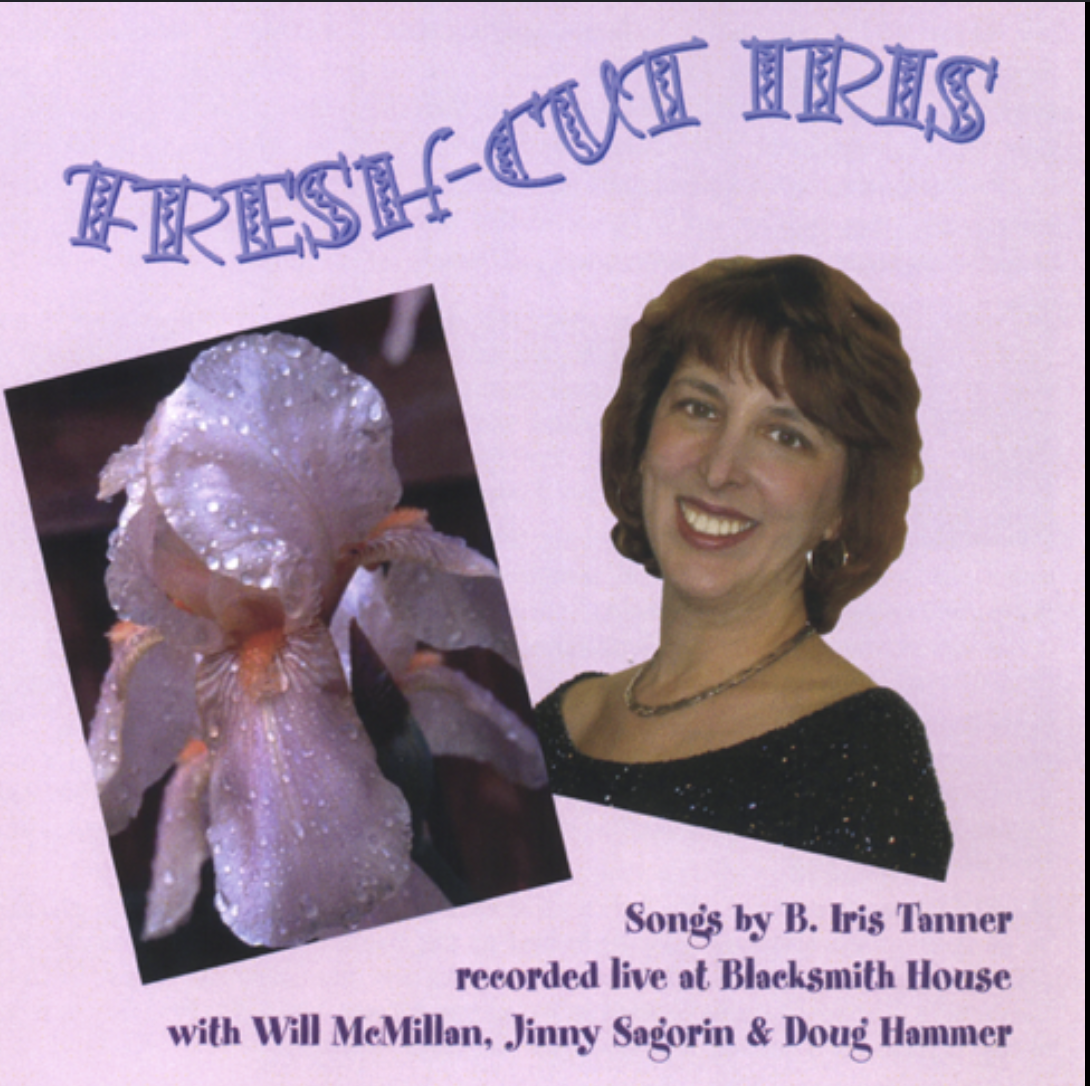
Iris put out a collection of her original songs — FRESH-CUT IRIS — a while back and included a live version of me singing “Nevertheless” (which she recorded at The Cambridge Center for Adult Education when I was working there (and co-hosting monthly open mic nights, too).
The version in the player at the beginning of this blog post, however, is one I recorded with pianist Doug Hammer when I thought I might release a CD of songs written by Boston-area songwriters (of which there are many!)
Then we added drum and percussion tracks by Gene Roma along with a bass track by Chris Rathbun.
This recording has sat — blessedly archived by Doug in zeros and ones — for a couple of decades.
And now it is seeing the light of day.
Hurrah!
Deep breath in.
Deep breath out.
As I wrote in a recent blog post, I am saddened that so many people — including myself — have to keep learning the latest version of everything (as well as updating our hardware and software) in order to use our laptops, our cell phones, the internet, etc.
What a waste of our precious lives here on planet earth!
Thus I am VERY grateful that Doug is willing to stay on top of this endless updating process as it relates to his recording equipment — in addition to remaining a splendid pianist.
Doug owns a bunch of great microphones, various boxes through which he runs audio information, and a powerful Apple computer which is loaded with extraordinary amounts of software.
AND he know how to use all of it quite seamlessly and reliably.
Astounding!
But when it comes to rehearsing, performing and recording music, we also use an actual instrument — his piano.
I love that no one has updated the basic mechanics of an acoustic piano for hundreds of years (although there ARE plenty of electronic keyboards which are continually being updated and “improved”).
I learned from ye olde internet that over three hundred years ago, an Italian harpsichord maker — Bartolomeo Cristofori di Francesco— created a new instrument in which strings were hammered rather than plucked..
This is what became known as a “piano.”
Here’s a link to a short history of the piano written by a fellow WordPress blogger named Viktorya Stepanyan if you are curious.
The mechanisms and construction materials for pianos have been tweaked over time, but generations of pianists have NOT had to re-learn over and over and over again how a piano functions.
The Schimmel grand piano which Doug plays at his studio, the Kawai baby grand piano which Molly plays when we rehearse at her house, and the Ivers & Pond upright piano (made here in Boston) in my living room all work the same way.
Another deep breath in.
And deep breath out.
There IS one change in piano construction, however, which I am glad to note.

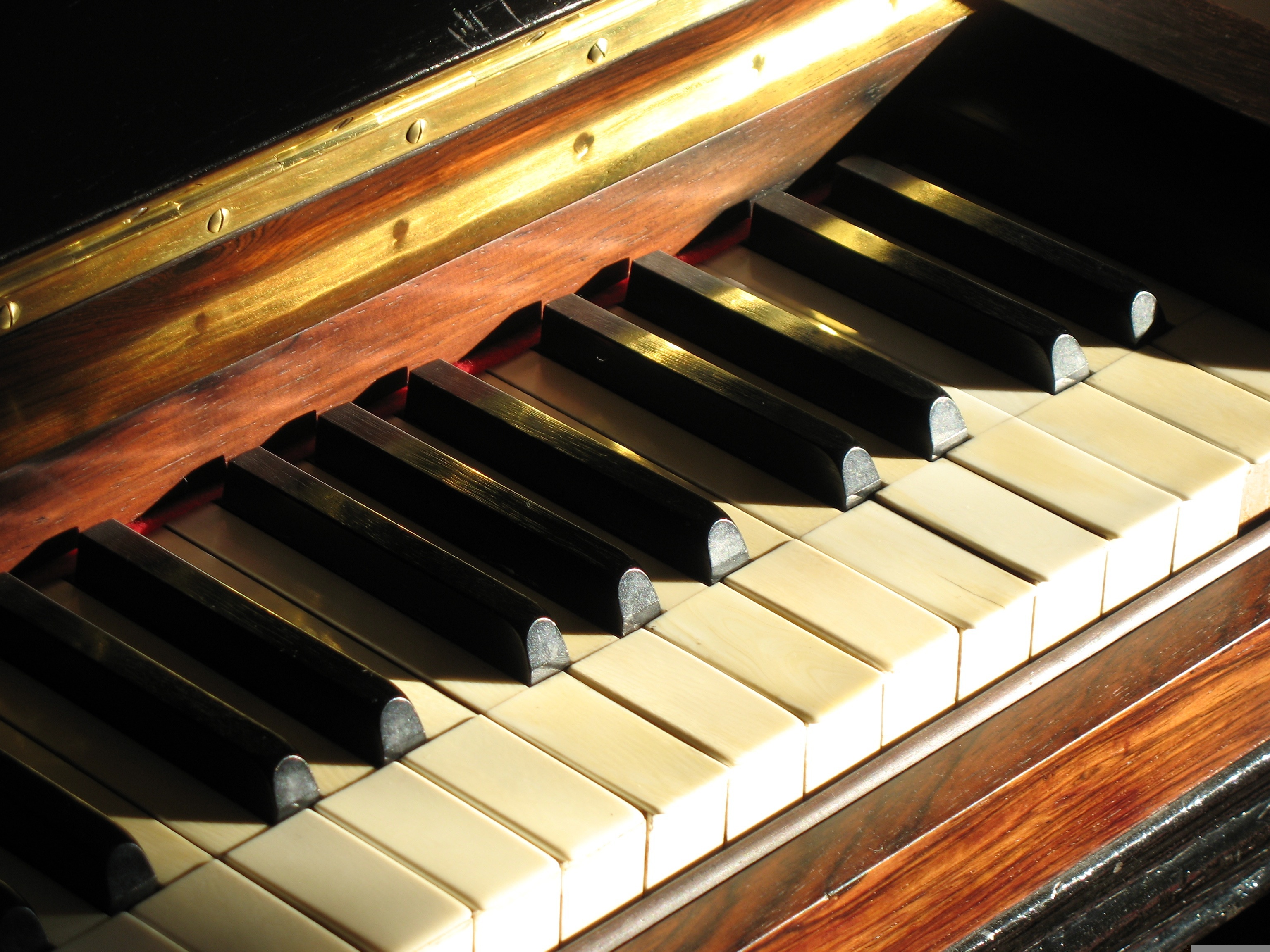
Ivory from elephant tusks is no longer used to make the surface of the white keys — as was done on my hundred-plus-years-old Ivers & Pond piano.
I sometimes pause and try to imagine the former lives (and deaths) of the elephants whose ivory tusks live on as part of my old piano’s keys…
Did they live in Africa?
In India?
In a zoo or circus here in the USA?
A Google search reveals that a LOT of piano-key ivory came from African elephants.
And the reason people liked to kill these huge and heartful beings is that “ivory was highly prized for its durable, slightly porous, and ‘cool’ texture, which helped absorb moisture from a pianist’s fingers” while they were playing.
What a strange and short-sighted species we human are — killing other animals in order to make our own music…
Yet another deep breath in.
And deep breath out.
I am happy to report that no elephants were killed to create the Schimmel grand piano at Doug’s studio or the Kawai baby grand at Molly’s house.

And I am excited — finally — to be sharing Iris’s lovely song with my fellow bloggers, family, friends, and fans.
Thank you to to Iris for writing this song, to Doug for playing (and also mixing) this song, to Stephen C. Fischer for his graphic design skills, to Gene and Chris for adding their musical chops to the mix, and to to the photographers at Pixabay for their lovely images,
And thank YOU for reading and listening to yet another one of my blog posts!
One more deep breath in.
And deep breath out.
PS: You are welcome to click here to stream this new version of “Nevertheless” if you are so inclined.
PPS: And if you are willing to “like” it and/or add it to a playlist, that apparently increases the chances that this recording will be shared with more new listeners.