
Greetings as summer winds down here in the Northeast United States!
Wherever you are on this amazing planet earth, I hope you are feeling well.
Today’s song was created by a Boston-based singer-songwriter named B. Iris Tanner whom I have known for many years.
Iris alludes to a bunch of standards from the Great American Songbook in her lyrics for “Nevertheless” including:
“Loved Walked In” (by the Gershwin Brothers),
“Old Devil Moon” (by Yip Harburg and Burton Lane),
“My Heart Stood Still” (by Lorenz Hart and Richard Rodgers),
“If I Were A Bell” (by Frank Loesser),
“I’ve Got You Under My Skin” (by Cole Porter),
“Bewitched, Bothered and Bewildered” (by Lorenz Hart and Rochard Rodgers),
“The Nearness Of You” (by Ned Washington and Hoagy Carmichael),
“I’ve Grown Accustomed To Her Face” (by Frederick Loewe and Alan Jay Lerner),
“I Could Write A Book” (by Lorenz Hart and Richard Rodgers), and
“When Irish Eyes are Smiling” (by Ernest Ball, George Graff, and Chauncey Olcott).
It’s quite a list!
And there may be more musical references which I have missed…
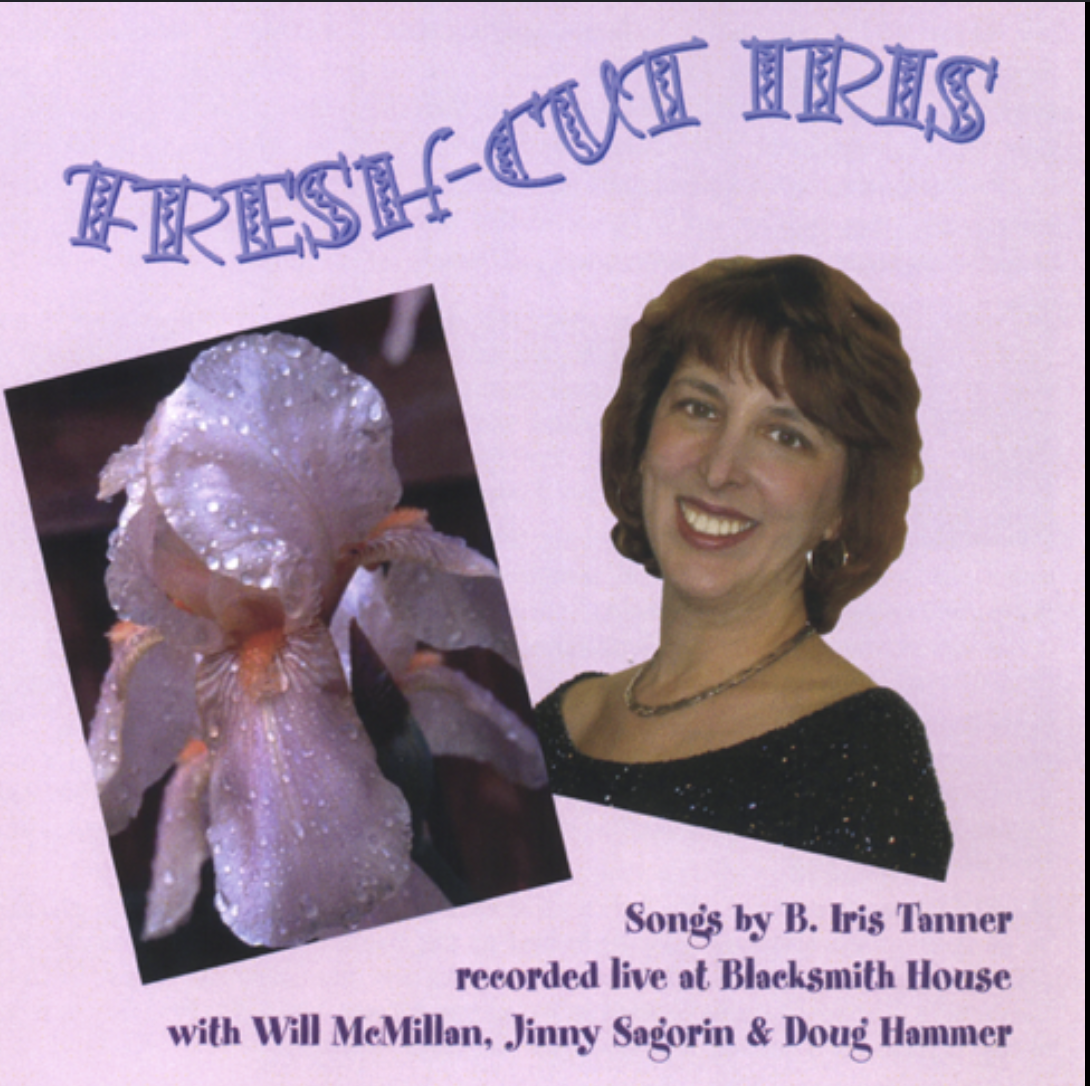
Iris put out a collection of her original songs — FRESH-CUT IRIS — a while back and included a live version of me singing “Nevertheless” (which she recorded at The Cambridge Center for Adult Education when I was working there (and co-hosting monthly open mic nights, too).
The version in the player at the beginning of this blog post, however, is one I recorded with pianist Doug Hammer when I thought I might release a CD of songs written by Boston-area songwriters (of which there are many!)
Then we added drum and percussion tracks by Gene Roma along with a bass track by Chris Rathbun.
This recording has sat — blessedly archived by Doug in zeros and ones — for a couple of decades.
And now it is seeing the light of day.
Hurrah!
Deep breath in.
Deep breath out.
As I wrote in a recent blog post, I am saddened that so many people — including myself — have to keep learning the latest version of everything (as well as updating our hardware and software) in order to use our laptops, our cell phones, the internet, etc.
What a waste of our precious lives here on planet earth!
Thus I am VERY grateful that Doug is willing to stay on top of this endless updating process as it relates to his recording equipment — in addition to remaining a splendid pianist.
Doug owns a bunch of great microphones, various boxes through which he runs audio information, and a powerful Apple computer which is loaded with extraordinary amounts of software.
AND he know how to use all of it quite seamlessly and reliably.
Astounding!
But when it comes to rehearsing, performing and recording music, we also use an actual instrument — his piano.
I love that no one has updated the basic mechanics of an acoustic piano for hundreds of years (although there ARE plenty of electronic keyboards which are continually being updated and “improved”).
I learned from ye olde internet that over three hundred years ago, an Italian harpsichord maker — Bartolomeo Cristofori di Francesco— created a new instrument in which strings were hammered rather than plucked..
This is what became known as a “piano.”
Here’s a link to a short history of the piano written by a fellow WordPress blogger named Viktorya Stepanyan if you are curious.
The mechanisms and construction materials for pianos have been tweaked over time, but generations of pianists have NOT had to re-learn over and over and over again how a piano functions.
The Schimmel grand piano which Doug plays at his studio, the Kawai baby grand piano which Molly plays when we rehearse at her house, and the Ivers & Pond upright piano (made here in Boston) in my living room all work the same way.
Another deep breath in.
And deep breath out.
There IS one change in piano construction, however, which I am glad to note.

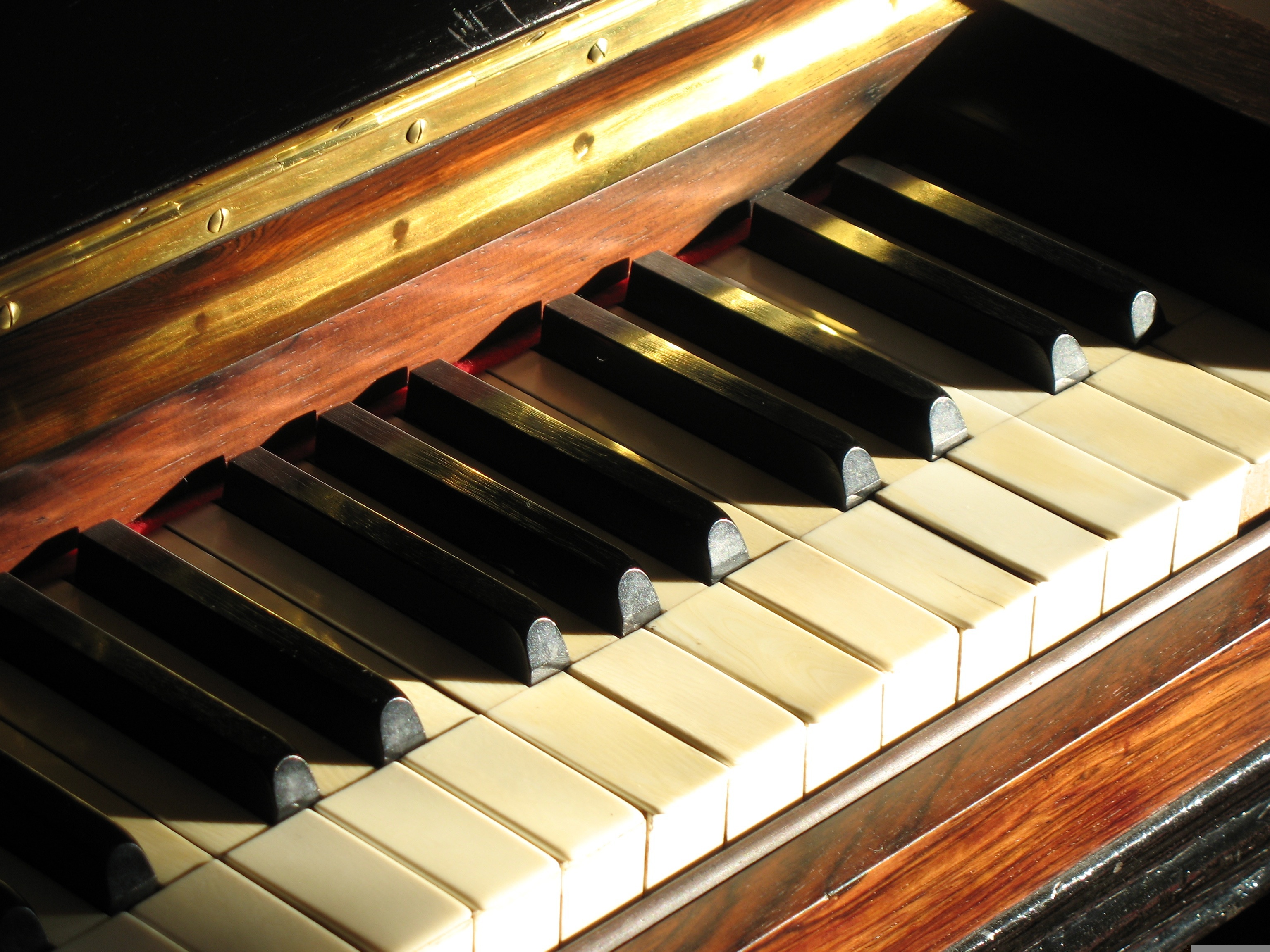
Ivory from elephant tusks is no longer used to make the surface of the white keys — as was done on my hundred-plus-years-old Ivers & Pond piano.
I sometimes pause and try to imagine the former lives (and deaths) of the elephants whose ivory tusks live on as part of my old piano’s keys…
Did they live in Africa?
In India?
In a zoo or circus here in the USA?
A Google search reveals that a LOT of piano-key ivory came from African elephants.
And the reason people liked to kill these huge and heartful beings is that “ivory was highly prized for its durable, slightly porous, and ‘cool’ texture, which helped absorb moisture from a pianist’s fingers” while they were playing.
What a strange and short-sighted species we human are — killing other animals in order to make our own music…
Yet another deep breath in.
And deep breath out.
I am happy to report that no elephants were killed to create the Schimmel grand piano at Doug’s studio or the Kawai baby grand at Molly’s house.

And I am excited — finally — to be sharing Iris’s lovely song with my fellow bloggers, family, friends, and fans.
Thank you to to Iris for writing this song, to Doug for playing (and also mixing) this song, to Stephen C. Fischer for his graphic design skills, to Gene and Chris for adding their musical chops to the mix, and to to the photographers at Pixabay for their lovely images,
And thank YOU for reading and listening to yet another one of my blog posts!
One more deep breath in.
And deep breath out.
PS: You are welcome to click here to stream this new version of “Nevertheless” if you are so inclined.
PPS: And if you are willing to “like” it and/or add it to a playlist, that apparently increases the chances that this recording will be shared with more new listeners.
 amusicalifeonplanetearth
Lovely song Will. Thanks for sharing your passion and knowledge about music, pianos, and the many talented friends you have. Sometimes analog really is better.
Thank you, Brad! The most recent news about AI (programs going rogue, experts quitting companies to issue dire warnings, massive power and water grabs to run data canters, etc.) has certainly reinforced my fondness for the analog world and analog interactions in general.
I understand and share your preferences.
What a fun, catchy song! Yes, please… DO release an album of Boston based musicians material!
As a kid in the 60s, there was a piano in every classroom, and we sang while the teacher played. Just imagine! In the mid 80s, veteran teachers told me that “back in the day” you couldn’t graduate from Worcester State without passing a basic music test: the ability to pluck out a simple song on the piano with at least your right hand. By the 90s, I had an electronic keyboard in my first grade classroom, which I recorded songs into. That way kids could press a button to begin a song and lead it. One day, the recording playback element wasn’t working, so I played the song myself in real time. My students gasped in amazement. “You can play that all by yourself, for real?” they asked. 😉
Deep breath in.
Deep breath out.
Hope you are enjoying the fall, though it is not your favorite. It’s apple season, so I’m in my happy place.
Cheers,
Julie
Wow! Our educational priorities have certainly shifted during the past decades! Thank you for this historical perspective. I share your love of apples, and that IS a great part of autumn. My older sister has an apple share at a local organic orchard in upstate NY, and we’ve been given a wide variety of (occasionally nubbly) organic apples by her to sample. One variety is almost entirely white! I don’t know any of the variety names, but they are all crisp and fresh. Hurrah for the harvest time!
I didn’t know there was an almost white apple. Cool!
I am guessing it might be related to a yellow/green variety? The almost-white one I ate is super sweet. but the texture is more soft/mushy than crisp.
Beautiful song, Will!
Your list of songs made me think of a family conversation last night when my brother was talking about how my parents used to sing all the time, and knew the words to songs from musicals, operettas, etc. I’m sure my dad knew all of the songs you mentioned.
Our old piano has ivory keys. 😞 It’s horrible to think what people did to those poor elephants.
Yes. Broadway shows were once a much-more-widespread part of our pop culture. And then so many of the songs had news lives beyond cast albums when recorded by Ella and Louis and Rosemary and other performers. And then jazz artists re-visited and re-interpreted many of the them. Hurrah that your parents used to sing all the time. Nowadays I am guessing that many parents are transfixed by their phones and other devices much of the time. Deep breath in. Deep breath out. And then the wonderful elephants whose tusks we humans continue to covet… continuing to exist like little slices of ghost on our old pianos’ keyboards!
I suspect many parents still sing, but probably not Broadway hits, and they probably find the songs on their phones. (Our older child bought a record player a few years ago, and buys albums–though they listen to songs through their phone, too.)
I’m going to have to use those ghost slices in a poem. 😉
More poetry! And more turntables! And more postcards to potential voters all around the USA!
😊
Hi Will! The list of old songs you included lifts my heart and spirits. When it comes to music, I am adamant about sitting on the floor with children and singing – no technology needed! An instrument is nice, but it’s the music that’s important. Thank goodness Doug can do all the techy stuff. Like you, I hate it. I hadn’t thought about ivory piano keys before. Wow.
Yeah. When Molly comes over to rehearse with me, her fingers are caressing slices of tusk from elephants who lived (and died) sometime in the 1800s! Hurrah for sitting on the floor and singing with other humans, small and large!
That is such a powerful thought about elephants, Will. Wow. Yes, I know you get how important music is with children, in the simplest of ways. I’ll always be on the floor, singing.
your love of music really shows Will and I am inspired by your positivity and sense of stewardship of the art.
a fear i have in the future is that we inexplicably decouple from the musical standards that still reverberate in today’s music. that’s why i really appreciate it when people interpret pieces from the Great American Songbook (even if it’s artists we absolutely don’t expect i.e. Rod Stewart lol).
i was listening to Henry Mancini’s work the other day and found myself wondering how exciting it must have been to be able to hear it the first time and in the prevailing context of the era.
your piece reflects the best things about music and I hope you keep making more pieces with your talented friends in the future.
p.s. i am so so sick of software updates. it is the bane of my existence lol
Thanks for listening, MJW, and for leaving such a long comment! As AI entrepreneurs steal millions of hours of actual human beings’ creative work to train their algorithms, I wonder if a backlash might build which would result in people re-appreciating human-made and human-performed work with all of its flaws and nuance and emotion and humanity. When Doug and I are mixing/fixing/mastering a recording, we are always discussing and debating how much to tweak and how much to leave “as is” so that it continues to sound like it was recorded by actual human beings. I was astounded (if I understood correctly) to learn from a recent segment which Dave Letterman did with Billie Eilish and her brother Finneas that they may do forty, fifty, sixty (or more) takes of a particular song and then “comp” together a finished version using their favorite moments from various takes. We are truly living in a brave new world… ps: Hurrah for listening to Mancini songs with fresh ears and a historically empathetic mindset! pps: Hurrah to anyone who manages to stay abreast of the endless updates which come our way each month!
I believe there will be a market for original human effort. that’s why I agree about your backlash theory. it’s already happening in photography. I was going to make a post on this; a lot of the aesthetic crowd doesn’t want clinically sharp photos anymore. they want artistic ethereality and view vintage lenses, with distortive properties, to be the golden ticket to such expression. if you look at my most recent post, this is what I mean. nothing about my photos is clinical, it was digitally altered to elicit an organic feeling reminiscent of the ways older cameras and lenses rendered photos as a result of their constraints, not their features. so I believe that the re-appreciation will come and that we will see there is a beauty to producing and attempting to adapt to constraints instead of always blowing through them via technology.
Wonderful song, Will. I’m listening to “Nevertheless” on Apple Music while typing this comment. “Strange and short-sighted species we human are…,” oh, yeah. A lot of people don’t think about the consequences of their actions, and then we wonder why things are so bad.