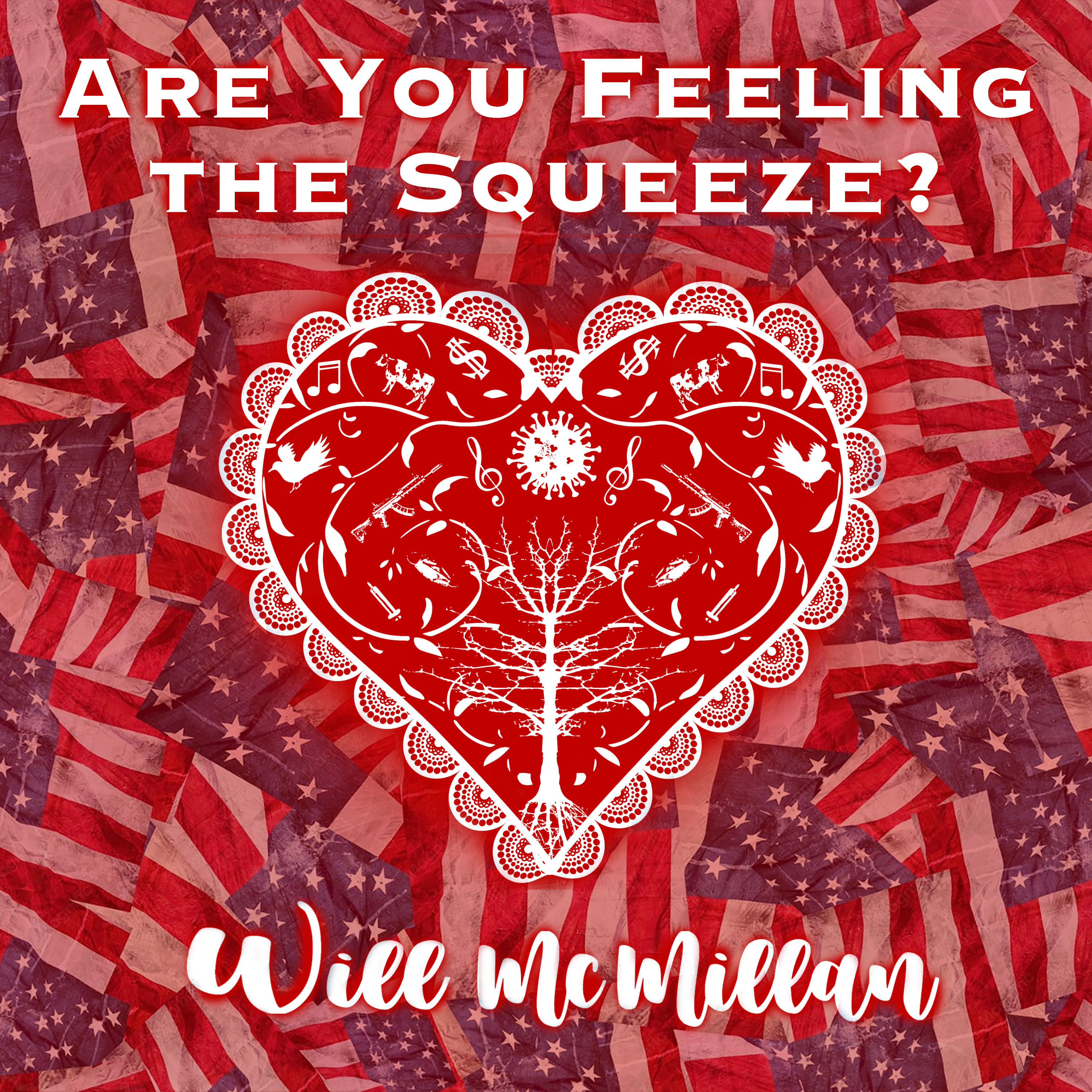
My Sweet Honeydew (A Cappella)

Graphic Design By Stephen C. Fischer

I hope you are well as you read this blog post!

Today I have been inspired by the aphorism “Insanity is doing the same thing over and over again and expecting different results.”

You may have seen it on posters, coffee mugs, etc. — attributed to Albert Einstein.

But according to an online search, there is little evidence that Einstein ever said it.

Instead I learned that a writer — Rita Mae Brown — created this quotation and attributed it to a fictional character in her 1983 book Sudden Death.

Thank you, Ms. Brown!

I think about this aphorism when I am reminded that one is supposed to budget an equal amount of money to market/promote/advertise one’s product as one has spent creating it in the first place.

Yikes!

I have never done this.

Other than maintaining my website, pitching a few songs to music bloggers, and writing this blog, I have spent very little money to promote my music.

However, this particular piece of marketing advice comes up fairly often when I am reading books/articles and watching videos about how to navigate the business of making music in the 21st century.

Now I must pause for a moment for a digression…

Over the past thirty years, I have observed that the music business — like life itself — is always changing and evolving.

So it is virtually impossible to do the same thing over and over again for more than a year or two.

And as a result of personal computers entering our daily lives, we have to keep endlessly learning the latest versions of many different programs/applications — as well as updating our hardware and software.

So as much as I would love to be able to do the same thing over and over again — while drafting new songs using Apple’s GarageBand or making videos using Apple’s iMovie, for example — I am forced to learn the latest updates (and alleged improvements) in order to continue making music.

Deep breath in.

Deep breath out.

This has always seemed to me to be a huge waste of time AND money in order to make a few tech company owners, tech company employees and tech company stockholders rich.

Graphic Design by Stephen C. Fischer

I keep hoping to find a research study which would document the billions of hours which we human beings have wasted in the process of learning — and re-learning…and learning yet again — how to use various computer programs.

I would also like to find studies which explore the cumulative toll on our mental health due to the Sisyphean frustration of having to update and re-learn so many basic tasks/skills on an ongoing basis.

Another deep breath in.

And deep breath out.

So I am happy to report that my friends Molly Ruggles, Ellen Epstein, Michael Cicone and I went in a pre-industrial — and some might even say late-Paleolithic — direction with our most recent song release which we recorded a cappella.

You may remember an earlier version of “My Sweet Honeydew” (recorded with pianist Doug Hammer) which I featured in a blog post from January 8, 2022.

You are welcome to click here and visit — or re-visit — that blog post if you are so inclined.

A couple of years ago singer/songwriter/pianist Molly Ruggles took my original version, added an entirely new section of music + lyrics, and then arranged it for four voices to perform a cappella.

Our new version is in the player at the beginning of this blog post.

You may recognize Molly as a vital part of my trio recordings with Carole Bundy.

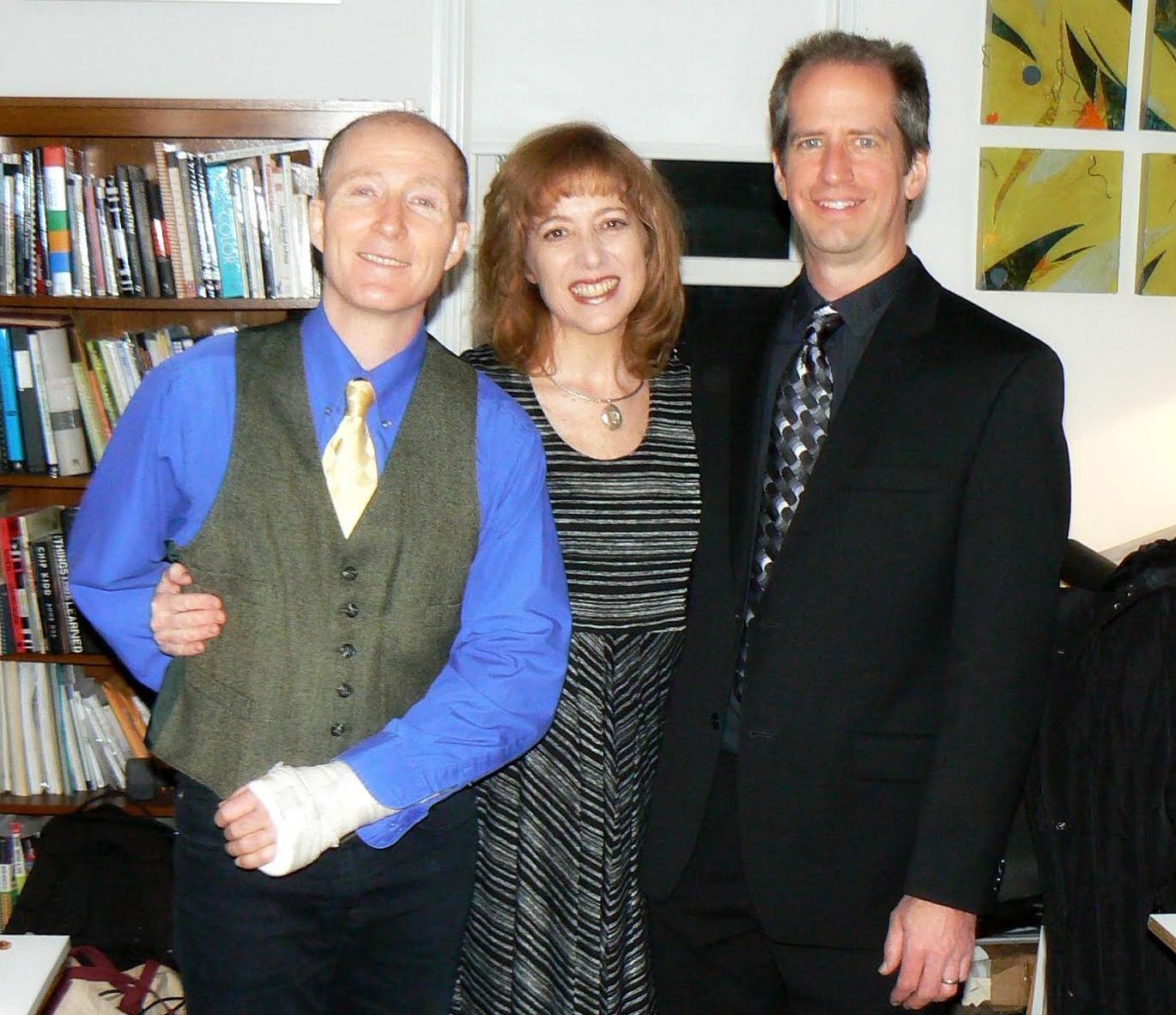
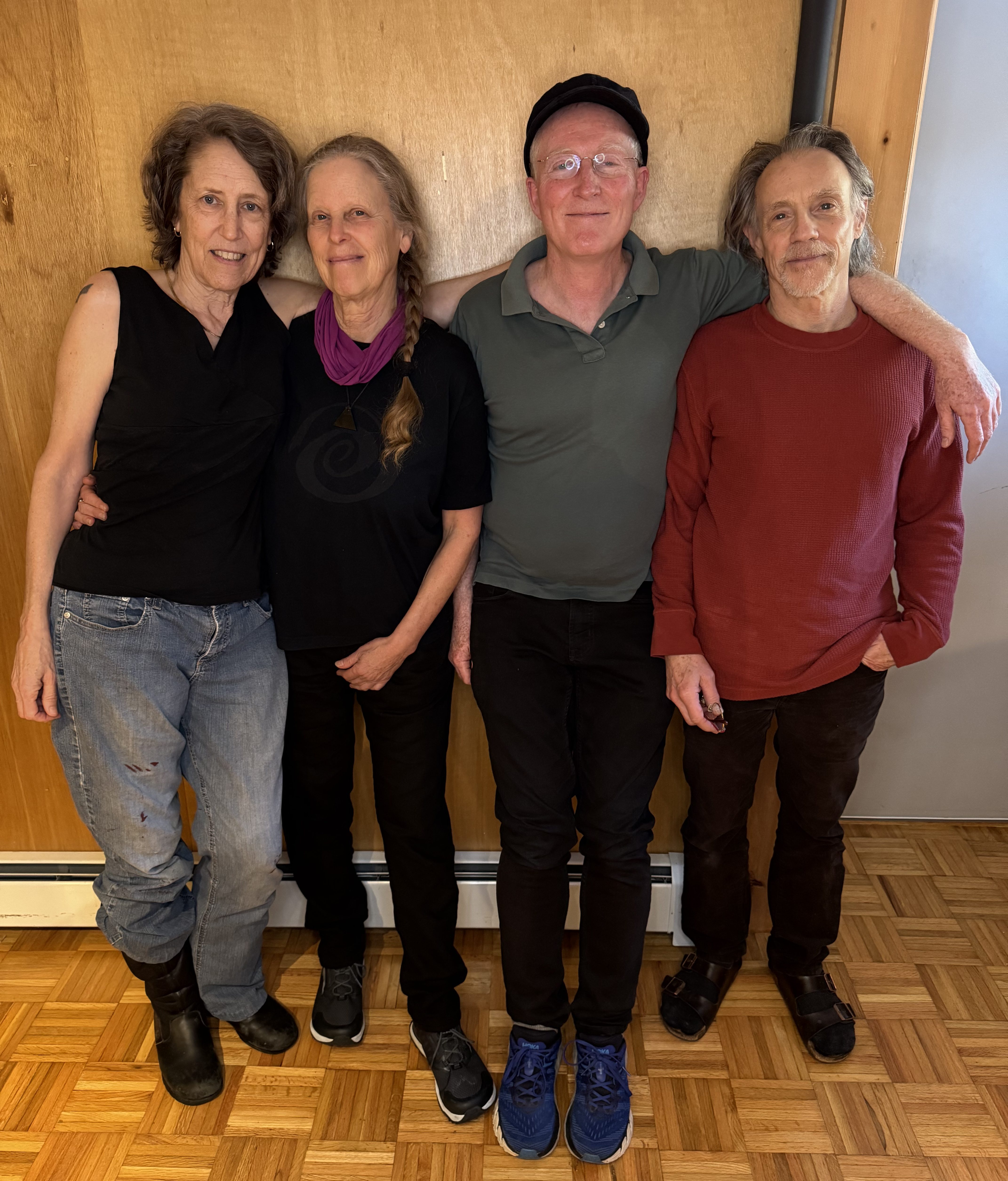
Molly, Ellen, Will & Michael (Photo by Doug Hammer)

I have known the other two singers on this recording — Ellen and Michael — for decades.

If you are a fan of contemporary folk music, you may be familiar with them as part of a musical trio with singer/songwriter/guitarist Cindy Kallet for forty-five years.

Ellen and Michael have released three beloved CDs of music with Cindy as well as appearing on many of her solo recording projects.

So I feel very honored and excited that they agreed to be part of this recording!

Now I will circle back to the aphorism that “Insanity is doing the same thing over and over again and expecting different results.”

Molly and I are doing something new with this recording.

We have hired a fellow singer-songwriter, Erik Balkey, to help us promote it to folk radio programs/stations around the USA.

Erik puts together compilation CDs of new recordings every two months and sends them to a couple hundred folk DJs and program directors.

We were surprised — and pleased — to learn that he chose “My Sweet Honeydew (A Cappella)” to lead off the second CD in his July/August promotional compilation.

If you happen to listen to a folk program in your neighborhood — or maybe far away from your neighborhood via an internet radio station — please let me know.

Then I will check and see if Erik sent his July/August promotional CDs — including “My Sweet Honeydew (A Cappella)” — to your favorite station/program.

It will be interesting to see what does — or doesn’t — unfold regarding airplay for our song this summer…

Another deep breath in.

And deep breath out.

Thank you to Erik Balkey for his radio outreach.

Thank you to Doug Hammer for his collaborative production skills (and spontaneous photographic impulses).

Image by congerdesign from Pixabay

Thank you to Stephen C. Fischer for his graphic design gifts.

Thank you to Molly Ruggles for creating this new version of my song.

Thank you to Molly and Michael and Ellen for learning, performing and then recording it.

And thank YOU for reading and listening to yet another blog post from/by me.

One final deep breath in.

And deep breath out.

P.S. You are welcome to stream “My Sweet Honeydew (A Cappella) on your favorite digital music platform by clicking here.

Throwback Thursday #11

Image by Hans from Pixabay

One of the pleasures of doing a Throwback Thursday blog post — as you may well know — is rediscovering something one once wrote (which one may have completely forgotten!)

In the case of this Throwback Thursday, I also rediscovered a song by Stephen Sondheim called “Everybody Says Don’t” which I had forgotten I’d recorded.

You can click here to check it out if you are curious.

A new biography of Mr. Sondheim came out earlier this year which my sister gave me for my birthday.

I just finished reading it and — not surprisingly — come away with renewed respect and gratitude for the wealth of songs and shows he helped to create over the course of a 50+ year career…

If you are not very familiar with his work, he wrote the lyrics for two blockbuster Broadway favorites — WEST SIDE STORY and GYPSY.

But what he really wanted to do is create both music and lyrics — which is what he finally got to do with A FUNNY THING HAPPENED ON THE WAY TO THE FORUM, A LITTLE NIGHT MUSIC, COMPANY, SWEENEY TODD, INTO THE WOODS, ASSASSINS, PASSION and other shows.

Image by Christiane from Pixabay

Mr. Sondheim experienced a few flops along the way, including ANYONE CAN WHISTLE and MERRILY WE ROLL ALONG.

But he continued to work on the latter show for decades until he (and various collaborators) finally arrived at a version which was one of the hottest tickets on Broadway — starring, among other talented human beings, Daniel Radcliffe (the original Harry Potter) — during 2023-2024.

A version of this production was filmed and can be watched via various streaming platforms.

And I learned from Wikipedia that Richard Linklater is filming his own version of it over many years (as he has done with other creative projects). Sounds like we may have to wait for a decade or more to see THAT version…

Mr. Sondheim did not have many of his songs become big pop hits, although Judy Collins recorded a lovely version of “Send In The Clowns” from A LITTLE NIGHT MUSIC.

He crafted his songs to advance the plot of each show and often wrote them for particular actors to perform.

This specificity may have made it more challenging for pop musicians like Frank Sinatra or Barbra Streisand to pluck one of this songs out of the context of a particular show to become a more generic pop hit — although Ms. Streisand DID include many of his compositions in her two albums devoted specifically to Broadway songs.

Image by Couleur from Pixabay

And Mr. Sondheim, bless him, did agree to write additional lyrics for Ms. Streisand’s version of “Send In The Clowns” so that it made more sense for her to sing it (out of the context of the original show).

I think I may have featured photos of hydrangeas in a previous blog post, but they are what is blooming right now in my neighborhood as summer officially gets underway in the Greater Boston area…

And I LOVE them.

Happy summer to any and all readers in the northern hemisphere of planet earth!

Throwback Thursday #10

Image by Kanenori from Pixabay

Thank you to anyone and everyone who has been visiting my blog.

As I have written in the past, I am amazed to check my stats and see that people continue to show up — even though I post somewhat infrequently.

Maybe that’s part of the power/magic of having 13 years worth of previous blog posts?

Today’s Throwback Thursday re-visits a blog post I published on March 15, 2014.

It focuses on music — and includes a recording of the Burt Bacharach/Hal David classic, “Alfie.”

You can click here to access it if you are curious.

Pianist/singer/arranger/songwriter Molly Ruggles and I performed “Alfie” recently at an assisted living community in Milford, MA, as part of an hour-long program of songs composed by Burt Bacharach.

Some of the folks in their memory care unit joined us, and one woman in a wheelchair appeared to be particularly zoned out when she was wheeled to her spot in the audience.

Then the music began… and she started to sing-along.

Image by Frauke Riether from Pixabay

She was able to remember the lyrics to a bunch of Bacharach/David hits, including “Walk On By,” “Close To You.” and “Raindrops Keep Falling On My Head.”

Music has many mysterious powers!

A quick search on Google tells me that “listening to or playing music is a full-brain experience that engages nearly every region, creating a ‘total brain workout’. It activates a widespread network involving auditory, emotional, motor, and memory systems simultaneously, often synchronizing these areas to enhance cognitive function.

  • Auditory Cortex (Temporal Lobes): Processes sound, rhythm, and melody, converting sound waves into electrical signals.
  • Limbic System (Emotion & Memory): The amygdala (emotion) and hippocampus (memory) respond to music, explaining why specific songs trigger vivid memories or emotional responses.
  • Motor System (Movement): The cerebellum and motor cortex are activated, controlling involuntary tapping or dancing to the rhythm.
  • Prefrontal Cortex (Focus & Planning): Involved in planning, attention, and interpreting musical structure.
  • Neurotransmitter Release: Music boosts dopamine (pleasure/motivation) and serotonin, while lowering cortisol (stress).
Image by Anke Sundermeier from Pixabay

And here’s a link to an article which elaborates on some of these phenomena — featuring a lovely pediatrician and musician named Patrick Whelan who was a member of the same a cappella singing group I joined in college — the Harvard Din & Tonics.

Thank you to the generous and talented photographers at Pixabay.

Thank you to the folks researching how music affects us.

And thank YOU for reading another one of my blog posts!

This Heart Of Mine…

Image by xiSerge from Pixabay

Thank you to everyone who continues to explore my blog even though I have not been posting a lot lately.

It is very exciting — and satisfying — to check my stats and see the many different blog posts people have visited during the past week.

One blog post which gets a surprising (to me) amount of traffic is about the composer Harry Warren.

He wrote the music for the song in the player at the beginning of this blog post along with lyricist Arthur Freed.

You can click here if you are curious to learn more about Harry Warren by reading my extremely loooong blog post from eight years ago (which also includes recordings of several of his hit songs).

Mr. Warren and Mr. Freed wrote “This Heart Of Mine” for a 1944 Metro-Goldwyn-Mayer (MGM) musical called the ZIEGFELD FOLLIES which starred Fred Astaire.

I think I first heard it sung by Judy Garland, who recorded it the following year for Decca Records.

Arthur Freed also wrote the lyrics for a bunch of other hit songs — such as “Singing In The Rain,” “You Are My Lucky Star,” and “Make ‘Em Laugh.”

You can click here to check out his Wikipedia page if you are curious to learn more about him.

I haven’t read any biographies about him (yet) but according to Wikipedia, he lived a fascinating life.

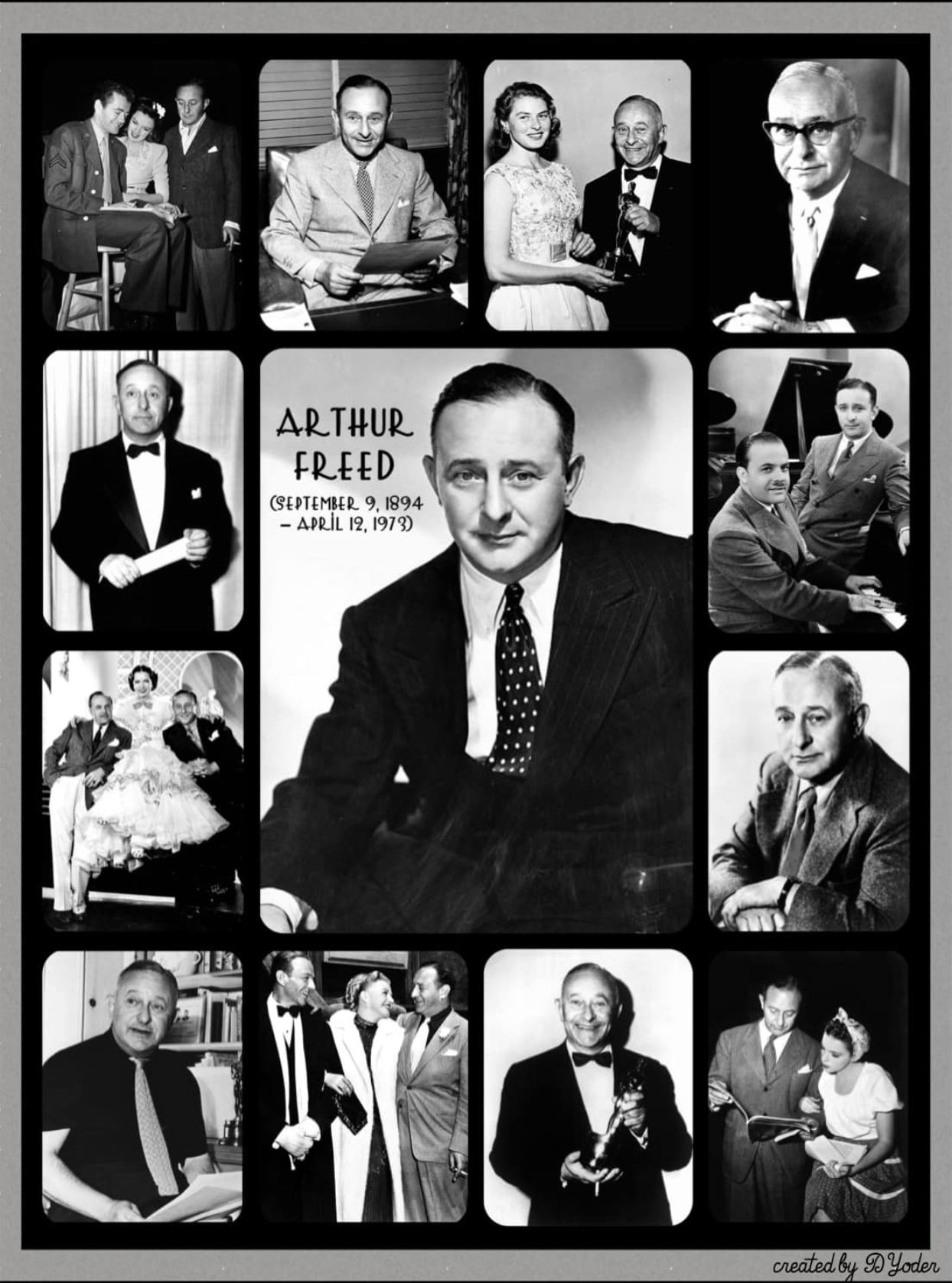
Composite Images of Arthur Freed by Diane Yoder

He was born in South Carolina in 1894, and ended up attending a very prestigious prep school in New Hampshire — Phillips Exeter Academy. I am guessing he was probably one of very few Jewish students on campus — and according to Wikipedia, he became interested in writing poetry there.

After prep school Mr. Freed ended up in Chicago and performed with early versions of the Marx Brothers act (!!!) in vaudeville.

He also wrote special material for them, which led to co-writing enough successful songs that Hollywood beckoned…and he was hired to write songs for early MGM musicals.

After many years at MGM, Freed transitioned from songwriter to producer, working (as an uncredited associate producer ) on THE WIZARD OF OZ and then officially producing his first movie, BABES IN ARMS.

Both of these films, as you probably know, starred Judy Garland.

Mr. Freed went on to produce many more of Garland’s movies including LITTLE NELLIE KELLY, FOR ME AND MY GAL, THE CLOCK, and MEET ME IN ST. LOUIS — which is where she met her second husband, the director Vincente Minnelli, whom Freed had brought from New York City to work at MGM.

According to Wikipedia, Freed hired great talent and then gave them free rein to do their thing — whether it was choreography, costumes, set design, songwriting, direction, etc.

He also gave himself free rein to do some very odd and abusive things, such as exposing his penis to a young Shirley Temple when she came for a visit to discuss doing a movie at MGM — and making sexual advances towards her mother as well.

Temple wrote about this incident in her autobiography — and apparently Mr. Freed experienced no censure as a result of his horrible behavior…

Deep breath in.

Image by Miroslav Kaclík from Pixabay

Deep breath out.

This reminds me of the ongoing conversations about Michael Jackson’s artistic and personal legacies…

Does one discard and avoid the music/art/products made by someone who does horrible things to other beings?

One of Mr. Freed’s most famous movies is SINGING IN THE RAIN, which re-used a bunch of his early hit songs.

Do we stop delighting in the the extraordinary dancing and singing of this movie because the producer was at times a perverse, abusive creep?

Perhaps this is something each one of us must decide for herself/himself…

I apologize for veering into this intense psychological and ethical territory.

I thought this blog post would be more light-hearted — to match the mood of the song.

However, human life is many-layered… full of contradictions, fallibility and mistakes.

Thank you to the (sometimes very flawed) songwriters who have given us wonderful music to lift our spirits year after year after year.

Graphic Design by Stephen C. Fischer

Thank you to pianist/producer Doug Hammer for his tremendous collaborative gifts.

Thank you to graphic designer Stephen C. Fischer for his ongoing work on behalf of my music.

Thank you to the photographers at Pixabay and to Diane Yoder for her composite image of Arthur Freed.

And thank YOU for reading and listening to another one of my blog posts.

If you’d care to stream this song — and maybe even “like” it — on your favorite music streaming platform, you are welcome to click here.

And you are always welcome to visit my website — and sign up for my very sporadic and under-utilized emailing list — by clicking here.

Boil A Frog Slowly…

Image by Sean Foy from Pixabay

Spring has finally arrived — in fits and starts — here in the northeast United States.

And we have two days of (much-needed) rain forecast to start later this morning!

I’ve been sitting on this blog post for weeks because I want my posts to be uplifting.

Yet so much of what is happening here on planet earth continues to be the opposite.

I find myself returning to recent elections in Hungary for hope.

If I understand correctly, Hungarians had a president/dictator for 16 years who did his best to hamstring/contaminate/eliminate their democratic institutions such as freedom of the press and judicial independence.

And yet, after MUCH courageous struggle, their president/dictator was defeated in April with a record 80% voter turnout.

Hurrah!

Deep breath in.

Deep breath out.

I wrote the song included at the beginning of this blog post several years ago.

Image by saguari from Pixabay

One of my favorite signs of spring is the hopeful sound of horny. peeper frogs who are looking for a mate and establishing their personal breeding territories.

In fact, I like this sound so much that I included it at the beginning and ending of “Boil A Frog Slowly.”

As readers of my blog are well aware, one of my main musical allies is pianist/composer/producer Doug Hammer, who lives with his beautiful French artist/graphic designer wife in a ranch-style dwelling on a suburban street in a city north of Boston.

Hidden in his basement is a recording studio with an impeccably maintained Schimmel grand piano and all sorts of recording equipment which Doug is constantly upgrading and updating, bless him.

And hidden behind his house is a little wetland which still manages to exist even though is has been surrounded by houses over the past few decades.

In the spring, melting snow and falling rain fill up the wetlands so that geese, ducks — including two wood ducks this year! —and other water-loving animals can do their thing.

And at a certain point, the peepers emerge from the earth/mud and start peeping!

It is such a lively sound — kind of like the aural equivalent of fireflies blinking on a summer night…

I spent a week in upstate NY last month, and most evenings I went for a long walk on country roads wearing a safety vest with ever-changing, multi-colored lights on it.

Image by Couleur from Pixabay

Whenever I passed a damp area — a pond or a stream or a drainage ditch — the sound of peepers filled the night air!

Somehow they manage to survive a changing mix of sun, rain, snow and hail with temperatures fluctuating from the 20s (overnight) to the 60s (during the day).

Astounding!

I learned from Wikipedia that “the spring peeper (Pseudacris crucifer) is a small chorus frog widespread throughout the eastern United States and Canada.”

Peepers “prefer permanent ponds due to (their) advantage in avoiding predation; however, (they are) very adaptable with respect to the habitat (they) can live in.”

I was happy to read that they are not currently considered to be an endangered species — perhaps due in part to their adaptable natures (mentioned above).

I also learned that “in northern regions, the frog is able to endure below freezing temperatures due to the capacity of its liver to exude and flush the bloodstream with a glucose cryoprotectant which acts both as an anti-freeze in its blood, and allows organs like the heart to enter into a state of protected dormancy.”

Wow!

That certainly helps to explain their resiliency during our weather/temperature swings.

Image by Georg Wietschorke from Pixabay

Wikipedia continues: “The peeper earns its name from its chirping call, which marks the beginning of spring.”

And its formal name, Pseudacris crucifer, “is derived from the Latin root meaning “cross-bearing”— a reference to the cross-like pattern on the spring peeper’s (back).”

Their “chirping calls are significant for communication…as females choose their mates based on the frequency and volume associated with them.”

Yes, indeed… the passionate songs of spring.

Chirp, peepers, chirp!

I released “Boil A Frog Slowly” two springs ago, and I have been collecting information since then about how out of balance, out of touch, and out of control our billionaire class —what some are now calling “The Epstein Class”— has become.

For example, the Americans For Tax Fairness Action Fund recently reminded me that:

“The United States was founded on a rejection of monarchy ie: no tiny elite ruling over everyone else.  However, our current president “has embraced a governing philosophy that rewards extreme wealth and concentrates power in the hands of the richest people in the country: America’s roughly 1,000 billionaires” — which includes himself as well as many of his friends and family members.

Deep breath in.

Deep breath out.

This statistic is particularly shocking to me: “During (our current president’s) first year back in office, U.S. billionaires increased their wealth by an astonishing $1.5 trillion, pushing their combined fortunes to more than $8.2 trillion.

Yowza!

Image by Albrecht Fietz from Pixabay

As I am sure most of us are well aware, billionaires and giant corporations hold enormous influence over our economy AND over our political system…

It was this emerging realization which inspired me to write this song.

But now as I listen to it, I am also reminded about our ongoing climate challenges which our current president plus all of the greedy and cowardly media/entertainment conglomerates (which continue to provide an awful ot of people with theira daily dose of “news”) are now downplaying and/or ignoring even more than in recent years.

Recently I watched a weather report on the CBS morning news/entertainment show.

As part of their reporting of record-breaking levels of heat in the west and southwest of the USA, there was NO mention of steps each and every one of us could take to decrease our carbon footprints.

Instead there were many segments on things to buy, places to fly (the most carbon-intensive way to travel) and ways to continue to consume more than our fair share of the natural resources on this amazing little planet which we all call home.

The message seemed to be “Keep living your consumerist lives exactly as you have been doing for the past few generations” — which, of course, is how we have ended up in our current terrifying environmental disaster situation.

Yet another deep breath in.

And deep breath out.

But back to the billionaires…

As I wrote above, I do not want my blog posts to increase anyone’s daily burden of hopelessness.

So I will end with two bits of positive news.

In 2022 Massachusetts voters — of which I was one — approved a “millionaire’s tax,” and since then it has added more than a billion dollars per year to our state budget.

Revenue from this surtax is mandated to go toward education and transportation initiatives — including more free lunch programs, implementing “clean energy” in schools, making community college free for students 25 and older, and increasing the number of child care slots for low-income families.

And rather than decreasing the number of millionaires and billionaires wanting to live in MA — as nay-sayers and their lobbyists had warned — that number continues to rise..

Adding an extra 4% tax on annual income exceeding one million dollars CAN be accomplished!

And in New York City, newly elected mayor Zohran Mamdani — along with governor Kathy Hochul — has recently proposed a pied-à-terre tax which would target luxury secondary homes worth over $5 million which are NOT primary residences.

This annual surcharge would raise $500 million annually to fund public services and bridge budget gaps.

And it would also begin to chip away at our much-lobbied tax code which currently allows super rich individuals and corporations to pay few — or no! — taxes while using all sorts of public services such as public education, drivable roads, tunnels and bridges.

Although “Boil A Frog Slowly” was written from a place of concern and despair, I do find ways to experience little patches of hope and optimism these days (such as the recent election in Hungary mentioned above).

Image by Couleur from Pixabay

The most recent “No Kings” day lifted my spirits and reminded me that there are millions of other human beings in the USA — and abroad — who are stepping up to help tip the balance of power/life back in a more healthy direction.

And the smaller political races around the country — in which Democratic candidates continue to over perform when compared with our most recent presidential election results — also give me hope.

People ARE daring to step up!

May each of us continue to find (and re-find) a healthy balance of active engagement — demonstrating in person, writing postcards/letters, giving money, volunteering on phone banks, etc. etc. etc. — with restful, rejuvenating, joyful activities.

And may the resiliency of the spring peepers give us hope and inspiration!

Thank you for reading this blog post.

We’ll see if I can increase the frequency — and upbeat tone — of them in the weeks/months to come.

Although I have not been very active as a writer, I DO continue to read many of my fellow bloggers’ posts.

And people continue to visit my site in increasing numbers — although my rising traffic statistics may be the result of bots having invaded WordPress?

Who knows…

I also remain grateful to the wonderful and generous photographers at Pixabay for their beautiful images.

And to Doug Hammer for his musicianship, collaborative skills, careful archiving of past work, and technical savvy.

And to Stephen C. Fischer for his graphic design skills and patience.

If you have time/energy/willingness to play “Boil A Frog Slowly” on your favorite music platform — and then “like” it — that will help increase the likelihood of it being shared with new listeners by the mysterious algorithms which influence/control more and more of our online lives.

You can connect to a bunch of streaming links by clicking here.

And you are always welcome to visit my website, willsings.com.

In Praise Of Pandora

Image by Duc Tinh Ngo from Pixabay

I am a huge fan of Pandora.

Not the woman in Greek mythology whose wedding gift/jar/box released evil sprits upon the world — along with Elpis aka Hope (“a single blessing to ease mankind’s suffering” according to a Greek mythology website I found online).

And not the jewelry company.

I am a fan of the music streaming company named Pandora.

However, I am also aware that the mythology of Pandora IS quite resonant right now.

Some days it does indeed feel like a bunch of evil spirits are ravaging our neighborhoods, our country, other countries, and our planet.

Thank goodness for Elpis ie: hope!

I had completely forgotten this crucial part of the myth — that the gods give us hope as an antidote/counterbalance to all of the evil spirits released by Pandora.

Deep breath in.

Deep breath out.

According to the Greek mythology website mentioned above, Elpis/hope is often depicted as a young woman carrying flowers — hence the flower images in this post.

And music can inspire a sense of hopefulness in many of us — so maybe Pandora isn’t a horrible name for a music streaming company after all.

Image by Hans from Pixabay

Now you may be wondering why I am choosing in this blog post to praise the music streaming company named Pandora?

It is because they have been the most consistent beacon of helpfulness and humanity I have encountered during my five-year foray into the business of streaming music.

I wrote about them a little bit in a blog post last March.

Although they are currently part of a larger company, Sirius/XM, their cultural norms of accessibility and friendliness have not (yet) been contaminated/eliminated in a short-sighted quest for increased profit.

I love that all of the Pandora staff members with whom I have interacted are themselves musicians — and many of them use Pandora to share their own music with the world.

I have been told that Pandora listeners are located only in the USA.

But apparently some people around the world are clever enough to use a VPN — a virtual private network which, according to NordVPN “protects your internet connection and privacy online (by creating) an encrypted tunnel for your data.”

If you use a VPN, you can stream music via Pandora from anywhere there is internet service on planet earth (if I am understanding this VPN option correctly).

I think using a VPN also allows for some privacy regarding one’s internet history — which might be wise for more of us to consider using?

Anyways, back to Pandora…

The Pandora staff have created a bunch of free promotional tools which musicians like me can use — such as creating personalized audio messages to share with one’s listeners.

Image by Annette Meyer from Pixabay

One can also feature a particular song for up to two months at a stretch (six times per year…)

And every month Pandora offers two free training sessions via Zoom, which allow independent musicians to learn how to use their promotional tools and — more importantly — to build relationships with real human beings.

This is the crucial piece that so many companies seem to have completely devalued in recent years.

Many (if not most) of us human beings want to build relationships with the people in our daily lives — whether it’s our mail carrier, or a teller at our local bank, or the staff at our local grocery store, or the folks who run our favorite restaurant, or the doctors/nurses/staff at our local hospital, etc. etc. etc.

Chatbots may save money, but they do not help to build actual human relationships.

And it’s actual human relationships which tend to create a foundation of customer loyalty.

Another deep breath in.

And deep breath out.

As regular readers of my blog are well aware, there is a steep learning curve when one starts releasing music to be streamed via companies like Pandora, Apple Music, YouTube, Spotify, Tidal, Amazon Music, etc.

In addition to recording a song, mixing it and then mastering it, one also needs to get a graphic designed for it, select a company to distribute it (I use CD Baby), register it with the Copyright Office in Washington DC, and then enter it into one’s account at various organizations which collect money for the use of one’s song — including ASCAP, SoundExchange, Songtrust and the Mechanical Licensing Collective.

CD Baby used to have wonderful customer service until it was bought by another company which made a lot of changes…

And now the company which bought CD Baby — Downtown Music — is being sold to Universal Music Group (one of the three largest music conglomerates) after they were given permission from a European tribunal weighing the anti-trust implications of such a purchase.

Image by David Underland from Pixabay

G-d only knows what changes this purchase will bring into the lives of tens of thousands of independent musicians like me who currently use CD Baby to distribute our music…

Maybe UMG will use some of their enormous clout on our behalf?

Maybe they will improve customer service at CD Baby?

Or maybe they will find new ways to cheat, fleece and otherwise take advantage of us?

Time will tell…

Yet another deep breath in.

And deep breath out.

I can attest to the effectiveness of Pandora’s promotional tools.

My total streams on Pandora recently surpassed 200,000.

So I will continue to use these promotional tools AND will continue to remain grateful for Pandora’s terrific staff.

The song I included at the beginning of this blog post was written for a show called FUNNY FACE which starred Fred Astaire and his older sister Adele in the1920s.

I attempted to release this version, which I recorded with pianist Doug Hammer, last year.

But CD Baby mysteriously messed up the metadata attached to the recording — listing Doug as a primary artist rather than a featured artist — and he asked me to remove it from distribution so that it wouldn’t confuse the fan base (much larger than mine) he has built for his solo piano compositions.

Sadly, I have been unable to get any definitive answer from the customer service staff at CD Baby about how this mistake happened in the first place and whether I’ll ever be able to re-release it with the correct designation (featured artist not primary artist) for Doug.

Image by Jan Van Bizar from Pixabay

Deep sigh.

Thank you to Doug for recording it with me.

Thank you to the Gershwin brothers for writing it in the first place.

Thank you to Pixabay for the lovely photos of spring flowers.

And thank YOU for reading and listening to another one of my blog posts.

You are always welcome to visit my website — willsings.com — if you are curious to learn more about my musical life here on planet earth.
I’ve begun a new postcard-writing campaign with a bunch of people in my neighborhood.

We are reminding Wisconsin voters that they have an important Supreme Court election coming up on April 7th.

It’s a small task.

But doing something — anything — to withstand/offset the chaotic cyclone of destruction being unleashed by our current political leadership helps me stay connected to a tiny sense of Elpis/Hope.

As does the melting snow outside…

And the promise of spring flowers!

Throwback Thursday #9

Image by Lin Animalart from Pixabay

One of the great things about doing a Throwback Thursday is re-visiting old blog posts.

Today I am throwing back to January 15, 2014 — and a post about seeing Van Gogh’s “Starry Night” painting in person.

I had completely forgotten this visit to the Museum of Modern Art in NYC — probably made with my friends Steve and Kate.

I had not forgotten, however, Don McLean’s lovely (and long) song about Van Gogh.

Doug Hammer and I recorded a version of this song — which eventually I hope to release.

For the time being it is accessible via this 1/15/14 blog post.

I have also included a few iris photos from Pixabay in today’s post because Van Gogh painted iris on more than one occasion..

And I am eager for spring to arrive here in New England!

Deep breath in.

Deep breath out.

Image by Louise Stoehr from Pixabay

I have spent a lot of time shoveling snow in recent days.

Now snow is piled high on both sides of our sidewalk.

This limits one’s visibility when crossing the street…

It also makes parking a challenge for the folks who work in a nearby office building.

Another deep breath in.

And deep breath out.

So far this winter our furnace is behaving.

And I haven’t injured my back.

And I remain grateful for food, shelter, electricity, heat and a functioning internet.

All this snow may also help our reservoirs remain in better shape as the year unfolds…

We shall see!

Image by Светлана from Pixabay

Thank you to the wonderful photographers at Pixabay.

And thank YOU for checking out yet another one of my blog posts.

You are always welcome to visit my website — WillSings.com — by clicking here.

PS: More snow (or possibly rain) is forecast in the Boston area for next week…

Falling In Love With Love…

Greetings from East Arlington, MA — just outside of Boston in the USA!

Today I am featuring a beautiful song with lyrics by Lorenz Hart and music by Richard Rodgers.

As this TIME Magazine cover attests, they were a very potent musical and cultural force in the early-middle 20th century.

And I am very happy that a recent movie — BLUE MOON (made by the wonderful director Richard Linklater and starring Ethan Hawke as Larry Hart) — has renewed interest in Hart’s life and musical legacy.

Here’s a link to a great article in The Hollywood Reporter about making the film if you are curious.

It turns out that BLUE MOON was a decade-long labor of love which was filmed on a beautifully re-created version of Sardi’s — a famous bar/restaurant in Manhattan’s theatre district.

Reading the article brought tears to my eyes.

You can also click here to read a blog post I wrote about Larry Hart exactly ten years ago if you are even more curious.

And I once wrote a blog post about two of his and Rodgers’ hit songs — “You Took Advantage Of Me” and “I Could Write A Book” — which you can read by clicking here.

Not mentioned in the BLUE MOON movie is how devoted Hart was to his mother — with whom he lived his entire life.

Hart’s mother died around the same time that OKLAHOMA (the first musical his decades-long collaborator Rodgers created with another lyricist — their mutual friend Oscar Hammerstein II) opened on Broadway.

So he was grieving this huge familial loss simultaneously with the at-least-partial loss of his friendship AND professional relationship with Rodgers.

Deep breath in.

Deep breath out.

And I had forgotten (until I re-read my blog post from ten years ago) that Mr. Hart had also begun a collaboration about underground freedom fighters in France with a composer who had recently escaped from Nazi-occupied Europe.

So, as an American-born Jew whose parents had emigrated to NYC in the late 19th century from Germany, he also may have also been feeling a significant amount of grief, rage, despair, terror, and “there but for the grace of G-d” empathy for the millions of Jews still remaining in Europe.

And let’s not forget that American Nazis were holding huge rallies at places like Madison Square Garden during this time as well!

Yet another deep breath in.

And deep breath out.

I don’t know how much it was public knowledge that LGBTQ folks were being sent to Nazi death camps, but I am guessing that theater people — such as composer Kurt Weill, who had managed to escape from Berlin to Paris to Manhattan — had plenty of heart-breaking anecdotes to share about the fates of their previous artistic partners who happened to be LGBTQ and/or Jewish and/or Roma.

All of this was also not mentioned in BLUE MOON. although Mr. Hawke and Mr. Linklater and some of the other actors such as Andrew Scott apparently did a lot of research before they began filming the movie — so I am guessing that they had most/all of this information influencing the subtexts of their acting performances.

And another deep breath in.

And deep breath out.

There are certainly some powerful parallels with what was happening leading up to Larry’s death in 1943 and what is currently unfolding here in the USA.

One thing I wrote about in my blog post from ten years ago — and which BLUE MOON does explore — is the paradox of Larry Hart (a somewhat closeted gay man) falling in love with and proposing to women.

And the song “Falling In Love With Love” may illuminate some of Hart’s thoughts and feeling on this topic/phenomenon/tendency.

What do YOU think?

Thank you to Doug Hammer for his exquisite piano playing and comprehensive production skills.

Thank you to John Childress (and his collaborator at the time named Laurel, I think…) for taking this photo many years ago when I still had plenty of hair.

Thank you to Stephen C. Fischer for his lovely graphic design work.

And thank YOU for reading and listening to another one of my blog posts.

You can click here to stream “Falling In Love With Love” on Pandora, YouTube, Apple Music, etc. if the spirit moves you.

And you are also always welcome to visit my website: WillSings.com.

There’s all sorts of info and music there — and you could join my email list of you are so inclined.

I Walk With Music

Hoagy Carmichael — NBC Television, Public domain, via Wikimedia Commons

This month’s song is a minor hit from what is sometimes called the Great American Songbook.

Composer Hoagy Carmichael and lyricist Johnny Mercer created it for a Broadway show — I WALK WITH MUSIC — which did not prove to be a success.

But it did give us this sweet song.

I discovered it when I was putting together an hour-long program of songs by Hoagy Carmichael — who also wrote the music for standards including “Georgia on My Mind,” “Stardust,” “The Nearness of You,” and “Skylark” (another song co-written with Johnny Mercer).

Pianist/producer Doug Hammer and I had a lot of fun recording it.

I just re-read the Wikipedia entries for Johnny Mercer and for Hoagy Carmichael.

I learned that — later in his life — Hoagy appeared as a songwriter character on THE FLINTSTONES animated TV show and also participated in a TV special with Fred (Mr.) Rogers.

And I was reminded that Johnny Mercer was a bit of a Jekyll/Hyde personality — beloved during the daytime and then drunk at parties saying mean things during the night — after which he would send flowers and an apology the next morning.

Johnny Mercer (from the Johnny Mercer Foundation website)

In addition to being successful songwriters, Hoagy and Johnny were also successful performers.

Later in his life, Hoagy worked as an actor in movies and TV shows, while Johnny recorded many hit singles over the years — of his own songs and as well as songs written by other people.

Johnny also was one of three men who founded and ran Capitol Records very successfully for many years.

He was mentored early in his career by Yip Harburg (the lyricist who co-wrote “Brother, Can You Spare A Dime?” “Over The Rainbow,” “How Are Things In Glocca Morra?” and “It’s Only A Paper Moon” among many other hits).

And near the end of his own life Mercer became a fan of singer-songwriter Barry Manilow.

In fact one of my favorite Johnny Mercer songs — “When October Goes” — was created after Mr. Mercer died with music by Barry Manilow and unpublished lyrics given to Mr. Manilow by Mercer’s widow, Ginger.

Both Mercer and Carmichael kept writing songs even after rock-n-roll had significantly altered the landscape of popular music — which meant that their work was less and less in demand…

Me (photo by Stephen C. Fischer)

I take inspiration from their creative perseverance as well as from the rich legacy of hit songs they left for all of us to savor.

On a personal note, I have begun attending several open mics on a regular basis, sharing my original songs while accompanying myself on ukulele.

Performing like this has been a good workout for my brain because I now have to remember both lyrics AND chords.

It has also been interesting to see how other regular open mic attendees do (and don’t) welcome one into each musical micro-community.

The key, I think, is simply continuing to show up.

Gradually we reveal ourselves to each other through our song choices and through the things we say between songs (the open mics I attend allow a person to perform 2-3 songs per night).

And trust begins to form…

Graphic Design by Stephen C. Fischer

And curiosity begins to arise…

Deep breath in.

Deep breath out.

All of the venues are also registered with ASCAP, the performing rights organization I joined several years ago.

So after each open mic, I log onto my ASCAP account and enter which of my original songs I performed.

In theory this is supposed to generate a tiny stream of income for me, but I haven’t seen anything yet…

One final thing I have been appreciating about attending open mics is that they give me a chance to fine-tune the lyrics of songs I haven’t yet recorded (but plan to record with Doug Hammer later this year).

If you would like to stream “I Walk With Music,” you are welcome to click here for a link to many different digital music platforms.

Thank you to pianist/composer/producer Doug Hammer for our ongoing — and ofter very playful — musical collaboration.

Thank you to Stephen C. Fischer for his photo and design expertise.

Image by Jenő Szabó from Pixabay

Thank you to Wikipedia (to which I give a tiny financial contribution each month) for being such a useful source of information.

Thank you to all of the terrific songwriters, living and dead, whose work touches our souls and lifts our spirits on a daily basis.

Thank you to Jeno Szabo for his beautiful image from Pixabay.

And thank you, dear reader, for making it through another one of my (now mostly monthly) blog posts.

Puttin’ On The Ritz

Irving Berlin (Wikimedia Commons)

If we scratch the surface of almost any cultural artifact — in this case a song written in the late 1920s by Irving Berlin — it is very likely that we will discover layers of herstory/history which have been buried, misplaced, overlooked or otherwise airbrushed out of the picture.

Wikipedia informs me that Irving Berlin wrote his original version of this song in May 1927, and it was first included in a 1930 movie — when “talkies” were an exciting new technology.

“The title derives from an (African-American) slang expression ‘to put on the Ritz’ — meaning to dress very fashionably — (which) was inspired by the opulent Ritz Hotel in London.”

And Mr. Berlin’s first set of lyrics do indeed describe very well-dressed African-Americans strolling on Lenox Avenue in Harlem…

Fred Astaire (Wikimedia Commons)

However, when Fred Astaire performed “Puttin’ On The Ritz” in the 1946 movie BLUE SKIES, Mr. Berlin re-wrote the lyrics to become the version which I recorded with Doug Hammer playing his Schimmel grand piano.

“Lenox Avenue” became “Fifth Avenue,” and “Spangled gowns upon the bevy/Of high browns from down the levy — all misfits” become “Different types who wear a day coat/Pants with stripes and cutaway coat — perfect fits.”

This appears to be yet another example of how African-American culture inspires — and then gets appropriated and re-purposed to earn money for non-African-Americans.

Deep breath in.

Deep breath out.

And here I go, continuing this sad cultural practice, by recording my own version with Doug!

Another deep breath in.

Image by Gerd Altmann from Pixabay

And deep breath out.

We did this when I was creating an hour-long program of songs written for — or made famous by — Fred Astaire.

This version is the second or third take Doug and I recorded — and it’s a great example of how spontaneous and playful our creative process can be when we are both “in the zone” together.

Although there are a few more winter holiday favorites written by Jewish songwriters which I would like to record with Doug, we never got around to doing that in 2025… so I have released “Puttin’ On The Ritz” in December as a nod to upcoming New Year’s Eve festivities…

If you’d like to stream it via Pandora, Apple Music, YouTube, etc, you can click here.

Thank you to Pixabay and Wikimedia Commons for these photos.

Thank you to Doug Hammer for his piano-playing and his producing/engineering skills.

Thank you to Stephen Charles Fischer for his graphic design work.

Thank you to Irving Berlin for writing — and re-writing — this song.

Thank you to the African-American residents of Harlem who inspired Mr. Berlin to write this song in the first place.

And thank YOU for reading and listening to this blog post!