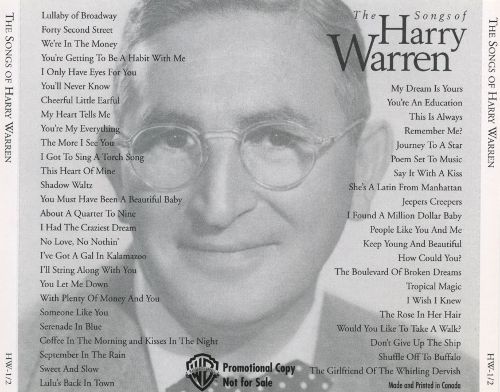
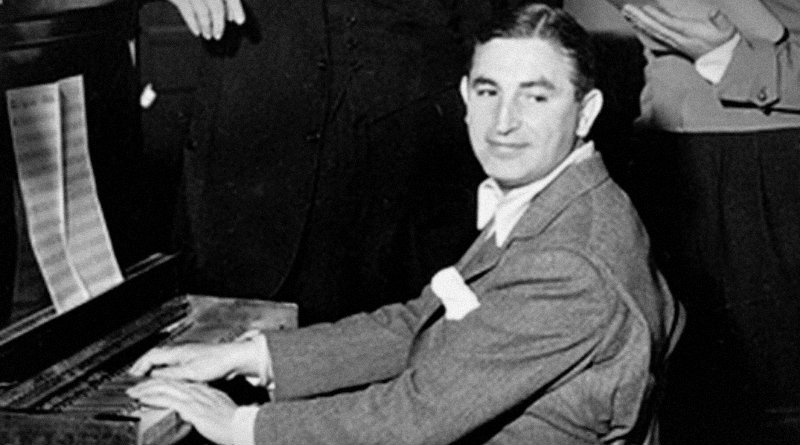
Mr. Warren and Mr. Freed wrote “This Heart Of Mine” for a 1944 Metro-Goldwyn-Mayer (MGM) musical called the ZIEGFELD FOLLIES which starred Fred Astaire.
I think I first heard it sung by Judy Garland, who recorded it the following year for Decca Records.
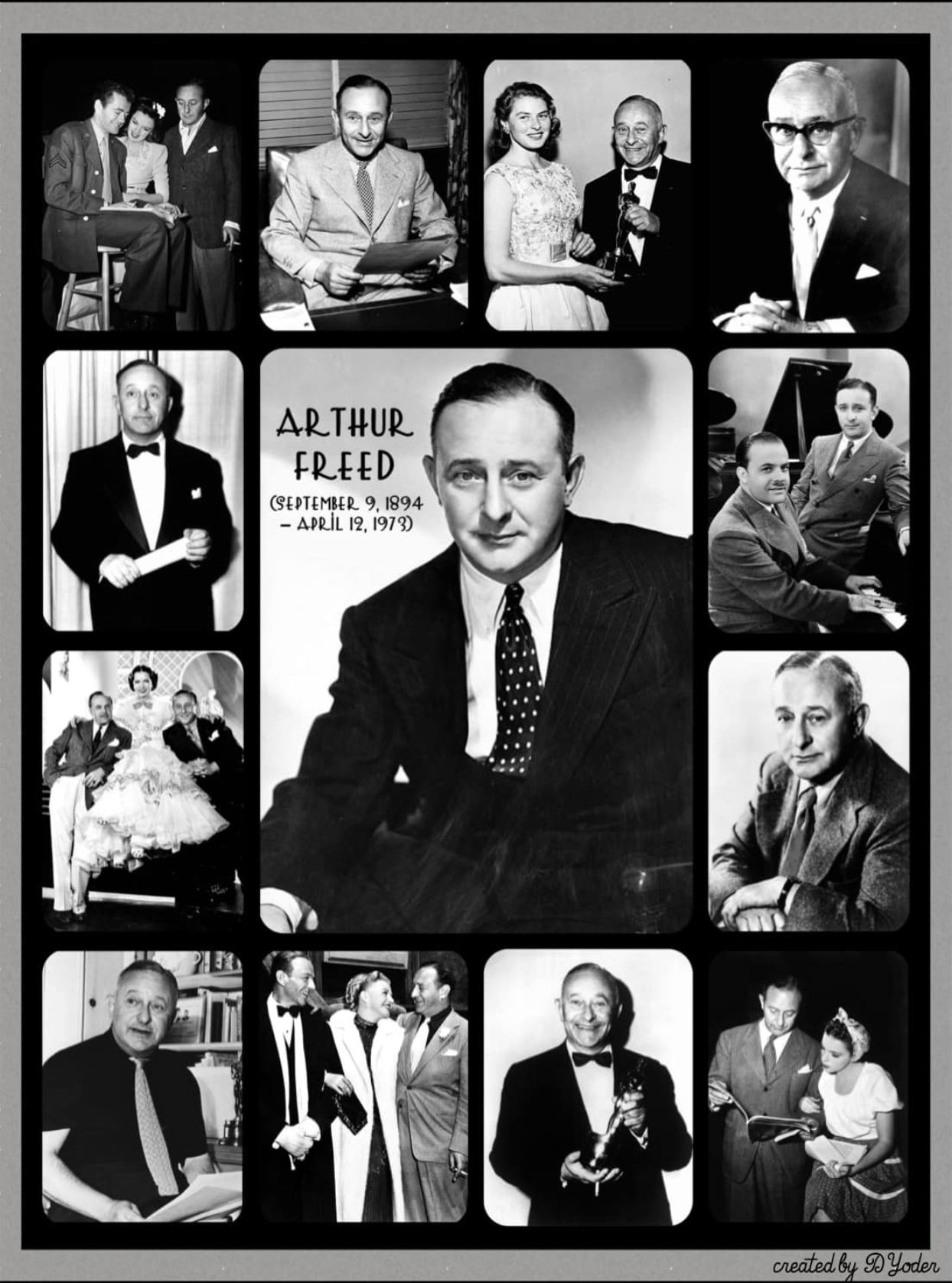
Arthur Freed also wrote the lyrics for a bunch of other hit songs — such as “Singing In The Rain,” “You Are My Lucky Star,” and “Make ‘Em Laugh.”
I haven’t read any biographies about him (yet) but according to Wikipedia, he lived a fascinating life.
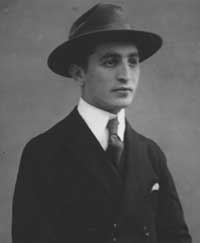
Composite Images of Arthur Freed by Diane Yoder
He was born in South Carolina in 1894, and ended up attending a very prestigious prep school in New Hampshire — Phillips Exeter Academy. I am guessing he was probably one of very few Jewish students on campus — and according to Wikipedia, he became interested in writing poetry there.
After prep school Mr. Freed ended up in Chicago and performed with early versions of the Marx Brothers act (!!!) in vaudeville.
He also wrote special material for them, which led to co-writing enough successful songs that Hollywood beckoned…and he was hired to write songs for early MGM musicals.
After many years at MGM, Freed transitioned from songwriter to producer, working (as an uncredited associate producer ) on THE WIZARD OF OZ and then officially producing his first movie, BABES IN ARMS.
Both of these films, as you probably know, starred Judy Garland.
Mr. Freed went on to produce many more of Garland’s movies including LITTLE NELLIE KELLY, FOR ME AND MY GAL, THE CLOCK, and MEET ME IN ST. LOUIS — which is where she met her second husband, the director Vincente Minnelli, whom Freed had brought from New York City to work at MGM.
According to Wikipedia, Freed hired great talent and then gave them free rein to do their thing — whether it was choreography, costumes, set design, songwriting, direction, etc.
He also gave himself free rein to do some very odd and abusive things, such as exposing his penis to a young Shirley Temple when she came for a visit to discuss doing a movie at MGM — and making sexual advances towards her mother as well.
Temple wrote about this incident in her autobiography — and apparently Mr. Freed experienced no censure as a result of his horrible behavior…
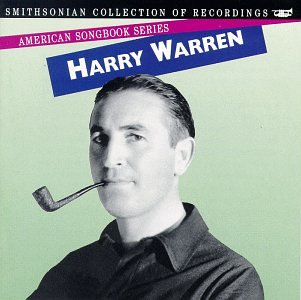
Last Sunday jazz pianist Joe Reid and I debuted a one-hour program of music devoted to the composer Harry Warren at an enthusiastic retirement community in Milton, MA.
Mr. Warren had a long and extraordinarily successful career as a songwriter, but his name is not as familiar as that of Irving Berlin, Cole Porter or the Gershwin Brothers — all of whom were his contemporaries.
Warren and lyricist Al Dubin wrote the first song in this blog post, “Lullaby Of Broadway,” for the Hollywood movie musical Gold Diggers of 1935 — and it earned them an Academy Award for Best Song in a Motion Picture.
It’s kind of ironic, however, that this love song to Broadway was written in California.
Harry had grown up in New York, and wanted for much of his adult life to move back east and write for the theater.
But he ended up living in California for over 50 years — where he composed more than 400 songs for 90 different movies.
And the songs he co-wrote — including such gems as “The More I See You,” “Serenade In Blue,” “Chattanooga Choo Choo,””The Boulevard of Broken Dreams,” and “At Last” — continue to be performed at weddings, included in commercials, featured in movies, etc. to this day!
Harry was the born on Christmas Eve, 1893, in Brooklyn, NY, and he was christened Salvatore Antonio Guaragna — the second youngest of eleven children. His father was a successful custom boot maker who had emigrated from Italy and changed the family name from Gauragna to Warren when Harry was a child.
Harry was very musically inclined, teaching himself how to play his father’s accordion as well as singing in the choir at his Catholic church. He dropped out of school at age 16 to play drums with his godfather in a band that toured up and down the Hudson River valley with a traveling carnival.
He also taught himself to play the piano, and ended up finding employment at the Vitagraph Motion Picture Studios in Brooklyn, NY, doing a wide variety of tasks including prop master, assistant director, and accompanist for the silent movie star Corinne Griffith to help her summon different emotions while she filmed her scenes.
During WWI he joined the Navy and was stationed at the tip of Long Island in Montauk. Since he played piano, he ended up entertaining his fellow soldiers a lot — and also started writing his first original songs.
In December 1918, right after the war had ended, he married Josephine Wensler, and their first child, Harry Junior, arrived the next year.
After WWI, Harry found work playing piano in cafes, bars, and silent movie theaters in order to support his young family.
In 1920 a couple of men from a music publishing company heard him playing piano in a Brooklyn saloon — including one of his original songs, “I Learned To Love You When I Learned My ABCs.” They brought him to meet their boss, Ruby Cowan, who hired him as a staff pianist and a song plugger.
He spent his days and nights visiting theaters, clubs, bars and restaurants all around Brooklyn in order to pitch his company’s latest songs to vaudeville performers, band leaders — anyone who might perform the song and thus help to make it popular so that people would buy sheet music which they could play at home.
Warren later claimed that his basic shyness prevented him from being particularly effective as a song plugger — and perhaps this shyness is also part of the reason why his name hasn’t become better known by the American public.
His first hit, “Rose Of The Rio Grande,” was a collaboration with composer Ross Gorman and lyricist Edgar Leslie in April 1922.
Gradually he was able to do less song plugging and more composing — collaborating with lyricists such as Gus Kahn, Ted Koehler, Irving Kahal and Ira Gershwin (when his brother George was focused on one of his classical music projects) among others…
Harry’s early hits caught the attention of Hollywood, and from 1929-1932 he wrote songs for several minor movies — commuting via the train from New York to Hollywood and back again.
But he did not enjoy his time in California, finding it too parochial — and disrespectful to songwriters.
He later explained: “It was nothing like it is today. The railway station was a wooden building. If you rented a car, you were lucky the wheels didn’t fall off, and there were very few decent places to eat. Hollywood looked to me like a small town in South Dakota, and when you finally got to the Warners studio in Burbank, it was like being on the frontier. You could look out the windows of the music department at the San Fernando Valley and see nothing but wide open land. All I could think about was New York. What made it even worse, the studio was empty — they had laid off most of their people for the summer. Although they had made a fortune with The Jazz Singer in 1927, by the summer of 1932 they were in real trouble.”
Many executives in Hollywood thought movie musicals were done after a flood of them were produced following the 1927 success of the first talking/singing motion picture, The Jazz Singer.
But Darryl Zanuck at Warner Brothers had a hunch that new technologies and the creative vision of Busby Berkeley might turn things around.
So in 1932 Warren was lured back west by Zanuck to write a complete score for a new film, 42nd Street, with lyricist Al Dubin.
And as it turned out, Depression-era audiences were cheered by the singing and dancing of Ruby Keeler and Dick Powell and wowed by Berkeley’s innovative, grandiose and oftentimes bizarre group dance extravaganzas.
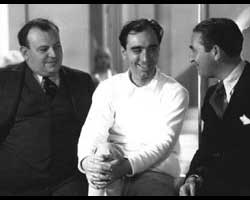
Here’s a photo of Al Dubin, Busby Berkeley and Harren Warren at the Warner Brothers studio.
42nd Street yielded several hits, including the title song, “42nd Street,” “Shuffle Off to Buffalo,” and “You’re Getting To Be A Habit With Me” — which has now become a habit with me (and which I find myself singing at all hours of the day and night).
42nd Street had been completed by the end of 1932, but Warner Brothers waited until spring of 1933 to release it.
Warren had returned to his office in New York at the Remick music publishing company.
He still hoped his future would be in Broadway theaters.
However, 42nd Street tested so successfully with preview audiences before it was released that Warner Brothers rushed a similar film into production — Gold Diggers of 1933, which was filmed in 28 days!
Warren and Dubin wrote five songs for Gold Diggers of 1933 and then signed a contract — renewable annually at Warner Brothers’ discretion — to continue writing songs there.
And since he proved to be a tremendous composer of hit songs, his contract was renewed over and over again — thus keeping him in California.
Gold Diggers of 1933 outdoes 42nd Street in the wildness and lavishness of its production numbers.
Busby Berkeley was now the man of the hour and was given more or less free rein to pursue his cinematic visions.
For example, the movie opens with Ginger Rogers and a chorus line of women all wearing bikinis made out of huge coins singing the optimistic anthem to capitalism, “We’re In The Money.”
During the rest of the 1930s Harry Warren worked on 20 movie musicals with Al Dubin — for which they created standards such as “I Only Have Eyes For You,” “Lulu’s Back In Town,” and “September In the Rain.”
Often the songs Warren and Dubin created had very little to do with the plot.
But they DID fuel the imagination of Busby Berkeley.
He would get inspired by their song titles and then manage — in some fantastic and unusual way — to include their songs in the plot of the movie.
In the 1934 film Dames Dick Powell’s character sings “I Only Have Eyes For You” to Ruby Keeler’s character on the Staten Island ferry.
Then they both fall asleep on the subway, and he dreams that he sees Ruby’s face everywhere — floating in geometrical patterns in the air, and then on the faces of a huge chorus of women who are all wearing masks of Ruby Keeler’s face while climbing up and down huge staircases and/or riding an elegant Ferris wheel.
At the climax of the song, all of these women bend over and form a giant mosaic of Ruby’s face using painted puzzle pieces on their backs.
If you have never seen this movie sequence, you can find it on YouTube.
It’s quite surreal.
This is not the only hit song Harry wrote about eyes.
In 1938 he wrote a song with lyricist Johnny Mercer for Louis Armstrong to sing in the Warner Brothers movie Going Places.
Armstrong plays the trainer of a wild-tempered race horse who only calms down when Mr. Armstrong’s character sings or plays this next song on the trumpet to him.
Given Mr. Armstrong’s decades-long relationship with marijuana — which he once described as being “a thousand times better than whiskey” — I have to think that the lyric might also have been something of an in joke between Mercer, Warren, Armstrong, and their fellow musicians.
Mr. Warren had a deep well of melodic ideas which he tapped into whenever he was composing a song.
Usually he and his lyricist would come up with a title and bat around ideas for lyrics.
Then Harry would compose a melody for which the lyricist would write words.
The list of great songs for which Harry Warren composed the music is quite extraordinary.
From 1931 – 1945, Harry co-wrote more hit songs than Irving Berlin, and had more Oscar nominations for best song (11) and wins (3) than Berlin, George Gershwin, Cole Porter, or Hoagie Carmichael.
Warren ended up winning an Oscar three times — for the afore-mentioned “Lullaby Of Broadway” with lyricist Al Dubin, “You’ll Never Know” with the lyricist Mack Gordon, and “On The Atchison, Topeka and the Santa Fe” with lyricist Johnny Mercer.
Warren also had more hit records — 42 songs! — on “Your Hit Parade” than any of his peers.
And yet his name is not familiar to many of us.
There appear to be many reasons for this.
As mentioned earlier, Harry was a shy man and not much of a schmoozer.
He didn’t go to a lot of Hollywood parties where a songwriter might sit down and promote his catalog of songs.
He also didn’t hire a publicist to keep his name in the papers the way many of his fellow songwriters did.
In fact at one point a few of his friends hired a publicist for Harry on his behalf, and Harry fired the man as soon as he found himself mentioned in a gossip column.
I was steered towards Warren and his music by a chapter called “I’m Just Wild About Harry Warren” in one of Michael Feinstein’s terrific books — Nice Work If You Can Get It: My Life In Rhythm and Rhyme.
Michael befriended Harry near the end of his life, and has championed his music ever since.
Feinstein’s anecdotes about Warren provide a lot of texture and detail which other biographies omit or gloss over.
For example, the man who wrote the music for so many happy songs was heart-broken by the sudden death of his son Harry, Jr. in 1938.
And according to Feinstein, Warren’s marriage remained deeply scarred by this tragedy for decades afterwards…
Deep breath in.
Deep breath out.
During his decades-long career in Hollywood, Harry worked primarily for four movie studios: Warner Brothers in the 30s, 20th Century-Fox in the early 40s, MGM in the later 40s, and finally Paramount in the 50s.
He co-wrote his last big hit — “That’s Amore” — with lyricist Jack Brooks in 1953 for Paramount’s movie The Caddy starring Dean Martin (which earned Warren his tenth Oscar nomination for best song in a motion picture).
In the mid-1950s, however, Hollywood stopped making many big musical films — so Harry expanded his horizons.
In 1955 he co-wrote the theme song for the TV show The Life and Legend Of Wyatt Earp.
He also wrote scores and title songs for dramatic movies including “Marty” in 1955, and “An Affair To Remember” in 1957 — and continued writing songs for Jerry Lewis’ comedic movies after Dean and Jerry parted ways.
He even returned to Broadway with a musical, Shangri-la, based on a James Hilton novel which sadly was not a success.
To keep himself busy, he composed a bunch of short piano vignettes, and in 1962 wrote a complete Catholic mass with Latin text.
One of his biggest successes came in 1980, when producer David Merrick and director/choreographer Gower Champion adapted the original 1933 Hollywood blockbuster 42nd Street into a Broadway musical which also included many other songs Warren and Dubin had written for Warner Brothers movies.
Warren’s lifelong dream of having a hit show on Broadway was realized.
And yet, according to Michael Feinstein, Merrick and Champion were not very inclusive of — or respectful to — Harry, even managing to leave his name off the poster for what became a huge musical success.
So — although it earned him plenty of money — the Broadway version of 42nd Street brought him very little happiness or satisfaction.
Another deep breath in.
And out.
I am going to end this blog post with song Harry wrote with lyricist Mack Gordon for the 1942 20th Century Fox film Iceland.
I am well aware that my ongoing curiosity about the songs, songwriters, and performers of bygone eras is in large part a coping mechanism to drown out the distressing realities of our current political landscape here in the USA.
Perhaps his songs will give you a few minutes of solace and distraction, too!
And yet the real world in which most of Warren’s songs were written included a huge economic crisis, the genocides of millions of human beings, the use of atomic weapons, public lynchings, and many, many other horrific undertakings by the human species.
Blessedly his songs have survived — with some of us still singing them.
As I was finishing the first draft of the patter for our hour-long program of Harry’s songs, I learned that the wonderful jazz singer Rebecca Parris — who was based in Duxbury on the South Shore of Boston with her partner, the pianist Paul McWilliams — had died after sitting in for a couple of songs with McWilliams at the Riverway Lobster House in South Yarmouth, MA.
I also learned from reading her obituary in a local paper that “There Will Never Be Another You” was the last song she performed before leaving the restaurant, collapsing outside., and being taken to Cape Cod Hospital.
So it seems a fitting way to end this blog post in honor of Harry and in honor of Rebecca — and in honor of all of the other singers who have breathed life into Harry’s songs over the past nine decades.
Thank you to Doug Hammer for playing piano so beautifully while simultaneously recording all of these songs with me so that I would have accurate versions of Harry’s songs to practice and learn.
Thank you to Joe Reid for playing over 50 shows a year with me in retirement communities, restaurants, synagogues, assisted living homes, senior centers, and coffee houses around the greater Boston area.
Thank you to Harry Warren and his lyrical collaborators for writing these songs.
Thank you to Michael Feinstein and others who have written about Harry.
And thank YOU for reading and listening to what I know is a lengthy post.
Let’s keep humming and singing Harry’s songs for years to come!
I have been been blessed to sing wonderful songs written by other people for many years — as the MP3 player on the right hand sidebar of this page can attest.
And every now and then I have helped to co-write a song.
But it wasn’t until a few years ago, when I bought my first ukulele, that I started writing songs on a regular basis.
The song in the player at the beginning of this blog post is one I recorded using my this ukulele and Apple’s wonderful GarageBand program on my laptop.
I love learning about how other songwriters have created their hits.
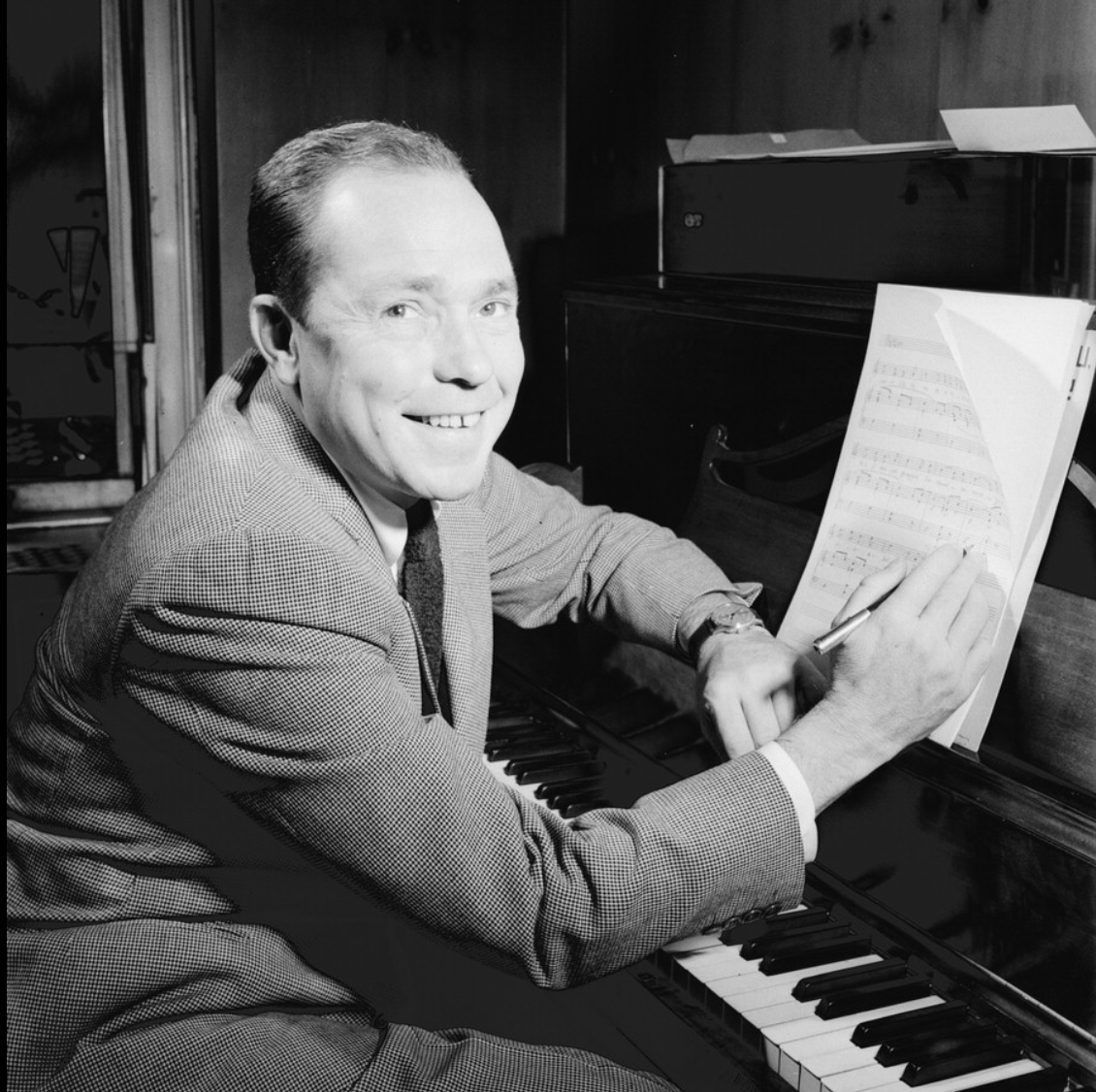
Composer Harry Warren and lyricist Johnny Mercer, for example, co-wrote “Jeepers, Creepers,” “On The Atchison, Topeka and the Santa Fe,” and “You Must Have Been A Beautiful Baby.”
Johnny Mercer in the 1940s
And at some point Warren gave Mercer the nickname ‘Cloud Boy’.
As Warren explained, “A lot of times when I would play a melody for John… particularly if it was after a good lunch… he’d stretch out on a couch and just lie there with his eyes closed and his hands folded across his stomach. He was way up there some place in the clouds. Of course, what came out later was just great.”
When asked by his father about his creative process, Mercer once said, “I simply get to thinking over the song — pondering over it in my mind — and all of a sudden I get in tune with the Infinite.”
Many songwriters have expressed a similar sentiment — that they feel as though they are acting as a conduit or channel for something greater than themselves.
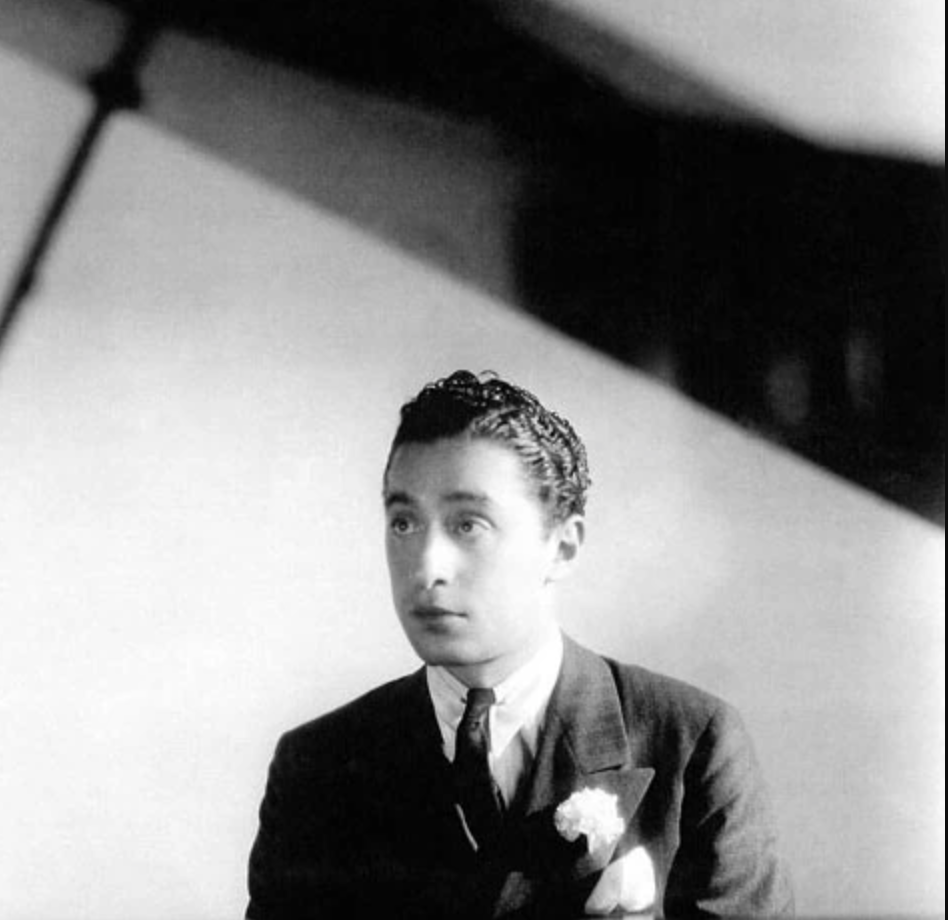
Harold Arlen
The lyricist Ira Gershwin said that the composer Harold Arlen would never “approach the simplest musical requirement or idea without first calling upon ‘the fellow up there’ — jabbing his finger at the ceiling.”
I cannot say that I have experienced this phenomenon yet.
I have, however, noticed that lyrical themes sometimes emerge which surprise me and lead a song in a different direction than I had originally intended.
And I have had the inspiring experience of writing a song which gradually became true.
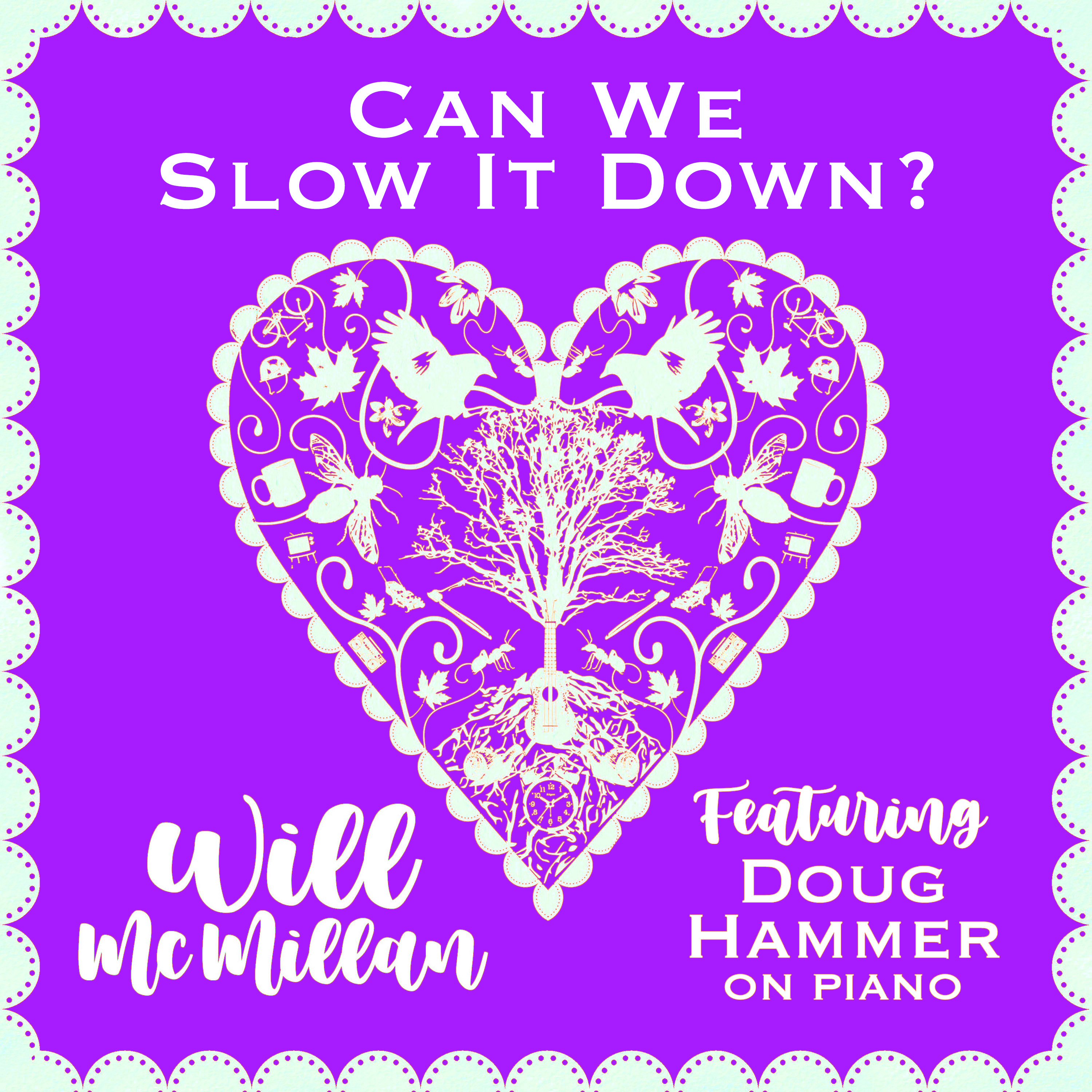
It is called “Can We Slow It Down?” — and I wrote it a couple of years ago when I was working full time at my day job in Harvard Square.
I realized recently when I was practicing it at home that my life has in fact slowed down since I began singing this song.
If you are curious, you can listen to two different versions of “Can We Slow It Down?” — the ukulele + GarageBand version at the top of this page and the piano/vocal version I released with pianist Doug Hammer by clicking here.
I will be singing it plus two other originals as part of a mini-set at a lovely open mic in Lexington — hosted by Nourish Restaurant on Massachusetts Avenue — on Tuesday, November 5, 2013, starting around 7:30 pm.