How About You?

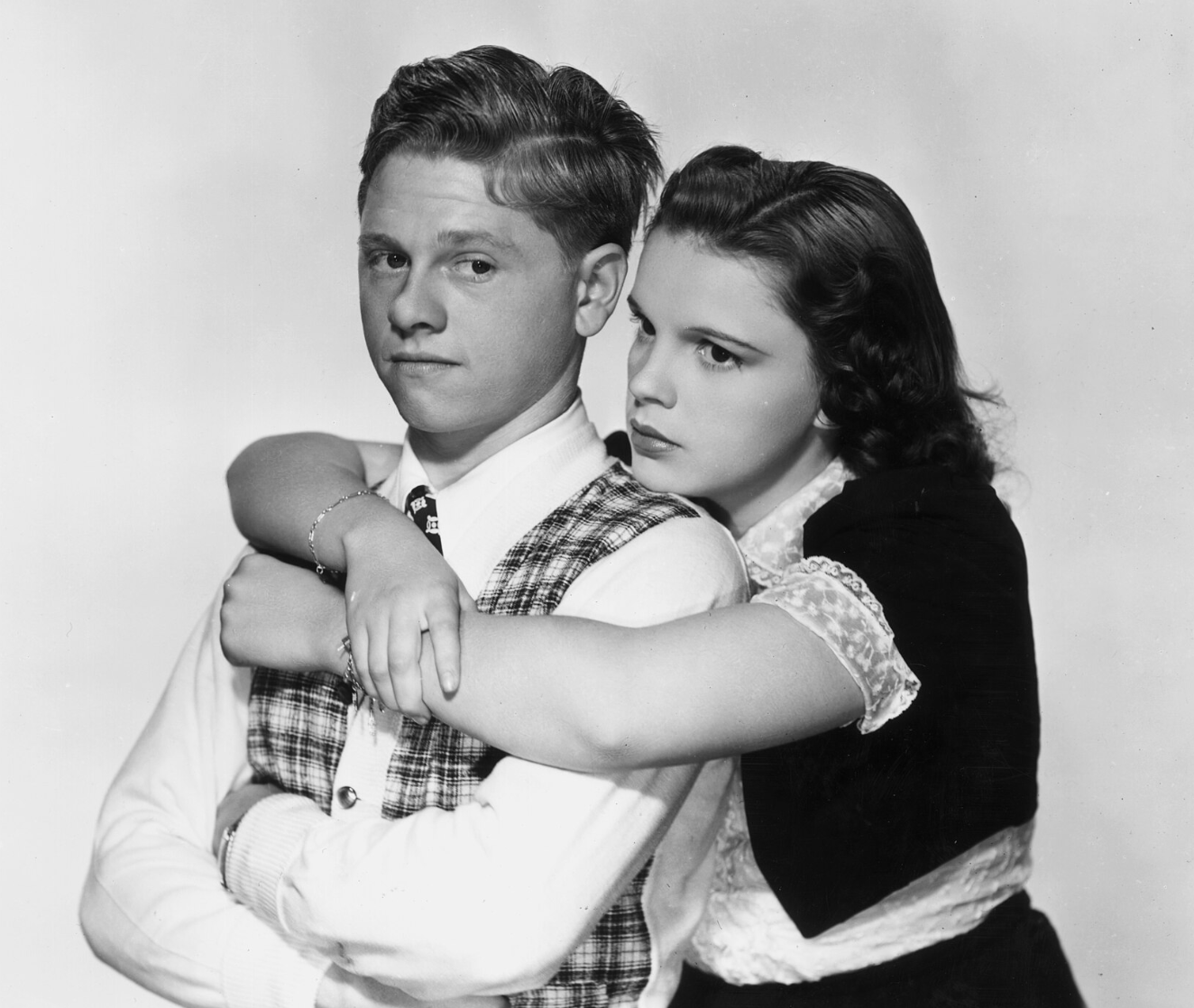
Mickey Rooney and Judy Garland

I recorded this sweet song as part on an hour-long program of music written for — or strongly identified with — Judy Garland.

It was written by Burton Lane and Ralph Freed for her and Mickey Rooney to perform in the 1941 MGM movie BABES ON BROADWAY.

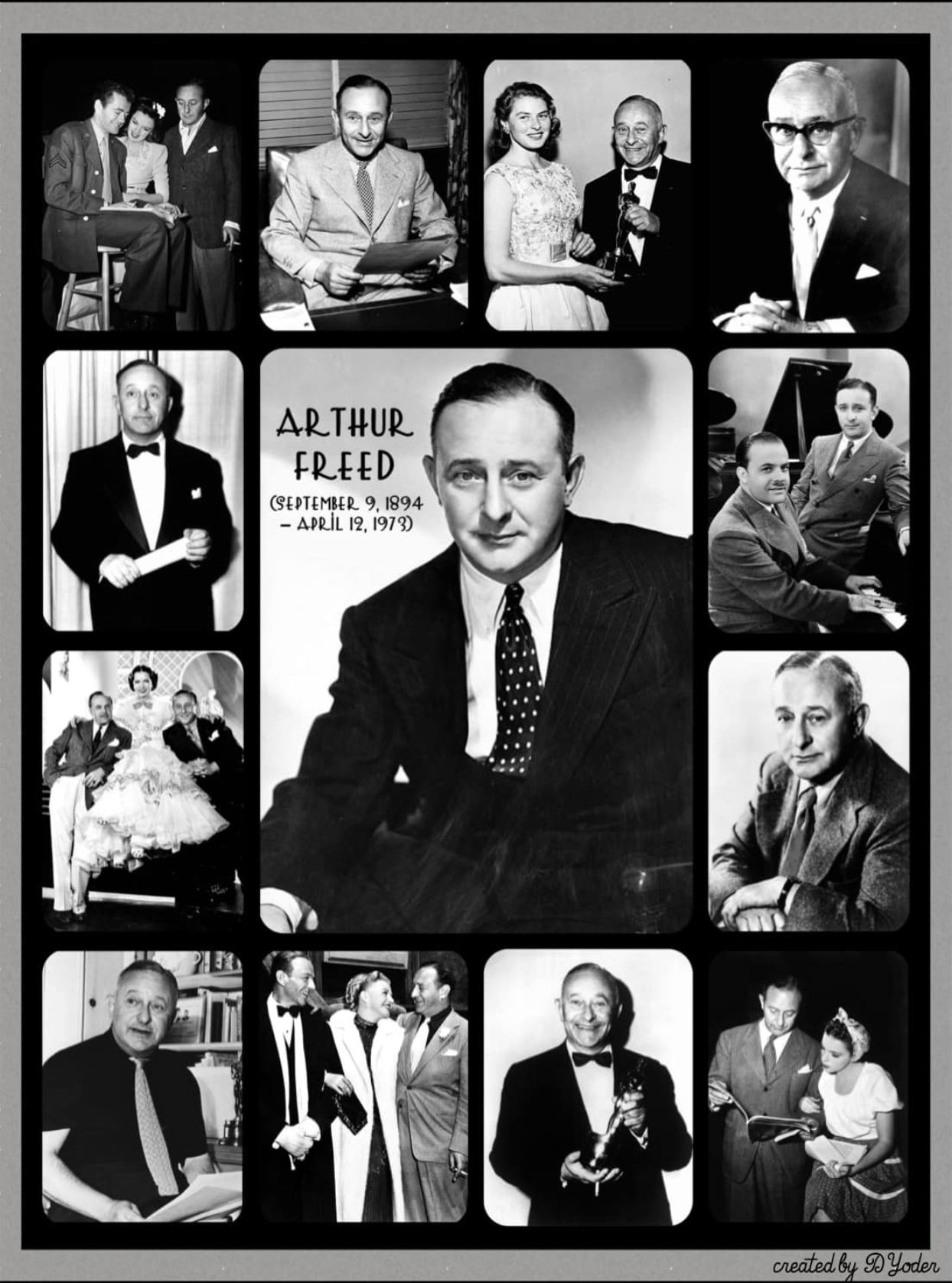
I learned from Wikipedia that the lyricist, Ralph Freed, was the baby brother of producer/lyricist Arthur Freed, who co-wrote the song “This Heart Of Mine” which I featured in a recent blog post,

Having spent a fair amount of time — especially during the summer — in Manhattan as a child and teenager, I savor all of the geographical references in the lyrics.

I only wish they had mentioned Chock Full o’ Nuts, my favorite place to get a burger (with ketchup, mustard and relish) plus a big orange drink — which was a mixture of orange juice, sugar and water, I think, churning endlessly in a big, glass dispenser until it was sold to thirsty customers.

Chock Full o’ Nuts started during the roaring ’20s as a chain of — no surprise — nut shops.

But when the Depression hit, the owner William Black pivoted and turned his stores into lunch counters where — according to Wikipedia — one could buy a cup of coffee and a cream-cheese-with-chopped-nuts sandwich for five cents.
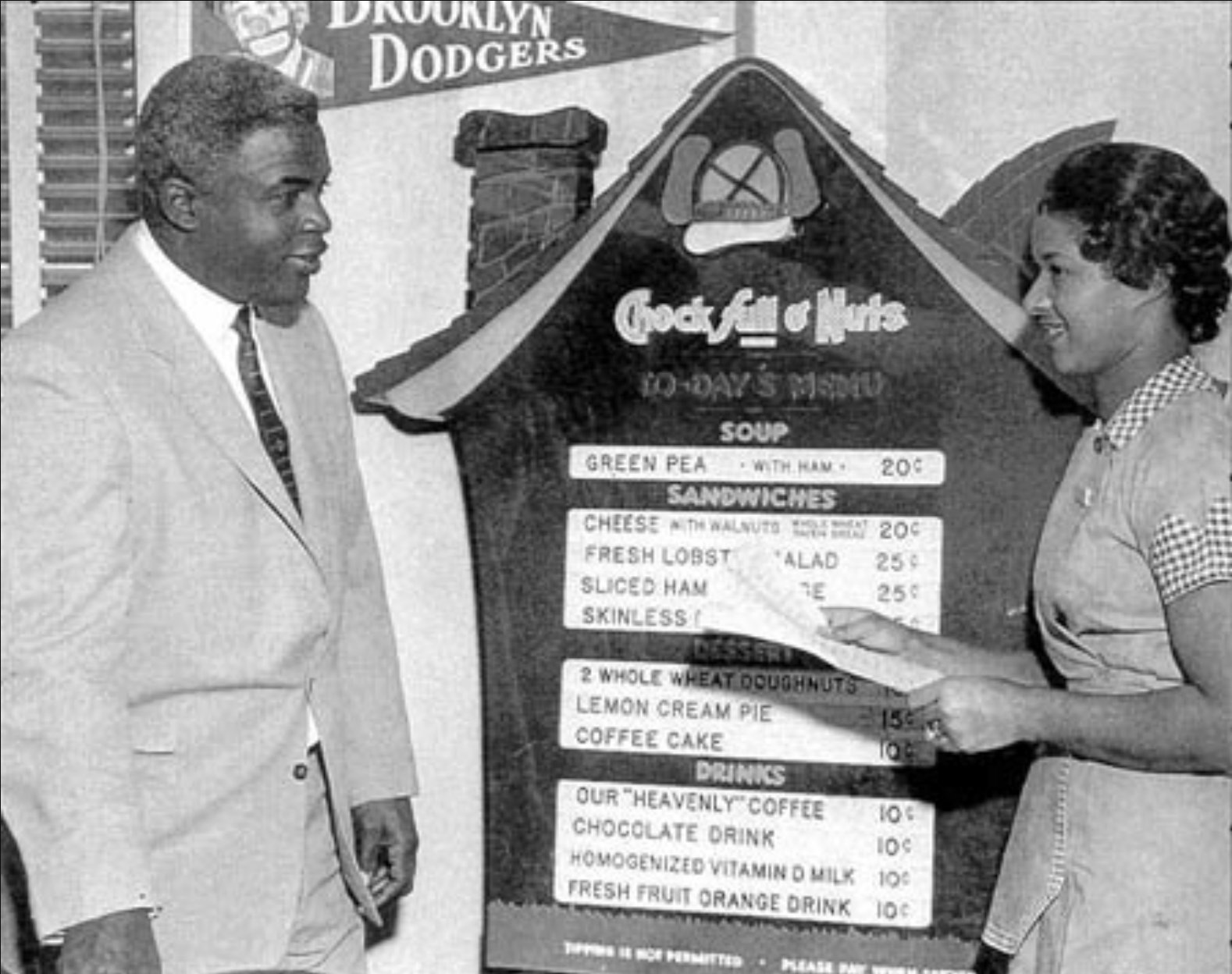
Jackie Robinson with a fellow Chock Full o’ Nuts employee

And his coffee proved to be so popular that he started selling it for people to make at home or in their office.

William Black — whose last name was originally Schwartz (which means black in Yiddish) — seems to have been a somewhat progressive employer.

Most of his company’s cooks and waitstaff were African-American, and when baseball superstar Jackie Robinson retired from playing, he became a vice president and director of personnel at Chock Full o’ Nuts.

Mr. Black was married to two female singers (not at the same time…) who performed his company’s radio and TV jingles. His second wife also became very involved with their family’s philanthropic efforts.

They gave millions of dollars to medical research and helped to start the Parkinson’s Disease Foundation.

And there is even a William Black medical research building at Columbia University’s medical center (Mr. Black was a Columbia alum…)

But back to “How About You?”.
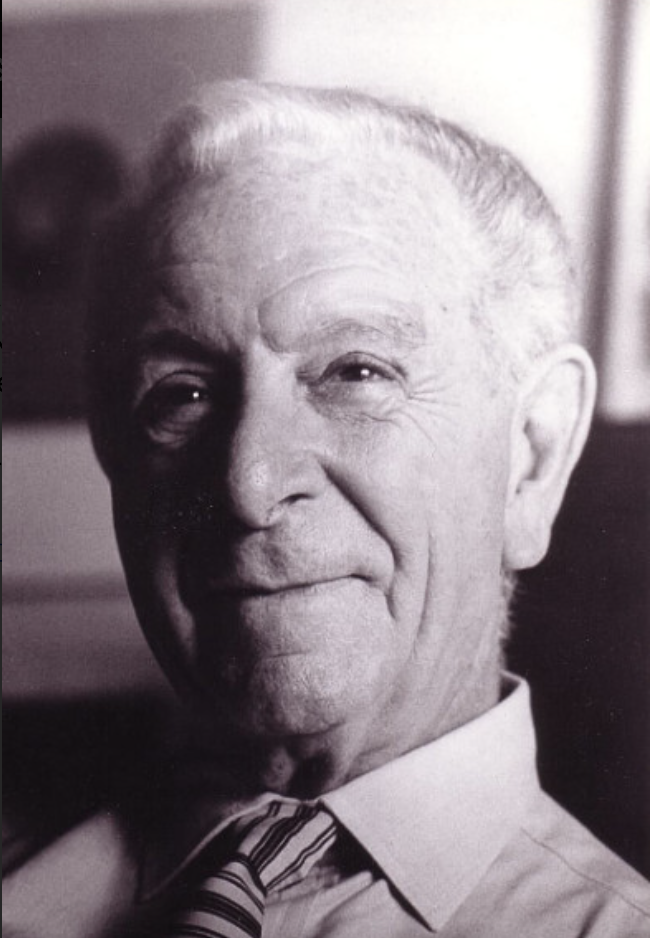
Burton Lane

Burton Lane was a very successful composer — originally from Manhattan — who worked at various movie studios in California.

Interspersed with his time in Hollywood, he co-wrote songs for Broadway shows including FINIAN’S RAINBOW (with Yip Harberg) and ON A CLEAR DAY YOU CAN SEE FOREVER (with Alan Jay Lerner).

He is also one of several people who claim credit for bringing Judy Garland to the attention of the powers-that-be at MGM after he saw her perform with her two older sisters at the Paramount Theatre in Los Angeles.

So not only do we have Mr. Lane to thank for the great songs he co-wrote, we also can (at least partially) thank him for helping to bring Judy Garland and her extraordinary gifts as a performer to a much wider audience.

I would also like to thank Doug Hammer for his playful piano impulses and painstaking production skills as well as Stephen C. Fischer for his patient and collaborative graphic design work.

If you’d like to stream our version of “How About You?” you can click here.

Every stream, every “like,” and every “save” encourages the mysterious algorithms of the digital music platforms to share a recording with other potential listeners.

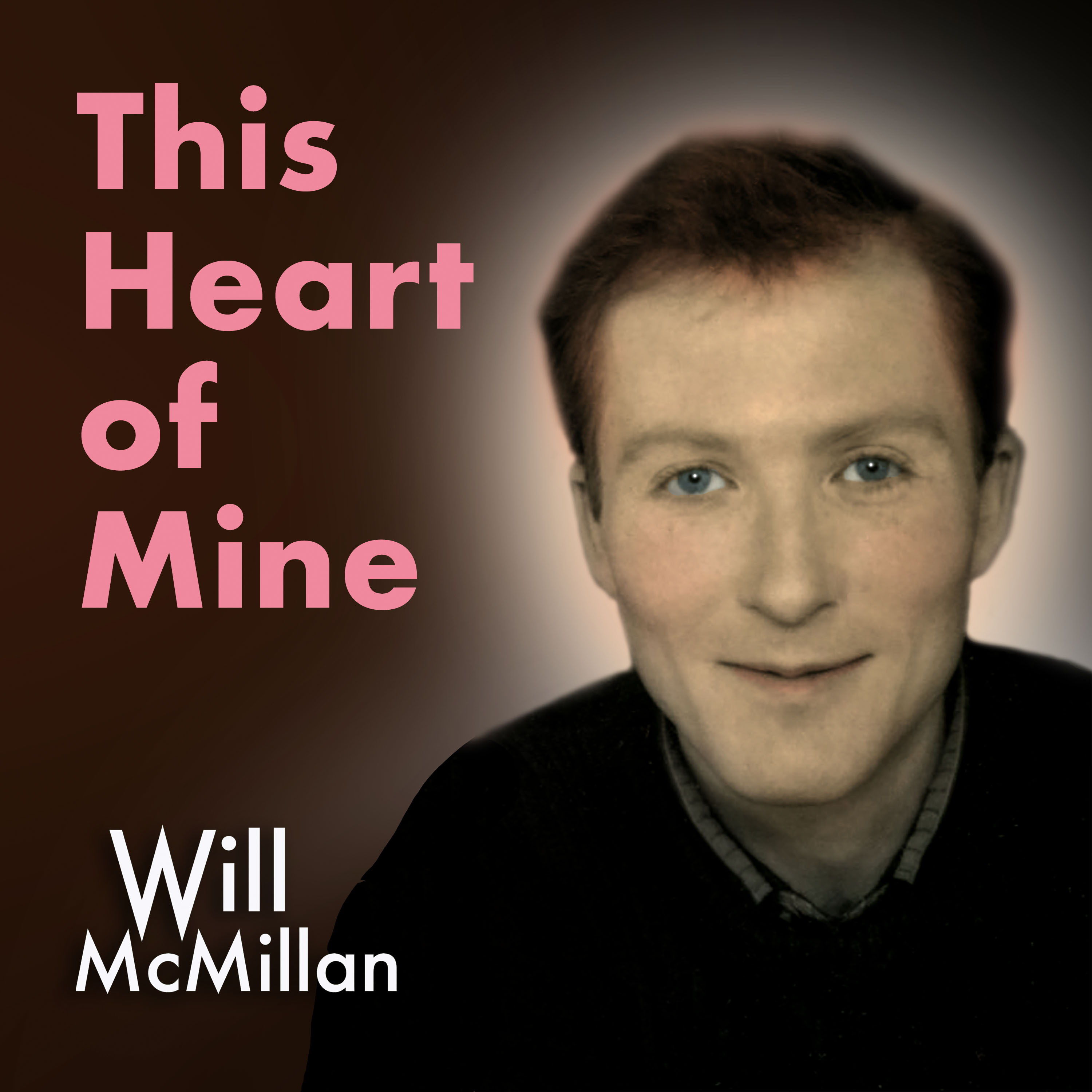
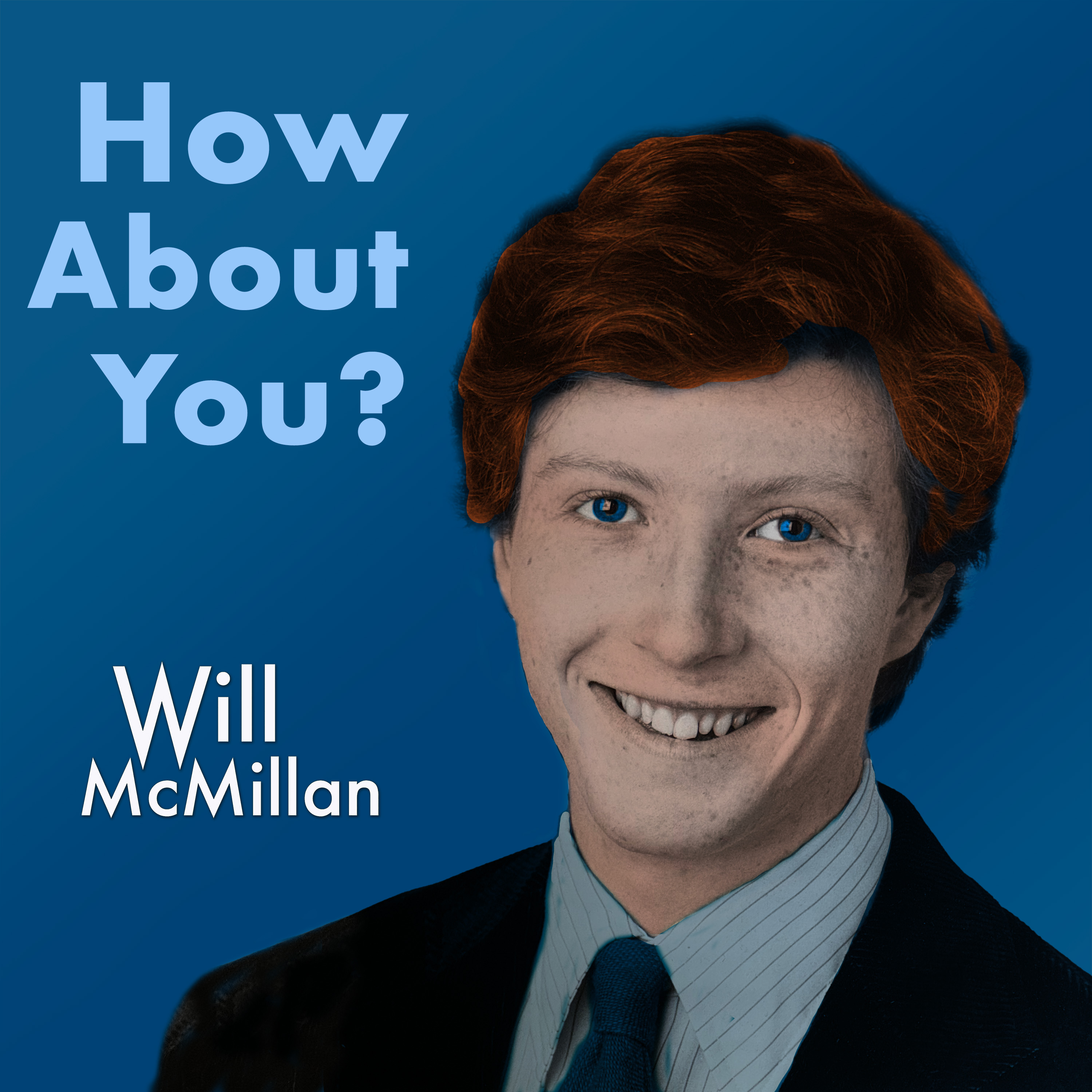
Here’s the graphic for “How About You?” which features what was probably my last professional headshot as a teen performer in NYC.
One final note…

As I was drafting this blog post, the New York Knicks were engaged in an extraordinary series of basketball games which culminated in them becoming NBA champions.

I especially like New York in June when the Knicks win the NBA playoffs after a 53 year drought!

How about you?

Although I am not a big basketball fan, I became swept up in the drama and virtuosity of the NBA playoffs.

Twice I went to bed early — thinking the Knicks had lost — and awoke to discover that they had triumphed.

Wow!

Oh, me of little faith…

Since their victory, I have been savoring the enthusiasm of the Knicks’ fans — in NYC and around the country.
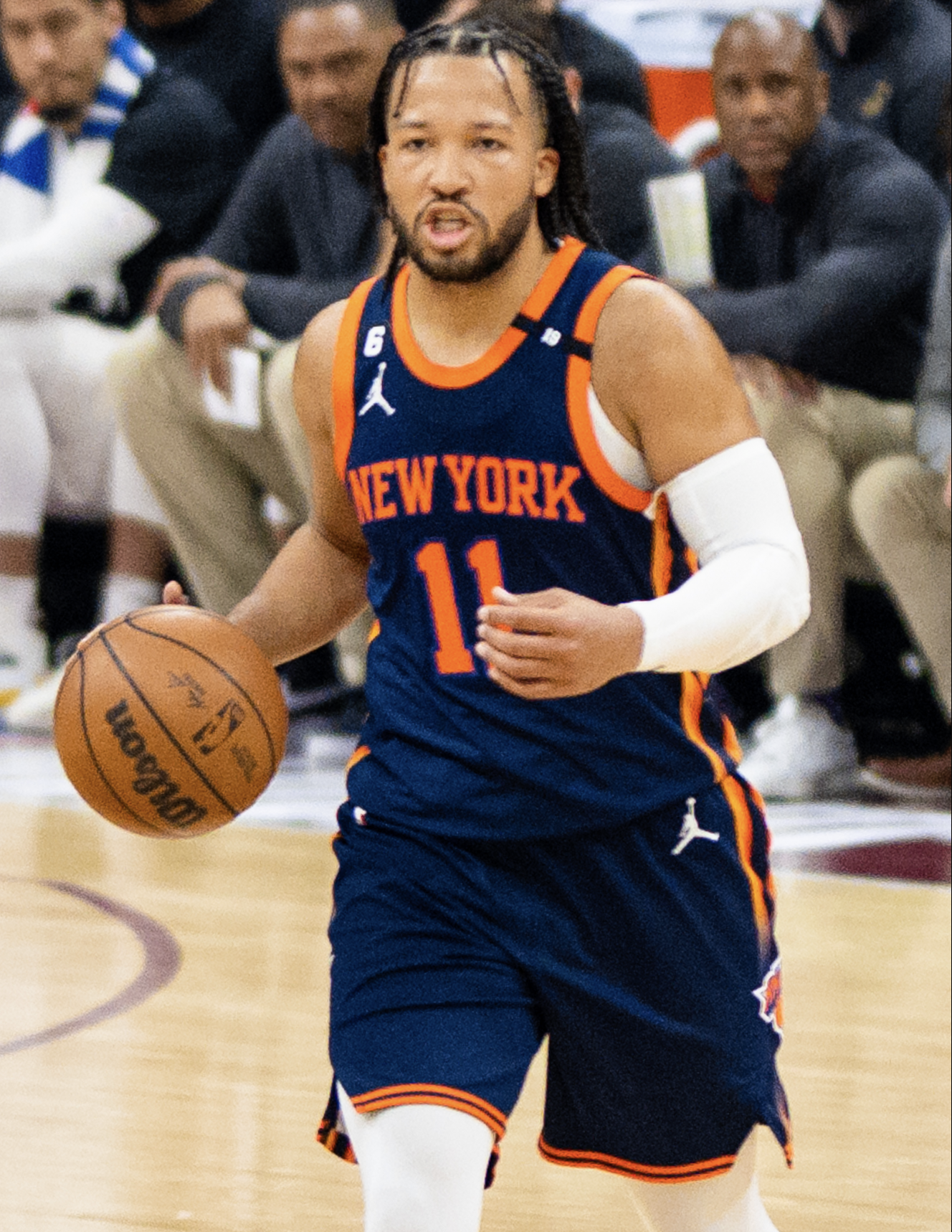
Jalen Brunson

And I love what one of their star players Jalen Brunson said following their record-breaking comeback from 29 points down to win game four.

“You’re allowed to think about the worst possible scenario, but you gotta go out there and do something about it.”

Deep breath in.

Deep breath out.

Those are great words to live by…

Thank you, Knicks, for bringing millions of us — from many different political and cultural and ethnic backgrounds — together during this challenging time here on planet earth.

You gave — and continue to give — us hope and joy and inspiration.

And THANK YOU to everyone who is willing to read and listen to yet another one of my blog posts.

This Heart Of Mine…

Image by xiSerge from Pixabay

Thank you to everyone who continues to explore my blog even though I have not been posting a lot lately.

It is very exciting — and satisfying — to check my stats and see the many different blog posts people have visited during the past week.

One blog post which gets a surprising (to me) amount of traffic is about the composer Harry Warren.

He wrote the music for the song in the player at the beginning of this blog post along with lyricist Arthur Freed.

You can click here if you are curious to learn more about Harry Warren by reading my extremely loooong blog post from eight years ago (which also includes recordings of several of his hit songs).

Mr. Warren and Mr. Freed wrote “This Heart Of Mine” for a 1944 Metro-Goldwyn-Mayer (MGM) musical called the ZIEGFELD FOLLIES which starred Fred Astaire.

I think I first heard it sung by Judy Garland, who recorded it the following year for Decca Records.

Arthur Freed also wrote the lyrics for a bunch of other hit songs — such as “Singing In The Rain,” “You Are My Lucky Star,” and “Make ‘Em Laugh.”

You can click here to check out his Wikipedia page if you are curious to learn more about him.

I haven’t read any biographies about him (yet) but according to Wikipedia, he lived a fascinating life.

Composite Images of Arthur Freed by Diane Yoder

He was born in South Carolina in 1894, and ended up attending a very prestigious prep school in New Hampshire — Phillips Exeter Academy. I am guessing he was probably one of very few Jewish students on campus — and according to Wikipedia, he became interested in writing poetry there.

After prep school Mr. Freed ended up in Chicago and performed with early versions of the Marx Brothers act (!!!) in vaudeville.

He also wrote special material for them, which led to co-writing enough successful songs that Hollywood beckoned…and he was hired to write songs for early MGM musicals.

After many years at MGM, Freed transitioned from songwriter to producer, working (as an uncredited associate producer ) on THE WIZARD OF OZ and then officially producing his first movie, BABES IN ARMS.

Both of these films, as you probably know, starred Judy Garland.

Mr. Freed went on to produce many more of Garland’s movies including LITTLE NELLIE KELLY, FOR ME AND MY GAL, THE CLOCK, and MEET ME IN ST. LOUIS — which is where she met her second husband, the director Vincente Minnelli, whom Freed had brought from New York City to work at MGM.

According to Wikipedia, Freed hired great talent and then gave them free rein to do their thing — whether it was choreography, costumes, set design, songwriting, direction, etc.

He also gave himself free rein to do some very odd and abusive things, such as exposing his penis to a young Shirley Temple when she came for a visit to discuss doing a movie at MGM — and making sexual advances towards her mother as well.

Temple wrote about this incident in her autobiography — and apparently Mr. Freed experienced no censure as a result of his horrible behavior…

Deep breath in.

Image by Miroslav Kaclík from Pixabay

Deep breath out.

This reminds me of the ongoing conversations about Michael Jackson’s artistic and personal legacies…

Does one discard and avoid the music/art/products made by someone who does horrible things to other beings?

One of Mr. Freed’s most famous movies is SINGING IN THE RAIN, which re-used a bunch of his early hit songs.

Do we stop delighting in the the extraordinary dancing and singing of this movie because the producer was at times a perverse, abusive creep?

Perhaps this is something each one of us must decide for herself/himself…

I apologize for veering into this intense psychological and ethical territory.

I thought this blog post would be more light-hearted — to match the mood of the song.

However, human life is many-layered… full of contradictions, fallibility and mistakes.

Thank you to the (sometimes very flawed) songwriters who have given us wonderful music to lift our spirits year after year after year.

Graphic Design by Stephen C. Fischer

Thank you to pianist/producer Doug Hammer for his tremendous collaborative gifts.

Thank you to graphic designer Stephen C. Fischer for his ongoing work on behalf of my music.

Thank you to the photographers at Pixabay and to Diane Yoder for her composite image of Arthur Freed.

And thank YOU for reading and listening to another one of my blog posts.

If you’d care to stream this song — and maybe even “like” it — on your favorite music streaming platform, you are welcome to click here.

And you are always welcome to visit my website — and sign up for my very sporadic and under-utilized emailing list — by clicking here.