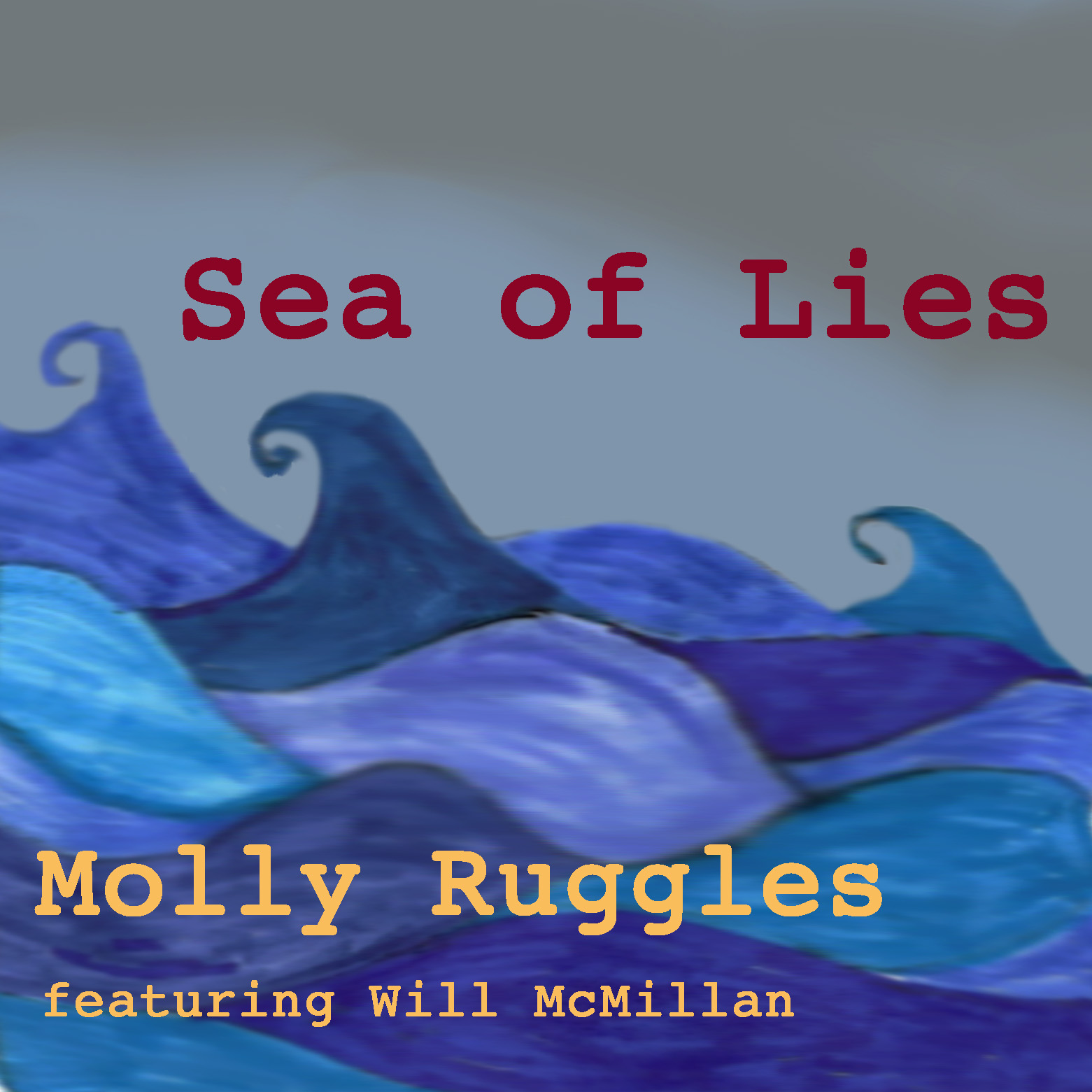
My friend Molly Ruggles recently released a new song called “Sea Of Lies.”
She was inspired to write it by the ongoing challenge of sorting through all the news and advertising and sound bites and spin and “blah blah blah” coming at us on an hourly/daily/weekly/monthly/yearly basis.
I originally learned a version she created for four voices (the same four who sang on “My Sweet Honeydew (A Cappella).”
But then she decided to re-write/re-arrange/re-focus it for two voices plus her piano accompaniment.
That’s the version she ended up releasing to various streaming platforms.
It is the sort of melody — and message — which easily gets stuck in my brain on auto-repeat.
“Need a little peace… just a hint of hope — with a hand to hold, maybe I can cope.”
Molly sings lead vocal plus some extra harmonies.
I sing a few harmonies.
I think my favorite moment of the song is when we both sing “Save me… please save me” in harmony.
Molly also designed the artwork to accompany her song.
She is a multi-talented human being.
I am curious to learn — or be reminded — about how other human beings deal with all of the (dis)information coming at us 24/7.
I know some wise people turn off their phones and computers for hours at a time.
And others make sure to exercise (walk, swim, bike, and more), do some gardening, sit in meditation, cook with friends, take a bath, read a book, lie in a hammock, do some yoga, and/or cuddle with their loved ones (human, feline, canine and otherwise).
Deep breath in.
Deep breath out.
What are YOUR coping strategies these days?
One of mine is — no surprise — making music and doing music-related activities such as this blog.
I also find a lot of hope and inspiration learning a few details about people who are brave enough to run for office — whether on the town, city, county, state or national level — all around our country.
And then there are the flowering plants of the world!
They always lift my spirits.
Thank you to Molly for writing this song and then asking me to sing harmony with her.
Thank you to the generous and talented photographers at Pixabay.
And thank YOU for reading — and listening to — yet another blog post from me…
I finished my Music Together classes at the end of June, and I only have one more gig this summer (at the retirement community, Longview, where my mother lives in Ithaca, NY).
So I have a little more time on my hands — hence my slightly more frequent blog posts…
Right now I am visiting family in upstate NY.
During my nocturnal walks around the countryside, I have been very happy to be reacquainted with the extraordinary magic of fireflies.
This summer they seem to be particularly healthy and active.
It was not easy finding a public domain photo of fireflies at night on the internet.
Thank you to Wikimedia Commons and a photographer named Tyler Savitsky for the image above.
As with so many natural phenomena, it is somewhat impossible to describe in words the majesty and miracle of a field full of fireflies at night.
To me it feels like I am entering nature’s (and/or G-d’s) brain — with each blink of a firefly corresponding to the firing of a neural synapse.
According to Wikipedia there are many different varieties of firefly‚ and most of them have the amazing ability to make some part of their body photoluminesce a.k.a. light up.
Among other things, this helps in the process of attracting and selecting a mate.
You can click the link two paragraphs above to learn a bunch of fascinating things about fireflies.
For example, in certain human cultures they are especially revered — such as in Japan, where there are parks created to watch them.
Deep breath in.
Deep breath out.
A field of fireflies at night also reminds me of a sky full of stars, which is the theme of today’s throwback blog post.
Not the woman in Greek mythology whose wedding gift/jar/box released evil sprits upon the world — along with Elpis aka Hope (“a single blessing to ease mankind’s suffering” according to a Greek mythology website I found online).
And not the jewelry company.
I am a fan of the music streaming company named Pandora.
However, I am also aware that the mythology of Pandora IS quite resonant right now.
Some days it does indeed feel like a bunch of evil spirits are ravaging our neighborhoods, our country, other countries, and our planet.
Thank goodness for Elpis ie: hope!
I had completely forgotten this crucial part of the myth — that the gods give us hope as an antidote/counterbalance to all of the evil spirits released by Pandora.
Deep breath in.
Deep breath out.
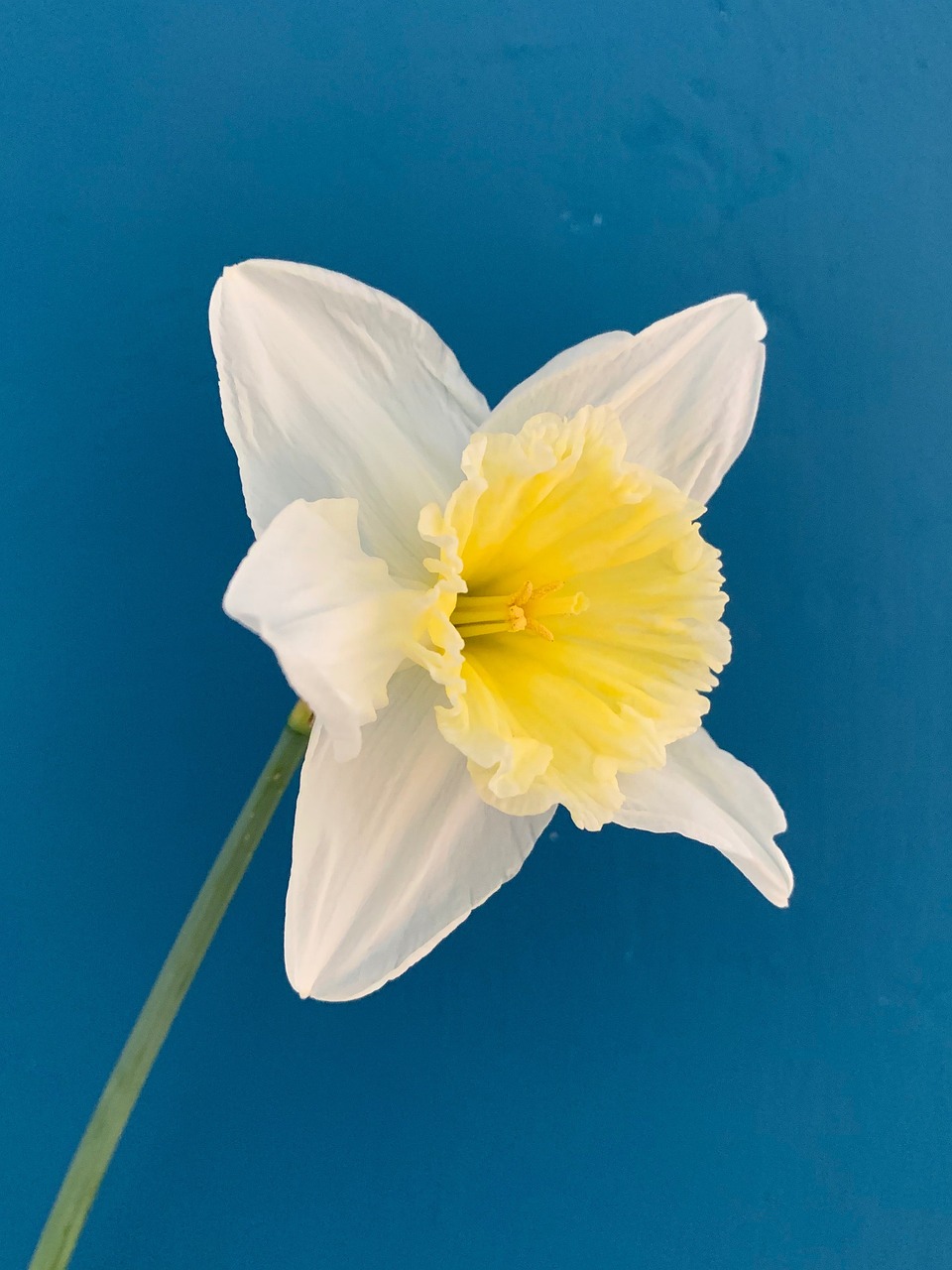
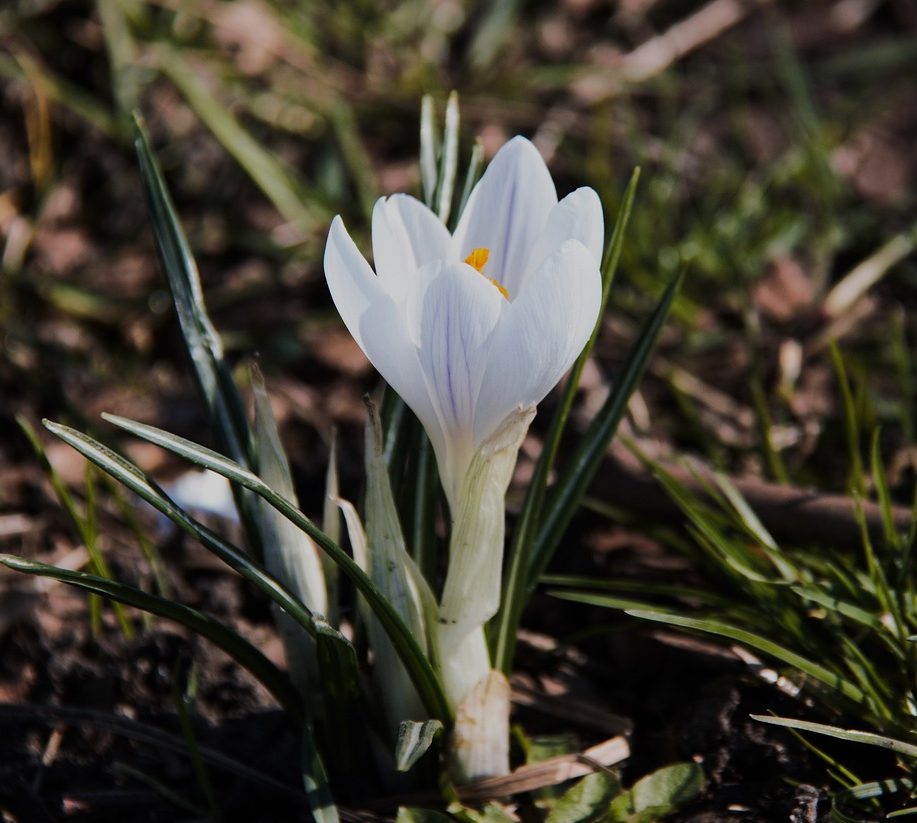
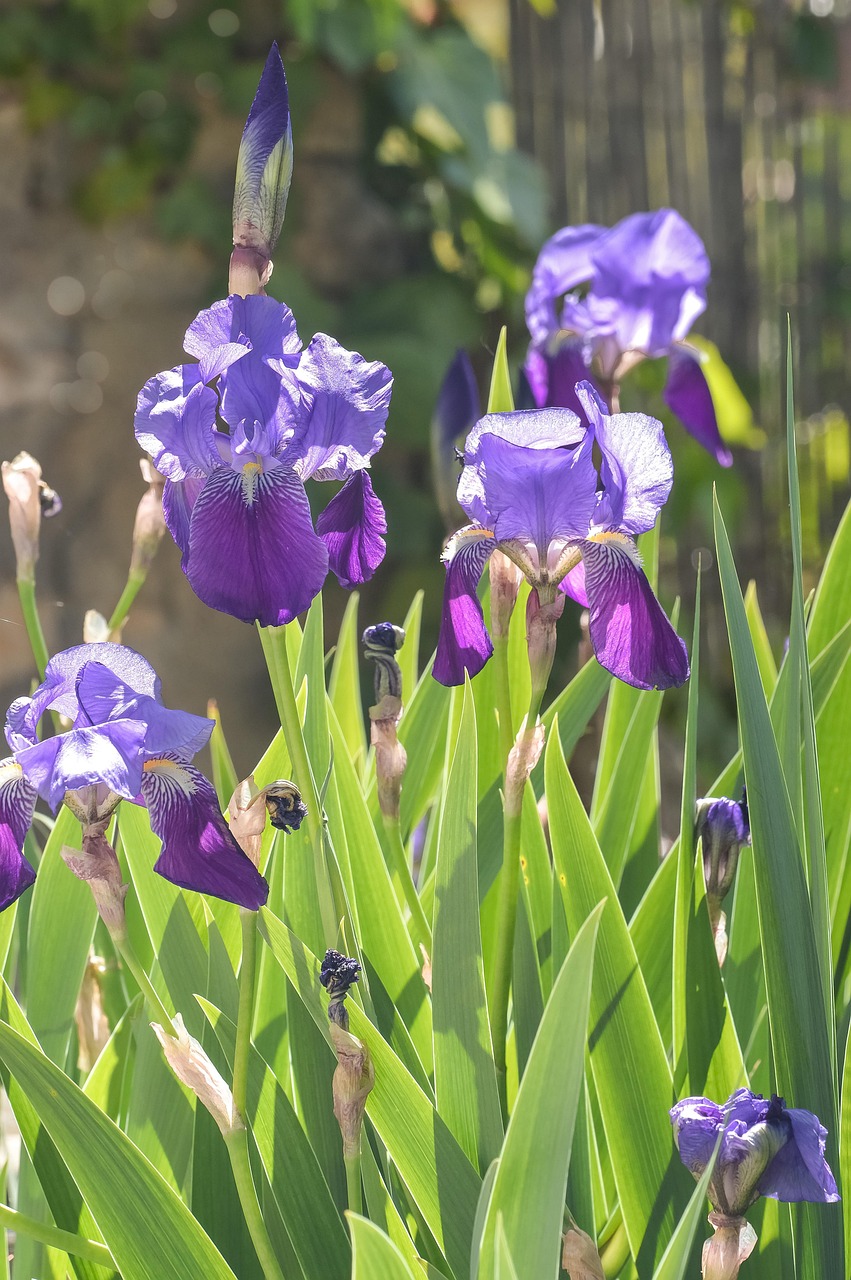
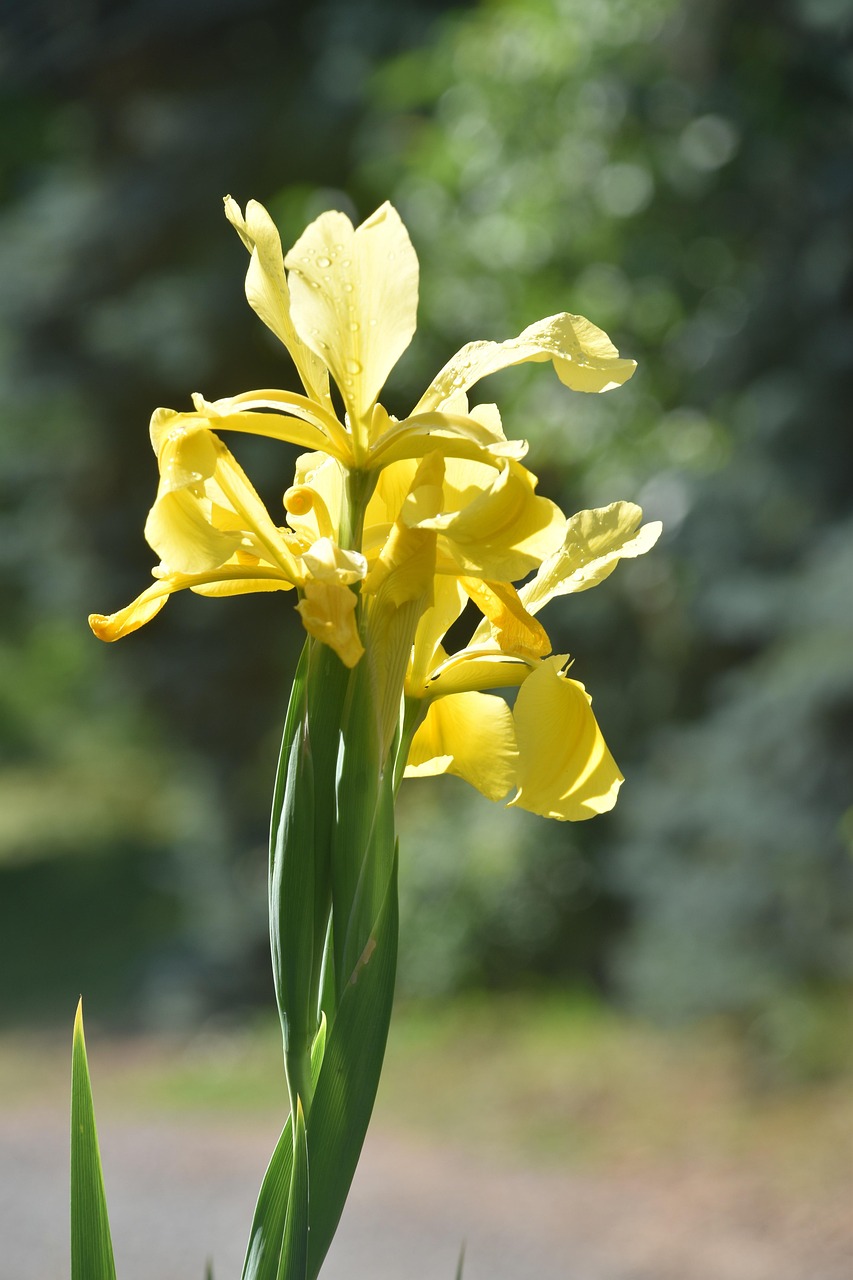
According to the Greek mythology website mentioned above, Elpis/hope is often depicted as a young woman carrying flowers — hence the flower images in this post.
And music can inspire a sense of hopefulness in many of us — so maybe Pandora isn’t a horrible name for a music streaming company after all.
Now you may be wondering why I am choosing in this blog post to praise the music streaming company named Pandora?
It is because they have been the most consistent beacon of helpfulness and humanity I have encountered during my five-year foray into the business of streaming music.
Although they are currently part of a larger company, Sirius/XM, their cultural norms of accessibility and friendliness have not (yet) been contaminated/eliminated in a short-sighted quest for increased profit.
I love that all of the Pandora staff members with whom I have interacted are themselves musicians — and many of them use Pandora to share their own music with the world.
I have been told that Pandora listeners are located only in the USA.
But apparently some people around the world are clever enough to use a VPN — a virtual private network which, according to NordVPN “protects your internet connection and privacy online (by creating) an encrypted tunnel for your data.”
If you use a VPN, you can stream music via Pandora from anywhere there is internet service on planet earth (if I am understanding this VPN option correctly).
I think using a VPN also allows for some privacy regarding one’s internet history — which might be wise for more of us to consider using?
Anyways, back to Pandora…
The Pandora staff have created a bunch of free promotional tools which musicians like me can use — such as creating personalized audio messages to share with one’s listeners.
One can also feature a particular song for up to two months at a stretch (six times per year…)
And every month Pandora offers two free training sessions via Zoom, which allow independent musicians to learn how to use their promotional tools and — more importantly — to build relationships with real human beings.
This is the crucial piece that so many companies seem to have completely devalued in recent years.
Many (if not most) of us human beings want to build relationships with the people in our daily lives — whether it’s our mail carrier, or a teller at our local bank, or the staff at our local grocery store, or the folks who run our favorite restaurant, or the doctors/nurses/staff at our local hospital, etc. etc. etc.
Chatbots may save money, but they do not help to build actual human relationships.
And it’s actual human relationships which tend to create a foundation of customer loyalty.
Another deep breath in.
And deep breath out.
As regular readers of my blog are well aware, there is a steep learning curve when one starts releasing music to be streamed via companies like Pandora, Apple Music, YouTube, Spotify, Tidal, Amazon Music, etc.
In addition to recording a song, mixing it and then mastering it, one also needs to get a graphic designed for it, select a company to distribute it (I use CD Baby), register it with the Copyright Office in Washington DC, and then enter it into one’s account at various organizations which collect money for the use of one’s song — including ASCAP, SoundExchange, Songtrust and the Mechanical Licensing Collective.
CD Baby used to have wonderful customer service until it was bought by another company which made a lot of changes…
And now the company which bought CD Baby — Downtown Music — is being sold to Universal Music Group (one of the three largest music conglomerates) after they were given permission from a European tribunal weighing the anti-trust implications of such a purchase.
G-d only knows what changes this purchase will bring into the lives of tens of thousands of independent musicians like me who currently use CD Baby to distribute our music…
Maybe UMG will use some of their enormous clout on our behalf?
Maybe they will improve customer service at CD Baby?
Or maybe they will find new ways to cheat, fleece and otherwise take advantage of us?
Time will tell…
Yet another deep breath in.
And deep breath out.
I can attest to the effectiveness of Pandora’s promotional tools.
My total streams on Pandora recently surpassed 200,000.
So I will continue to use these promotional tools AND will continue to remain grateful for Pandora’s terrific staff.
The song I included at the beginning of this blog post was written for a show called FUNNY FACE which starred Fred Astaire and his older sister Adele in the1920s.
I attempted to release this version, which I recorded with pianist Doug Hammer, last year.
But CD Baby mysteriously messed up the metadata attached to the recording — listing Doug as a primary artist rather than a featured artist — and he asked me to remove it from distribution so that it wouldn’t confuse the fan base (much larger than mine) he has built for his solo piano compositions.
Sadly, I have been unable to get any definitive answer from the customer service staff at CD Baby about how this mistake happened in the first place and whether I’ll ever be able to re-release it with the correct designation (featured artist not primary artist) for Doug.
Thank you to the Gershwin brothers for writing it in the first place.
Thank you to Pixabay for the lovely photos of spring flowers.
And thank YOU for reading and listening to another one of my blog posts.
You are always welcome to visit my website — willsings.com — if you are curious to learn more about my musical life here on planet earth.
I’ve begun a new postcard-writing campaign with a bunch of people in my neighborhood.
We are reminding Wisconsin voters that they have an important Supreme Court election coming up on April 7th.
It’s a small task.
But doing something — anything — to withstand/offset the chaotic cyclone of destruction being unleashed by our current political leadership helps me stay connected to a tiny sense of Elpis/Hope.
The only flowers remaining these days in my neighborhood are chrysanthemums and asters.
They are a hardy bunch, bless them.
We’ve had a few frosts; so most bees and butterflies are gone…
I’m already counting down the days to the winter solstice, when daylight in the Northern Hemisphere will again start to lengthen!
In recent weeks I’ve re-discovered the pleasures of tea — my current favorite being Celestial Seasonings’ Bengal Spice with some honey — and soup (today chicken, squash, carrot, potato, onion, garlic and ginger, are simmering together on the stove…)
They also both opened my eyes to how complicated, interconnected and corrupt our human-created world can be… especially when our wounded hearts lead us astray into greed, retribution, domination and revenge.
I watched several episodes before bedtime; so it is probably not a surprise that I woke up in the middle of the night and was unable to fall back asleep…
So I got out of bed and skimmed my inbox — which these days means that I deleted inumerable emails asking for money from all sorts of political candidates and organizations — until I found two uplifting pieces of information.
1) News that Catherine Cortez Masso is projected to win her senate race here in the USA.
As Michelle explains it on her Boomer Eco Crusader blog, ikigai is similar to the French idea of raison d’être — which means “reason or justification for existence.”
And one can explore ikigai by reflecting upon four ideas/concepts/topics:
You are always welcome to visit my website — where you can find many songs and learn more about my musical life here on planet earth if you are curious.
You can also find “A Beating Heart” on various digital music platforms by clicking here.
You can also find me singing — with Doug Hammer playing his Schimmel grand piano — on Spotify, Pandora, Apple Music, YouTube and other digital music platforms.
Any song you “like” or “heart” or add to one of your playlists will improve the algorithmic activity of my music there!
As longtime readers of my blog probably recall, when I was laid off from my day job as assistant director of the Cambridge Center for Adult Education seven years ago, I decided to devote my life to making music.
A few months after my lay-off, a Boston-area jazz pianist named Joe Reid reached out to see if I might like to do a gig at the retirement community where his dad lives.
I had met Joe several years earlier — when HE was in the midst of a life transition from working full-time as a lawyer to working full-time as a musician — and promptly said, “Yes!”
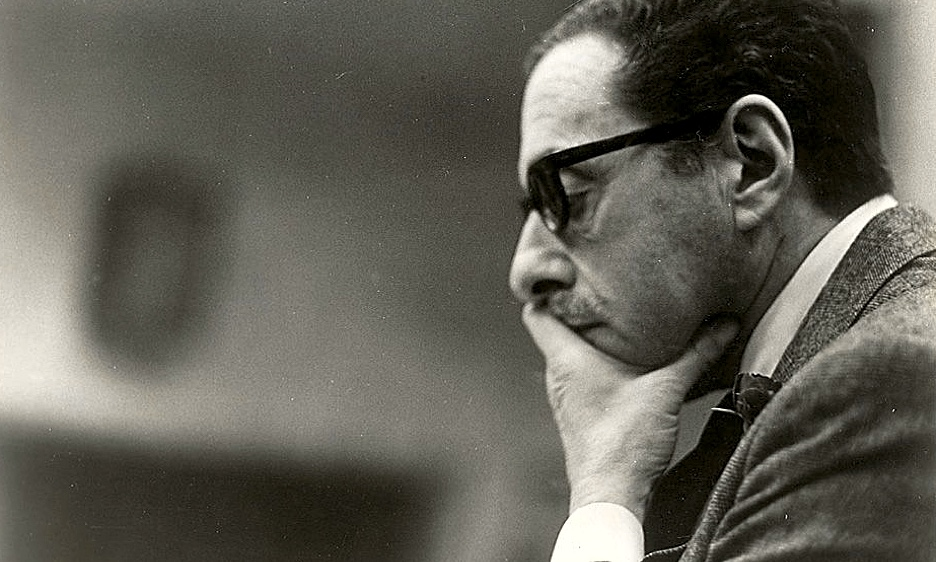
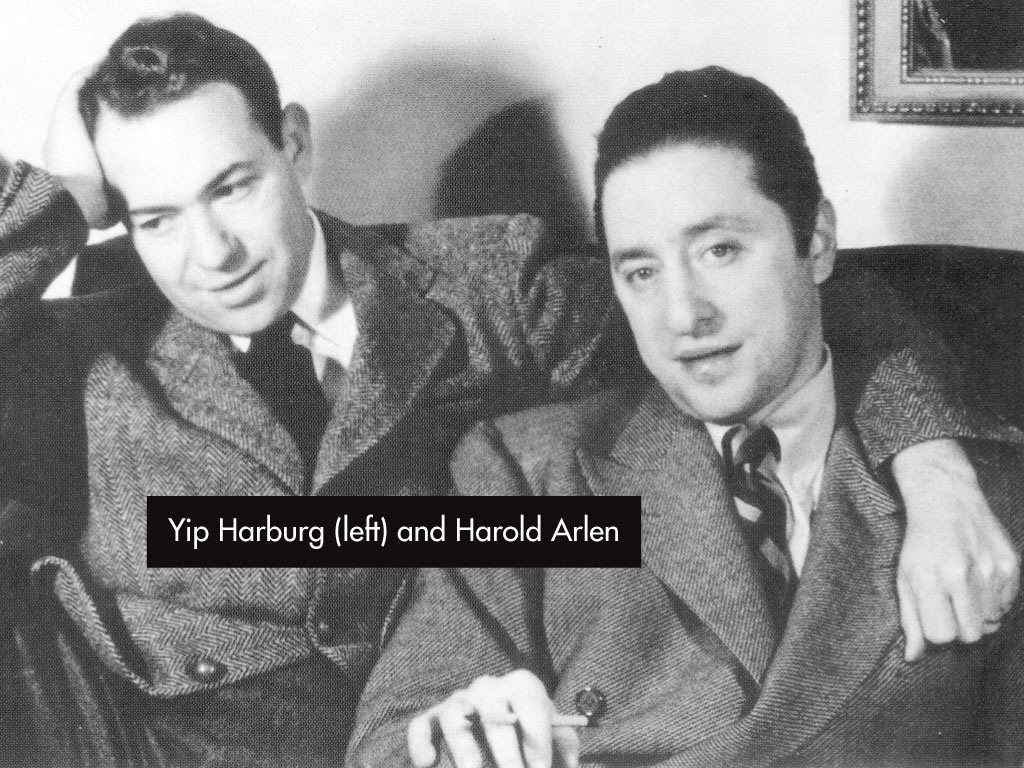
We needed to prepare an hour of music, and I mentioned that I had long loved many songs co-written by composer Harold Arlen — a list which includes “My Shining Hour,” “I’ve Got The World On A String,” “Accentuate The Positive,” “Anyplace I Hang My Hat Is Home,” “Come Rain Or Come Shine,” “Blues In The Night,” “That Old Black Magic,” “If I Only Had A Brain,” “Over The Rainbow,” “Happiness is Just A Thing Called Joe,” “Let’s Fall In Love,” “Get Happy,” and “It’s Only A Paper Moon.”
I had sung a few of these songs in a program of music featuring the lyrics of Johnny Mercer with singer Bobbi Carrey and pianist Doug Hammer — because one of Mr. Arlen’s many collaborators was Mr. Mercer.
And I was familiar with others due to the movie version of The Wizard Of Oz, for which Mr. Arlen composed the music and Yip Harburg wrote lyrics (and a lot of uncredited dialogue — a topic I will explore in a future blog post dedicated to Yip).
I biked over to Joe’s house — in the town next to mine — with a bunch of sheet music.
We spent about 90 minutes running through thirteen songs — picking comfortable keys and exploring tempos/feels for each of them.
And that was it for rehearsing with Joe.
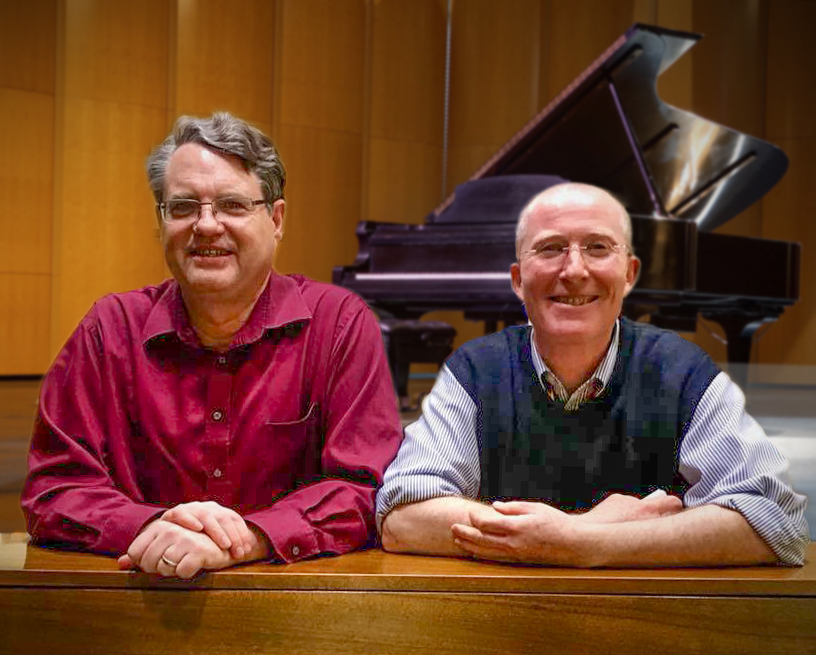
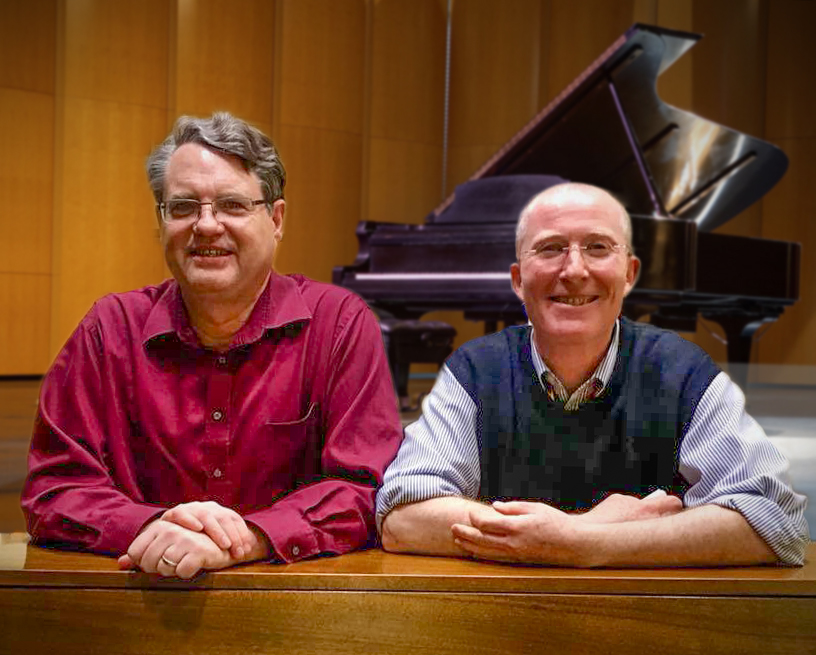
Joe (on the left) is very much a “let’s-trust-in-the-moment” kind of musician who welcomes improvisation and spontaneity.
I, too, value spontaneity — and I also appreciate structure.
So I booked time with pianist Doug Hammer at his studio north of Boston.
We recorded all of the Arlen songs once or twice so that I could have a set of piano-only tracks to play on my iPod as I walked around Arlington memorizing lyrics.
And some of the versions we recorded — such as the version of “It’s Only A Paper Moon” included in the player at the beginning of this blog post — came out surprisingly well.
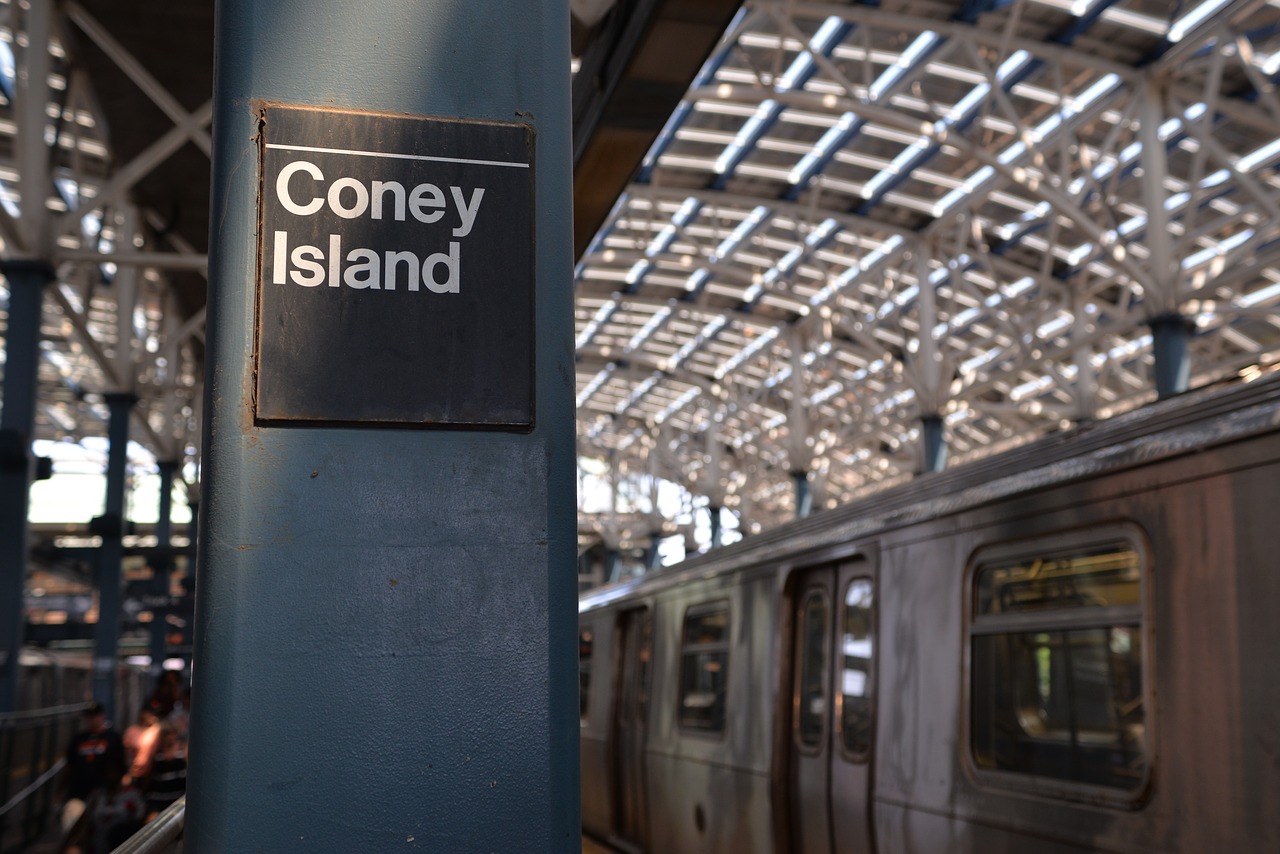
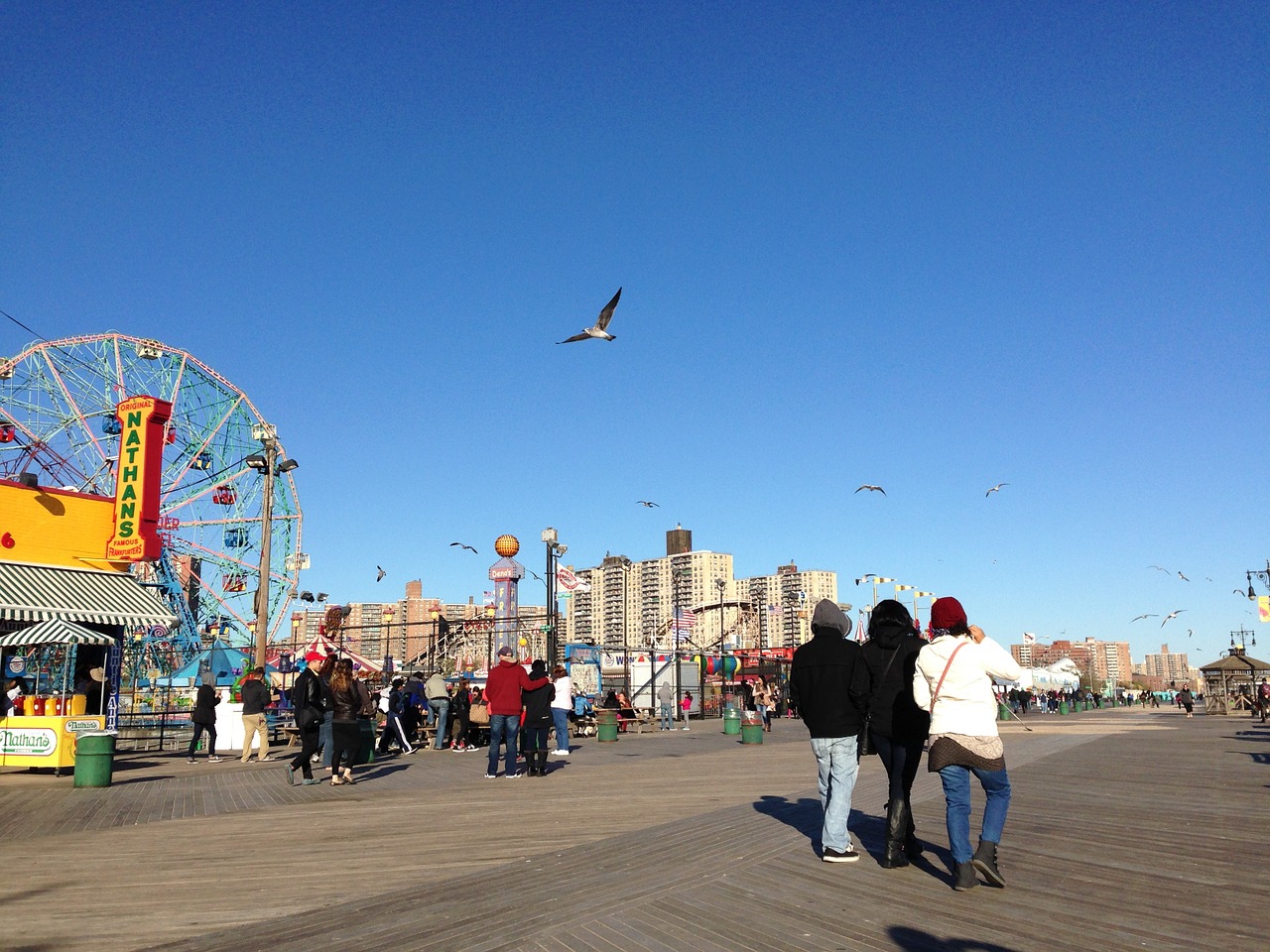
“It’s Only A Paper Moon” was written for a 1932 play (not a musical) called The Great Magoo set in Coney Island which was not a big success.
It is credited to Arlen, Harburg, and impresario Billy Rose — who was somewhat infamous for adding his name to the songwriting credits of other people’s work after having contributed an idea or two during the creative process.
You may recognize Rose’s name because he was married for many years to the great performer Fanny Brice, and his character appears in the movie Funny Lady starring Barbra Streisand as Brice.
Somehow this Coney Island hot dog made me think of him…
Luckily the song was rescued from The Great Magoo and included in a movie called Take A Chance the next year — which led to successful recordings by a wide range of musicians over the past 70+ years.
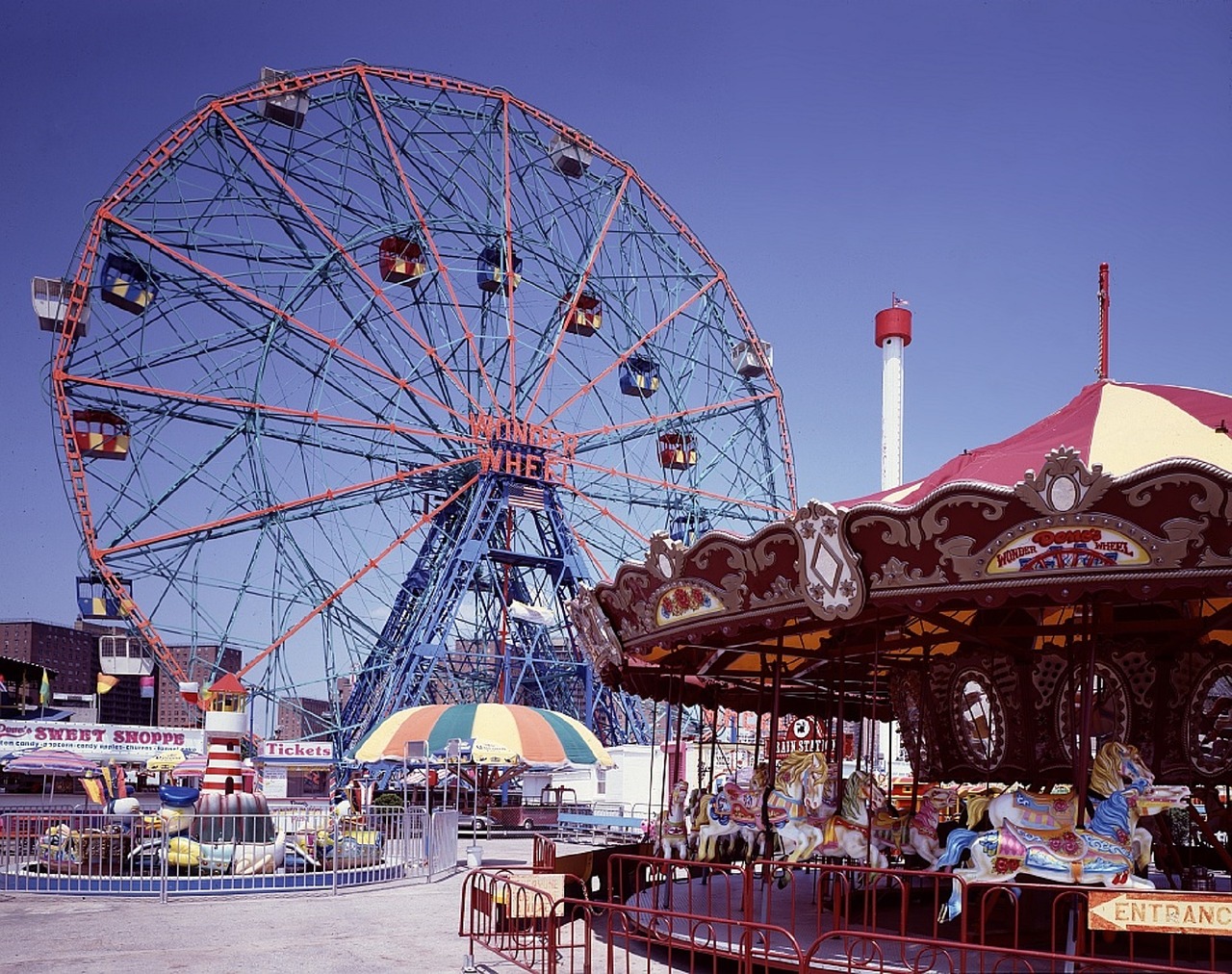
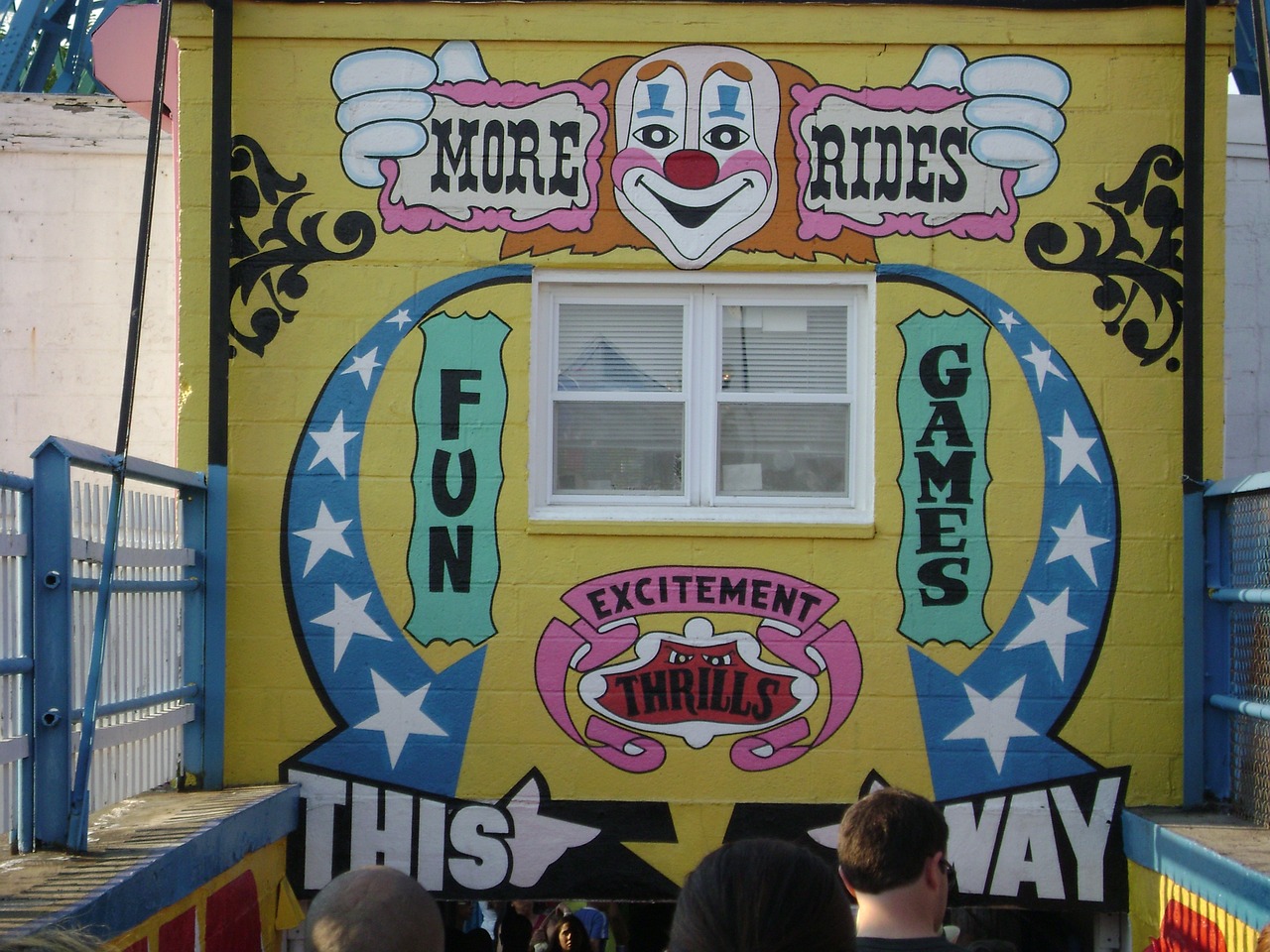
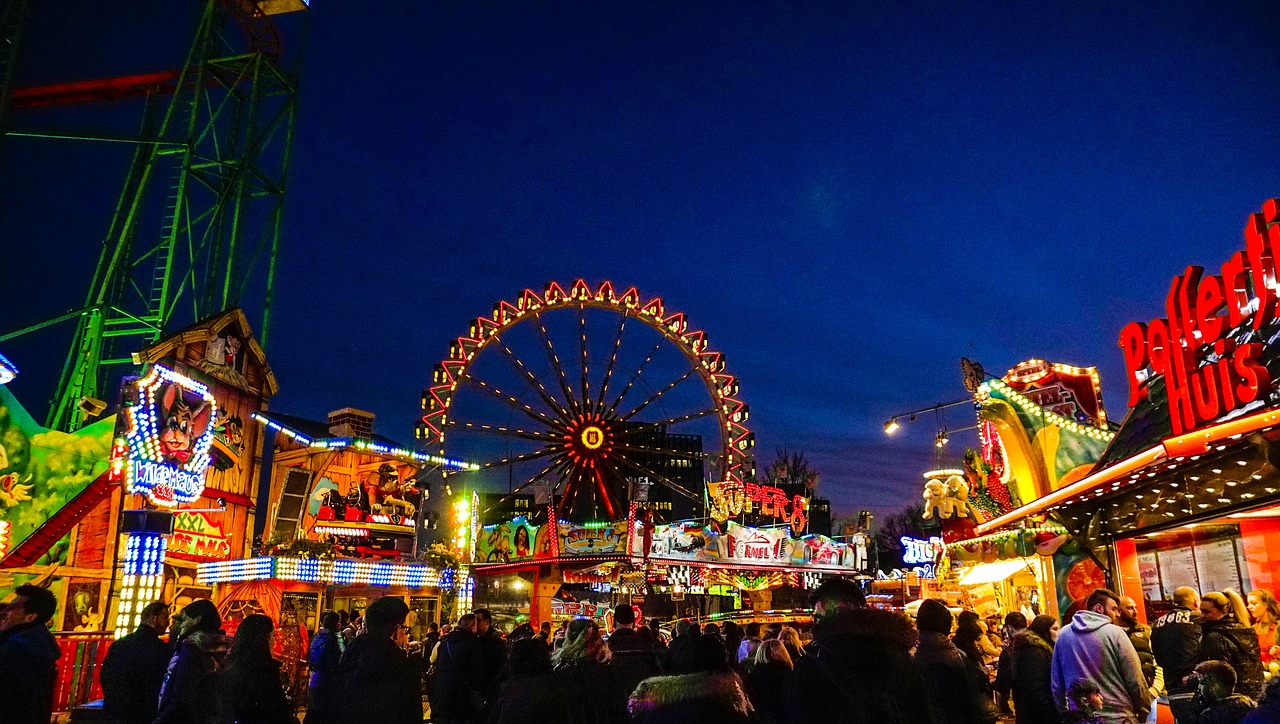
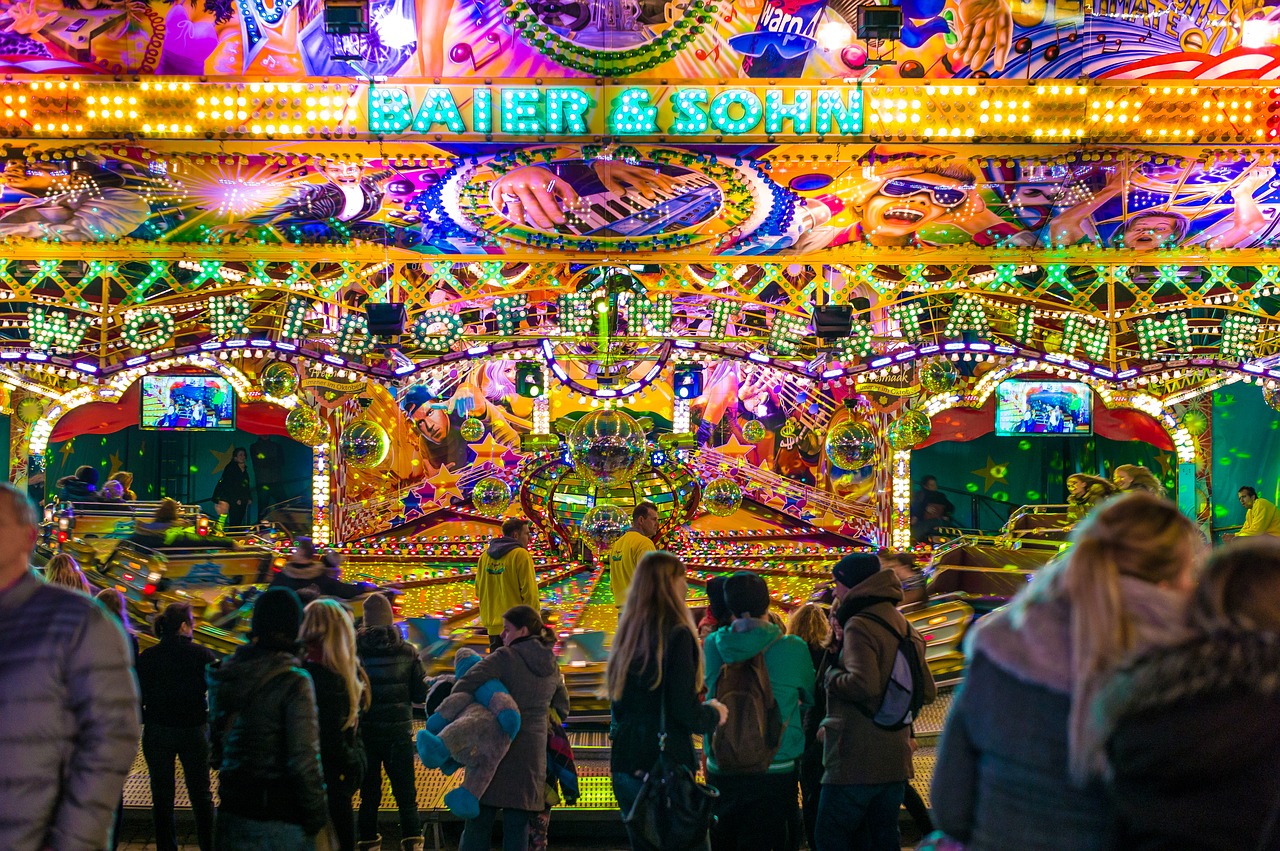
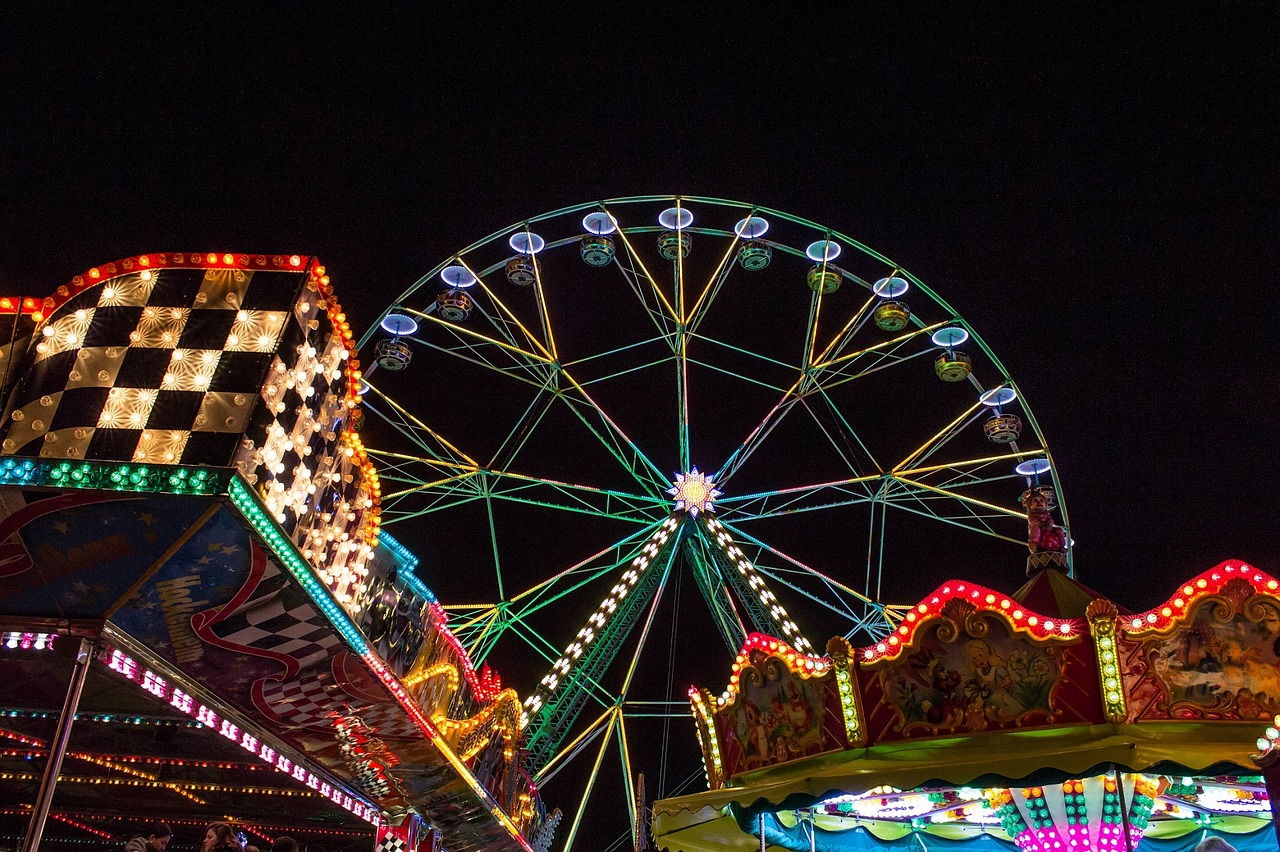
I love the metaphors and imagery used in the song — all things one might encounter at an amusement park like Coney Island.
I also love the sentiment of the song — that if someone believes in and loves another person, their belief and love can be transformative.
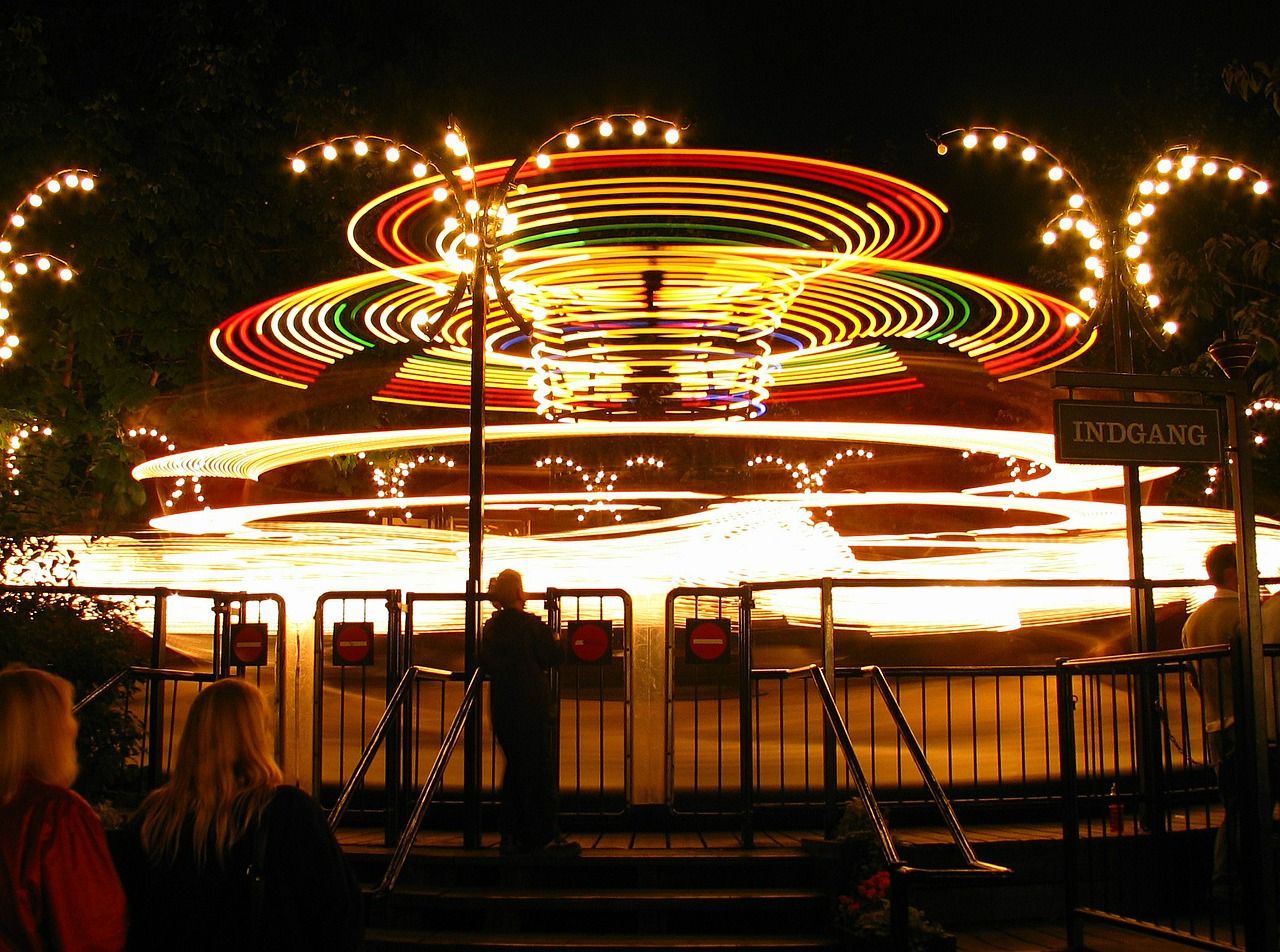
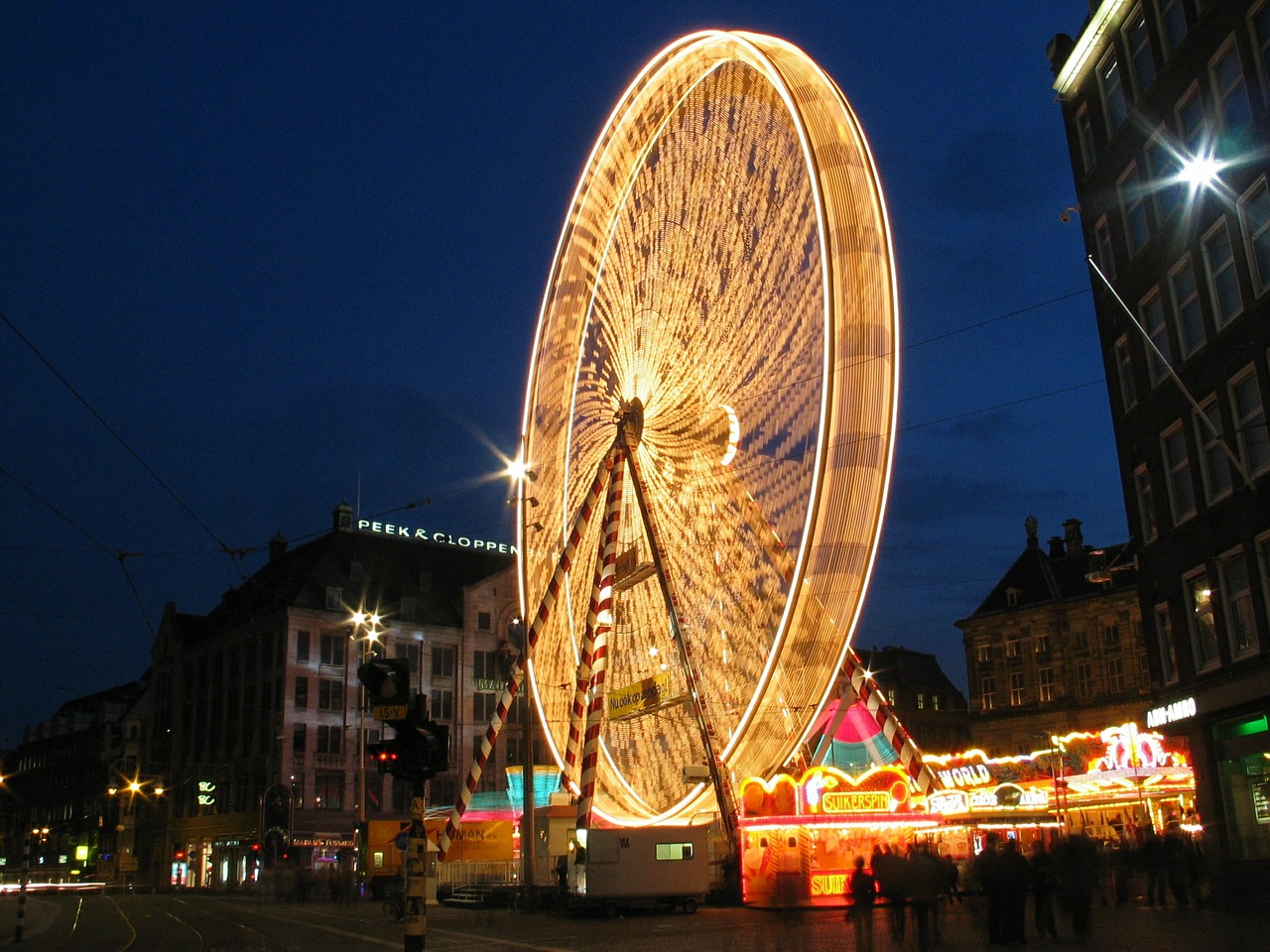
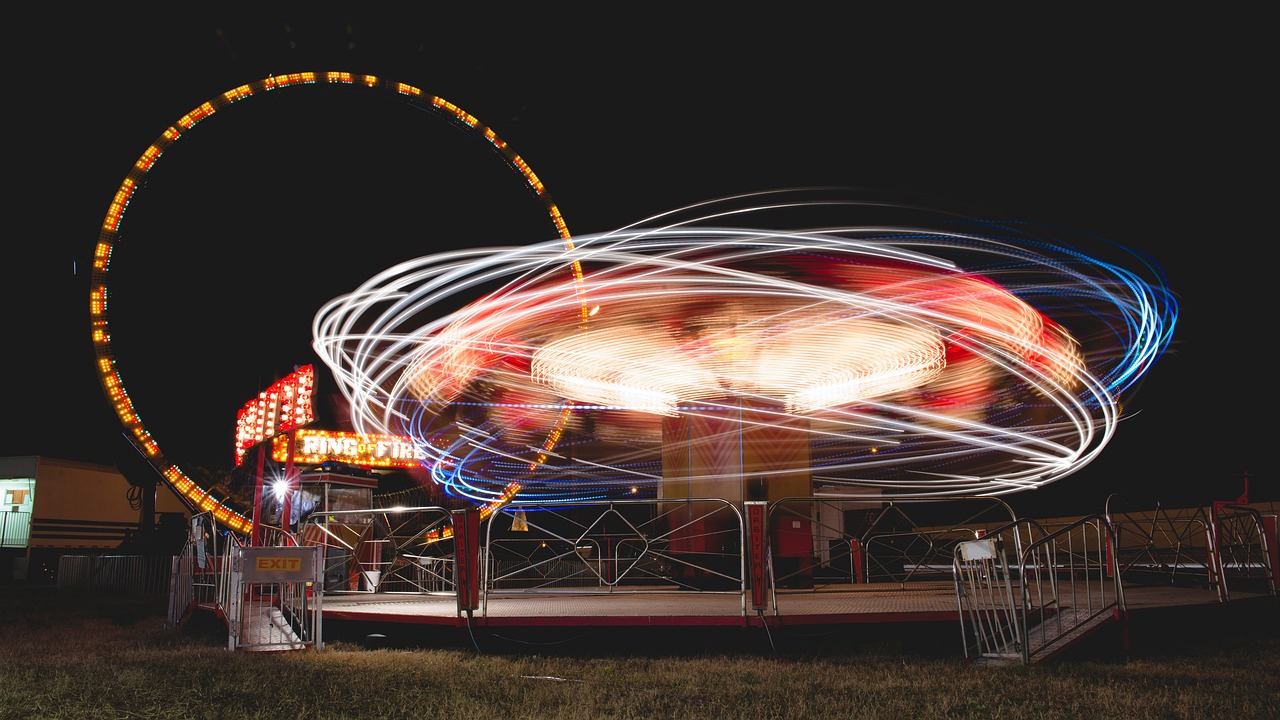
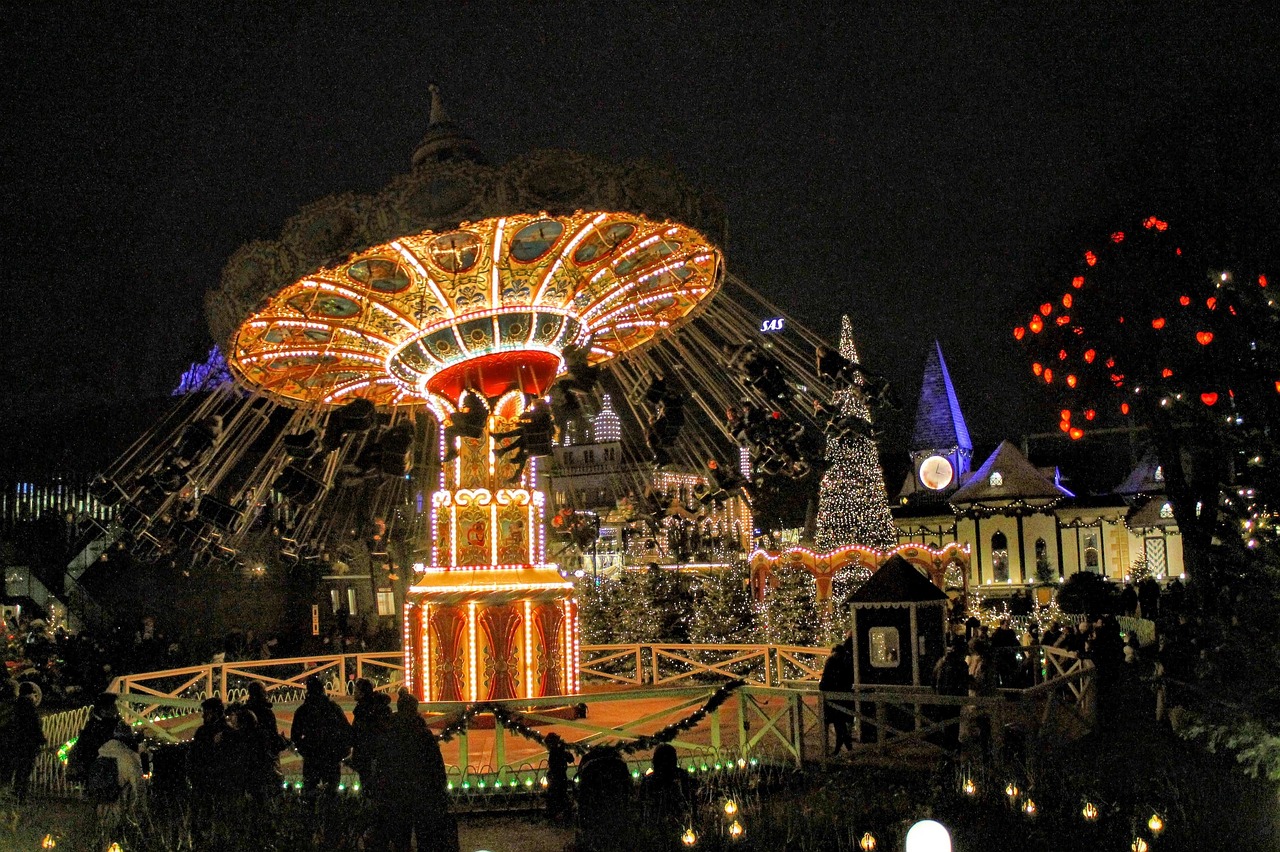
And looking at these photos, I am struck by the way an amusement park transforms from day to night…
Valentine’s Day is just around the corner, and I would like to dedicate Doug’s and my version of “It’s Only A Paper Moon” to all of the folks who have at one time or another believed in me — including friends and acquaintances in the WordPress blog-o-sphere.
Your positive feedback regarding my music and my blog continues to touch and inspire me every day.
Thank you to Pixabay for the great color photographs of Coney Island and other amusement parks around the world.
Thank you to Harold Arlen and Yip Harburg and Billy Rose for writing this wonderful song.
And to Joe Reid for asking me to do a gig with him seven years ago.
Since then Joe and I have done hundreds of gigs together and created twenty five different one-hour musical programs.
Thank you to Doug Hammer for his engineering excellence and his playful virtuosity at the keyboard.
And THANK YOU for reading and listening — and even leaving a comment or two from time to time.
We share them at public libraries, retirement communities, memory cafes, and coffee houses.
Our latest program features songs written for — and/or made famous by — Bing Crosby.
I had known very little about Mr. Crosby before requesting several biographies about him via our local inter-library network (which includes the terrific Robbins library pictured above in a photo by Jinny Sagorin).
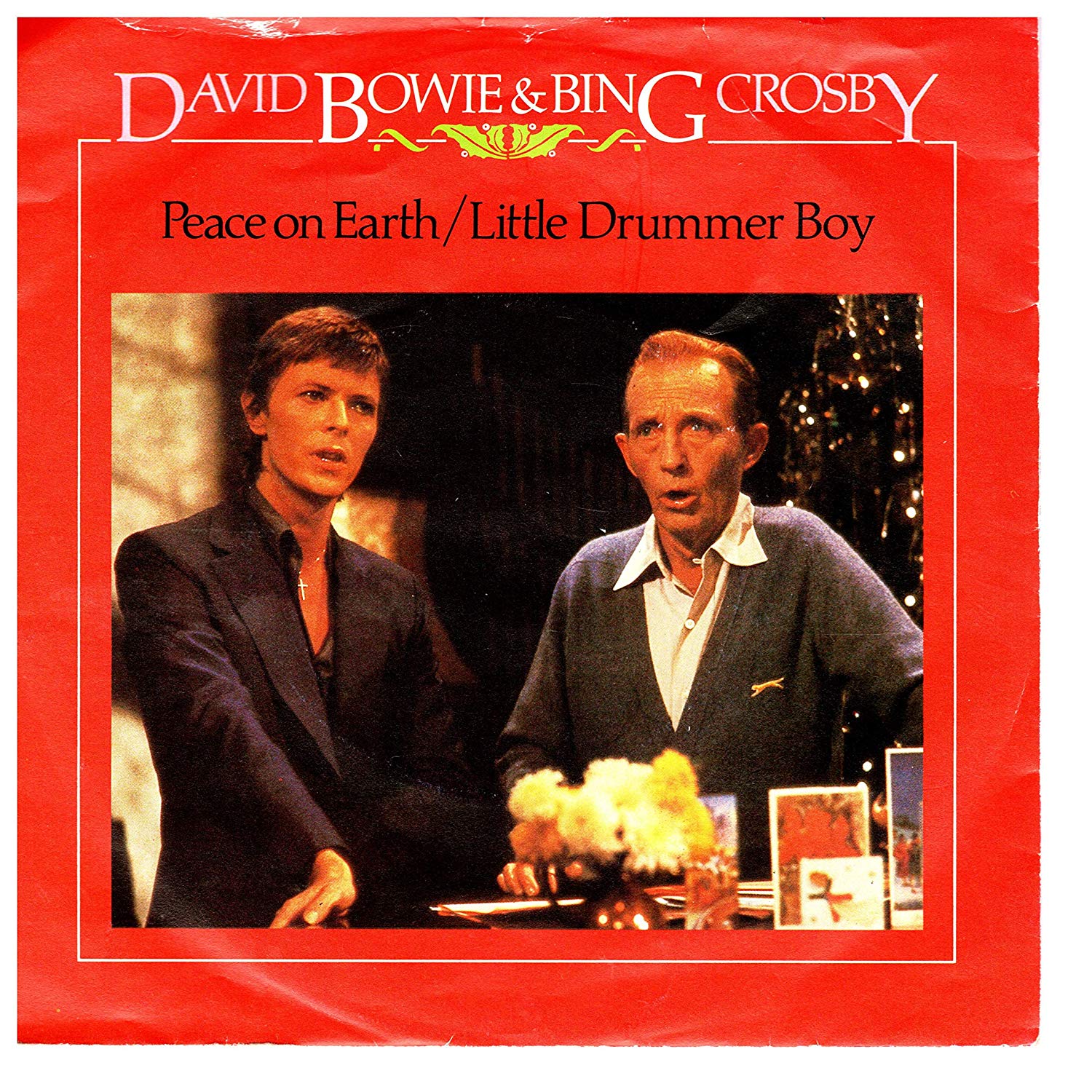
Mostly I remembered him for singing an incongruous but lovely duet with David Bowie on a Christmas TV special.
I also knew that he loved golfing and had sung “White Christmas” — which became one of the highest selling recordings ever made.
And I was aware that at least one of his children had written about how challenging it was to have him as a father.
After reading several books about him, my perspective on Mr. Crosby has become much more complicated and fascinating and human…
To begin with, I hadn’t understood how HUGE a star Bing was.
His weekly radio programs reached millions of listeners for decades.
He was in the top ten of Hollywood box office money-makers for decades.
His recordings regularly topped the charts for decades.
He was definitely one of America’s first “superstars.”
He was also a devoted Catholic, following the spiritual path of his mother (who had requested that Bing’s father convert to Catholicism before they were married).
He sang an extraordinarily wide range of songs — from cowboy to Irish to jazz to pop to show tunes to hymns to Americana.
Although a Republican, he had a huge hit during the early years of the Great Depression with Yip Harburg and Jay Gorney’s empathetic lament for the common man, “Brother, Can You Spare A Dime?” — which hit the airwaves right before FDR was elected to his first term as president.
And he was one of the first recording artists to release an album of Christmas holiday songs.
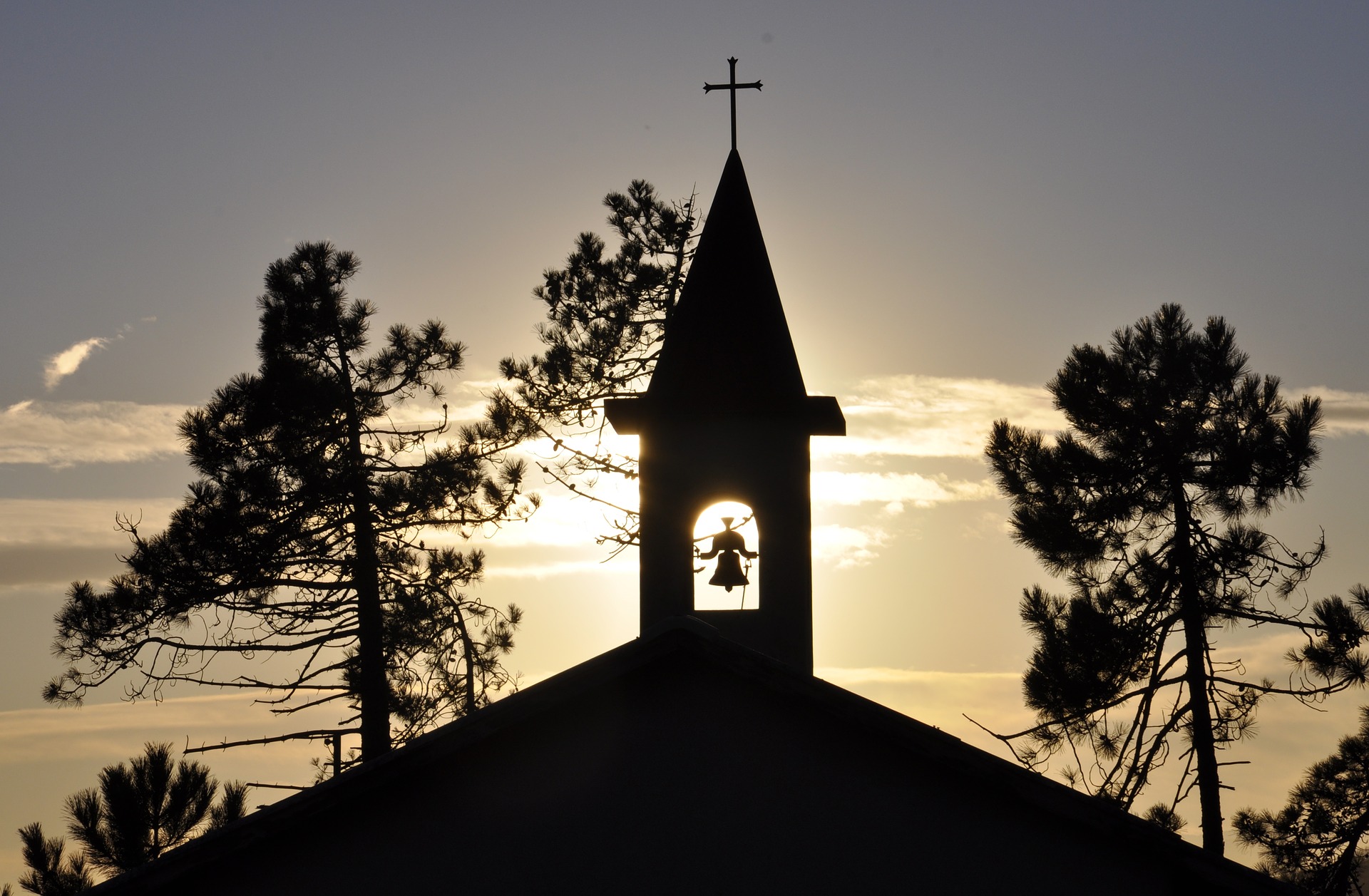
One of the many Christmas songs Bing recorded — “I Heard The Bells On Christmas Day” — has become a new favorite of mine.
Bing recorded it on October 3, 1956, and it soon became a holiday classic.
I recorded it earlier this month with pianist Doug Hammer at his studio in Lynn, MA (and our version is included in the player at the beginning of this blog post).
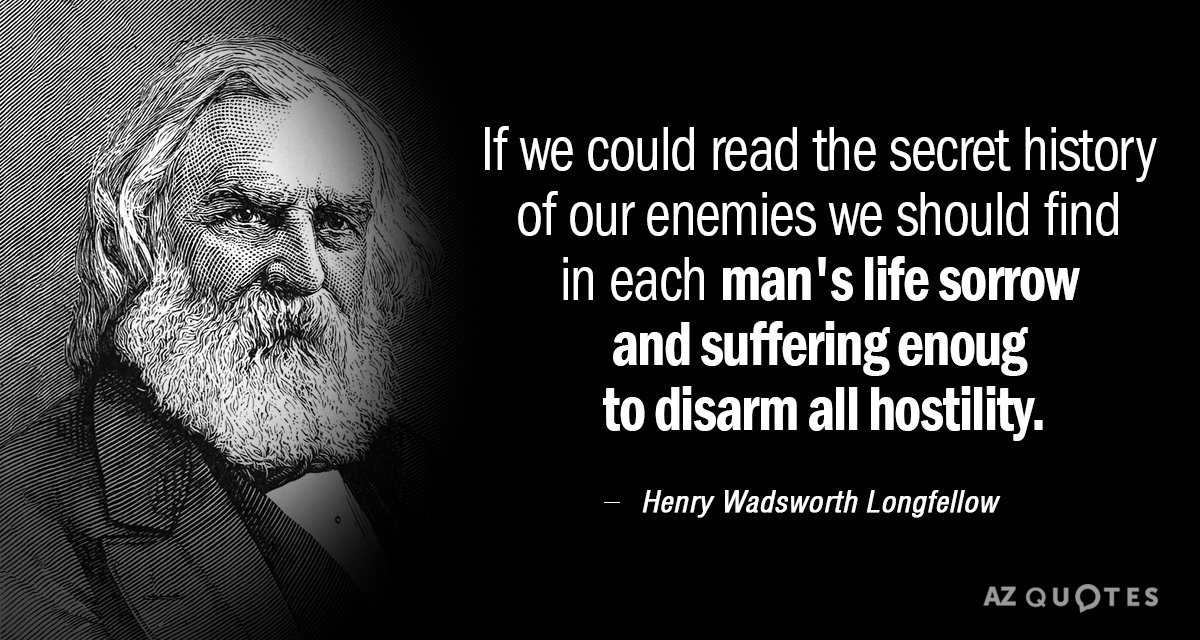
I discovered on Wikipedia that the lyrics were written by Henry Wadsworth Longfellow on Christmas Day, 1863 while the USA was in the middle of our astoundingly horrible and bloody Civil War.
He lived in Cambridge, MA — a couple of miles away from where I now live — and one of his sons had left home to fight in the Union Army.
You can click here to learn more about Longfellow’s poem on Wikipedia if you are curious.
He experienced many deep losses during his lifetime — his first wife died after a miscarriage and his second wife died from burn wounds after her dress accidentally caught on fire — and perhaps as a result, he developed very empathetic heart.
Many different composers have been moved to set this particular poem to music over the years.
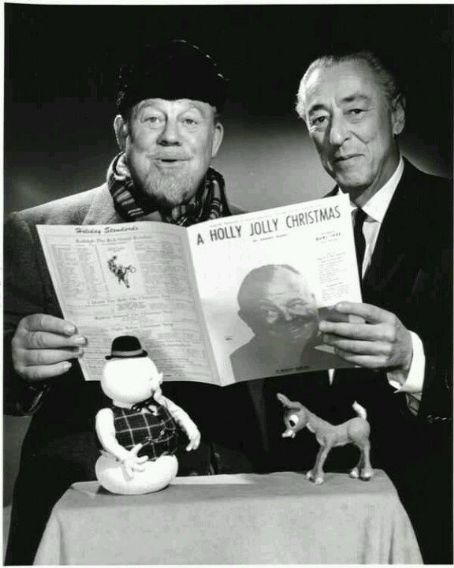
In 1956 Johnny Marks — a Jewish songwriter whose creative output also includes “Rudolph The Red-Nosed Reindeer,” “Rockin’ Around The Christmas Tree,” “Run, Rudolph, Run,” “Silver and Gold,” “A Holly, Jolly Christmas,” and all of the other songs from the Rudolph holiday TV show — devised a lovely tune for a few stanzas from Longfellow’s poem.
I’m not sure why this song touches me so deeply…
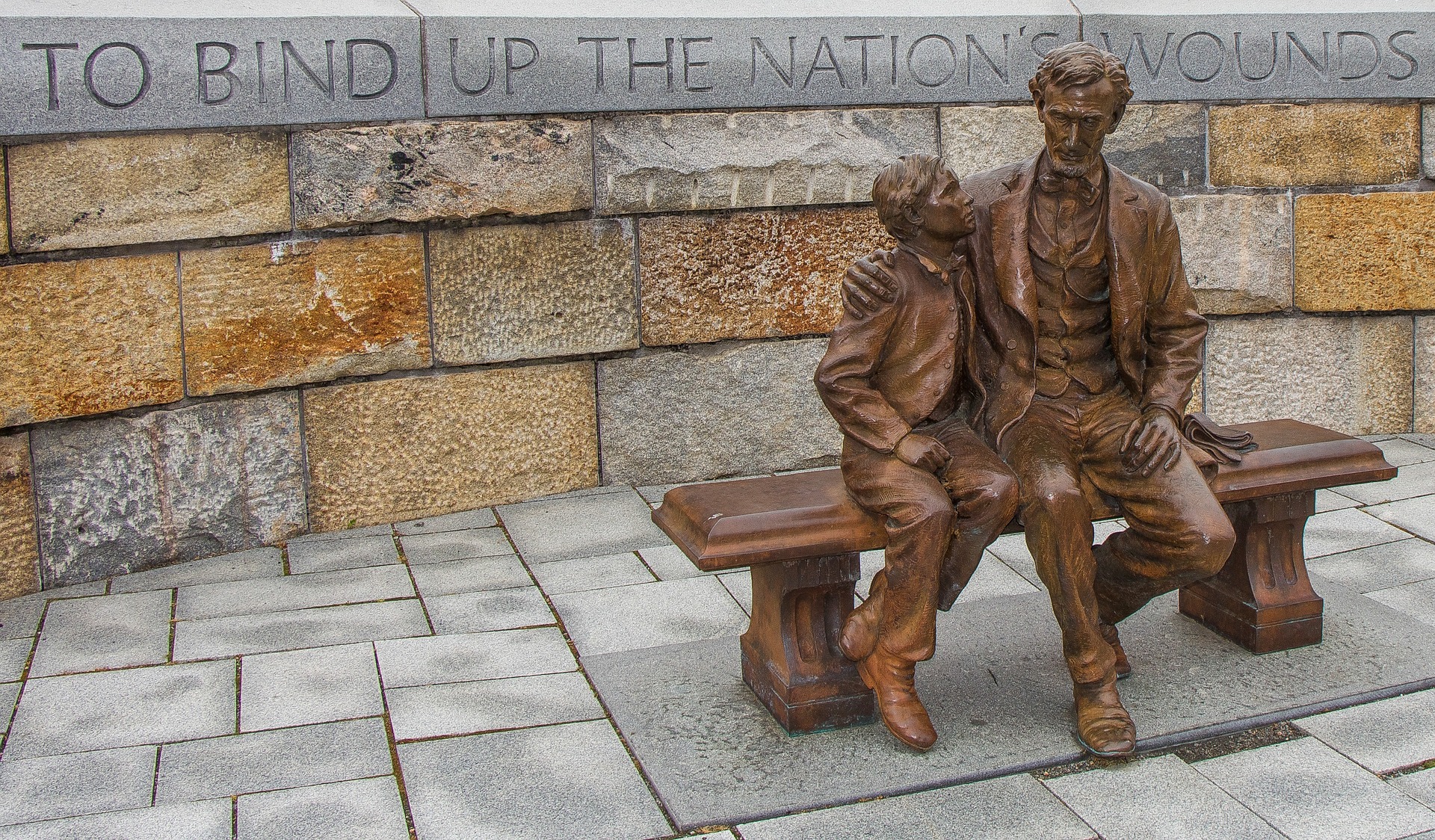
Perhaps it is an echo of Longfellow’s broken-heartedness and faith reverberating from the depths of America’s civil war to our present moment of cultural unrest…
I am grateful to be reminded of the gentle power of words and music during this season of short days and long nights.
I am grateful to Pixabay and Wikimedia Commons and Stephen Fischer and Jinny Sagorin for the images in this blog post.
And I am grateful to YOU for reading and listening to this blog post.
May we experience more peace and empathy in the new year!
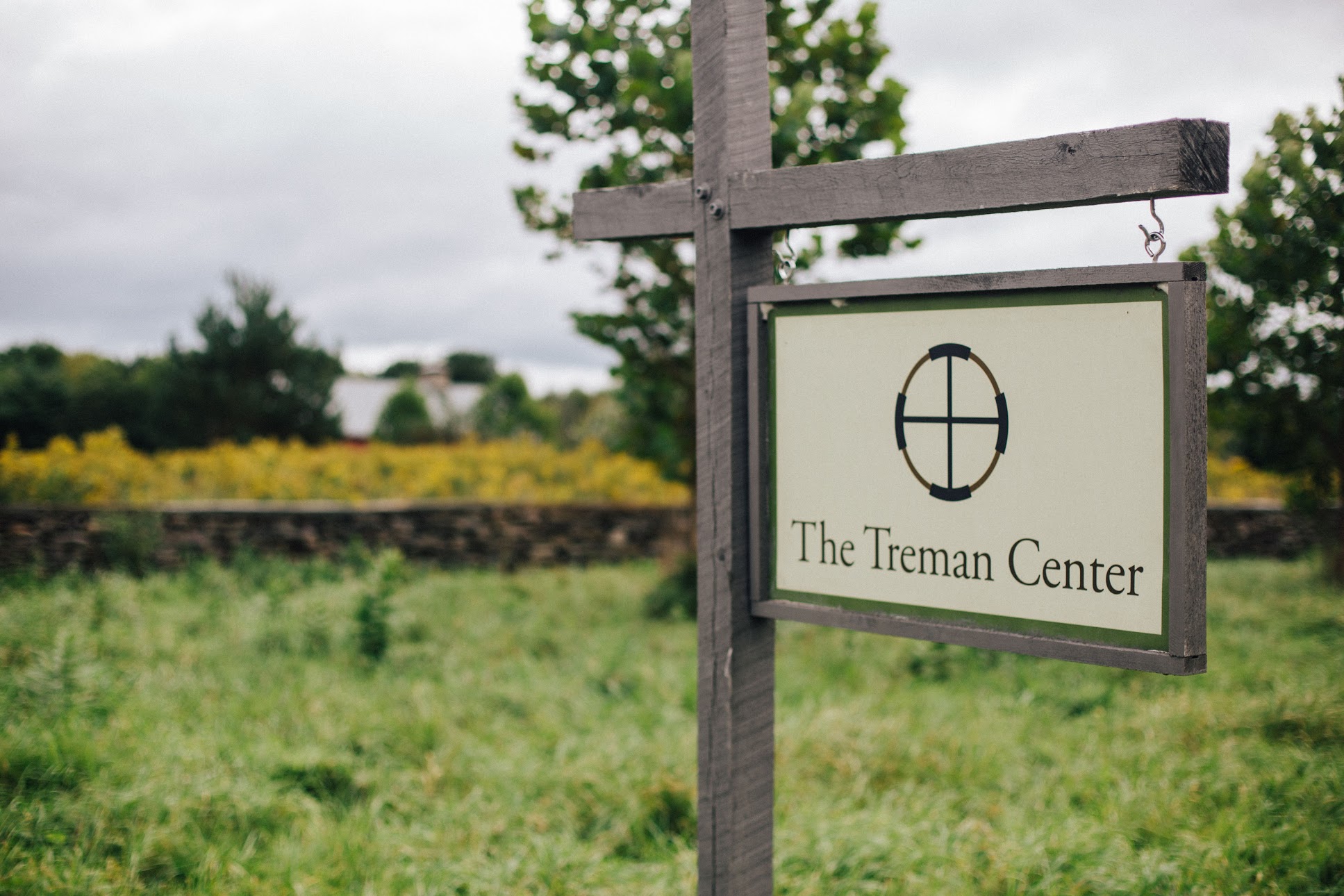
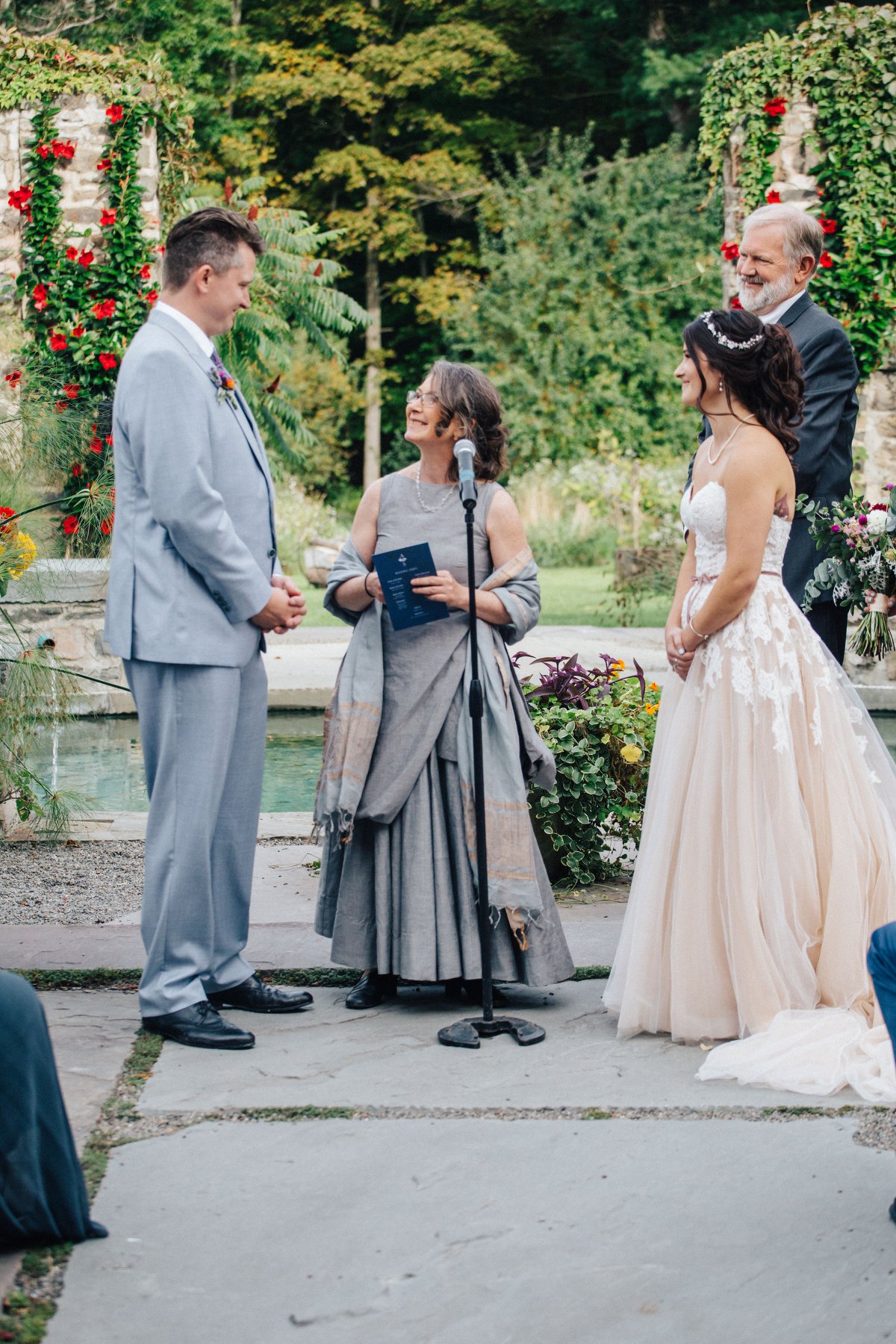
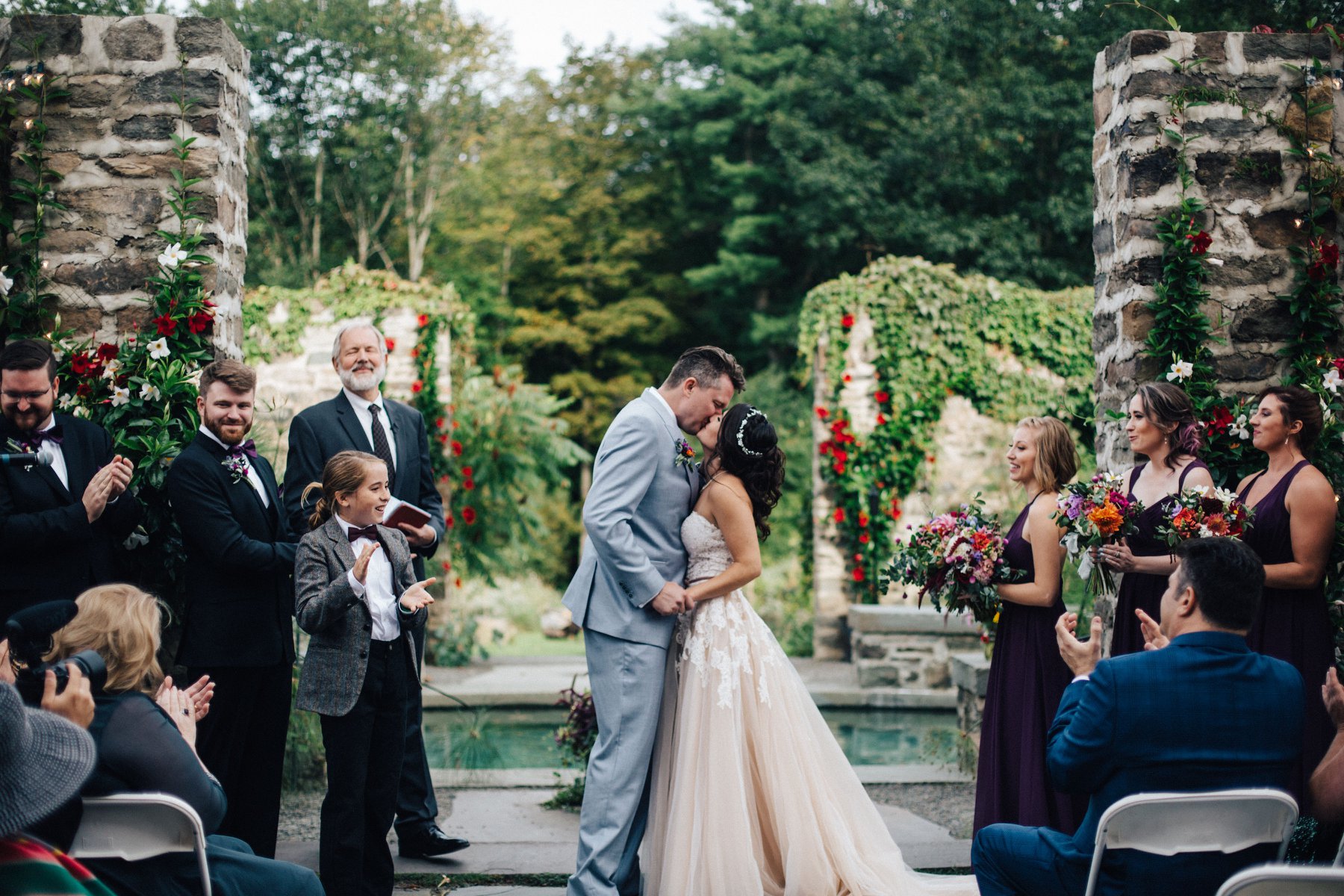
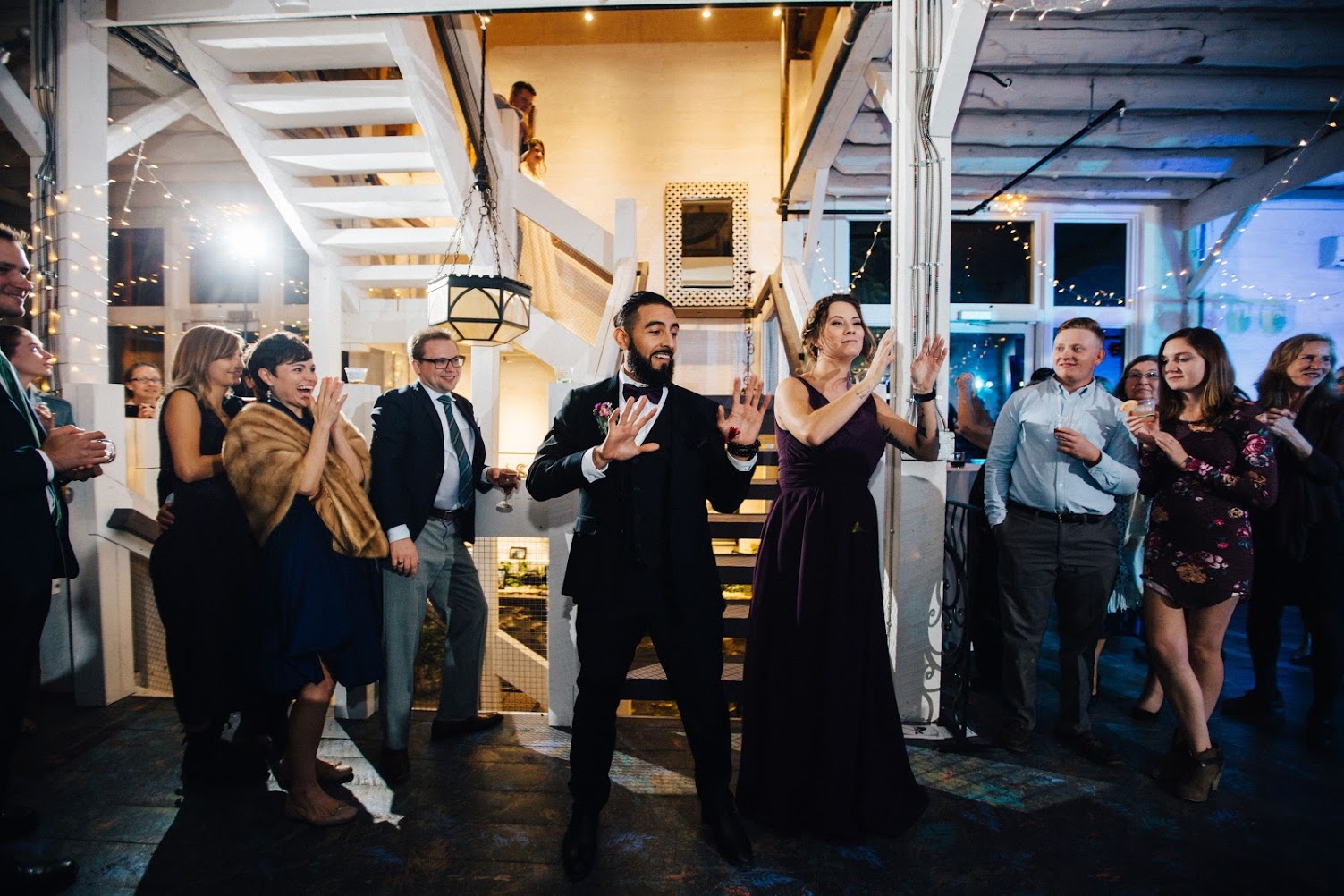
Last fall my niece married her boyfriend at a beautiful place called the Treman Center in upstate NY not far from the farm where she spent most of her childhood and teen years — and where her mother still lives.
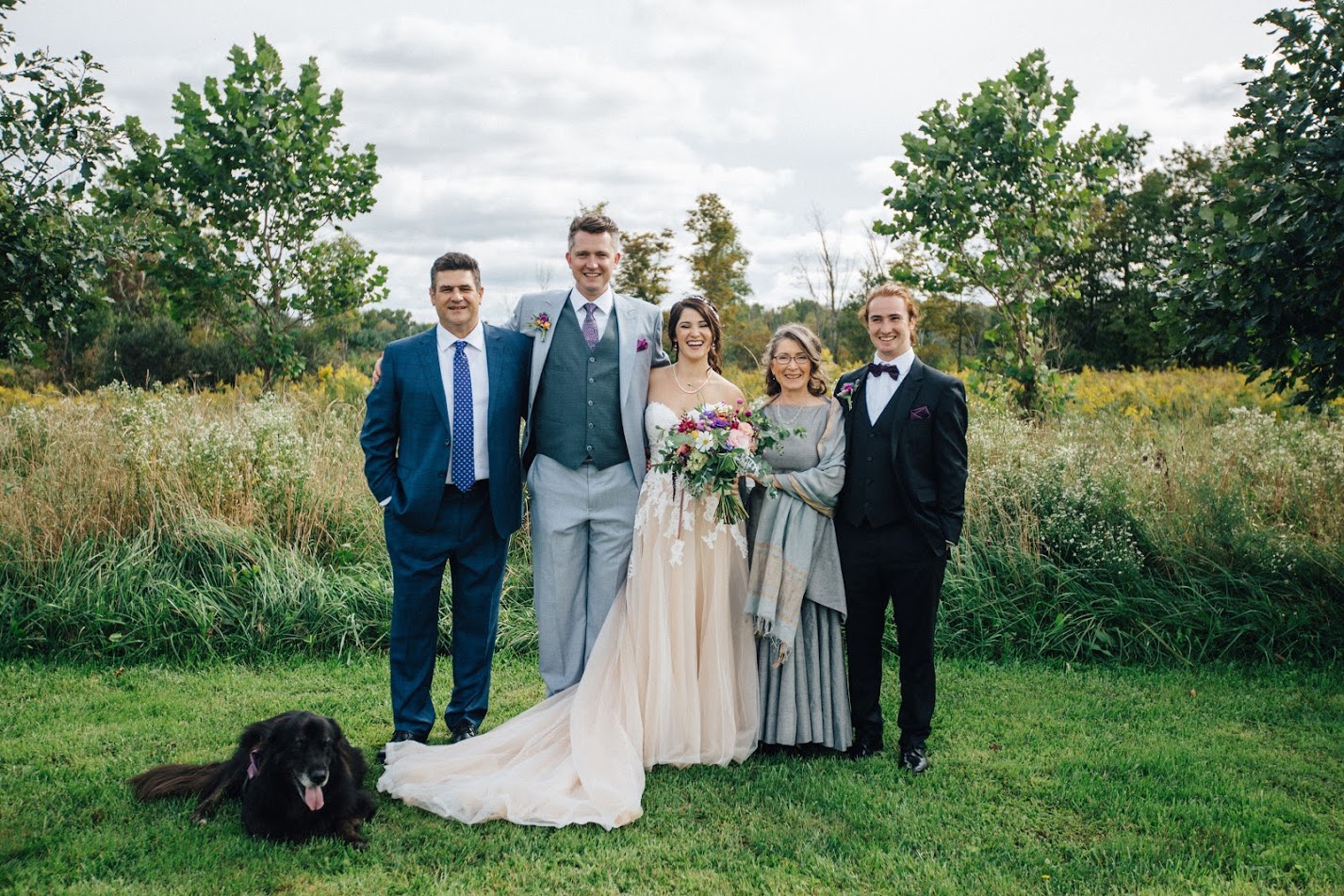
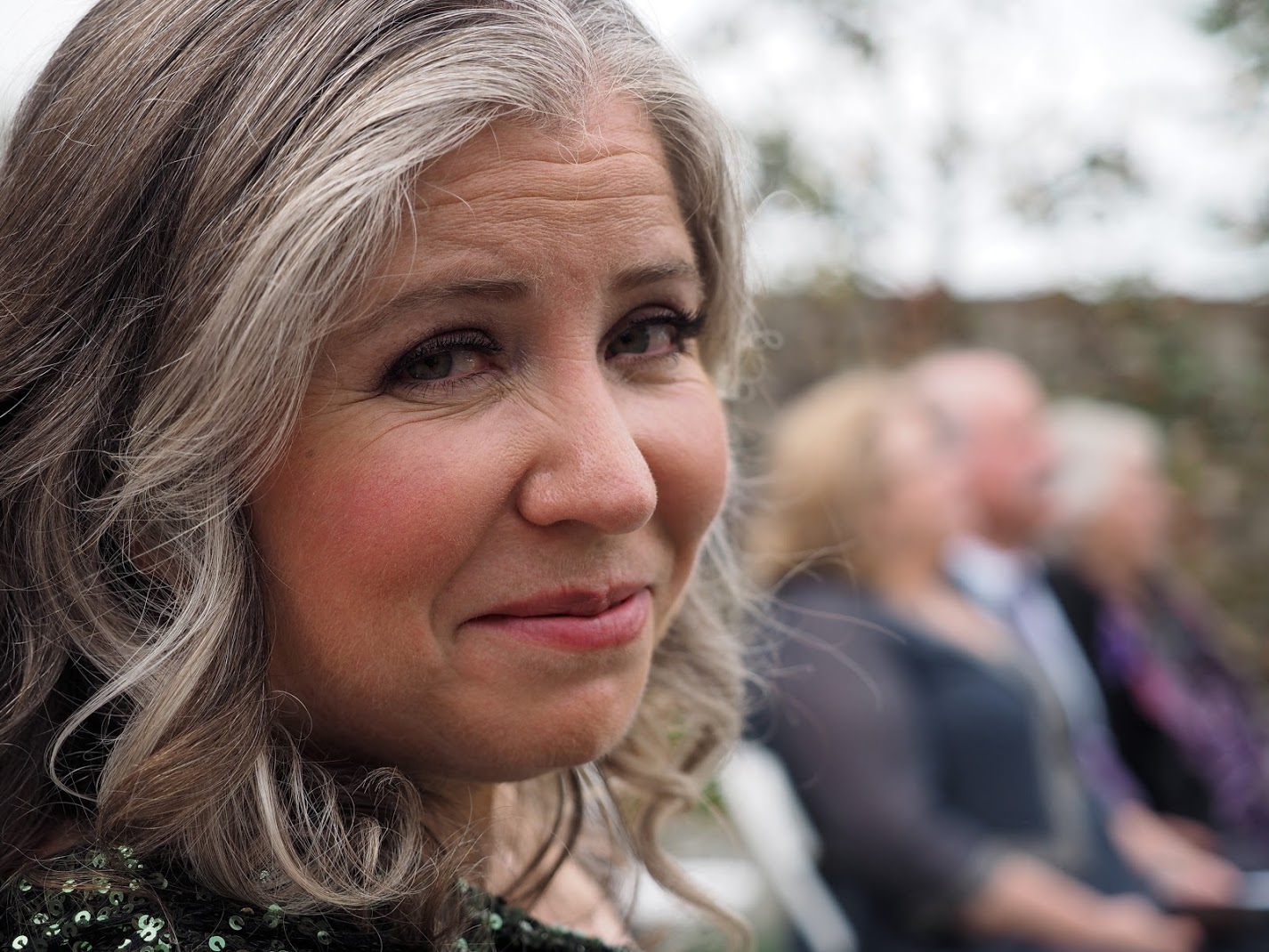
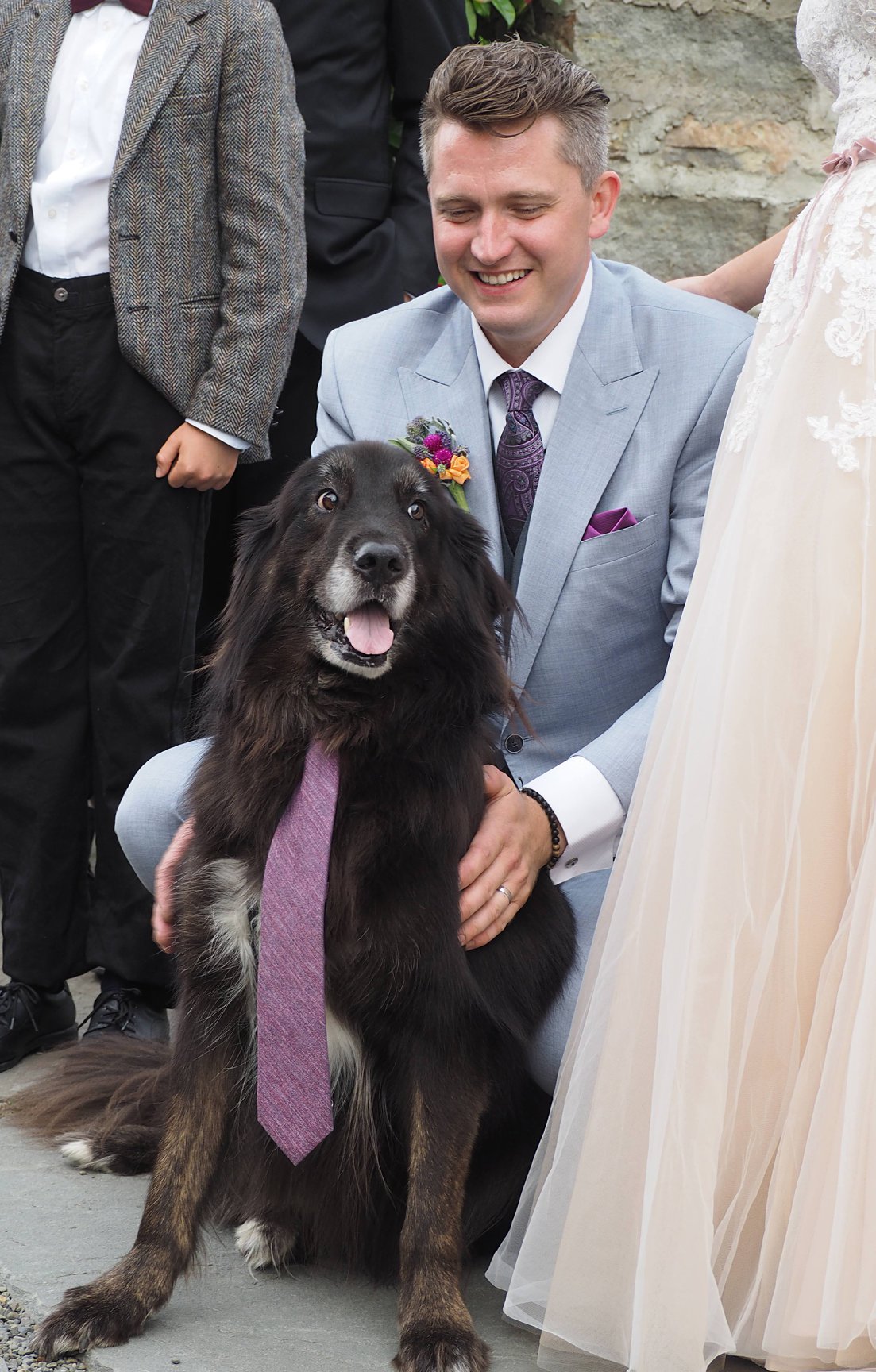
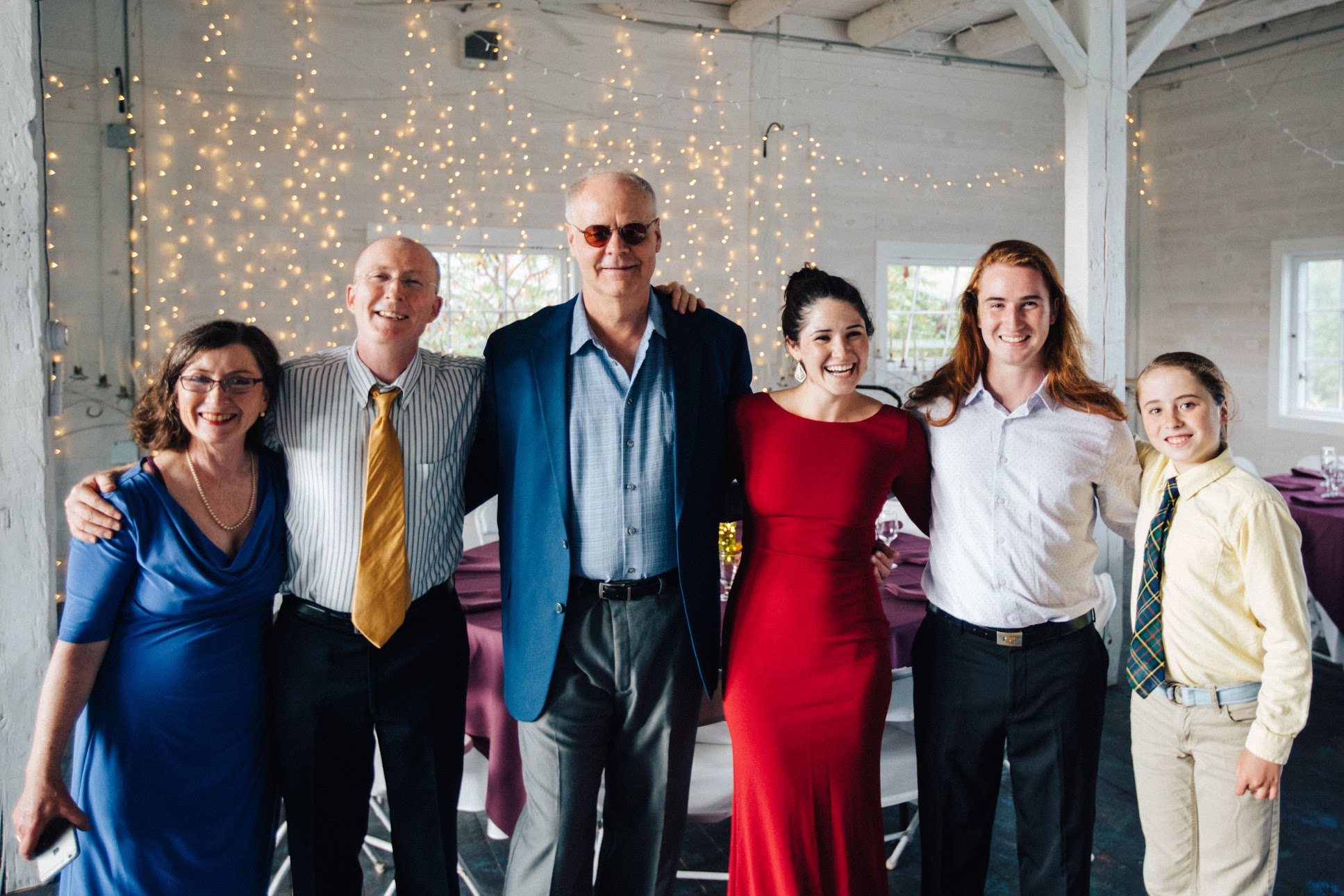
Here she is with her father, husband, mother, brother, and dog.
My niece recently gave me access to a huge cache of their wedding photos, which I plan to feature in two separate blog posts.
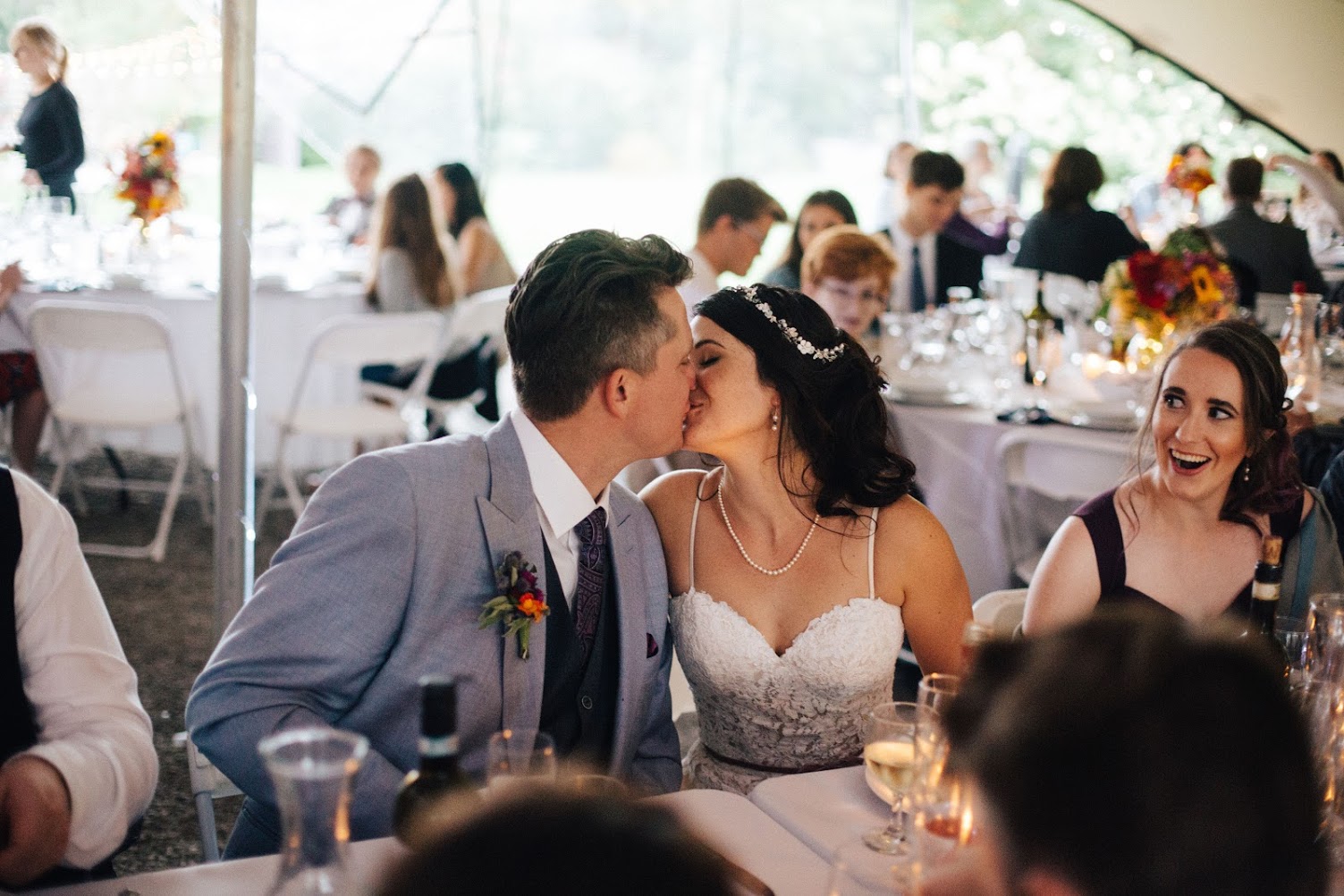
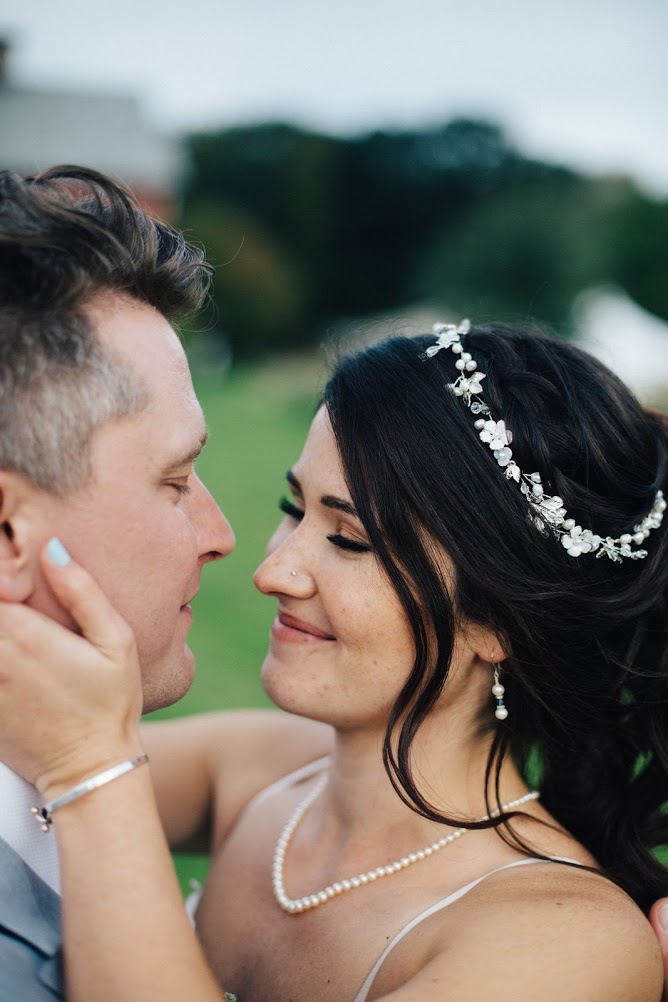
Today’s theme is “The Look Of Love…”
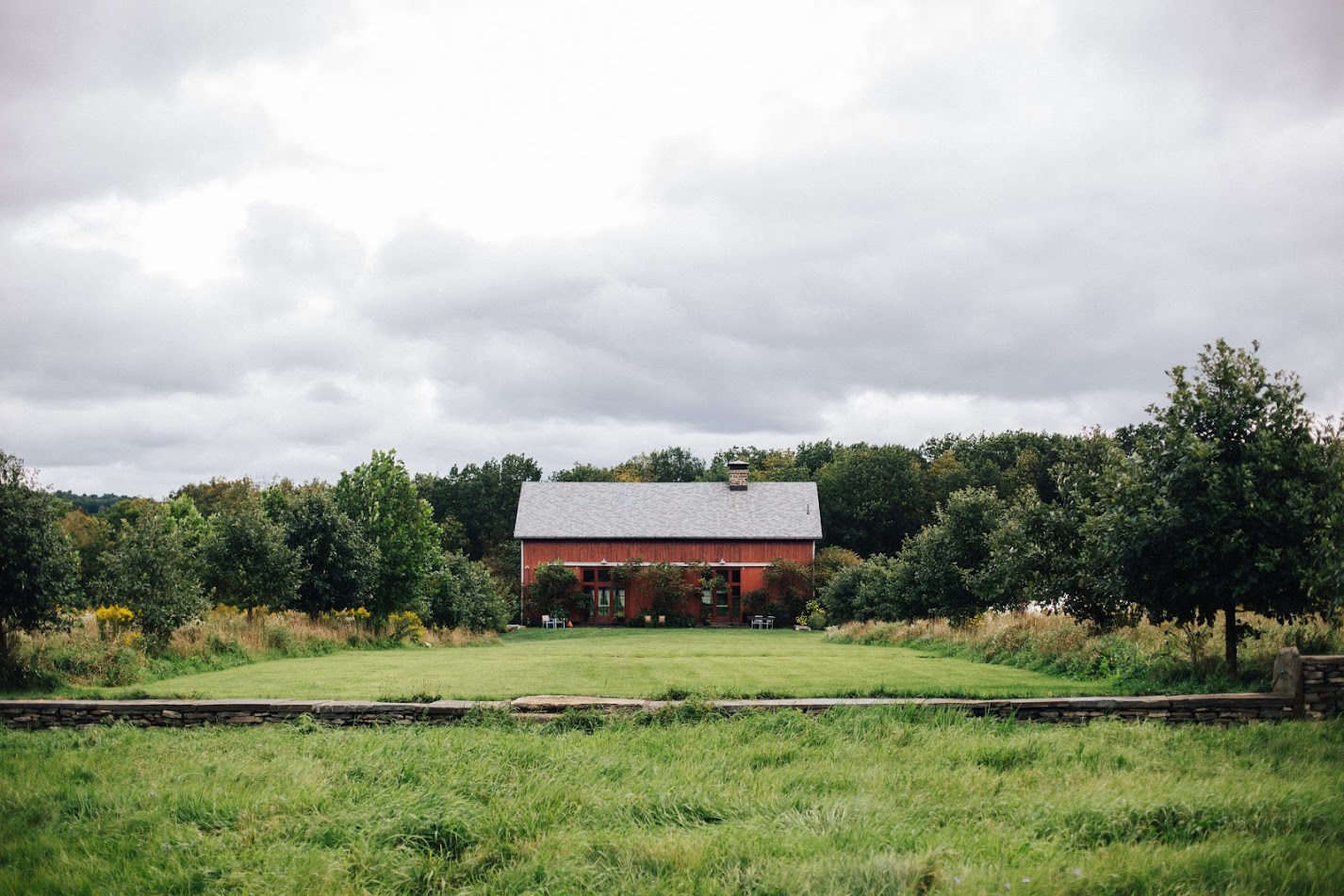
The Treman Center is itself a labor of love by a wife and husband team — full of all kinds of beauty. The husband is a tremendous stone mason. The wife is a terrific host who — among her many gifts — is also an extraordinary makes-things-beautiful person.
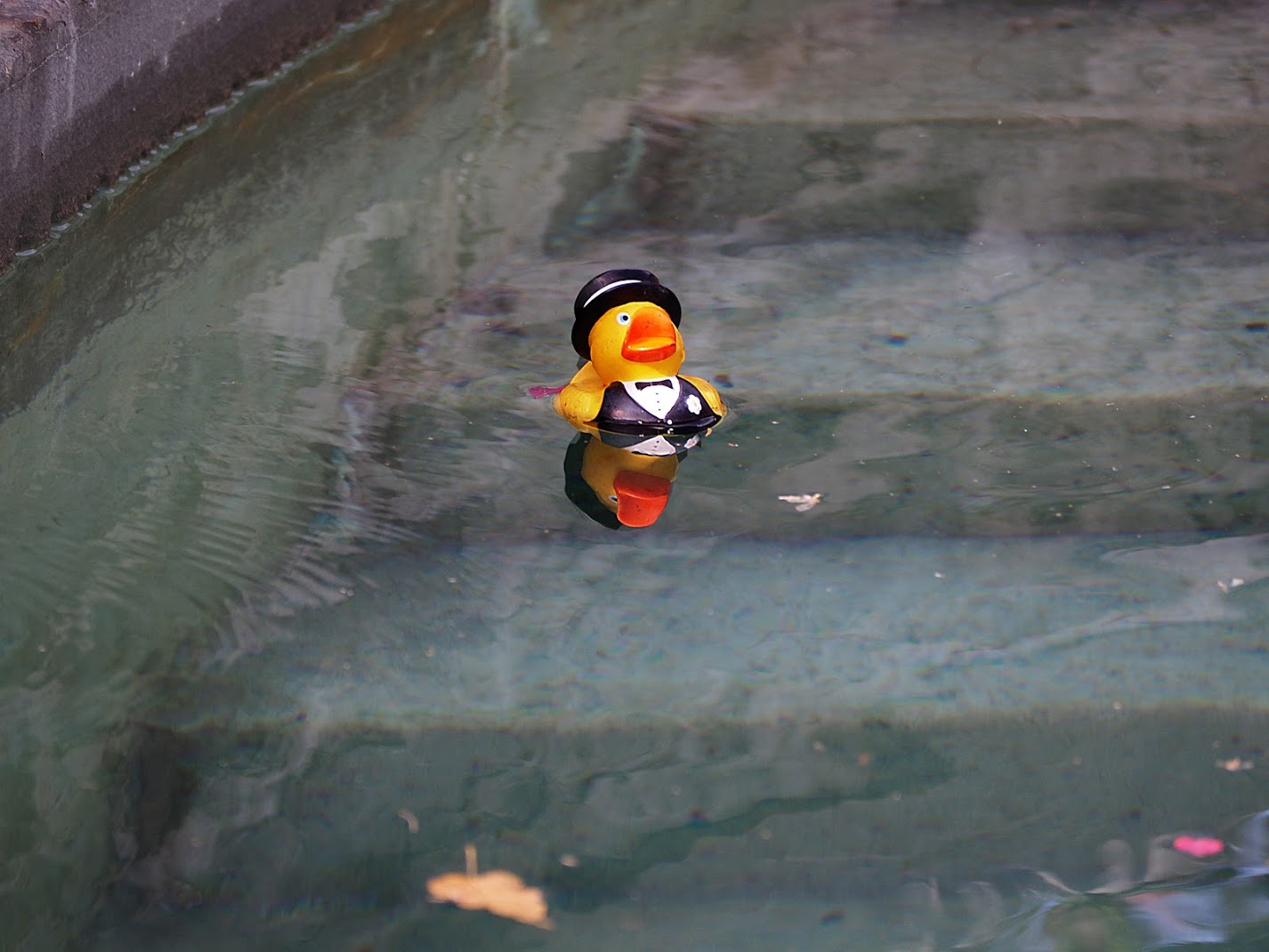
Beauty can be found everywhere at the Treman Center — as well as whimsy, such as this rubber ducky floating in their reflecting pool…
My niece’s husband’s family also lives in the area, and we have loved becoming friends with them over the past six years.
At first I did not understand why my niece and her (then) boyfriend wanted to have a fancy wedding.
But as soon as I arrived at the Treman Center, I got it.
They wanted to create and share a weekend of love and beauty with a small tribe of their nearest and dearest.
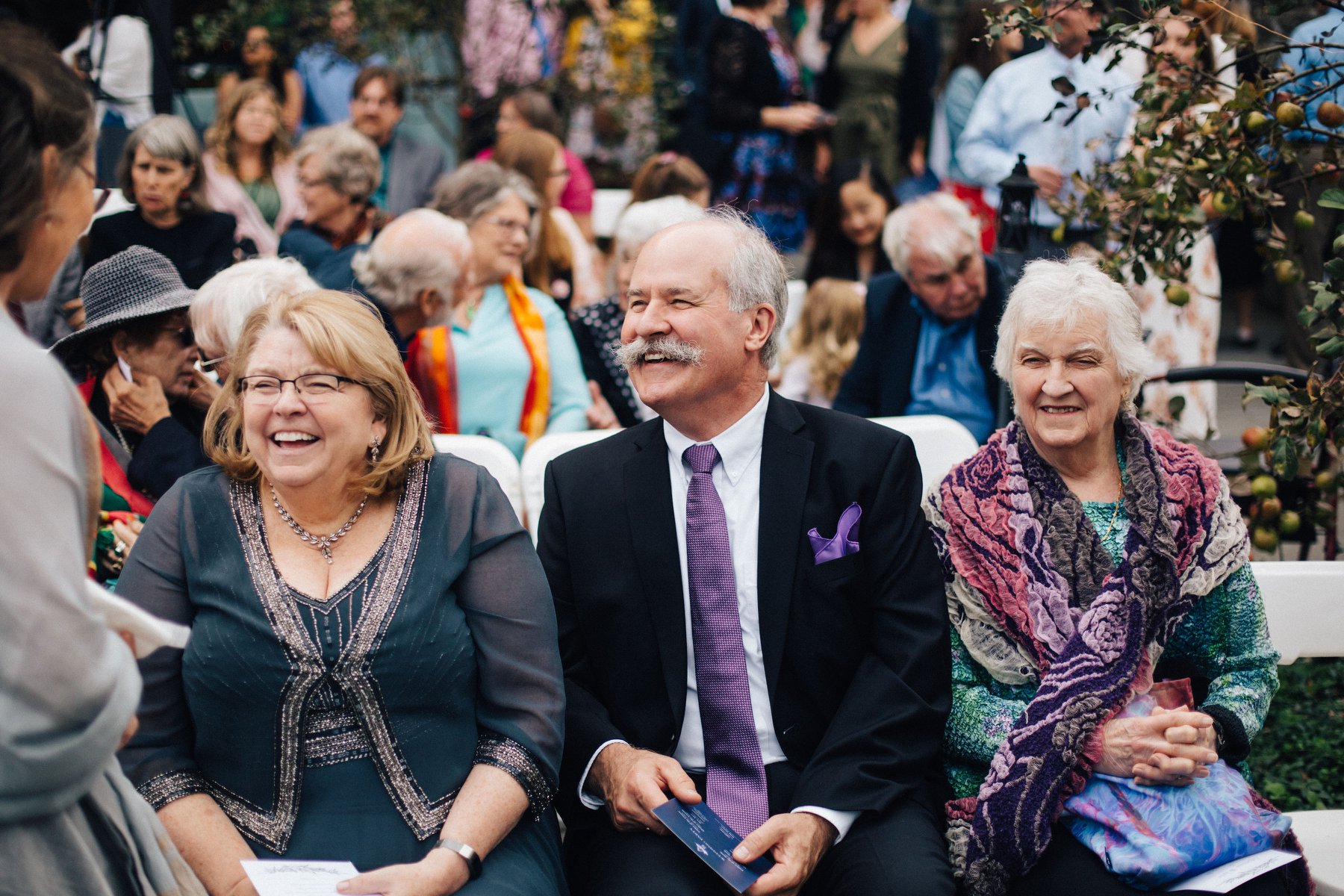
Weddings can be a transformative event not only for the bride and groom, but also for the community of family, friends, and beloved pets whom they invite to surround them, bear witness to their vows, and celebrate with them.
This wedding proved to be a wonderful mix of hands-on work by family and friends + catered deliciousness which wove everyone together in new ways.
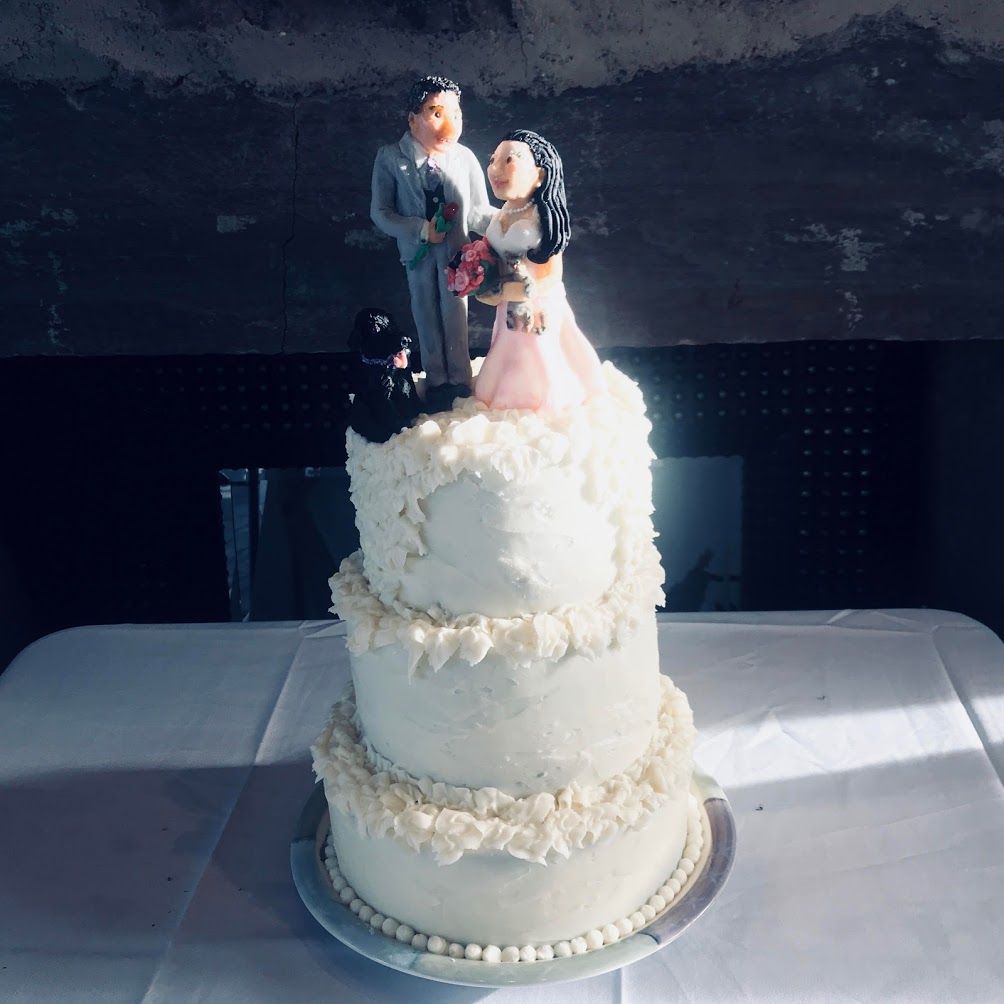
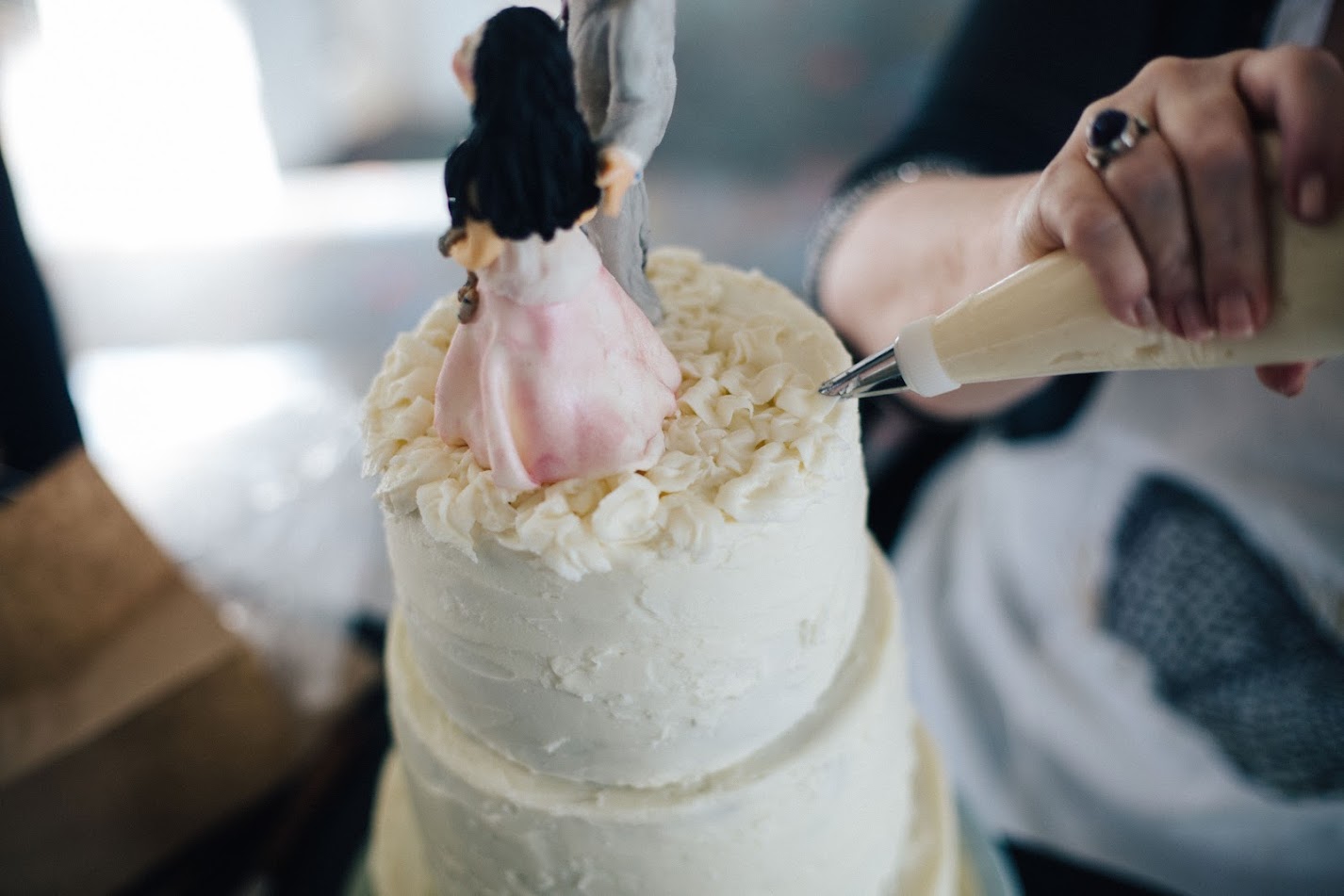
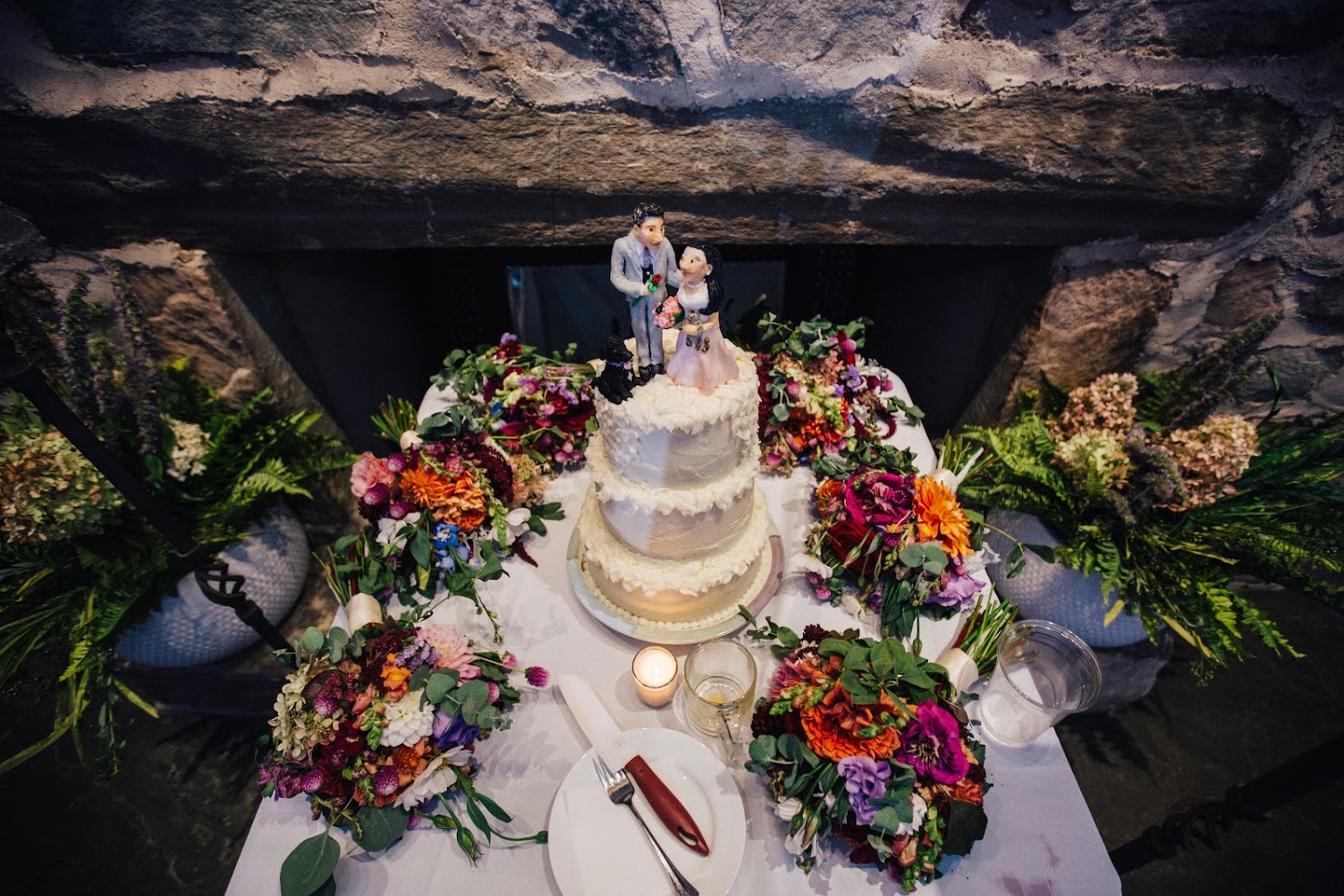
For example, the wedding cake was made by the groom’s mother.
It featured custom-made replicas of the groom and the bride plus their beloved dog.
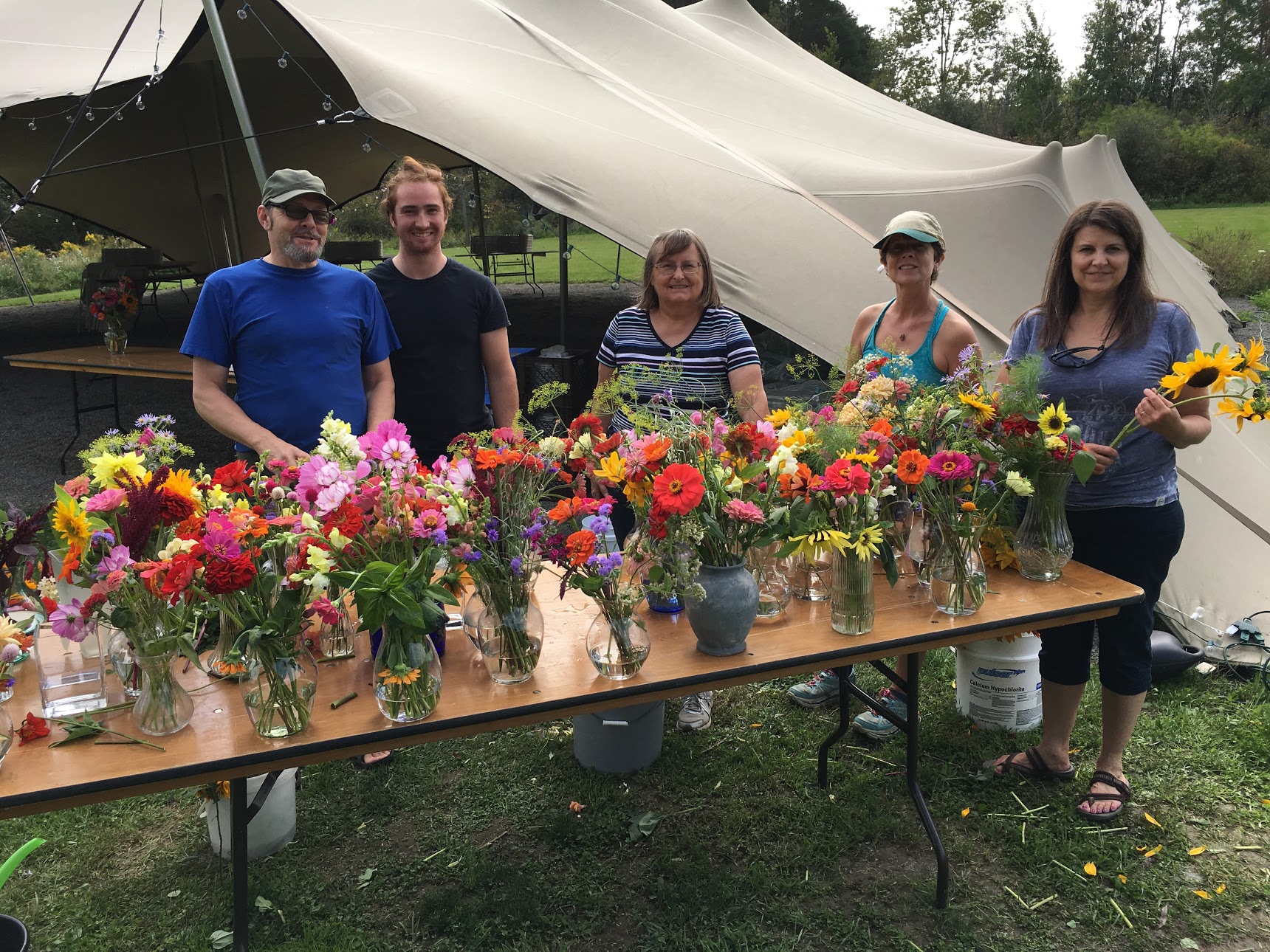
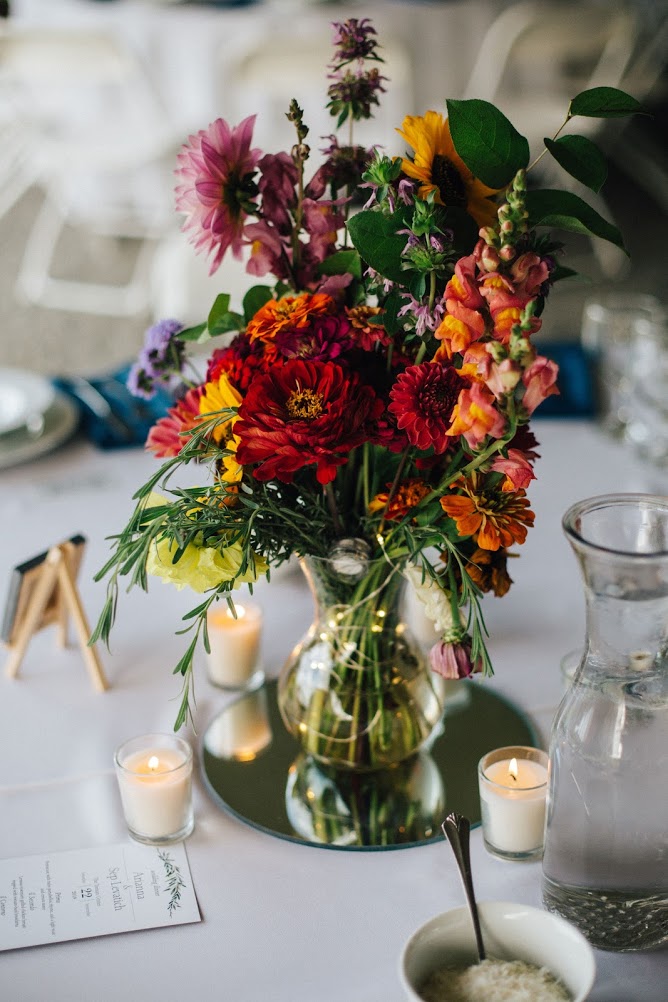
All of the flower arrangements — except for the bouquets and boutonnieres of the bridal party — were grown and harvested and assembled by local family members who spent most of Friday focused on this exquisite undertaking.
Here is some of their — and mother nature’s — handiwork…
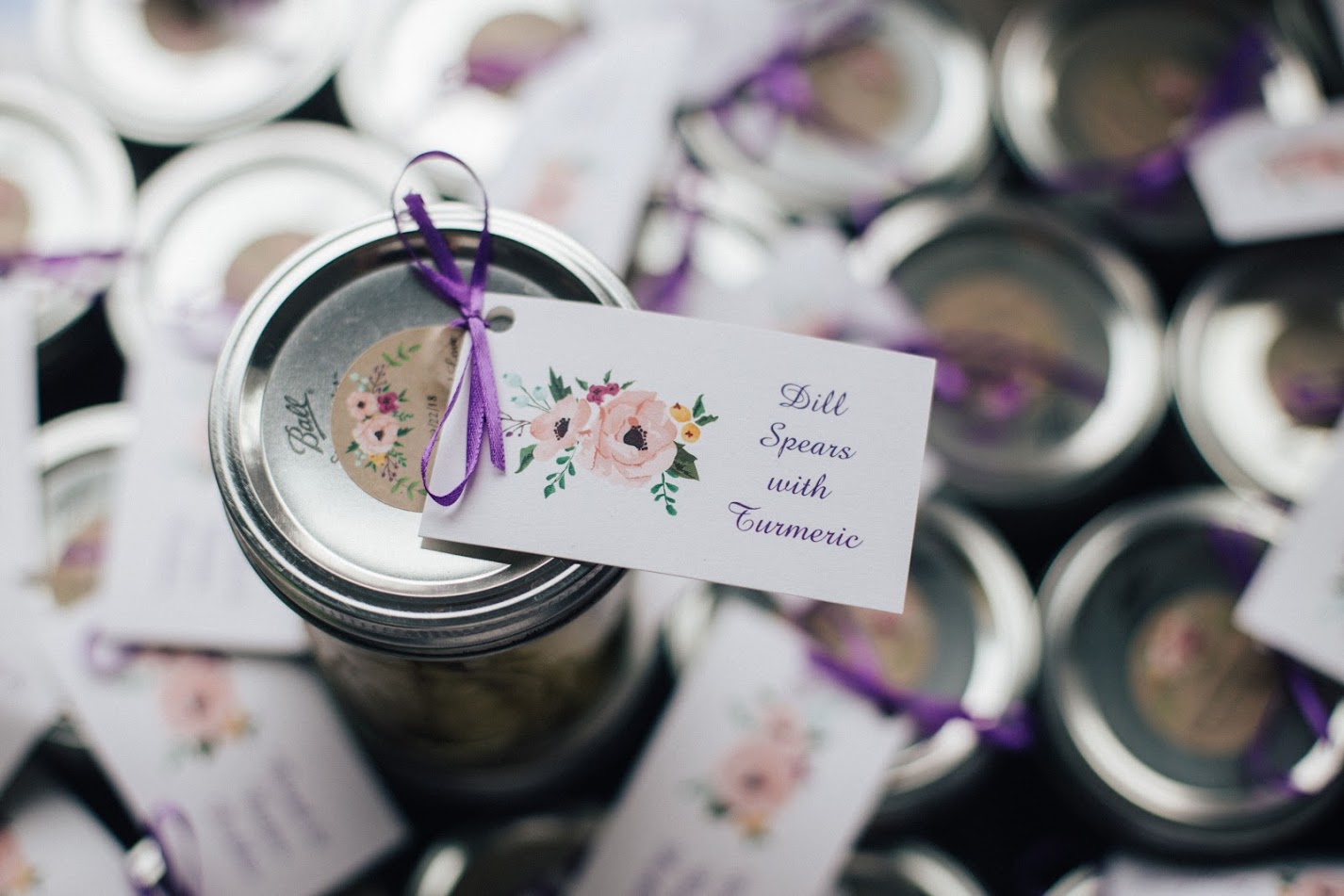
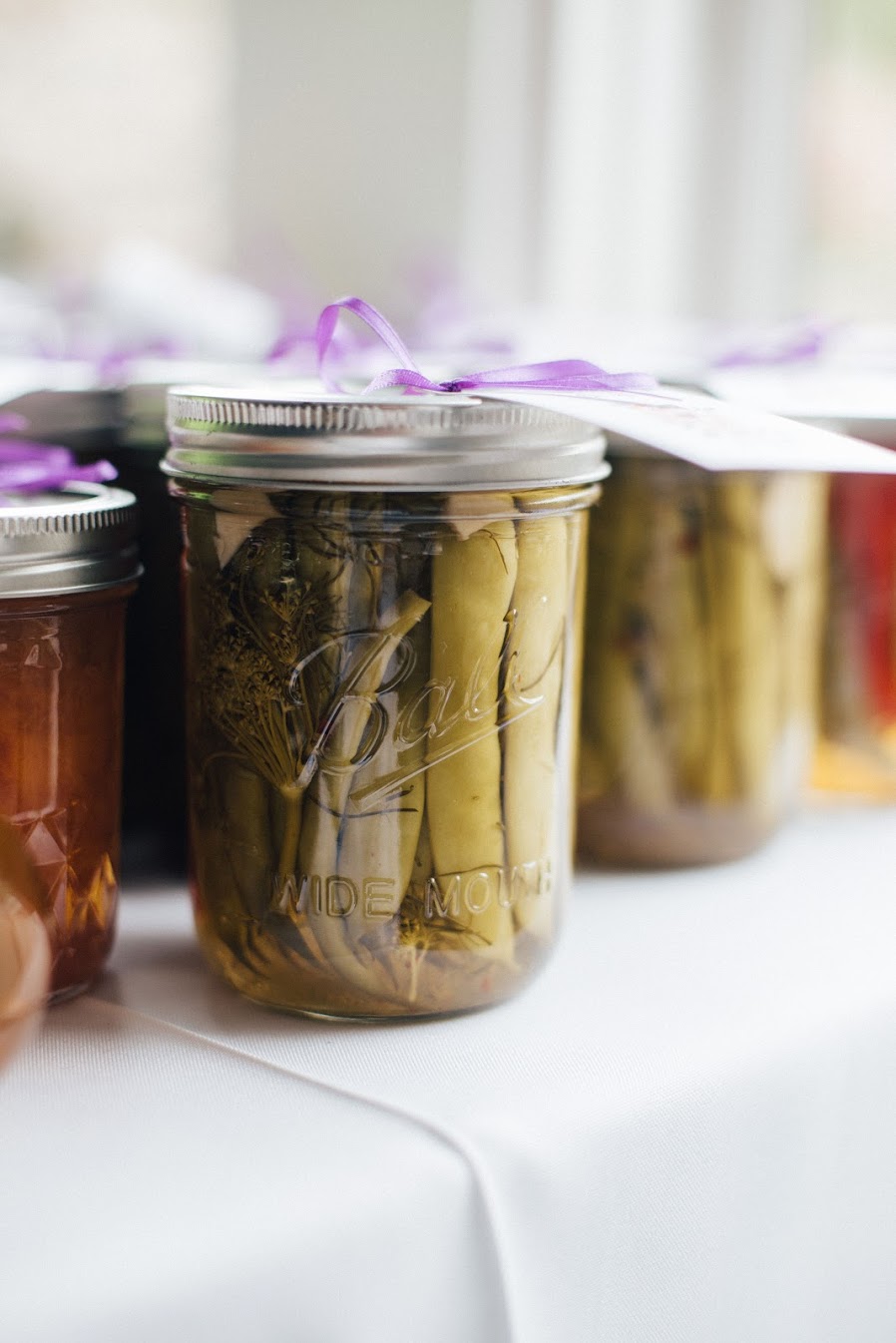
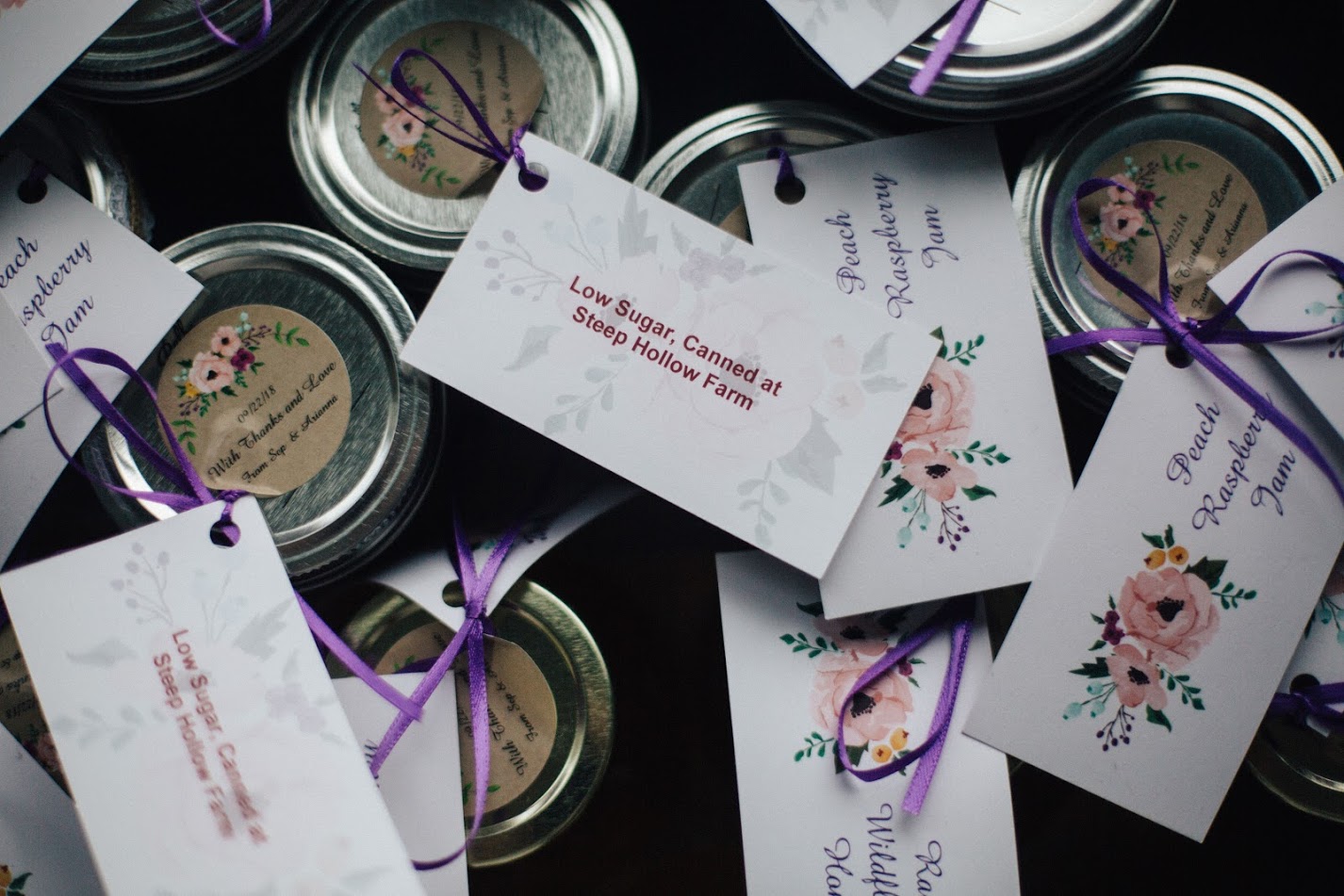
All of the wedding favors for guests were also grown, harvested, and preserved by members of our family.
My other sister (the bride’s aunt) is — among many other things — a terrific chef, and she took leadership of a pre-wedding pickling marathon.
Yum!!!
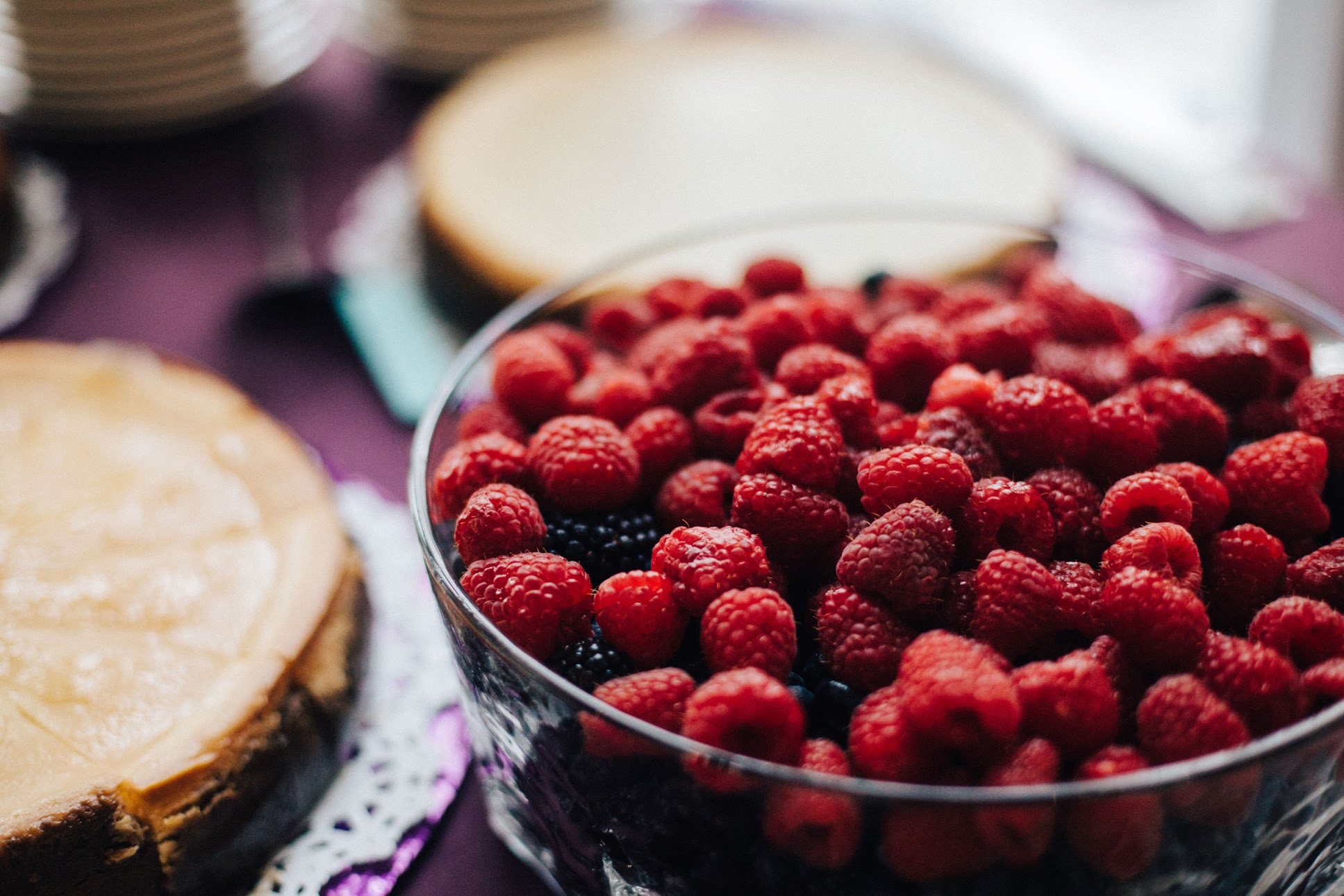
My sisters also canned a lot of peach-raspberry jam…
And my sisters’ neighbors keep bees; so some guests took home jars of local honey, too.
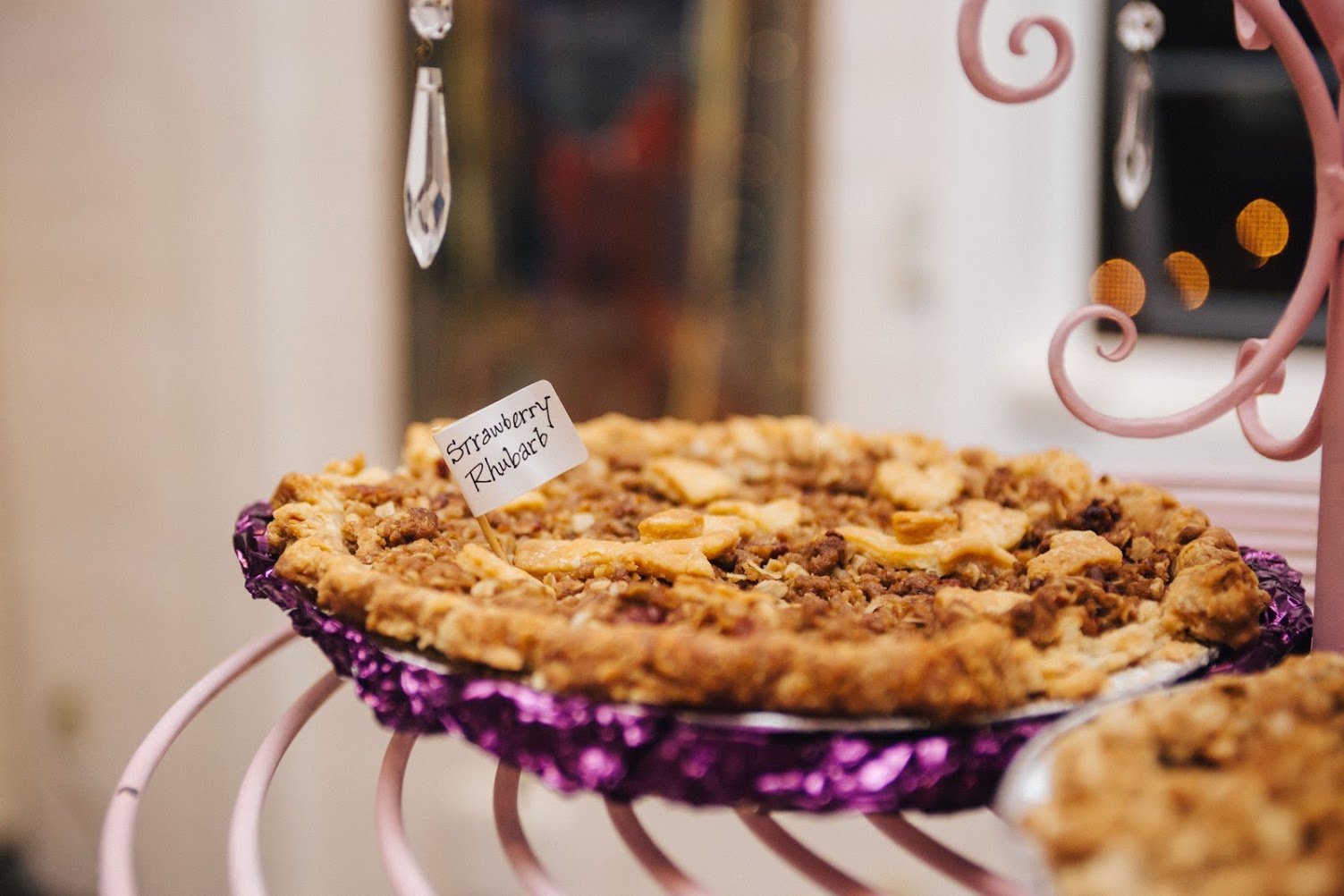
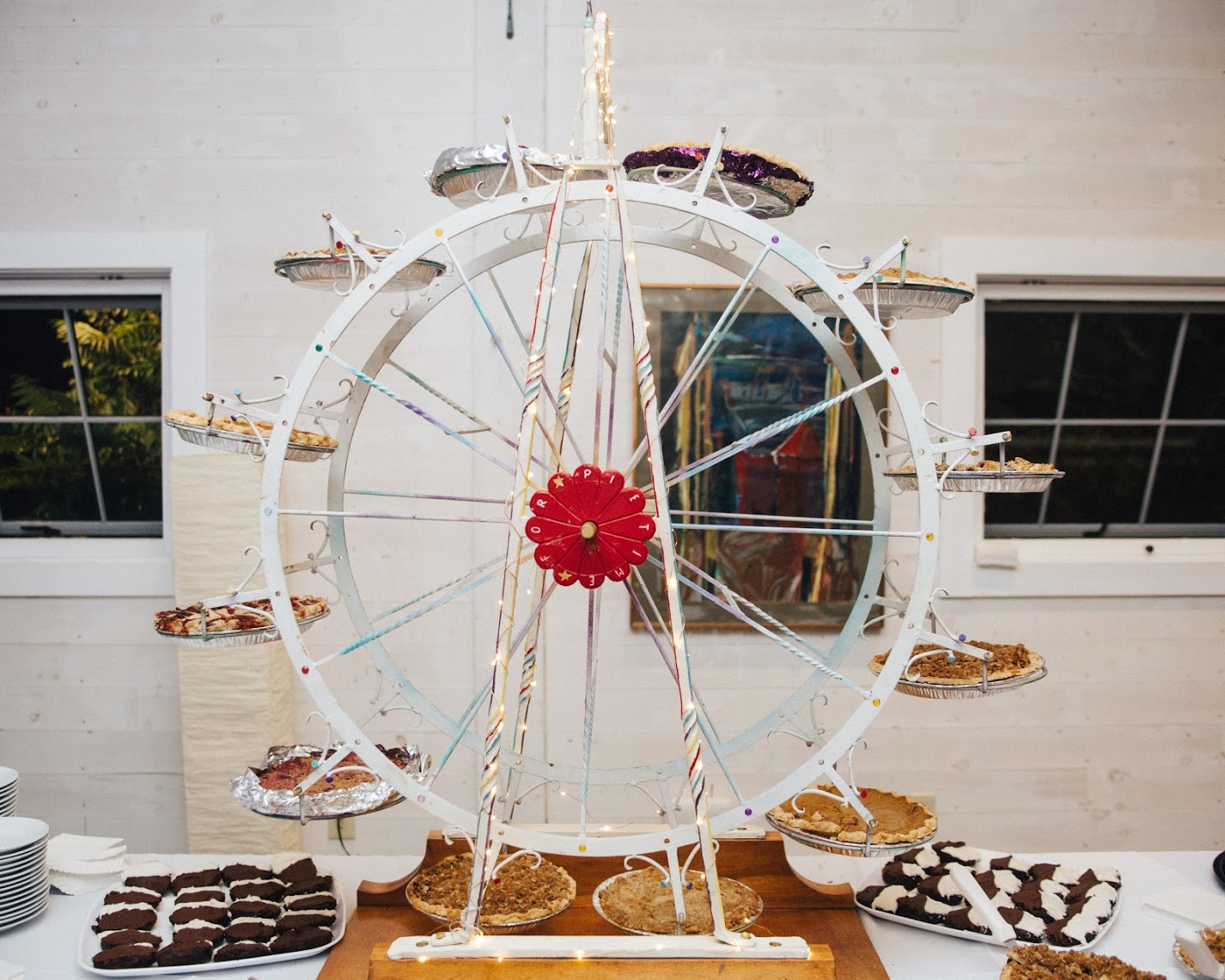
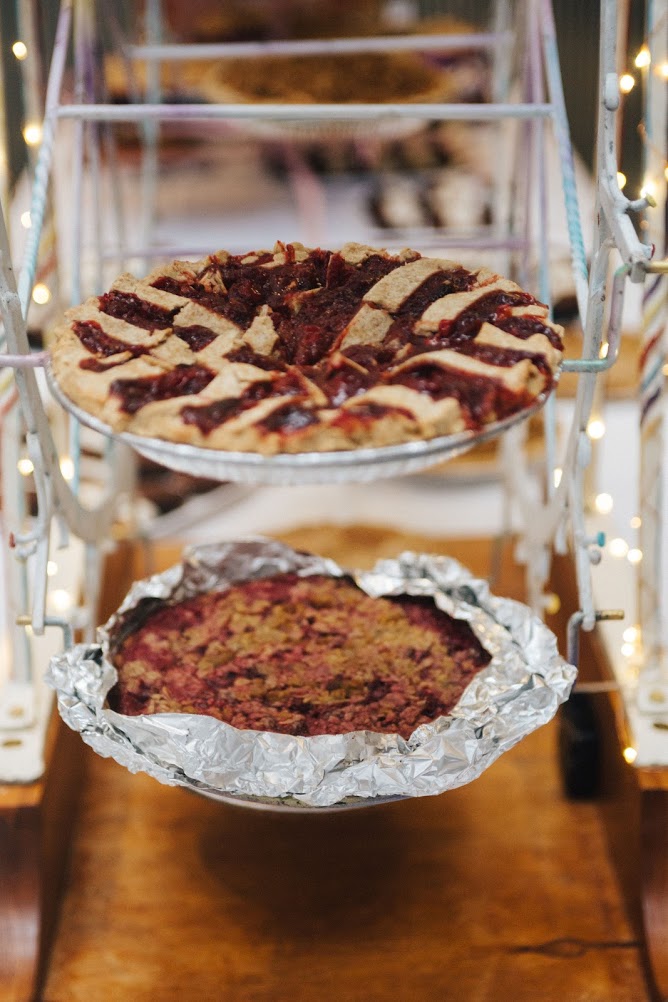
Many friends and family members also pitched in to make pies.
A lot of pies…
They were served from a Ferris Wheel Of Pie — which was something I had never seen before.
And very delicious.
Friday night was the rehearsal dinner, and somehow the caterers were running late.
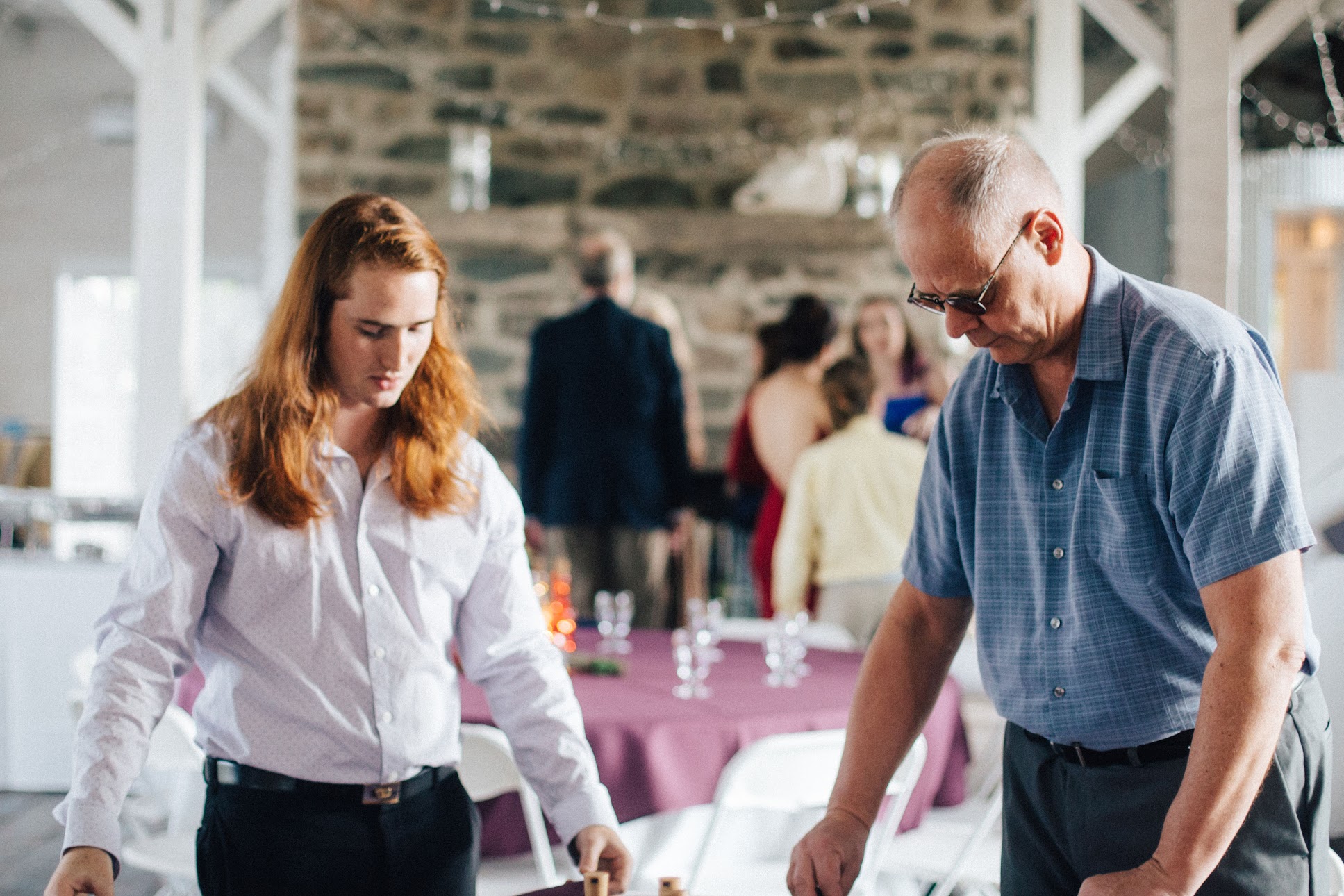
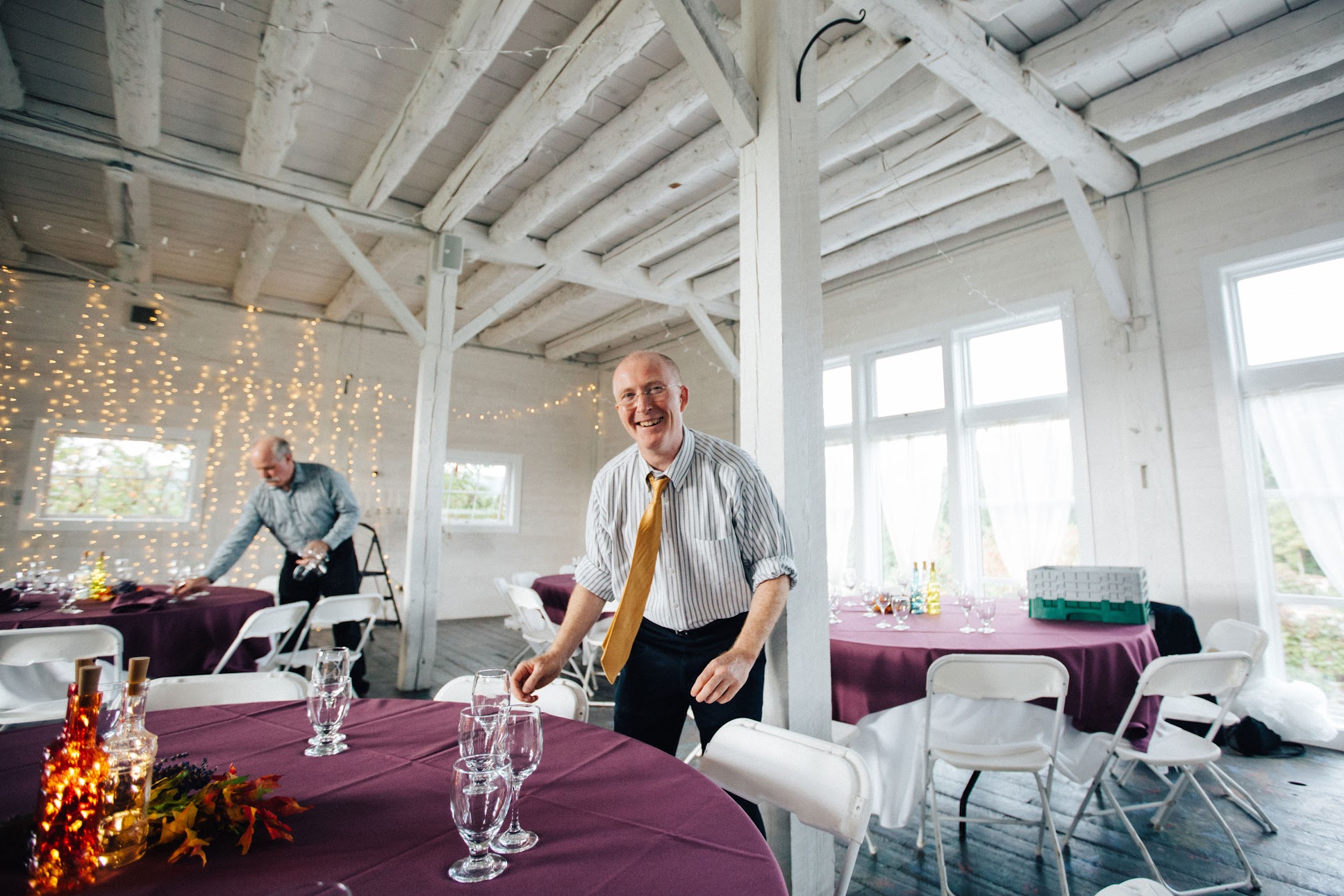
So everyone — except the bride and groom — pitched in to set up tables, plates, glasses, silverware on the second floor of the elegantly converted barn that is the heart of the Treman Center.
Working together like this is one of my favorite ways to spend time with other human beings — and a tried-and-true way to jumpstart a sense of shared purpose and community.
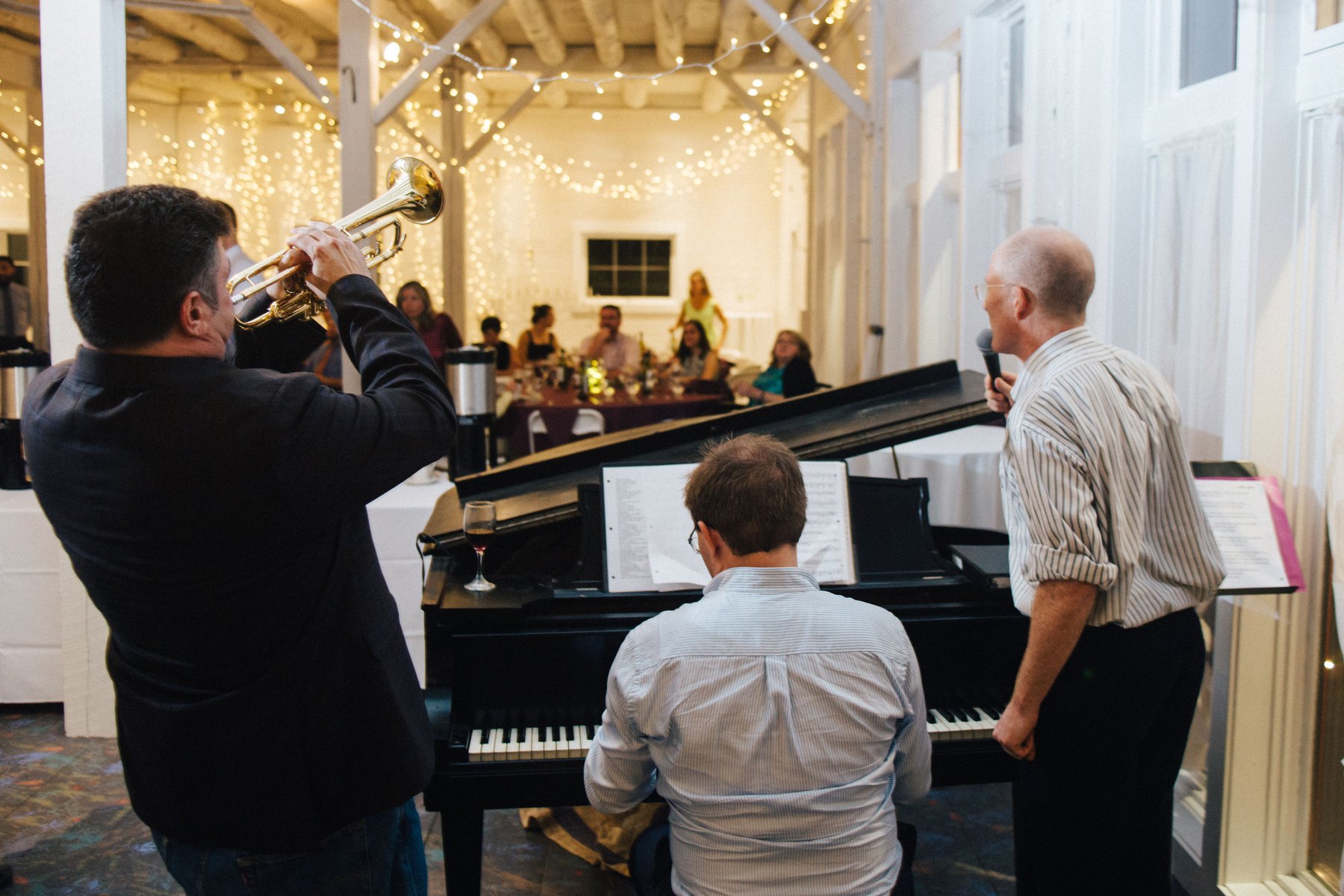
After dinner the father of the bride — who is a professional trumpeter — and I and a dear friend of the bride and groom who happens to be a great pianist (and who had driven all the way from Norfolk, VA, with his fiancee to be part of the celebration) sang jazz standards at a funky old Steinway which graces the Treman Center.
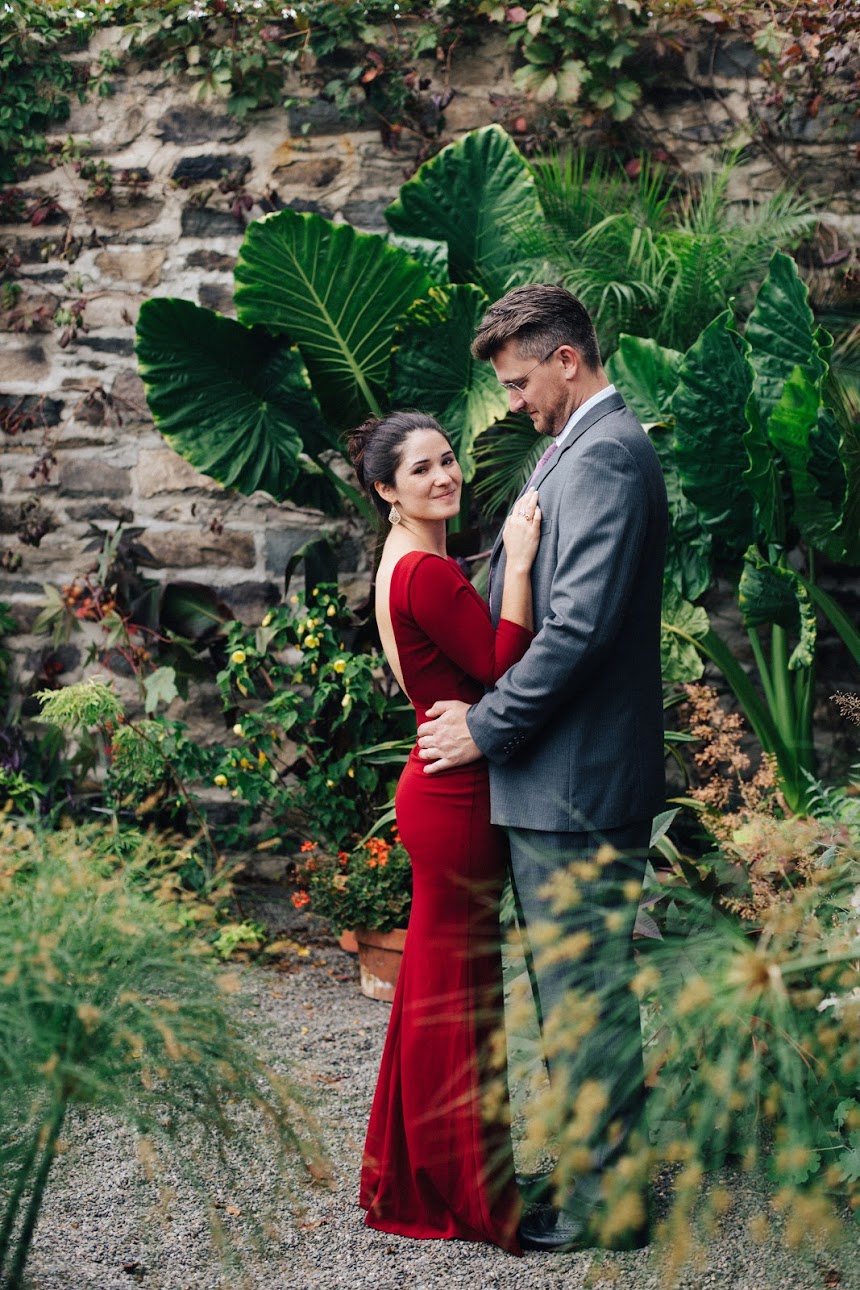
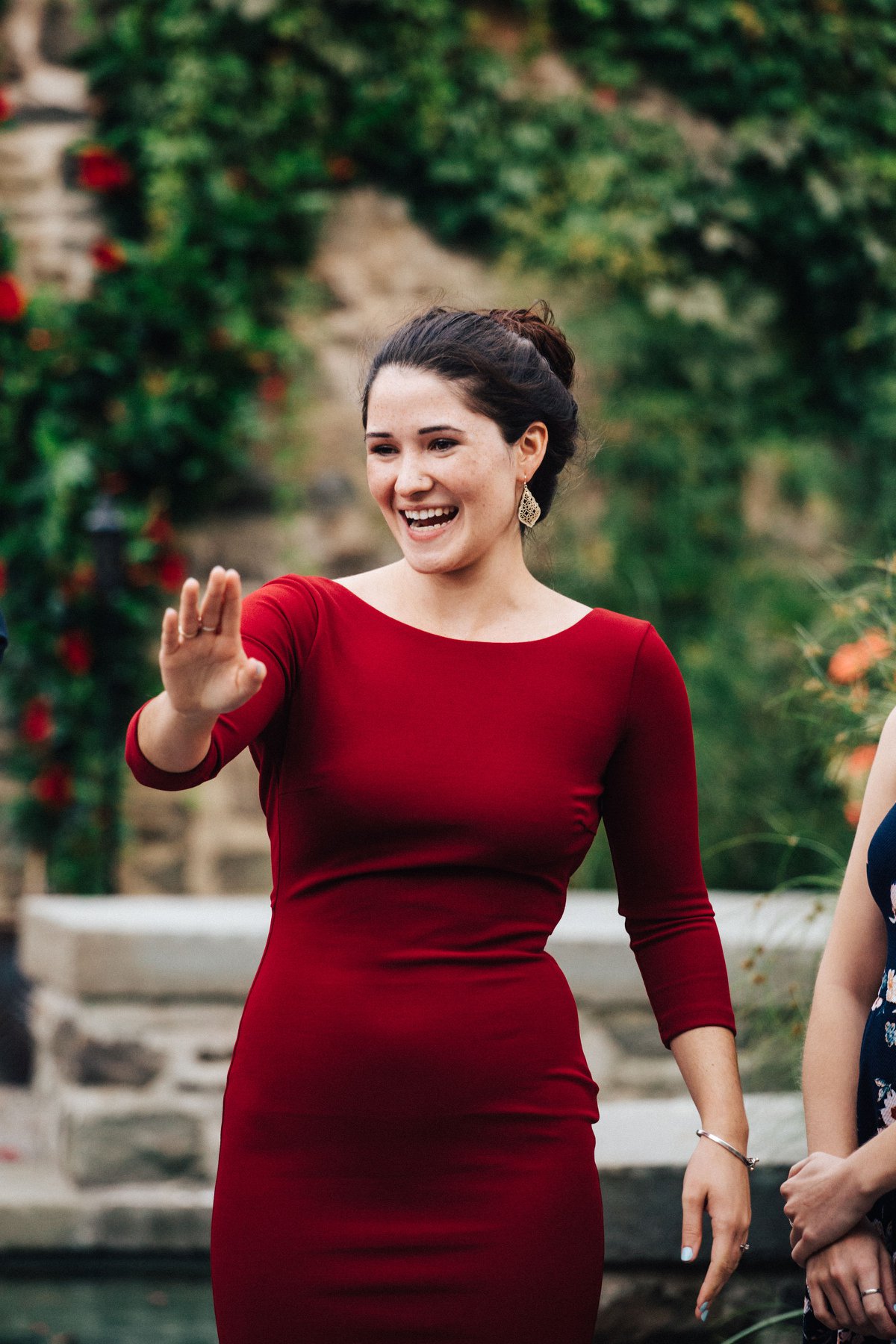
My niece wore a beautiful and very red dress.
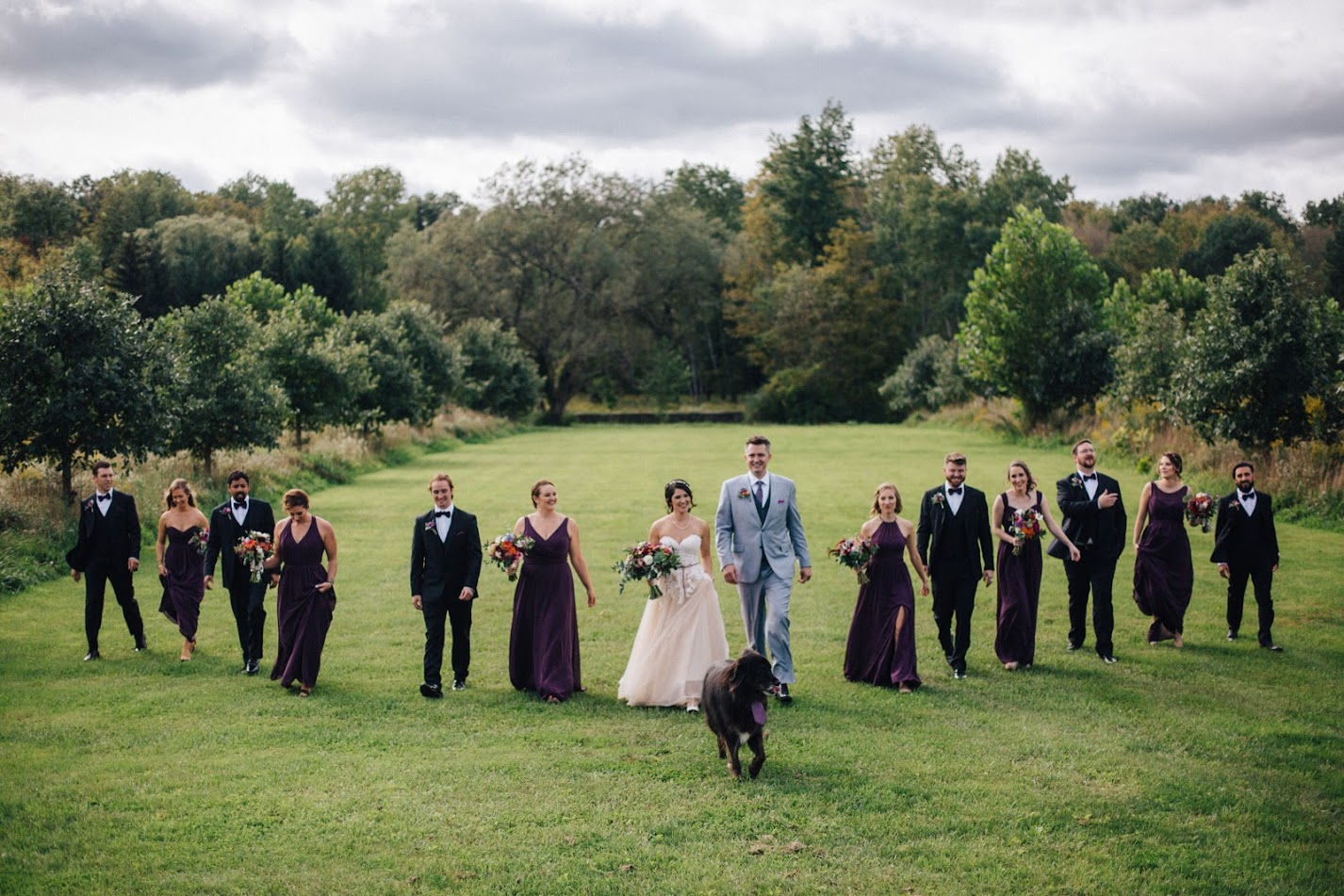
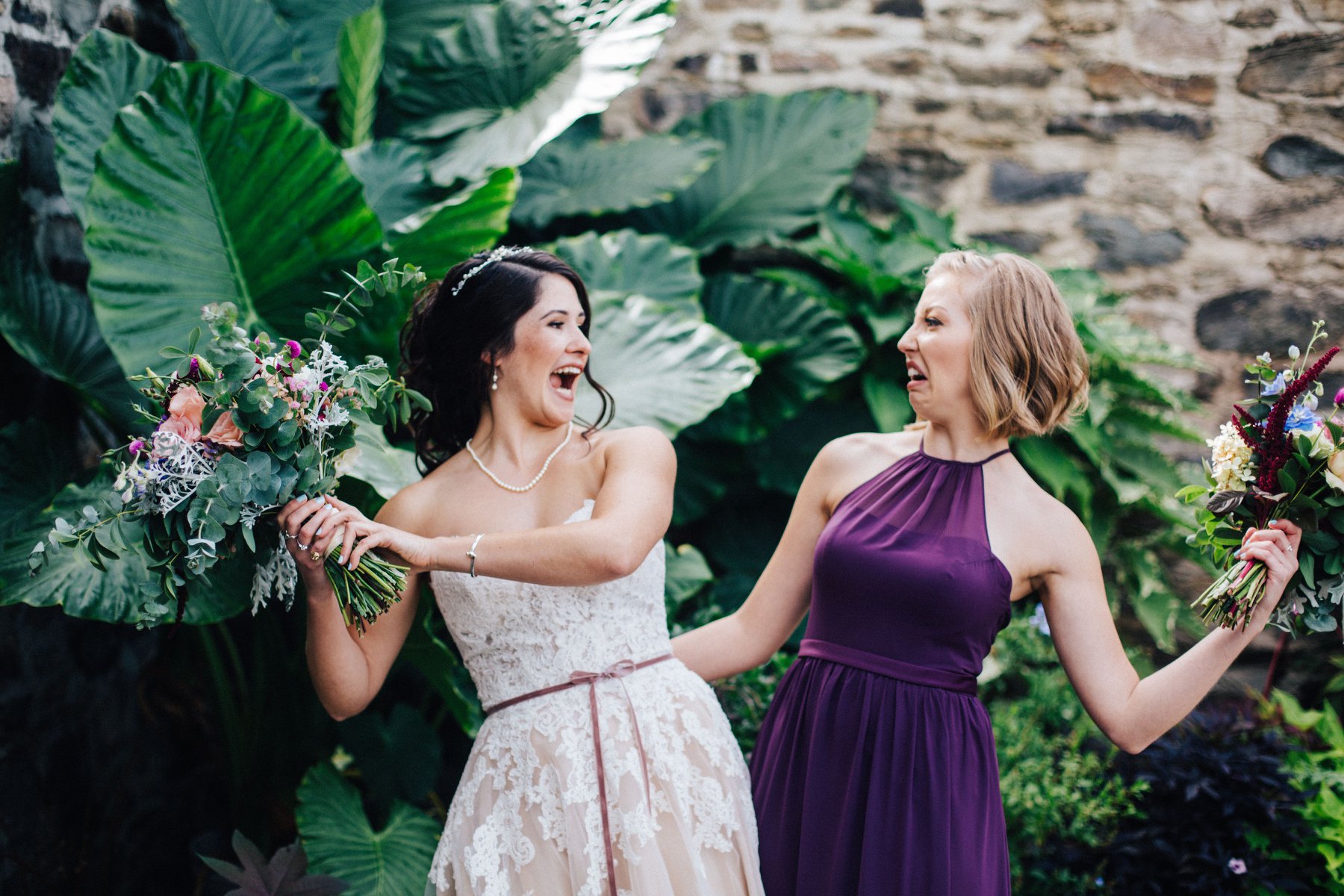
She had a terrific group of friends as bridesmaids, and the spirit throughout the weekend was often quite playful.
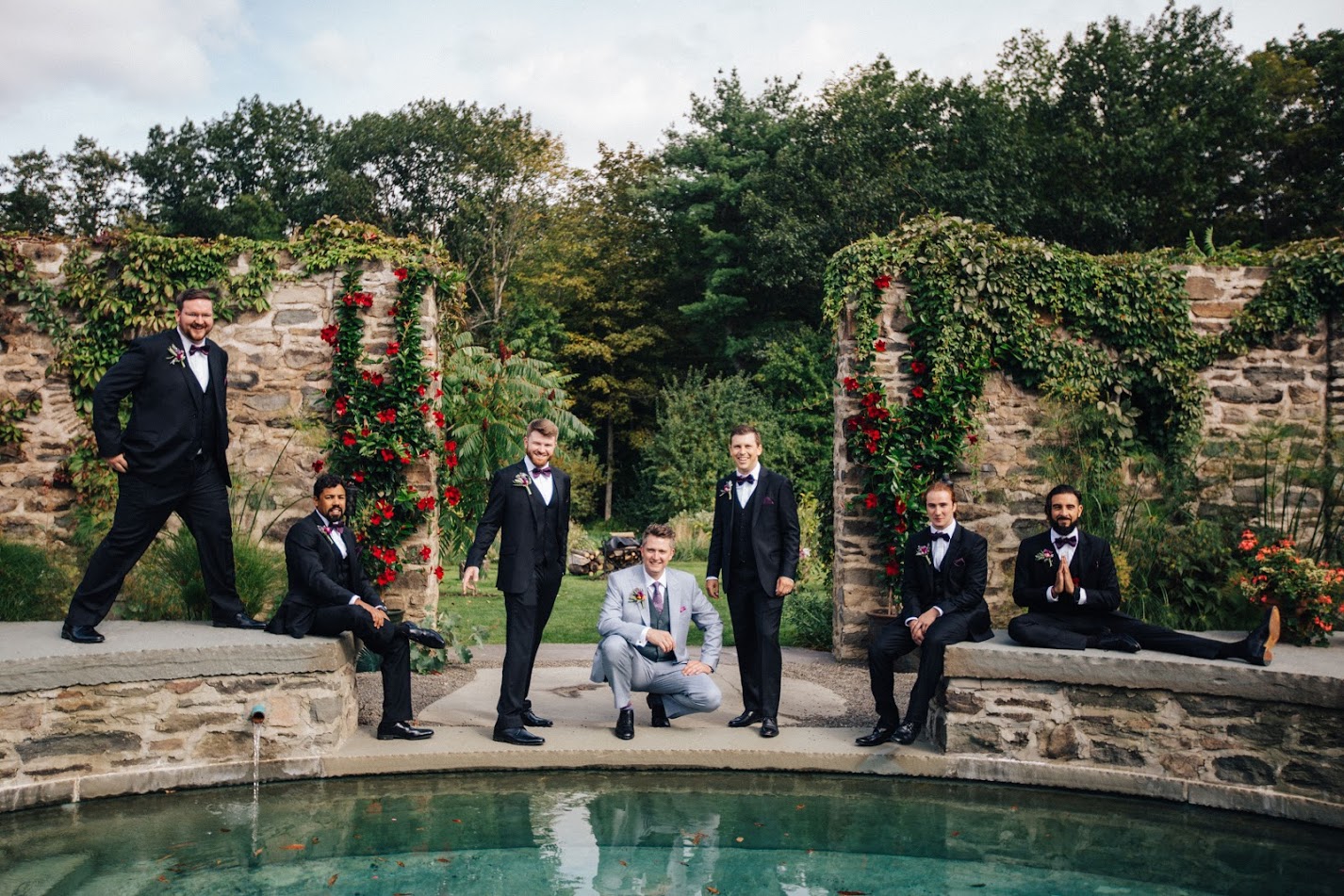
The groomsmen were also full of fun and creativity.
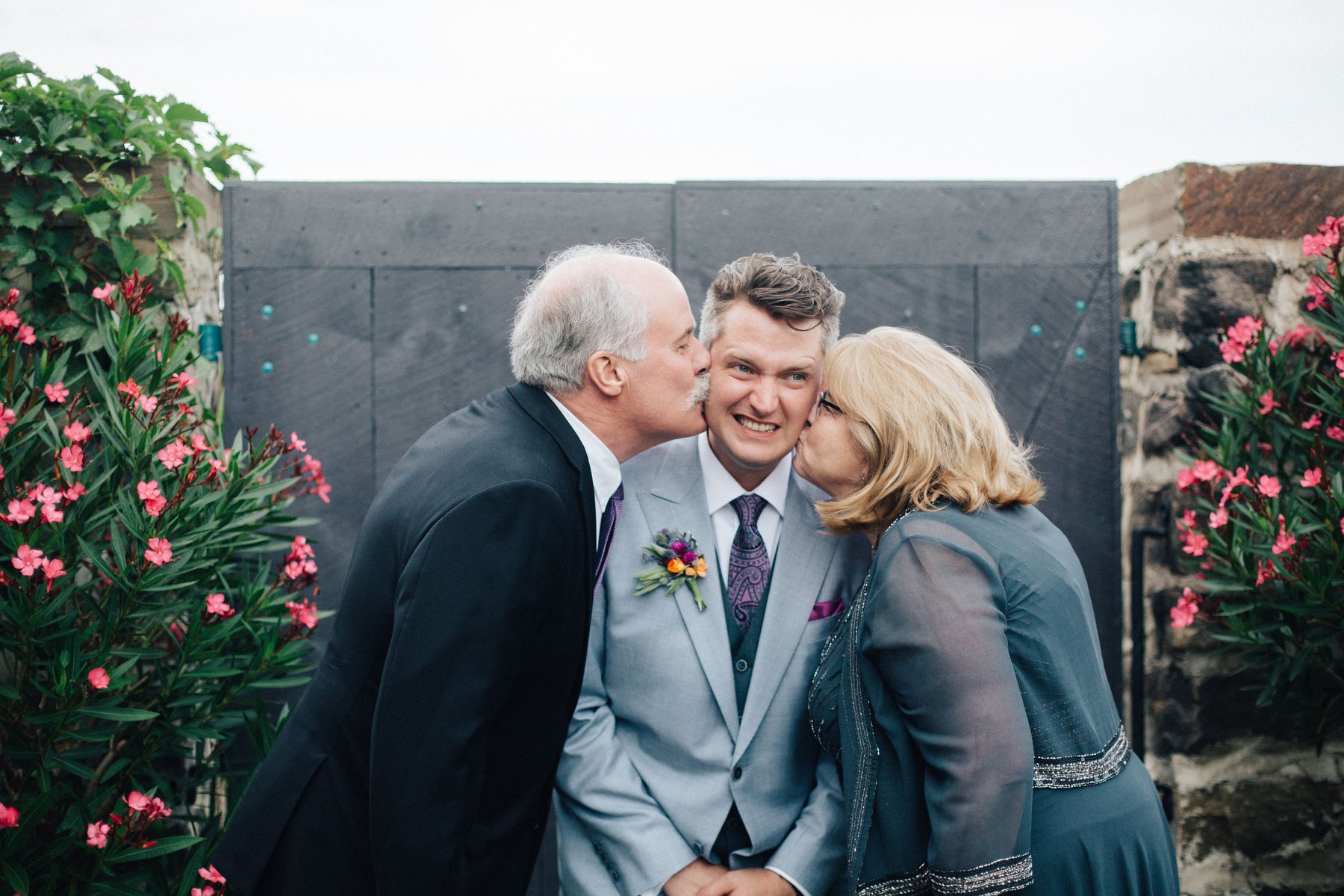
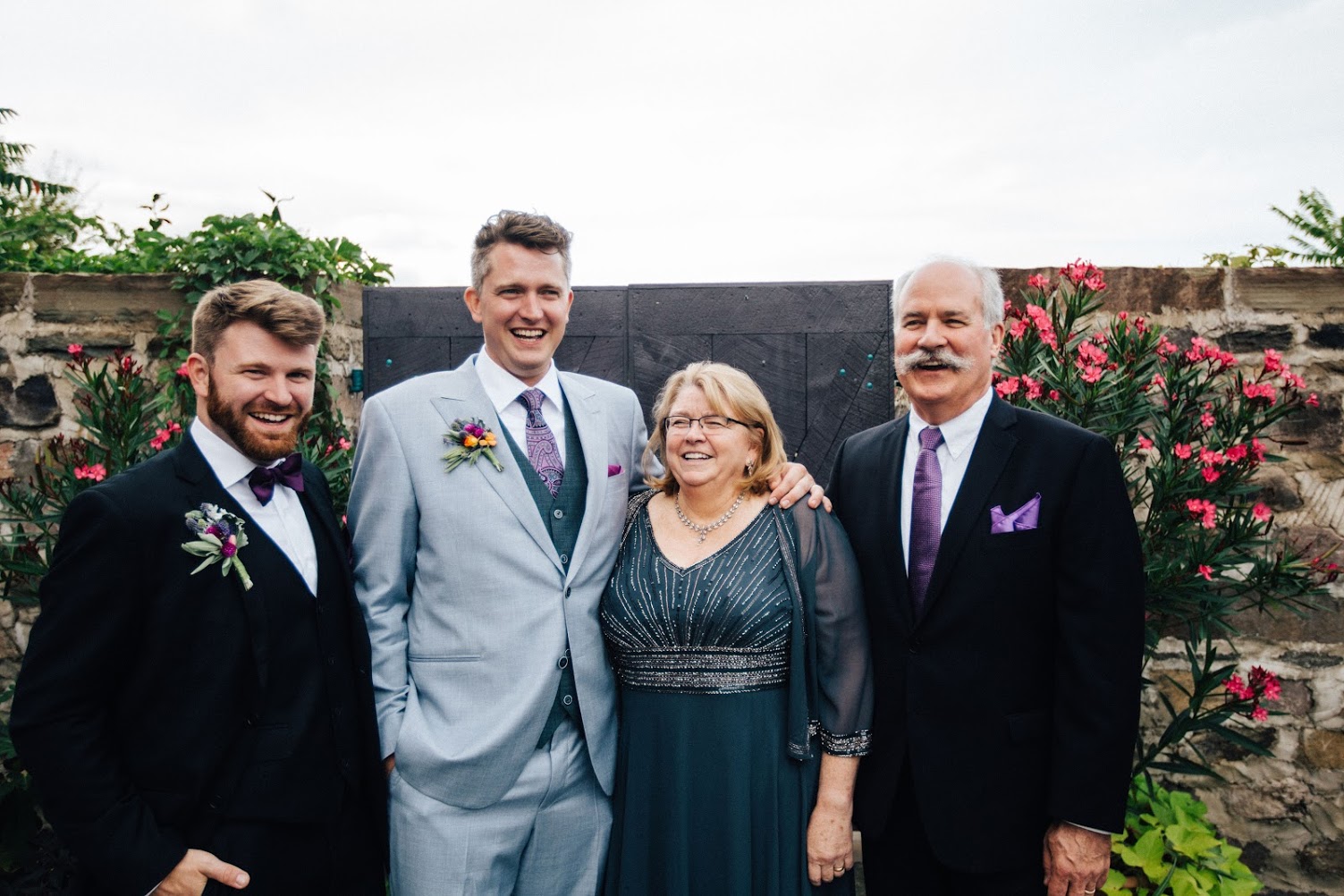
I love this photo of the groom and his parents.
The bride’s quietly extraordinary younger brother (my older nephew) was part of the bridal party, and pitched in to help at every conceivable opportunity.
Their mother is a hardworking farmer and photographer who like many hardworking farmers — and photographers — also has a day job.
Currently she works at Cornell University’s department of Fiber Science and Apparel Design — which meant that she was able to have a gown created for her by an up-and-coming clothing designer.
One of the unexpected pleasures of this wedding was seeing friends and family members whom I usually see in shorts and swim suits — or in the case of my sister, a one-piece jumpsuit which she wears when she takes care of the chickens and sheep and gardens on her farm — wearing somewhat fancier clothing.
Everyone cleaned up very nicely!
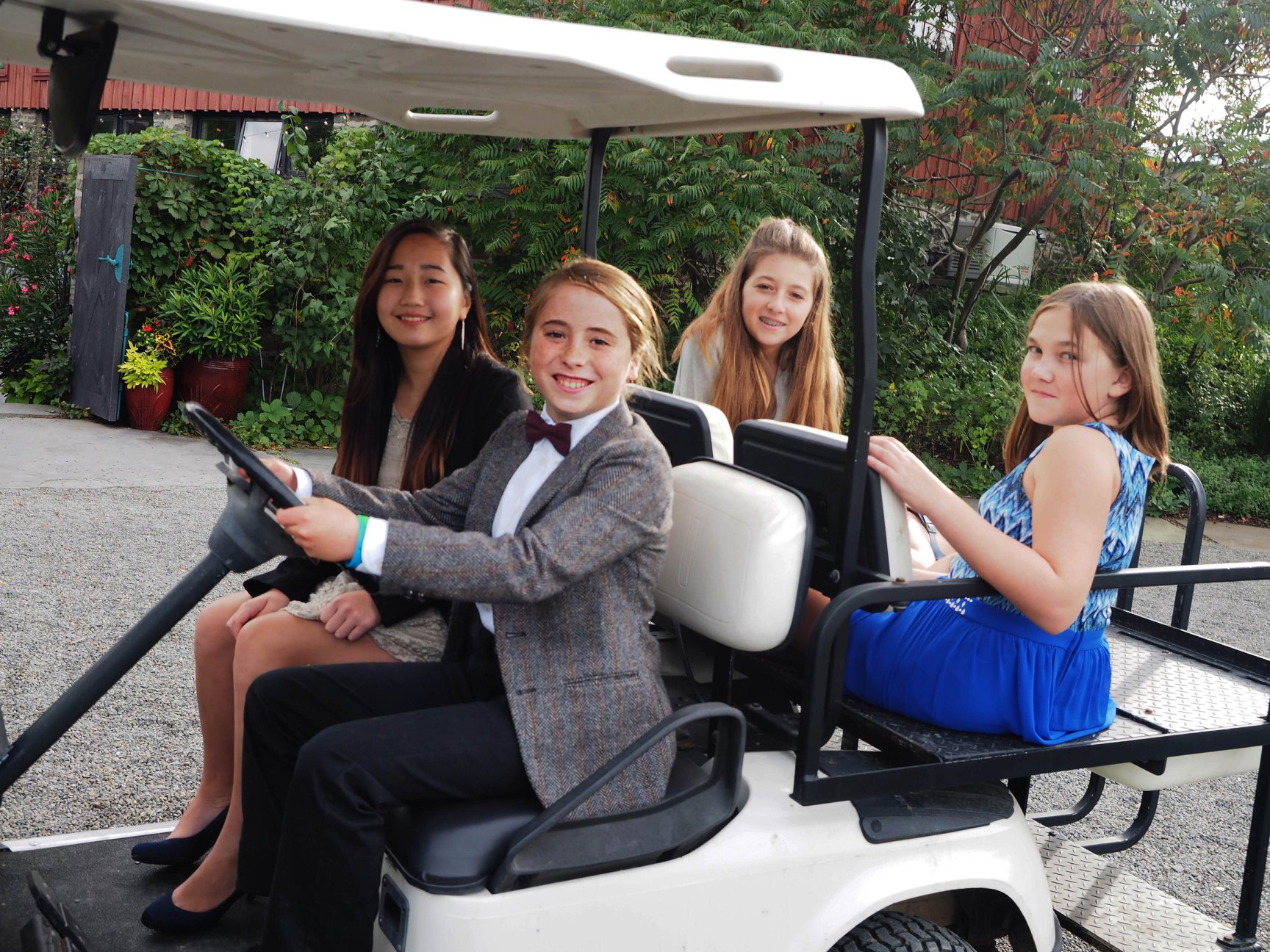
My younger nephew and some of my younger cousins looked very sharp when they were given permission to drive a golf cart around the venue.
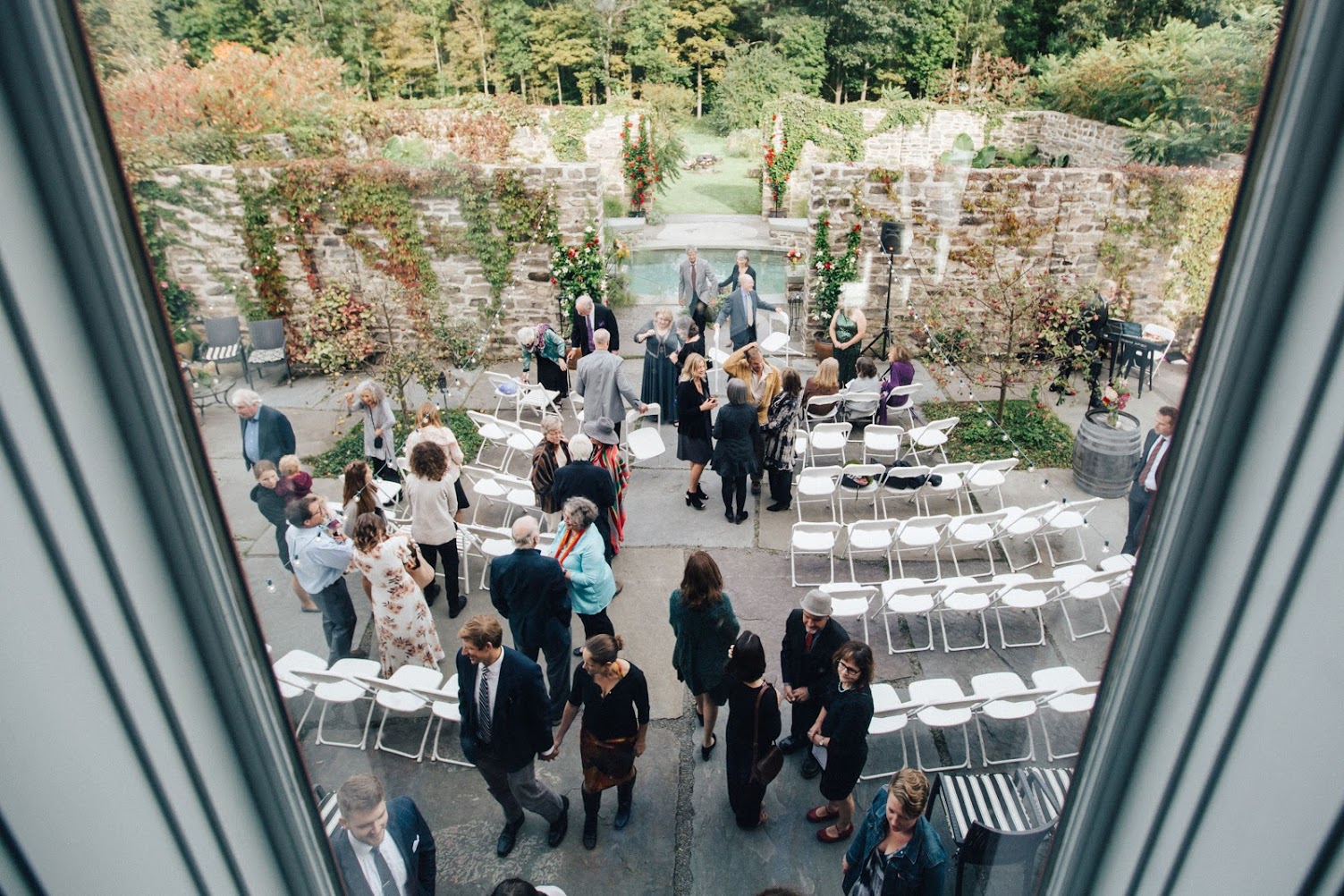
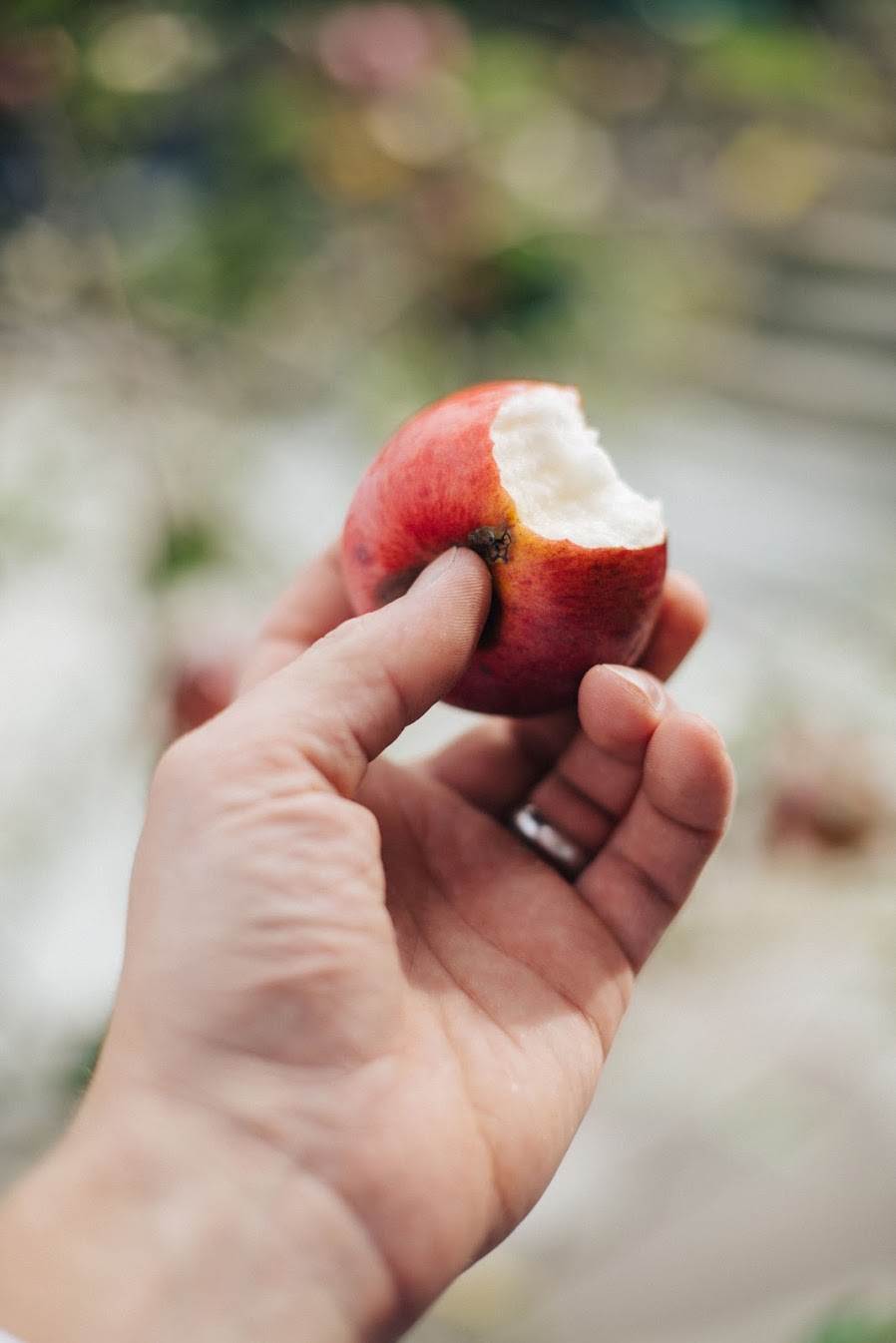
The wedding ceremony was held in a stone courtyard which had all sorts of fruit trees growing in huge planters.
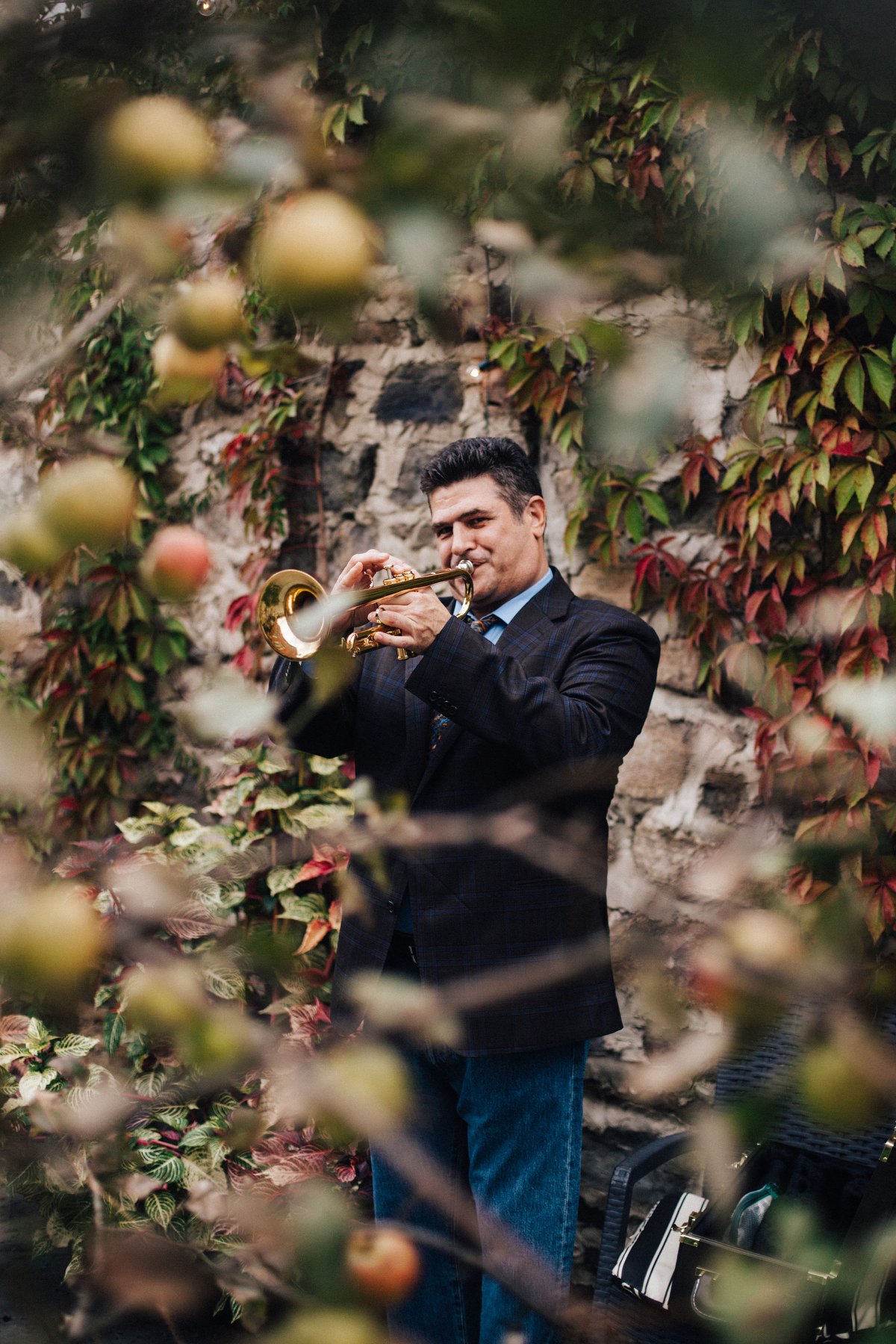
While everyone was assembling on Saturday afternoon before the ceremony began, the pianist friend and I shared more standards while the bride’s father rocked his trumpet.
He has toured with Wynton Marsalis, Maynard Ferguson, and Harry Connick, Jr. among others…
I will share lots of photos from the actual wedding ceremony in my second (future) post.
Here are a few observations:
The groom is very tall.
He has a wonderful family.
And he and my niece are very fond of each other.
If I am remembering correctly, they originally met when he was an assistant coach for her crew team.
They both went to the same college — although they didn’t overlap as undergraduates because he is a few years older — and their romance began when they both worked on the island of Elba in the Mediterranean one summer.
She was the cook and he was the gardener on the estate of a college professor.
She wrote a wonderful blog which documented many of her adventures on Elba — culinary and otherwise. You can click here to get a taste of her blog if you are curious…
One of the highlights of the ceremony on Saturday was the ring-bearer — their beloved dog companion named Dozer.
The ceremony was not-too-long and very sweet — culminating, of course, with a lovely kiss.
After this was dinner.
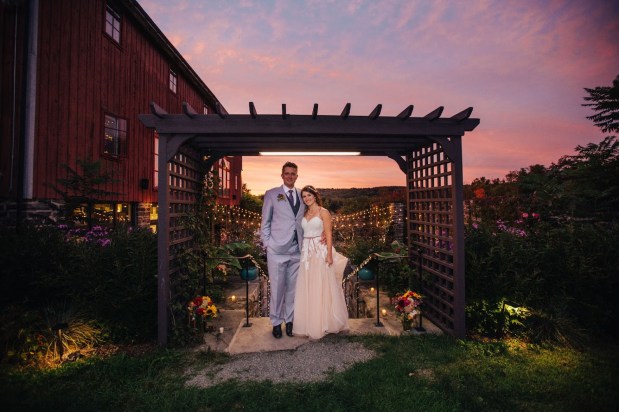
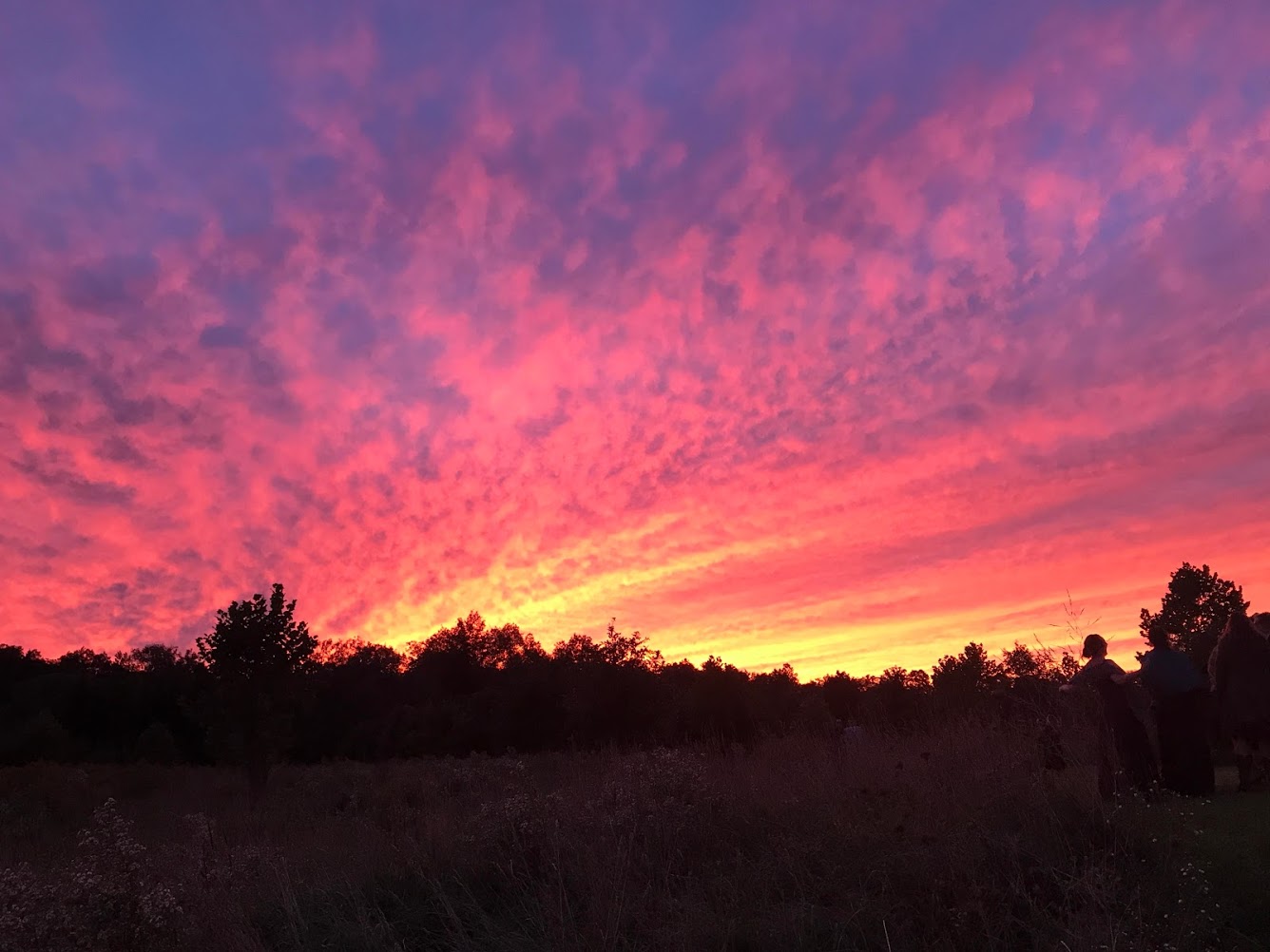
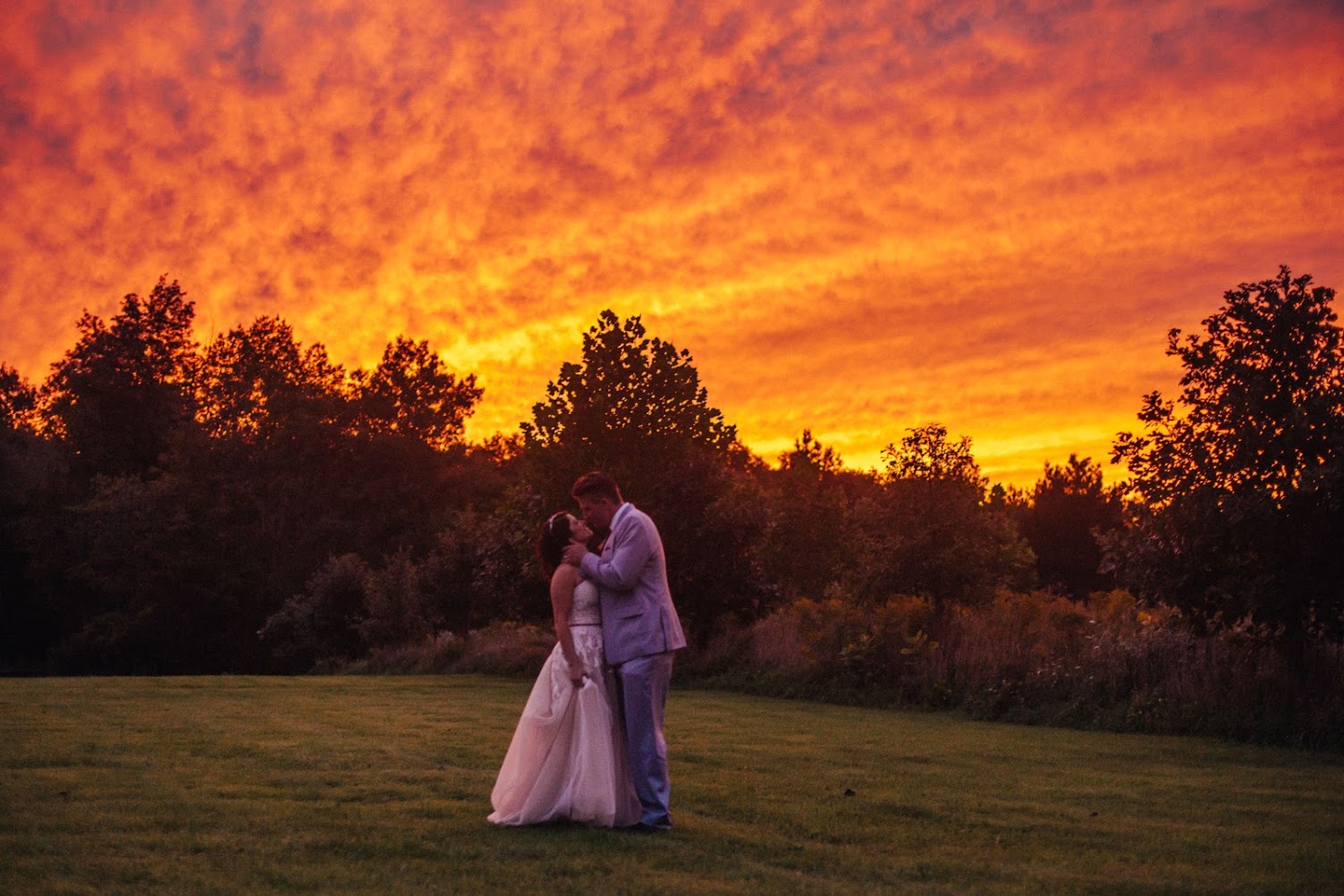
And an extraordinary sunset.
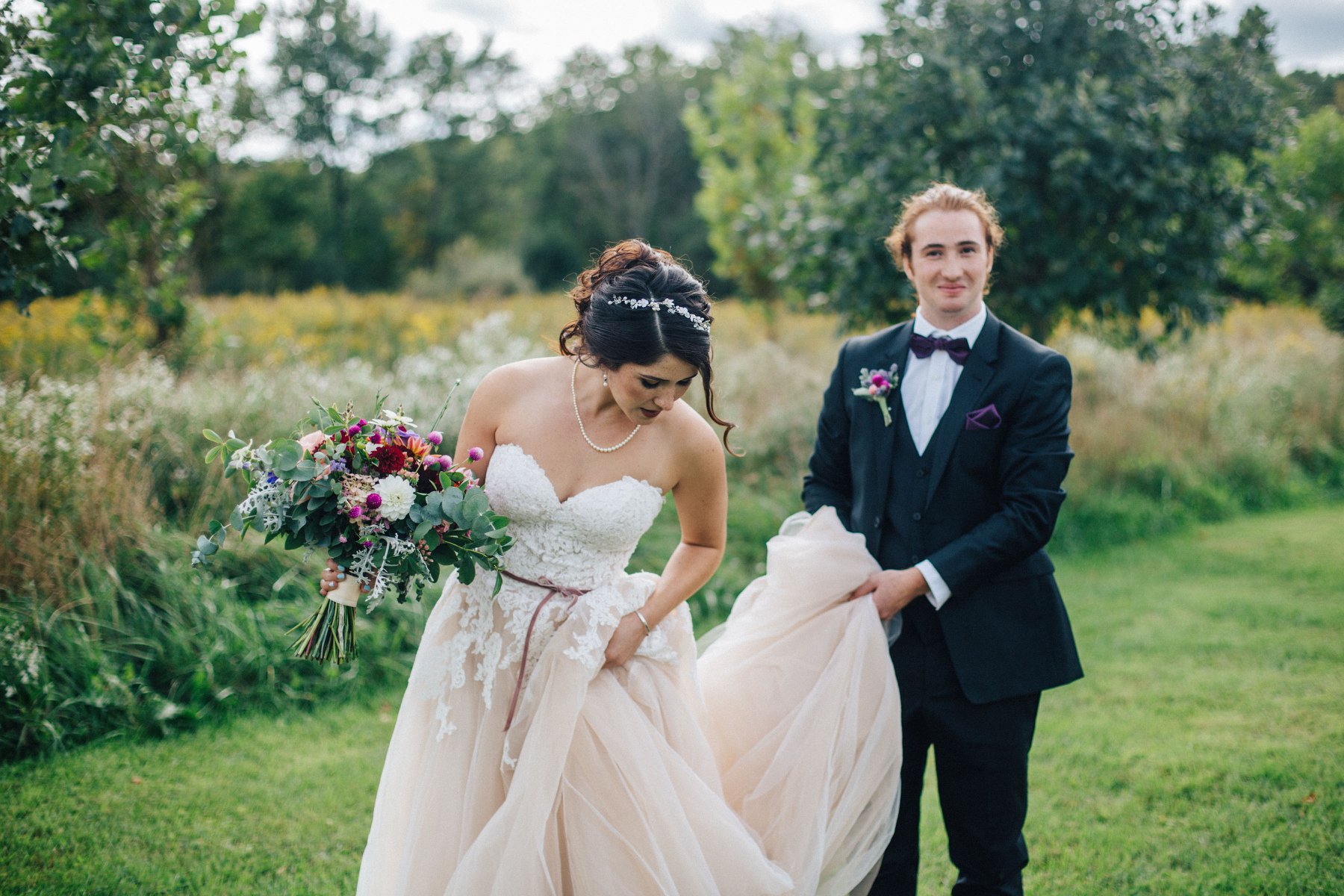
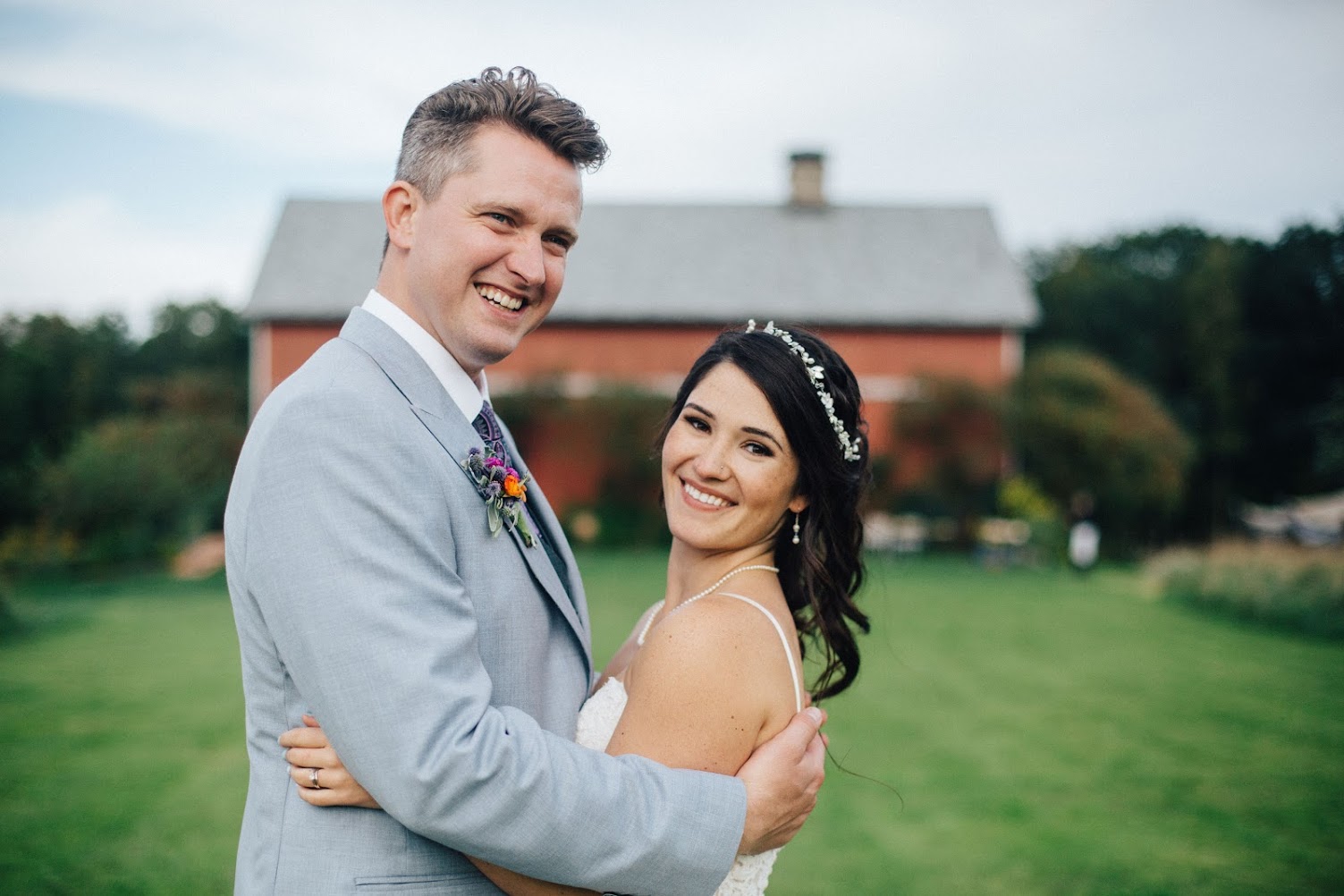
The proactive and very congenial wedding photographers grabbed the bride and groom for a sunset portrait…
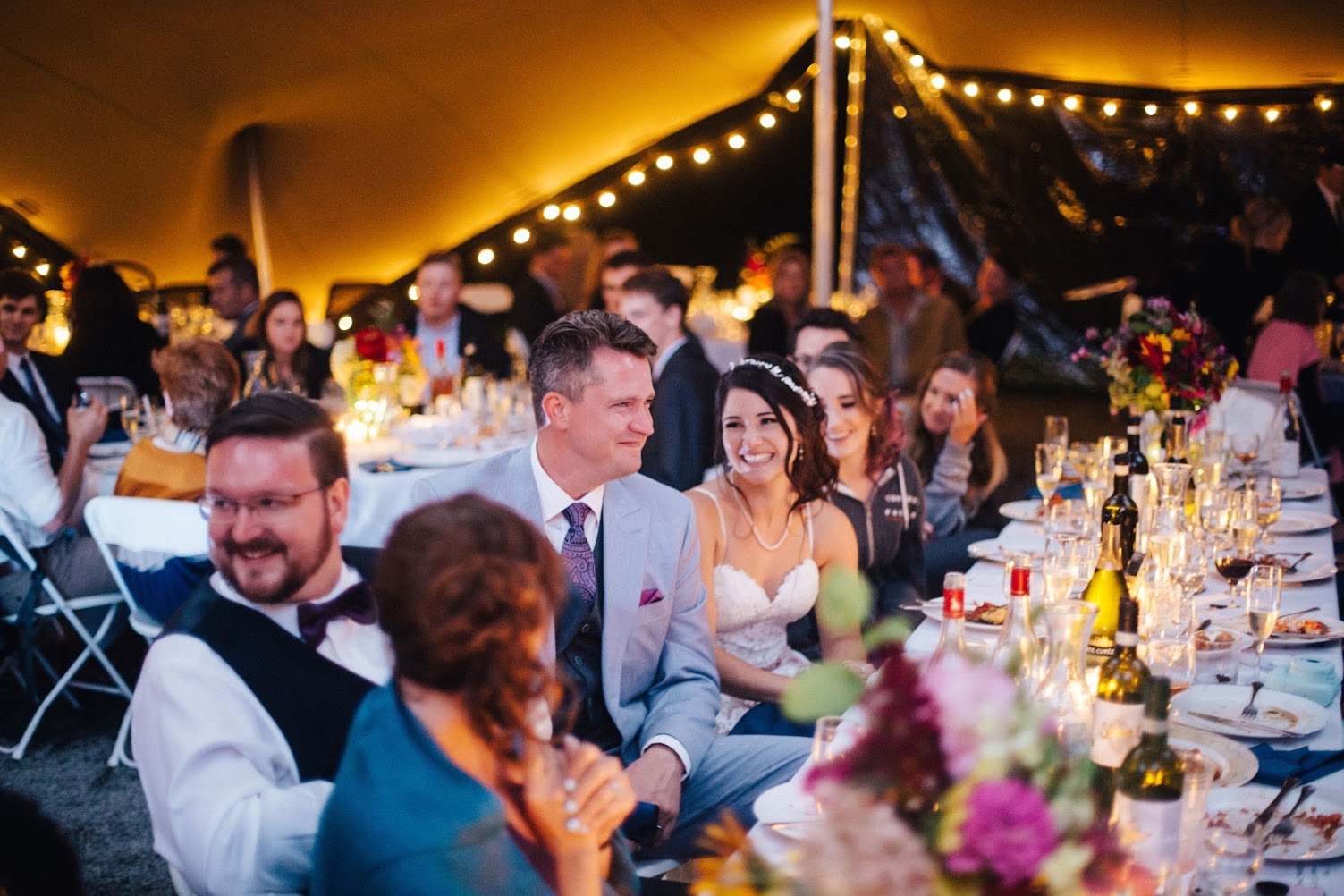
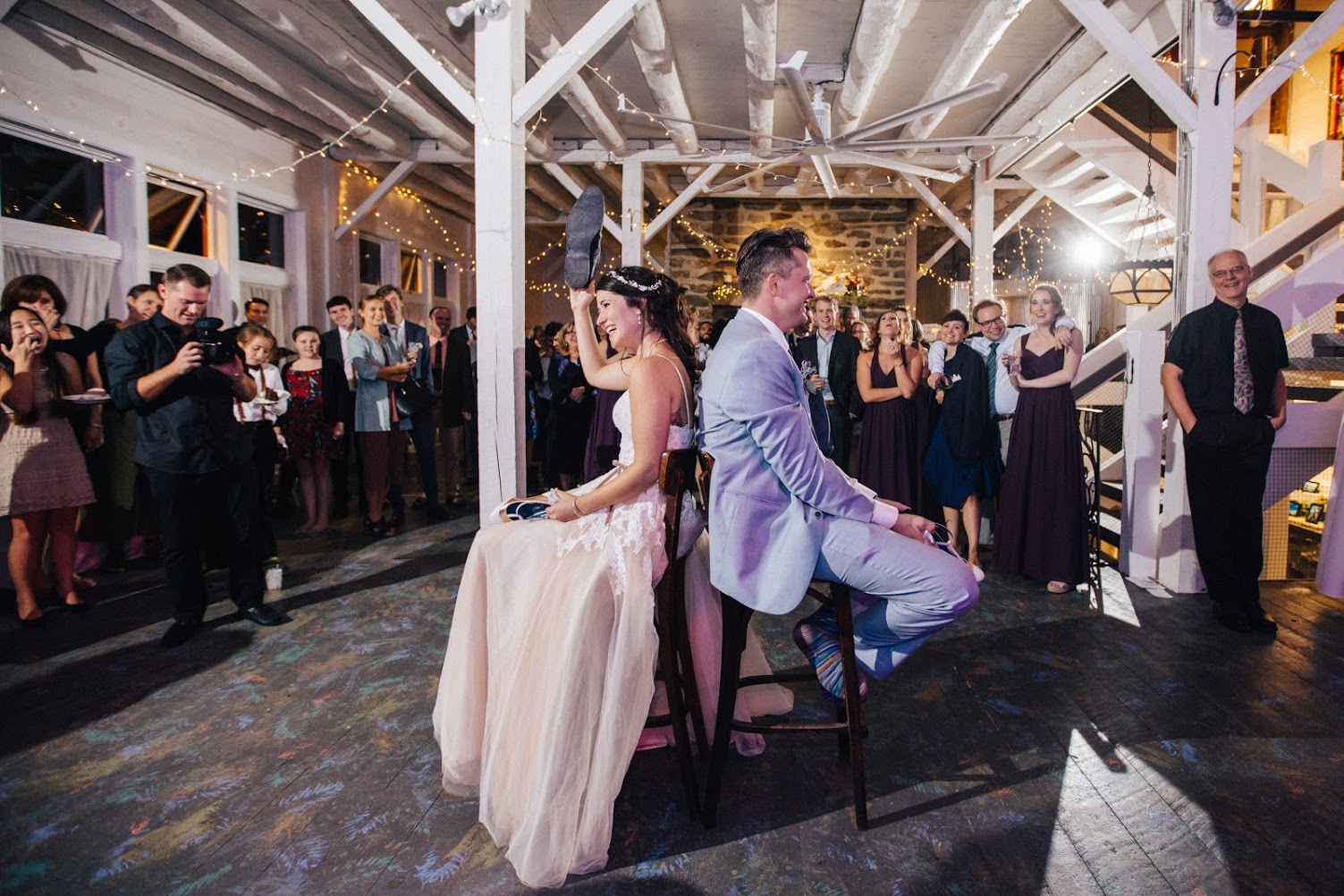
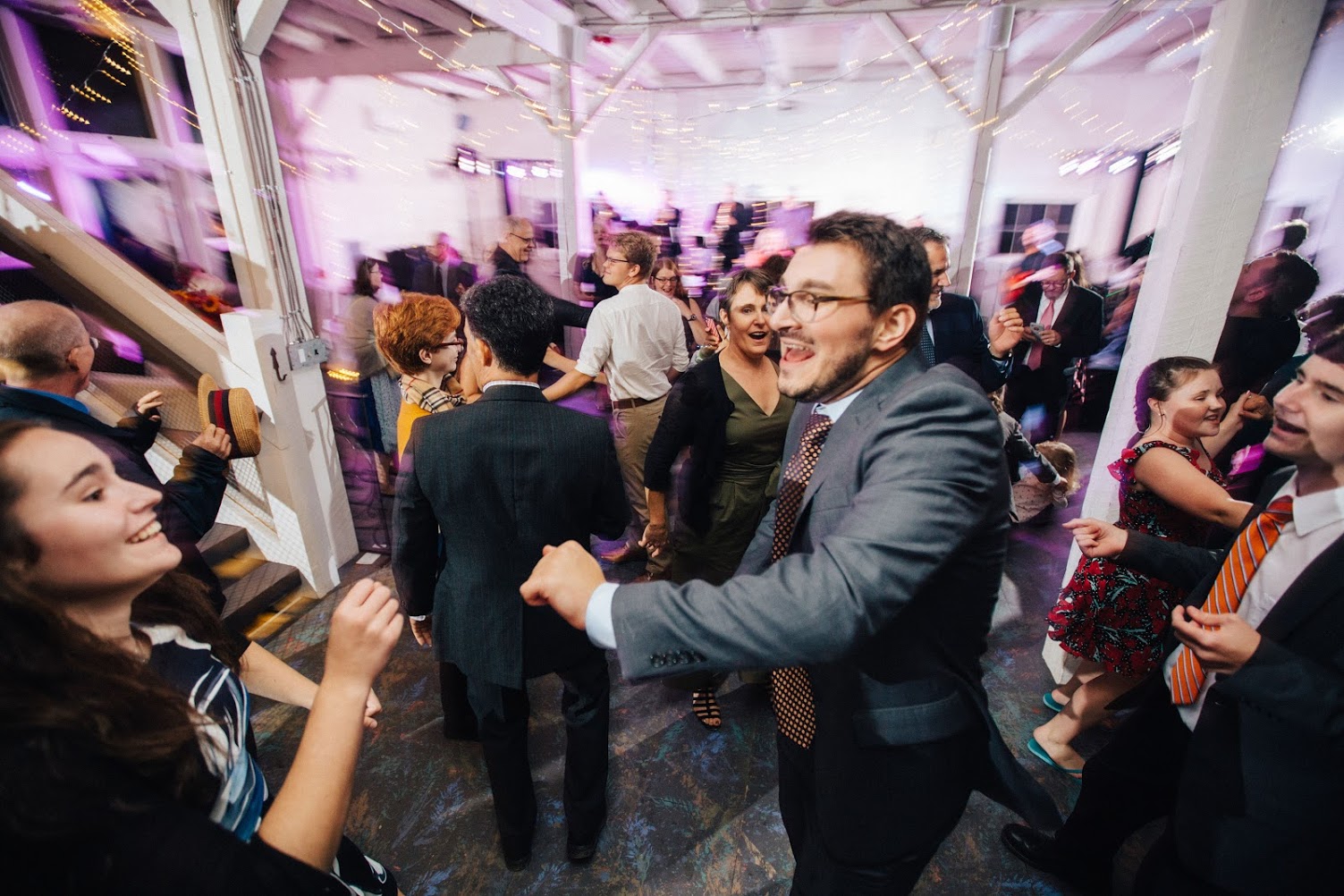
Then we all danced for several hours in varying states of abandon to a great live band.
Dancing was interspersed with a few wedding games.
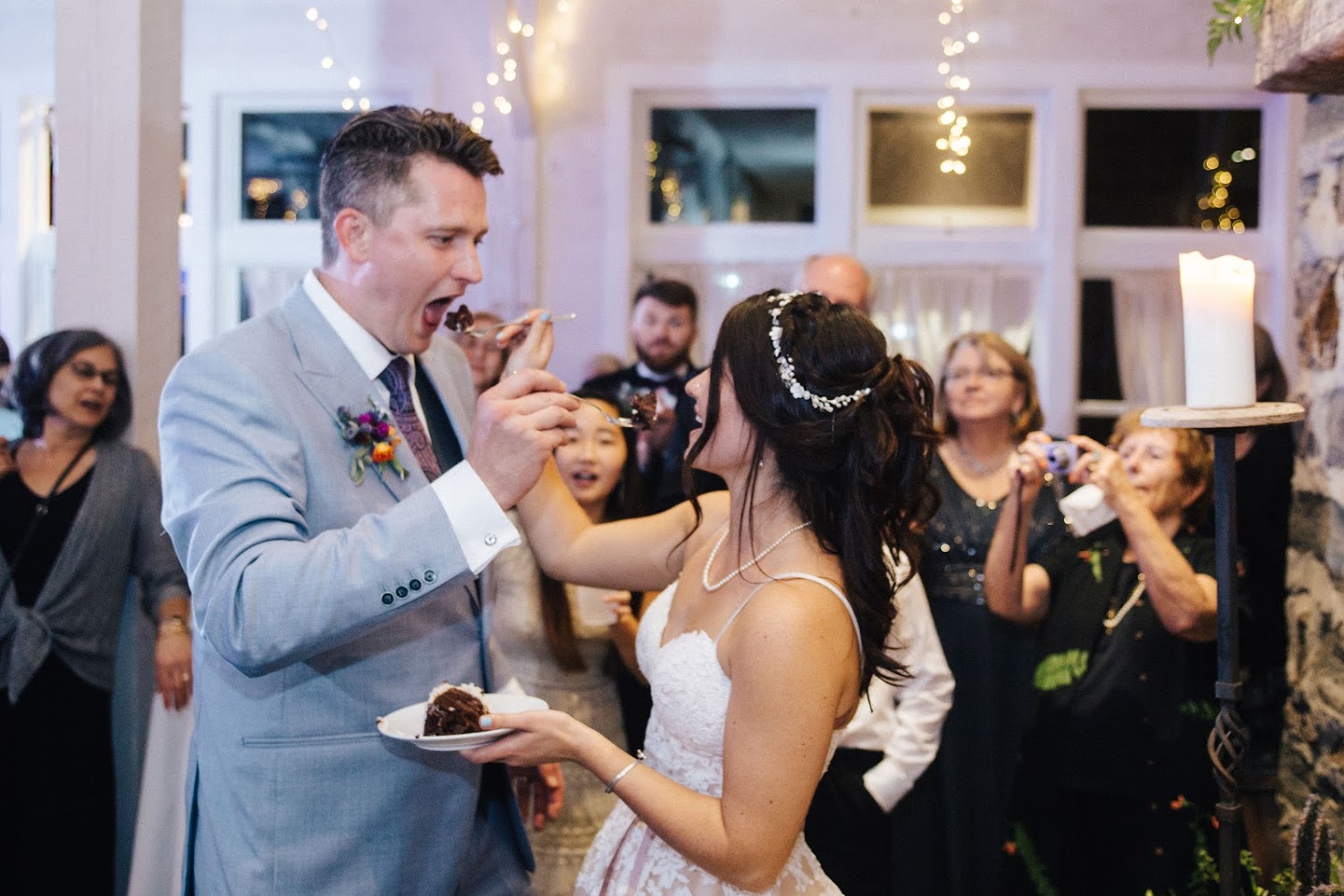
And the cutting of the cake…
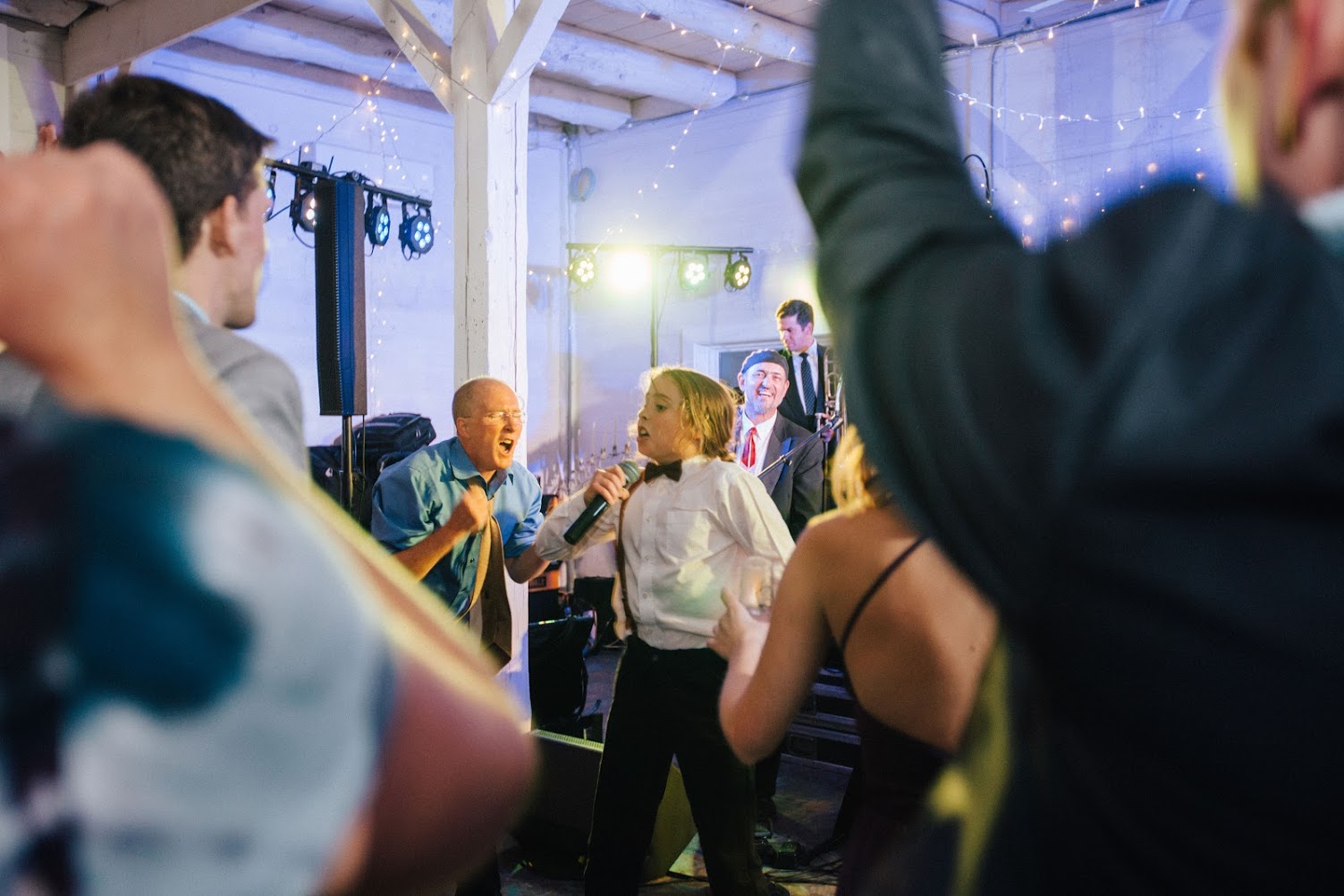
One of the unplanned highlights of the night was when the band started playing the song “Uptown Funk” — which my younger nephew had previously memorized to perform in a talent show at his school.
One of the singers in the band gave my nephew a mic so that he could lead us in what became a Dionysian explosion of energy on the dance floor.
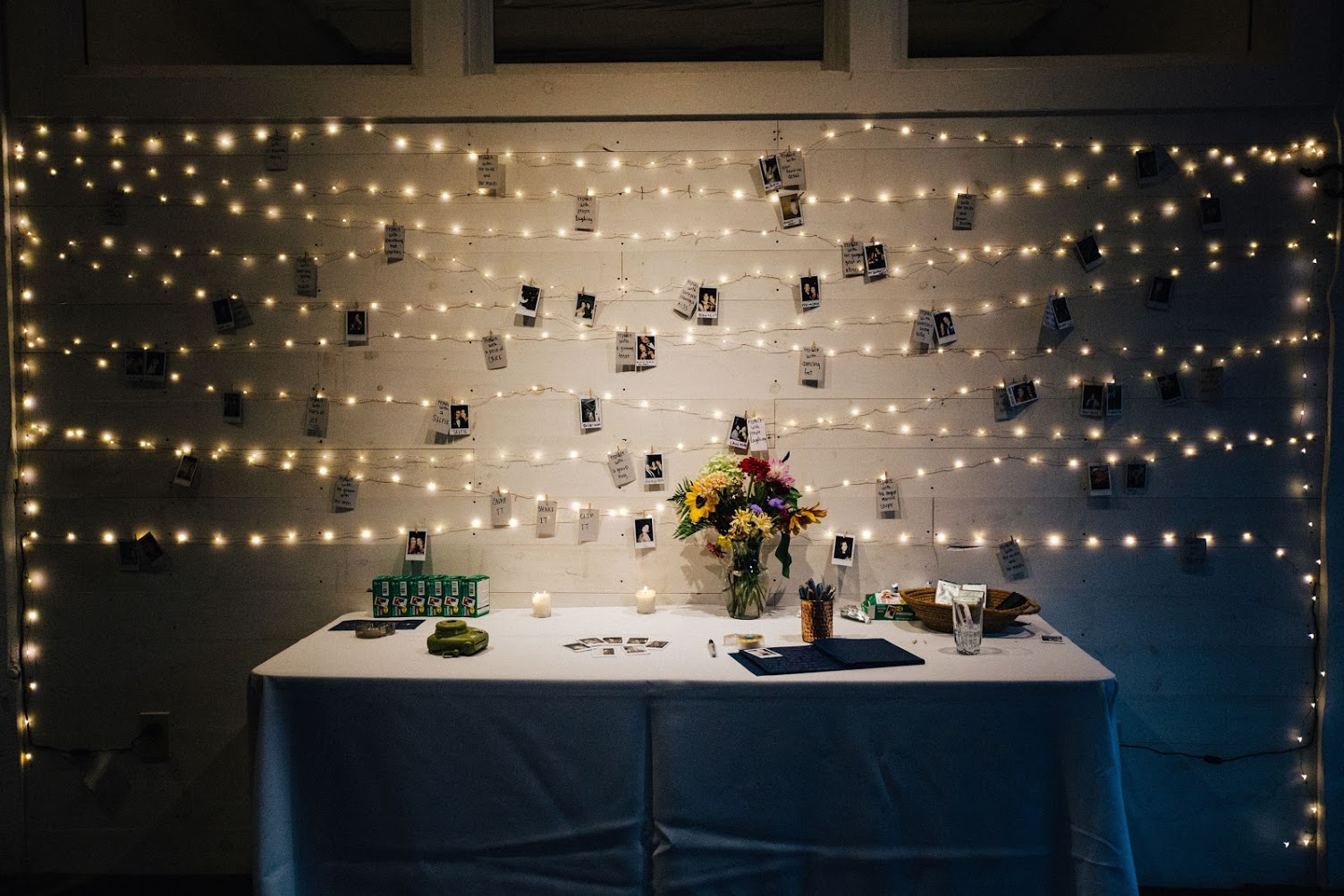
If you got tired of dancing, there was also a wall for Polaroid photos + written thoughts…
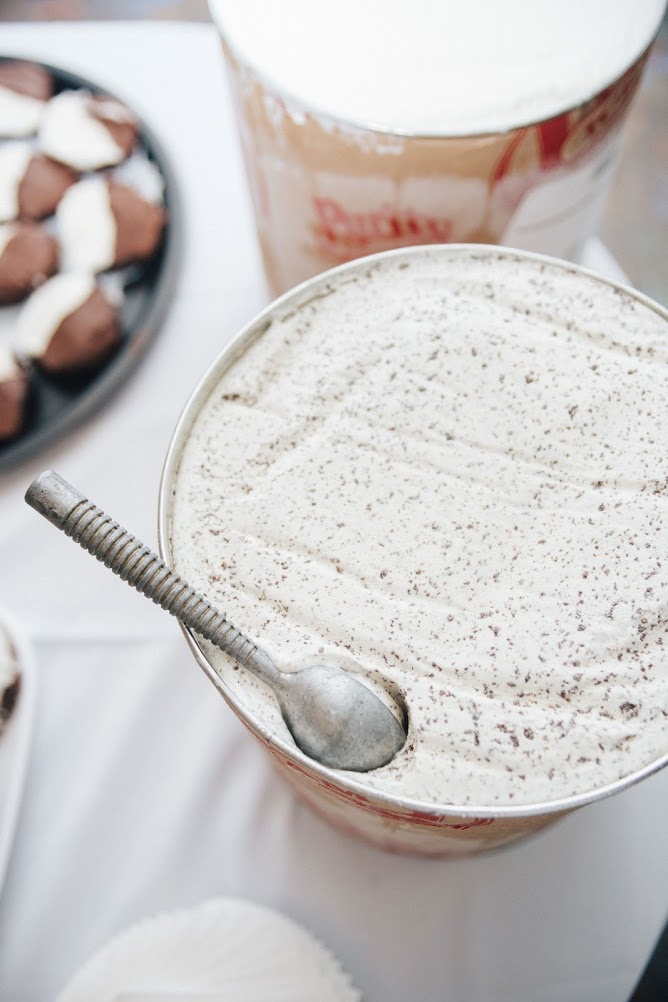
And lots of bittersweet ice cream…
I will devote a future blog post to the wedding ceremony itself — which included its own spontaneous surprise from their beloved ringbearer, Dozer.
Thank you to my niece and nephew-in-law for letting me blog about their wonderful wedding.
Thank you to everyone who pitched in to help make this such a loving and delicious and memorable wedding celebration.
Thank you to Julian Huarte with Couple of Dudes Photography, to Mary Bloom (a longtime family friend and professional photographer), and to everyone else whose photos of the wedding I have included in this blog post.
Thank you to Nina Vansuch, Michael Ricca, and Brian Patton for recording the two-song medley (included at the beginning of this post) with me many years ago. You can click here to hear more of our music at CD Baby.
And thank YOU for reading all the way to the end of this post!
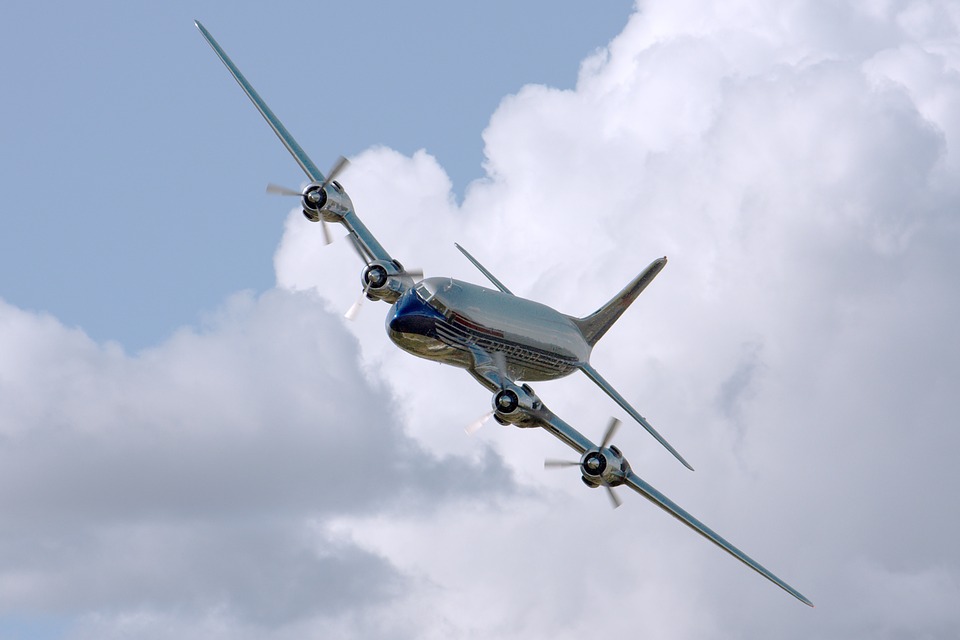
This afternoon I saw an airplane rising in the sky above Boston.
As usual, I was amazed that such a huge and complicated chunk of metal could become airborne.
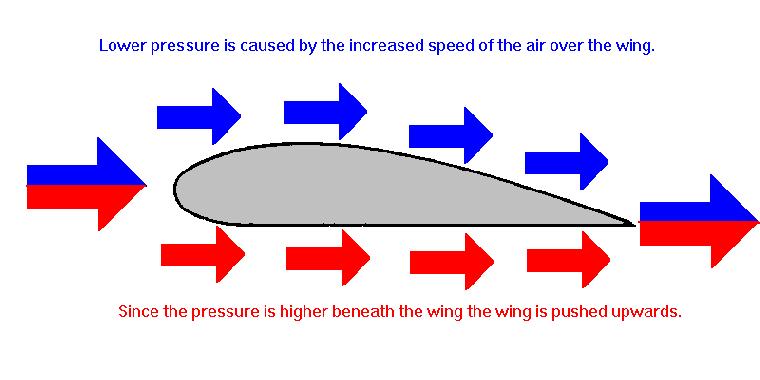
Apparently it has something to do with the Bernoulli Effect.
In online article by Matthew Reeve I learned that “Daniel Bernoulli was an eighteenth-century Swiss scientist who discovered that as the velocity of a fluid increases its pressure decreases.
This can be demonstrated when a constant flow of fluid or gas is passed through a tube, and a section of the tube is constricted.
At the point of constriction, the flow will speed up and there will be a drop in pressure against the walls of the tube.
This principle has become widely known as the Bernoulli Effect.”
The Bernoulli Effect explains why planes fly AND why we are able to produce sound with our vocal cords.
Matthew Reeve continues,
“The two results of the Bernoulli Effect can be explained with two examples.
Flow increase: When you place your thumb over the end of a running hose, the flow of water speeds up and travels further across the garden. At the point of constriction velocity increases.
Air pressure drop: An airplane’s wing is shaped so that the bottom is flat and the top is curved. When air flows across the top of a plane’s wing, it travels faster and the lower pressure creates lift.”
He was attempting to explain to me how our vocal cords — which are more accurately called vocal folds — vibrate to produce sound.
When we make a sound using our voice (also know as phonation), our vocal folds are pulled together by a team of small, strong, sophisticated muscles.
During phonation, the stream of air coming up from our lungs through our wind pipe/trachea is momentarily stopped by our vocal folds.
At this point pressure begins to build up below the vocal folds.
Back to Matthew Reeve’s article…
“When the pressure is high enough, the vocal folds are forced to separate and the airstream is allowed to flow through the vocal folds.
The airstream through the vocal folds then accelerates causing a drop in pressure.
This drop in pressure then sucks the vocal folds back together.
Air pressure under our vocal folds then builds up again and the process continues.”
This cycle of our vocal folds opening and closing — hundreds of times per second — creates the waves of air pressure that we recognize as sound.
Reading about the Bernoulli Effect reminded me of a recording of “The Wind Beneath My Wings” that pianist Doug Hammer and I made during a rehearsal for a memorial service a few years ago.
It combines the act of singing with the imagery of flying.
Thank you to Nicki Nichols Gamble for asking me and Bobbi Carrey to sing at her husband’s memorial service — and for requesting this particular song.
Thank you to Doug Hammer for his terrific piano playing and for his engineering expertise.
Thank you to David Gay, Eugene Rabine, Roland Seiler, Craig Wich, Mary Klimek, and all of the other human beings who have taught me about healthy vocal function.
Thank you to Pixabay for some lovely photographs and to the internet for some useful graphics
Thank YOU for reading and listening to another blog post — and thank you to everyone who continues to offer me positive feedback and enthusiastic support for my music-making.
You are indeed the wind beneath my wings.
And — echoing the final lyrics of the song — I also give thanks for the Bernoulli Effect, which allow planes to fly and human beings to sing!



















 As longtime readers of my blog probably recall, when I was laid off from my day job as assistant director of the