As I may have mentioned in a previous blog post, my father and mother each told me (separately) that when I was an infant, I would always cry when they sang “Good Night, Irene” to me as a lullaby.
If that is true, I’m not sure why they kept singing it to me (maybe to see if — yet again — it would move me to tears?)
I recorded it with pianist Doug Hammer when we were working on a show called “Songs About Parents and Children.”
I used to think that it was written by Rodgers & Hammerstein, but it turns out — as you may already know — that it was written by Richard Rodgers after Oscar had died (from stomach cancer on August 23, 1950 at his beloved Bucks County farm in Pennsylvania).
They are a well-known songwriting team based in New York City, and they have crafted a bunch of stand-alone songs — along with entire musicals — which are beloved by performers.
A few of their NYC-area hits include “I Like Them (Bald),” “Alto’s Lament,” and “Taylor, The Latte Boy.”
Jinny Sagorin and I recorded their song “There’s Nothing I Wouldn’t Do” with pianist Doug Hammer a few years ago.
Originally from South Africa, Jinny has lived in the Boston area for the past two decades.
In recent years Jinny has expanded beyond musical theater and cabaret to becoming a cantor.
We both share a sense that music can be very sacred (as well as silly, sexy, heartfelt, and open-minded).
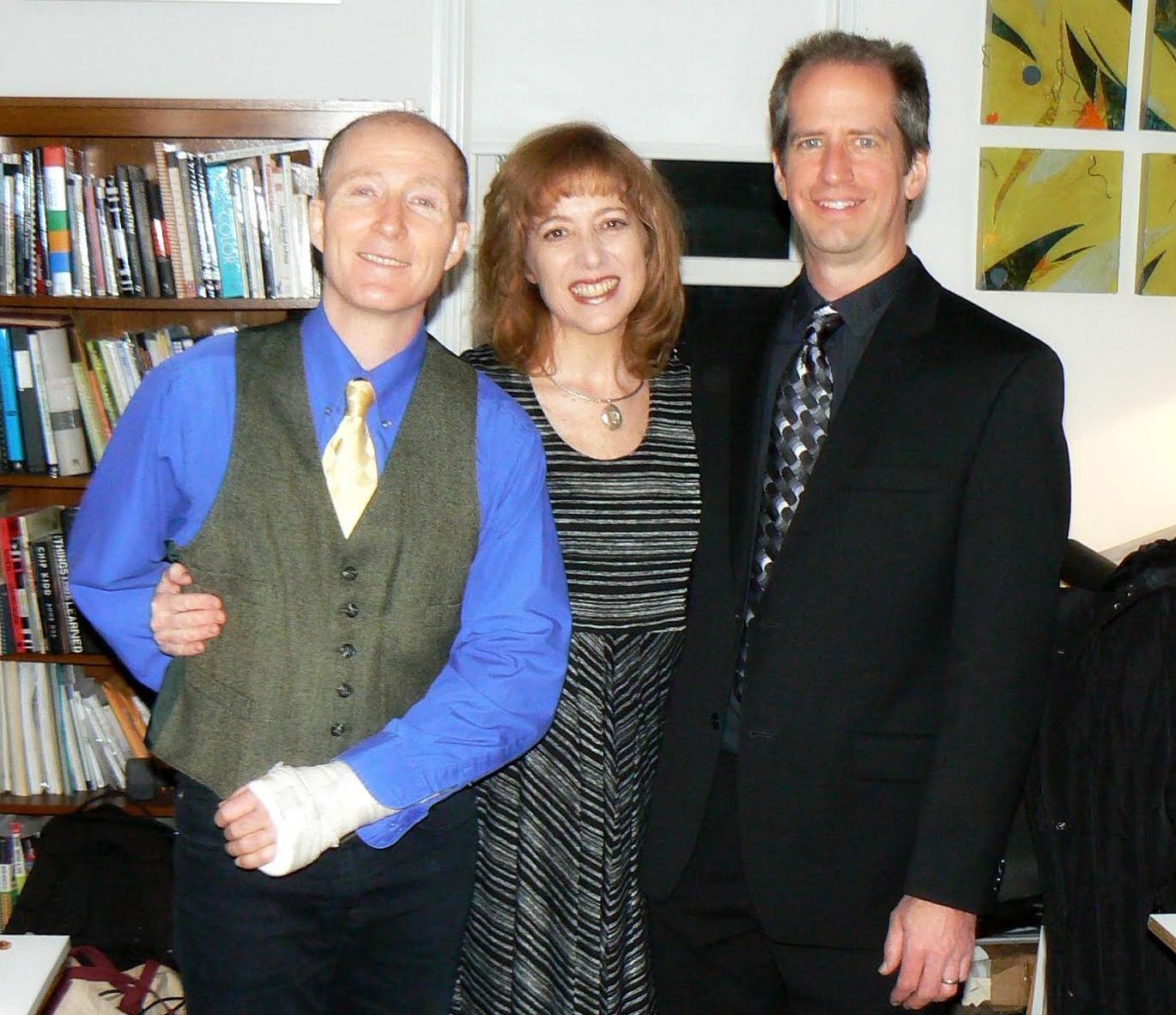
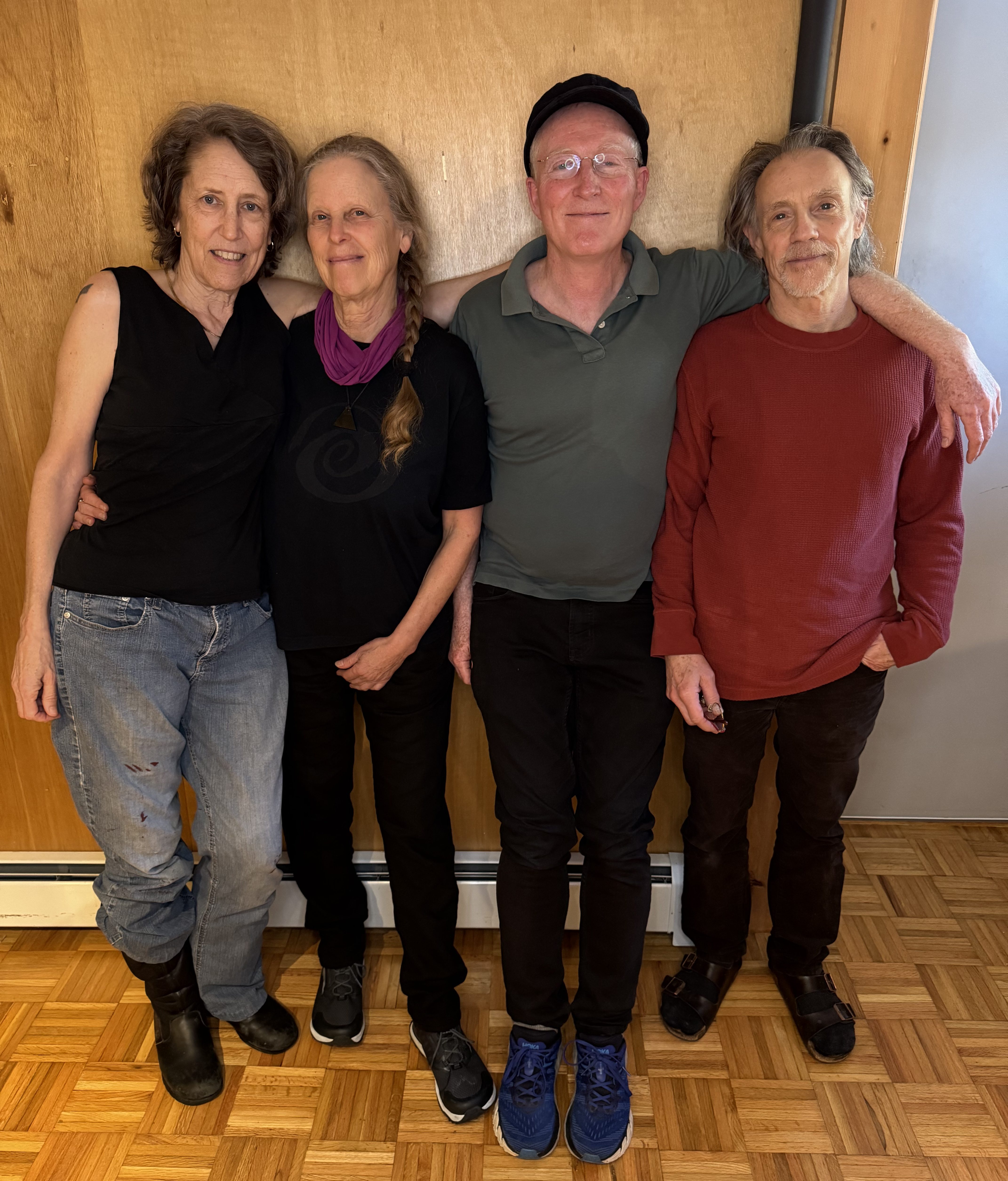
Will (with broken elbow), Jinny and Doug — Photo by Jeremy Schmahmann
And performing in a synagogue, library, church or retirement community can be just as satisfying as performing in a bar or club — although we have both done plenty of that, too!
I first met Jinny when I was co-hosting an open mic at The Cambridge Center For Adult Education in Harvard Square (where I also was employed as an events manager and PR person).
Eventually we put together an entire program of songs called LIFE MATTERS.
Jinny also invited me to perform as a special guest when she debuted her solo CD, IT’S FOR YOU, to a sold-out crowd at Scullers Jazz Club in Boston.
And she has performed many of my original songs when I have done showcases of my own work.
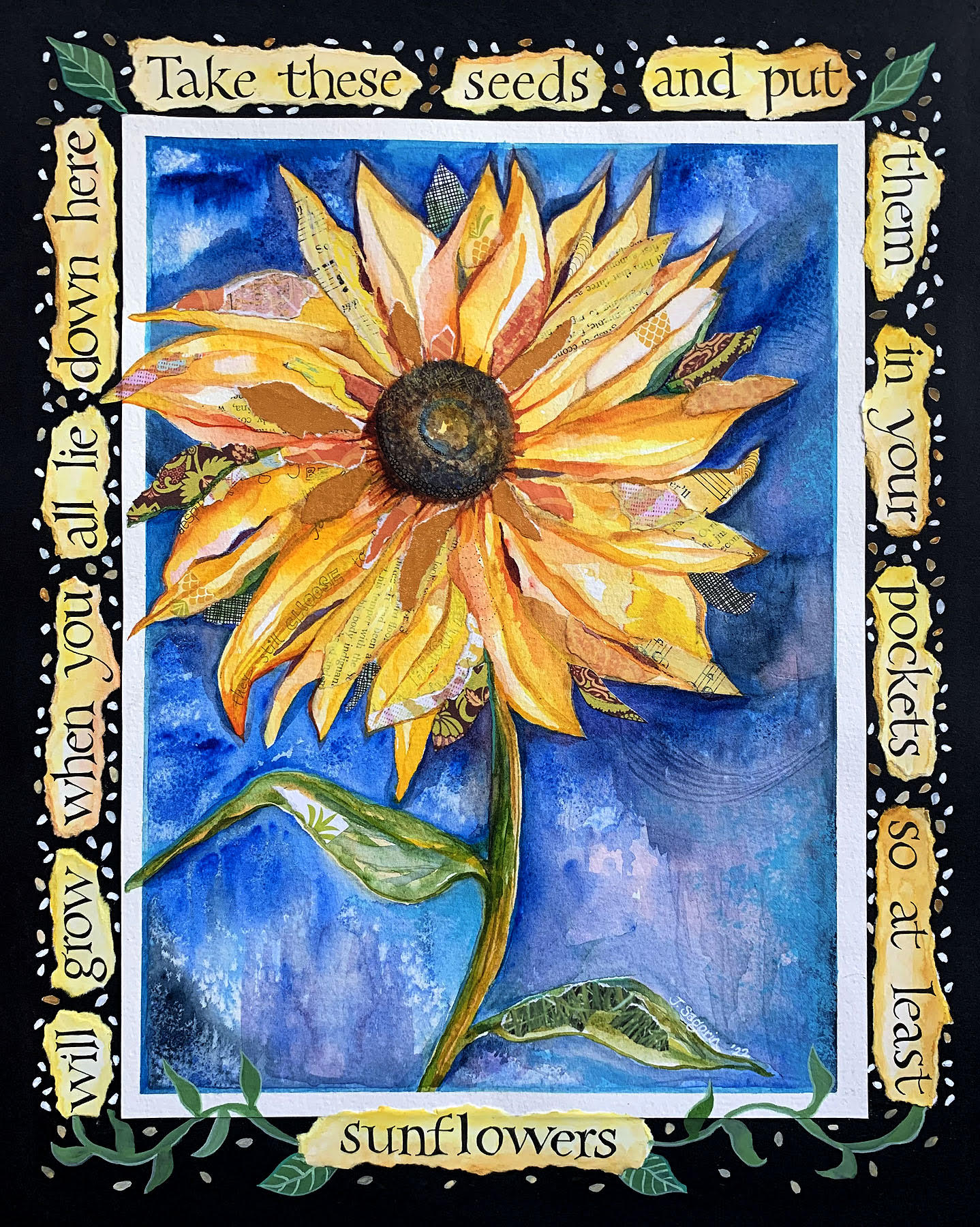
In addition to being a performing artist, Jinny is also a visual artist.
Here’s an example of a work of art she created for an annual show called ART/Word in which she is a regular participant.
Thank you to Marcy and Zina for writing this song.
Thank you to Jinny and Doug for recording it with me.
PS: If you feel like streaming this song on your favorite digital music platform, please click here for links.
PPS: I haven’t mentioned the current challenges here on planet earth (wars, heat waves, forest fires, floods, spreading diseases, rising costs, lack of food/fertilizer/fuel, political upheaval, etc.) in recent blog posts.
But I remain vividly aware of them.
And I continue to find inspiration and hope from the courageous candidates and hard-working GOTV (get out the vote) organizations at work around the USA.
As you are probably well aware, there are a bunch of very inspiring human beings stepping up at the local, state and national levels these days.
Let’s support them — with tiny donations of time and/or money— as much as we are able.
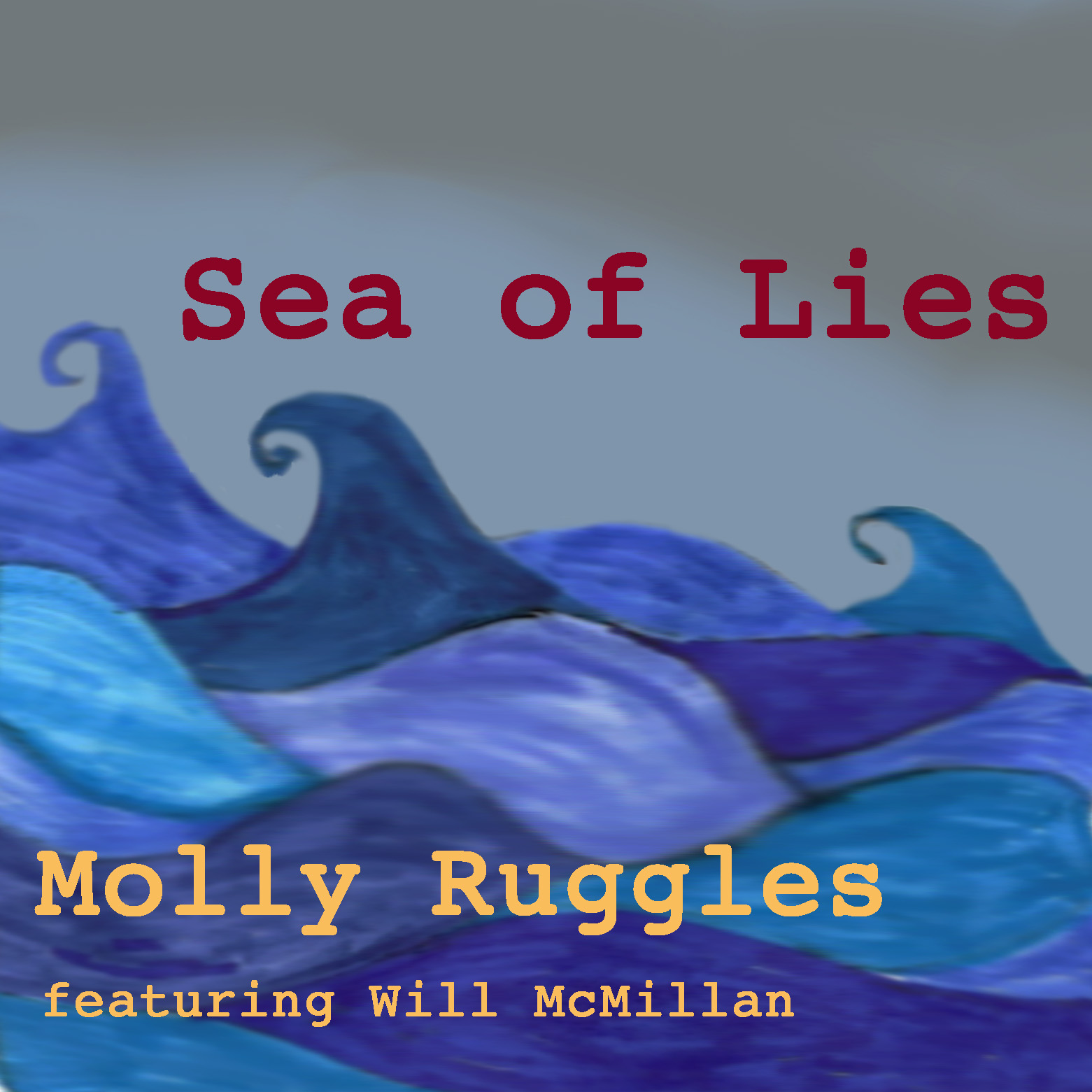
My friend Molly Ruggles recently released a new song called “Sea Of Lies.”
She was inspired to write it by the ongoing challenge of sorting through all the news and advertising and sound bites and spin and “blah blah blah” coming at us on an hourly/daily/weekly/monthly/yearly basis.
I originally learned a version she created for four voices (the same four who sang on “My Sweet Honeydew (A Cappella).”
But then she decided to re-write/re-arrange/re-focus it for two voices plus her piano accompaniment.
That’s the version she ended up releasing to various streaming platforms.
It is the sort of melody — and message — which easily gets stuck in my brain on auto-repeat.
“Need a little peace… just a hint of hope — with a hand to hold, maybe I can cope.”
Molly sings lead vocal plus some extra harmonies.
I sing a few harmonies.
I think my favorite moment of the song is when we both sing “Save me… please save me” in harmony.
Molly also designed the artwork to accompany her song.
She is a multi-talented human being.
I am curious to learn — or be reminded — about how other human beings deal with all of the (dis)information coming at us 24/7.
I know some wise people turn off their phones and computers for hours at a time.
And others make sure to exercise (walk, swim, bike, and more), do some gardening, sit in meditation, cook with friends, take a bath, read a book, lie in a hammock, do some yoga, and/or cuddle with their loved ones (human, feline, canine and otherwise).
Deep breath in.
Deep breath out.
What are YOUR coping strategies these days?
One of mine is — no surprise — making music and doing music-related activities such as this blog.
I also find a lot of hope and inspiration learning a few details about people who are brave enough to run for office — whether on the town, city, county, state or national level — all around our country.
And then there are the flowering plants of the world!
They always lift my spirits.
Thank you to Molly for writing this song and then asking me to sing harmony with her.
Thank you to the generous and talented photographers at Pixabay.
And thank YOU for reading — and listening to — yet another blog post from me…
So far we’ve had some extreme heat, some drought, some wildfire smoke (drifting hundreds of miles from Canada), some drenching rain, some very windy weather, and some beautiful 70-degree days here in the northeast United States.
Deep breath in.
Deep breath out.
My heart goes out to the humans, deer, woodchucks, trees, foxes, turkeys, cardinals, bushes, bears, bees, woodpeckers and all of the other animal and plant species affected by these extreme weather events.
Another deep breath in.
And deep breath out.
Very few media people pause to honor the havoc wreaked on wildlife by a flood or a wildfire.
There was some footage from the recent floods in Texas which showed a deer up to its neck in swirling waters…
But that’s all I saw about our non-human fellow species here on planet earth.
Thank you to the generous photographers at Pixabay for these gorgeous photos of blooming lupines.
I have planted lupines — along with iris, echinacea and columbines — in front of our house.
But someone keeps nibbling them…
None of the plants are dead, but many of them are hanging on with only a few functional leaves.
Hopefully — as the song “The Lord Of The Dance” proclaims — they will eventually leap up high after having been cut down by woodchucks or deer or rabbits!
Lupine (uncredited) from Pixabay
Until then I will keep watering (and weeding) them as needed.
Thank you to everyone who keeps showing up to read — and listen to — my blog posts.
I love how respectful the WordPress community continues to be with each other.
Even though we may not agree about many things, I have never seen any snarky, mean-spirited, or combative comments following one of my — or anyone else’s — blog posts.
Today I have been inspired by the aphorism “Insanity is doing the same thing over and over again and expecting different results.”
You may have seen it on posters, coffee mugs, etc. — attributed to Albert Einstein.
But according to an online search, there is little evidence that Einstein ever said it.
Instead I learned that a writer — Rita Mae Brown — created this quotation and attributed it to a fictional character in her 1983 book Sudden Death.
Thank you, Ms. Brown!
I think about this aphorism when I am reminded that one is supposed to budget an equal amount of money to market/promote/advertise one’s product as one has spent creating it in the first place.
Yikes!
I have never done this.
Other than maintaining my website, pitching a few songs to music bloggers, and writing this blog, I have spent very little money to promote my music.
However, this particular piece of marketing advice comes up fairly often when I am reading books/articles and watching videos about how to navigate the business of making music in the 21st century.
Now I must pause for a moment for a digression…
Over the past thirty years, I have observed that the music business — like life itself — is always changing and evolving.
So it is virtually impossible to do the same thing over and over again for more than a year or two.
And as a result of personal computers entering our daily lives, we have to keep endlessly learning the latest versions of many different programs/applications — as well as updating our hardware and software.
So as much as I would love to be able to do the same thing over and over again — while drafting new songs using Apple’s GarageBand or making videos using Apple’s iMovie, for example — I am forced to learn the latest updates (and alleged improvements) in order to continue making music.
Deep breath in.
Deep breath out.
This has always seemed to me to be a huge waste of time AND money in order to make a few tech company owners, tech company employees and tech company stockholders rich.
Graphic Design by Stephen C. Fischer
I keep hoping to find a research study which would document the billions of hours which we human beings have wasted in the process of learning — and re-learning…and learning yet again — how to use various computer programs.
I would also like to find studies which explore the cumulative toll on our mental health due to the Sisyphean frustration of having to update and re-learn so many basic tasks/skills on an ongoing basis.
Another deep breath in.
And deep breath out.
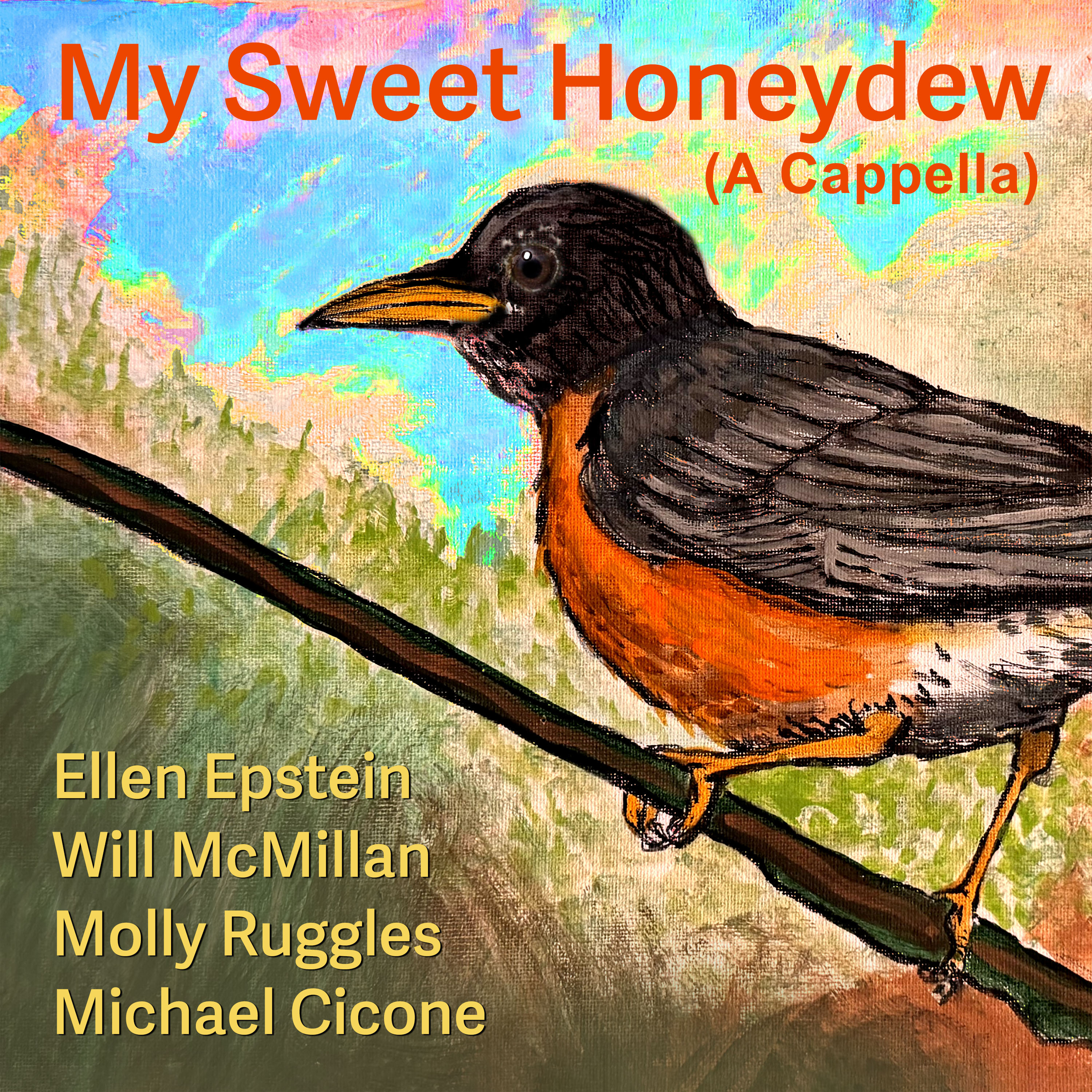
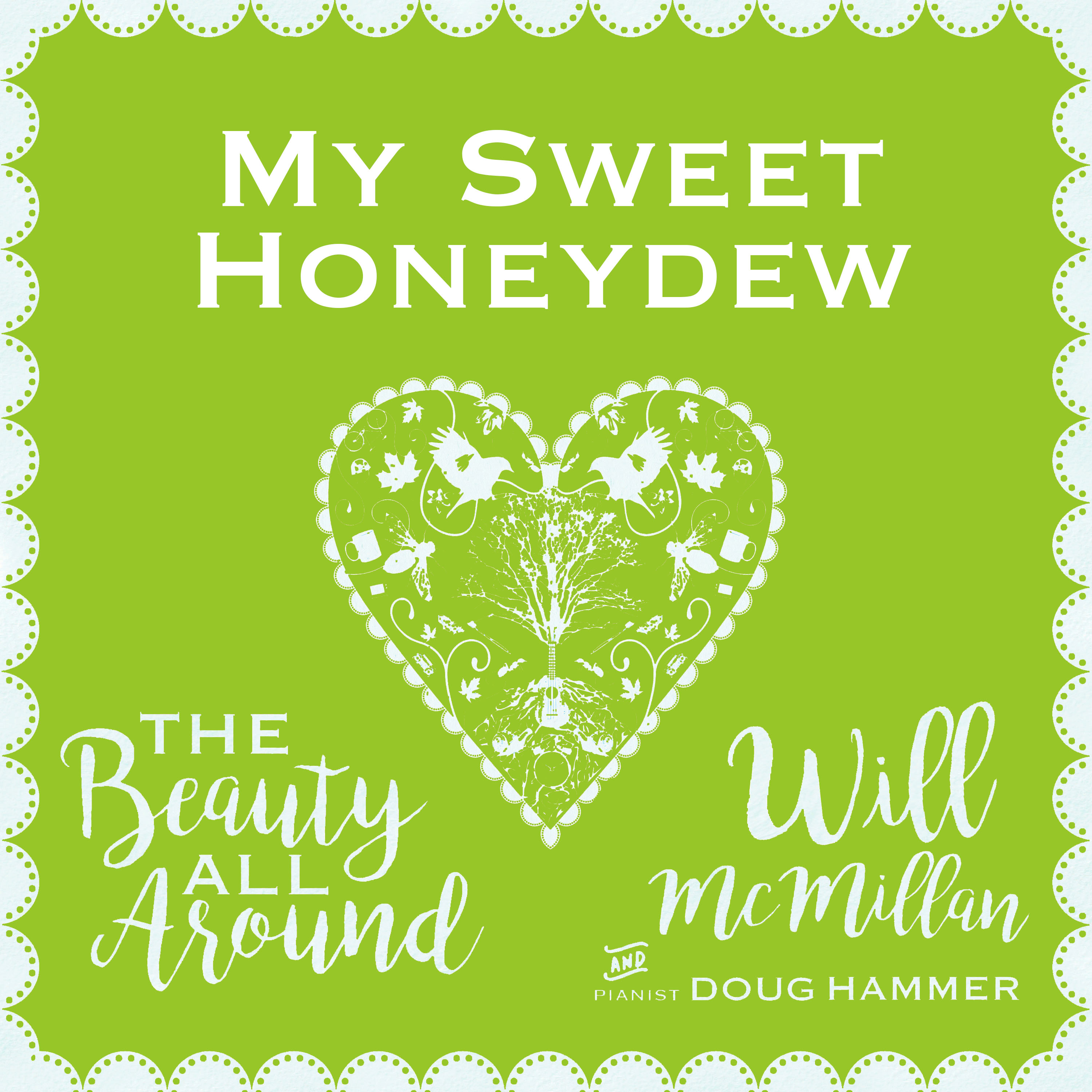
So I am happy to report that my friends Molly Ruggles, Ellen Epstein, Michael Cicone and I went in a pre-industrial — and some might even say late-Paleolithic — direction with our most recent song release which we recorded a cappella.
A couple of years ago singer/songwriter/pianist Molly Ruggles took my original version, added an entirely new section of music + lyrics, and then arranged it for four voices to perform a cappella.
Our new version is in the player at the beginning of this blog post.
You may recognize Molly as a vital part of my trio recordings with Carole Bundy.
Molly, Ellen, Will & Michael (Photo by Doug Hammer)
I have known the other two singers on this recording — Ellen and Michael — for decades.
If you are a fan of contemporary folk music, you may be familiar with them as part of a musical trio with singer/songwriter/guitarist Cindy Kallet for forty-five years.
Ellen and Michael have released three beloved CDs of music with Cindy as well as appearing on many of her solo recording projects.
So I feel very honored and excited that they agreed to be part of this recording!
Now I will circle back to the aphorism that “Insanity is doing the same thing over and over again and expecting different results.”
Molly and I are doing something new with this recording.
We have hired a fellow singer-songwriter, Erik Balkey, to help us promote it to folk radio programs/stations around the USA.
Erik puts together compilation CDs of new recordings every two months and sends them to a couple hundred folk DJs and program directors.
We were surprised — and pleased — to learn that he chose “My Sweet Honeydew (A Cappella)” to lead off the second CD in his July/August promotional compilation.
If you happen to listen to a folk program in your neighborhood — or maybe far away from your neighborhood via an internet radio station — please let me know.
Then I will check and see if Erik sent his July/August promotional CDs — including “My Sweet Honeydew (A Cappella)” — to your favorite station/program.
It will be interesting to see what does — or doesn’t — unfold regarding airplay for our song this summer…
Another deep breath in.
And deep breath out.
Thank you to Erik Balkey for his radio outreach.
Thank you to Doug Hammer for his collaborative production skills (and spontaneous photographic impulses).
I finished my Music Together classes at the end of June, and I only have one more gig this summer (at the retirement community, Longview, where my mother lives in Ithaca, NY).
So I have a little more time on my hands — hence my slightly more frequent blog posts…
Right now I am visiting family in upstate NY.
During my nocturnal walks around the countryside, I have been very happy to be reacquainted with the extraordinary magic of fireflies.
This summer they seem to be particularly healthy and active.
It was not easy finding a public domain photo of fireflies at night on the internet.
Thank you to Wikimedia Commons and a photographer named Tyler Savitsky for the image above.
As with so many natural phenomena, it is somewhat impossible to describe in words the majesty and miracle of a field full of fireflies at night.
To me it feels like I am entering nature’s (and/or G-d’s) brain — with each blink of a firefly corresponding to the firing of a neural synapse.
According to Wikipedia there are many different varieties of firefly‚ and most of them have the amazing ability to make some part of their body photoluminesce a.k.a. light up.
Among other things, this helps in the process of attracting and selecting a mate.
You can click the link two paragraphs above to learn a bunch of fascinating things about fireflies.
For example, in certain human cultures they are especially revered — such as in Japan, where there are parks created to watch them.
Deep breath in.
Deep breath out.
A field of fireflies at night also reminds me of a sky full of stars, which is the theme of today’s throwback blog post.
One of the pleasures of doing a Throwback Thursday blog post — as you may well know — is rediscovering something one once wrote (which one may have completely forgotten!)
In the case of this Throwback Thursday, I also rediscovered a song by Stephen Sondheim called “Everybody Says Don’t” which I had forgotten I’d recorded.
A new biography of Mr. Sondheim came out earlier this year which my sister gave me for my birthday.
I just finished reading it and — not surprisingly — come away with renewed respect and gratitude for the wealth of songs and shows he helped to create over the course of a 50+ year career…
If you are not very familiar with his work, he wrote the lyrics for two blockbuster Broadway favorites — WEST SIDE STORY and GYPSY.
But what he really wanted to do is create both music and lyrics — which is what he finally got to do with A FUNNY THING HAPPENED ON THE WAY TO THE FORUM, A LITTLE NIGHT MUSIC, COMPANY, SWEENEY TODD, INTO THE WOODS, ASSASSINS, PASSION and other shows.
Mr. Sondheim experienced a few flops along the way, including ANYONE CAN WHISTLE and MERRILY WE ROLL ALONG.
But he continued to work on the latter show for decades until he (and various collaborators) finally arrived at a version which was one of the hottest tickets on Broadway — starring, among other talented human beings, Daniel Radcliffe (the original Harry Potter) — during 2023-2024.
A version of this production was filmed and can be watched via various streaming platforms.
And I learned from Wikipedia that Richard Linklater is filming his own version of it over many years (as he has done with other creative projects). Sounds like we may have to wait for a decade or more to see THAT version…
Mr. Sondheim did not have many of his songs become big pop hits, although Judy Collins recorded a lovely version of “Send In The Clowns” from A LITTLE NIGHT MUSIC.
He crafted his songs to advance the plot of each show and often wrote them for particular actors to perform.
This specificity may have made it more challenging for pop musicians like Frank Sinatra or Barbra Streisand to pluck one of this songs out of the context of a particular show to become a more generic pop hit — although Ms. Streisand DID include many of his compositions in her two albums devoted specifically to Broadway songs.
And Mr. Sondheim, bless him, did agree to write additional lyrics for Ms. Streisand’s version of “Send In The Clowns” so that it made more sense for her to sing it (out of the context of the original show).
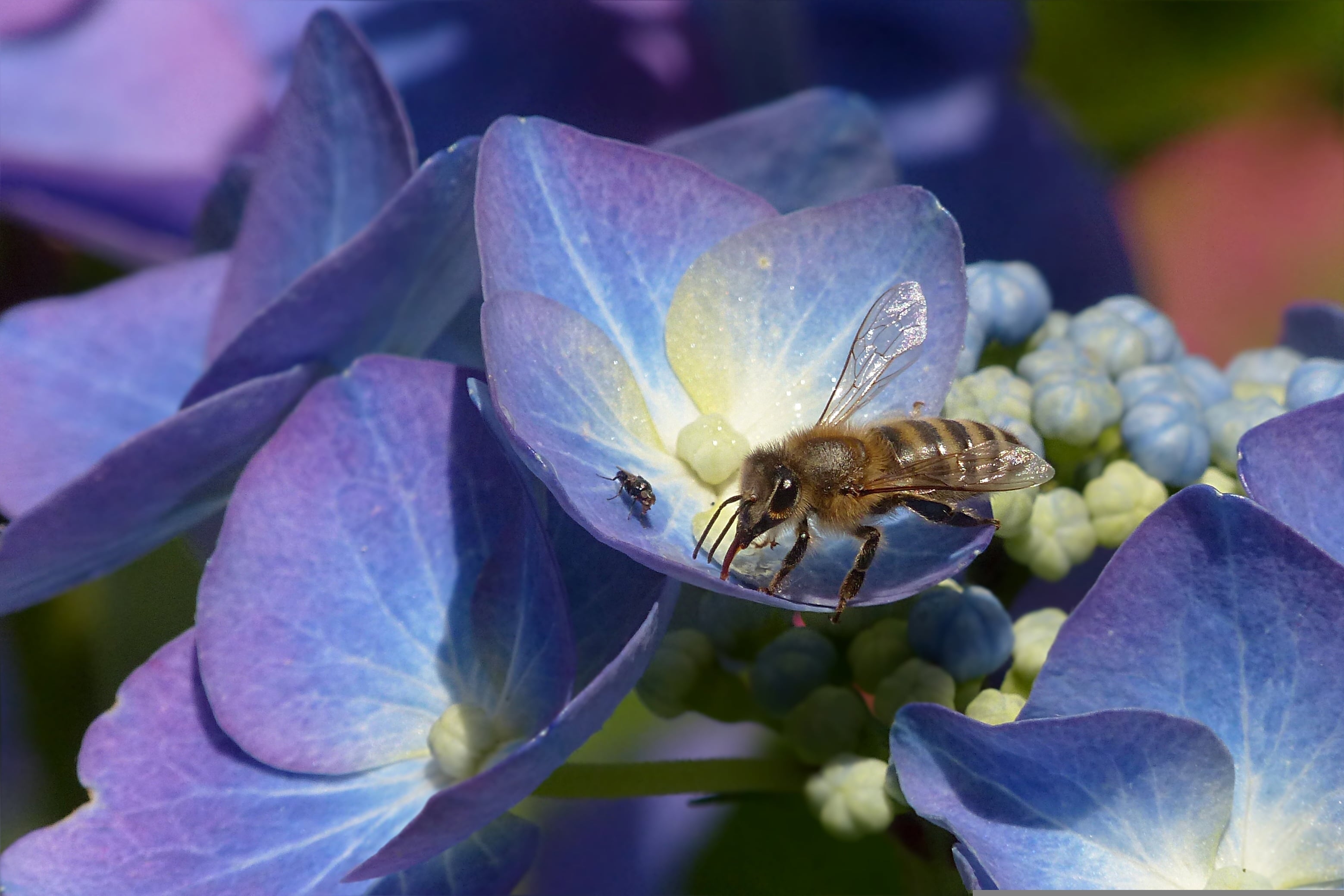
I think I may have featured photos of hydrangeas in a previous blog post, but they are what is blooming right now in my neighborhood as summer officially gets underway in the Greater Boston area…
And I LOVE them.
Happy summer to any and all readers in the northern hemisphere of planet earth!
I recorded this sweet song as part on an hour-long program of music written for — or strongly identified with — Judy Garland.
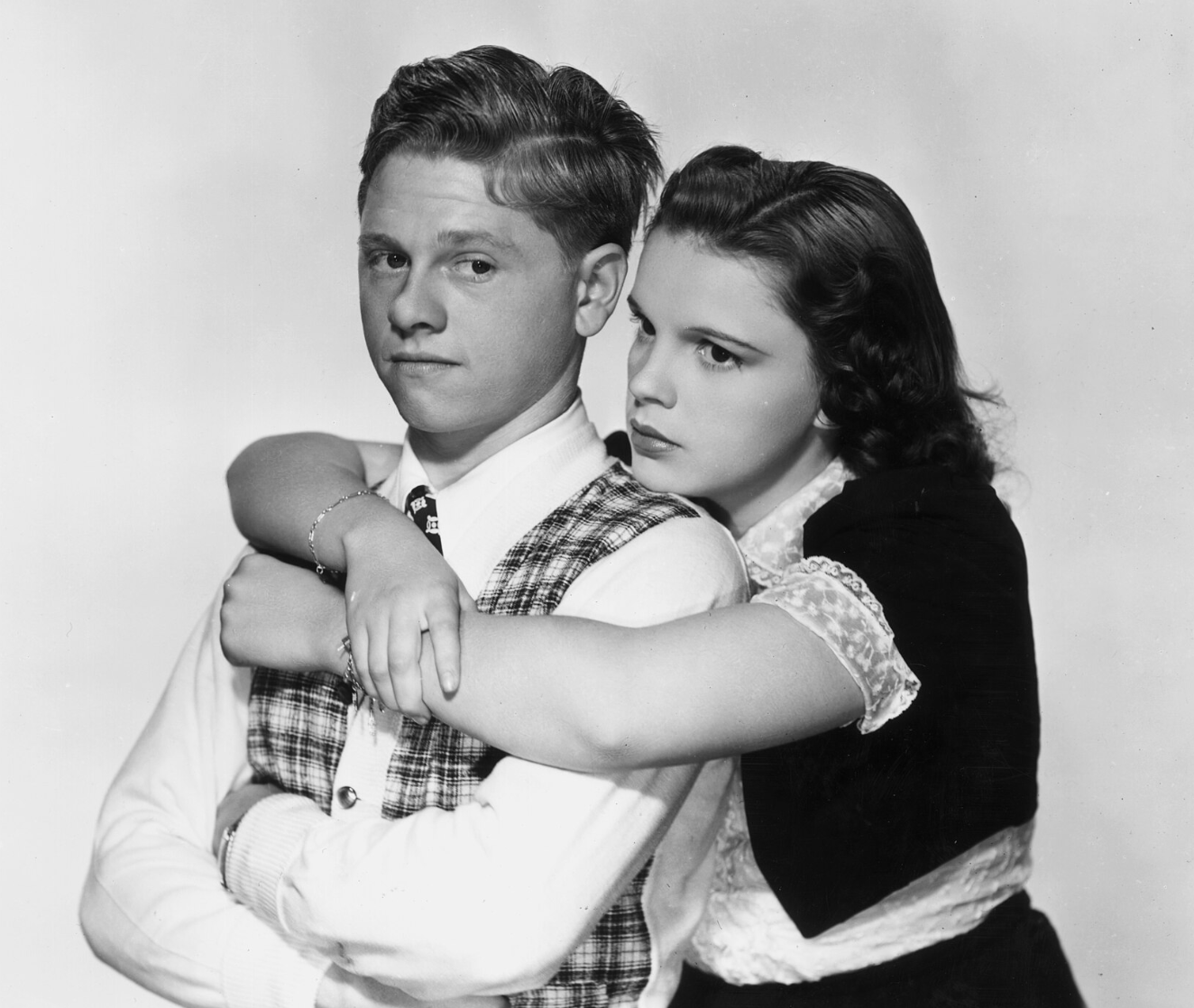
It was written by Burton Lane and Ralph Freed for her and Mickey Rooney to perform in the 1941 MGM movie BABES ON BROADWAY.
I learned from Wikipedia that the lyricist, Ralph Freed, was the baby brother of producer/lyricist Arthur Freed, who co-wrote the song “This Heart Of Mine” which I featured in a recent blog post,
Having spent a fair amount of time — especially during the summer — in Manhattan as a child and teenager, I savor all of the geographical references in the lyrics.
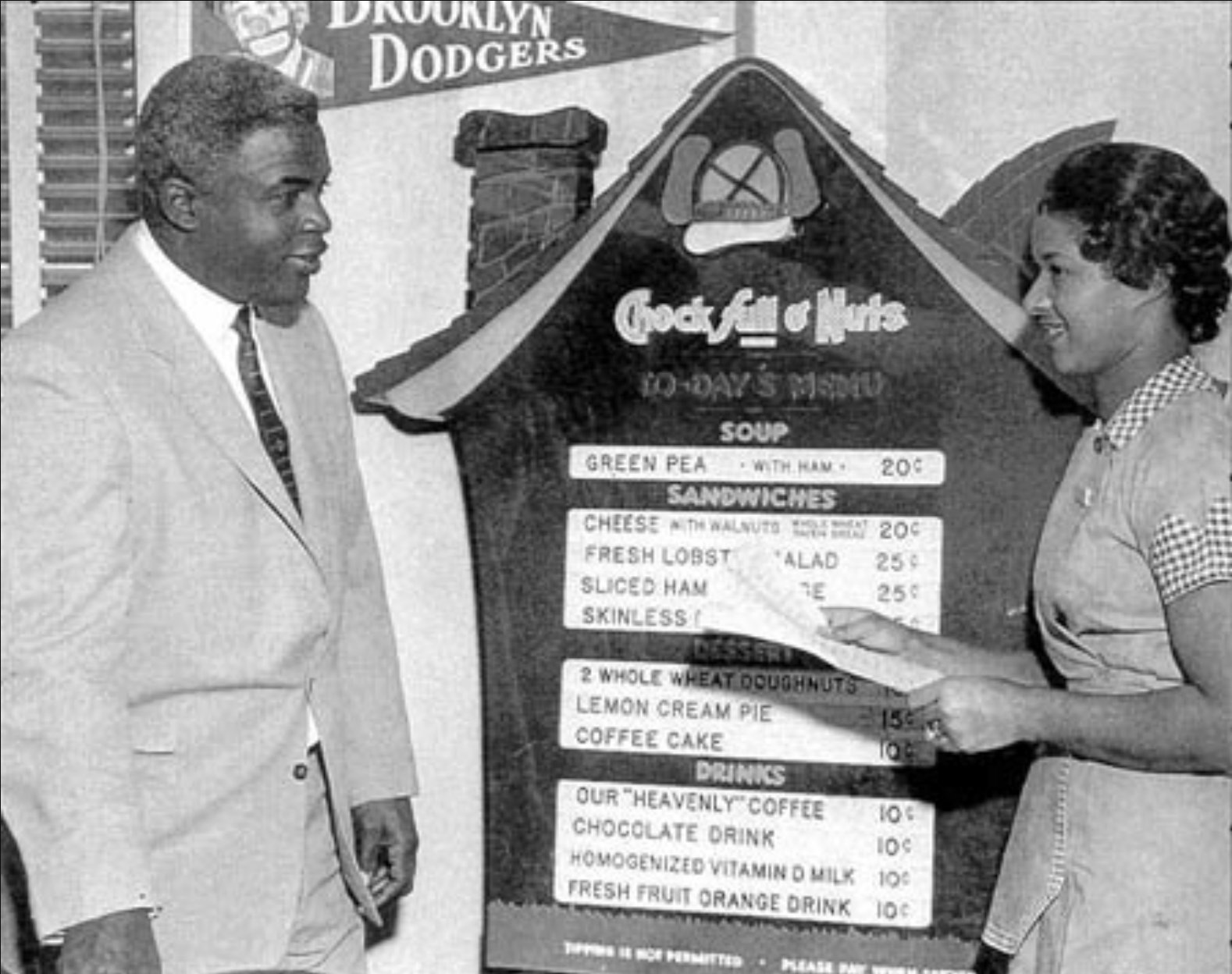
I only wish they had mentioned Chock Full o’ Nuts, my favorite place to get a burger (with ketchup, mustard and relish) plus a big orange drink — which was a mixture of orange juice, sugar and water, I think, churning endlessly in a big, glass dispenser until it was sold to thirsty customers.
Chock Full o’ Nuts started during the roaring ’20s as a chain of — no surprise — nut shops.
But when the Depression hit, the owner William Black pivoted and turned his stores into lunch counters where — according to Wikipedia — one could buy a cup of coffee and a cream-cheese-with-chopped-nuts sandwich for five cents.
Jackie Robinson with a fellow Chock Full o’ Nuts employee
And his coffee proved to be so popular that he started selling it for people to make at home or in their office.
William Black — whose last name was originally Schwartz (which means black in Yiddish) — seems to have been a somewhat progressive employer.
Most of his company’s cooks and waitstaff were African-American, and when baseball superstar Jackie Robinson retired from playing, he became a vice president and director of personnel at Chock Full o’ Nuts.
Mr. Black was married to two female singers (not at the same time…) who performed his company’s radio and TV jingles. His second wife also became very involved with their family’s philanthropic efforts.
They gave millions of dollars to medical research and helped to start the Parkinson’s Disease Foundation.
And there is even a William Black medical research building at Columbia University’s medical center (Mr. Black was a Columbia alum…)
But back to “How About You?”.
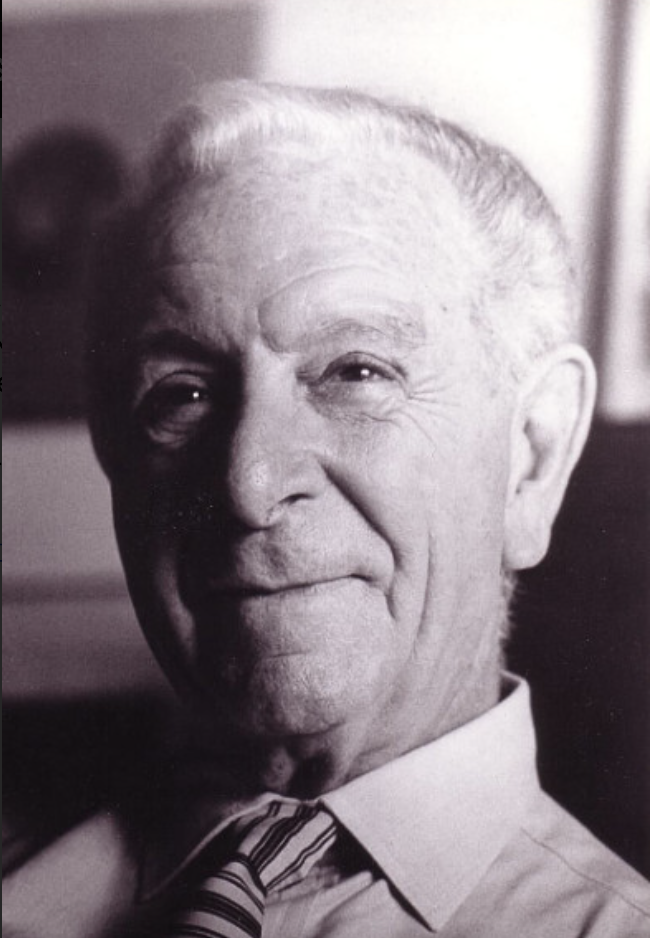
Burton Lane
Burton Lane was a very successful composer — originally from Manhattan — who worked at various movie studios in California.
Interspersed with his time in Hollywood, he co-wrote songs for Broadway shows including FINIAN’S RAINBOW (with Yip Harberg) and ON A CLEAR DAY YOU CAN SEE FOREVER (with Alan Jay Lerner).
He is also one of several people who claim credit for bringing Judy Garland to the attention of the powers-that-be at MGM after he saw her perform with her two older sisters at the Paramount Theatre in Los Angeles.
So not only do we have Mr. Lane to thank for the great songs he co-wrote, we also can (at least partially) thank him for helping to bring Judy Garland and her extraordinary gifts as a performer to a much wider audience.
I would also like to thank Doug Hammer for his playful piano impulses and painstaking production skills as well as Stephen C. Fischer for his patient and collaborative graphic design work.
If you’d like to stream our version of “How About You?” you can click here.
Every stream, every “like,” and every “save” encourages the mysterious algorithms of the digital music platforms to share a recording with other potential listeners.
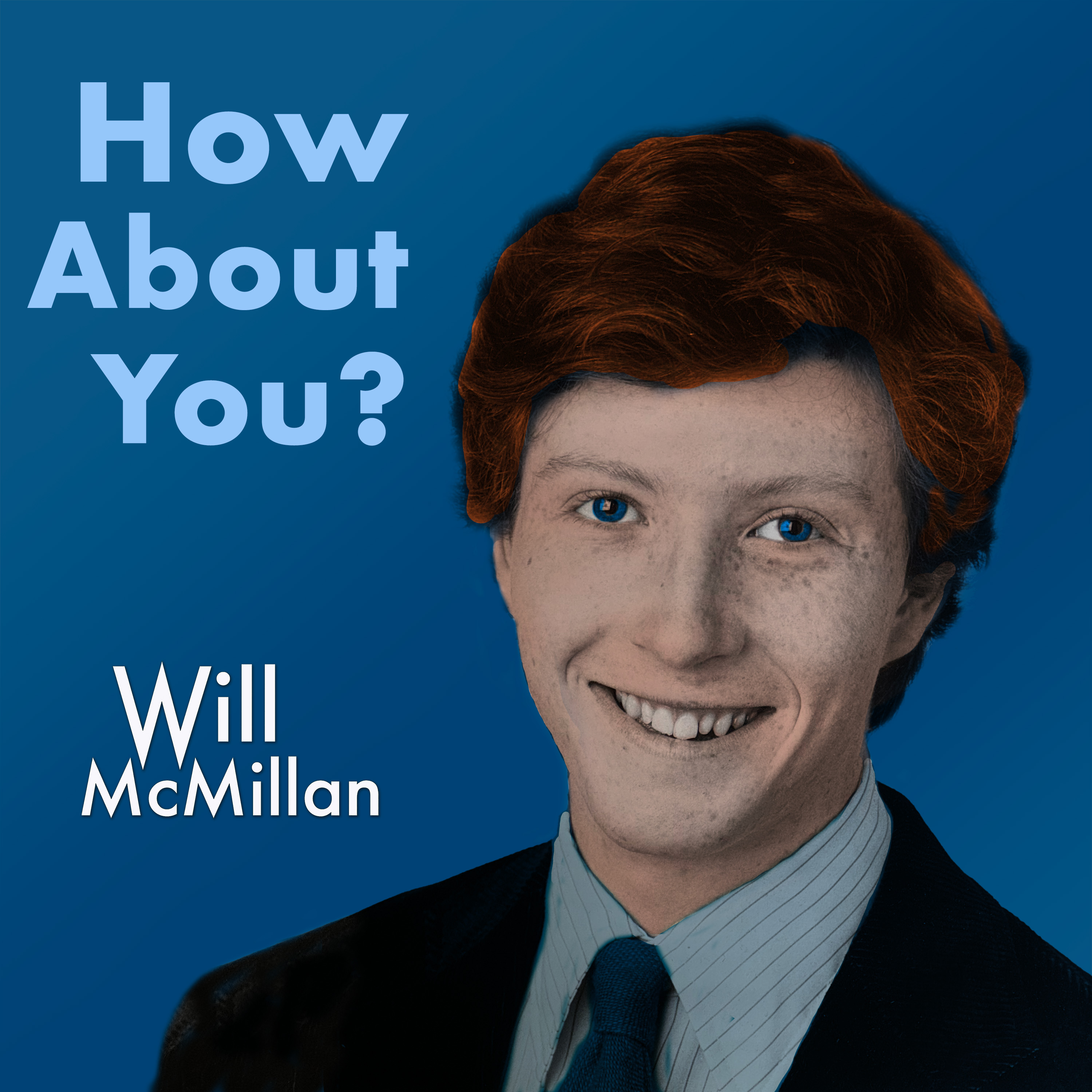
Here’s the graphic for “How About You?” which features what was probably my last professional headshot as a teen performer in NYC.
One final note…
As I was drafting this blog post, the New York Knicks were engaged in an extraordinary series of basketball games which culminated in them becoming NBA champions.
I especially like New York in June when the Knicks win the NBA playoffs after a 53 year drought!
How about you?
Although I am not a big basketball fan, I became swept up in the drama and virtuosity of the NBA playoffs.
Twice I went to bed early — thinking the Knicks had lost — and awoke to discover that they had triumphed.
Wow!
Oh, me of little faith…
Since their victory, I have been savoring the enthusiasm of the Knicks’ fans — in NYC and around the country.
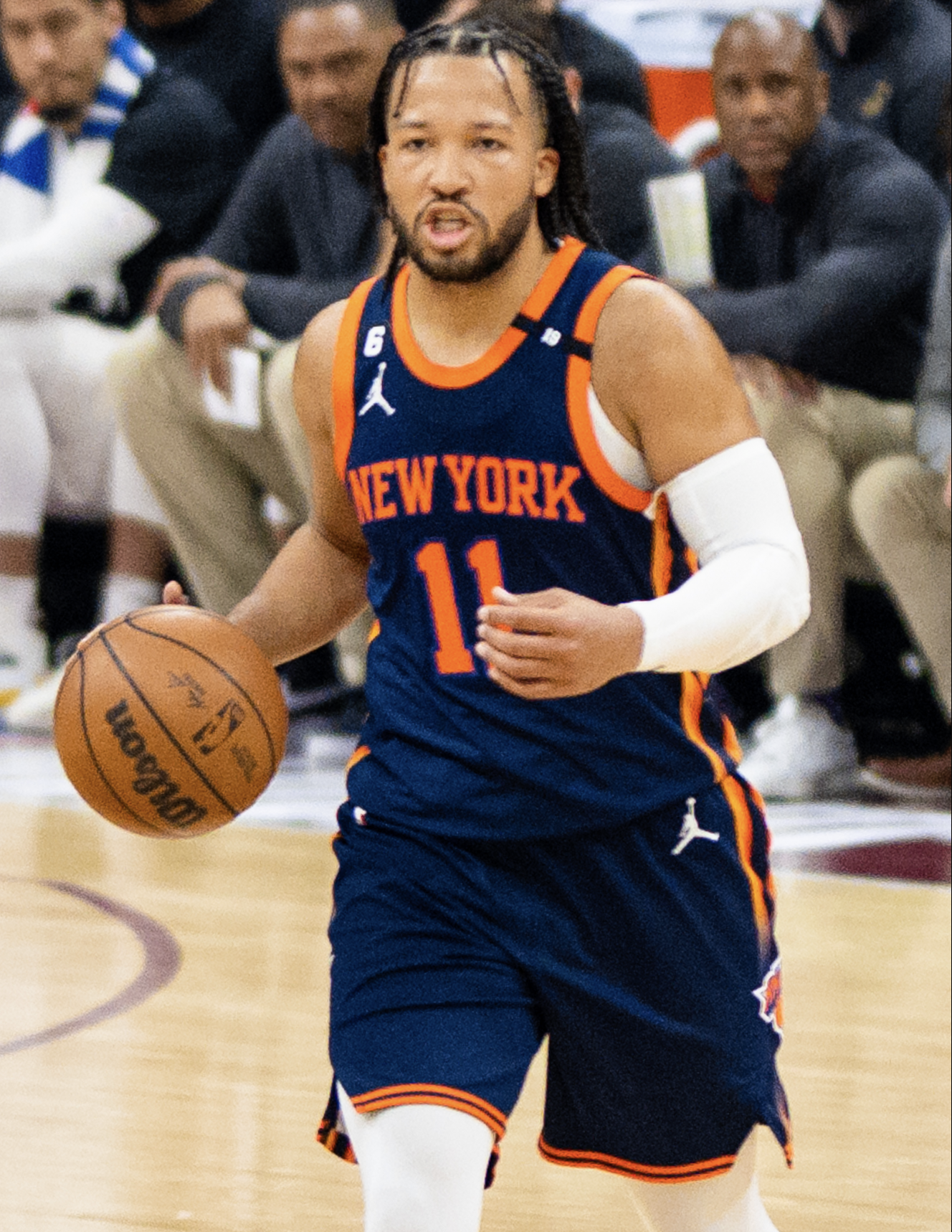
Jalen Brunson
And I love what one of their star players Jalen Brunson said following their record-breaking comeback from 29 points down to win game four.
“You’re allowed to think about the worst possible scenario, but you gotta go out there and do something about it.”
Deep breath in.
Deep breath out.
Those are great words to live by…
Thank you, Knicks, for bringing millions of us — from many different political and cultural and ethnic backgrounds — together during this challenging time here on planet earth.
You gave — and continue to give — us hope and joy and inspiration.
And THANK YOU to everyone who is willing to read and listen to yet another one of my blog posts.
Pianist/singer/arranger/songwriter Molly Ruggles and I performed “Alfie” recently at an assisted living community in Milford, MA, as part of an hour-long program of songs composed by Burt Bacharach.
Some of the folks in their memory care unit joined us, and one woman in a wheelchair appeared to be particularly zoned out when she was wheeled to her spot in the audience.
Then the music began… and she started to sing-along.
She was able to remember the lyrics to a bunch of Bacharach/David hits, including “Walk On By,” “Close To You.” and “Raindrops Keep Falling On My Head.”
Music has many mysterious powers!
A quick search on Google tells me that “listening to or playing music is a full-brain experience that engages nearly every region, creating a ‘total brain workout’. It activates a widespread network involving auditory, emotional, motor, and memory systems simultaneously, often synchronizing these areas to enhance cognitive function.
Auditory Cortex (Temporal Lobes): Processes sound, rhythm, and melody, converting sound waves into electrical signals.
Limbic System (Emotion & Memory): The amygdala (emotion) and hippocampus (memory) respond to music, explaining why specific songs trigger vivid memories or emotional responses.
Motor System (Movement): The cerebellum and motor cortex are activated, controlling involuntary tapping or dancing to the rhythm.
Prefrontal Cortex (Focus & Planning): Involved in planning, attention, and interpreting musical structure.
Neurotransmitter Release: Music boosts dopamine (pleasure/motivation) and serotonin, while lowering cortisol (stress).
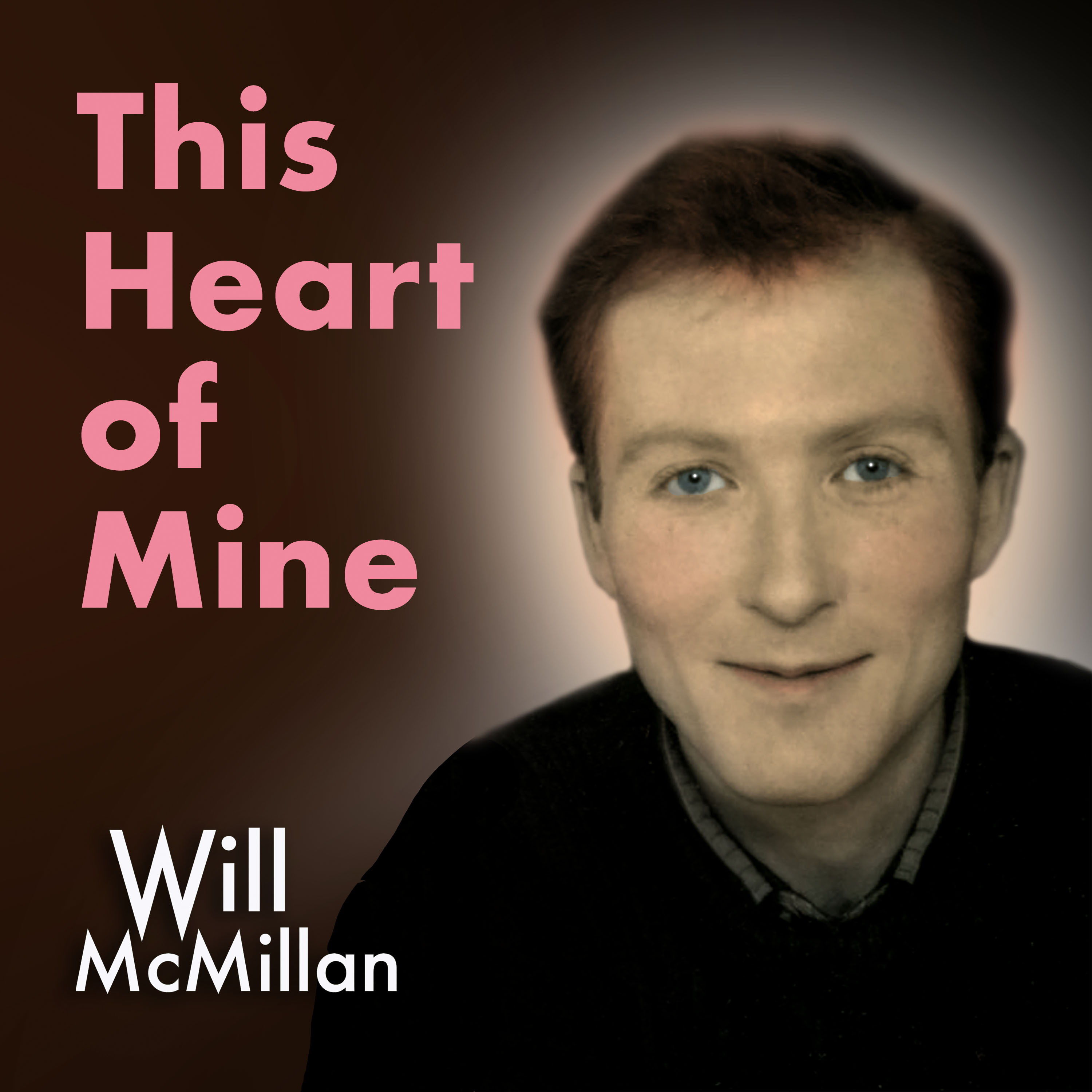
Mr. Warren and Mr. Freed wrote “This Heart Of Mine” for a 1944 Metro-Goldwyn-Mayer (MGM) musical called the ZIEGFELD FOLLIES which starred Fred Astaire.
I think I first heard it sung by Judy Garland, who recorded it the following year for Decca Records.
Arthur Freed also wrote the lyrics for a bunch of other hit songs — such as “Singing In The Rain,” “You Are My Lucky Star,” and “Make ‘Em Laugh.”
I haven’t read any biographies about him (yet) but according to Wikipedia, he lived a fascinating life.
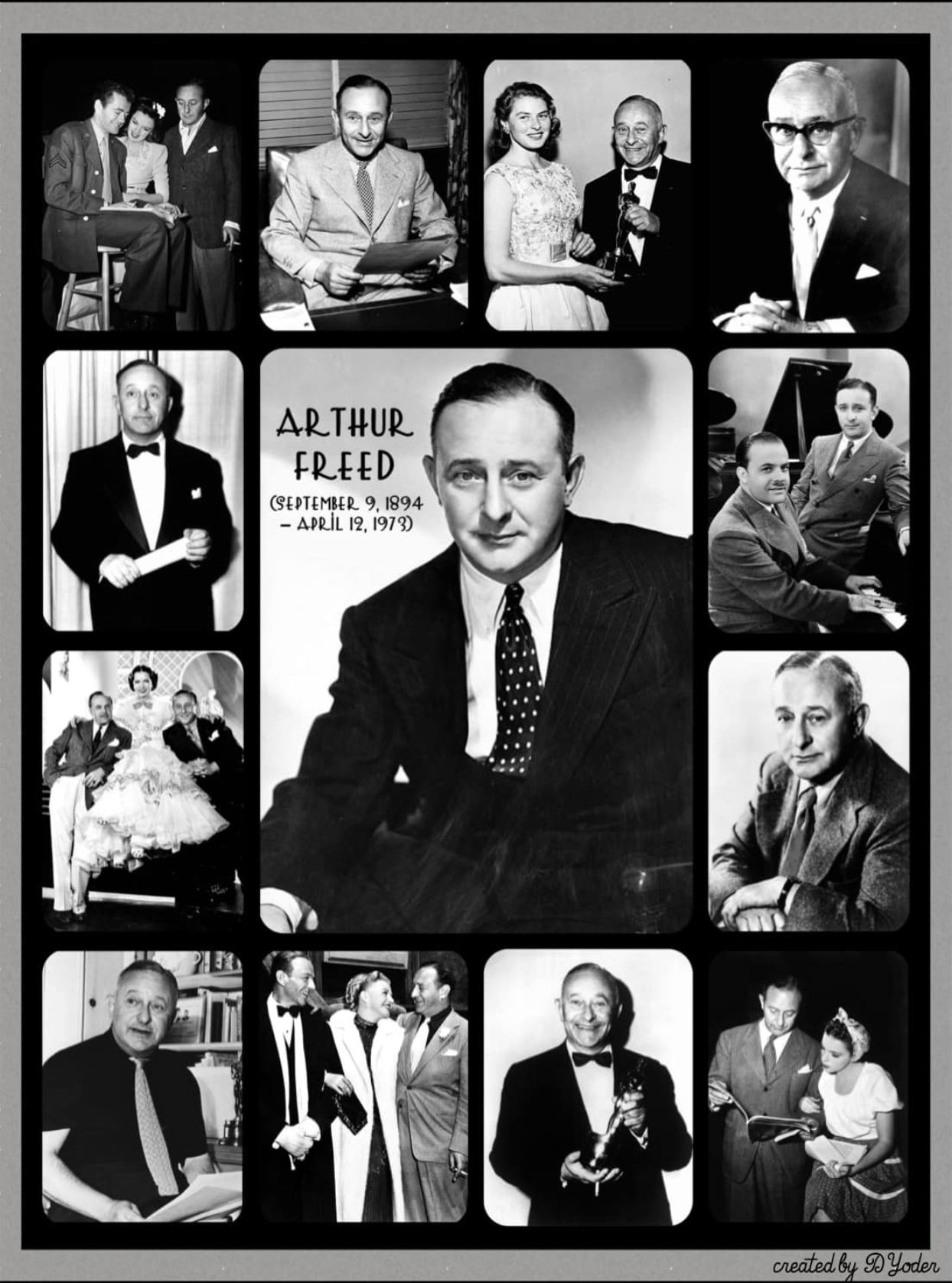
Composite Images of Arthur Freed by Diane Yoder
He was born in South Carolina in 1894, and ended up attending a very prestigious prep school in New Hampshire — Phillips Exeter Academy. I am guessing he was probably one of very few Jewish students on campus — and according to Wikipedia, he became interested in writing poetry there.
After prep school Mr. Freed ended up in Chicago and performed with early versions of the Marx Brothers act (!!!) in vaudeville.
He also wrote special material for them, which led to co-writing enough successful songs that Hollywood beckoned…and he was hired to write songs for early MGM musicals.
After many years at MGM, Freed transitioned from songwriter to producer, working (as an uncredited associate producer ) on THE WIZARD OF OZ and then officially producing his first movie, BABES IN ARMS.
Both of these films, as you probably know, starred Judy Garland.
Mr. Freed went on to produce many more of Garland’s movies including LITTLE NELLIE KELLY, FOR ME AND MY GAL, THE CLOCK, and MEET ME IN ST. LOUIS — which is where she met her second husband, the director Vincente Minnelli, whom Freed had brought from New York City to work at MGM.
According to Wikipedia, Freed hired great talent and then gave them free rein to do their thing — whether it was choreography, costumes, set design, songwriting, direction, etc.
He also gave himself free rein to do some very odd and abusive things, such as exposing his penis to a young Shirley Temple when she came for a visit to discuss doing a movie at MGM — and making sexual advances towards her mother as well.
Temple wrote about this incident in her autobiography — and apparently Mr. Freed experienced no censure as a result of his horrible behavior…





















 amusicalifeonplanetearth