Today’s song is actually a two-song medley from the musical Sweet Charity.
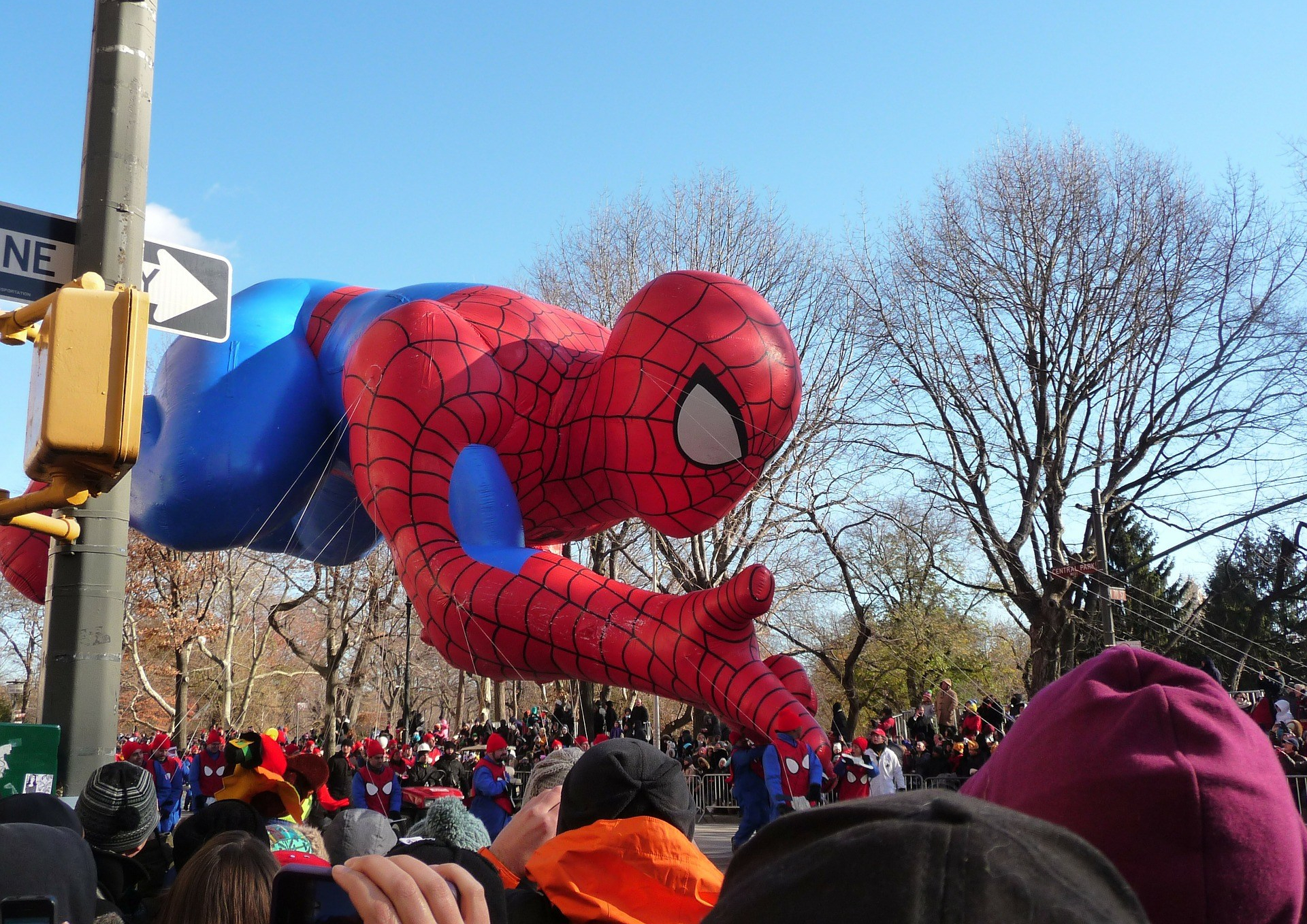
I included it because the first song, “I’m A Brass Band,” mentions the Macy’s Thanksgiving Day parade, which is coming up soon…
I learned online that this year there will be very little marching.
Most of the performances and activity will unfold where the parade usually ends: Herald Square — which is the intersection of Broadway, Sixth Avenue, and 34th street in Manhattan.
Some segments will be pre-recorded and some will be live.
And there will be performances by the casts of many Broadway shows — all of which have been on hiatus for months due to Covid-19.
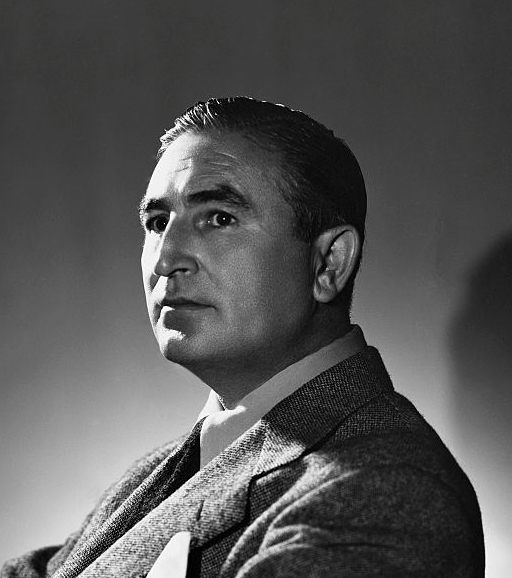
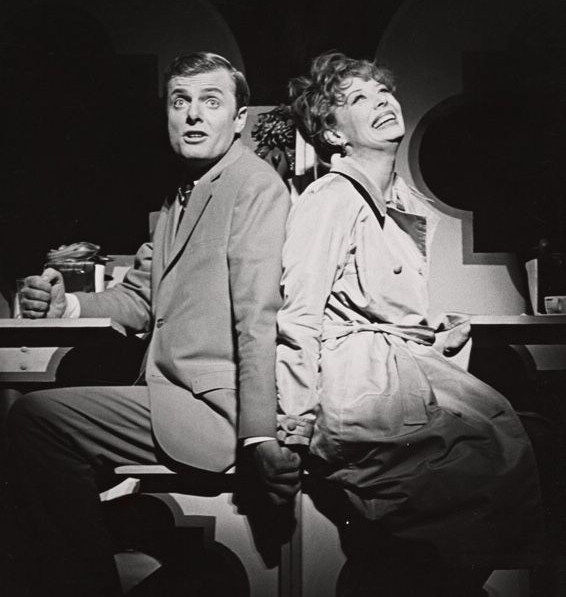
John McMartin and Gwen Verdon
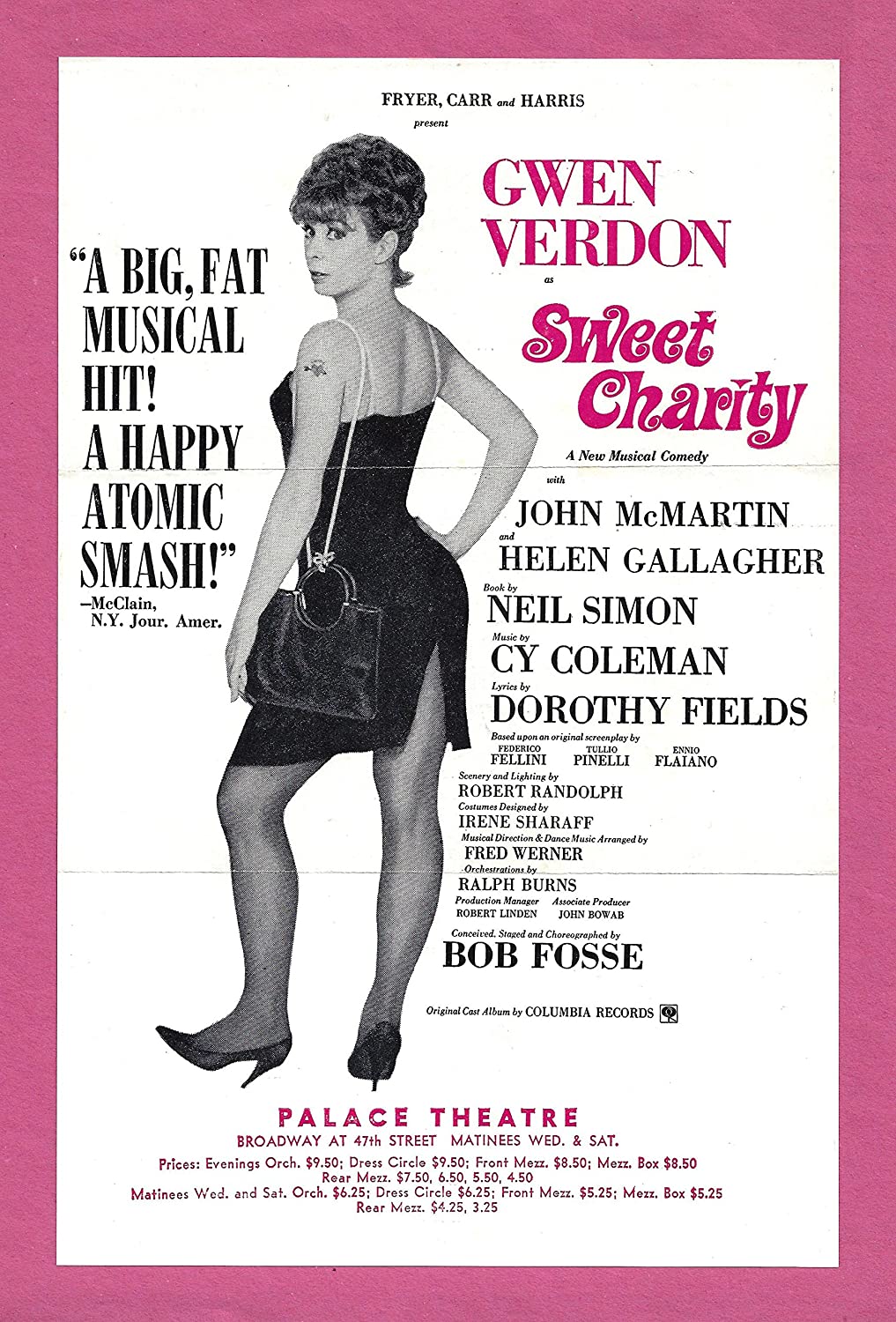
Sweet Charity was a big hit on Broadway in 1966 starring Gwen Verdon and John McMartin.
Bob Fosse and his wife/muse Gwen Verdon had seen a Fellini movie, The Nights Of Cabiria, and Fosse soon began writing a treatment about how it could become a musical.
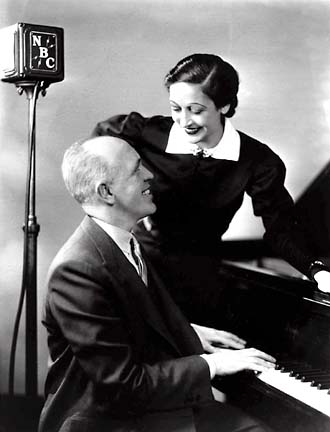
Lyricist Dorothy Fields and composer Cy Coleman joined the creative team — and after they had written a few songs, Bob convinced his old friend Neil Simon to work on the script.
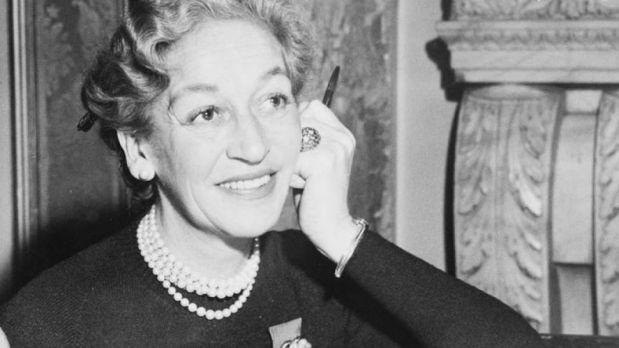
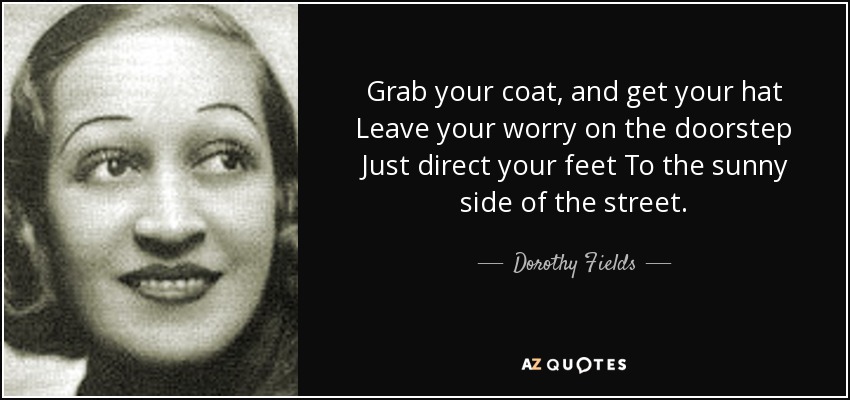
She had an extraordinary career as a lyricist, co-writing hit songs from the late 1920s through the early 1970s.
I’m not sure why she is not a household name similar to Cole Porter or Irving Berlin — both of whom, incidentally, she worked with as a librettist (script writer).
Maybe because she was a woman?
Maybe because she didn’t hire publicists to keep her name in the papers?
When many of her friends and contemporaries like Ira Gershwin, Harold Arlen, and Richard Rodgers had become frustrated by the arrival of rock & roll on the cultural landscape, Fields teamed up with a composer almost half her age — Coleman, who was 37 years old — and experienced one of the biggest hits of her entire career when she was 61!
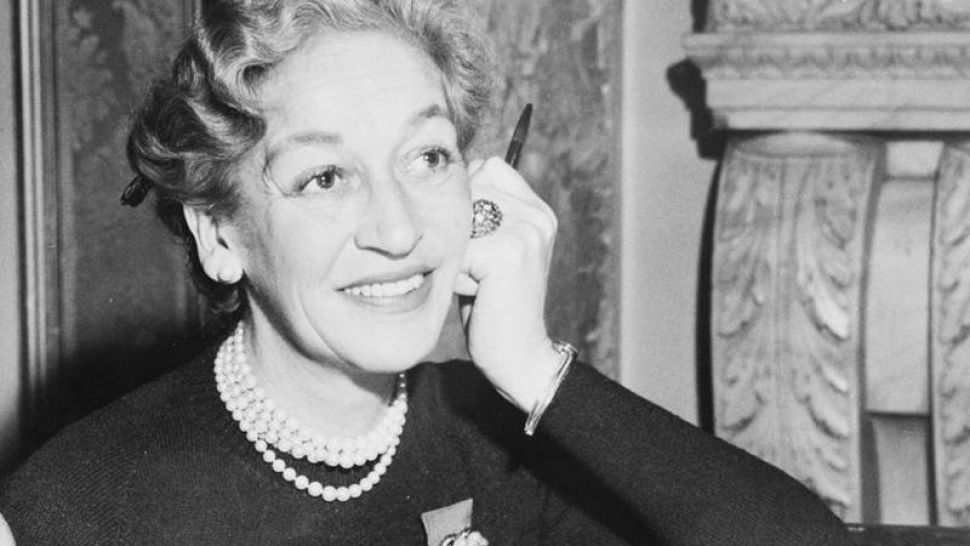
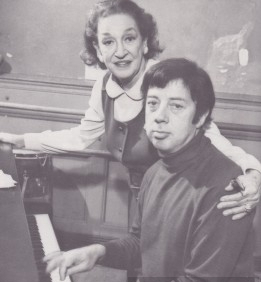
Dorothy Fields and Cy Coleman
Her lyrics for the songs in Sweet Charity are witty and hip in a pre-summer-of-love-kinda-way.
And I love the verse for “I’m A Brass Band.”
“Somebody loves me — my heart is beating so fast. All kinds of music is pouring out of me — somebody loves me at last…”
I feel very loved — or perhaps a more understated word would be appreciated — by the WordPress community.
I am not sure why, but the average number of people visiting my site has doubled in recent weeks.
And so far in November I have already had more people visit the site than in any previous month!
The WordPress community continues to feel like a blessed parallel universe — where respect for others is still a norm.
I love reading other people’s blog posts, and I love reading the comments that each post inspires.
And I love seeing increasingly familiar names turn up in the comments section of an ever-widening variety of blog posts.
I also love when people take the time not only to read and listen to one of my blog posts but also to leave a comment.
Thank you!!!
Last Sunday I was listening to a sermon via Zoom while addressing postcards to potential voters in Georgia — encouraging them to register to vote in the upcoming senate elections.
The theme of the sermon was gratitude — and how powerful a practice it can be in our lives.
As soon as one slows down and starts looking around, most of us can find a seemingly endless stream of things to be grateful for.
And Thanksgiving IS a traditional time to count one’s blessings.
So let’s begin…
I am grateful for music and for great songwriters like Dorothy Fields and Cy Coleman.
I am grateful for pianist/engineer Doug Hammer, with whom I have recorded (and mixed and mastered) many fun versions of songs over the past 20+ years — some of which I share on this blog and some of which I am starting to share via Spotify, Apple Music, Amazon, Pandora, etc.
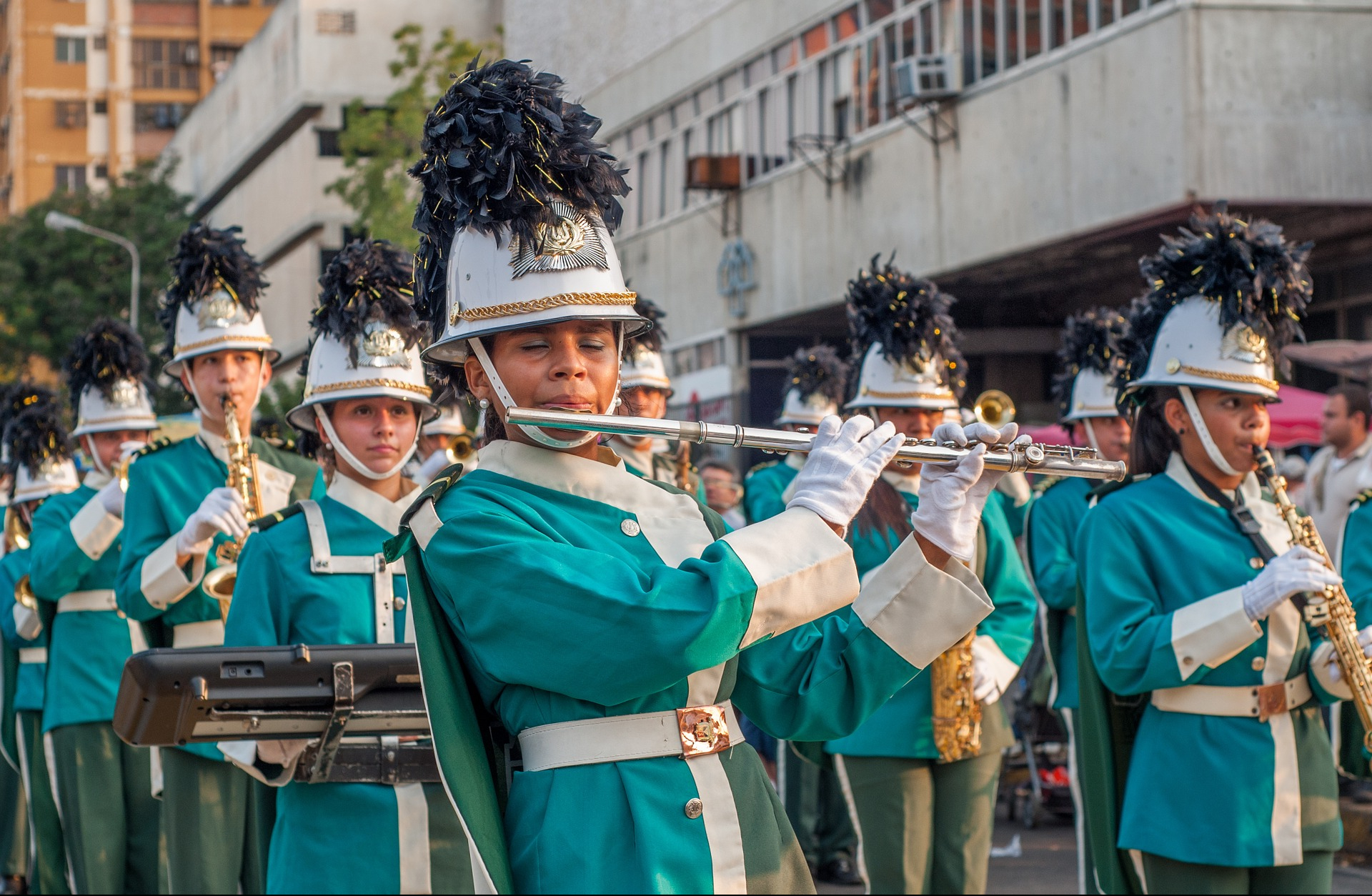
I am grateful for marching bands — who do not need any electricity at all to generate a soul-stirring amount of sound and excitement.
I am grateful for friends and family.
I am grateful for food, clothing and shelter.
I am grateful for photosynthesis — which creates oxygen for all of us animals to breathe and transforms energy from a nearby star (our sun) into something we can eat and use to fuel our own lives.
I am grateful for all the folks who grow and harvest and package and deliver food for us city-dwellers to eat.
I am grateful for the two twenty-somethings who recently gave my bike a complete tune-up at a store they help to run not far from where I live.
I am grateful for electricity, my laptop computer, and the internet — which allow me to write blog posts, record songs, and share them with anyone else in the rest of the world who also has access to electricity, a computer and the internet.
I am grateful for my Music Together families — with whom I hop and clap and kick and spin and dance and sing each week (in a local park wearing lots of masks and also via Zoom).
I am grateful for the men installing new, more efficient windows in our basement today.
I am grateful to my friend, the jazz pianist and composer Steve Sweeting, who gave me the sheet music for “I’m A Brass Band” many years ago because he thought I might like to perform it some day…
I am grateful for all the folks around the world and in the USA who are actively engaged in the challenging, ever-evolving work of living in a democracy.
I am grateful to Pixabay and ye olde internet for the images in this blog post.
A happy and healthy Thanksgiving to you and yours…
And, of course, I am grateful to YOU for reading and listening to another one of my blog posts.
The film had a rather extraordinary cast — including Eddie “Rochester” Anderson, Lena Horne, Louis Armstrong, Butterfly McQueen and Duke Ellington.
It was also the first movie directed by Liza Minnelli’s father, Vincente — who before that had been a successful designer and director on Broadway.
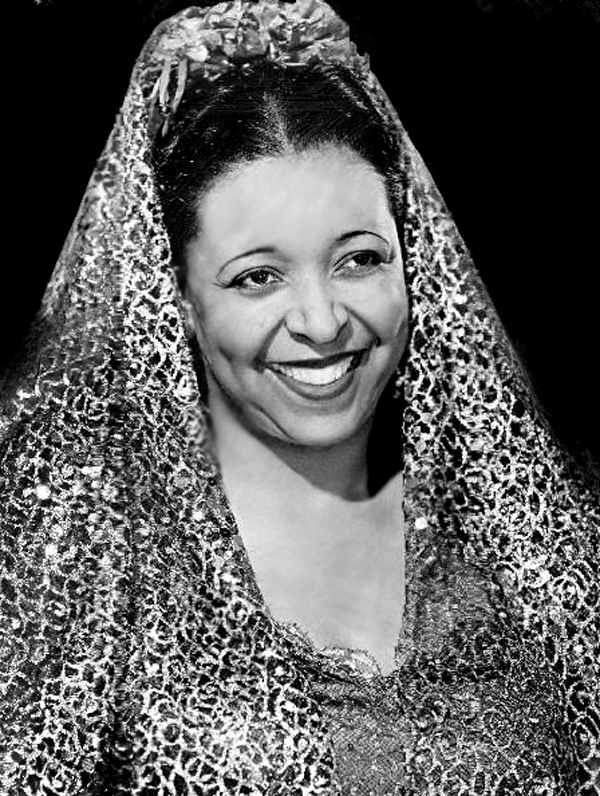
Ethel Waters had also starred in the original Broadway version of Cabin in The Sky, which was directed by the famous choreographer George Balanchine with music composed by fellow Russian Vernon Duke and lyrics by John Latouche.
I’m not sure when I first heard this song, but it was a natural to include in the very first program of music — featuring songs composed by Harold Arlen — which I put together with pianist Joe Reid.
Joe Reid
Joe had called me up and asked me if I would like to do an hour of music with him at a retirement community called Brookhaven (where his dad lives).
This was a few months after I had been laid off from a non-profit where I had worked for 16 years, and I said, “Yes, please!”
Joe has proved to be an excellent collaborator.
During the past seven years we have put together one-hour programs of music featuring songs by — and stories about — Harold Arlen, Sammy Cahn, Hoagy Carmichael, Dorothy Fields, the Gershwin Brothers, Oscar Hammerstein, Yip Harburg, Lorenz Hart, Jerome Kern, Frank Loesser, Johnny Mercer, Cole Porter, Jule Styne, and Harry Warren as well as one-hour programs of songs written for Fred Astaire, Bing Crosby, Judy Garland, and Ethel Merman.
We also have assembled programs featuring Irish-American songs, songs in honor of Father’s Day, songs in honor of Mother’s Day, songs written for Disney movies made while Walt was still alive, and winter holiday songs written by Jewish songwriters.
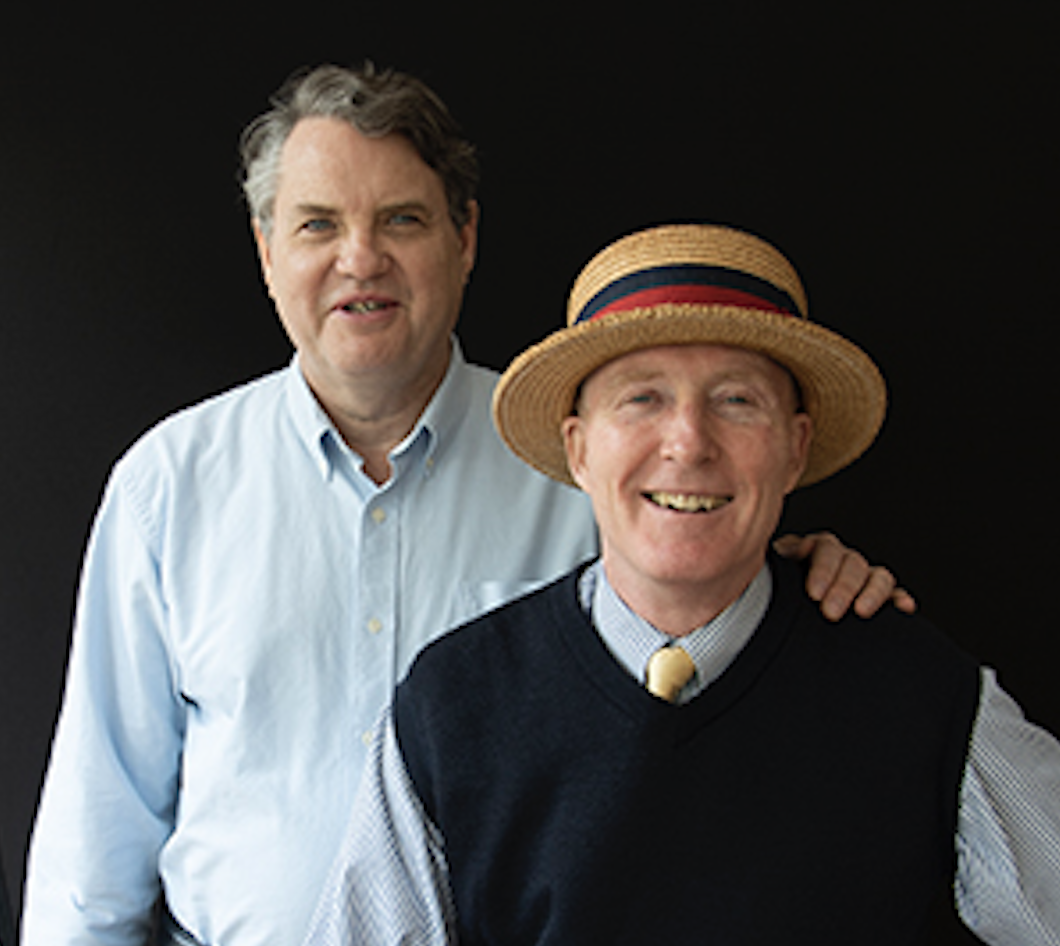
Joe and Will
In addition to his agile musicality as a jazz pianist, Joe brings a reliable hybrid car and a level temperament to our collaboration.
He always shows up on time, and has only missed one gig in the past eight years due to an unusually bad cold.
He is also passionately involved with politics and recently installed solar panels on the roof of his house.
He is a musical mensch.
In addition to making music together, we have spent hundreds of hours driving to and from gigs in his Prius — discussing the current political climate, his extended family, how he transitioned from corporate lawyer to full-time pianist, and much more…
We were on track to perform over seventy five gigs together in 2020 before Covid-19 stopped us in our tracks.
In the past seven months we’ve performed together once — outside and well-masked — at one of our favorite retirement communities, Springhouse.
We watch the Covid case numbers rising again in Massachusetts and wonder when we will be able to perform together again…
This song also takes on a new resonance following the recent election of Joe Biden and Kamala Harris to lead our country for the next four years.
Joe Biden celebrating his 75th birthday
Many of us are very excited by this election.
I am also aware that there are many who are sad and angry that their candidate lost…
Deep breath out.
Deep breath in.
I remain very grateful to live in a country that holds presidential elections every four years.
I also am truly grateful to live in a country with a system of checks and balances between our president, our congress, our judicial system, and our investigative media.
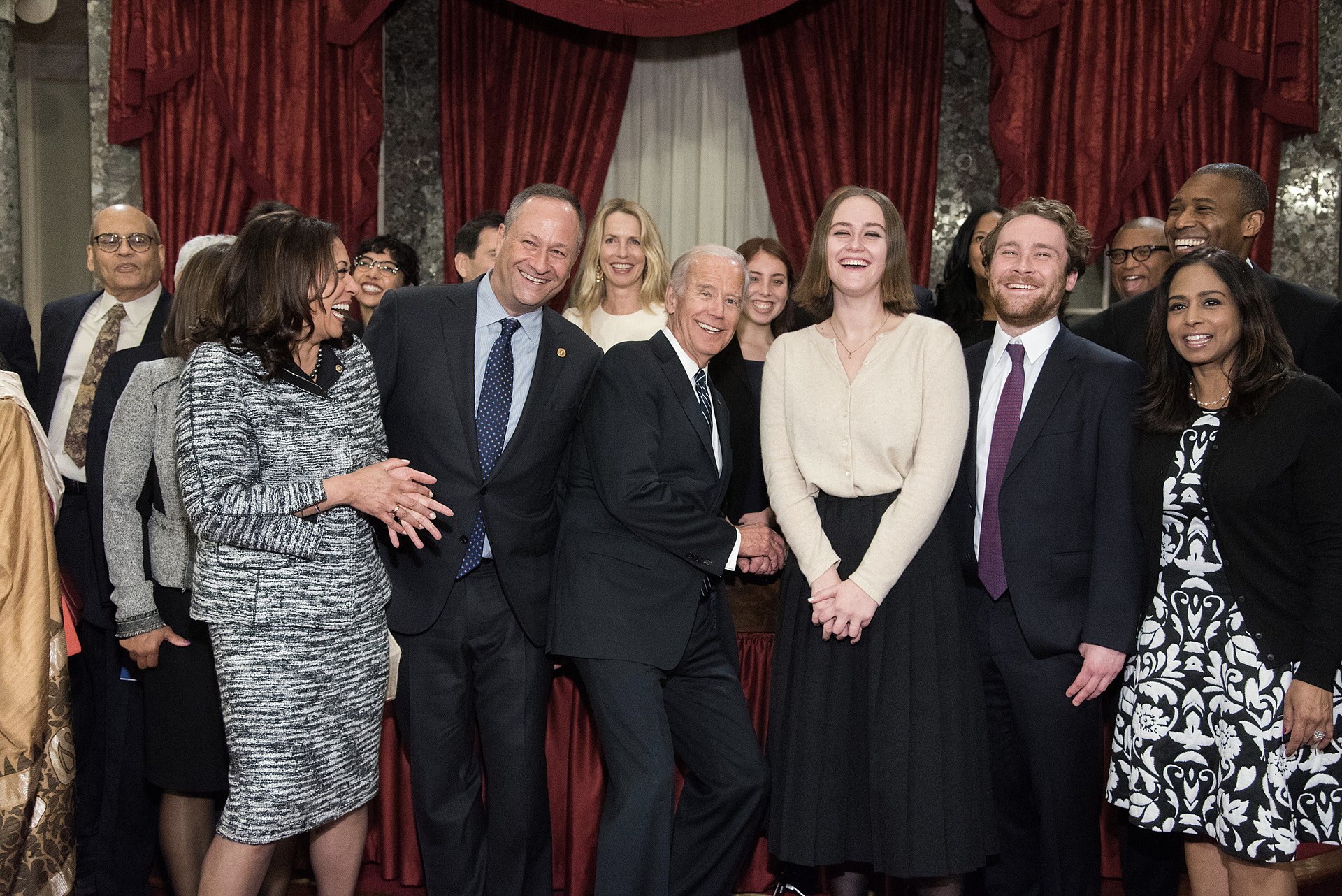
Joe Biden and Kamala Harris
I am hopeful that our country can re-discover a sense of respect and inclusivity with different leadership in the White House.
In my Music Together classes I see on a weekly basis how strong the “monkey see, monkey do” effect is…
Not just on children, but on everyone!
One of the main ways we learn what is possible — and how to behave — is by seeing other human beings in action.
Joe Biden brings compassion and empathy — which he gained in part due to the heart-breaking losses of his first wife Neilia, baby daughter Amy, and grownup son Beau — to the White House.
He also brings a decades-long history of collaboration in the US Senate, working with Republican peers across the aisle on behalf of the residents of the USA (and also on behalf of many corporate donors and lobbyists…)
We shall see how he governs!
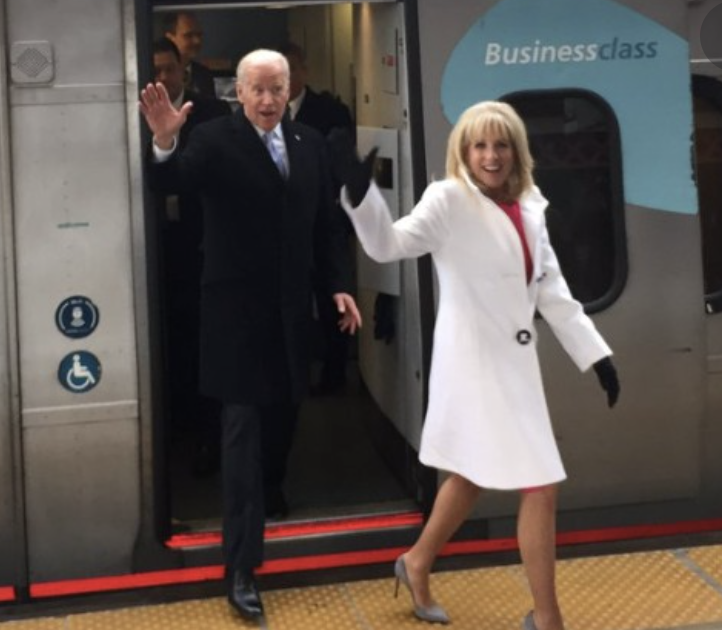
Joe and Jill Biden stepping off an Amtrak train…
I am also very curious to see who Joe and Kamala invite to join them as part of their cabinet and staff…
And as someone who loves to travel via trains, I like that Joe is a long-time commuter — from Washington, DC to Delaware — on Amtrak.
Thank you to Joe Reid for seven years of musical collaboration.
Thank you to all the poll workers who stepped up — some for the first time! — to run our recent national election.
Thank you to Wikimedia Commons and to Stephen Fischer for the photos in this blog post.
Thank you to pianist Doug Hammer for recording this song with me at his studio north of Boston (where I record all of my musical programs so that I have piano-only versions with which to practice…)
And thank YOU for reading and listening to this blog post.
It was originally written for a 1931 revue called The Band Wagon — which was notable for being one of the last times that Fred Astaire and his sister Adele performed together on Broadway.
The lyrics feel like an existential poem to me.
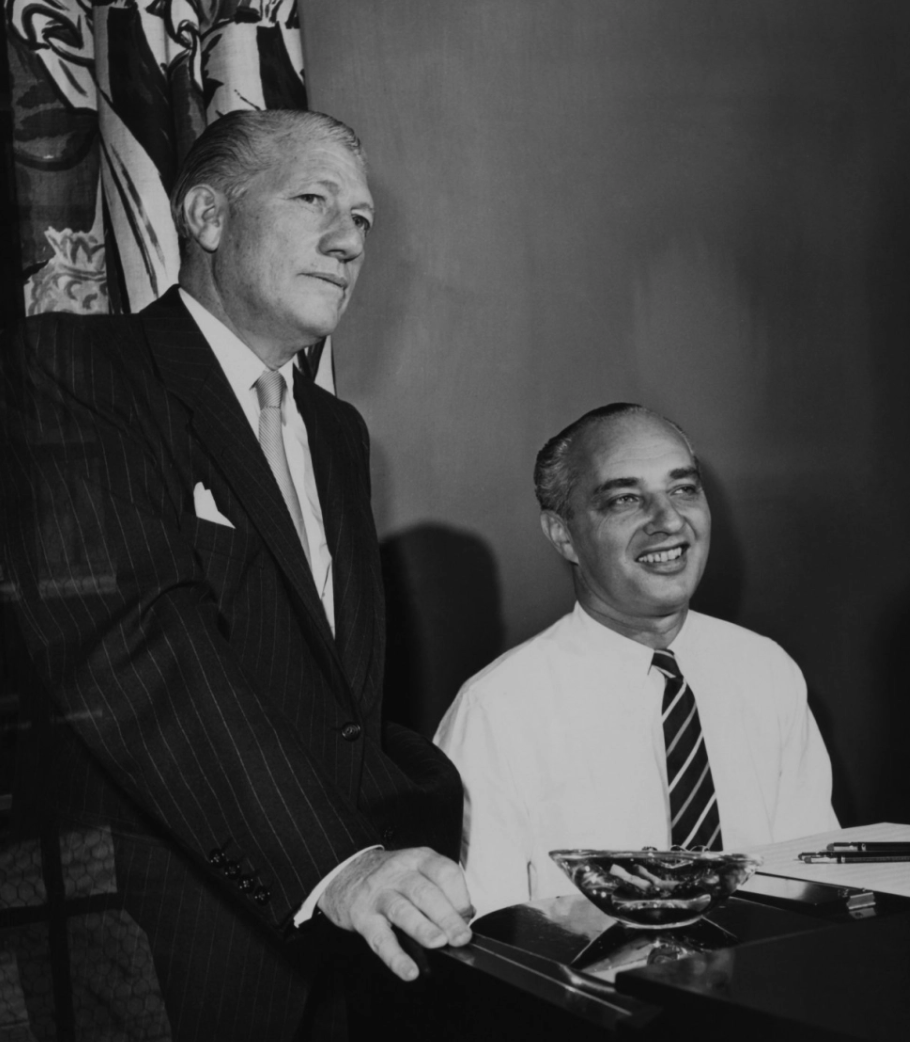
Howard Dietz and Arthur Schwartz
They were written by Howard Dietz — who also co-wrote the script for The Band Wagon with George S. Kaufman — plus music by Arthur Schwartz.
Dietz went on to become the head of public relations at MGM movie studios.
He is reputed to have chosen their lion logo as well as their motto: Ars Gratia Artis (art for art’s sake).
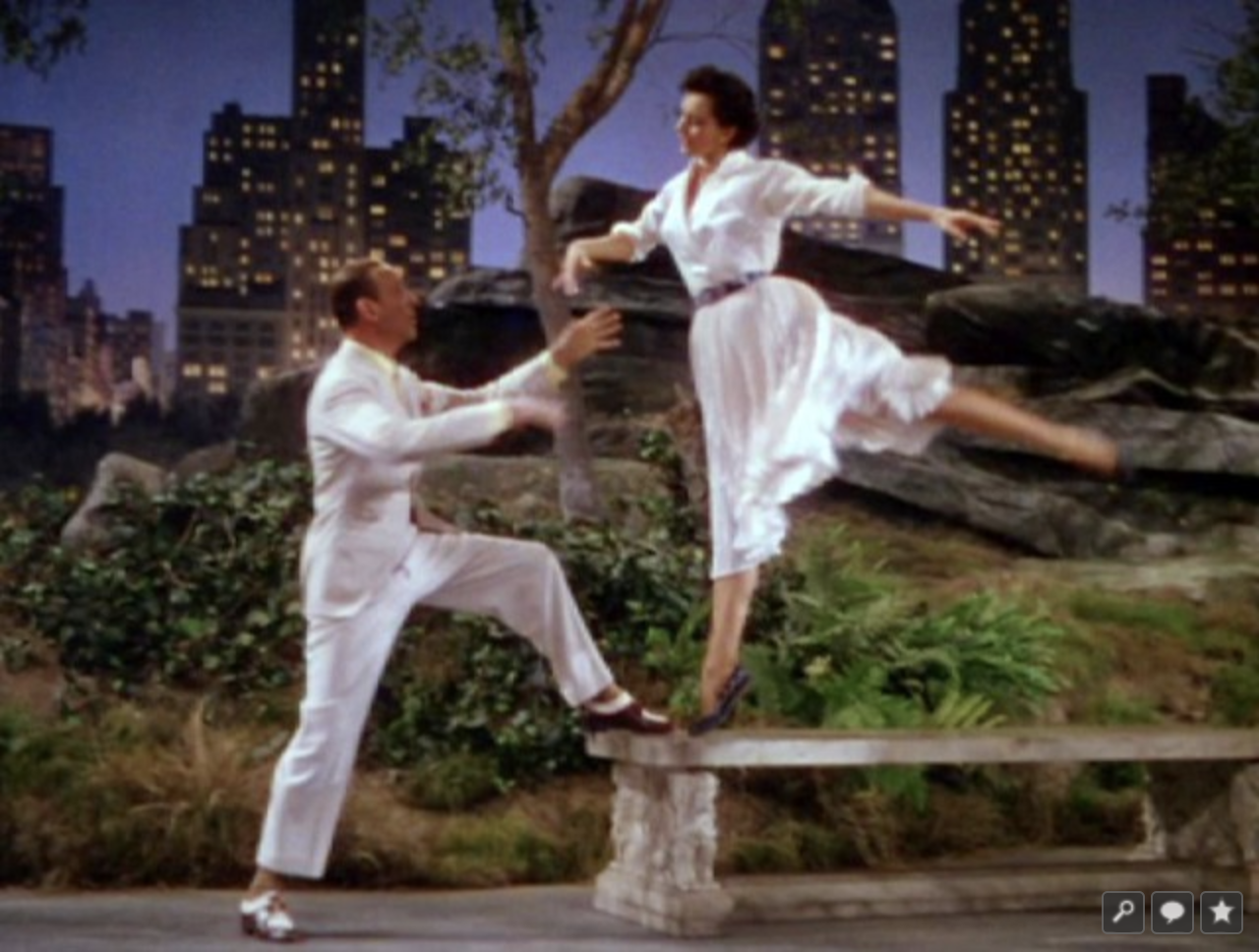
While based in MGM’s New York office, he wrote co-wrote songs for decades with Arthur Schwartz, including “That’s Entertainment” for MGM’s film version of The Band Wagon in 1953 — which again featured Fred Astaire, who performed with Cyd Charisse while…”Dancing In The Dark.”
Fred Astaire and Cyd Charisse
The message of the song seems particularly appropriate in the days leading up to a very important national election here in the USA.
I have been limiting my exposure to radio and TV because most of the news is simply very high-octane speculation.
However, I was happy to learn that early voter turnout is very high.
People are engaged with the political process!
But I am also concerned that gun/ammunition sales are very high (although I have been told this often happens when gun-using folks in the USA fear a Democratic victory which might lead to future firearm regulations…)
The state of our democracy can seem very dark these days — with our president repeatedly saying that he may not honor the results of our upcoming election while simultaneously casting seeds of doubt about the voting process itself.
And he continues to hold large public rallies during a health pandemic — after one of which his ally (and former presidential candidate) Herman Cain died from COVID-19.
All the while hospitals in cities around the United States fill up to capacity…
And nurses, EMTs, and doctors — who are working 12 hour shifts day in and day out to save the lives of their fellow citizens — continue to plead with us to wear our face masks, wash our hands, and maintain our social distancing…
I am truly amazed by our health care workers’ dedication, selflessness, and love for their fellow human beings.
I am amazed that they show up for work — day after day and night after night — while putting their own lives AND the lives of their loved ones at risk for catching this virus.
I am amazed that they treat the folks who deny the threat of Covid-19 and refuse to wear a mask with as much compassion as they treat the folks who wore a mask and still got sick.
What they are doing is astounding.
I don’t have adjectives to describe how I feel about the virus-deniers.
Or at least adjectives that I want to put into print.
I do sometimes wonder if the extreme dysfunction unfolding in our country is a symptom of mother nature getting serious about reducing the number of human beings who now live on (and some might say over-run and infest) planet earth…
Denying the science of how a virus spreads and multiplies — exponentially! — is a form of madness which has already killed hundreds of thousands of people here in the USA…
I see it as being very similar to denying the science of climate change.
One can deny it all one wants…
Yet the scientific processes — such as the fact that a virus can spread exponentially if unchecked and will swiftly overwhelm the staff of your local hospital — will continue to unfold whether one denies the scientific realities or not.
The fact that our earth’s atmosphere is changing due to our human (mis)use of fossil fuels since the start of the industrial era is also undeniable.
In fact I recently saw a reprint of an article from the early 20th century in which scientists described and predicted how our increasing use of fossil fuels would alter the earth’s atmosphere.
Some people have been aware of this challenge for generations!
The fact that climate change is increasing the severity of storms, increasing the frequency of forest fires, and changing the patterns of how ecosystems around the planet do (or don’t) stay in balance is undeniable.
It’s all over the news in the USA.
It’s what hundreds if not thousands of scientists have been warning about for decades.
Will we as a species continue to deny it is happening?
Will we continue to live our lives as if nothing huge and profound is changing?
Continue to drive our SUVs and pickup trucks as many miles as we (or our credit cards) can afford?
Continue to travel as much as our budgets (or credit cards) will allow?
Continue to refuse to put solar arrays on our roofs?
Continue to consume more resources than can be sustainably grown/harvested/produced here on planet earth?
Fundamental patterns and cycles here on planet earth will continue to tip out of balance regardless of what our leaders may or may not be saying.
There are scientific processes and realities at work which can’t be denied or spun or ignored until they go away.
Deep breath in.
Deep breath out.
It is indeed an extraordinary time to be alive…
I hope and trust that we will persevere.
That enough people will wake up to the realities of science.
That enough people will realize that wearing a mask and continuing to practice social distancing is in fact a very loving and respectful thing to do for one’s self, for one’s family, for one’s co-workers, for one’s neighborhood, and for all the folks who risk their lives working at one’s local hospital.
And that we can continue to dance through this period of darkness, keeping a sense of love and light and fairness and respect burning in our hearts as we cast our ballots.
Thank you to Howard Dietz and Arthur Schwartz for writing this song during another very challenging era in our country’s history…
Thank you to pianist Doug Hammer for making music and recording music with me for the past 20+ years AND then for fixing and mixing songs with me from his home studio via Zoom in recent months.
Thank you to all the photographers at Pixabay for these glorious images.
And thank YOU for reading and listening to another one of my blog posts!
I truly treasure our community of WordPress bloggers and readers and commenters…
I mentioned in my last blog post that I’ve been doing a lot of reading and watching educational videos about how the music industry works.
Today’s song — which I wrote with pianist/composer/songwriter Steve Sweeting many years ago — is perfectly themed for my current state of understanding (and lack thereof…)
In case you are the least bit curious, here’s a little of what I’ve been learning.
As a singer and songwriter, I am supposed to file for two types of copyright: sound recording (also known as the “master recording”) and song composition (of the actual song).
Song compositions generate payments to songwriters and music publishers — and sound recordings generate payments to recording artists and record labels.
So it turns out I need to learn how to wear four business hats: recording artist, record label, songwriter, and publisher.
Actually I also need to learn how to wear a publicist hat, a business manager hat, a booking agent hat, a social media/advertising hat — and the list goes on and on…
I have learned that sound recordings are given a unique ISRC code so that they can be tracked around the planet as they are downloaded, streamed, enjoyed via satellite radio, played in elevators as Muzak, etc.
In theory this tracking leads to various payment streams for the artist who recorded the song, their record company, the person (or team) who wrote the song, and their publishing company.
Also each original song composition is given a unique ISWC code for tracking purposes.
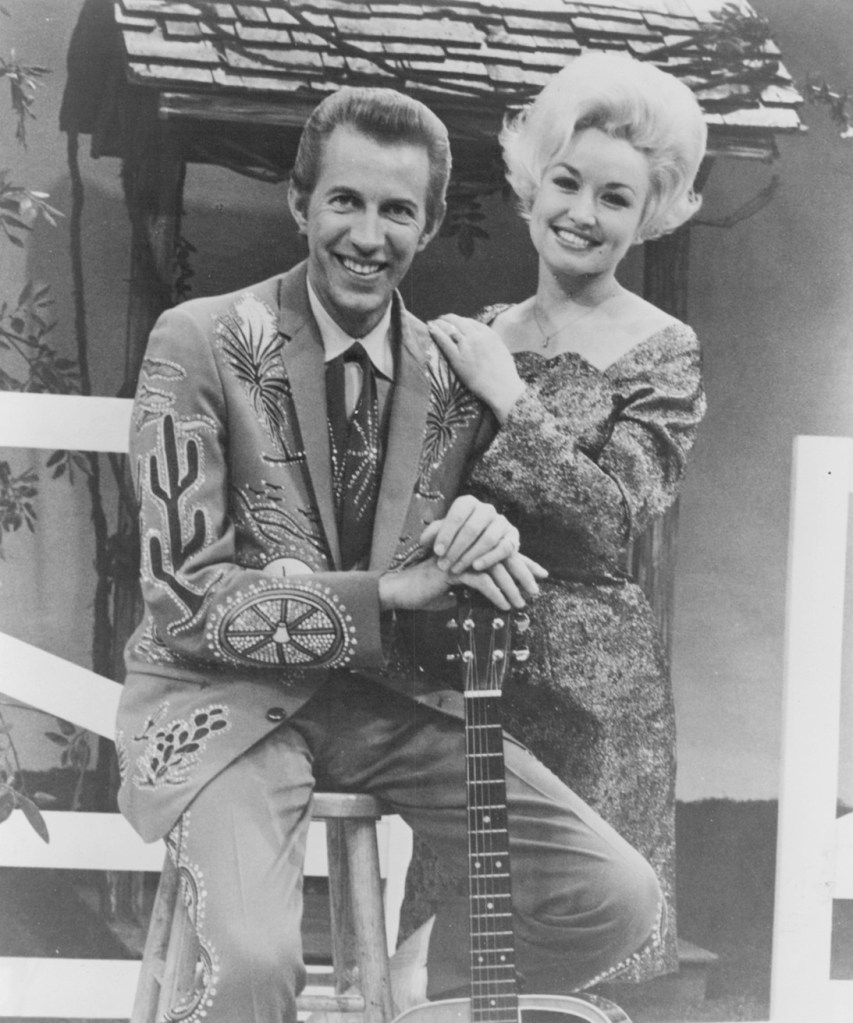
For example, Dolly Parton wrote and recorded “I Will Always Love You” when she made a very difficult decision to leave Porter Wagoner’s TV show.
This song has a unique ISWC code as a composition AND a unique ISRC code as her particular sound recording of it.
I loved reading in a 2012 interview about how Ms. Parton came to write this iconic song.
Porter and Dolly
“I was trying to get away on my own because I had promised to stay with Porter’s show for five years. I had been there for seven. And we fought a lot. We were very much alike. We were both stubborn. We both believed that we knew what was best for us. Well, he believed he knew what was best for me, too, and I believed that I knew more what was best for me at that time. So, needless to say, there was a lot of grief and heartache there, and he just wasn’t listening to my reasoning for my going.”
She continued, “I thought, ’He’s never going to listen. He’s just going to bitch every day that I go in to talk about this.’ So I thought, ’Well, why don’t you do what you do best? Why don’t you just write this song?’ Because I knew at that time I was going to go, no matter what. So I went home and out of a very emotional place in me at that time, I wrote the song, ’I Will Always Love You.'”
“It’s saying, ’Just because I’m going doesn’t mean I won’t love you. I appreciate you and I hope you do great and I appreciate everything you’ve done, but I’m out of here. And I took it in the next morning. I said, ’Sit down, Porter. I’ve written this song, and I want you to hear it.’ So I did sing it. And he was crying. He said, ’That’s the prettiest song I ever heard. And you can go, providing I get to produce that record.’ And he did, and the rest is history.”
Since then her song has been recorded by a lot of other singers — most famously by Whitney Houston.
And each recorded version has its own unique ISRC code as part of its metadata (plus Dolly’s ISWC code for writing the song) so that it can be monitored — and monetized — via unimaginably vast banks of computers keeping track of playlists, streams, downloads, broadcasts, Muzak services, etc.
Right now the music industry is in the middle of a paradigm shift which began when digital recording technology and CDs arrived in our lives.
When I was first making music as a young adult — performing with a jazz pianist, in a folk duo, and as part of an original five-person pop/rock band — I earned money from live gigs and from the sale of cassettes and CDs.
That era is over…
Music has gone from being sold on an analog object — such as a piano roll, wax cylinder, record, or cassette tape — to being sold as a long string of zeros and ones.
The zeros and ones which encoded music onto CDs allowed us to make copies of songs using our computers… and then share those copies with the rest of the world.
We could share them with our other devices (such as an iPod), with our friends and family, and eventually — via sites like Napster — with anyone else on the planet who also had a computer.
And no one got paid for any of this free file sharing!
Since then the music industry has continued to evolve — with streaming platforms such as Spotify entering our lives — but revenues for recorded music are still way down.
And now we also have COVID-19 reducing opportunities for musicians to earn money from live performances.
In fact many small music venues in the Boston area have already closed their doors…with more likely to succumb in upcoming months.
Deep breath in.
Deep breath out.
It’s hard to know what’s coming next!
My current plan, since the wonderful Doug Hammer is not yet welcoming customers back into his recording studio in person, is to work with him remotely (using Zoom) and polish some songs we’ve recorded in past years.
And write a few more blog posts explaining what I am learning about the music industry.
And continue to wear a face mask when I leave my house.
And ride my bike and walk whenever possible.
And lead Music Together classes — both outside (wearing a new face shield + wireless headset) and inside via Zoom.
And give as much money as I can afford to various political candidates and non-profit organizations who are doing their best to prevent our country from lurching into an autocracy.
As longtime readers of my blog probably recall, when I was laid off from my day job as assistant director of the Cambridge Center for Adult Education seven years ago, I decided to devote my life to making music.
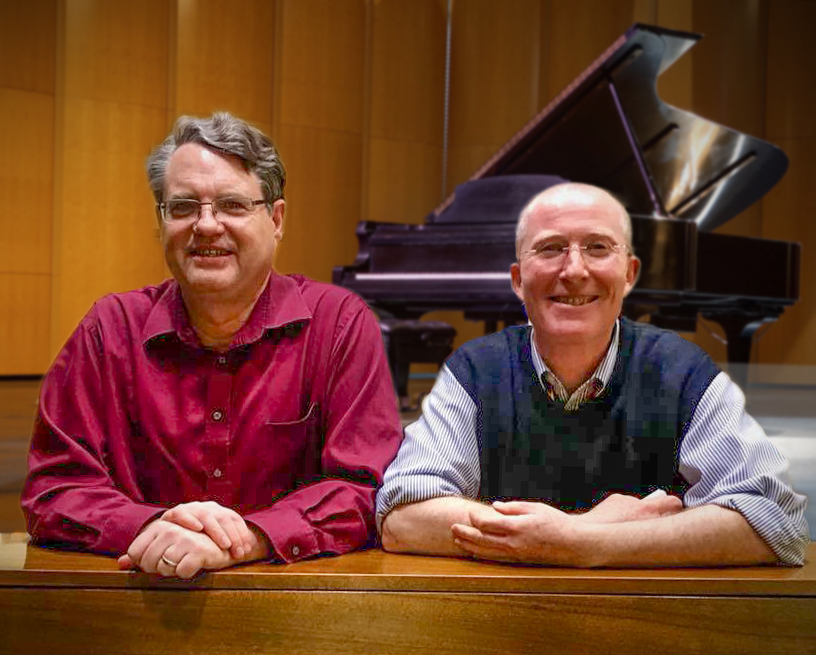
A few months after my lay-off, a Boston-area jazz pianist named Joe Reid reached out to see if I might like to do a gig at the retirement community where his dad lives.
I had met Joe several years earlier — when HE was in the midst of a life transition from working full-time as a lawyer to working full-time as a musician — and promptly said, “Yes!”
We needed to prepare an hour of music, and I mentioned that I had long loved many songs co-written by composer Harold Arlen — a list which includes “My Shining Hour,” “I’ve Got The World On A String,” “Accentuate The Positive,” “Anyplace I Hang My Hat Is Home,” “Come Rain Or Come Shine,” “Blues In The Night,” “That Old Black Magic,” “If I Only Had A Brain,” “Over The Rainbow,” “Happiness is Just A Thing Called Joe,” “Let’s Fall In Love,” “Get Happy,” and “It’s Only A Paper Moon.”
I had sung a few of these songs in a program of music featuring the lyrics of Johnny Mercer with singer Bobbi Carrey and pianist Doug Hammer — because one of Mr. Arlen’s many collaborators was Mr. Mercer.
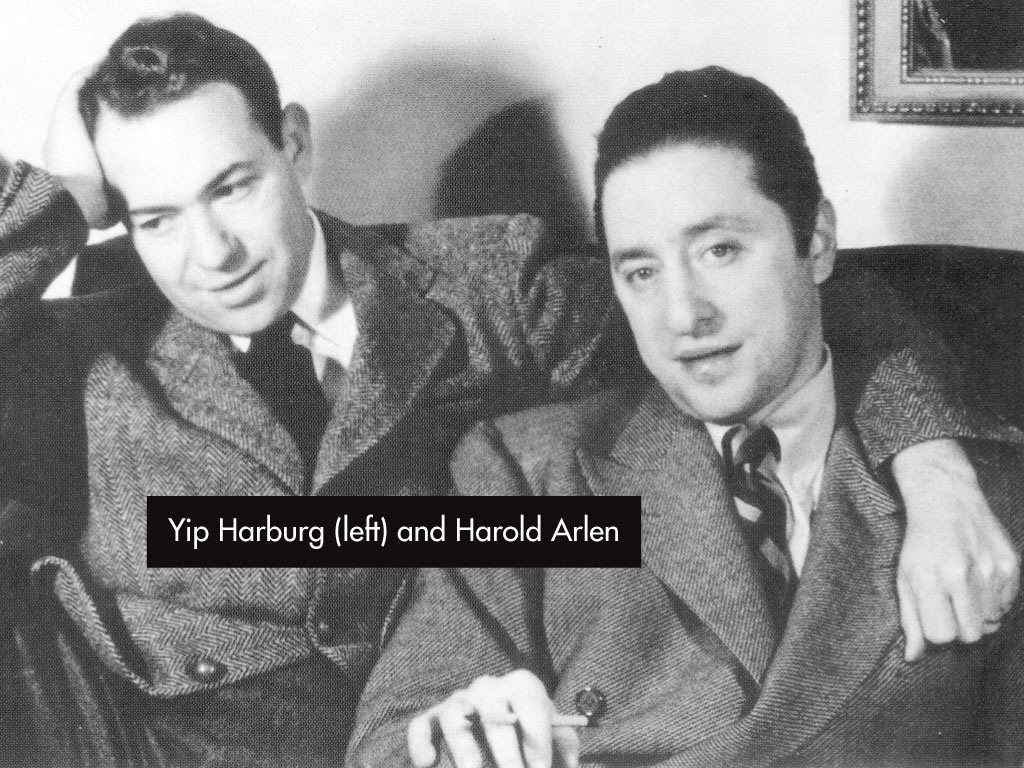
And I was familiar with others due to the movie version of The Wizard Of Oz, for which Mr. Arlen composed the music and Yip Harburg wrote lyrics (and a lot of uncredited dialogue — a topic I will explore in a future blog post dedicated to Yip).
I biked over to Joe’s house — in the town next to mine — with a bunch of sheet music.
We spent about 90 minutes running through thirteen songs — picking comfortable keys and exploring tempos/feels for each of them.
And that was it for rehearsing with Joe.
Joe (on the left) is very much a “let’s-trust-in-the-moment” kind of musician who welcomes improvisation and spontaneity.
I, too, value spontaneity — and I also appreciate structure.
So I booked time with pianist Doug Hammer at his studio north of Boston.
We recorded all of the Arlen songs once or twice so that I could have a set of piano-only tracks to play on my iPod as I walked around Arlington memorizing lyrics.
And some of the versions we recorded — such as the version of “It’s Only A Paper Moon” included in the player at the beginning of this blog post — came out surprisingly well.
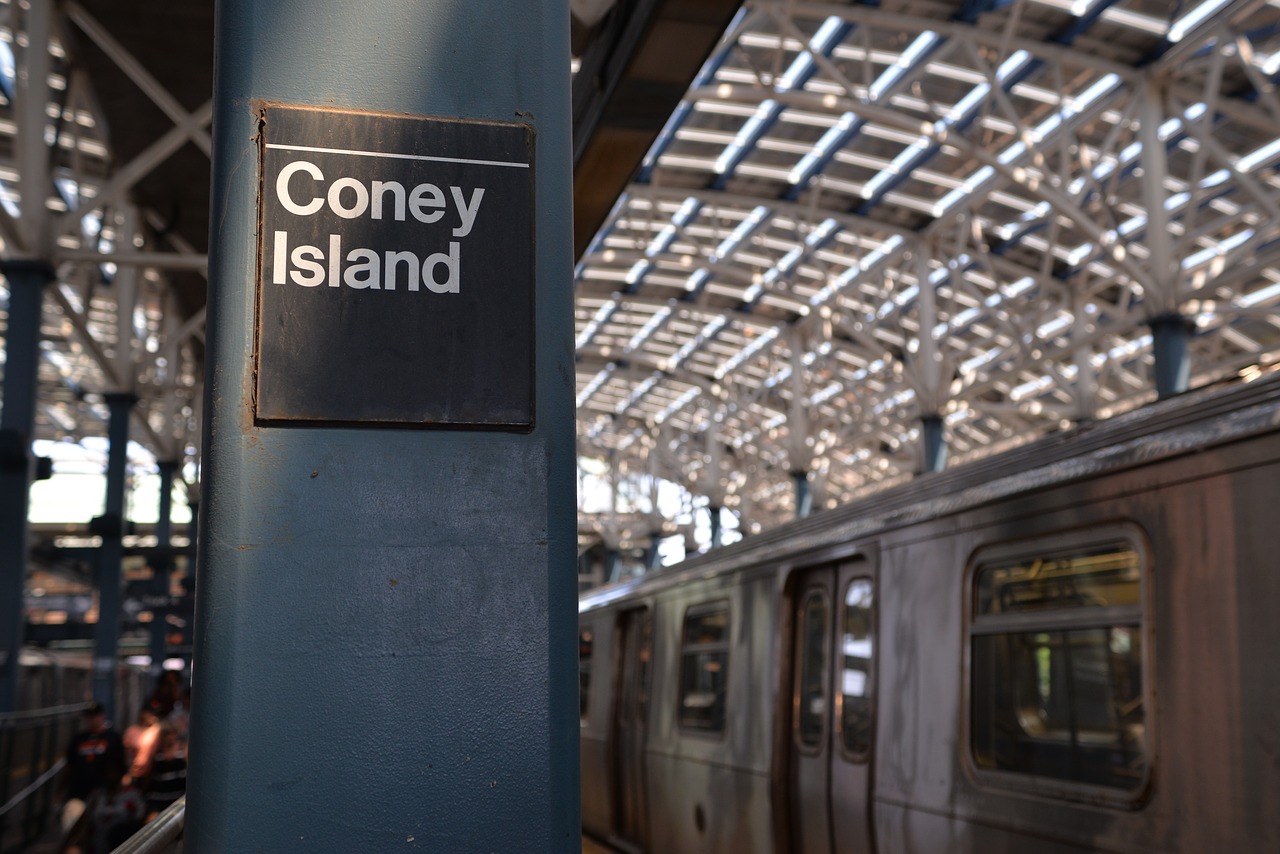
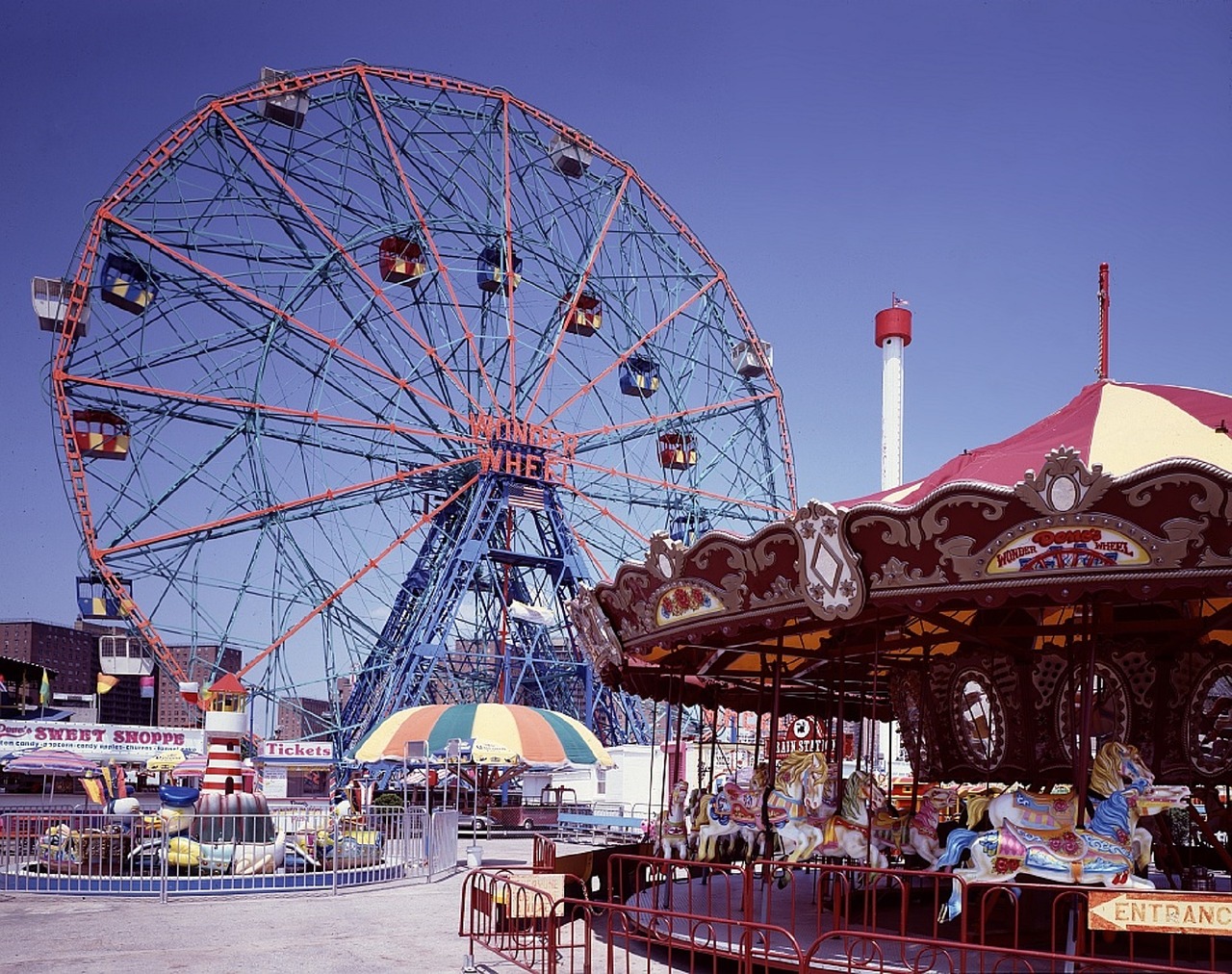
“It’s Only A Paper Moon” was written for a 1932 play (not a musical) called The Great Magoo set in Coney Island which was not a big success.
It is credited to Arlen, Harburg, and impresario Billy Rose — who was somewhat infamous for adding his name to the songwriting credits of other people’s work after having contributed an idea or two during the creative process.
You may recognize Rose’s name because he was married for many years to the great performer Fanny Brice, and his character appears in the movie Funny Lady starring Barbra Streisand as Brice.
Somehow this Coney Island hot dog made me think of him…
Luckily the song was rescued from The Great Magoo and included in a movie called Take A Chance the next year — which led to successful recordings by a wide range of musicians over the past 70+ years.
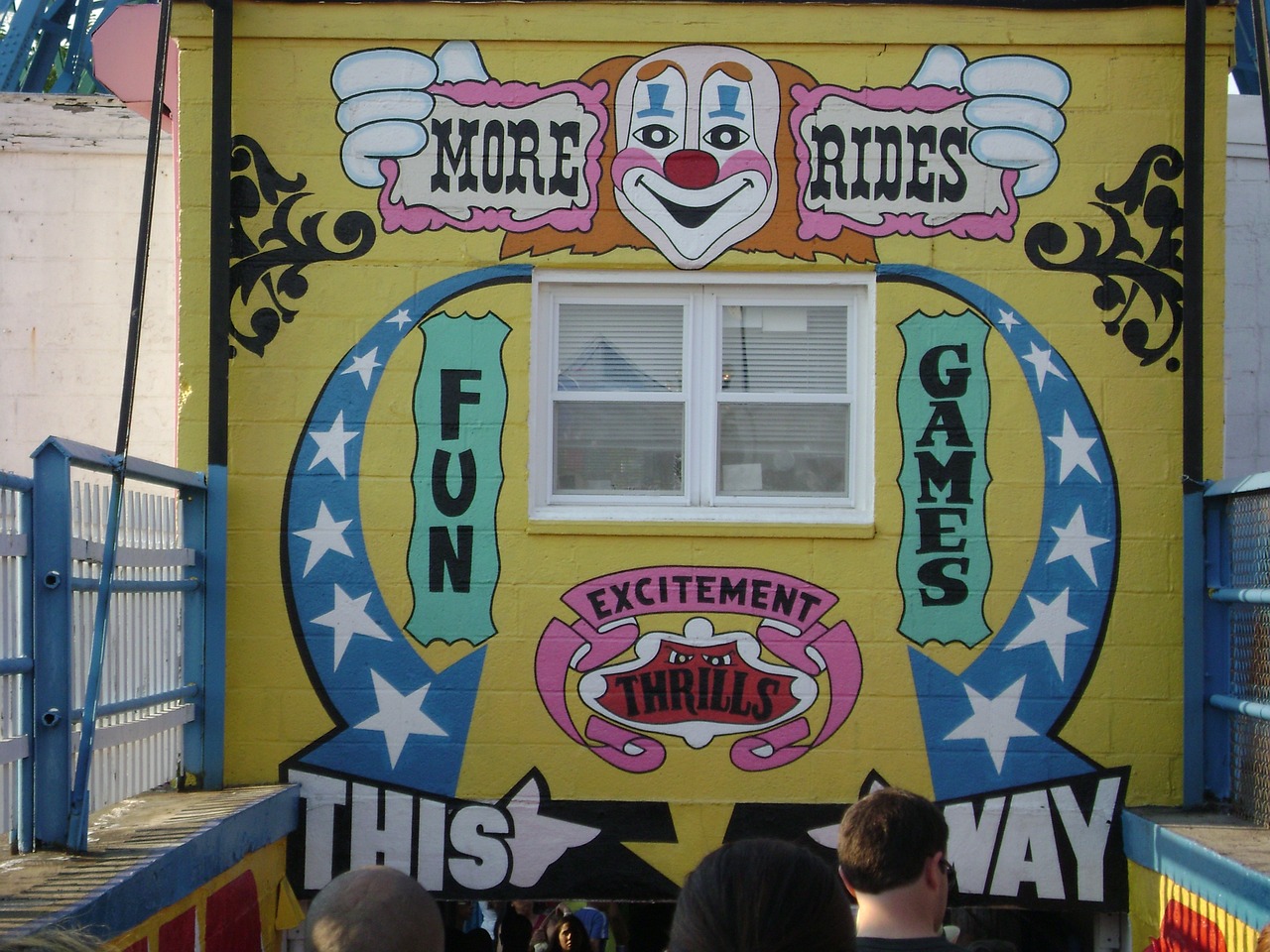
I love the metaphors and imagery used in the song — all things one might encounter at an amusement park like Coney Island.
I also love the sentiment of the song — that if someone believes in and loves another person, their belief and love can be transformative.
And looking at these photos, I am struck by the way an amusement park transforms from day to night…
Valentine’s Day is just around the corner, and I would like to dedicate Doug’s and my version of “It’s Only A Paper Moon” to all of the folks who have at one time or another believed in me — including friends and acquaintances in the WordPress blog-o-sphere.
Your positive feedback regarding my music and my blog continues to touch and inspire me every day.
Thank you to Pixabay for the great color photographs of Coney Island and other amusement parks around the world.
Thank you to Harold Arlen and Yip Harburg and Billy Rose for writing this wonderful song.
And to Joe Reid for asking me to do a gig with him seven years ago.
Since then Joe and I have done hundreds of gigs together and created twenty five different one-hour musical programs.
Thank you to Doug Hammer for his engineering excellence and his playful virtuosity at the keyboard.
And THANK YOU for reading and listening — and even leaving a comment or two from time to time.
I haven’t written a new blog post for over a year.
And I am amazed to discover — after visiting my stats page — that people have continued to visit my site.
THANK YOU to everyone who nosed around my blog while my creativity was lying fallow for the past thirteen months.
I’m sure exactly how or why I stopped writing new posts.
Partly — because we have created an economy which encourages us to replace and discard things as often as possible — I needed a newer computer, which a friend extraordinarily gave to me at the end of last year!
Partly I lost blogging momentum.
And partly I didn’t feel that I had much to share that would brighten anyone’s day.
But I HAVE continued to write new songs as well as create demos of my songs using Apple’s wonderful GarageBand program.
And I have continued to offer hour-long programs of music at retirement communities, assisted living homes, senior centers, and public libraries accompanied by pianist Joe Reid or pianist Molly Ruggles.
I started writing the song at the top of this blog post sitting on the porch with my dad and younger sister at a shared family cottage in upstate NY in the summer of 2015.
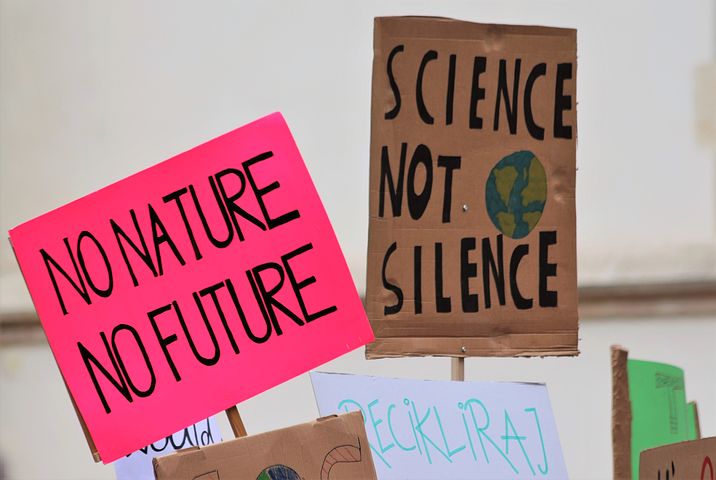
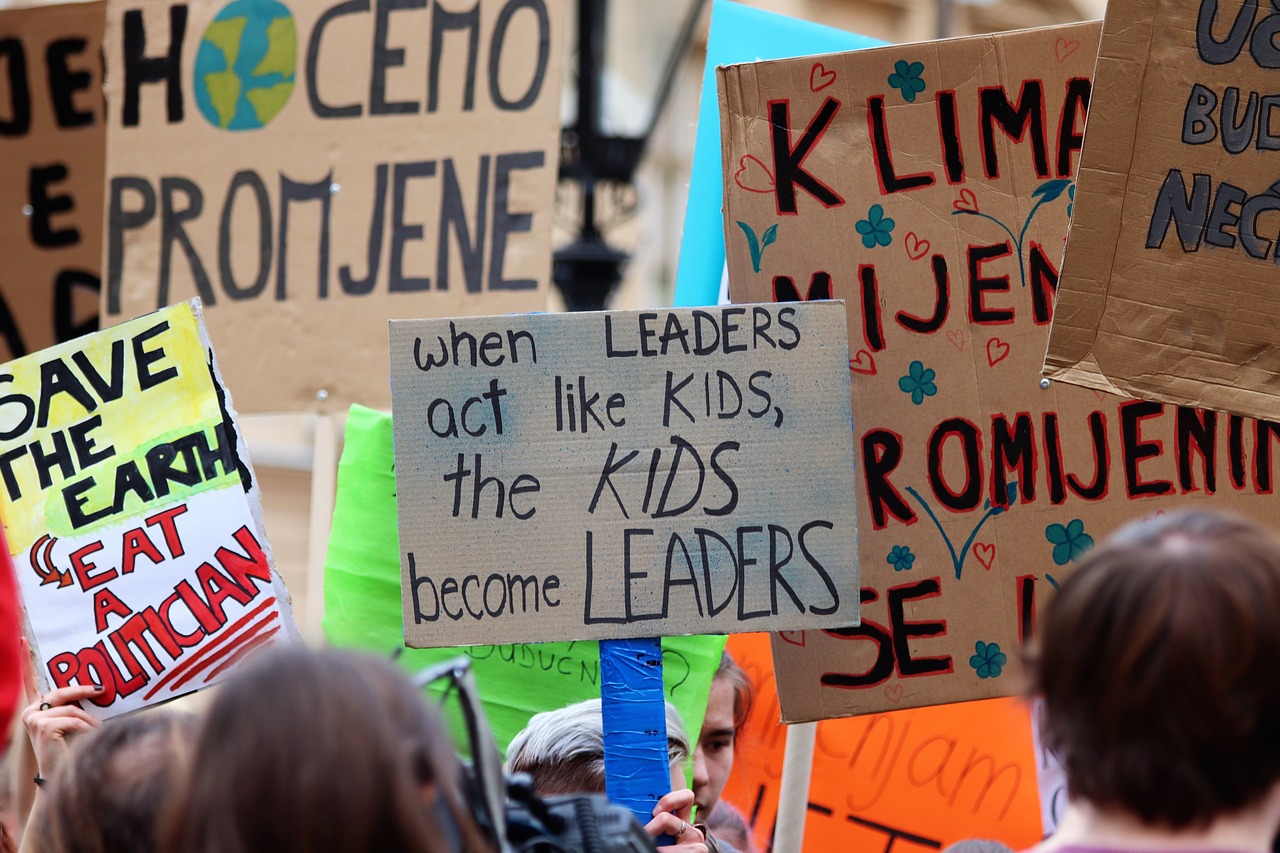
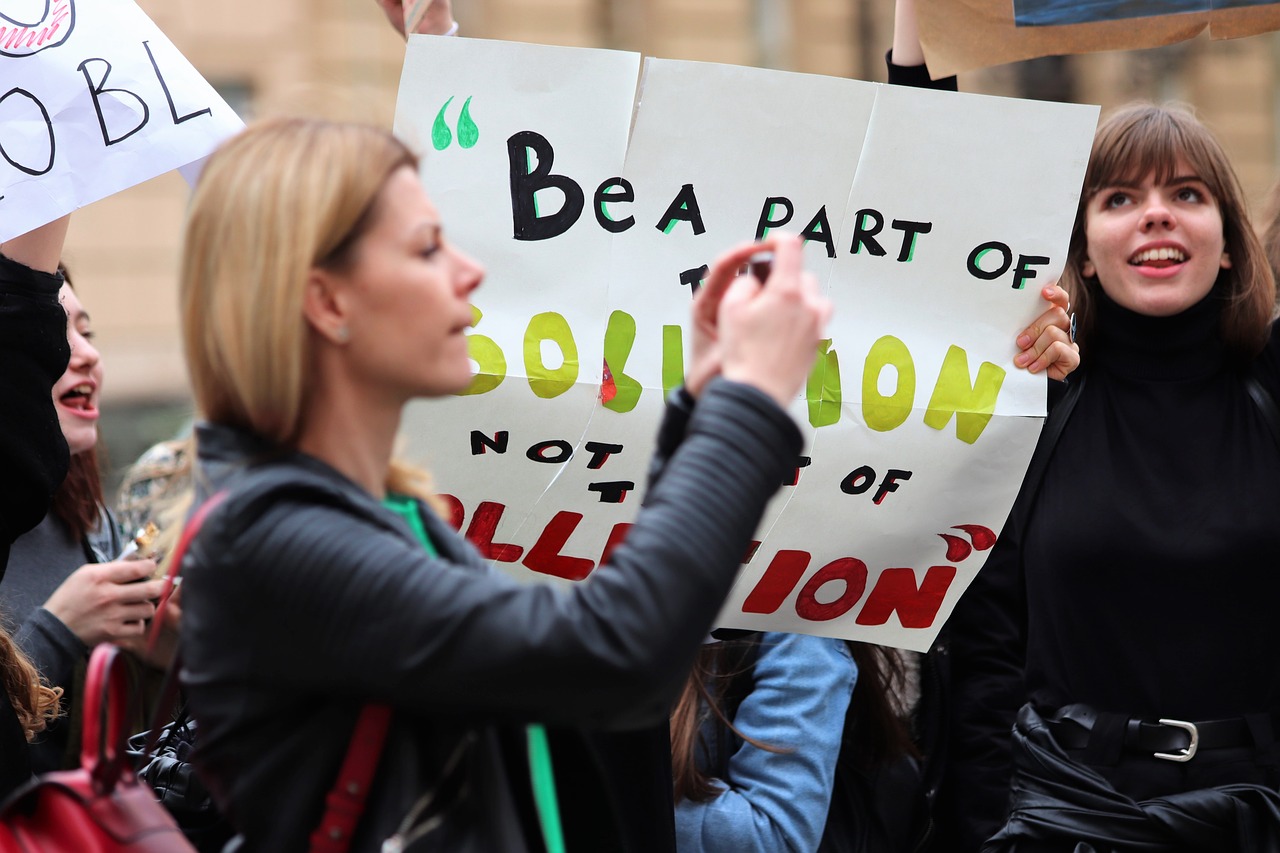
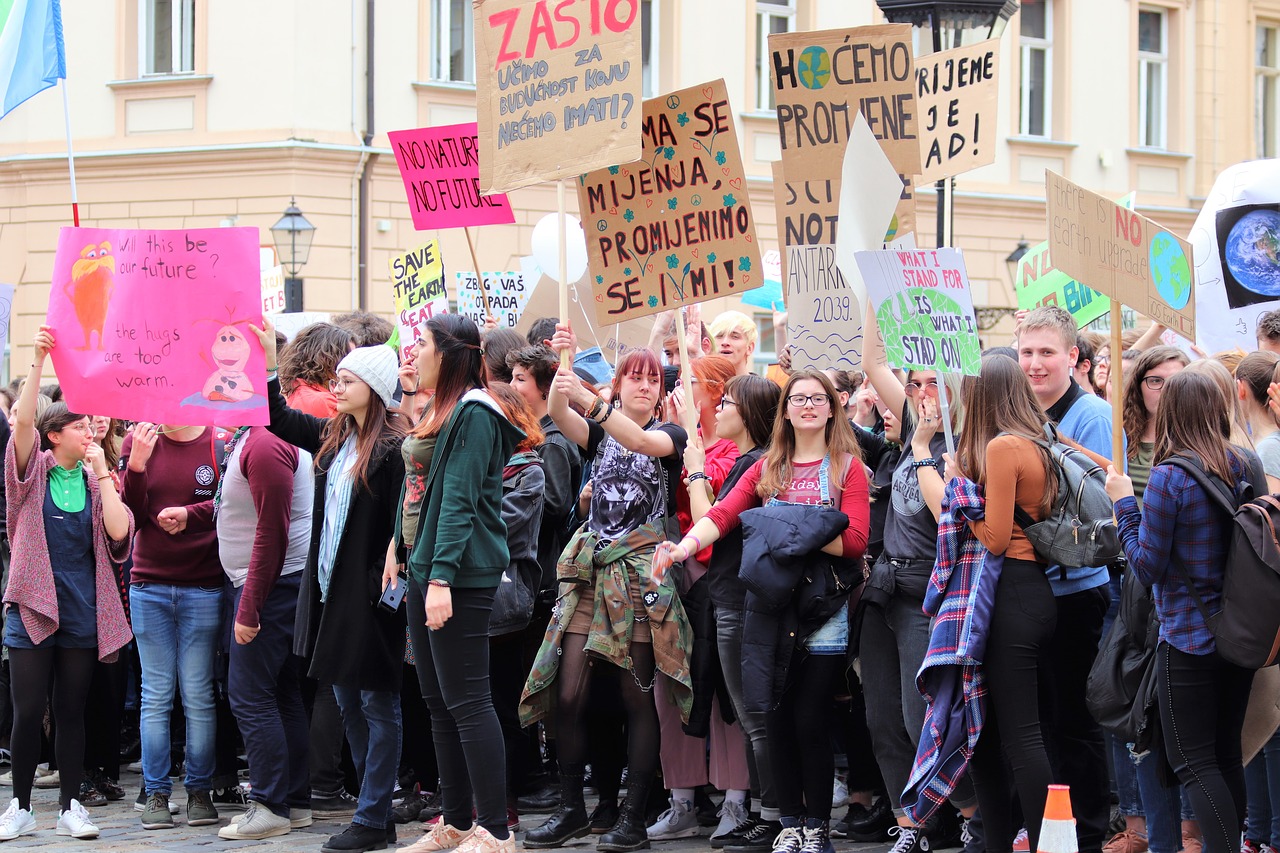
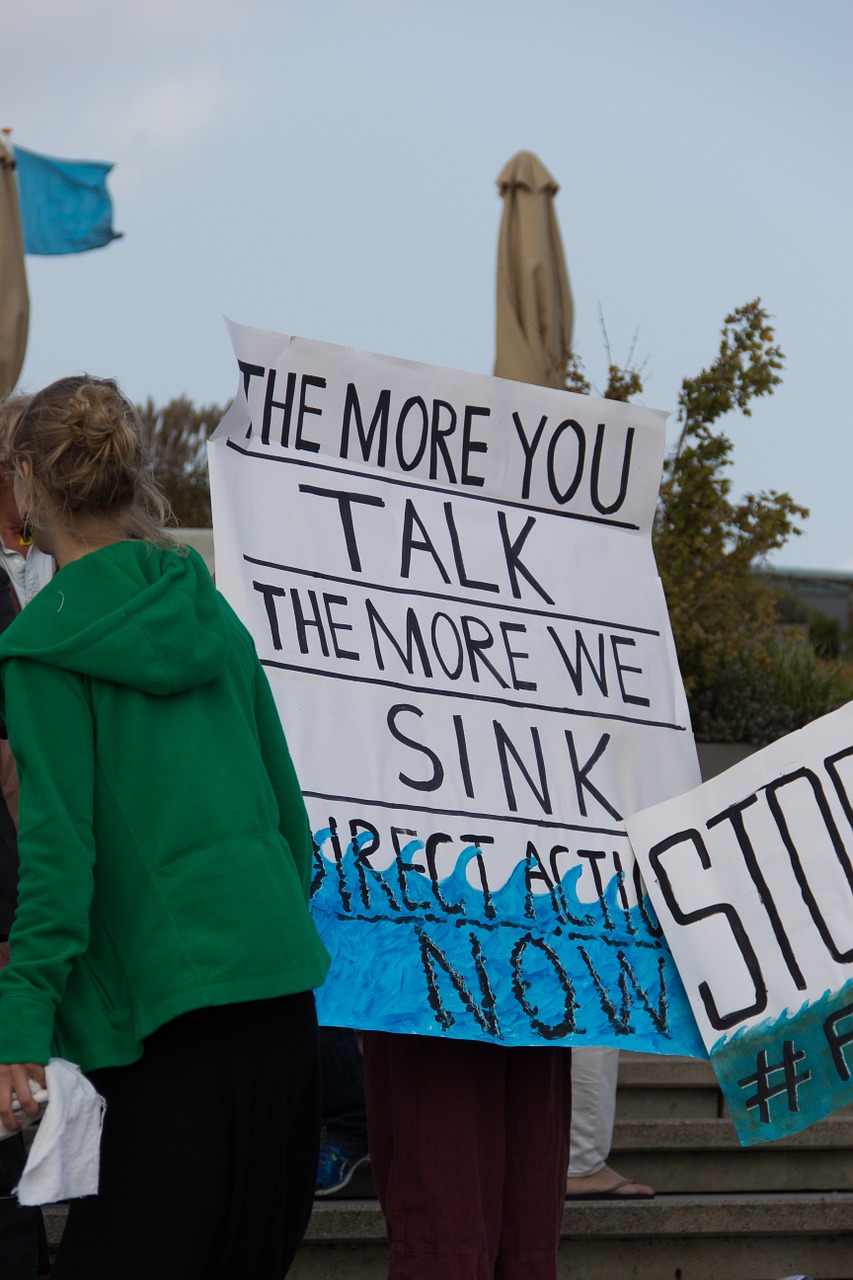
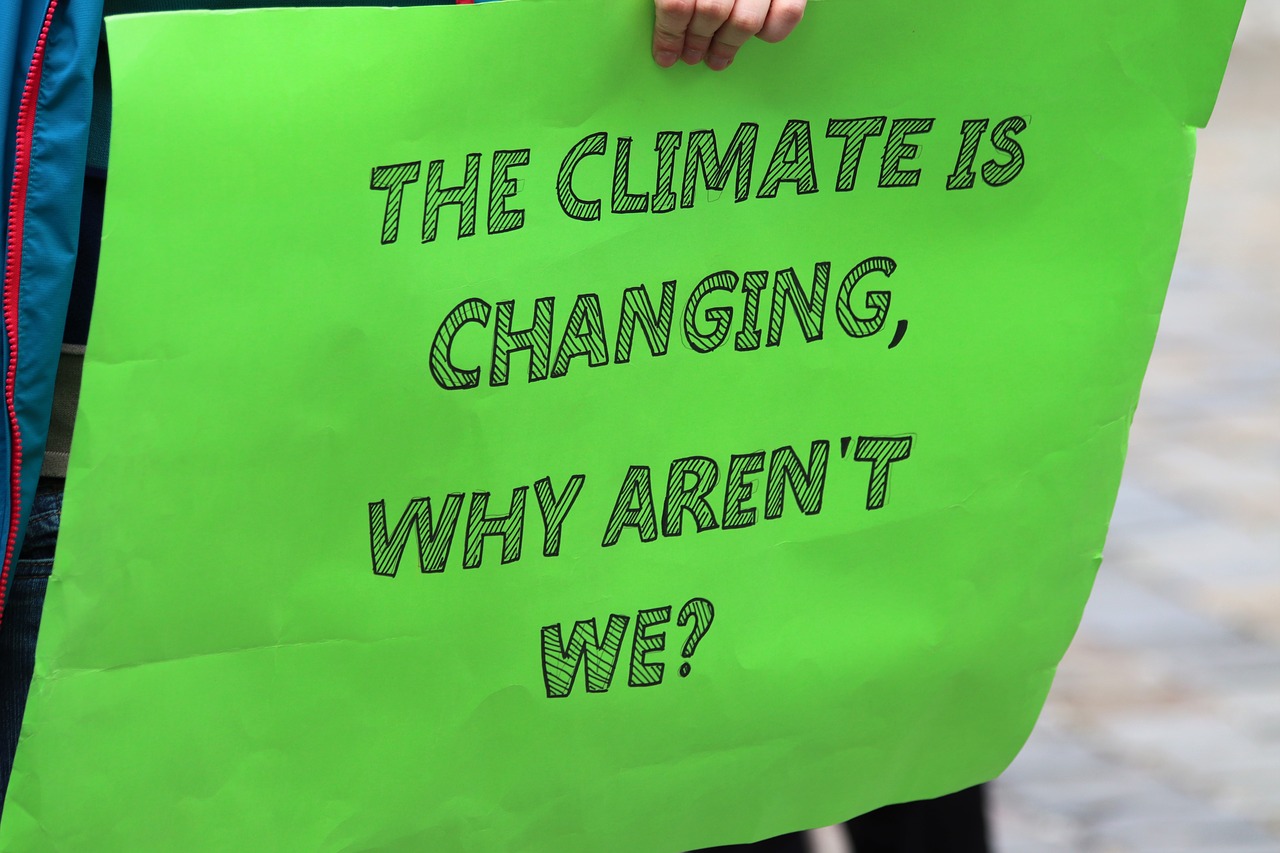
I was inspired to finish working on it by the youth-led climate march earlier this month.
As I have mentioned in previous posts, I had a somewhat unusual childhood.
My mom, siblings, and I spent our summers at my grandmother’s home in Queens, NY (where my mom had grown up) while my dad stayed home in Washington, DC.
A few days each week we’d walk to the end of the block, get on a bus to Flushing, and then ride the #7 train into Manhattan so that we could go on interviews for TV commercials, voice-overs, modeling jobs, plays, and movies.
As I look back, I realize that it was rare for us ever to drive anywhere using a car during these summer months. We just used buses or trains.
Maybe this is why I still like to use public transportation.
When we started out, my older sister was five and I was an infant. Eventually my younger brother and sister were born and joined the process.
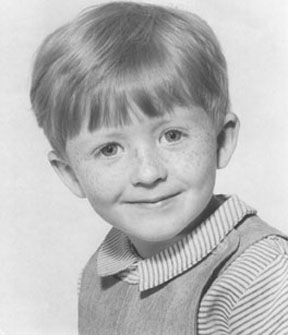
This is what I looked like as a small child.
My family became very familiar with the lobbies, elevators, and waiting rooms of many advertising agencies (depicted in the TV series Mad Men) such as Young & Rubicam, Doyle, Dane & Bernbach, and Grey Advertising.
The ratio of interviews to actual jobs was very steep — and in my early years we considered ourselves a success if each one of us managed to film one commercial per summer.
However, the summer before fifth grade I was cast as a standby in a musical which was trying out at the newly-built Kennedy Center.
My parents allowed me to do this partly because we could live at home during the out-of-town preview period (although I would miss the start of fifth grade that fall), partly because most Broadway musicals flop, and partly because it would be exciting to watch Bob Fosse and the rest of his creative team build a new show,
The musical — Pippin — proved to be a hit, and we ended up moving to my grandmother’s house in Queens year round.
This is when my and my siblings’ careers gained a lot of momentum — since we were now able to audition for work year-round.
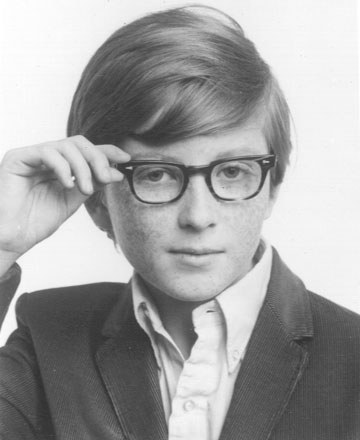
This is what I looked like as my career gained momentum…
During the next three years I ended up doing many commercials, a couple of made-for-TV movies, another play, and a lot of voice-over work.
Then I entered prep school, and my life as a child performer came to an end.
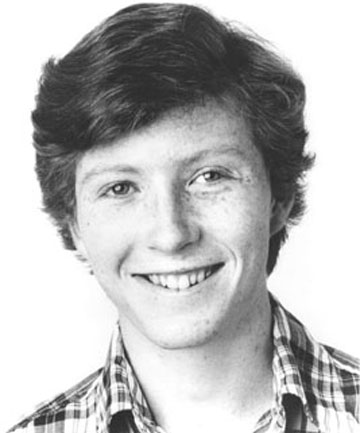
This is my last professional headshot.
With hindsight — and many years of psychotherapy — I have come to see how odd it was to learn to say “yes” to almost anything we were asked in an interview such as “Do you like to eat peanut butter on bananas?” or “Can you roller skate backwards?” or “Would you be comfortable singing and dancing on a tugboat in the harbor?”
People who said “no” (as one of my siblings did when asked if they liked to eat peanut butter on bananas…) didn’t get hired.
We were supposed to say “yes” and then — if we found out we had gotten a callback visit — we quickly learned how to do whatever we had claimed to be able to do during the initial interview.
Even more sobering is to realize that much of the time I was using my g-d given talents to encourage people to buy stuff that they didn’t need (more clothing, for example) or that was unhealthy to ingest (such as Ring Ding Juniors, Lifesavers, Oreos, and Dr. Pepper) as part of an economy built on our ongoing over-consumption of natural resources.
The climate march this week and Greta Thunberg’s speech in Washington, DC a few days before it — in which she explains how necessary it is for all of us human beings to pull the emergency brake NOW on our fossil-fuel-driven lives — gave me a few minutes of much-needed hope.
But I continue to feel deeply discouraged by the stuckness/denial/apathy/fear regarding fossil-fuel consumption and climate change that I see all around me — in the media, in the advertising industry, in my neighborhood, in my friends’ lives.
Almost everyone seems to be continuing to take lots of trips via airplanes and automobiles, continuing to eat lots of meat, continuing to use our air conditioners as much as we want, and continuing to behave as we have been behaving for the past many decades here in these not-so-united states.
And really, why should I expect anything different?
I know from psychotherapy how very difficult it can be to change one’s behavior.
We in the USA have grown up in an era of hopes and dreams and habits and assumptions which are based on using way more than our fair share of fossil fuels.
Of course we can travel anywhere — and as often — as we want.
Of course we can own as large a house as we want.
Of course everyone can own and drive a car, everyone can apply for jobs which require a car to commute, everyone can eat as much as we want in any season of the year — foods which may have traveled thousands of miles before ending up on our plates — and everyone can squander the amazing inheritance of fossil fuels from millions of years of photosynthesis by billions of plants that all of us here on planet earth have inherited.
Deep sigh.
And if you can’t afford to do these things, you can pay for them using one or more credit cards and become ever more deeply in debt.
As you may know from having read previous blog posts, I am blessed to have cobbled together a very modest living during the past six years (after having been laid off from my day job helping run a non-profit in Harvard Square) which depends largely on bicycling and public transportation.
And I live quite happily without a cell phone.
But my sweetheart of 27 years DOES commute to work using a car.
And I gratefully use his cell phone when we drive to see friends and family around New England and New York.
Another deep sigh.
What will it take for us to pull the emergency brake on our selfish, out of balance, unsustainable, fossil-fuel consuming, all-too-human habits?
I think of the anecdotes I have read about conventional farmers who have converted to more sustainable, organic farming practices — but it’s often (very sadly) because they or someone in their family has developed some sort of disease as a result of exposure to toxic pesticides, herbicides, fertilizers, etc.
I wish we human beings could choose to make deep changes in our life habits without having to experience health/climate crises in our personal lives.
But maybe that’s the path we are on…
What do you think?
How have you changed your daily habits in response to climate change?
Where do you find hope in these challenging times?
Thank you, as always, to the folks who share their photos and graphics at Pixabay which is a wonderful resource for imagery.
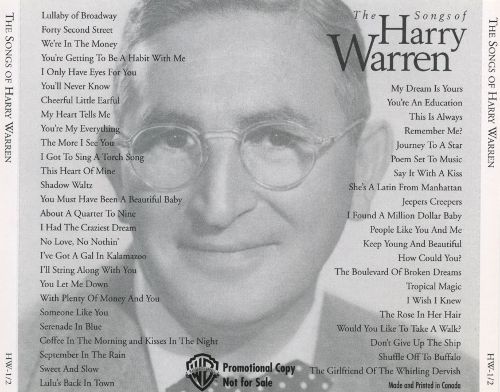
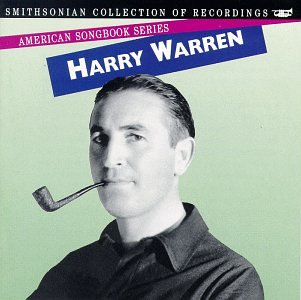
Last Sunday jazz pianist Joe Reid and I debuted a one-hour program of music devoted to the composer Harry Warren at an enthusiastic retirement community in Milton, MA.
Mr. Warren had a long and extraordinarily successful career as a songwriter, but his name is not as familiar as that of Irving Berlin, Cole Porter or the Gershwin Brothers — all of whom were his contemporaries.
Warren and lyricist Al Dubin wrote the first song in this blog post, “Lullaby Of Broadway,” for the Hollywood movie musical Gold Diggers of 1935 — and it earned them an Academy Award for Best Song in a Motion Picture.
It’s kind of ironic, however, that this love song to Broadway was written in California.
Harry had grown up in New York, and wanted for much of his adult life to move back east and write for the theater.
But he ended up living in California for over 50 years — where he composed more than 400 songs for 90 different movies.
And the songs he co-wrote — including such gems as “The More I See You,” “Serenade In Blue,” “Chattanooga Choo Choo,””The Boulevard of Broken Dreams,” and “At Last” — continue to be performed at weddings, included in commercials, featured in movies, etc. to this day!
Harry was the born on Christmas Eve, 1893, in Brooklyn, NY, and he was christened Salvatore Antonio Guaragna — the second youngest of eleven children. His father was a successful custom boot maker who had emigrated from Italy and changed the family name from Gauragna to Warren when Harry was a child.
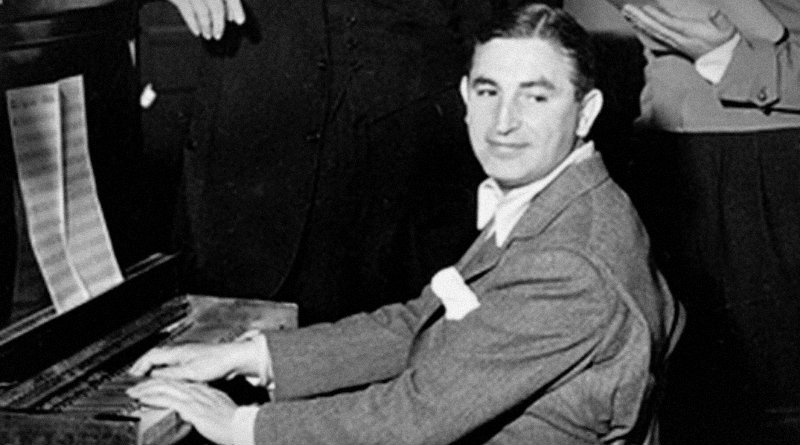
Harry was very musically inclined, teaching himself how to play his father’s accordion as well as singing in the choir at his Catholic church. He dropped out of school at age 16 to play drums with his godfather in a band that toured up and down the Hudson River valley with a traveling carnival.
He also taught himself to play the piano, and ended up finding employment at the Vitagraph Motion Picture Studios in Brooklyn, NY, doing a wide variety of tasks including prop master, assistant director, and accompanist for the silent movie star Corinne Griffith to help her summon different emotions while she filmed her scenes.
During WWI he joined the Navy and was stationed at the tip of Long Island in Montauk. Since he played piano, he ended up entertaining his fellow soldiers a lot — and also started writing his first original songs.
In December 1918, right after the war had ended, he married Josephine Wensler, and their first child, Harry Junior, arrived the next year.
After WWI, Harry found work playing piano in cafes, bars, and silent movie theaters in order to support his young family.
In 1920 a couple of men from a music publishing company heard him playing piano in a Brooklyn saloon — including one of his original songs, “I Learned To Love You When I Learned My ABCs.” They brought him to meet their boss, Ruby Cowan, who hired him as a staff pianist and a song plugger.
He spent his days and nights visiting theaters, clubs, bars and restaurants all around Brooklyn in order to pitch his company’s latest songs to vaudeville performers, band leaders — anyone who might perform the song and thus help to make it popular so that people would buy sheet music which they could play at home.
Warren later claimed that his basic shyness prevented him from being particularly effective as a song plugger — and perhaps this shyness is also part of the reason why his name hasn’t become better known by the American public.
His first hit, “Rose Of The Rio Grande,” was a collaboration with composer Ross Gorman and lyricist Edgar Leslie in April 1922.
Gradually he was able to do less song plugging and more composing — collaborating with lyricists such as Gus Kahn, Ted Koehler, Irving Kahal and Ira Gershwin (when his brother George was focused on one of his classical music projects) among others…
Harry’s early hits caught the attention of Hollywood, and from 1929-1932 he wrote songs for several minor movies — commuting via the train from New York to Hollywood and back again.
But he did not enjoy his time in California, finding it too parochial — and disrespectful to songwriters.
He later explained: “It was nothing like it is today. The railway station was a wooden building. If you rented a car, you were lucky the wheels didn’t fall off, and there were very few decent places to eat. Hollywood looked to me like a small town in South Dakota, and when you finally got to the Warners studio in Burbank, it was like being on the frontier. You could look out the windows of the music department at the San Fernando Valley and see nothing but wide open land. All I could think about was New York. What made it even worse, the studio was empty — they had laid off most of their people for the summer. Although they had made a fortune with The Jazz Singer in 1927, by the summer of 1932 they were in real trouble.”
Many executives in Hollywood thought movie musicals were done after a flood of them were produced following the 1927 success of the first talking/singing motion picture, The Jazz Singer.
But Darryl Zanuck at Warner Brothers had a hunch that new technologies and the creative vision of Busby Berkeley might turn things around.
So in 1932 Warren was lured back west by Zanuck to write a complete score for a new film, 42nd Street, with lyricist Al Dubin.
And as it turned out, Depression-era audiences were cheered by the singing and dancing of Ruby Keeler and Dick Powell and wowed by Berkeley’s innovative, grandiose and oftentimes bizarre group dance extravaganzas.
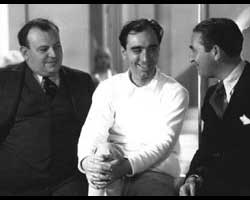
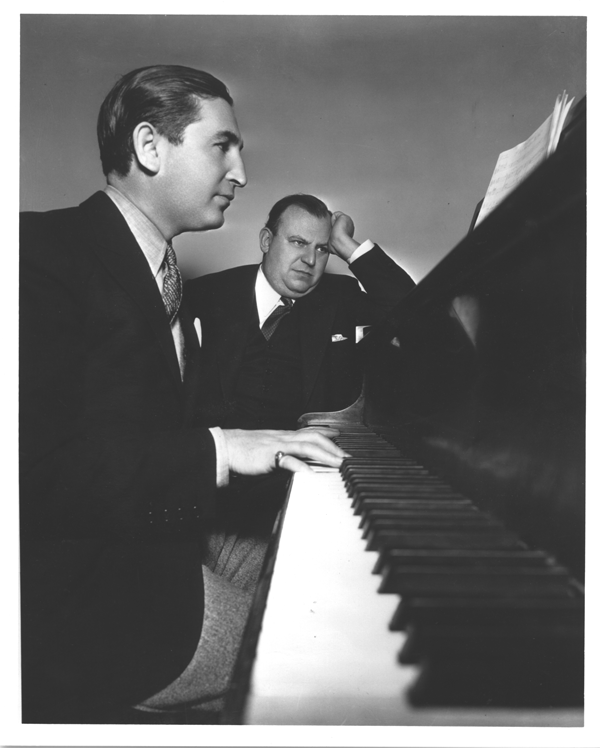
Here’s a photo of Al Dubin, Busby Berkeley and Harren Warren at the Warner Brothers studio.
42nd Street yielded several hits, including the title song, “42nd Street,” “Shuffle Off to Buffalo,” and “You’re Getting To Be A Habit With Me” — which has now become a habit with me (and which I find myself singing at all hours of the day and night).
42nd Street had been completed by the end of 1932, but Warner Brothers waited until spring of 1933 to release it.
Warren had returned to his office in New York at the Remick music publishing company.
He still hoped his future would be in Broadway theaters.
However, 42nd Street tested so successfully with preview audiences before it was released that Warner Brothers rushed a similar film into production — Gold Diggers of 1933, which was filmed in 28 days!
Warren and Dubin wrote five songs for Gold Diggers of 1933 and then signed a contract — renewable annually at Warner Brothers’ discretion — to continue writing songs there.
And since he proved to be a tremendous composer of hit songs, his contract was renewed over and over again — thus keeping him in California.
Gold Diggers of 1933 outdoes 42nd Street in the wildness and lavishness of its production numbers.
Busby Berkeley was now the man of the hour and was given more or less free rein to pursue his cinematic visions.
For example, the movie opens with Ginger Rogers and a chorus line of women all wearing bikinis made out of huge coins singing the optimistic anthem to capitalism, “We’re In The Money.”
During the rest of the 1930s Harry Warren worked on 20 movie musicals with Al Dubin — for which they created standards such as “I Only Have Eyes For You,” “Lulu’s Back In Town,” and “September In the Rain.”
Often the songs Warren and Dubin created had very little to do with the plot.
But they DID fuel the imagination of Busby Berkeley.
He would get inspired by their song titles and then manage — in some fantastic and unusual way — to include their songs in the plot of the movie.
In the 1934 film Dames Dick Powell’s character sings “I Only Have Eyes For You” to Ruby Keeler’s character on the Staten Island ferry.
Then they both fall asleep on the subway, and he dreams that he sees Ruby’s face everywhere — floating in geometrical patterns in the air, and then on the faces of a huge chorus of women who are all wearing masks of Ruby Keeler’s face while climbing up and down huge staircases and/or riding an elegant Ferris wheel.
At the climax of the song, all of these women bend over and form a giant mosaic of Ruby’s face using painted puzzle pieces on their backs.
If you have never seen this movie sequence, you can find it on YouTube.
It’s quite surreal.
This is not the only hit song Harry wrote about eyes.
In 1938 he wrote a song with lyricist Johnny Mercer for Louis Armstrong to sing in the Warner Brothers movie Going Places.
Armstrong plays the trainer of a wild-tempered race horse who only calms down when Mr. Armstrong’s character sings or plays this next song on the trumpet to him.
Given Mr. Armstrong’s decades-long relationship with marijuana — which he once described as being “a thousand times better than whiskey” — I have to think that the lyric might also have been something of an in joke between Mercer, Warren, Armstrong, and their fellow musicians.
Mr. Warren had a deep well of melodic ideas which he tapped into whenever he was composing a song.
Usually he and his lyricist would come up with a title and bat around ideas for lyrics.
Then Harry would compose a melody for which the lyricist would write words.
The list of great songs for which Harry Warren composed the music is quite extraordinary.
From 1931 – 1945, Harry co-wrote more hit songs than Irving Berlin, and had more Oscar nominations for best song (11) and wins (3) than Berlin, George Gershwin, Cole Porter, or Hoagie Carmichael.
Warren ended up winning an Oscar three times — for the afore-mentioned “Lullaby Of Broadway” with lyricist Al Dubin, “You’ll Never Know” with the lyricist Mack Gordon, and “On The Atchison, Topeka and the Santa Fe” with lyricist Johnny Mercer.
Warren also had more hit records — 42 songs! — on “Your Hit Parade” than any of his peers.
And yet his name is not familiar to many of us.
There appear to be many reasons for this.
As mentioned earlier, Harry was a shy man and not much of a schmoozer.
He didn’t go to a lot of Hollywood parties where a songwriter might sit down and promote his catalog of songs.
He also didn’t hire a publicist to keep his name in the papers the way many of his fellow songwriters did.
In fact at one point a few of his friends hired a publicist for Harry on his behalf, and Harry fired the man as soon as he found himself mentioned in a gossip column.
I was steered towards Warren and his music by a chapter called “I’m Just Wild About Harry Warren” in one of Michael Feinstein’s terrific books — Nice Work If You Can Get It: My Life In Rhythm and Rhyme.
Michael befriended Harry near the end of his life, and has championed his music ever since.
Feinstein’s anecdotes about Warren provide a lot of texture and detail which other biographies omit or gloss over.
For example, the man who wrote the music for so many happy songs was heart-broken by the sudden death of his son Harry, Jr. in 1938.
And according to Feinstein, Warren’s marriage remained deeply scarred by this tragedy for decades afterwards…
Deep breath in.
Deep breath out.
During his decades-long career in Hollywood, Harry worked primarily for four movie studios: Warner Brothers in the 30s, 20th Century-Fox in the early 40s, MGM in the later 40s, and finally Paramount in the 50s.
He co-wrote his last big hit — “That’s Amore” — with lyricist Jack Brooks in 1953 for Paramount’s movie The Caddy starring Dean Martin (which earned Warren his tenth Oscar nomination for best song in a motion picture).
In the mid-1950s, however, Hollywood stopped making many big musical films — so Harry expanded his horizons.
In 1955 he co-wrote the theme song for the TV show The Life and Legend Of Wyatt Earp.
He also wrote scores and title songs for dramatic movies including “Marty” in 1955, and “An Affair To Remember” in 1957 — and continued writing songs for Jerry Lewis’ comedic movies after Dean and Jerry parted ways.
He even returned to Broadway with a musical, Shangri-la, based on a James Hilton novel which sadly was not a success.
To keep himself busy, he composed a bunch of short piano vignettes, and in 1962 wrote a complete Catholic mass with Latin text.
One of his biggest successes came in 1980, when producer David Merrick and director/choreographer Gower Champion adapted the original 1933 Hollywood blockbuster 42nd Street into a Broadway musical which also included many other songs Warren and Dubin had written for Warner Brothers movies.
Warren’s lifelong dream of having a hit show on Broadway was realized.
And yet, according to Michael Feinstein, Merrick and Champion were not very inclusive of — or respectful to — Harry, even managing to leave his name off the poster for what became a huge musical success.
So — although it earned him plenty of money — the Broadway version of 42nd Street brought him very little happiness or satisfaction.
Another deep breath in.
And out.
I am going to end this blog post with song Harry wrote with lyricist Mack Gordon for the 1942 20th Century Fox film Iceland.
I am well aware that my ongoing curiosity about the songs, songwriters, and performers of bygone eras is in large part a coping mechanism to drown out the distressing realities of our current political landscape here in the USA.
Perhaps his songs will give you a few minutes of solace and distraction, too!
And yet the real world in which most of Warren’s songs were written included a huge economic crisis, the genocides of millions of human beings, the use of atomic weapons, public lynchings, and many, many other horrific undertakings by the human species.
Blessedly his songs have survived — with some of us still singing them.
As I was finishing the first draft of the patter for our hour-long program of Harry’s songs, I learned that the wonderful jazz singer Rebecca Parris — who was based in Duxbury on the South Shore of Boston with her partner, the pianist Paul McWilliams — had died after sitting in for a couple of songs with McWilliams at the Riverway Lobster House in South Yarmouth, MA.
I also learned from reading her obituary in a local paper that “There Will Never Be Another You” was the last song she performed before leaving the restaurant, collapsing outside., and being taken to Cape Cod Hospital.
So it seems a fitting way to end this blog post in honor of Harry and in honor of Rebecca — and in honor of all of the other singers who have breathed life into Harry’s songs over the past nine decades.
Thank you to Doug Hammer for playing piano so beautifully while simultaneously recording all of these songs with me so that I would have accurate versions of Harry’s songs to practice and learn.
Thank you to Joe Reid for playing over 50 shows a year with me in retirement communities, restaurants, synagogues, assisted living homes, senior centers, and coffee houses around the greater Boston area.
Thank you to Harry Warren and his lyrical collaborators for writing these songs.
Thank you to Michael Feinstein and others who have written about Harry.
And thank YOU for reading and listening to what I know is a lengthy post.
Let’s keep humming and singing Harry’s songs for years to come!
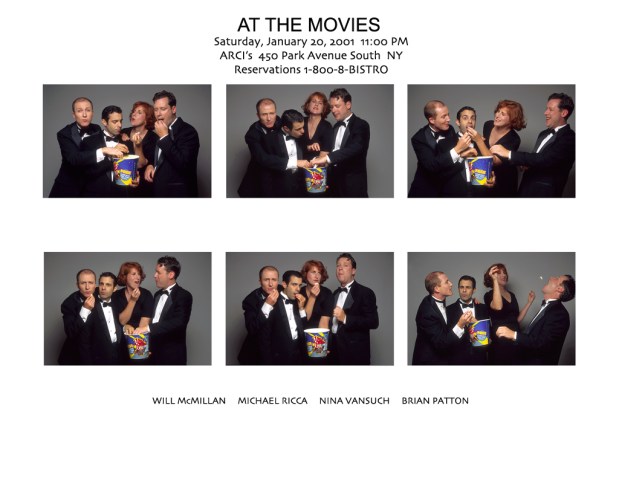
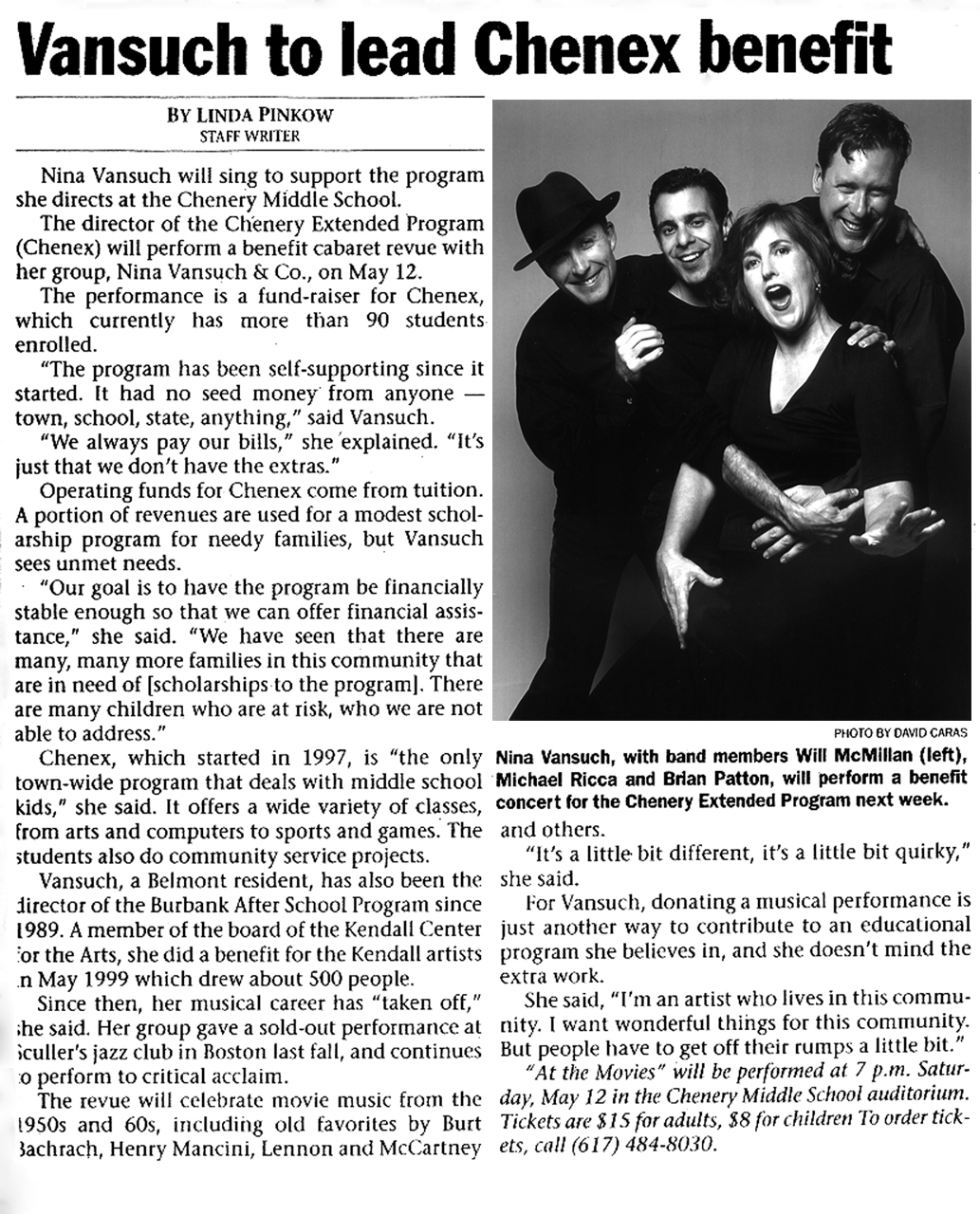
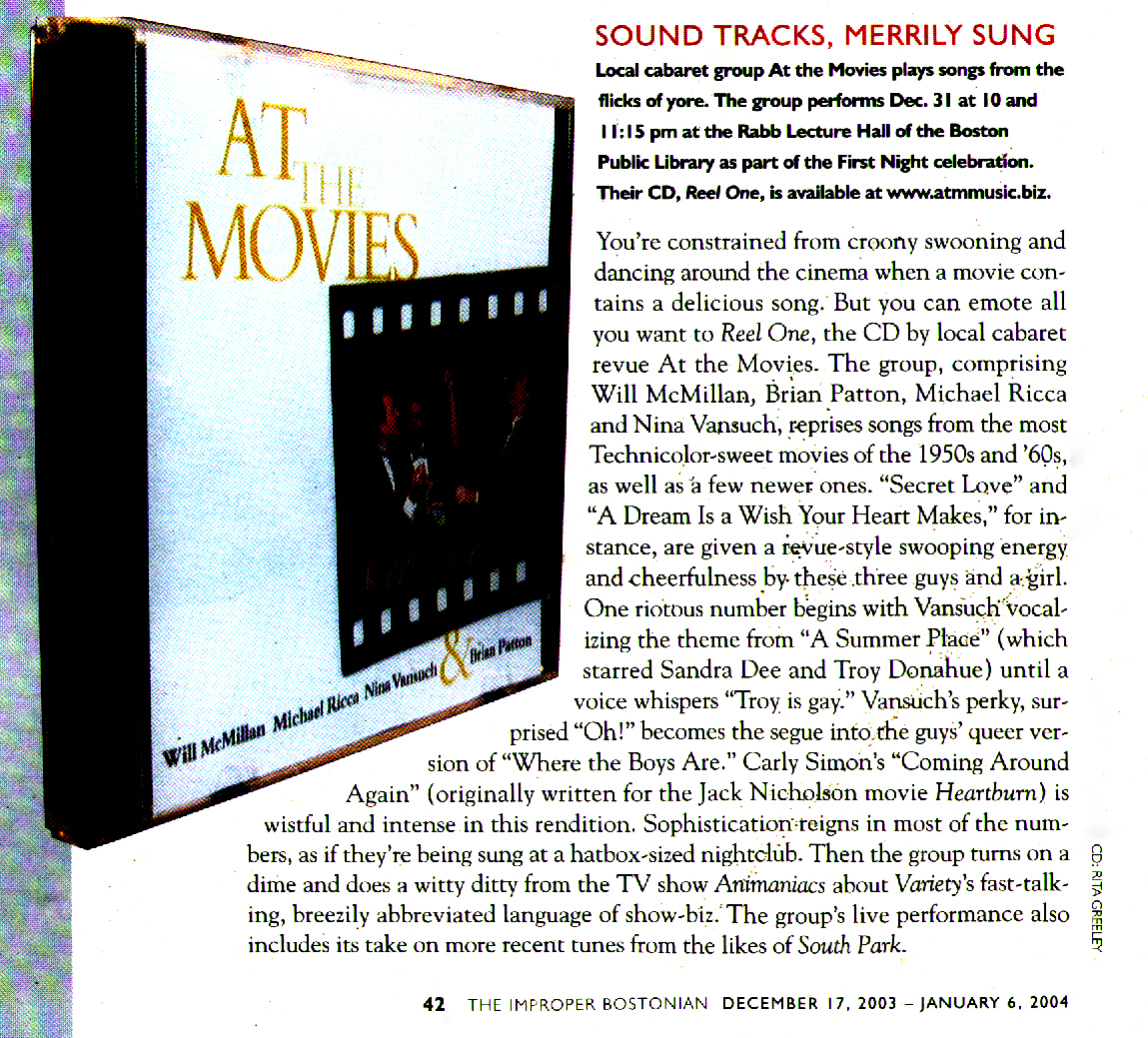
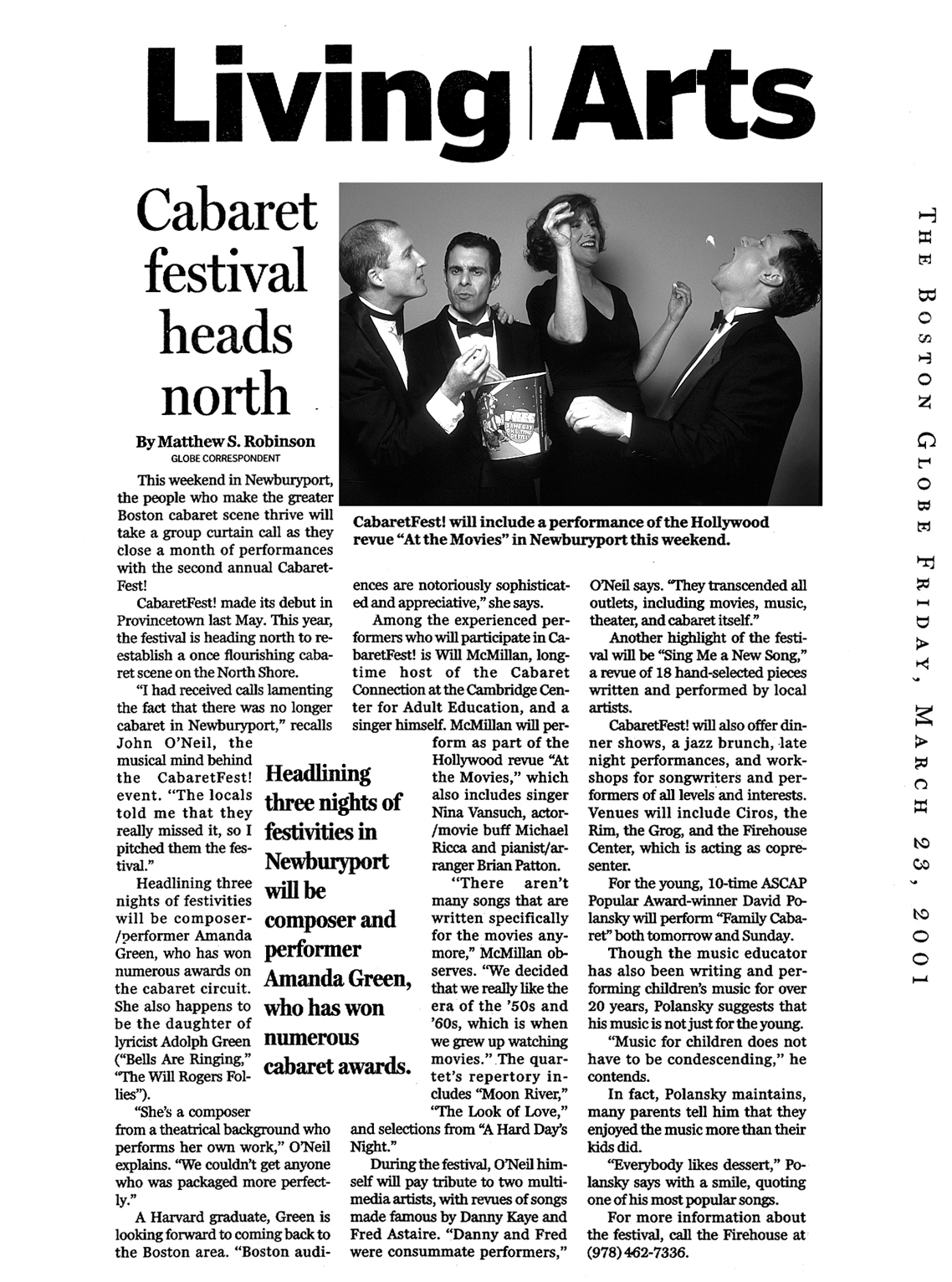
I was looking through a list of past gigs on my web site recently and was surprised to realize that almost 15 years has passed since I was part of a vocal quartet called At The Movies.
Three of us — Nina Vansuch, Michael Ricca and I — had attended a week-long cabaret symposium at the O’Neill Theater Center on the Connecticut coast of Long Island Sound in the summer of 1999.
Our teachers included musical luminaries such as Margaret Whiting and Julie Wilson along with Broadway actress Sally Mayes and a slew of other generous (and mostly inspiring) experts from the worlds of musical theater, jazz and cabaret.
We came back to Boston fired up and ready to sing.
I don’t remember who had the idea that we three would join forces — maybe Nina and/or Michael and/or Brian will weigh in some day with THEIR memories of how we got started using the comments section at the end of this blog post.
I’m pretty sure, however, that it was Nina who brought another wonderful singer AND pianist AND arranger — Brian Patton — into the mix.
For four years we met after work — usually at Nina’s place in Belmont or Brian’s place in Jamaica Plain — to eat dinner and make song choices and work on arrangements and write patter and rehearse, rehearse, rehearse.
I remember many delicious meals cooked by Nina — and also a lot of patience from Brian as we fine-tuned our harmonies.
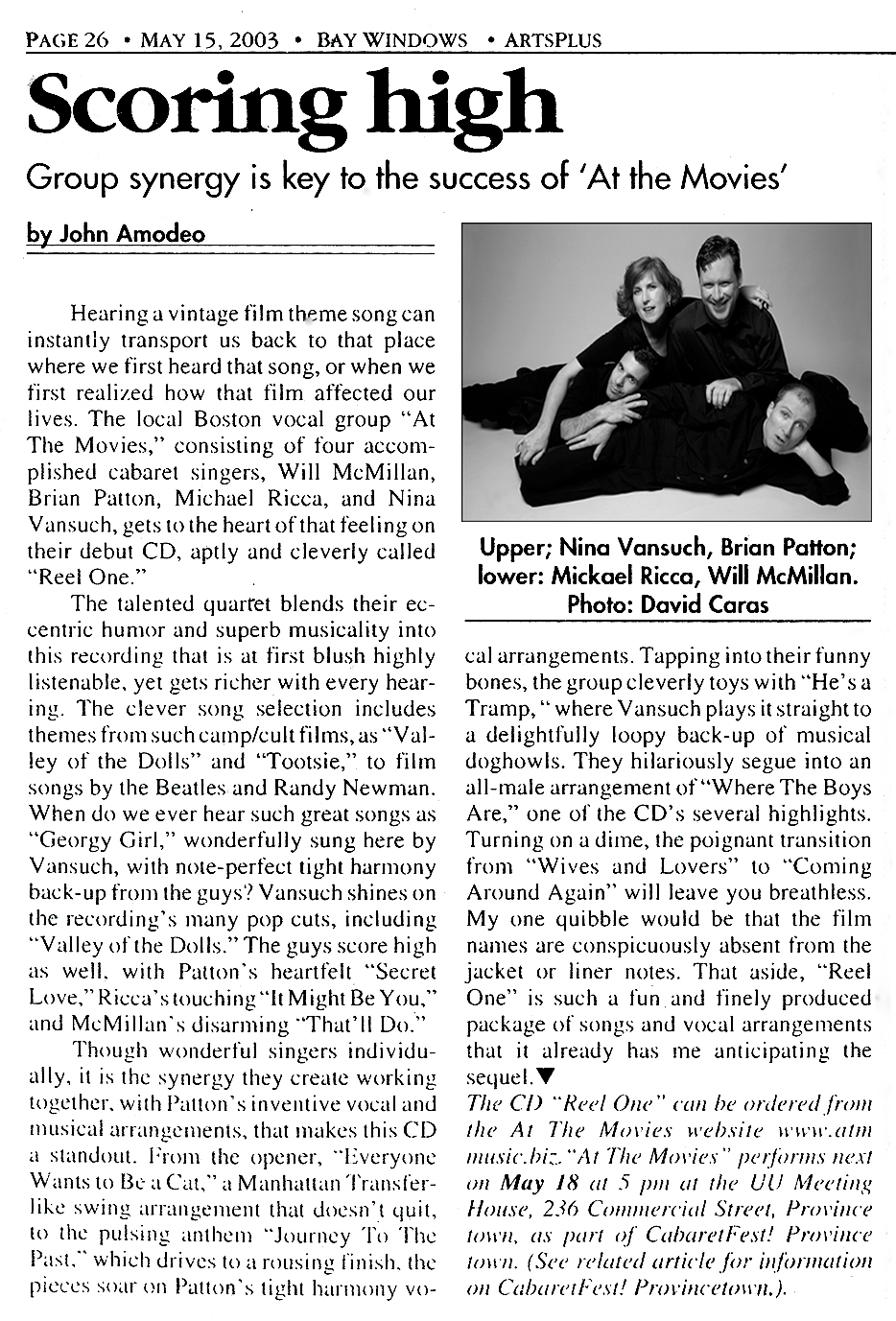
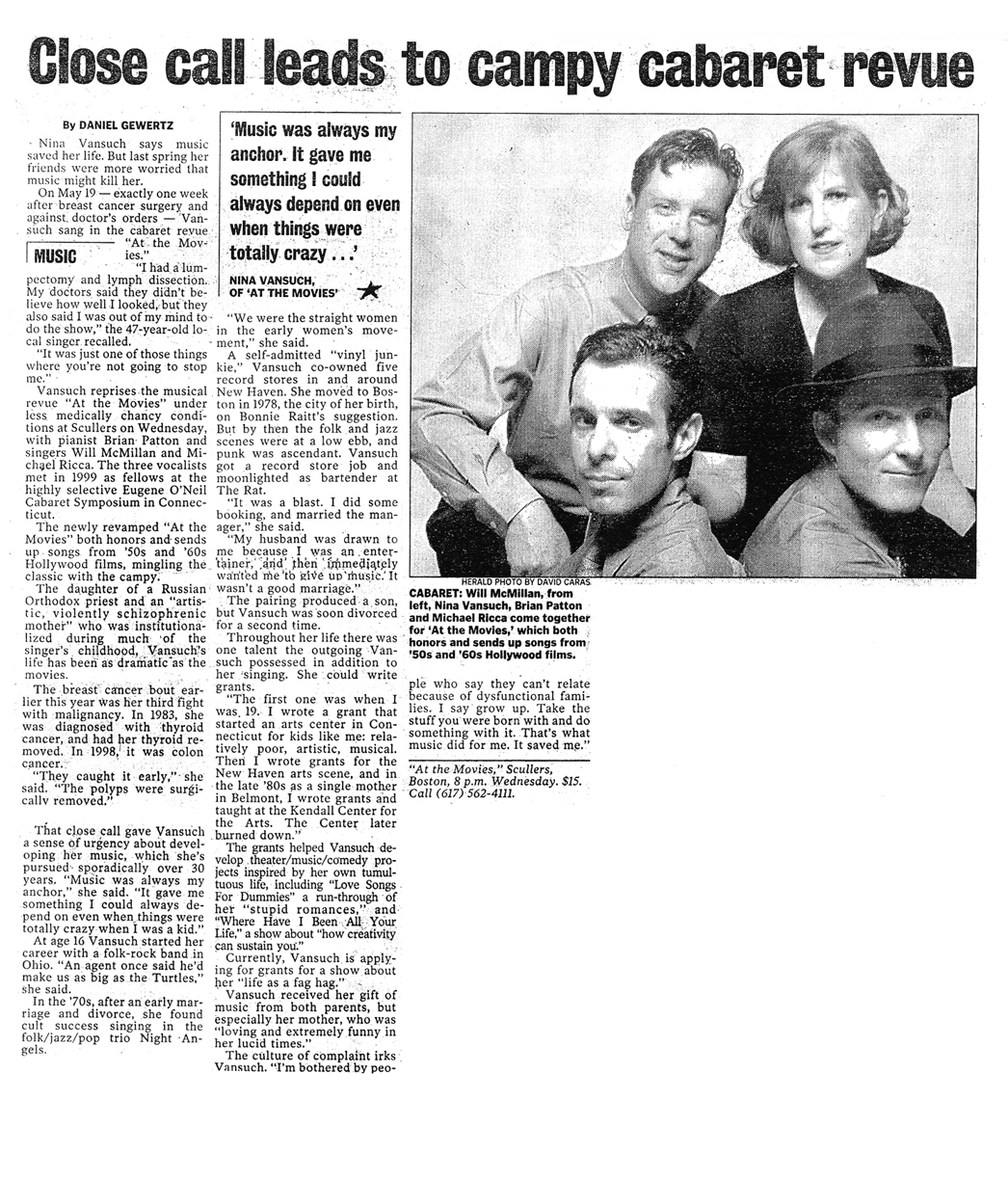
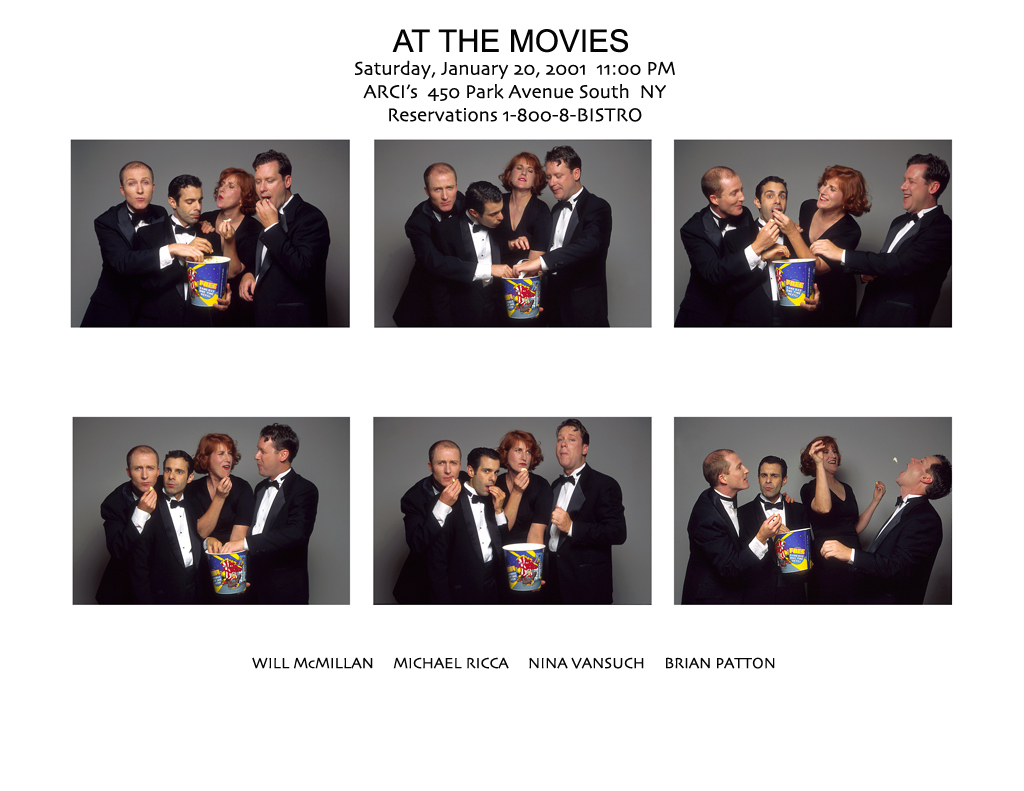
I had forgotten, however, how much publicity we got.
Thankfully Nina scanned some of it and included it on her web site.
Gradually we added some outside eyes and ears to our creative process, bouncing rough drafts of performances off local directors and working for a while with a warm and loving choreographer/director named Marla Blakey who lived on Martha’s Vineyard.
At one point in her career Marla had worked in this capacity with Bette Midler and also with the vocal group The Manhattan Transfer.
So we were honored and excited to learn from her AND to hear some of her stories about how show business unfolds behind the scenes…
As you can see from the media clippings and hear from the recordings I have included in this blog post, we had a lot of fun together.
Most — or maybe all — of our great photographs were taken by a very talented friend of Nina’s named David Caras.
You can visit his web site by clicking here if you are curious to see more of his work.
After we had sold out Scullers Jazz Club (thank you for booking us, Fred Taylor!) a couple of times, we decided to record a CD, which can still be purchased at CD Baby by clicking here.
We recorded it at Doug Hammer’s studio north of Boston along with additional musicians Gene Roma (drums), Chris Rathbun (bass), and Spartaco John “Sparkie” Miele (saxophone).
In addition to the songs I have included in this blog post, you can find other songs from our CD — “Journey To The Past,” “Wives & Lovers,” and “That’ll Do” — in the right hand column of this blog.
My memory is also hazy as to why we decided to focus on songs written for or performed in movies…
There are so many great songs in existence — just waiting to be sung! — that we probably knew that it would be wise to narrow our focus a bit.
It may also have been related to Michael’s somewhat savante-like knowledge of movie history.
We performed at the Cambridge Center for Adult Education (where I then worked) and also at the Boston Public Library as part of First Night; participated in John O’Neil’s wonderful CabaretFests in Provincetown, MA, Newburyport, MA, and Newfound Lake, NH (thank you, John!); traveled to perform in Providence, RI at the Hi-Hat Club (thank you, Ida Zecco!) and to NYC at a club called Arci’s Place (thank you, Erv Raible — may you rest in peace!) I think our last gig may have been in Quincy for John McDonald (thank you, John!)
One thing I came to appreciate as a result of being part of At The Movies is that an audience doesn’t just enjoy the music when they go to a concert.
Most of us also enjoy observing the relationships we see in action on stage — both the planned and the spontaneous interactions that unfold during a performance.
After four years of working and playing — and dining — together, however, our creative collaboration came to an end.
But thanks to the digital magic of zeros and ones, the songs we recorded at Doug Hammer’s studio for our CD Reel One live on…
And I was able to find these media clippings on Nina’s web site (thank you, Nina!)
Perhaps someday we will dig our harmony practice cassettes out of the basement and do a few more shows together.
I am not sure why I love reading about the lives of songwriters.
And learning many of their songs.
And then sharing what I have learned in one-hour musical programs at retirement communities, public libraries, senior centers, memory cafes, and coffeehouses.
But I do!
The most recent program I put together with jazz pianist Joe Reid features the life and music of Dorothy Fields.
She was a terrific lyricist who co-wrote hit songs from the late 1920s right through the early 1970s.
When many of her friends and contemporaries — such as Cole Porter, Irving Berlin, the Gershwin brothers, Oscar Hammerstein, Larry Hart — were either dead, discouraged or stymied by evolving musical trends such as folk and rock, Dorothy Fields achieved one of her biggest hits on Broadway, the wonderful musical Sweet Charity.
She was 61 years old.
Go, Dorothy!
Dorothy Fields was born into a theatrical family and raised to be a wife and mother — NOT an actress or a songwriter (both of which occupations her parents strongly discouraged…)
Her father was half of a very famous and successful vaudeville team called “Weber & Fields” who had started as childhood friends performing in the Bowery and had risen as adults to the top ranks of theatrical entertainment in the US .
Eventually her father tired of performing and touring, and began to produce shows by other people, including a young team of songwriters named Rodgers & Hart, who were friends with Dorothy’s older brother Herbert (having collaborated together on original theatrical productions while attending Columbia University).
Dorothy and her three siblings had been exposed to theater their entire lives, and Dorothy played lead (male!) roles in amateur theatrical productions at her high school, The Benjamin School for Girls at 144 Riverside Drive on the upper west side of Manhattan.
So it seems a bit surprising (to me, anyways) that her parents attempted to dissuade her from a life in the theater.
When she was growing up, the family had blank books into which everyone was encouraged to jot down ideas for jokes, skits, plots and routines — which served as inspiration when a new show was being created by her father.
And both of her brothers were very successful on Broadway and in Hollywood as writers.
In fact, later on in her life, Dorothy and her older brother Herbert co-wrote the librettos (aka scripts) for shows by Cole Porter and Irving Berlin — including the smash hit, Annie Get Your Gun — which had originally been HER idea as a starring vehicle for her friend Ethel Merman.
Dorothy was supposed to write the songs with one of her most beloved collaborators, Jerome Kern, until Kern unexpectedly died.
Among other hits, she and Jerry had co-written “The Way You Look Tonight,” which won an Academy award for best song in a motion picture in 1936.
After a period of mourning, she and her producers — Richard Rodgers & Oscar Hammerstein — asked Irving Berlin if he would consider joining the project.
And the rest is history…
But Dorothy was born in 1905, when middle and upperclass women were expected to become wives and mothers (not actresses or songwriters or librettists).
Women didn’t get the right to vote until 1920 — when Dorothy was 15 — and her life illuminates many of the social changes that unfolded in the US until her death in 1974.
Dorothy managed to finesse her parental/societal expectations by BOTH marrying young (to a doctor) AND pursuing a career as a lyricist.
Although she worked with a “who’s who” list of composers during her long career, three of them stand out as being particularly significant in her creative life: Jimmy McHugh, Jerome Kern, and Cy Coleman.
Jimmy McHugh was a Catholic pianist from Boston, where he had left a wife and son (whom he dutifully supported from afar) when he moved in his 20s to Manhattan to find work as both a composer and business manager for music publishing companies.
He crossed paths with Dorothy when her friend J. Fred Coots — whom she had met while golfing and who went on to write hits of his own such as “You Go To My Head” and “Santa Claus Is Coming To Town” — began introducing her to music publishing companies as a budding lyricist.
Dorothy and Jimmy hit it off creatively — and possibly romantically — although they were both extremely protective of their private lives and mindful about the potential for bad publicity.
During their ten-year collaboration they wrote hits including, “I Feel A Song Coming On,” “On The Sunny Side Of the Street,” and “I Can’t Give You Anything But Love.”
I love learning that “I Can’t Give You Anything But Love” was not an immediate hit (one critic called it “sickly” and “puerile”) and was cut from two different shows before it finally caught on as part of the Blackbirds of 1928.
Persistence, persistence, persistence!
Her next significant collaborator was Jerome Kern. They wrote songs — including “Pick Yourself Up,” “I Won’t Dance,” and “A Fine Romance” — for Hollywood movies with stars such as Ginger Rogers and Fred Astaire.
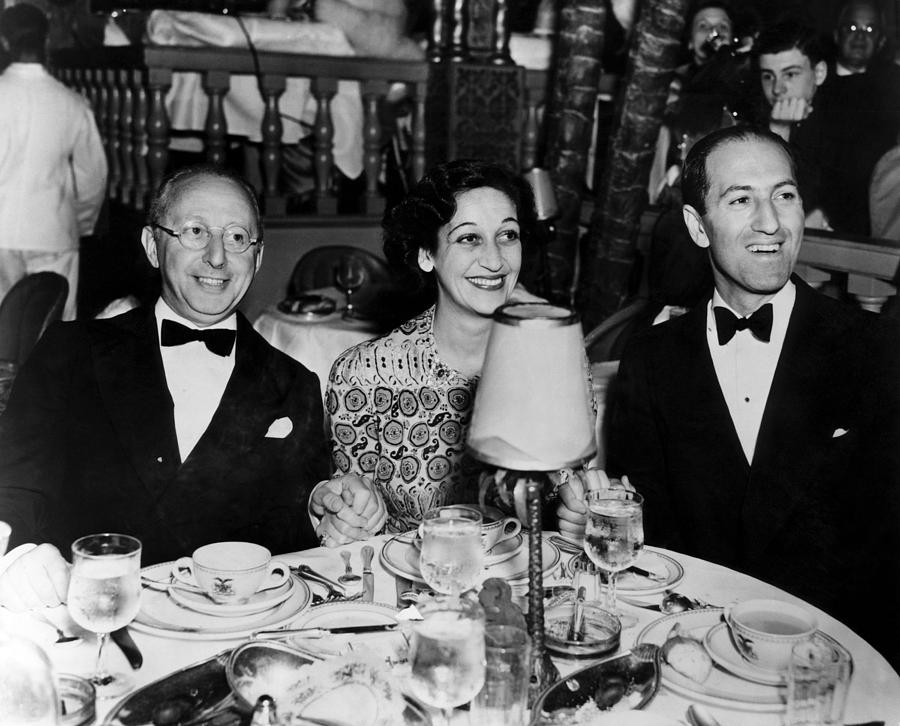
Here she is with Jerry Kern (on her left) and George Gershwin (on her right) at a nightclub in the 1930s.
Jerome Kern was older than many of his contemporary songwriters (Gershwin, Arlen, Youmans and others looked up to him when they were starting to write songs) and had a reputation for speaking his mind — and not suffering fools gladly. Some people in the entertainment industry were intimidated by him.
But not Dorothy. She loved him and even gave him a nickname which few others would have dared to choose: “Junior” (Dorothy was 5″ 5″ tall and towered over Kern, who was much shorter).
I have wondered whether the lyrics she wrote for their song “You Couldn’t Be Cuter” might have been something of an “in joke” between the two of them.
Here’s a version of that song — combined with an earlier hit she wrote with Jimmy McHugh, “Exactly Like You” — that I recorded with pianist Doug Hammer earlier this year.
Her third significant collaborator was Cy Coleman, a composer who had already written hit songs with Carolyn Leigh (including “The Best Is Yet To Come,” “Hey, Look Me Over,” and “Witchcraft”) before he met Dorothy at a party.
She was 59 years old, and he was 35.
He asked her if she might be willing to explore working together, and she allegedly said something like, “Thank g-d someone asked me…yes!”
They ended up collaborating on a musical inspired by a Fellini film — “Le Notti Di Cabiria,” about a prostitute looking for love — which Bob Fosse and his wife Gwen Verdon had seen and which had immediately inspired Fosse to start working on a musical version for Verdon to star in.
With Neil Simon added to the creative team as librettist, Fosse, Verdon, Fields and Coleman created what became the hit musical Sweet Charity — which went on to become a movie starring Shirley MacLaine and John McMartin, and which gave us songs such as “Hey, Big Spender,” “I’m A Brass Band,” and “If My Friends Could See Me Now.”
Dorothy Fields achieved a remarkable level of success in a male-dominated industry —where women were expected to be on stage, not behind the scenes as part of the creative team.
She was not a glamour girl nor a prima donna — although she was always very well-dressed and had separate closets for her shoes, dresses, suits, sportswear, and evening gowns.
She was reliable, respectful and professional.
And she was a hard-worker.
At one point she said, “I wrote the words to ‘I Feel a Song Coming On,’ but I don’t believe a word of it. A song just doesn’t ‘come on.’ I’ve always had to tease it out, squeeze it out. Ask anyone who writes — it’s tough labor and I love it.”
I’ll end with two more gems she wrote with Jimmy McHugh — “Don’t Blame Me” and “I’m In The Mood For Love” — which I recorded with pianist Doug Hammer at his terrific studio, Dreamworld, in Lynn, MA.
Thank you to Dorothy Fields and her many collaborators for writing such terrific songs.
Thank you to pianist Steve Sweeting for recording “I Feel a Song Coming On” and “The Way You Look Tonight” with me many years ago at his apartment in Brighton, MA.
And thank YOU for reading and listening to this blog post.
I am writing this blog post, appropriately enough, in the middle of the night.
I just woke up from a nightmare in which I was attempting to rush a group of children away from a place full of dangerous people who wanted to hurt all of us.
The children — blessedly and also appropriately — did not understand why these people were dangerous, and I did not want to explain.
I just wanted them to keep moving as quickly as possible away from the old warehouse where I knew the dangerous people were hanging out.
Deep breath in.
Deep breath out.
I woke up with a burst of adrenaline coursing through my bloodstream and a mixed feeling of panic and relief.
Panic that maybe I hadn’t been able to rescue the children in my dream.
And relief that it was “only” a dream.
Deep breath in.
Deep breath out.
Except — obvious to anyone who reads the news or watches TV or listens to the radio — my blessed nightmare is the horrific reality for hundreds of thousands of human beings on planet earth.
And here in the USA we mostly don’t think about them.
And that’s just the human-to-human devastation…
There is also an extraordinary wave of extinction of other forms of life on planet earth unfolding right now… and most humans don’t want to think about that either.
We are ignorant — choosing to ignore the complicated and heart-breaking repercussions of our actions because it is too painful.
And because the challenges of how we might change some of these patterns seem too vast.
And because our media tends to give us a very limited glimpse of what is happening here on planet earth.
And because our media — which at its most basic level exists to entice human beings to BUY THINGS — has very little incentive to do anything other than reinforce the allure of fame and wealth and celebrity and insane over-consumption.
Over-consumption of cars and alcohol and clothing and accessories and medication and food products and music and fossil fuels and hair dye and eyeliner and TV shows and lipstick and sunblock and pesticides and movies and plastic bags and electronic devices and travel and “entertainment” and a myriad other things that most of us do not need.
Deep breath in.
Deep breath out.
“When I’m worried and I can’t sleep, I count my blessings instead of sheep,” the songwriter Irving Berlin once wrote and set to music.
According to Wikipedia (and a book edited by local musical expert Ben Sears called The Irving Berlin Reader) it was based on Berlin’s real life struggle with insomnia.
He wrote in a letter to Joseph Schenck:
“I’m enclosing a lyric of a song I finished here and which I am going to publish immediately… You have always said that I commercial my emotions and many times you were wrong, but this particular song is based on what really happened… The story is in its verse, which I don’t think I’ll publish. As I say in the lyrics, sometime ago, after the worst kind of a sleepless night, my doctor came to see me and after a lot of self-pity, belly-aching and complaining about my insomnia, he looked at me and said ‘speaking of doing something about insomnia, did you ever try counting your blessings?’”
Mr. Berlin certainly had experienced many things that might have hung heavily on his heart.
He emigrated to the US when he was a small child to escape the anti-semitic pogroms unfolding in Czarist Russia.
His father died when he was young, which catalyzed Irving (or Izzy as he was called by his family) into leaving school and earning money as a paper boy on the streets of lower Manhattan.
His own son died when he was less than a month old on Christmas Day.
Mr. Berlin served in both the first and second World Wars, producing (and performing in) theatrical revues to raise money, lift the spirits of a country at war, and comfort soldiers fighting all around the planet.
As a Jewish man, he must have been deeply affected by the unimaginable reality of the Holocaust… and atomic weapons… and so many other astoundingly destructive human creations of the 20th century.
Mr. Berlin used the song in the 1954 film White Christmas.
Bing Crosby’s character sings it to Rosemary Clooney’s character to comfort and (it being a Hollywood movie — perhaps to begin a romantic relationship with) her.
I join with millions of people who have sung this song in the past 62 years to restore a sense of peace and gratitude in their lives when they are tossing and turning in the middle of the night.
And as 2016 slouches towards 2017, I also count my blessings:
Clean water at the twist of a faucet…
A functioning furnace…
Fossil fuels to power the furnace and stove and water heater…
My sweetheart of almost 25 years…
One remaining parent + a wonderful step parent…
Siblings who love and communicate with each other…
Friends…
Employment that involves relatively modest consumption/destruction of natural resources (CDs of music to the families in Music Together classes, electricity to play them, fossil fuels to heat and sometimes cool the karate studio where we lead classes, gasoline to power the hybrid car in which jazz pianist Joe Reid and I drive to gigs, electricity to run the PA systems where we perform)…
Music…
The magic of digital recording…
My trusty iPods for learning songs…
My ukuleles and laptop computers for creating new songs…
My rhyming dictionaries for inspiration…
The amazing interlibrary book/CD/DVD loan system for more inspiration…
How our bodies can heal themselves…
White privilege…
Male privilege….
US citizen privilege….
Human privilege…
Curiosity….
Once one starts, the list of blessings goes on and on and on.
Thank you yet again to Pixabay photographers for the lovely images in this blog post.
Thank you to Irving Berlin for his musical and poetical genius.
Thank you to Doug Hammer for his reliable studio plus his exquisite rapport while playing the piano (and simultaneously engineering our sessions).
And thank you, brave and hardy soul, for reading — and listening to — this blog post.














 As longtime readers of my blog probably recall, when I was laid off from my day job as assistant director of the













 But I HAVE continued to write new songs as well as create demos of my songs using Apple’s wonderful GarageBand program.