Musings on Larry Hart

Having recently read many biographies about Lorenz “Larry” Hart and about Richard Rodgers, I’ve been wondering how Larry would have told his own story if he hadn’t died at age 48…

Richard Rodgers lived for 36 years after Hart’s heartbreakingly early death, and as a result he had many opportunities to share HIS memories of their often-times challenging creative collaboration.
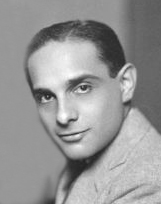
Larry Hart
Larry Hart

But we have no hindsight from Larry to balance their biographical narrative.

We do, however, have the lyrics he wrote for 26 Broadway shows and several Hollywood movies.

They range from the simple and sincere — “With a Song In My Heart” — to the playfully brutal — “I Wish I Were In Love Again.”

Here’s a version of “I Wish I Were In Love Again” that Bobbi Carrey and I recorded with Doug Hammer at his great studio north of Boston (with extra musical input from Mike Callahan).

 It is tempting to imagine that some clues to his life experiences are encoded into his lyrics.
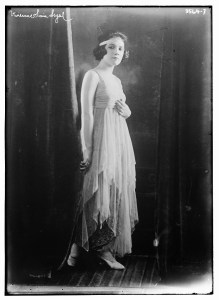
Vivienne_Sonia_Segal
Vivienne Segal

For example, Larry writes at the end of “I Could Write a Book” from one of his later musicals, Pal Joey: “and the world discovers as my book ends how to make two lovers of friends.”

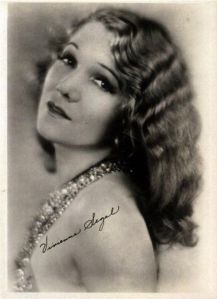
This lyric makes me wonder about his relationship with the actress and singer Vivienne Segal, one of the stars of Pal Joey who was also his friend and to whom he apparently proposed marriage more than once…

She respectfully declined each time — saying that she had had enough of marriage (she was divorced from a first husband).  She was also well aware that Hart was an alcoholic and what we would now describe as a closeted gay man.

Yet Cole Porter, another closeted gay songwriter of the time, had a long, loving, committed marriage to divorcée and millionairess Linda Lee Thomas — while simultaneously carrying on a life-long stream of romantic and sexual liasons with other men.

Porter, like Hart, was also devoted to his mother — although Porter did not share a home with his family for almost his entire life as did Hart.

Lorenz Milton Hart was born on May 2, 1895 and grew up in a boisterous household in Harlem, NY (then a largely Jewish neighborhood) with a father who was well-connected within the Democratic Tammany Hall political establishment.

His father made a living doing a variety of business deals — for example, he was alleged to be an investor in a very popular brothel — and over the years the Hart’s family finances would ebb, when his mother’s jewelry would go to the local pawn shop, and flow, when her jewelry would come out of hock and Larry might be given a $100 bill so that he could take all of  his friends out for a night on the town.
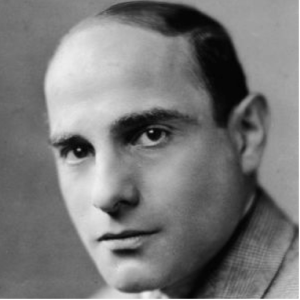
Larry Hart

It was a tight-knit family.

Larry (or Lorry as he was called by his German-Jewish mother) shared a bedroom with his younger brother Teddy until they were both in their forties.

The Harts regularly hosted parties attended by friends, relatives, local politicians, and — as Larry’s fame mounted — an expanding cast of writers, composers, musicians, performers, stars, groupies and hangers-on.

Larry supported his family after his father died — and he was apparently hounded by people to whom his father owed money for many years afterwards.

Hart was acutely aware of his mother’s wish that he would get married like his brother Teddy, who was a performer and who finally got married in 1938.

But none of the women to whom Larry proposed said yes.

Deep sigh.

I am reminded of Hart’s lyric for the song “Glad To Be Unhappy” (which I once recorded with Doug on piano at his studio during a rehearsal).

“Fools rush in… so here I am, very glad to be unhappy. I can’t win… so here I am, more than glad to be unhappy. Unrequited love’s a bore, and I’ve got it pretty bad — but for someone you adore, it’s a pleasure to be sad.”

Hart seems to have buried or hidden much of his sadness behind a playful, generous, talkative, enthusiastic personality — as well as a thick haze of cigar smoke and LOTS of alcohol.

And Larry carried on his family’s tradition of hospitality and generosity — helping his father pay off debts and loans when he was still alive, lavishing gifts on friends, hosting endless parties, and picking up the tab when out on the town.  
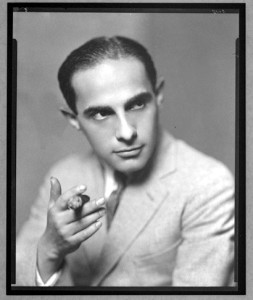
Hart

He was also generous with his time and creativity.

His sister-in-law Dorothy Hart claimed, “My brother-in-law wrote more lyrics without getting credit for more friends who were stumped or had songwriters’ block. He was very generous, not only with money, but also with his talents.”

About Larry’s death she says, “He was really, I think, a victim of burnout, and at the age of 48, the theater didn`t offer too much surprise for him, because he had done it all.”

I also wonder what effect the news from Europe during WWII had on his spirit.

Before his death — after Richard Rodgers had begun his new collaboration with their mutual lifelong friend Oscar Hammerstein — Larry had been working on a musical about the underground resistance movement in Paris with a composer who had recently escaped from Germany.

So he must have been very well-informed about recent developments in Germany — from which his parents had emigrated in the late 1800s and to which he had traveled as an adult — and Europe.

How did this excruciating information affect his mood? His spirit? His world view?

One of the last songs he wrote in partnership with Richard Rodgers was a witty tour de force for Vivienne Segal to sing in a 1943 revival — and updated version — of their 1927 hit show A Connecticut Yankee.
VivienneSegal
More Vivienne Segal

It is called “To Keep My Love Alive” and relates how the singer has remained faithful to a long list of husbands (“until death do us part”) by killing each of them in a different way.

One death occurs when the singer pushes her husband off a balcony.

Hart would surely have been aware that Richard Rodgers’ wife’s father had died a few years earlier as a result of a fall from the balcony of their NY penthouse apartment when Rodgers’ father-in-law was being treated for depression.

Might this have been a hidden — and ostensibly humorous — way for him to process some of his feelings about Rodgers having begun a new collaboration with their long-time mutual friend and colleague Oscar Hammerstein, II — the first fruits of which was the musical Oklahoma?

A way to needle Richard and his wife Dorothy under the cloak of music and rhyme?

A way for him to express how he might have felt about Vivienne’s declining to accept his marriage proposals?

Who knows…

I’ve been spending a lot of time with Mr Hart’s life story — and his lyrics — while I put together a program of songs and stories to perform with jazz pianist Joe Reid.
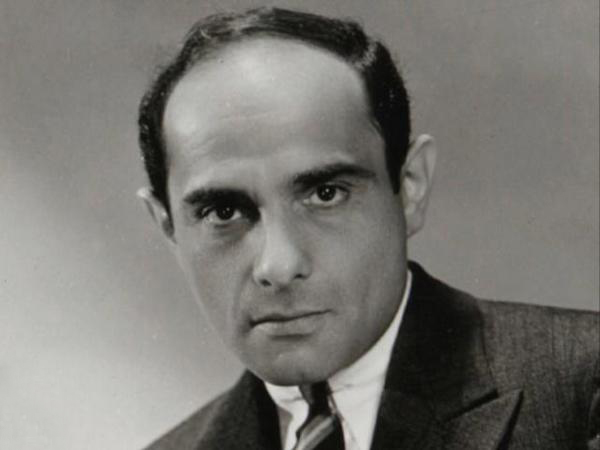
And my freely associative mind can’t help but see — or perhaps more accurately imagine — connections between Hart’s life and his work.

I am wildly grateful that he left such a rich and beautifully-crafted body of work for all of us to savor and sing for many years to come.

Rest in peace, dear Mr. Hart.

Deep breath in.

Deep breath out.
Grateful

As 2015 comes to a close, I find myself singing John Bucchino’s wise song, “Grateful,” a lot.

I love the entire song from start to finish (and you are welcome to listen to a version I recorded during a rehearsal with Doug Hammer a few years ago by activating the player at the beginning of this post).

I think my favorite lyric may be, “It’s not that I don’t want a lot, or hope for more…or dream of more — but giving thanks for what I’ve got, makes me so much happier than keeping score.”

It is very easy to fall into the trap of “keeping score” and comparing one’s accomplishments to one’s peers, to people on TV, to celebrities, etc. etc. etc.

But that path tends to be a dead end — and a recipe for dissatisfaction, unhappiness, depression and discouragement.

So here is a list of things (in no particular order) for which I am grateful.

Health…and health insurance.

A devoted and supportive life partner.

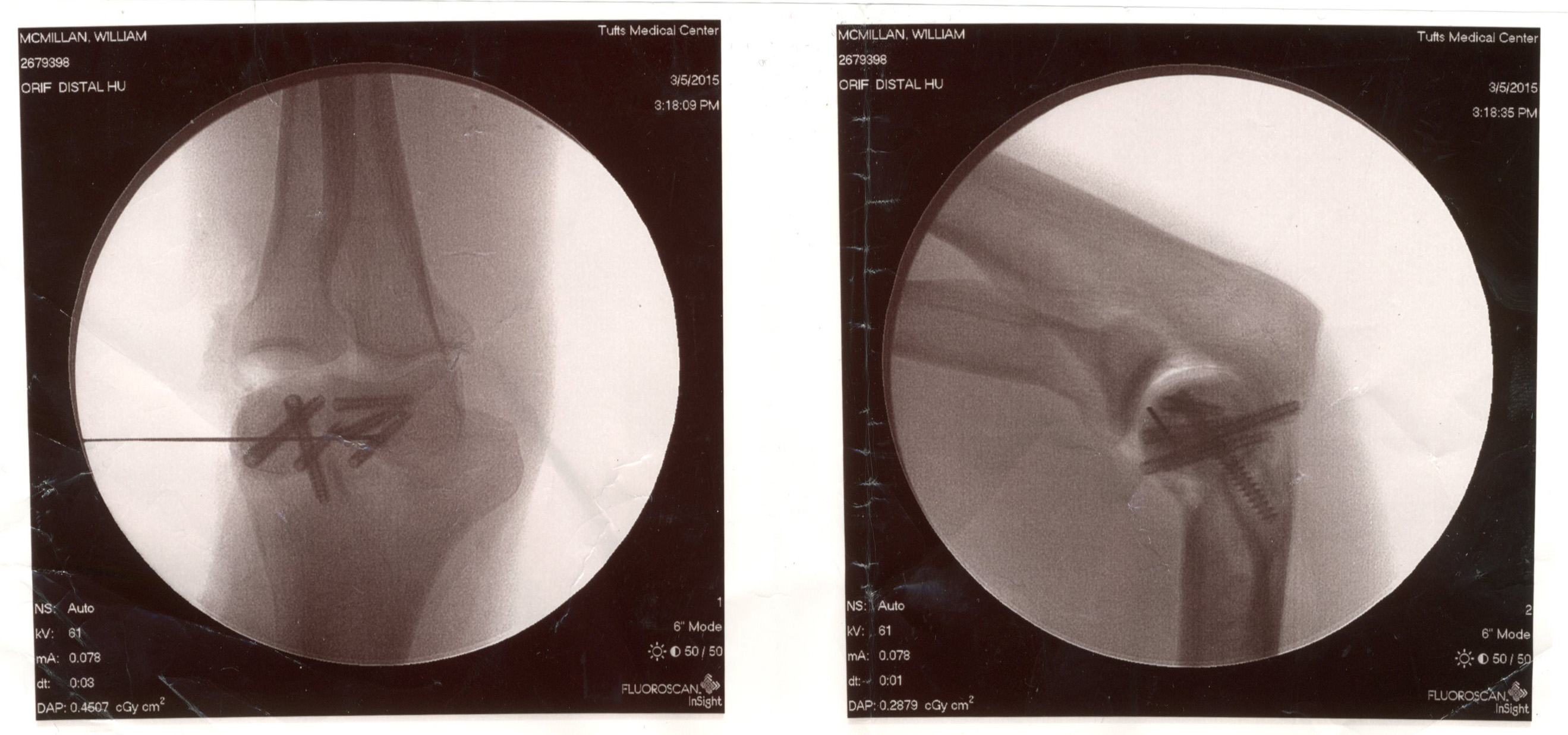
Dr. Charles Cassidy and his surgical team at Tufts Medical Center, who successfully pieced together the shattered bits of bone in my left elbow using several titanium screws of various sizes at the beginning of March.

WillXRaysElbow

Opiate drugs — which were a daily blessing during my elbow recovery.

Jazz pianist and composer Steve Sweeting, who invited me to record a CD of his tremendous original songs with him and then did two performances to celebrate “Blame Those Gershwins” in Manhattan and Somerville.

All of the families who have chosen to make Music Together with me in Belmont and Arlington — as well as my MT bosses.

Doug Hammer — for his engineering wizardry at Dreamworld Studio AND astoundingly collaborative spirit at the piano.

Jinny Sagorin for lending her voice and heart and diplomatic feedback to “The Beauty All Around” performance.

Jazz pianist Joe Reid, with whom I put together programs of music about Jule Styne, Hoagy Carmichael, and Jerome Kern — and with whom I also performed programs of music about Harold Arlen, Cole Porter, and the Gershwin brothers at retirement communities, libraries and synagogues around the greater Boston area.

Exceeding my (modest) financial goals for 2015 — thanks in part to two well-paid musical projects at the beginning of the year.

Kyra and Briony and Jill for a heartful musical adventure in honor of an old friend.

Bobbi Carrey, who is embracing new (although not very musical) challenges in Kuala Lumpur.

A grant from the Bob Jolly Charitable Trust to support my work on “The Beauty All Around.”

An ecstatic first performance of “The Beauty All Around” at Third Life Studio in Union Square.

Very supportive friends and family.

Very devoted and enthusiastic fans.

All the folks who have hired me and Joe to bring music to their retirement community, their library, their condo complex, their synagogue, etc.

Visits to Lime Rock, Connecticut; Ithaca, New York; Toronto, Ontario; and the upper west side of Manhattan.

Susan Robbins, who invited me to perform at Third Life Studio and maintains a very sweet Steinway grand piano there!

Photo by Anton Kuskin

All the people (most of whom I will never meet) who planted, cultivated, harvested, sorted, packaged, shipped, unpacked, displayed, sold (and sometimes cooked and served) me the food I ate in 2015.

That our planet orbits a modest star at the perfect distance for life to unfold in astounding cycles of expansion and contraction over the course of millions of years.

North of Highland campground.

The Atlantic ocean.

Cayuga lake and the Rice Heritage cottage.

A wonderful web of cousins.

The Boston Association of Cabaret Artists community.

The Ukulele Union of Boston Meetup groups with a welcoming spirit and humble open mic section (during which I dare to share new songs…)

A new ukulele handmade — and given to me! — by Patrick Collins, a gifted musician, inspired woodworker, and dedicated teacher who lives in Toronto.

Megan Henderson, who has become my newest musical ally.

Rain and sun and dirt which create the conditions for plants to grow and flourish here on planet earth.

My trusty, slightly rusty, bicycle.

Electricity.

My two, increasingly aged, lap top computers which continue to function with grace and reliability.

Apple’s Garageband program.

The freshly paved, extremely smooth — with bike lanes! — stretch of Massachusetts Avenue from the Cambridge border to Arlington Center.

And, of course, music, music and more music — new songs or beloved standards, live or pre-recorded, spontaneous or well-rehearsed, solo or ensemble — it’s all a blessing.

Thank you for reading and listening to yet another blog post.

If I have forgotten to mention you in this list, please accept my heartfelt apologies…

A happy, healthy, and musical new year to you and yours!

Photo by Joe Turner
Photo by Joe Turner
Love who (and what) you love…

Love who (and what) you love…

I just returned from thirteen days of heaven on earth a.k.a. camping at North of Highland Campground in North Truro, MA (near the tip of Cape Cod).

One of the things I most love about camping is the lack of interruptions and distractions.

Life is distilled down to basics — and things like TV and America’s Got Talent and Netflix and Orange Is the New Black simply disappear from one’s awareness.

I did not speak with anyone via the telephone.

There was no internet tempting me to visit Facebook or Linked In.

I had no emails reminding me each day about a deeply discouraging array of horrible things happening all over planet earth which I could possibly help by signing a petition and/or donating money.

I listened to no radio.

I read very few magazines (mostly back issues of The New Yorker).

I received no snail mail full of solicitations from environmental defense organizations and prograssive lobbying groups and hard-working political candidates.

Instead I savored the rain and the sun.

And birds.

And wind in the pine trees overhead.

And random sounds of fellow campers in the distance — sometimes the beep of a car with keys left in the ignition, sometimes the cry of a small child having an emotional melt down.

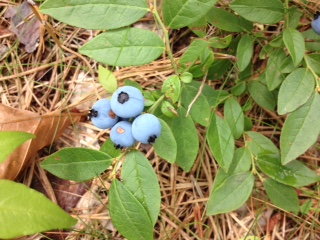
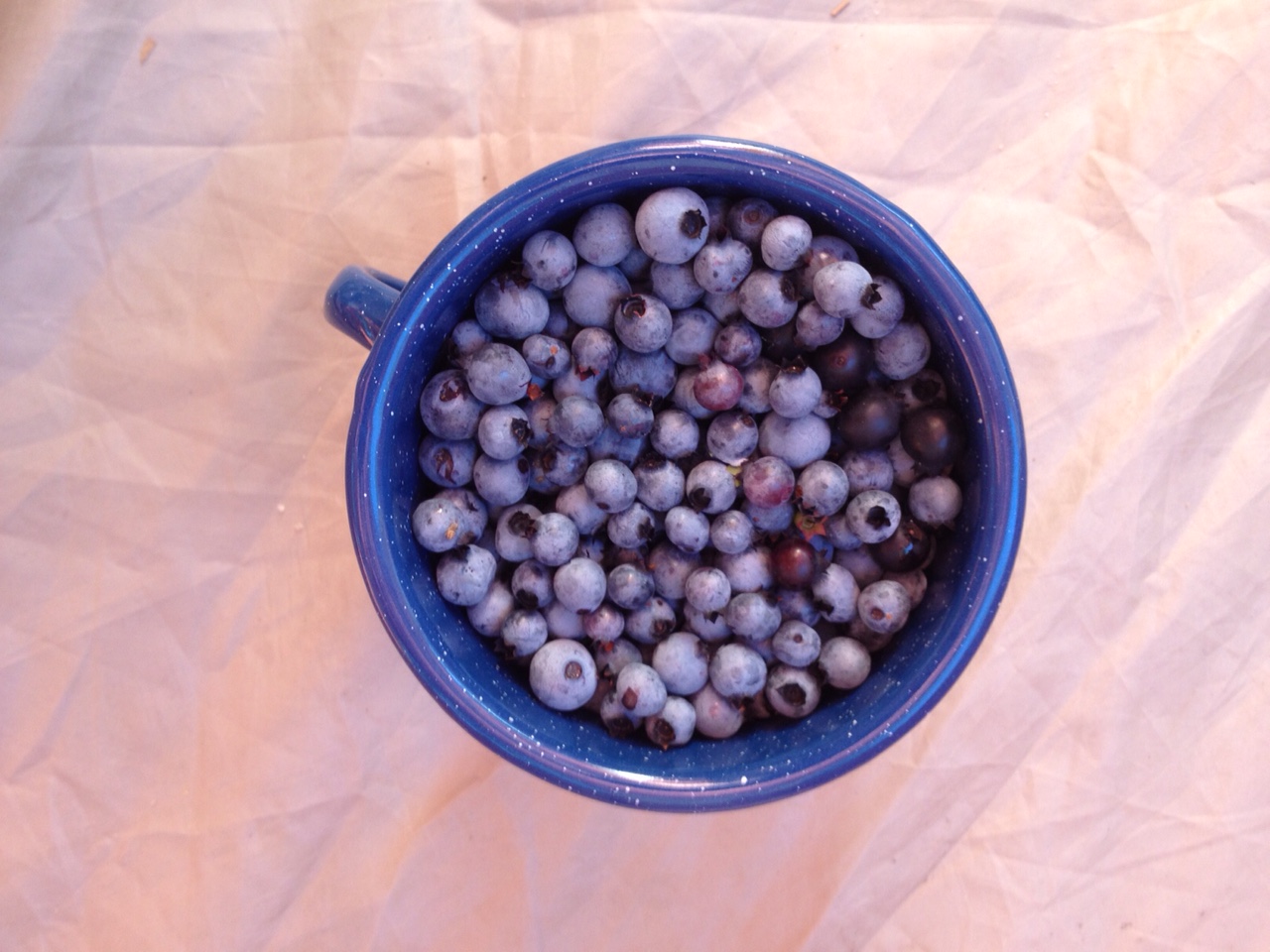
And BLUEBERRIES.

Blueberries1

This year we arrived at the peak of blueberry abundance.

Little scrubby bushes which in past summers might have offered a few berries were now covered with them.

Each morning before the sun became too hot, I picked a mug-full to eat — first with oatmeal and then as an anti-oxidant treat throughout the rest of the day.

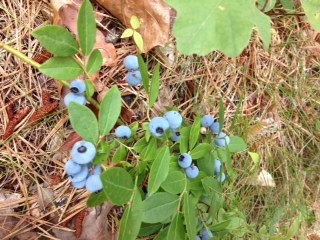
Some bushes had small berries, and others were loaded with whoppers.

On the morning of our departure, I picked one final mug’s worth to bring home to Arlington, and I am eating the last of them as I type this entry.

Yum for summer!

Blueberries2

At first I was concerned that I might be depriving the local wild life of much-needed sustenance.

One morning I watched a small red squirrel pick blueberries, climb up on a small tree stump to eat them, climb down to pick more, climb back up to eat more until she or he apparently had eaten their fill and frisked off into the trees.

But that was the only animal consumption I witnessed.

And I saw many wrinkled, older berries on the ground under the bushes — so plenty of them were ripening and falling to the ground untouched by anyone.

I decided it was OK to revel in this unexpected, beautiful, delicious gift from mother earth.

And there were many berries I did not manage to pick and eat when we left our camp site…

Maybe the two wild turkeys we saw as we were packing up camp would return to savor them?

This morning I was given a link to a slide show that a father had put together to play at the memorial service for his four-year-old son, who had died as a result of complications after an unsuccessful heart transplant operation. 

This radiant little being was a student of a fellow Music Together (MT) teacher, and she had reached out via Facebook to a bunch of MT teachers when he was about to go into surgery so that we might pray for him and his family and his caregivers.

Despite the massive amounts of time Aiden had spent in hospitals during his short, sweet life, he was able to stomp in rain puddles and play at the beach  and attend Music Together classes with his parents.

Apparently he loved singing and dancing — and his parents included several MT songs as part of his slide show and memorial service.

From the slide show I could see how loved he was by his extended family.

And as a result of watching it, I brought an aching awareness of love and loss with me to my Music Together class this morning — and did my best to welcome and celebrate each being who came though the door.

The song at the beginning of this post was written by Lynn Ahrens and Stephen Flaherty for a musical called A Man Of No Importance.

I recorded it with Doug Hammer playing piano and Mike Callahan playing horn several years ago as part of my “Will Loves Steve” show — which featured songs written or co-written by people named Steve or Stephen or Stevie.

For me it captures some of the poignance of being a loving human here on planet earth.

Thank you for reading and listening!

Blueberries from Truro

Love Is Real


Love IS real.

It may not always be easy to feel, but it’s always there somewhere — or perhaps everywhere? — waiting to be tapped into.

In the two years since I was laid off from my day job, I have come to understand that music is one of our most accessible — and brilliant — technologies for re-connecting with love.

I experienced another love-filled gig with pianist Joe Reid last Saturday at a retirement community to the south of Boston.

It was the first time we had been there; so I didn’t know what to expect.

I was also feeling a bit concerned that our choice of “Make Someone Happy: The Songs of Jule Styne” — rather than a program of songs by the more familiar Cole Porter or Gershwin Brothers — might have been too risky for a first visit.

But we were warmly welcomed, ushered to a lovely performance space (not too big, not too small — a “just right” Goldilocks fit) with a small grand piano, a good PA system, and an audience of American Popular Songbook aficionados.

The size of the room — and the lighting in the room — made it possible for me to make eye contact with everyone.

Many audience members knew the words to the songs we were performing — and I, inspired by my Music Together classroom experiences, exhorted everyone to hum, tap, snap, or even dance if the spirit moved them.

There is something about the structure of a well-written song that allows — even encourages — one to put one’s heart into the singing of it.

And knowing that a song has a beginning, a middle, and an end somehow makes it safe for me as a singer to experience a wide range of feelings while I am singing it.

I think I have written in previous blog posts about how amazing subtext can be — how simply changing what or whom one is thinking about as one is singing can completely alter one’s interpretation of a particular song.

I have even begun to wonder — as I sing and make eye contact during performances with as many different audience members as are willing to connect in that surprisingly intimate way — whether I start connecting on an unconscious level with some of THEIR subtext, THEIR history, and THEIR associations with a particular song.

Whatever is transpiring energetically, it certainly opens MY heart — and re-connects me to feelings of joy and heart-ache and love and fear and desire and hope and pain.

Afterwards Joe and I listened to the stories that these songs evoked in the residents — tales of huge summer parties near Westport, CT in the 30s and 40s, or of seeing Barbra Streisand in the original production of Funny Girl, or of listening to these songs on the radio with loved ones in the living rooms of their past.

One woman said something like, “We have to have you and Joe back again right away — your singing reached inside and touched my soul.”

This is what I live for.

This is what music can do.

Two strangers can, in a safe and well-boundaried way, touch each other’s souls.

John Lennon knew that.

He wrote the song “Love Is Real” — which I recorded several years ago with Doug Hammer at his Dreamworld Studio. Then I monkeyed with those tracks using Garageband to create the version at the top of this page.

Thirty four years ago John Lennon was killed as he got out of his car and headed into his apartment in NYC.

According to Wikipedia, he had chosen to get out on 72nd Street (rather than the driving into the courtyard of his building) so that he could chat with any fans who might be waiting to say “hi” and ask for an autograph.

In fact, earlier in the day he had autographed a copy of Double Fantasy — the life-affirming album he had recently released with Yoko Ono — for the man who later shot and killed him.

After I heard the horrible news of John’s death, I remember walking along Massachusetts Avenue in Harvard Square, feeling very sad and upset that this could ever have happened.

One loss often awakens previous losses — like a metal chime rippling and echoing through the layers of one’s emotional body and memory.

So, with hindsight, it is very likely that I was also grieving other deaths, other losses, other assassinations — as I grieve tonight…listening to John’s music and reflecting on his inspiring life.

You can click here for a link to a comforting essay I found online which offers perspective about why so many of us continue to be so deeply moved by John’s murder.

I loved John Lennon.

I continue to love his music — as well as the music of all The Beatles.

And his songs live on.

Love IS real.

The Mystery of Neuronal Connections


After I take a shower in the morning, I like to wipe the water off the tile walls with a squeegee.

I had never done this until I visited my friend Michael Ricca’s family home in Quincy, MA.

Their bathroom was spotless, and I learned that Michael’s dad always cleaned the water from the shower walls with a squeegee.

So now I think about Michael and his parents almost every morning as I stand — naked or wearing a towel — and use my shower squeegee.

Michael’s parents used to invite me and him and Nina Vansuch and Brian Patton over for huge Italian feasts when the four of us were singing together in a musical project called At The Movies.

So I also think about Nina and Brian and the music we made together each morning as I wipe water from the shower walls.

I love how “squeegee” and “Michael Ricca’s dad and mom” and “Michael Ricca” and “Nina Vansuch” and “Brian Patton” and “Quincy, MA” are all neuronally linked in my memory banks.

And somehow the act of wiping down the shower walls brings all of them to the surface of my consciousness.

Brian and Nina and Michael and I performed together for a few years, selling out Scullers Jazz Club on a regular basis and recording a CD, Reel One, which still — ten years later — sounds great.

I have included a couple of selections from Reel One in this blog. And a couple more (“Wives & Lovers/Coming Around Again” and “That’ll Do”) are in the player in the right hand side bar of this page.

I especially love Nina’s vocal performance on “Theme from The Valley Of the Dolls” and the vocal harmonies Brian crafted for us to support her.


I don’t know if At The Movies will ever perform together or record again, but I am very grateful that we have such lovely audio documentation of our time together.

I was talking with a fellow singer about the fascinating power of neuronal associations the other night as we drove home from an open mic in Natick.

Sometimes what transforms someone’s song interpretation from good to great is simply how many neural associations they have woven into their memorization of the lyrics.

A song may remind them of a loved one who once sang it to them, or an intense crush they once had in high school, or a particularly tumultuous (or poignant or peaceful) period in their life.

Or all of the above.

And those images, those memories, those associations somehow bring the song to life when they perform it.

I try to inoculate songs that I am learning with as many different layers of memory associations as I can muster.

Then when I am performing, I can tap into different constellations of memory associations as the spirit moves me.

One night a song about love might evoke a strong image of my nephews and niece.

On another night I might find myself remembering my former voice teachers — or the first person with whom I fell head over heels in love — or my sweetheart of 22 years — or one of my siblings — or the horse our family owned as a pet for over 30 years — or the corgi we had who once raised a litter of abandoned kittens — or the heron who sleeps at night on an abandoned shopping cart in the middle of a stream which runs along a busy road near my house.

Or huge Italian feasts with Michael and Brian and Nina and Michael’s parents at his childhood home in Quincy.

Or squeegeeing my shower tiles.

Or all of the above.

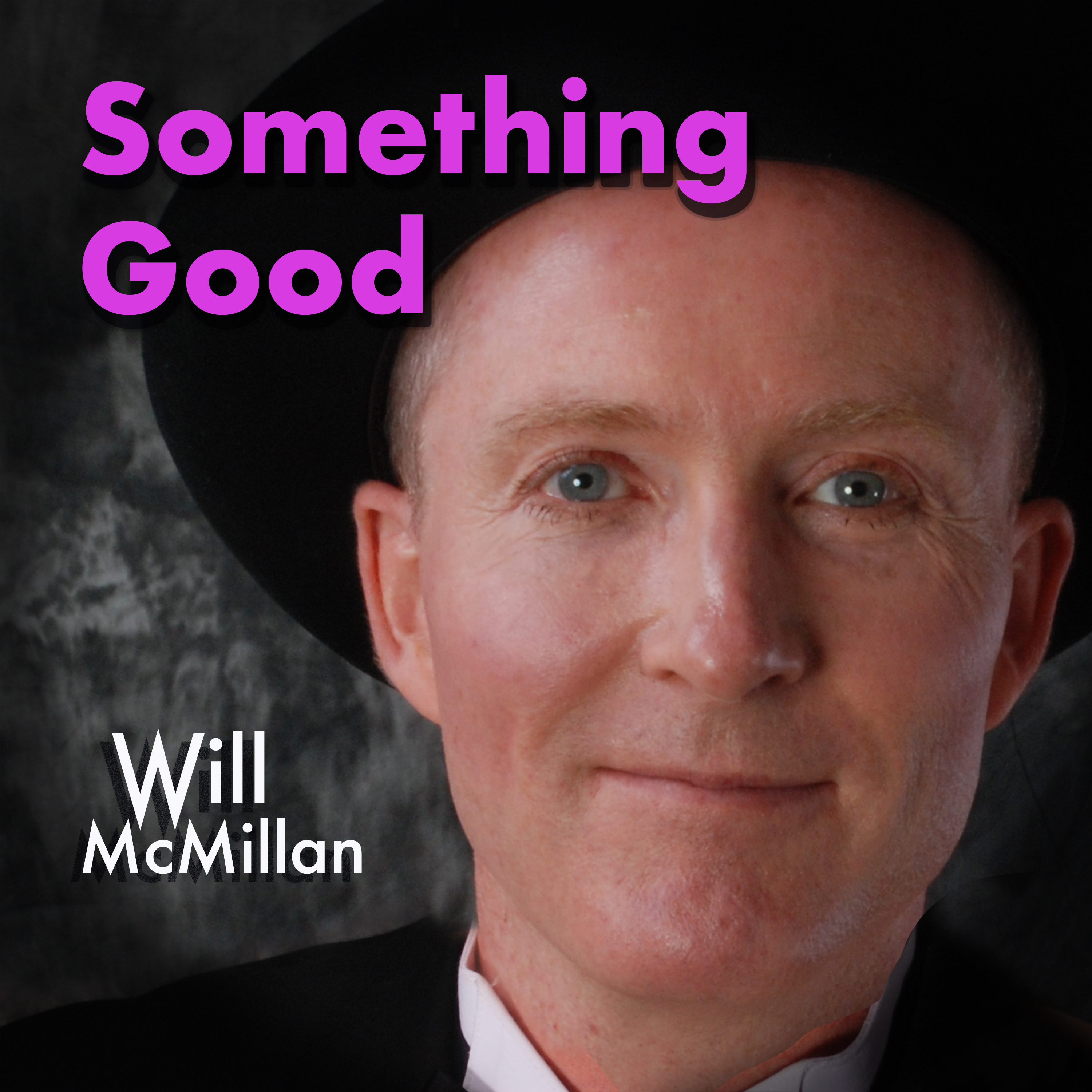
Something Good


Skimming over some of my previous posts, I see that I rarely mention anything about feeling frustrated, unhappy, anxious, or any other “negative” emotional state.

I would like to clearly state that I feel disappointed, scared, envious, disheartened, disgusted, vengeful, upset, discouraged, and cranky on a regular basis.

But I strive — when feeling out of sorts — to remind myself of any number of things in my life that I can be grateful for.

A wonderful life partner.  Health.  Plenty of food.  Lots of family.  Lots of friends.  A functional bicycle.  Employment.  A safe place to live.  Clean water.  No tanks patrolling my neighborhood.  Music.  Electricity.  The children and grown-ups in my Music Together classes. Warm clothing.  Two lap top computers.  Access to the internet.  Great collaborators.  Our local network of public libraries.  The retirement communities which invite me and my collaborators back to perform again and again.

Once one gets started, the list can go on and on and on…

The week before Doug Hammer and I performed Songs About Parents & Children at the Third Life Studio in Somerville, MA, I found out that I had been awarded a grant from the newly-created Bob Jolly Charitable Trust to help pay for rehearsals and marketing outreach.

Bob Jolly, who died in 2013, was a beloved actor in the Boston community for 28 years.

The Bob Jolly Charitable Trust — established by his will — supports local actors, performers, composers, and theater companies with modest yet very meaningful financial support.

I am very grateful for this grant as well as Bob’s vision to nurture Boston’s creative community for years to come.

His generosity is indeed something good!

The song in the player at the beginning of this blog post was created by Richard Rodgers for the movie version of The Sound Of Music.

He wrote both the music and the lyrics because his second longtime lyricist/collaborator, Oscar Hammerstein, II, died before the movie was made.

The knowledge that Mr. Hammerstein was dying from stomach cancer while they were bringing the original Broadway musical to life adds — for me — an extra layer of poignance to songs such as “My Favorite Things,” So Long, Farewell,” “Climb Every Mountain,” “Edelwiess,” and “The Sound Of Music.”

And learning more about Mr. Rodgers challenging relationship with alcohol — as well as with various female cast members in his shows —  adds many more layers of complexity to “Something Good,” which Doug and I performed as our final encore at the end of Songs About Parents & Children.

Deep breath in.

Deep breath out.
Thank you for reading and listening.

What Is This Thing Called Love?

This past Sunday pianist Joe Reid and I performed an hour of songs with music by Harold Arlen at an independent living center in Quincy, MA.

The residents who showed up were very friendly — and a few of them knew the words to almost every song!

Even if they weren’t singing, I could see that everyone was moving some part of their body — fingers, toes, head, torso — in rhythm with the music.

It was a delightful way to spend an hour of my life.

Afterwards one woman — whose eyes had been closed for much of the time — explained that when these songs had been popular, she and her husband had not had a lot of money, but that they HAD been able to listen to music on the radio.

So even though it may have appeared she was dozing off,  she had in fact been remembering that time in her life and imagining that her husband was still sitting next to her.

Deep sigh.

What is this thing called love?

What Is This Thing Called Love?

The previous day pianist Doug Hammer and I had performed a 40 minute chunk of my show, “The Kid Inside,” at a benefit for a new organization called OUT MetroWest.

OUT MetroWest has been providing supportive space for LGBTQ teenagers to meet for many years, and this benefit was a big step to expand their services beyond the Unitarian Universalist church in Wellesley where they began.

I originally created “The Kid Inside”  to perform for the 10th grade class at my high school. It’s a recollection, using stories and songs, of my high school years — including how conflicted and confused I felt about my sexuality.

At one point I tell a story about when — lacking a gay-straight alliance on campus or even any “out” faculty members to whom I might speak — I sneaked from my dorm one night and knocked on the front door of an apartment belonging to one of the young, unmarried male teachers who lived on campus,

When he answered the door, I was unable to say anything and just stood there — feeling stuck and ashamed and humiliated.

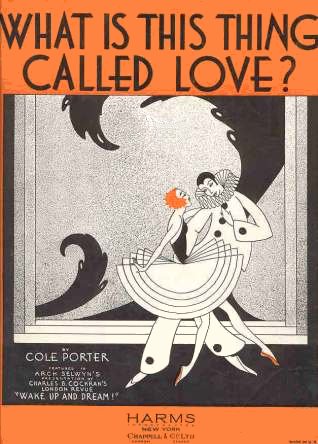
I follow this story by singing the Cole Porter song “What Is This Thing Called Love?” — which is in the player at the top of this post with Doug Hammer on piano, Mark Carlson on bass, and Kenny Wenzel on trombone.

I am happy to know that there are now safe spaces at many high schools to talk about the amazing and powerful and at times perplexing topics of sexuality and identity and relationships — as well as organizations like OUT Metro West.

And I am amazed at how songs can re-connect us with people and places from our past.

Love is a mystery.

How music taps into our memories and opens our hearts is a mystery.

Today I embrace those mysteries and remain grateful for all the music in my life on a daily basis.

Thank you for reading…and listening.

So Many Stars…

Image by yavorzhelyazkov from Pixabay

“So Many Stars” is a song I have heard performed by many different singers, and I have always thought to myself, “I need to learn that song.”

This past summer I visited a pianist/songwriter friend, Steve Sweeting, and his family while attending a Music Together training session in Manhattan.

One evening we were brainstorming about possible future collaborations, and I mentioned that I have long wanted to do an evening of songs about stars — both the amazing energetic phenomena that we see at night and the human-created idea of “star” — as in “movie star” or “musical theatre star.”

To get us started, he gave me the sheet music for “So Many Stars,” which I promptly began learning.

Pianist Doug Hammer and I recorded the version I have included at the top of this post  — and then I went camping for two weeks with family on Cape Cod.

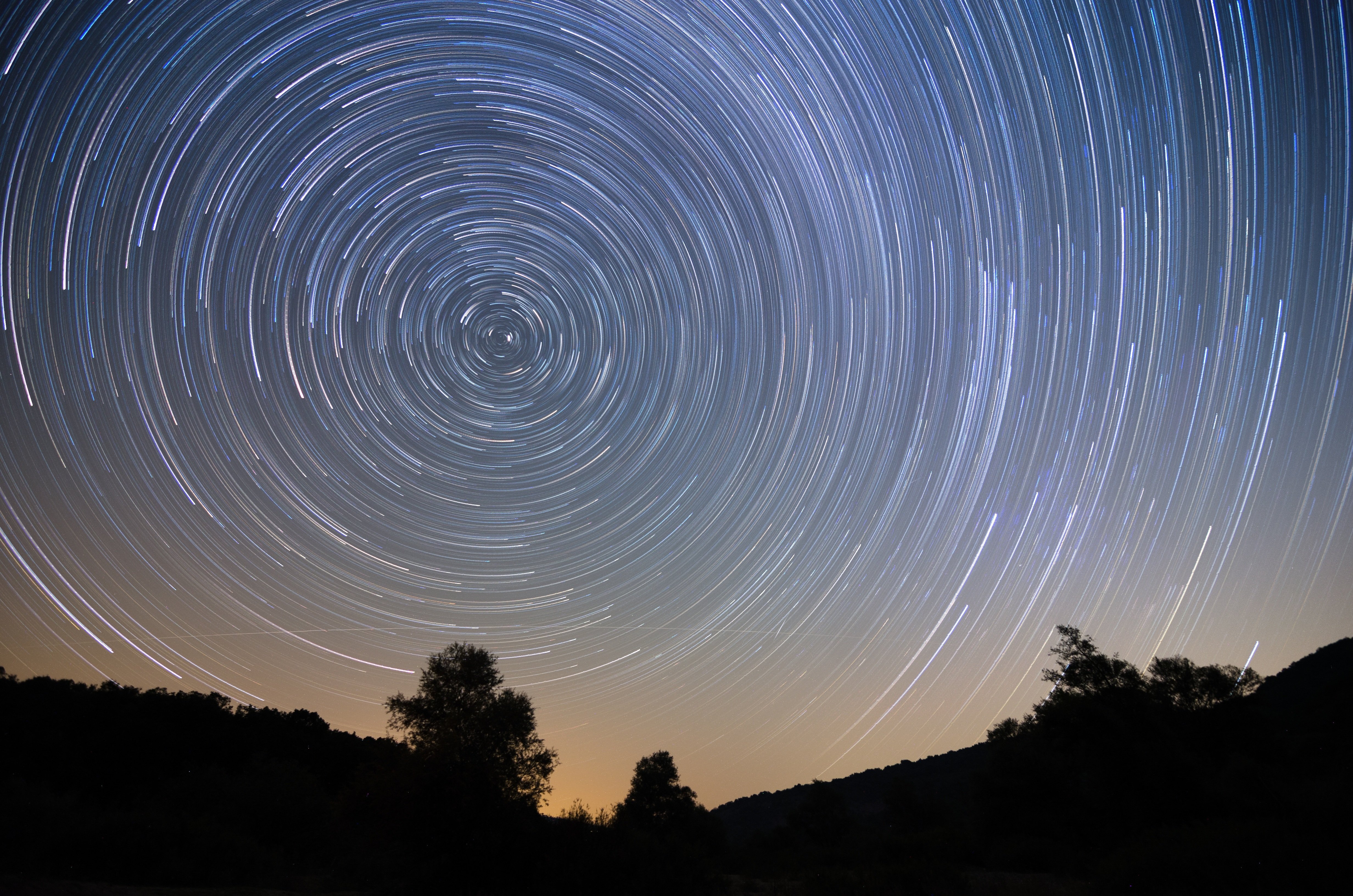
Image by Pexels from Pixabay

One of the things I love about getting away from the city is gazing at the sky on a cloudless night.

A couple of times I walked down to the beach after dark and sang “So Many Stars” over and over again while the universe beamed light across unimaginably vast distances to trigger the rhodopsin in my eyeballs — and awaken a sense of wonder in my mind, body, and spirit.

The deceptively simple lyrics of “So Many Stars” were written by the wife-and-husband team of Marilyn and Alan Bergman for a wonderful melody by Sérgio Mendes, a Brazilian pianist and songwriter.

The Bergmans created lyrics for a bunch of great songs including “Nice and Easy” (for Frank Sinatra), “The Way We Were” (for Barbra Streisand), “What Are You Doing The Rest of Your Life?” and “You Must Believe In Spring.”

Sérgio Mendes was a founding member of the successful vocal jazz group Brazil ’66 and left behind a 35-album legacy of music when he died from complications of long-term COVID in 2024 (I updated this blog post in 2026…)

Image by fernando zhiminaicela from Pixabay

There are so many ironies about the lives that we “modern” human beings have created here at the beginning of the 21st century on planet earth.

One of them is how — in the interest of safety and security and advertising — we have erected vast numbers of exterior lights, which means that we are less and less able to experience the truly amazing sight of a starry, starry night — along with the humility and curiosity and mystery that it can evoke in us.

Deep breath in.

Deep breath out.
As someone who has (blessedly) never been mugged, I’d rather have more visible starlit nights and fewer streetlights in my life.

How about you?

Hurrah for rhodopsin, hurrah for music, and hurrah for the vast mysteries of the universe!

Image by wal_172619 from Pixabay

I can get so caught up in the human drama unfolding here on planet earth that I forget about the larger — and potentially un-knowable — universal patterns and cycles unfolding all around us at every moment of the night and day.

Another deep breath in.

And deep breath out.

Thank you to the Bergmans and Mr. Mendez for creating this beautiful song.

Thank you to Steve for giving me the sheet music for “So Many Stars” and to Doug for recording it with me.

Thank you to the generous and gifted photographers at Pixabay.

And thank YOU for reading and listening to yet another one of my blog posts.

PS: You are always welcome to visit my musical website, willsings.com, by clicking here.

The Ebb and Flow

Image by günter from Pixabay

Autumn is arriving here in Boston, MA.

Summer is ebbing, and cooler air is flowing into our neighborhood.

In the morning I sit on our back porch, wearing a hoodie until the sun warms everything up.

I listen for sounds from the natural world — today, a blue jay — competing with the sound of cars and buses and trucks and motorcycles nearby.

And I happily remember my time last month camping in North Truro on the Cape and next to Cayuga Lake in upstate New York.

I find camping to be a terrific reminder of many important things.

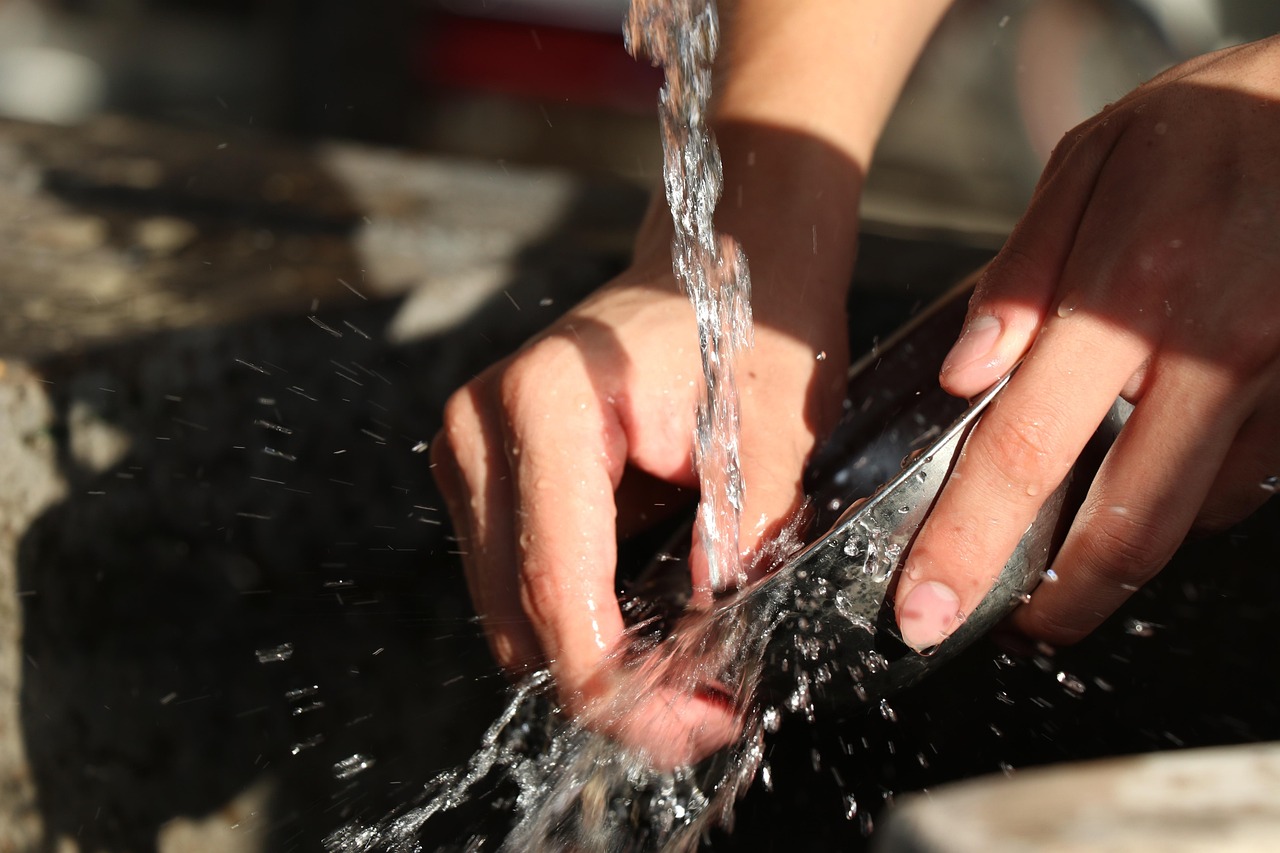
For example, how little water one needs to wash dishes.

Image by 国明 李 from Pixabay

Or wash one’s hands.

Or take a shower.

The campground has communal cabins with sinks and toilets and showers, but the sinks have taps which automatically shut off after about three seconds — a simple and very effective reminder to use water more mindfully — and the showers are activated by quarters (25 cents for three minutes of hot water).

And in upstate New York I simply jumped — except for the times when my feisty nephew Ryder pushed me — into the lake each morning and then scrubbed with Dr. Bronner’s soap and a washcloth.

We had no radio, no TV, and no internet.

Image by Mickey Estes from Pixabay

We awoke early — due to birds singing their morning calls — and went to bed early, too.

Sometimes we all sang together after dinner — songs written by the Beatles being the most popular…

I wrote new songs for most of each day — happily holed up on the boathouse or in a tent with my ukulele and laptop computer and rhyming dictionary — and then joined other family members for a swim in the late afternoon.

One of the most powerful part of camping for me is being reminded of the ebb and flow of life.

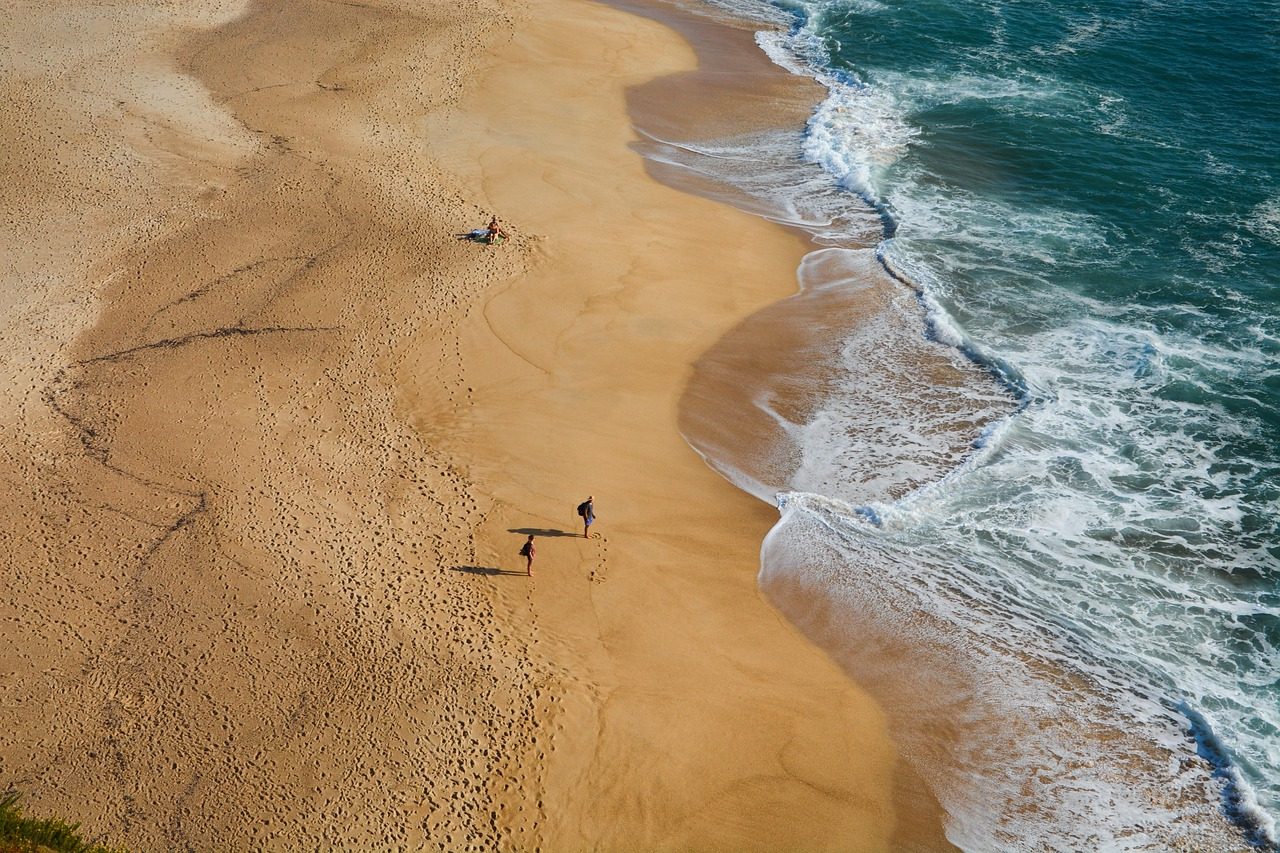
We see it at the beach.

The waves flow in and out at the water’s edge.

Image by marco bubbio from Pixabay

The tide rises and falls, sweeping the ocean shore clean of footprints twice a day — while revealing (and later concealing) sand bars, rocks, shells, crabs, sea weed, drift wood, and tiny jumping sand fleas.

Back at our campground, we see neighboring tent sites fill with new arrivals and then empty out at the end of each week.

What was once a colorful array of tents and campers and cars and coolers and towels and bikes returns to being a community of pine trees, squirrels, golden finches, blueberry bushes and open air.

I find it a very poignant reminder of mortality — my own as well as the mortality of all the people and places and animals and plants I love here on planet earth.

Image by Peggychoucair from Pixabay

This feeling of mortality seeped into a song I wrote, “Under My Umbrella,” which is embedded at the top of the page.

It seems to fit with the days getting shorter as we approach the autumnal equinox.

Deep breath in.

Deep breathe out.

Thanks for reading…and listening.

Everybody Says Don’t…

Image by laurenta_photography from Pixabay

One of my favorite Stephen Sondheim songs — “Everybody Says Don’t” (on the player embedded above) — is from his first official flop, Anyone Can Whistle, which starred Angela Lansbury, Harry Guardino, and Lee Remick on Broadway in 1964 and ran for nine performances.

Among other topics, the plot explored the classic question of who is saner — the folks in a mental hospital or those who are not.

“Everybody Says Don’t” invites us to consider how we make choices.

Many of us make choices based on what other people say or think.

Sometimes this demonstrates a healthy respect for our shared values as human beings — and helps to keep our societies more, rather than less, civil.

Sometimes it’s a way to avoid saying or doing something important — something which might be utterly, uniquely, and profoundly why we are alive here and now on planet earth.

I might have stayed in my non-musical day job as a PR/development/events professional for another 16 years if I hadn’t been laid off.

The job offered me teamwork, camaraderie, shared purpose, a paycheck, respect from my peers, and daily surprises/challenges.

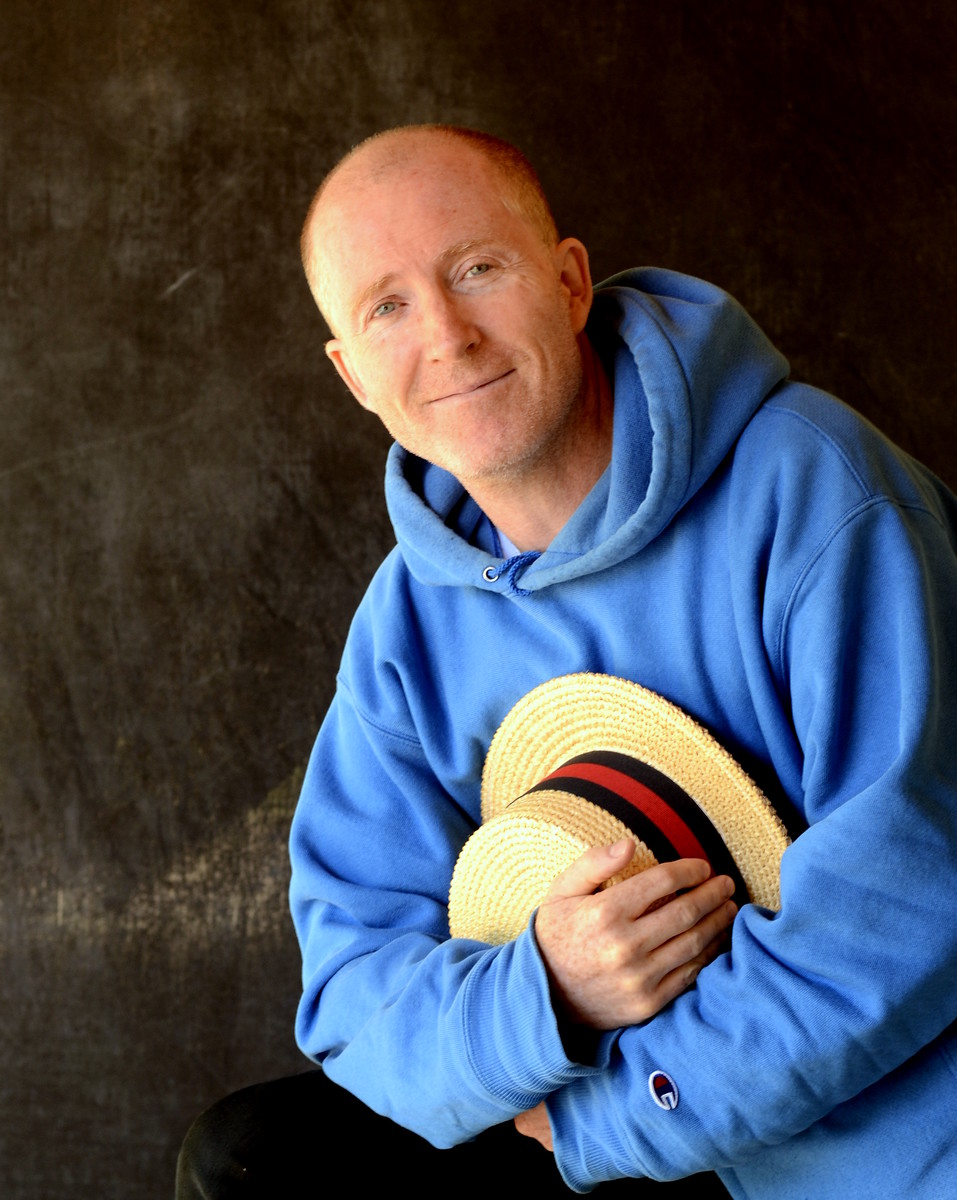
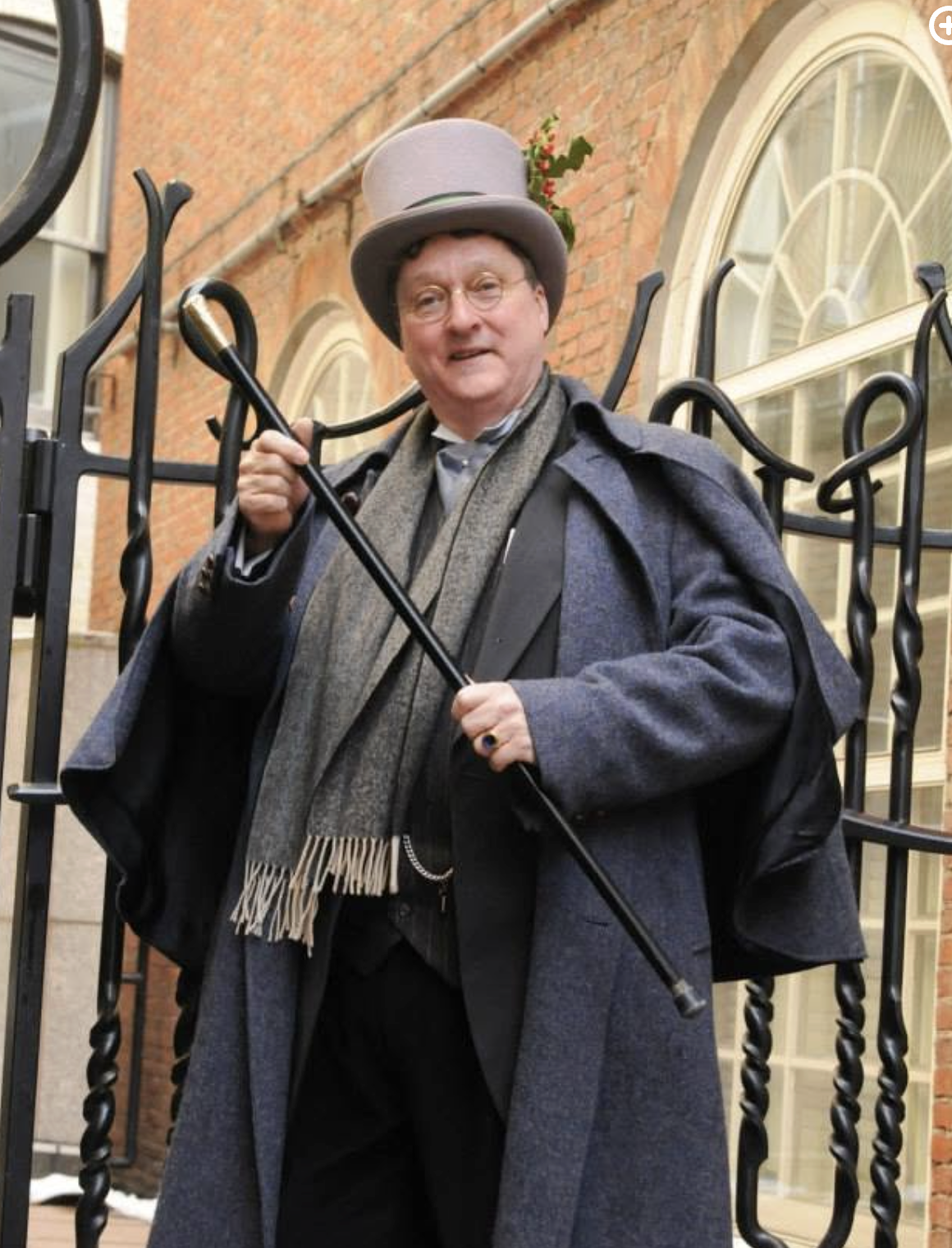
Will McMillan by Stephen C. Fischer

But it was not tapping very deeply into my musical soul.

Now I am devoted to making music for a living — as a performer, a songwriter, and a Music Together teacher.

The sentiment of “Everybody Says Don’t” reminds me of one of the guiding principles of Music Together — that anything a child chooses to do during class is fine and needs to be respected as part of their learning process/style.

A child’s caregiver may want them to sit still and “play” a drum — or a shaker egg, or a triangle, or a set of wooden sticks — in a particular manner.

But their way of soaking up the music in class may involve moving their bodies around the room, sitting in a corner (seemingly disconnected from everything happening in class), or bouncing up and down in someone’s lap.

As long as the child is not endangering themselves or hurting someone else in class, s/he is free to respond to the music in her/his own fashion — which may change from song to song and class to class.

I sometimes imagine the adult caregivers (moms, dads, nannies, grand mothers, grand fathers, au pairs, uncles, aunts and more) as younger versions of themselves — who may have been told somewhere along the line: “don’t sing so loudly,” or “don’t sing out of tune,” or worst of all, “don’t sing — just move your lips.”

Image by Joe McDonagh from Pixabay

One never knows what musical wounds people may be bringing into our classrooms…

As one teacher remarked at the end of a three day Music Together seminar, “90% of our job is showing up with a compassionate heart.”

I guess that could be true about a lot of our interactions here on planet earth…

Deep breath in.

Deep breath out.
Thank you for reading and listening to this blog post.

I welcome any comments you might be inspired to share below.