Last weekend I saw a dad herding two small boys wearing rubber boots.
They were delightedly stomping their way across a very large puddle.
The sun was shining.
Snow was melting everywhere.
The air almost felt warm on my face.
Ahh, the intoxicating approach of spring!
Robins have landed twice on the bushes outside my bedroom window, eating berries that — miraculously — remain on the branches.
Two male cardinals have been jousting in the airspace around our house — flashes of scarlet fluttering from fence to roof to branch and then back to fence — all the while uttering a passionate selection of hormone-infused songs.
Soon tiny frogs will wake up and start peeping in the wetlands behind my friend Doug Hammer’s studio to the north of Boston.
A few years ago Doug found a great sound sample of spring peepers, and we added it to my Snow Flake Song (playable at the top of this post).
Right now the peep frogs are still hibernating under a log or behind the loose bark of a tree.
When they are full grown, spring peepers are only an inch and a half long.
I bought a box of cards at CVS yesterday so that I can hand out child-sized Valentines to the little ones in my Music Together class.
There were cards which featured wrestling action stars and others with garish visual special effects.
There were cards publicizing children’s movies and TV shows.
I showed my final choice — puppies and kittens with accompanying tattoos — to a mom in the card aisle.
She assured me that most parents are OK with temporary tattoos.
We shall see…
I have long admired the song I included at the beginning of this post.
“And So It Goes” is one of Billy Joel’s most beautiful, wise ballads.
I recorded it with Bobbi Carrey — who provided harmony near the end — and Doug Hammer — who played piano and engineered simultaneously — at Doug’s great studio outside Boston.
There are more tracks from that CD in the music player on the right hand column of this blog, including “I’ll Be Here With You,” “What Is This Thing Called Love?” “Dog At The Pound,” and the title track, “If I Loved You.”
I realize — not surprisingly —that almost every song in the right hand column of this blog is about love.
Music has an uncanny power to re-connect us with our hearts.
May you have much music in your life on this — and every — day.
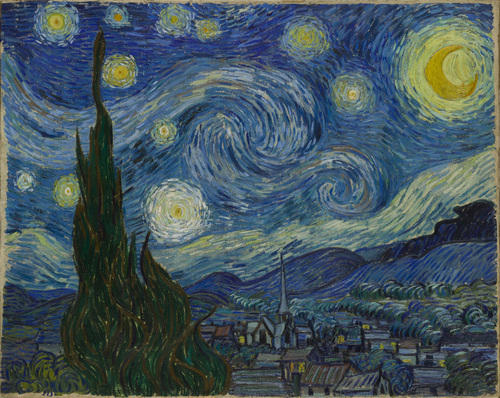
What is it about Vincent Van Gogh’s painting “The Starry Night” that touches so many of our human hearts?
At the end of December I was wandering through the Museum of Modern Art in New York City when I happened upon his masterpiece.
First I noticed the scrum of people who were jockeying for position in front of it.
Then I noticed the guard who had the extraordinary responsibility of making sure that none of the members of the scrum got close enough to damage the painting.
And then I saw it…The Starry Night.
And tears immediately appeared in my eyes.
Even with a crowd of people taking photos of it, taking photos of themselves in front of it, and tweeting and texting their friends about it, “The Starry Night” was serenely, astoundingly beautiful.
I don’t know if I cried partly because I, too, love to gaze at the night sky — amazed at the beauty of the stars and the vastness of the universe — and Van Gogh captures it so well in this painting?
Or if I was reminded of Don McLean’s song “Vincent (Starry, Starry Night),” which speaks so poignantly about how little respect or success Van Gogh earned in his lifetime — as well as his eventual suicide?
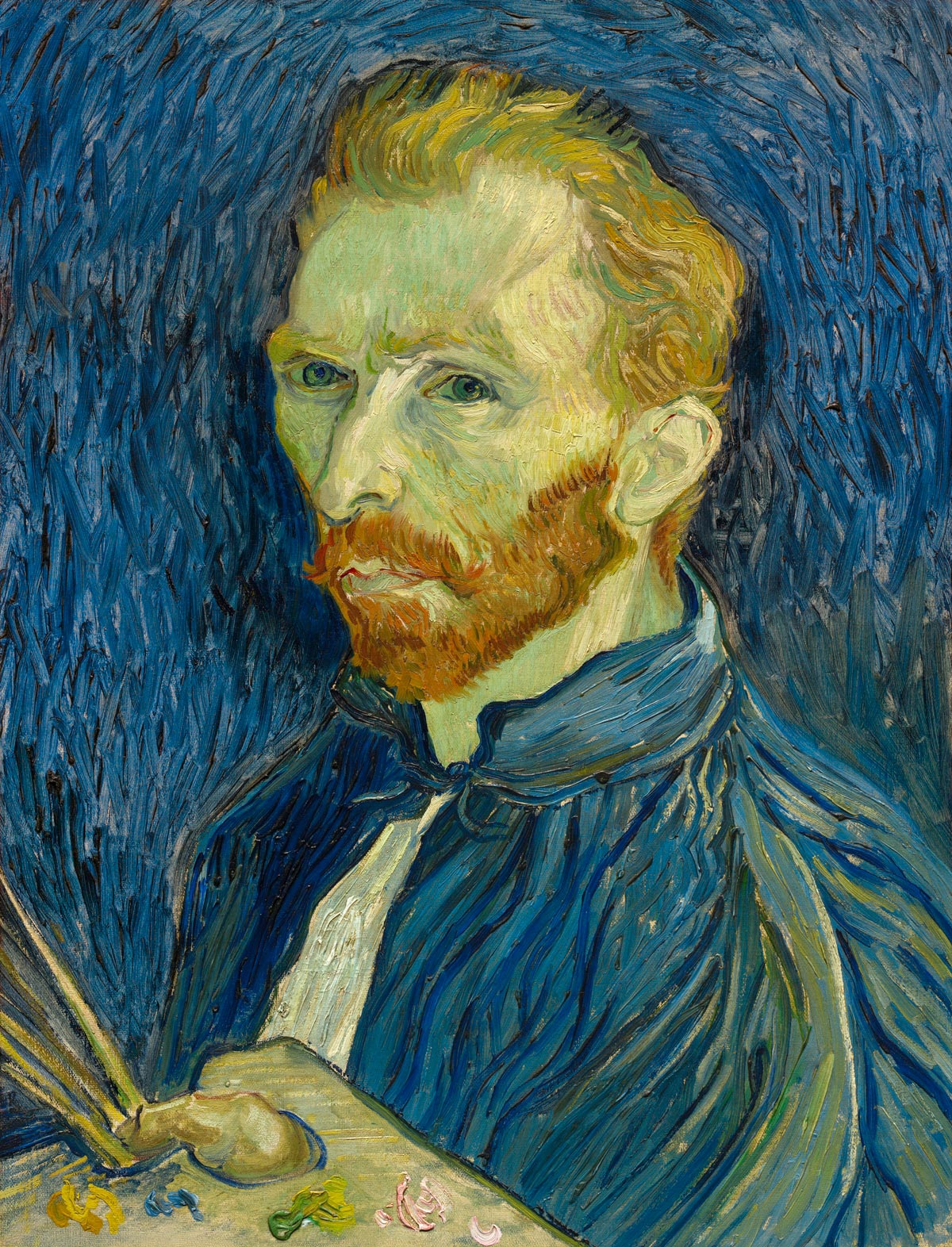
The juxtaposition of the clamoring crowd of art-lovers in the 21st century and Van Gogh’s downwardly mobile existence in the 19th century was odd.
And yet we all still share the same huge questions — about how our finite lives relate to the unimaginably vast realms of space, about what happens to us when our bodies die, about how our wonderful blue-green planet fits into the swirling patterns of the universe, about time…and space…and love…and loss.
Ahh, art.
Ahh, music.
Deep breath in.
Deep breath out.
If you are curious to learn more, here is a link to MOMA’s web page for “The Starry Night.”
Special thanks to pianist Doug Hammer, at whose Dream World studio we recorded the version of “Vincent (Starry, Starry Night)” you can hear by clicking at the top of this blog entry.
One of the things I love most about teaching Music Together is the concept that each person absorbs and processes music in their own way.
Some children — and some adults, too — like to sit still while they soak up the sights and sounds swirling around them.
Others like to move their bodies — swaying, clapping, tapping their toes, nodding their heads, or even jumping up to dance in the center of the circle.
Still others prefer to wander around the room, seemingly oblivious to the musical activity unfolding all around them.
And yet these same children will often start singing their own versions of the songs as soon as they leave class…
I love the respect for different learning styles that is baked into the Music Together pedagogy.
As long as no one is hurting themselves or distracting the rest of the class, whatever she or he wants to do in class is OK.
At times this can make for a somewhat chaotic classroom experience.
But if the teacher and a majority of the adults are able to keep participating — singing, moving, chanting, drumming, dancing, marching, and so forth — the class flows on.
The children copy their accompanying grown up, the teacher, the other grown ups, and the other children.
And I am always looking for movements and ideas from the children and grownups in the class which I can mirror, highlight, and somehow incorporate into the flow of my lesson plan.
It can become a very rich — and fun — environment of “monkey see, monkey do” feedback loops.
I wrote the song at the top of this page, “I’m A Baby Monkey,” before I became a Music Together teacher.
One of the truly magical aspects of a musical life on planet earth in the 21st century is how widely one can share one’s songs if one has access to the internet.
After Bobbi Carrey, Doug Hammer and I — with lots of help from Mike Callahan, Jonathan Wyner, and guest musicians — recorded our CD “If I Loved You,” we heard from family, friends AND folks whom we had never met.
One listener included our version of the David Friedman ballad “I’ll Be Here With You” (which you can hear by clicking on the right hand sidebar of this page) on a CD she sent to her fiance who was serving in the US military overseas.
Another fan — who had been given our CD by a friend — tracked us down and told us that she listened to our music each morning while she worked out. When her husband died, she asked us to sing at his memorial service.
And I recently learned — in a reply to my blog post about music and spontaneity — that a CD of my “Will Loves Steve” show (which features songs written by people named Stephen, Steven, Stevie or Steve) had traveled from Massachusetts to Argentina, where it helped lift the spirits of someone who was feeling very low.
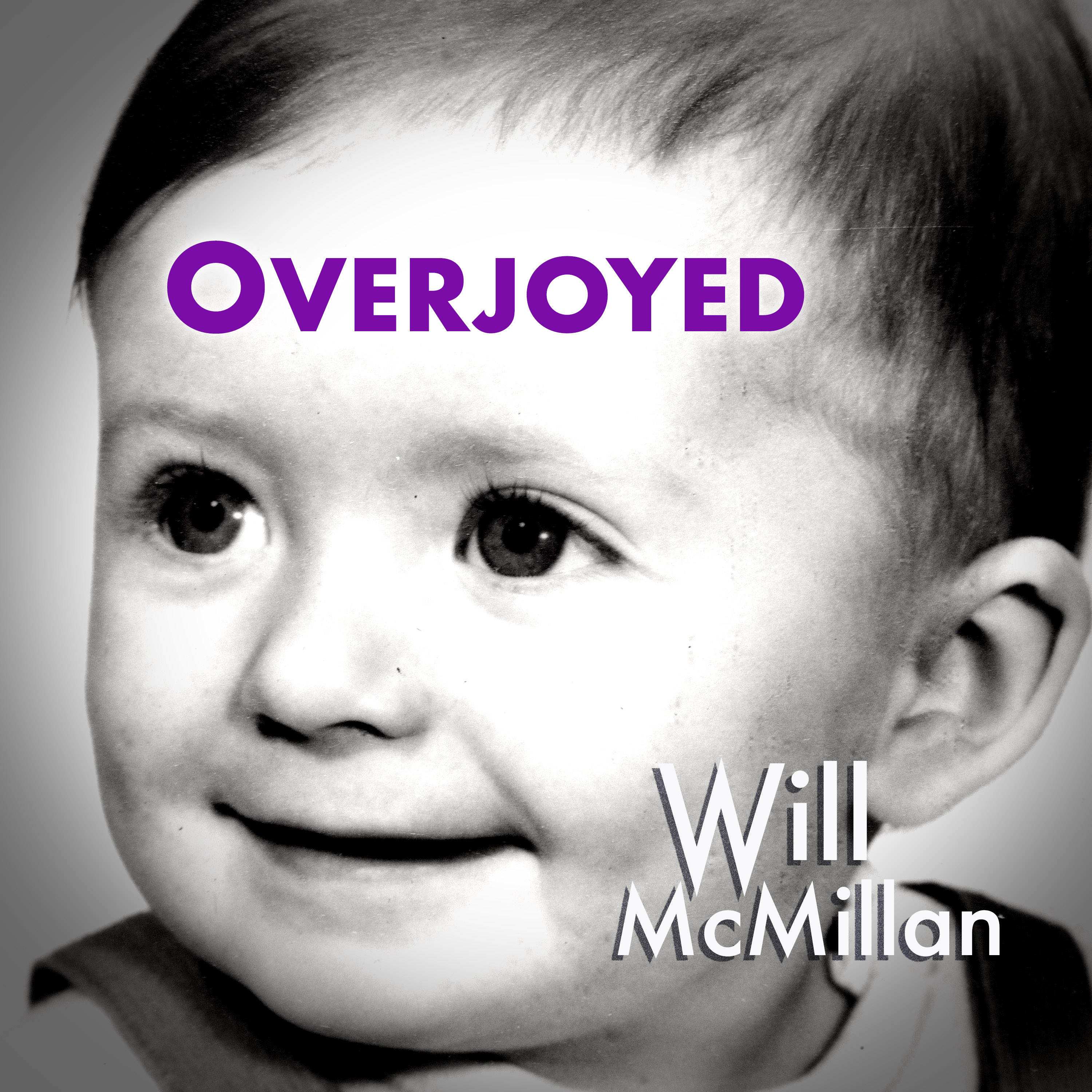
Here’s a selection from that show — “Overjoyed by Stevie Wonder…
Earlier this year a fellow WordPress blogger directed me to new research from the University of Gothenburg in Sweden.
The study — named ‘Kroppens Partitur’ or ‘The Body’s Musical Score’ — monitored the pulses of fifteen choral singers as they made their way through three different exercises: humming, performing a hymn, and chanting a slow mantra.
The authors of the study reported:
“When you are singing, the heartbeat for the whole group is going up and down simultaneously…It gives you pretty much the same effect as yoga breathing. It helps you relax, and there are indications that it does provide a heart benefit.”
This synchronization is thought to be caused by the breathing patterns which the music inspires in the singers.
When they are singing the same melody, they tend to pause to breathe in the same place, and these breathing patterns then influence their heart rates.
I love learning about this research, because it corroborates what human beings have experienced for thousands of years — singing with other human beings is a special, healthy and often uplifting experience.
It also reminds me how important it is to include “sing-along” songs as part of a performance.
Who wouldn’t want an opportunity for a room full of people’s hearts to synchronize?
“Blue Moon” by Richard Rodgers and Lorenz Hart is a song which Bobbi Carrey and I included in our In Perfect Harmony show in hopes that people might sing (or hum or whistle) along with us.
I have included a version that we recorded with Doug Hammer on the piano at the very beginning of this blog post.
I have long been aware of how intimate singing with another person can be — whether in unison or in harmony — but I didn’t realize that Bobbi and I might actually be synchronizing our heartbeats when we perform together.
I have been been blessed to sing wonderful songs written by other people for many years — as the MP3 player on the right hand sidebar of this page can attest.
And every now and then I have helped to co-write a song.
But it wasn’t until a few years ago, when I bought my first ukulele, that I started writing songs on a regular basis.
The song in the player at the beginning of this blog post is one I recorded using my this ukulele and Apple’s wonderful GarageBand program on my laptop.
I love learning about how other songwriters have created their hits.
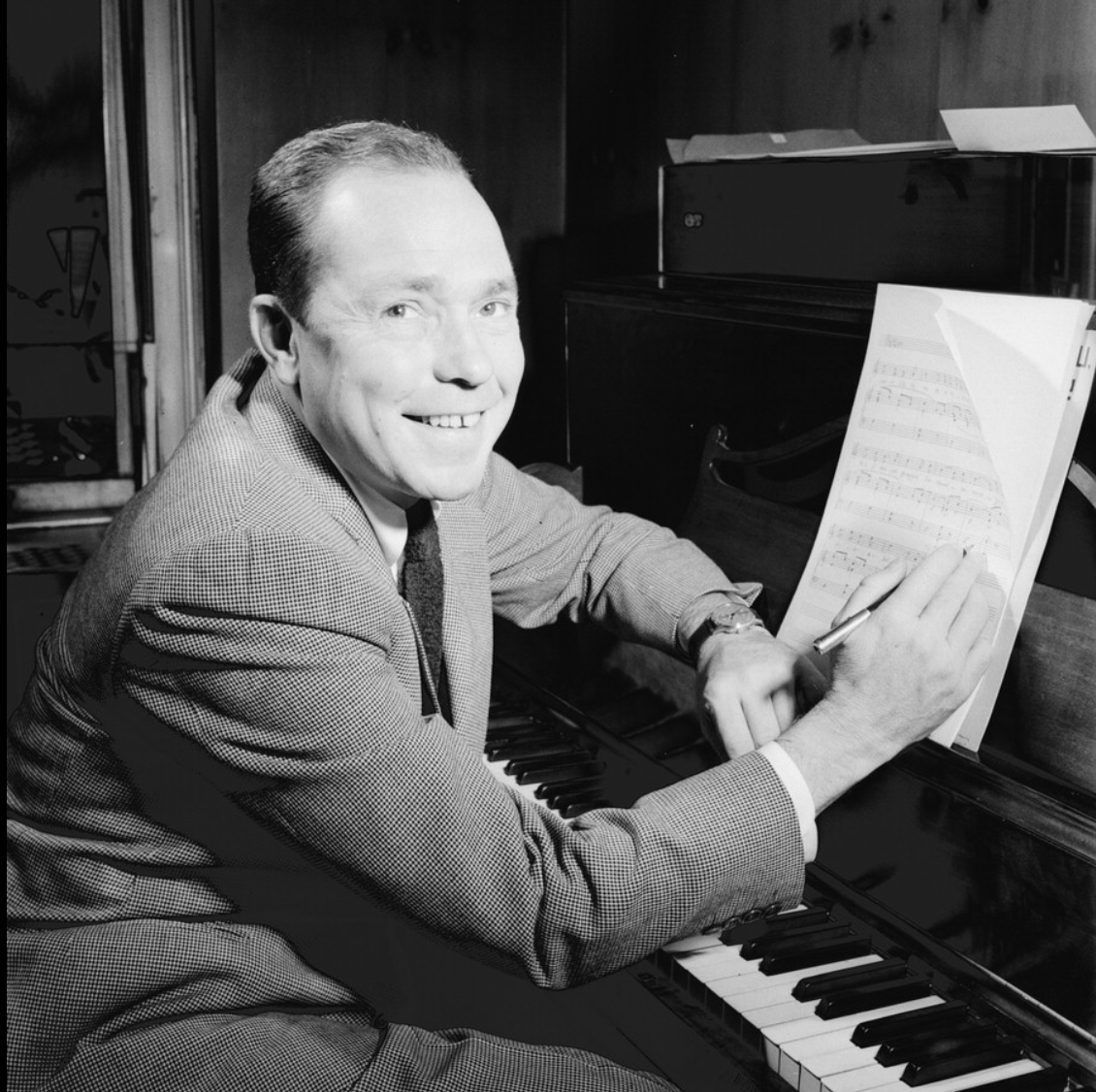
Composer Harry Warren and lyricist Johnny Mercer, for example, co-wrote “Jeepers, Creepers,” “On The Atchison, Topeka and the Santa Fe,” and “You Must Have Been A Beautiful Baby.”
Johnny Mercer in the 1940s
And at some point Warren gave Mercer the nickname ‘Cloud Boy’.
As Warren explained, “A lot of times when I would play a melody for John… particularly if it was after a good lunch… he’d stretch out on a couch and just lie there with his eyes closed and his hands folded across his stomach. He was way up there some place in the clouds. Of course, what came out later was just great.”
When asked by his father about his creative process, Mercer once said, “I simply get to thinking over the song — pondering over it in my mind — and all of a sudden I get in tune with the Infinite.”
Many songwriters have expressed a similar sentiment — that they feel as though they are acting as a conduit or channel for something greater than themselves.
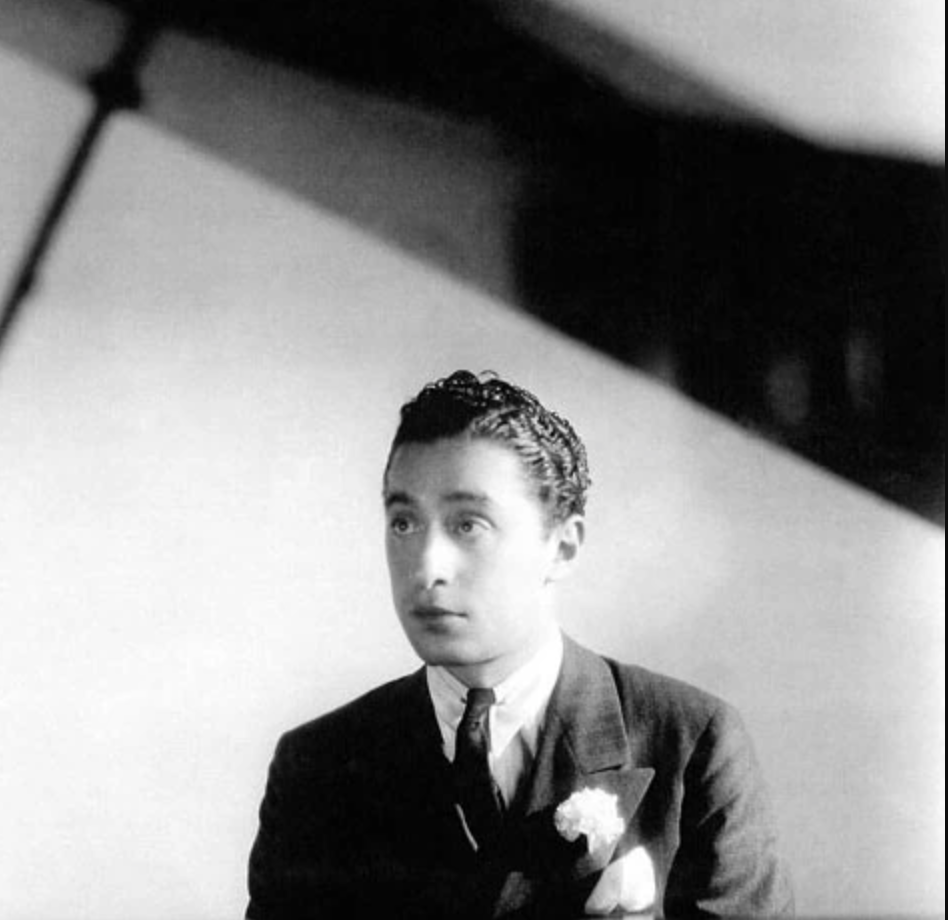
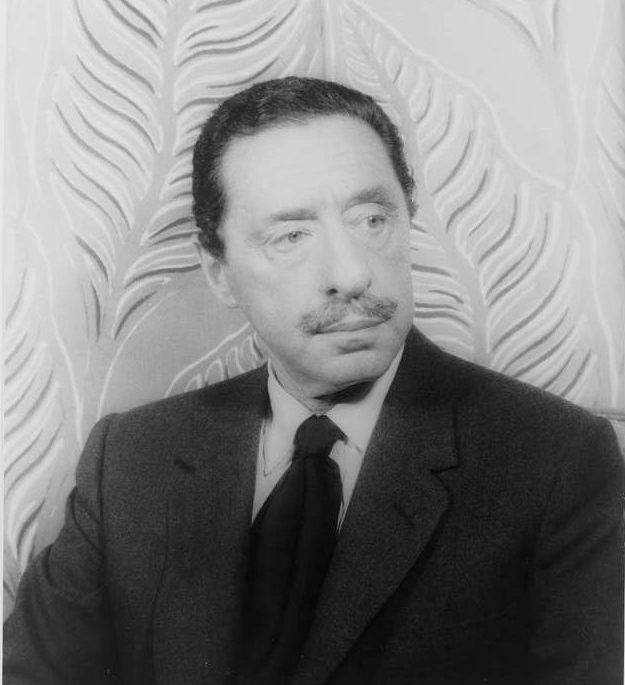
Harold Arlen
The lyricist Ira Gershwin said that the composer Harold Arlen would never “approach the simplest musical requirement or idea without first calling upon ‘the fellow up there’ — jabbing his finger at the ceiling.”
I cannot say that I have experienced this phenomenon yet.
I have, however, noticed that lyrical themes sometimes emerge which surprise me and lead a song in a different direction than I had originally intended.
And I have had the inspiring experience of writing a song which gradually became true.
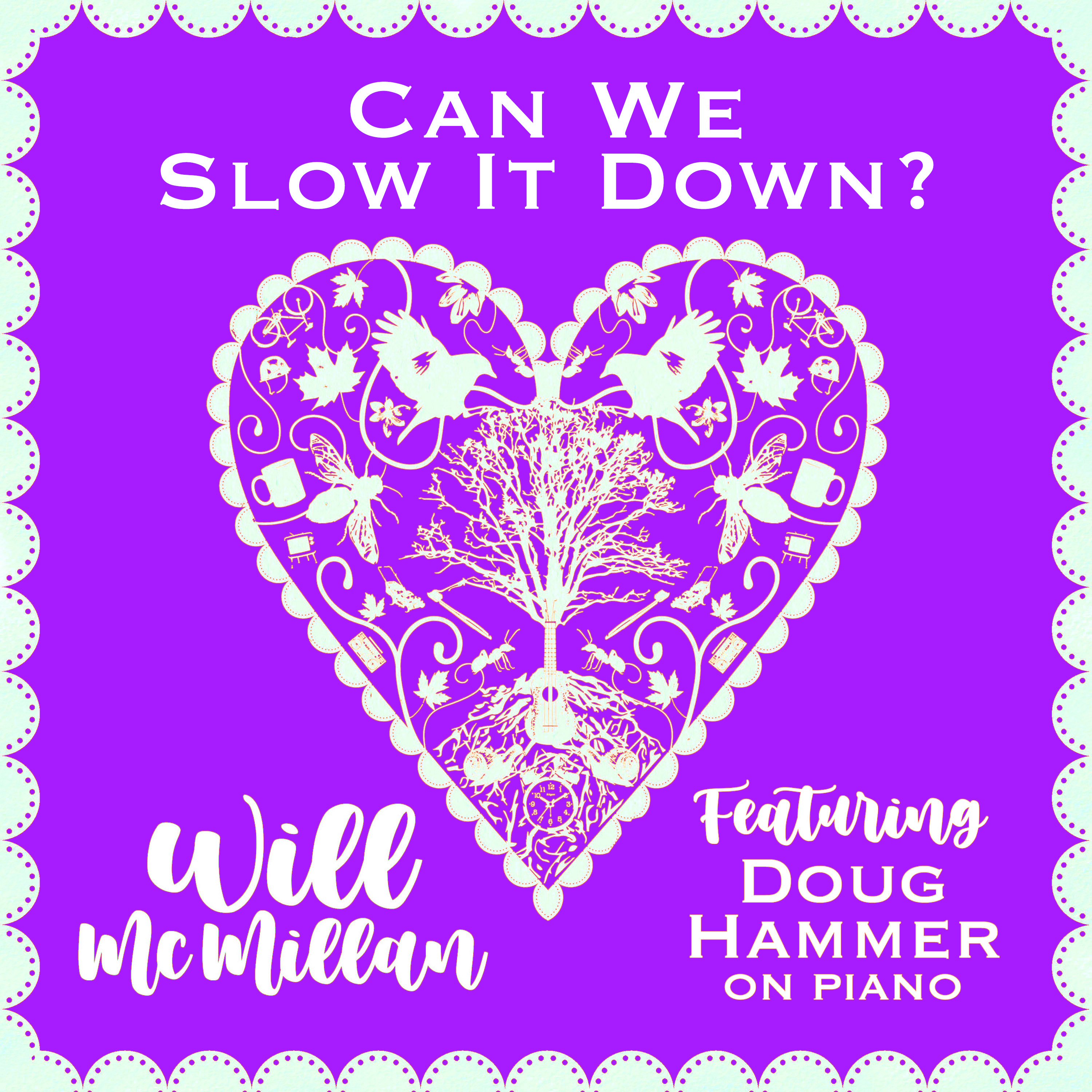
It is called “Can We Slow It Down?” — and I wrote it a couple of years ago when I was working full time at my day job in Harvard Square.
I realized recently when I was practicing it at home that my life has in fact slowed down since I began singing this song.
If you are curious, you can listen to two different versions of “Can We Slow It Down?” — the ukulele + GarageBand version at the top of this page and the piano/vocal version I released with pianist Doug Hammer by clicking here.
I will be singing it plus two other originals as part of a mini-set at a lovely open mic in Lexington — hosted by Nourish Restaurant on Massachusetts Avenue — on Tuesday, November 5, 2013, starting around 7:30 pm.
Steve Heck — a wonderful local pro — is playing the grand piano, and I am singing “Over The Rainbow.”
Harold Arlen
It is one of the songs in a new show about Harold Arlen which I have recently begun performing with pianist Joe Reid.
After Steve takes a piano solo, I re-enter at the bridge of the song (“Some day I’ll wish upon a star…”) and then I hear elevator doors opening behind me.
Three women — friends of Steve Heck, I later learn — appear on stage with me.
They did not realize that the elevator would deposit them there.
I turn and — still singing — welcome them so that I can escort them across the stage and down into the audience.
But as I do this, I realize that they probably love music and very likely know the words to “Over The Rainbow;” so I encourage them to stay with me onstage and sing — which they happily do.
One woman in particular catches my attention because she is adding a beautiful harmony in a great big, belting voice.
We make eye contact as the song builds to a dramatic climax of “Why oh why can’t I?” — each of us singing at the top of our lungs, my microphone completely unnecessary.
The entire series of events lasts less than a minute, and the entire room is happily caught up in the moment.
Afterwards, during a break period, I am asked how I managed to time their arrival so perfectly.
I explain that I had never met them before and that the entire experience was utterly spontaneous — unfolding moment by moment with no guidance other than the lyrics of the song, Steve Heck’s solid accompaniment, and our shared love of music.
Ahh, music!
Ahh, spontaneity!
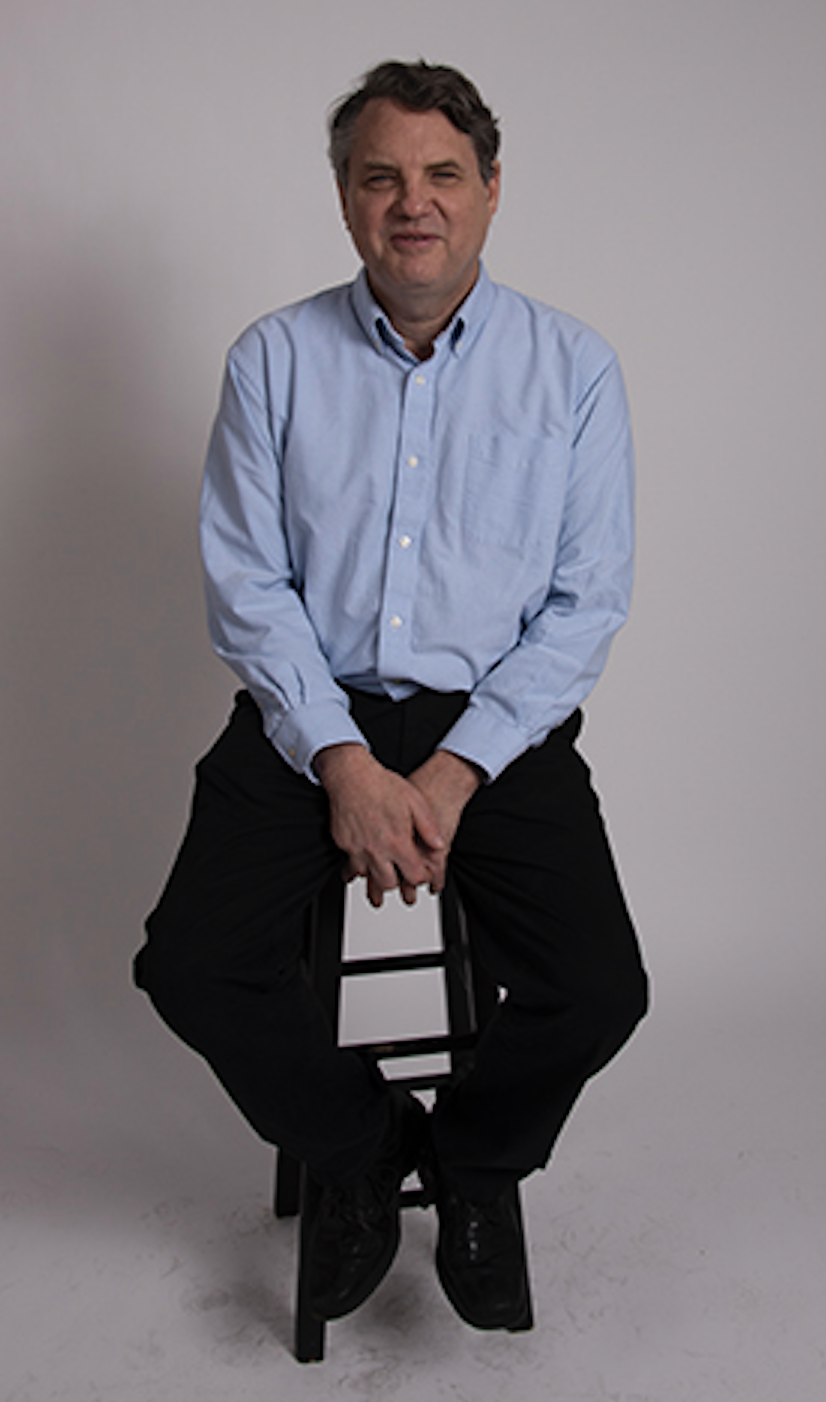
Joe Reid
I have been experiencing a lot of spontaneous musical moments in the past few months.
Joe Reid and I put together our hour-long Harold Arlen program in one rehearsal that lasted about two hours.
He is a jazz pianist who is very comfortable making music in the here and now.
I brought a bunch of Arlen sheet music to his house plus a rough idea of a song run order.
We double-checked the keys for all the songs, played each one through once or twice, and Joe was ready to take it public.
So far we have performed at two retirement communities with very enthusiastic audiences (and we did get together for another hour-long rehearsal between our first and second performances…)
I also spent many additional hours making sure I knew exactly how the song was originally written, reading several books about Arlen I ordered from my local library, recording practice piano tracks with Doug Hammer, memorizing lyrics, and writing the “patter” to lead from one song to the next.
All of this preparation helps me to surrender to the moment when we are performing these wonderful songs.
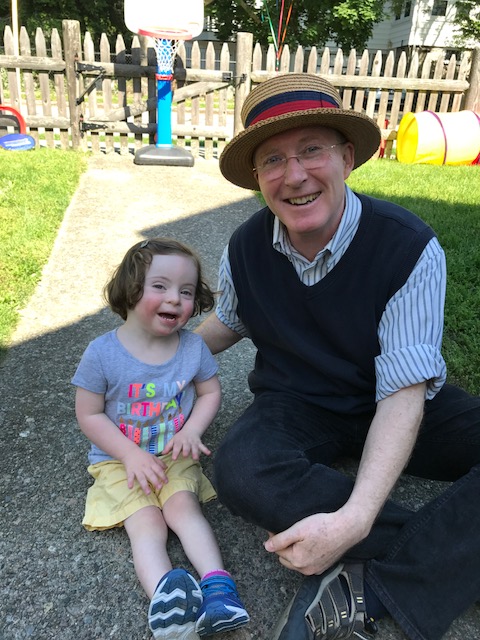
Me and one of my favorite MT participants of all time!
I have also begun leadingMusic Together (MT) classes in Arlington and Belmont (a neighboring town where Mitt and Ann Romney used to live).
MT is a very-well-researched and very-well-planned program to introduce small children — along with their caregivers — to the joy and fun of active music-making.
Although participants are encouraged to learn 30 new songs accurately — each one carefully selected to include a wide variety of keys and rhythms — per semester, we teachers are given free rein to be spontaneous and improvisatory during class.
I am sure my training during the past six months to become a MT teacher helped me to go with the flow at the BACA open mic when those three women appeared onstage.
And I have experienced many moments of musical connection with children and caregivers during my first two weeks of MT classes which have given me a similar jolt of delight.
I think this might be what I am supposed to be doing here on planet earth…
The song in the player at the beginning of this blog post is a Harold Arlen/Johnny Mercer classic called “Accentuate the Positive” which I recorded with pianist Doug Hammer during a rehearsal for the “Mostly Mercer” show that singer Bobbi Carrey and I created last year.
It’s a new show called “In Perfect Harmony” with fellow singer Bobbi Carrey and pianist/composer Doug Hammer — in which all the songs include at least a partial harmony somewhere.
Because we have been performing together for ten years — and since one of our favorite things to do is sing in harmony — we have a lot of material to choose from.
The show also includes quotations and anecdotes about the process of collaboration — which for us has involved a great arranger, Mike Callahan.
From time to time we send Mike recordings from our rehearsals, along with detailed notes about which harmonic ideas we think show promise and which need help.
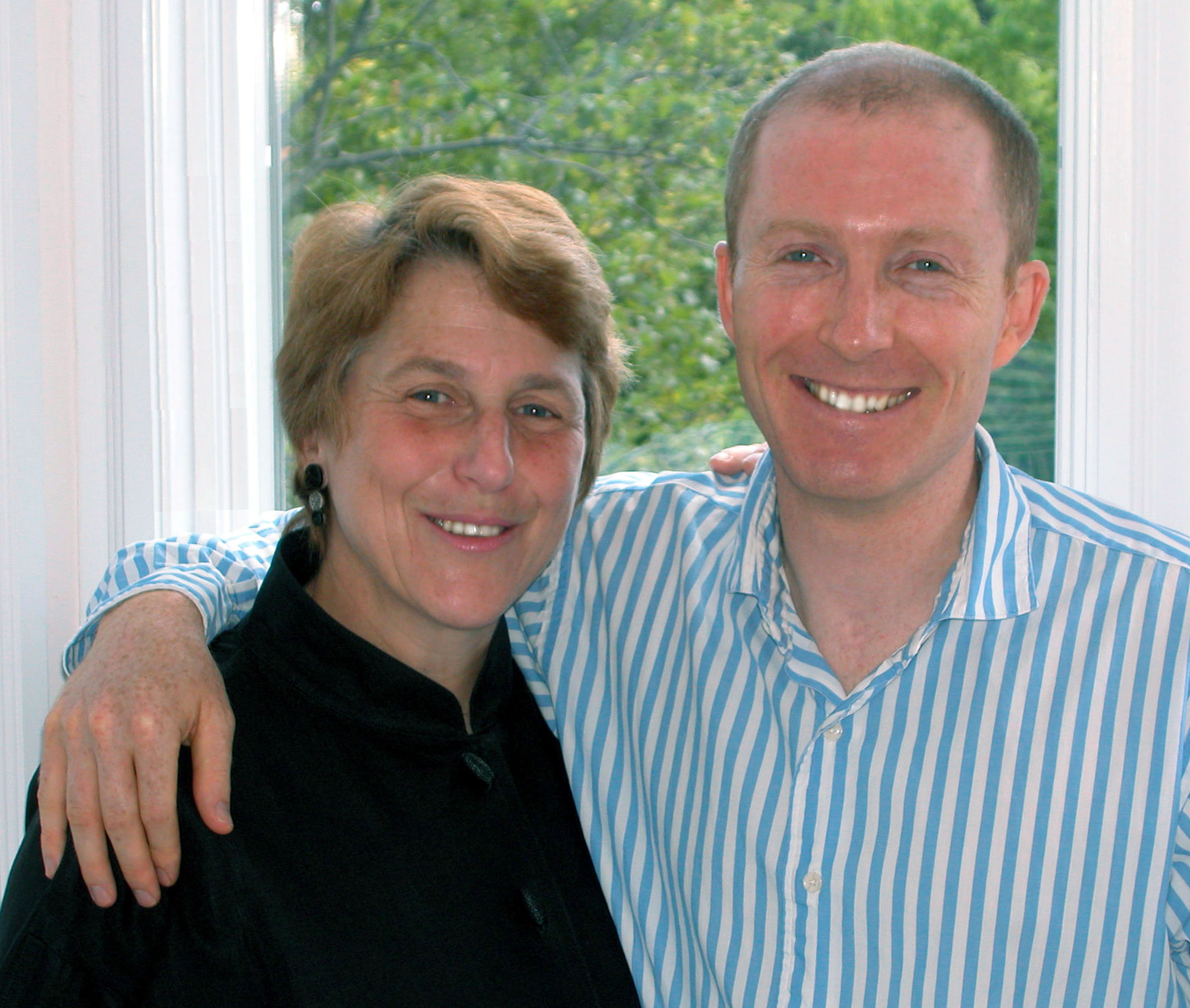
Bobbi and me after a rehearsal
Invariably he sends charts back to us that both improve our ideas AND surprise us with some great new musical impulses.
At the top of this blog post is our version of the Johnny Mercer/Henry Mancini classic “Moon River” if you are curious to hear the fruits of this collaborative process.
Deep breath in.
And deep breath out.
There is something very intimate and satisfying about singing with someone else — whether in unison or harmony.
And since electricity entered — and in many ways took over — our daily lives during the last century, our patterns and habits of singing have certainly evolved…
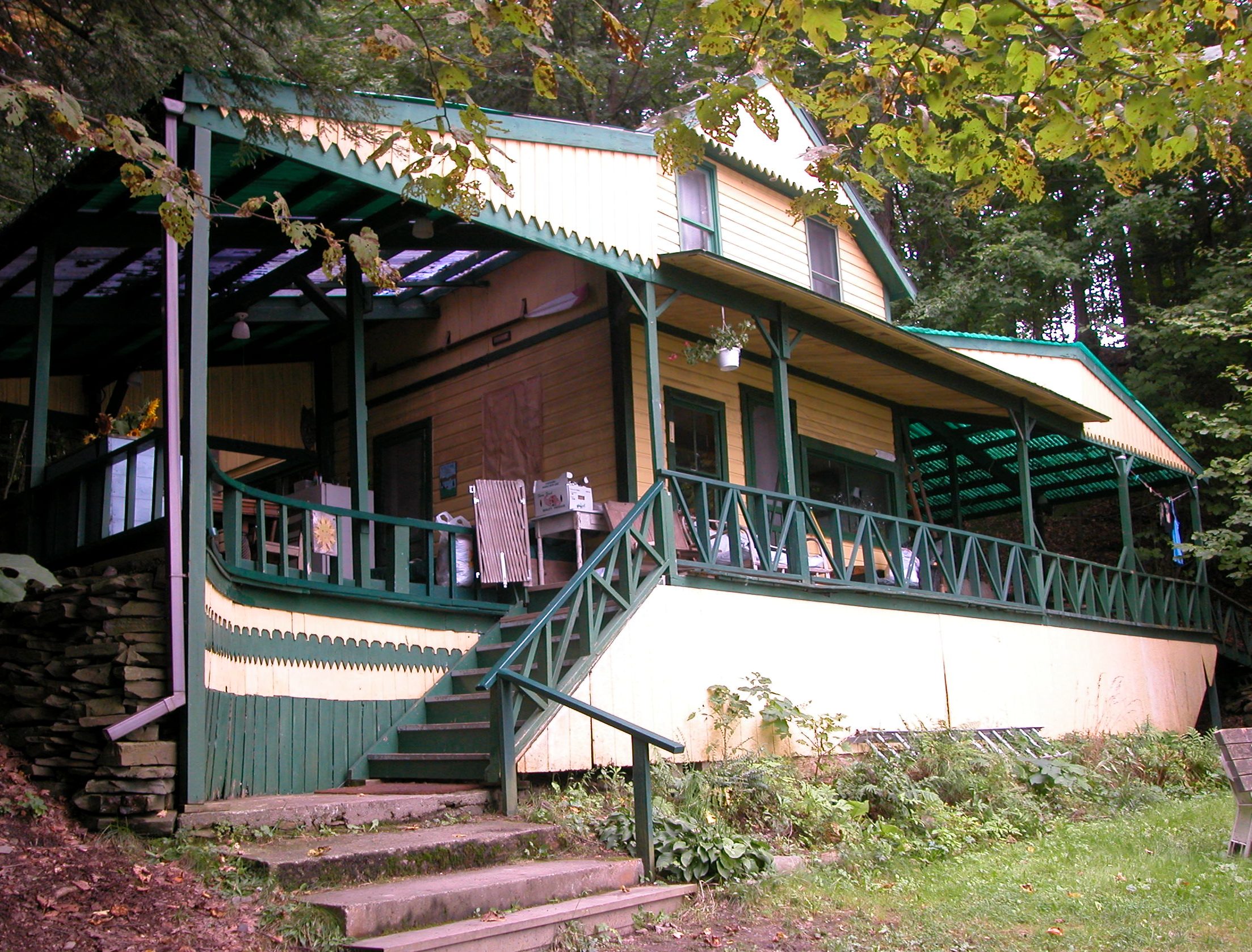
Rice Heritage Cottage
Crooning along with the radio or a CD or a song being streamed on Pandora or Spotify is great — yet it’s very different from singing with another real live human being in the present moment.
My great grandfather James E. Rice bought this cottage (I think from fellow Cornell professors John Henry Comstock and Anna Botsford Comstock — who was the first woman to become a professor at Cornell University).
James E. Rice was a professor of poultry science at Cornell and had a farm — called the Egg and Apple Farm on Rice Road — just up the hill from this cottage in Trumansburg, NY.
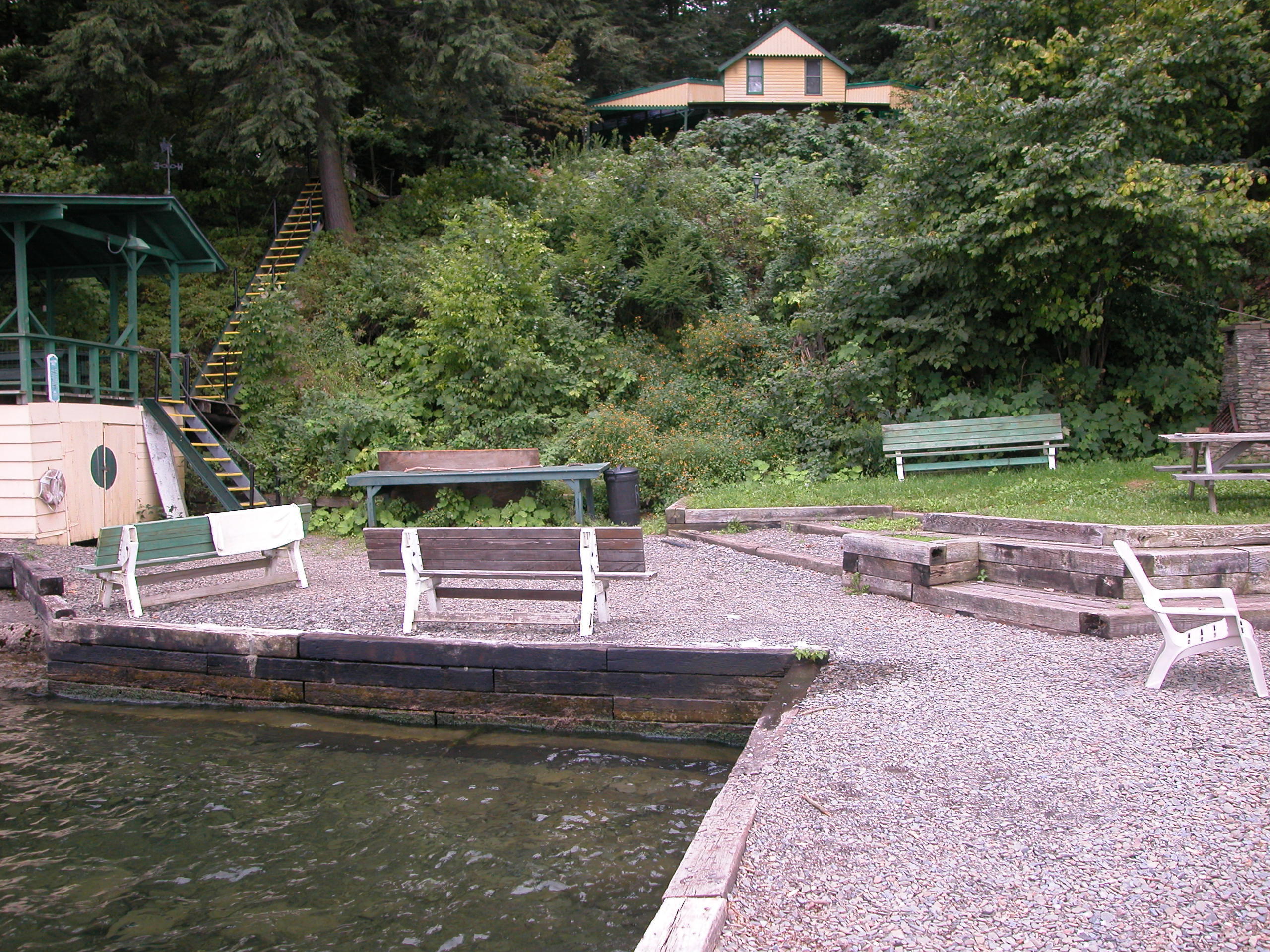
The uphill view from dock to cottage…
He and his wife Elsie Van Buren Rice raised six children — three girls and three boys — almost all of whom ended up owning farms, too, when they grew up and married.
Sadly, however, Elsie died when their youngest daughter was still a teenager.
James ended up leaving the family’s cottage — overlooking Cayuga Lake — to his six children plus their descendants.
And many of his descendants continue to take turns staying there each summer in one- and two-week increments of time.
This summer one of my older cousins told me about songs she had heard as a child from her parents and grandparents — some of which were originally sung by people working outside in gardens and fields as a way (according to my cousin) to pass the time and remain connected with their neighbors.
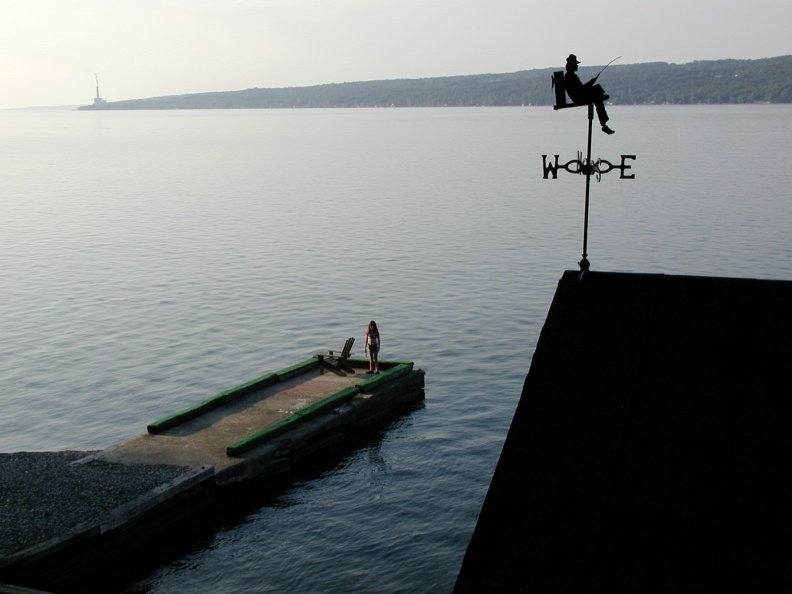
The downhill view of dock and boathouse…
What a different era — and mode — of human connectedness!
Another deep breath in.
And deep breath out.
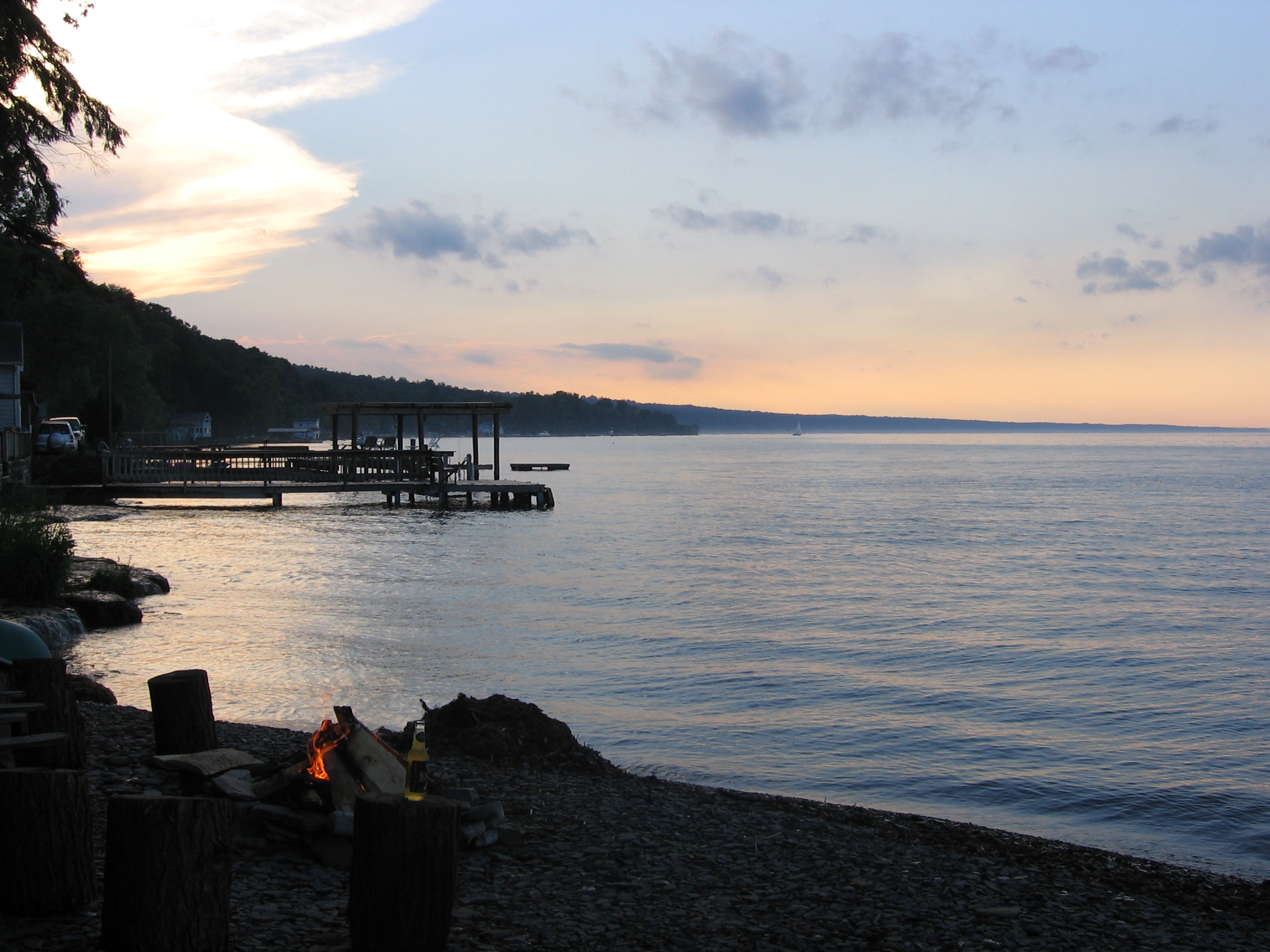
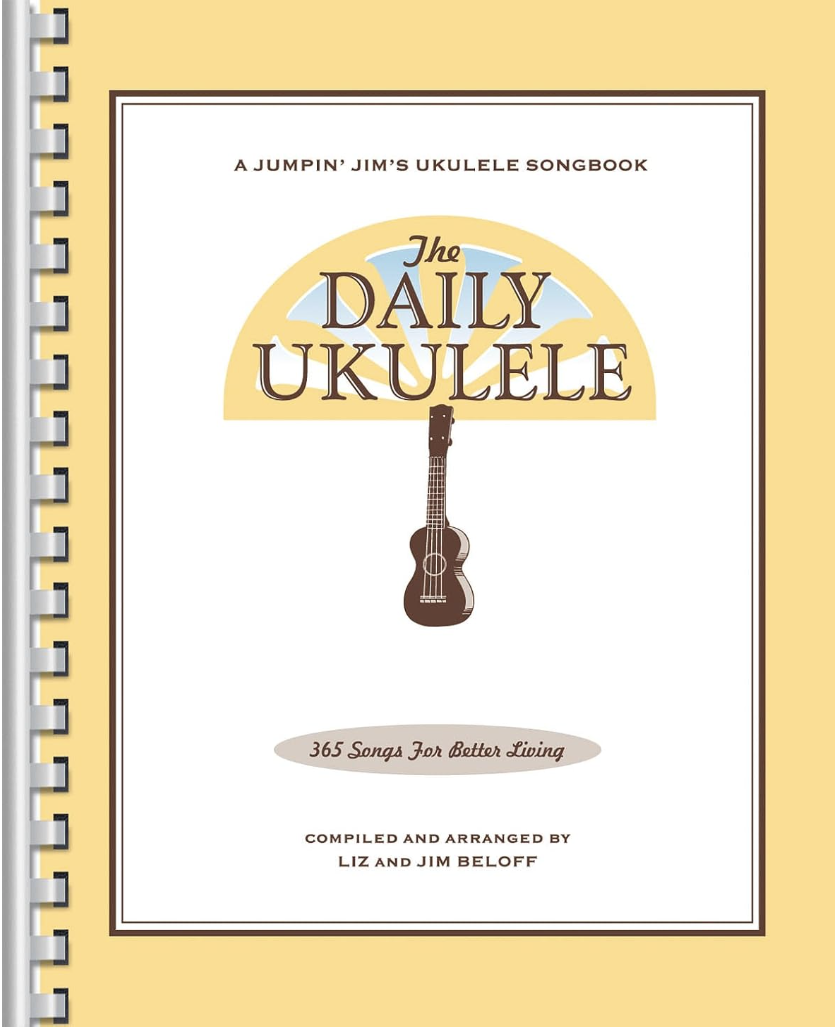
Using my ukulele and the great “Daily Ukulele” songbooks, we sang together most nights on the beach around a camp fire — while the younger members of our family roasted marshmallows and made s’mores for all to eat.
Yum!
I could do this for hours — and in fact on the last night I did play without a break for over three hours.
The beach with campfire at twilight…
Music.
Stars above.
Friends and family all around.
Lake water lapping with low sounds by the shore.
Bliss.
THANK YOU for reading — and listening to — this (recently updated) blog post.
Thank you to my great grandfather and great grandmother for their generous foresight in buying this cottage and then leaving it to their descendants.
And thank you to all of my cousins who have pitched in — decade after decade — to keep the Rice Heritage intact and functional for generations to come.
I started playing the ukulele three years ago after attending a class in Harvard Square led by the marvelous Danno Sullivan.
Danno Sullivan
Not only is Danno an inspiring teacher, he also has a terrific sense of humor — sprinkling his classes with droll asides and insights.
Since then I have been strumming on a regular basis — thanks to Danno’s handouts, the wonderful Daily Ukulele songbook, and the amazing group mind of the internet (where one can find chords and lyrics for almost every song under the sun).
Soon after discovering the chords for Coldplay’s song “Viva La Vida” on line, I realized that many of my favorite pop songs have a surprisingly simple structure — four chords.
And some do fine with just three chords — as in the case of Bobby McFerrin’s “Don’t Worry, Be Happy.”
And thus my life as a budding songwriter took root…
Deep breath in.
Deep breath out.
I had written lyrics in the past with a friend, pianist/composer Steve Sweeting (and you can listen to one of the songs we created together called “Stuff” by clicking here if you are curious).
I had also collaborated on a couple of songs with a guitarist friend (again as a lyricist).
And I had co-written a couple of songs with bandmates in a pop/rock band.
But until I picked up a ukulele, my songwriting efforts had been restricted to what I could cobble together using Apple’s blessed GarageBand program — songs consisting of my vocals plus various loops and samples from the GarageBand library.
Now, in the past three years, I have written a bunch of ukulele-based songs.
And in the past month I have attended three singer-songwriter open mics — accompanying myself (solidly but not very gracefully) on the ‘uke.
In addition to helping me write songs, the ukulele has also given me a new way to hang out with my mom, with my dad, and with other friends and family members.
All I have to do is pick up a ‘uke, open up a songbook, and start strumming.
Almost invariably the mood in the room shifts to something lighter and (literally) more harmonious as everyone starts to hum and sing along.
I find this to be somewhat magical and amazing.
And it inspired me to write the song featured at the beginning of this blog post — a version which I recorded with Doug Hammer playing a shaker egg and his Schimmel grand piano — as well as a GarageBand version I recorded by myself using my Apple laptop (which I have included below.
I highly recommend that anyone reading this blog post consider buying a decent (but inexpensive) ukulele.
Then you can check out all sorts of fun, free, instructional videos on YouTube AND start attending a wonderful, welcoming ukulele Meetup gathering near you.
They happen all across the USA — and in many other countries around the world.
And the sound of many ukuleles being strummed together is quite heavenly.
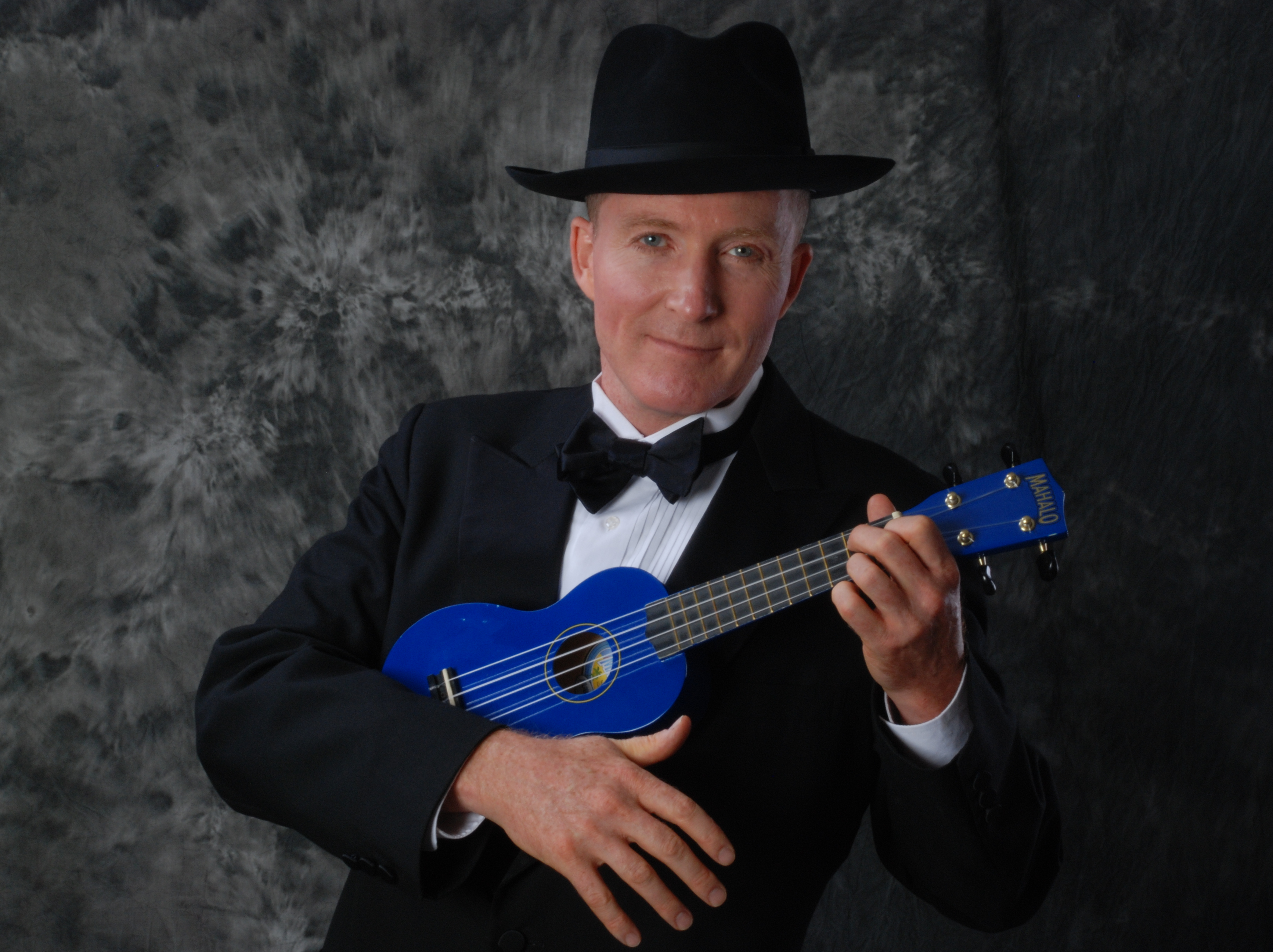
Me and my first ukulele (Photo by Stephen C. Fischer)
Thank you, too, to Danno Sullivan for his excellent instruction and ongoing inspiration.
Thank you as well to the Cambridge Center for Adult Education for offering ukulele classes with Danno (and to Michael Cicone — then head of educational programming at CCAE — for hiring Danno in the first place).
Thank you to Stephen C. Fischer for his fun — and very patient — photography sessions.