One of my favorite bloggers is Dan Kennedy, who has worked at many different media organizations in the Boston area and is now a professor at Northeastern University.
He writes about what is happening in — and to — the media here in the USA.
My boss Diane Wortis and I created (and then produced annually for five years) a day-long conference called “Arts & The Media” which allowed us to call everyone who had anything to do with arts coverage in the Greater Boston area and invite them to participate on a panel.
This included folks from our big papers (including The Boston Globe, The Boston Herald, and The Boston Phoenix) — to folks at radio and TV stations, to folks who worked for smaller local papers and magazines.
Our conferences started happening as Mitt Romney’s private investment company Bain Capital was buying up a bunch of local daily and weekly newspapers in the greater Boston area and consolidating them into one company — which meant that the staff at all of these formerly independent papers was being slashed and lots of generic (non-town-specific) content was starting to be written which could be printed in many different papers within this new chain.
I bore witness firsthand to the degradation of media coverage as a result of large-scale, corporate consolidation.
And twenty five years later, that trend of media consolidation has only worsened.
All of this is to explain why I write near the end of this song — “May our press remain vital, always truth pursuing…”
Reading our local papers and nurturing relationships (via hundreds of hand-written thank you cards) with local arts writers and arts editors for over a decade helped me to understand how crucial the Fourth Estate is to a functioning democracy with healthy checks and balances.
Dan writes in his blog about what is going poorly (media consolidation continues, ad revenues drop…) and also where there are glimmers of hope via new models of local journalism.
And sometimes he weighs in on journalistic best practices.
He steered me to a speech Marty Baron gave at Brandeis University a few years ago which touched upon the fascinating topic of objectivity.
Mr. Baron used to be the editor of The Boston Globe and then became the editor of The Washington Post.
Here’s the heart of what Marty had to say:
“Objectivity is not neutrality.
It is not on-the-one-hand, on-the-other-hand journalism.
It is not false balance or both-sidesism.
It is not giving equal weight to opposing arguments when the evidence points overwhelmingly in one direction.
It does not suggest that we as journalists should engage in meticulous, thorough research only to surrender to cowardice by failing to report the facts we’ve worked so hard to discover…
The idea is to be open-minded when we begin our research and to do that work as conscientiously as possible.
It demands a willingness to listen, an eagerness to learn — and an awareness that there is much for us to know.
We don’t start with the answers.
We go seeking them, first with the already formidable challenge of asking the right questions and finally with the arduous task of verification.”
Deep breath in.
Deep breath out.
Graphic by Stephen C. Fischer
May our media in the USA stop kowtowing and collapsing… and realize that they are just as vulnerable as the rest of us to arrests in the middle of the night, arrests while we are walking from campus to our apartment, arrests while we are in a courthouse following all the rules about how to become a US citizen, arrests while we are picking vegetables, arrests while we are doing our laundry in the middle of the night.
If you might be kind enough to stream it —and maybe even “like” it and add it to one of your playlists if you are so moved — that would be very helpful to feed positive data into the various algorithms which decide whose music gets played and how often…
I am using some of my recent favorites to illustrate this blog post.
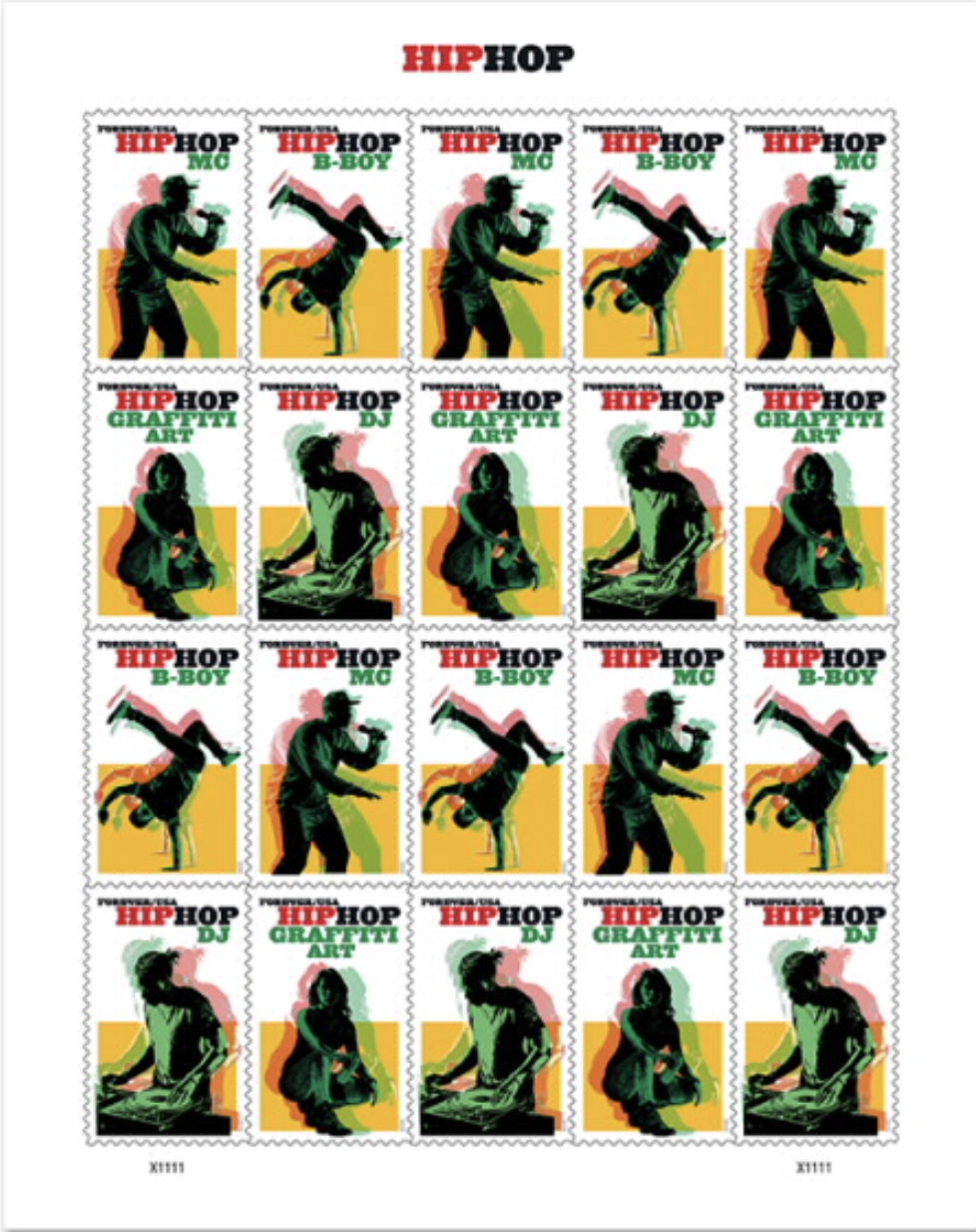
I feel the postal service is one of the things that still connects all of us — and that we all continue to use on a regular basis — regardless of political ideology, religious affiliation, racial ancestry, and socio-economic status (although the rates going up and up and up certainly make it more expensive to use…)
I also like our postal carrier, Rob.
He has been assigned to our neighborhood for the past decade (at least), and his familiar face — and warm personality — weave all of us in this section of East Arlington together on a daily basis.
Mostly what I receive in the mail are bills, credit card statements, requests for money from organizations to which I may have given a tiny amount of money in the past (or from new organizations to whom someone has given or sold my name and address) and advertisements.
On very rare occasions, I get a handwritten — and sometimes even a handcrafted! — card.
And I savor it…
Deep breath in.
Deep breath out.
I am not sure exactly what makes a hand-written card/note/letter different from an email/text message.
There is the pleasure of seeing a person’s individual, idiosyncratic, and — in a few cases — beautiful handwriting.
I also like knowing that the person who wrote it has touched the same paper and the envelope and the stamp that I am now touching as I rip it open and read it.
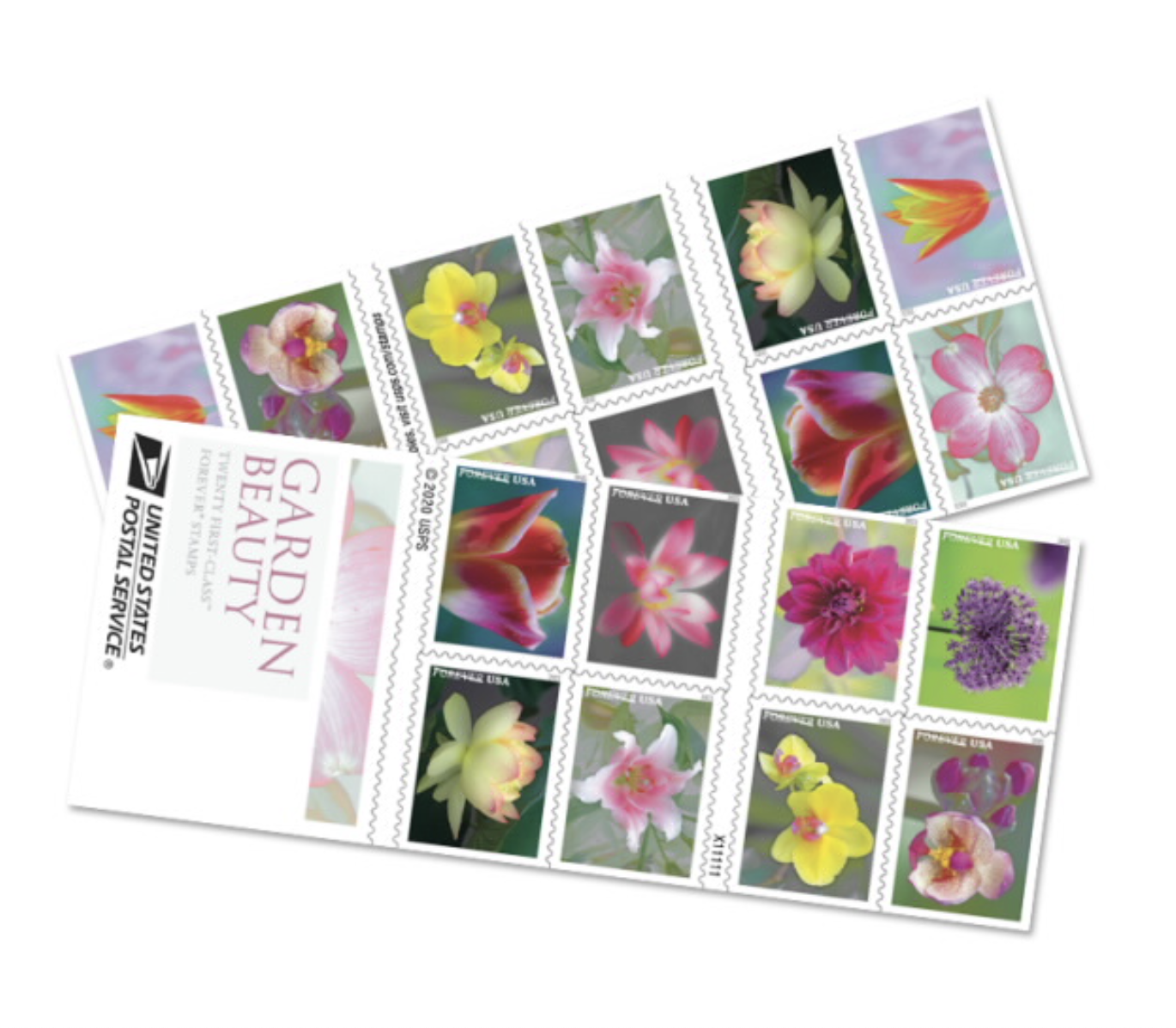
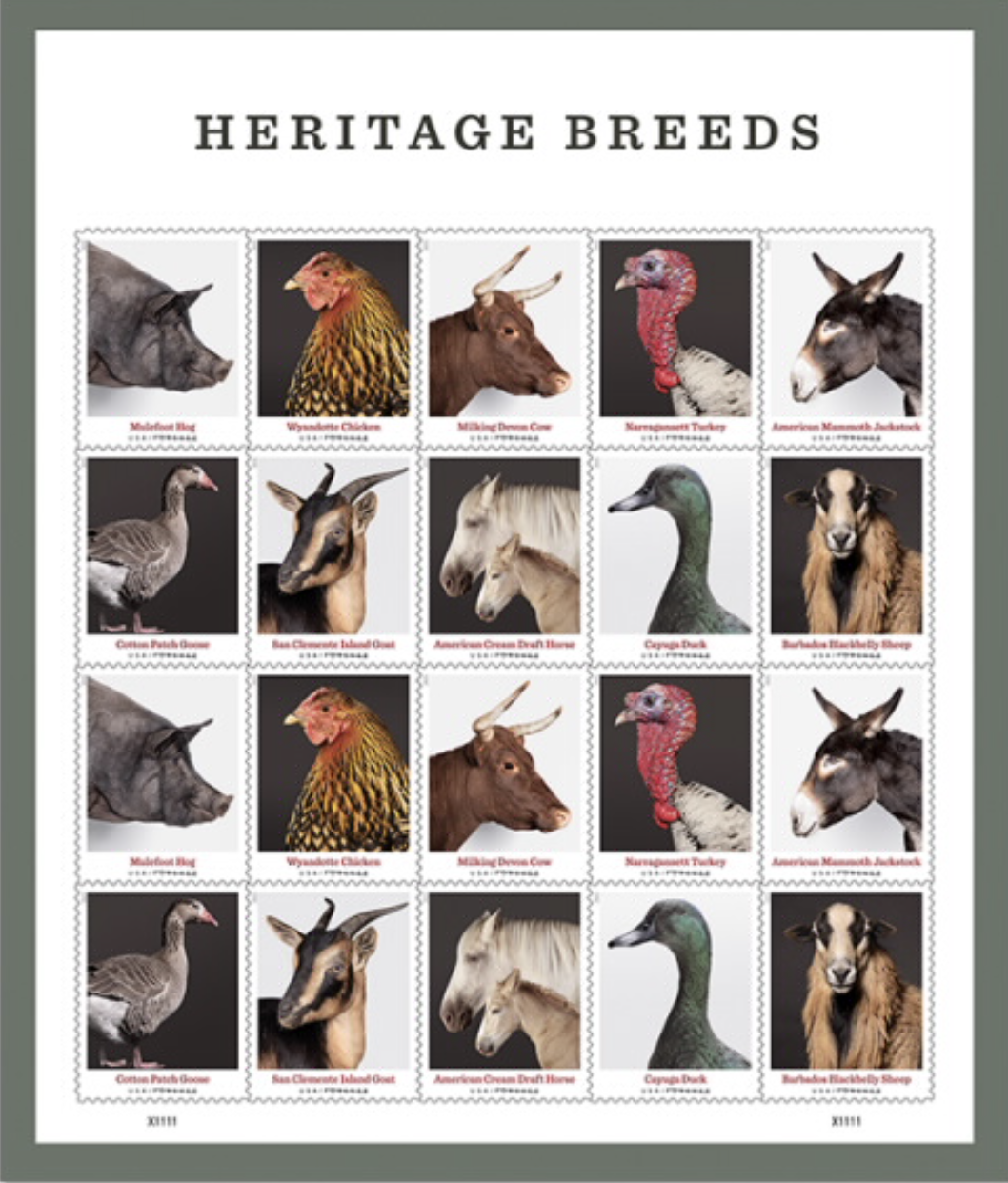
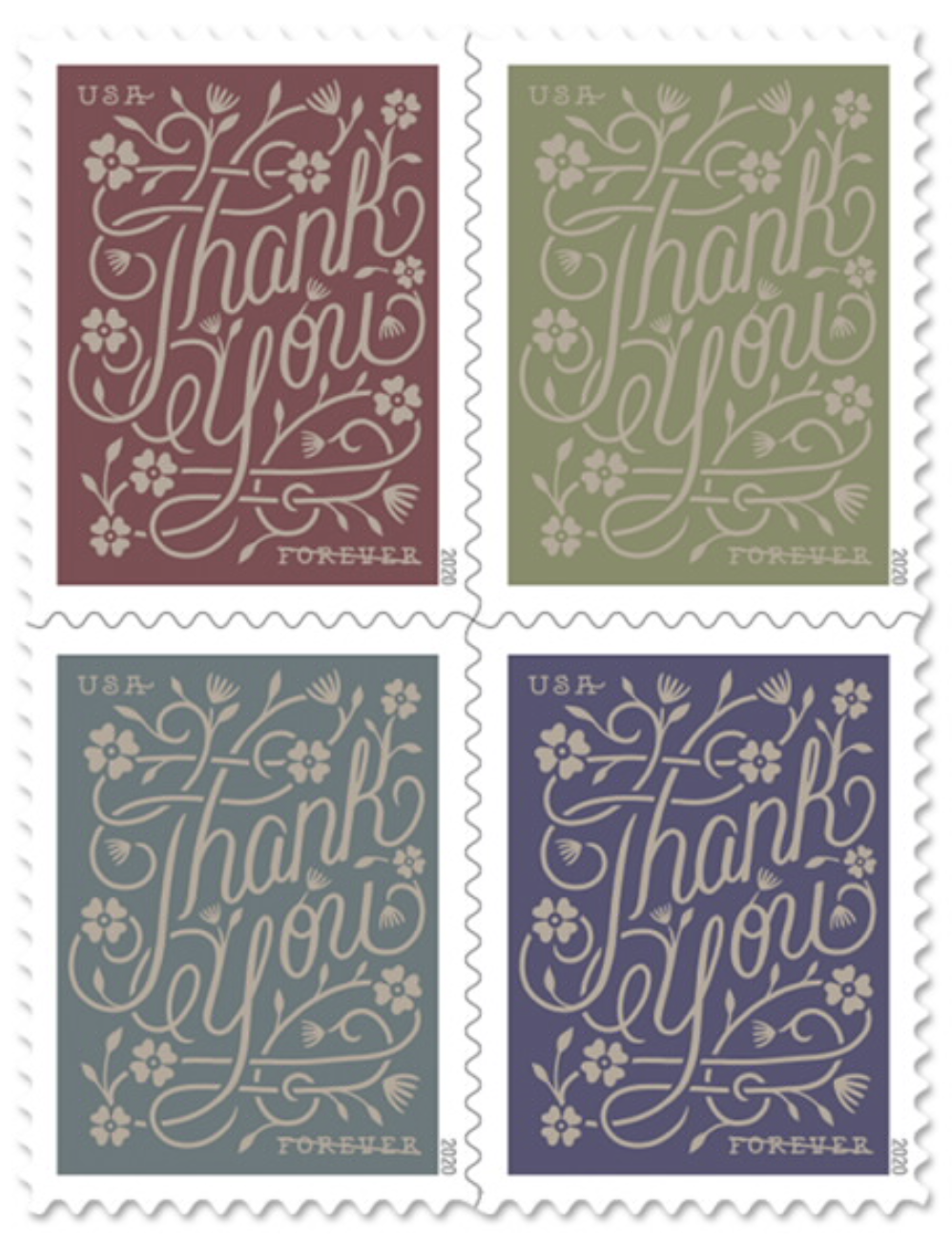
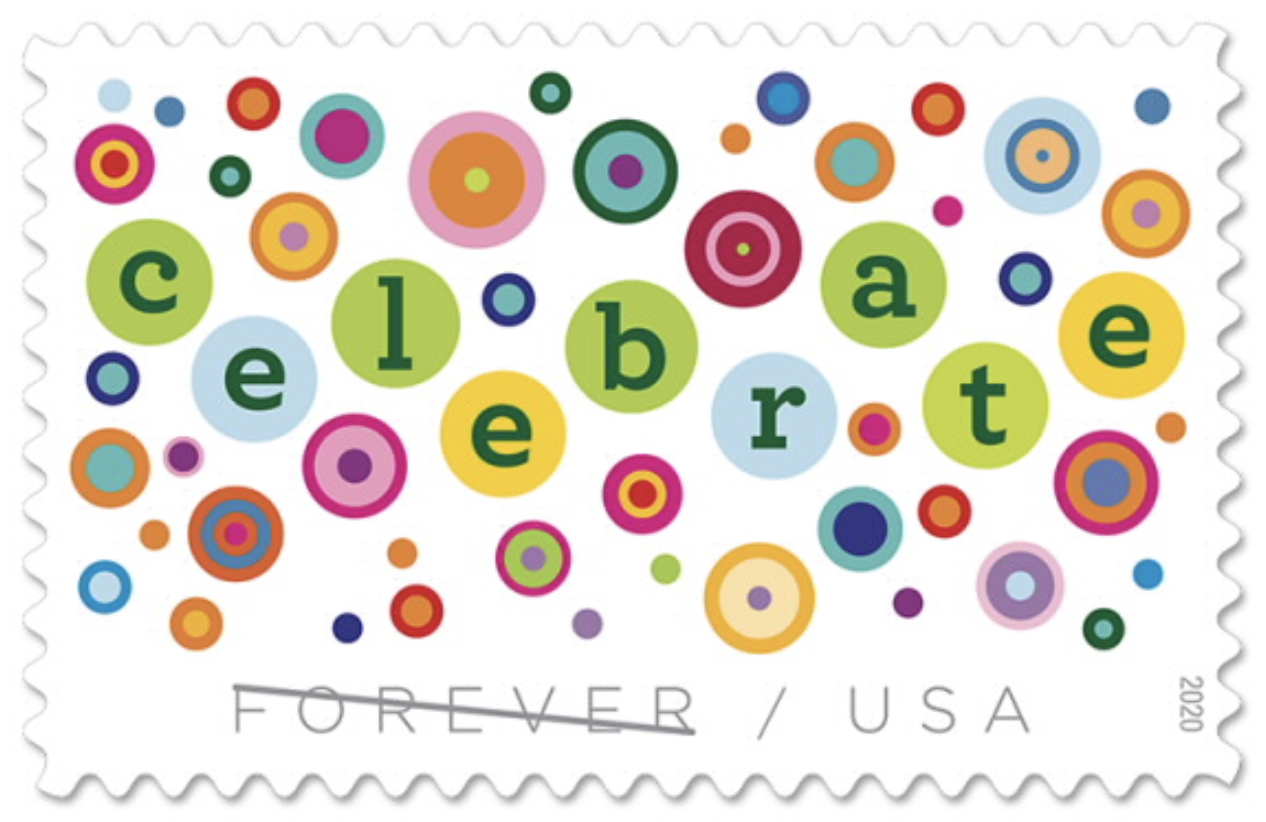
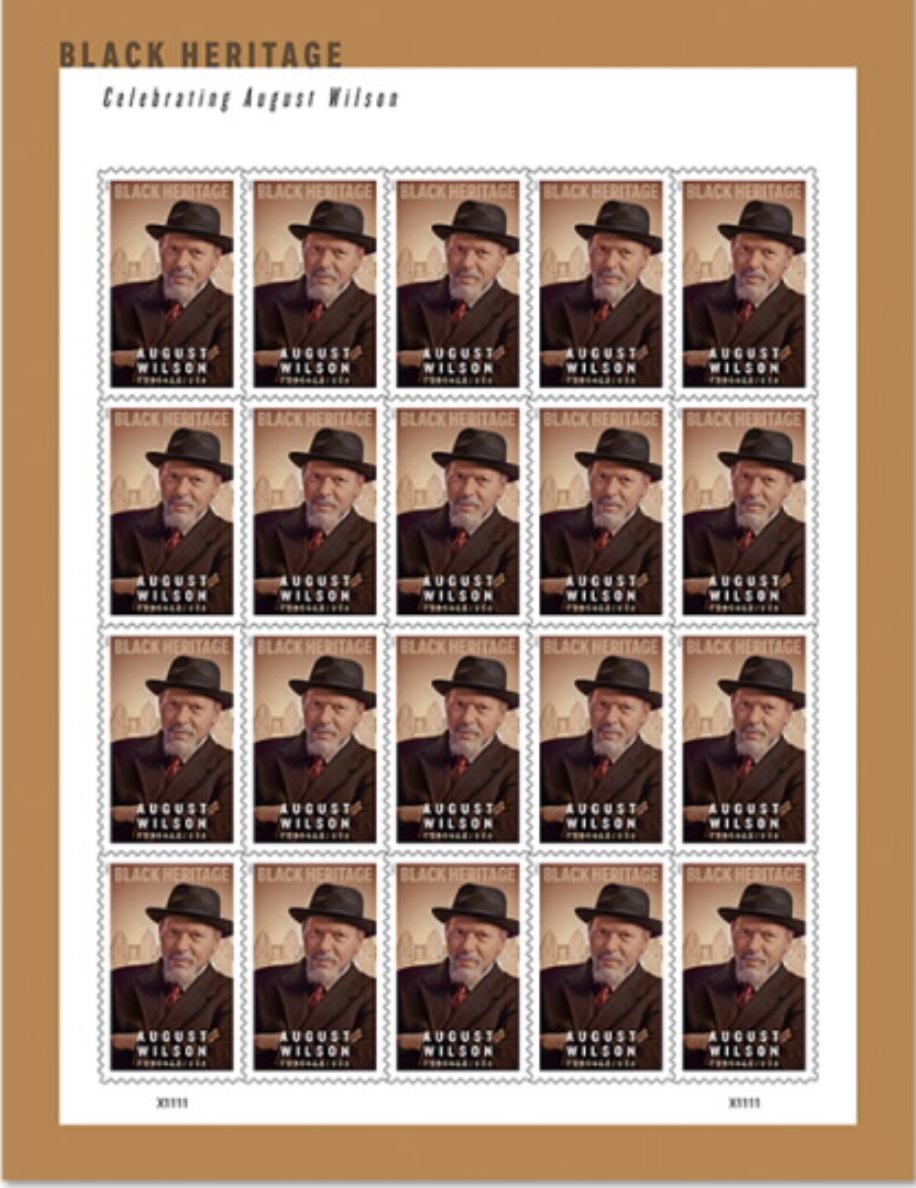
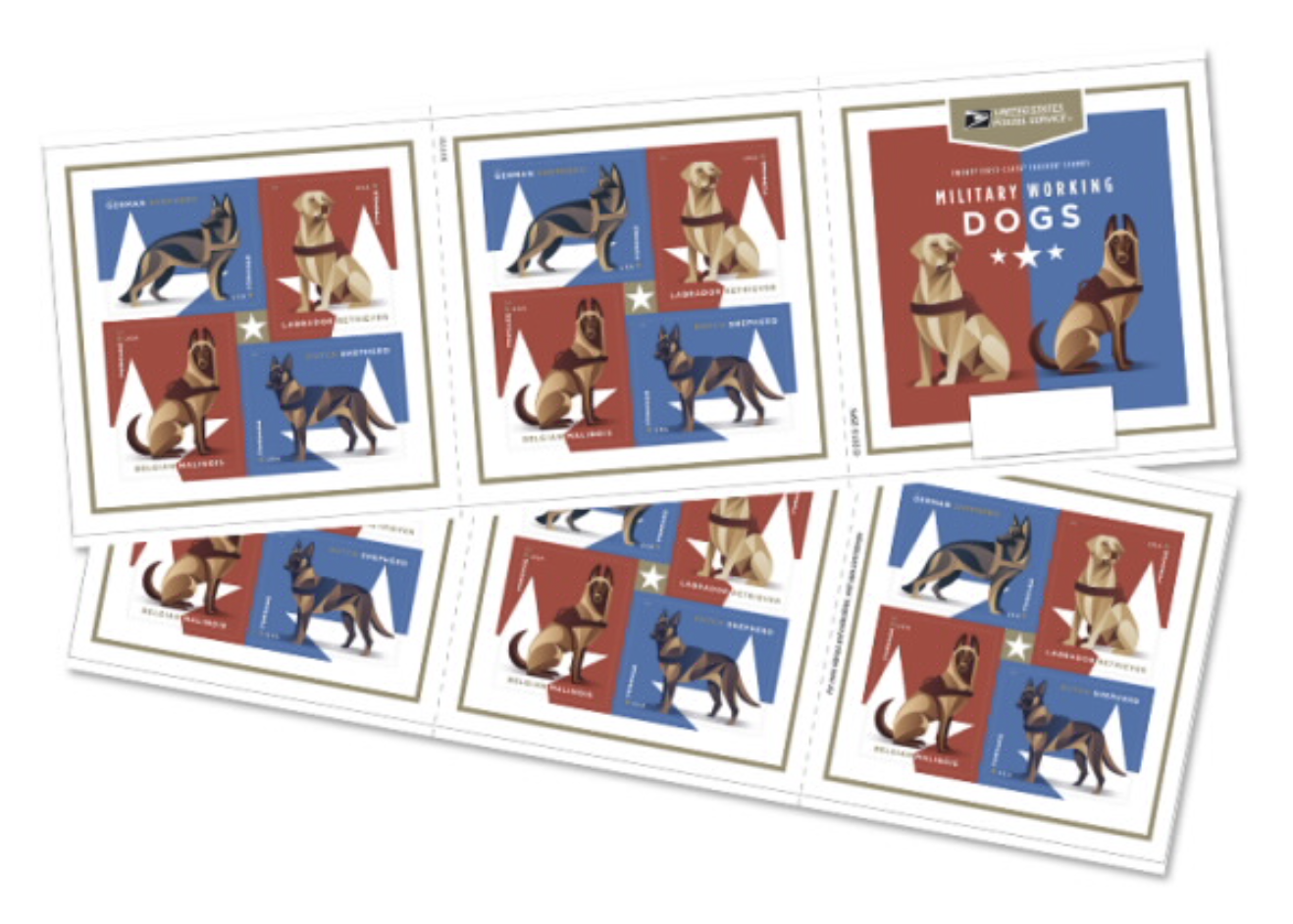
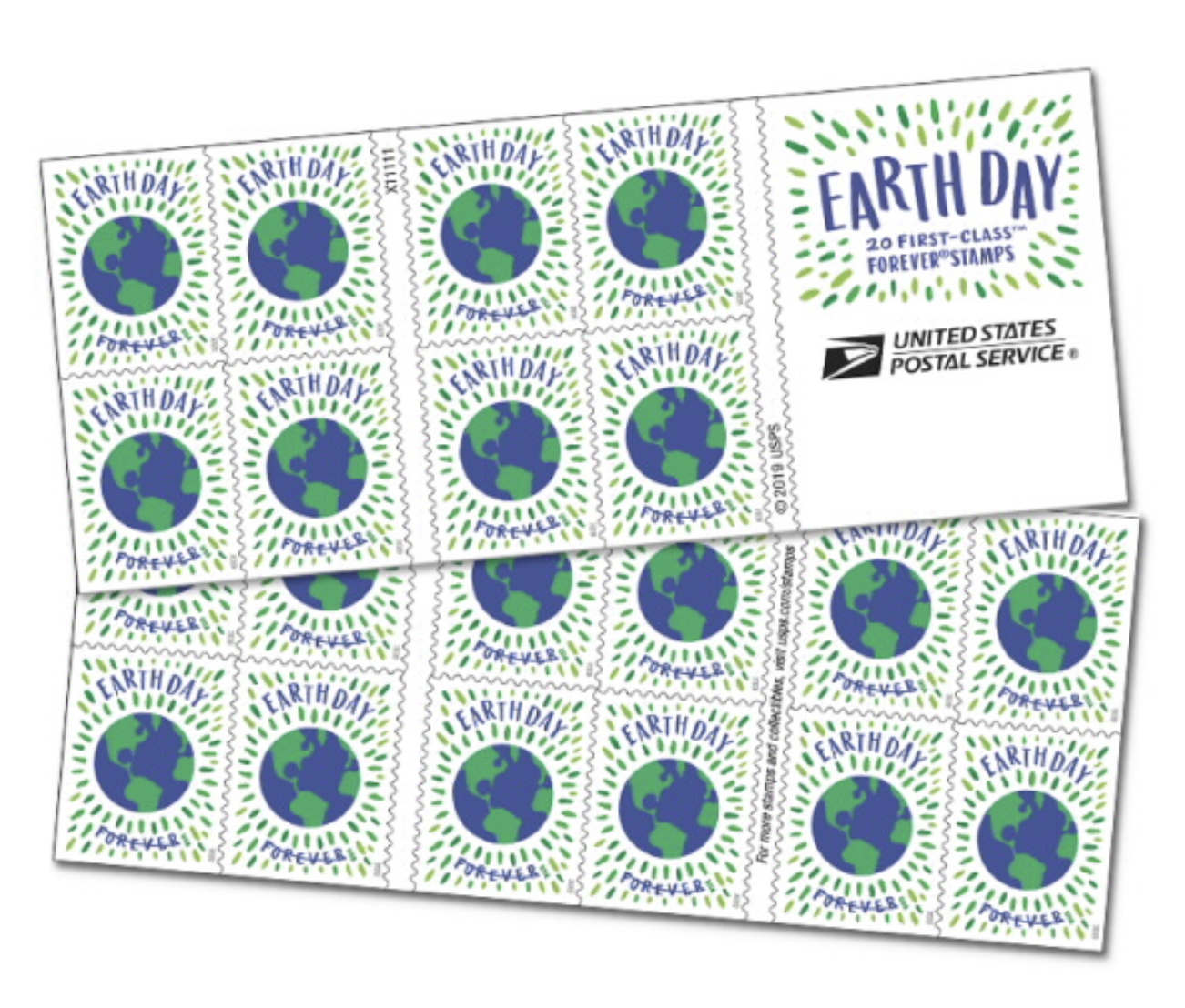
And I like seeing what stamp they have selected.
But there is also — for me at least — an element of respect that is somehow implied by the fact that they found the time to find a card (or piece of paper), write something on it, put it into an envelope, address it, stamp it, and get it into the mail.
And then, somewhat magically, it finds its way to me!
I have had jobs which included dropping off mail at both a local office and at a huge regional mail sorting center.
I have seen the people and conveyor belts and sorting machines and wheeled carts and trucks that are responsible for a card or letter or package getting from point A to point B.
It is quite a feat of logistics which most of us take for granted.
And I have never had a card or letter or bill payment (that I know of…) get lost.
On rare occasions I have received something which got a little chewed up en route.
But it was still legible.
In particular I love to send “thank you” cards.
It became a habit when I was given a promotion from part-time events coordinator to full-time PR director (who still coordinated a lot of events) at the Cambridge Center For Adult Education over twenty years ago.
Email was just becoming a regular thing — and hand-written cards were becoming more of a rarity.
Any time a media person included one of our classes or events in a calendar listing, or mentioned us in an article, or interviewed one of our teachers, or mentioned us on the radio, or covered us in any way — I sent them a hand-written “thank you” card.
I wanted to thank them, AND I also wanted to jumpstart (and then nurture) a relationship with them so that when they were next on a deadline and needed some expert to interview for a story, they might be more inclined to think of us as a potential resource.
Or when they had to choose an event to feature in their weekly calendar, they might be a little more likely to select one of our offerings.
Or they might even come and take one of our classes — or attend one of our poetry readings or concerts or workshops.
I was happily surprised (and a little bit embarrassed) to learn, when I attended an annual conference of local black journalists one year, that I had even become slightly infamous when an editor from The Boston Globe referred to me as “the guy who sends all of those ‘thank you’ notes.”
I continue to send “thank you” cards after every one of my gigs to the person who booked us — and sometimes also to the person who welcomed us and made sure we were all set up, too.
And I send “thank you” notes for gifts I receive, to family or friends who feed me dinner or host me on trips, and to local media folks who write about me and my musical life here on planet earth.
I love the cards at Trader Joe’s (only a buck each) and have learned that if I see something I like, I need to buy a bunch of them because I may never see them again for sale.
And every six months or so I go to a local discount department store, TJ Maxx, in a strip mall located a 12-minute bike ride from home.
If I am lucky, they have a bunch of simple, elegant “thank you” cards (in boxes of 12 or 15 or even 20!) at a half or a third of their regular price.
This translates to anywhere from 25 to 50 cents per card.
Then I buy 5-10 boxes of whatever is nicest (because I’ll probably never see any of THEM for sale either) and ride home feeling very rich in ‘thank you” cards.
Same thing for stamps.
If I see some I like, I buy many sheets (or rolls) of that particular design because there is no telling when they will sell out at my local post office — located a four-minute walk from my home.
I guess I could order them online, but I love going to an actual post office and talking with an actual postal employee.
I don’t love putting on two face masks — a medical one and a fabric one — before I go inside, but the more infectious Delta mutation is on the rise even here in relatively well-vaccinated Massachusetts.
So I am using face masks again when I am inside a public space like a post office or grocery store.
Last week when I bought a bunch of stamps, I was the only customer in the post office — which made my visit short and sweet.
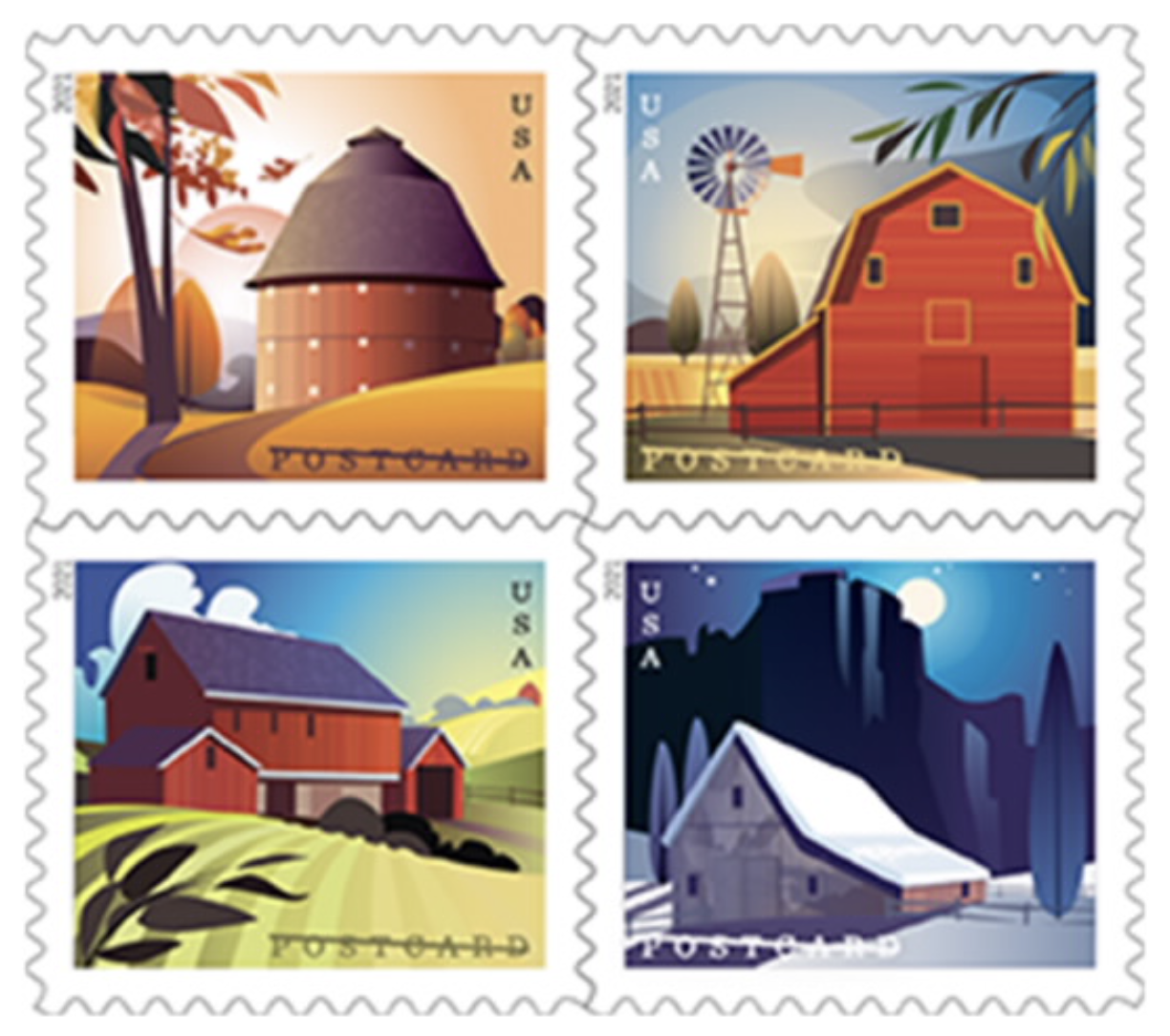
I purchased $800 worth of postcard stamps — with a selection of beautiful barns on them — to go along with the 10,000 postcards I ordered earlier this year.
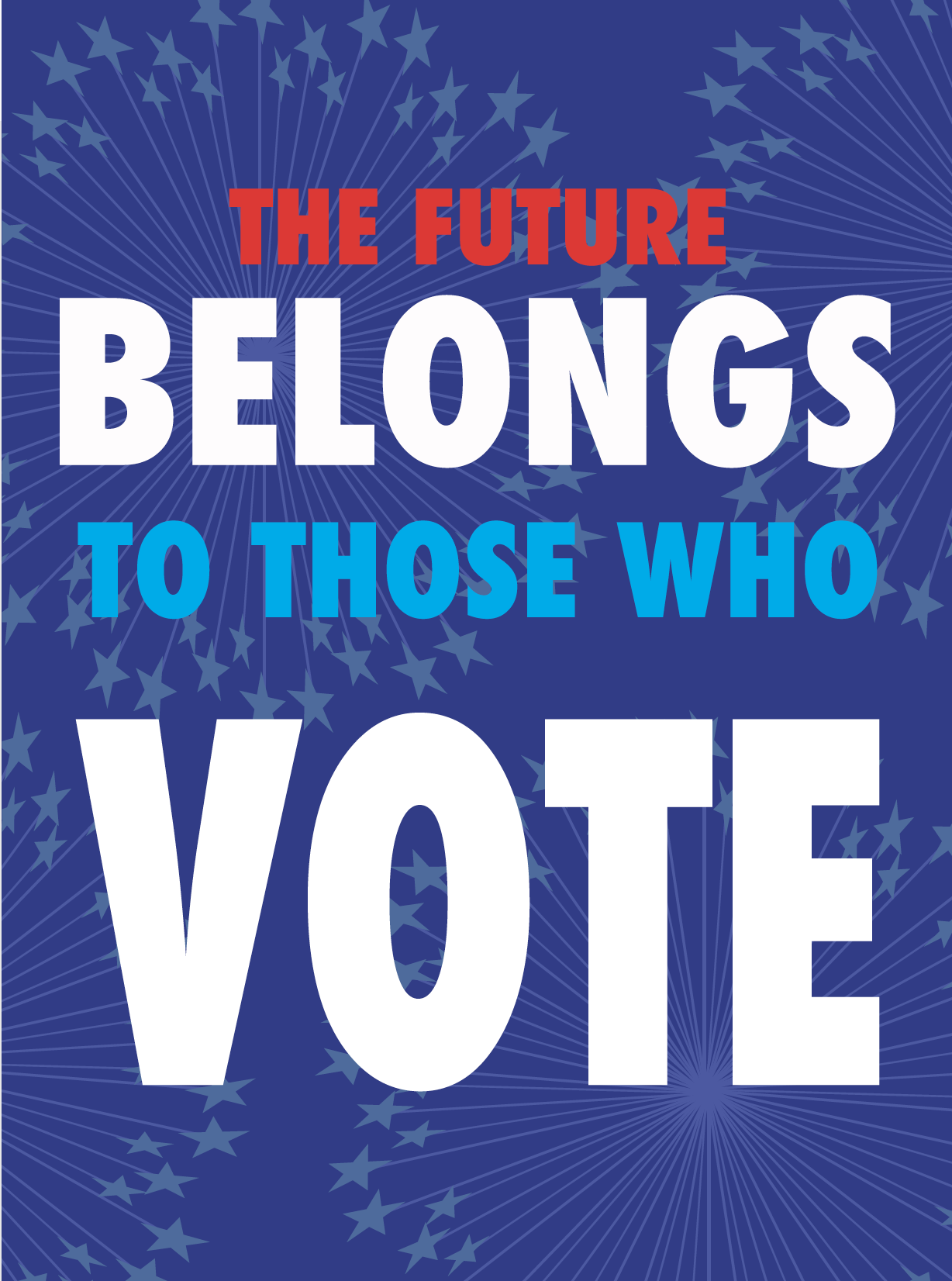
Actually I only ordered 5,000 postcards, but the printer did not understand the four-card template I sent to them and misprinted the first 5,000 (with four small messages rather than one big message on each card).
Then they very generously reprinted them correctly at no extra cost; so I ended up with 10,000 cards total — half of which say “The future belongs to those who vote,” and half of which say the same thing but four times and in much small type.
I mail them — along with a recommended hand-written message — to potential voters all over the USA who have a local election coming up (which they may or may not be aware of…)
It is one of the ways I attempt to ward off my profound disappointment — verging at times on terror — with how political events have been unfolding recently in these not-very-United States.
But this blog post is not intended to be a downer.
The recording I’ve included is a fun take of “Please Mr. Postman” written by Georgia Dobbins, William Garrett, Freddie Gorman, Brian Holland, and Robert Bateman.
Wikipedia reminded me that it was the debut single by a Motown/Tamla group called The Marvelettes — originally released sixty years ago in August 1961.
Apparently the songwriter credits have varied over time — but the current copyright, I am happy to see, includes Georgia Dobbins, who was the original lead singer for The Marvelettes.
She helped create the first version of the song (which she and her bandmates sang when they auditioned for Motown/Tamla) by adapting a blues written by her friend William Garrett.
Her version was then re-worked by several Motown/Tamla songwriter/producers, including Freddie Gorman — who was also an actual Detroit postman.
I am particularly glad that she is included as a co-songwriter, because Wikipedia reports that Ms. Dobbins left the group soon after they were signed by Berry Gordy and before they recorded “Please Mr. Postman.”
There must be more to THAT story…
The song she helped to write became a hit — crossing the Atlantic to the UK where The Beatles quickly added it into their repertoire and eventually recorded it two years later in 1963.
Another thing I learned is that Marvin Gaye played drums on The Marvelettes’ version!
The Carpenters made it a hit yet again in 1975, and their version was sampled and used in another song called “Oh Yes” by the rapper Juelz Santana in 2006.
It is fascinating to see how songs, like viruses, move from one human host to another and creatively mutate over time…
The version at the beginning of this blog post is from a rehearsal I did a few years ago with the wonderful pianist Doug Hammerand a wonderful singer named Lynn Fischer.
In addition to being a life-long performer, Lynn is also the the executive director and co-artistic director of the Mass Transit Theater company in New York City.
I love the playful and spontaneous spirit of this recording, which I think was take number three during our rehearsal for the opening of an art exhibit called ART/Word which my sweetheart produces each year with a different theme.
The artistic theme that year was “Letters.”
I will end by thanking Lynn Fischer for joining me in our fun rendition of this song.
And thanking Doug Hammer for his gifts as a pianist AND engineer/producer.
And thanking the US postal service for continuing to exist and function!
And thanking the artists who create such an extraordinary variety of artwork for our stamps.
And thanking YOU for reading and listening to yet another one of my blog posts.
Do you still send hand-written cards and letters to anyone?
And you are always welcome to visit my website — or you can find me singing (with Doug Hammer playing his Schimmel grand piano) on Spotify, Pandora, Apple Musicand other digital music platforms.
Let’s continue to find new ways to reduce our carbon footprint on this precious planet each and every day!
There are far too many forest fires and floods and mudslides happening these days…
I started playing the ukulele three years ago after attending a class in Harvard Square led by the marvelous Danno Sullivan.
Danno Sullivan
Not only is Danno an inspiring teacher, he also has a terrific sense of humor — sprinkling his classes with droll asides and insights.
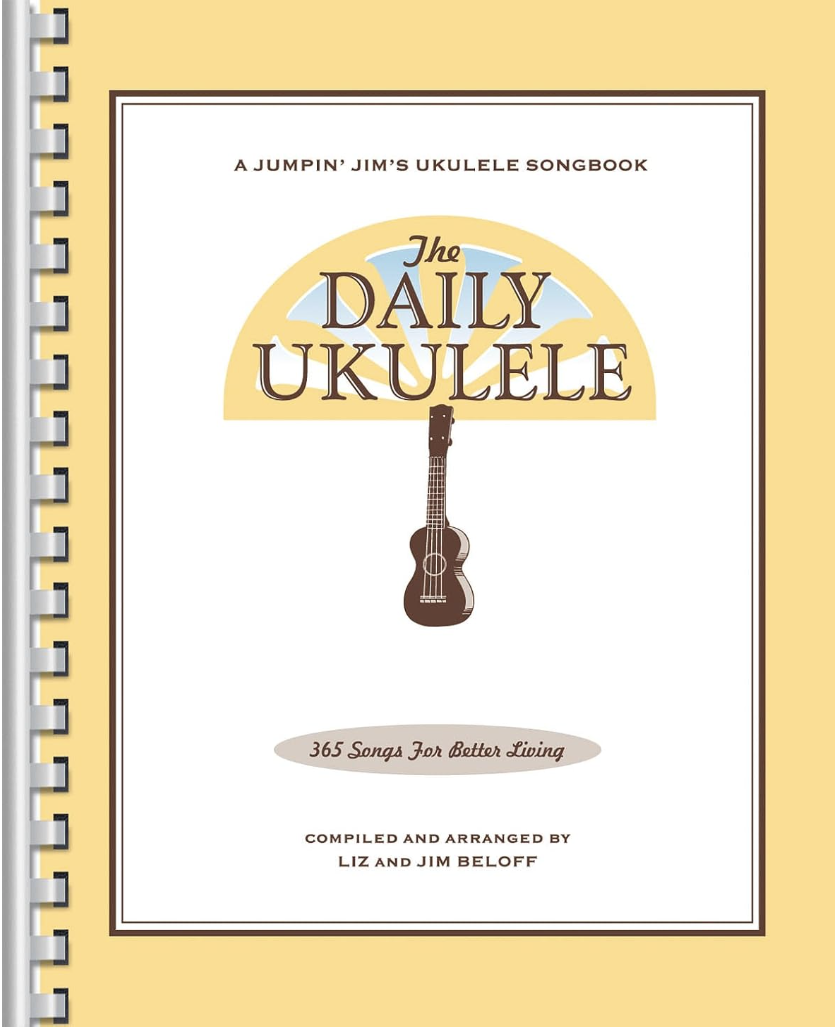
Since then I have been strumming on a regular basis — thanks to Danno’s handouts, the wonderful Daily Ukulele songbook, and the amazing group mind of the internet (where one can find chords and lyrics for almost every song under the sun).
Soon after discovering the chords for Coldplay’s song “Viva La Vida” on line, I realized that many of my favorite pop songs have a surprisingly simple structure — four chords.
And some do fine with just three chords — as in the case of Bobby McFerrin’s “Don’t Worry, Be Happy.”
And thus my life as a budding songwriter took root…
Deep breath in.
Deep breath out.
I had written lyrics in the past with a friend, pianist/composer Steve Sweeting (and you can listen to one of the songs we created together called “Stuff” by clicking here if you are curious).
I had also collaborated on a couple of songs with a guitarist friend (again as a lyricist).
And I had co-written a couple of songs with bandmates in a pop/rock band.
But until I picked up a ukulele, my songwriting efforts had been restricted to what I could cobble together using Apple’s blessed GarageBand program — songs consisting of my vocals plus various loops and samples from the GarageBand library.
Now, in the past three years, I have written a bunch of ukulele-based songs.
And in the past month I have attended three singer-songwriter open mics — accompanying myself (solidly but not very gracefully) on the ‘uke.
In addition to helping me write songs, the ukulele has also given me a new way to hang out with my mom, with my dad, and with other friends and family members.
All I have to do is pick up a ‘uke, open up a songbook, and start strumming.
Almost invariably the mood in the room shifts to something lighter and (literally) more harmonious as everyone starts to hum and sing along.
I find this to be somewhat magical and amazing.
And it inspired me to write the song featured at the beginning of this blog post — a version which I recorded with Doug Hammer playing a shaker egg and his Schimmel grand piano — as well as a GarageBand version I recorded by myself using my Apple laptop (which I have included below.
I highly recommend that anyone reading this blog post consider buying a decent (but inexpensive) ukulele.
Then you can check out all sorts of fun, free, instructional videos on YouTube AND start attending a wonderful, welcoming ukulele Meetup gathering near you.
They happen all across the USA — and in many other countries around the world.
And the sound of many ukuleles being strummed together is quite heavenly.
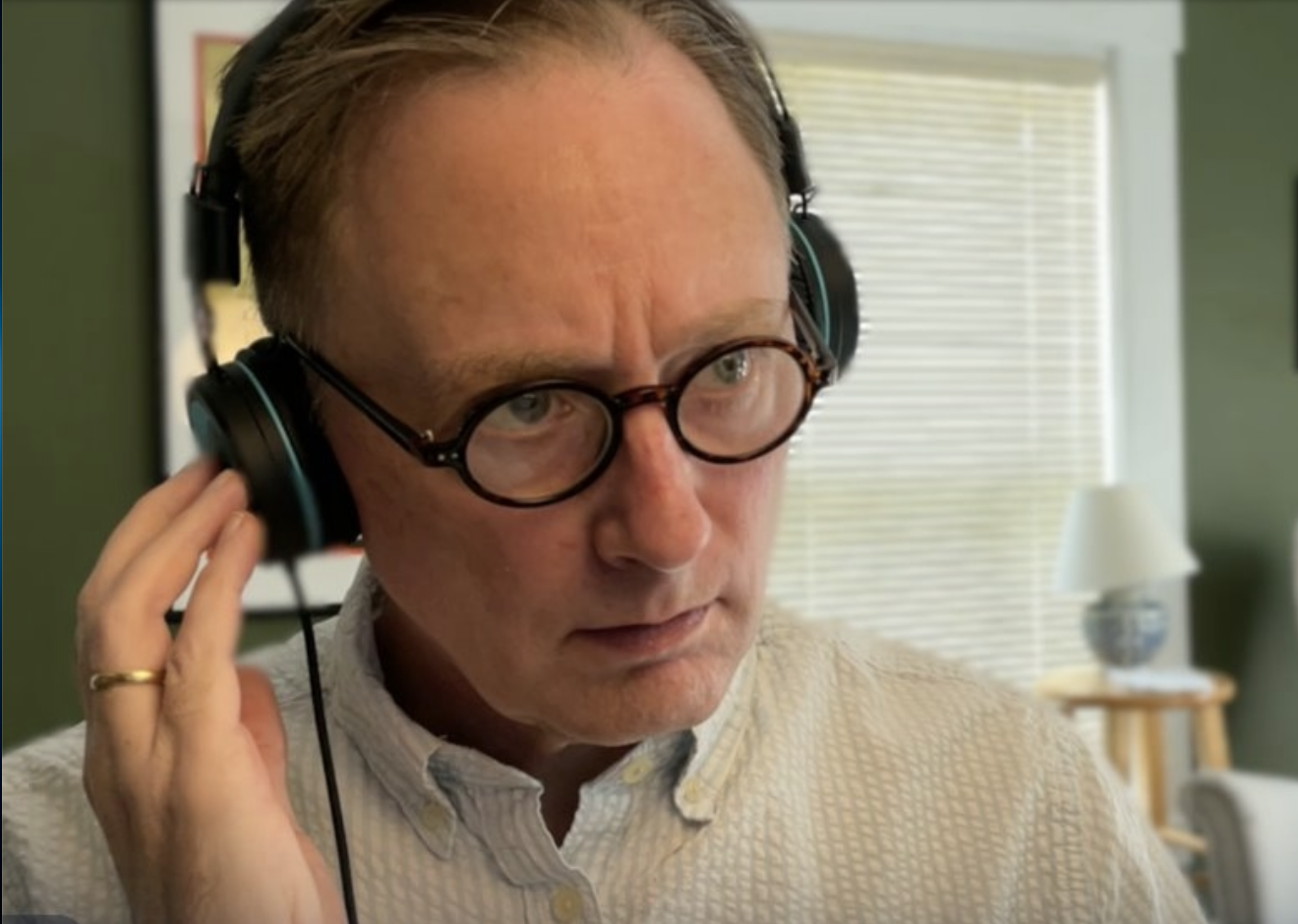
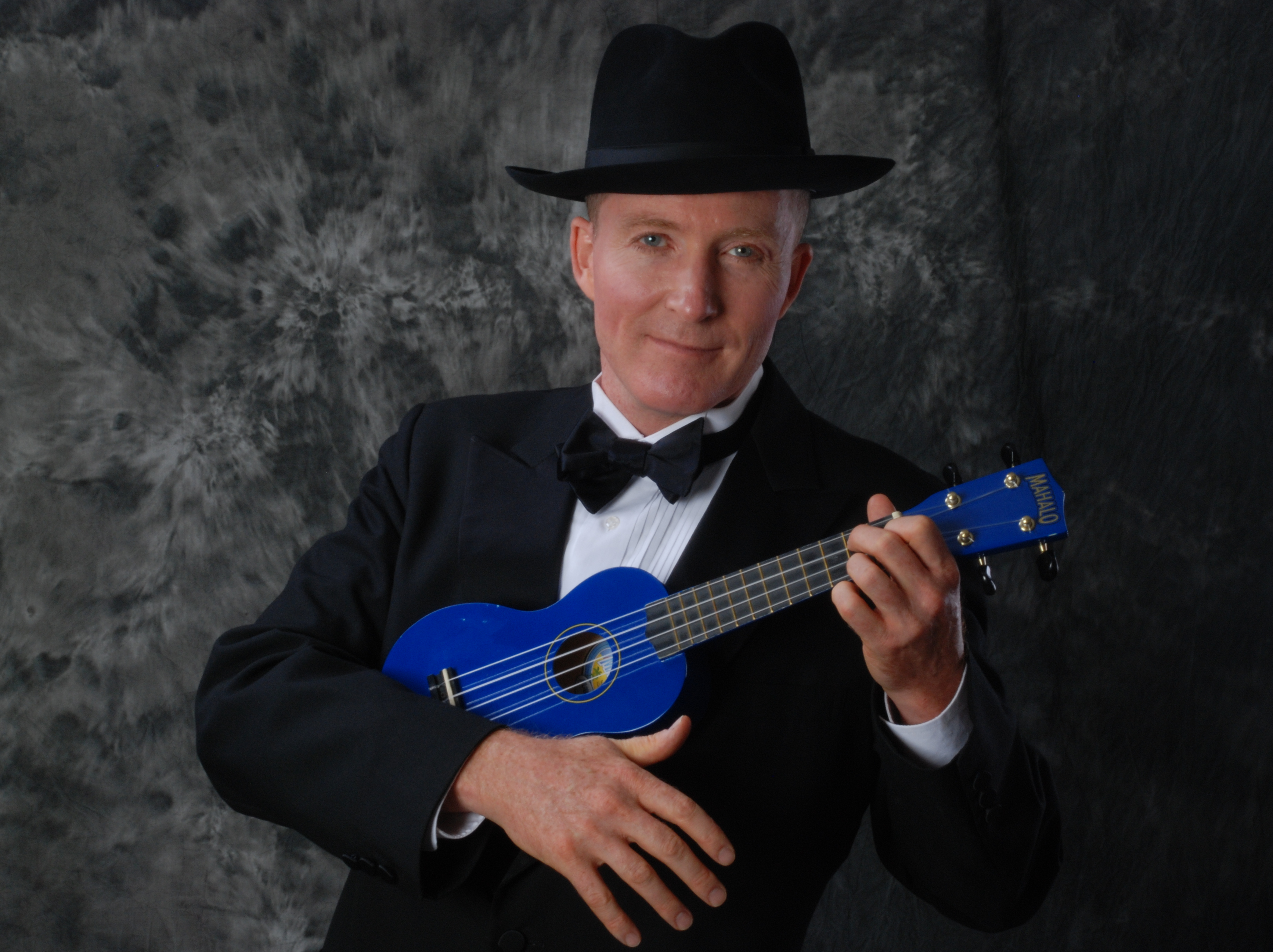
Me and my first ukulele (Photo by Stephen C. Fischer)
Thank you, too, to Danno Sullivan for his excellent instruction and ongoing inspiration.
Thank you as well to the Cambridge Center for Adult Education for offering ukulele classes with Danno (and to Michael Cicone — then head of educational programming at CCAE — for hiring Danno in the first place).
Thank you to Stephen C. Fischer for his fun — and very patient — photography sessions.