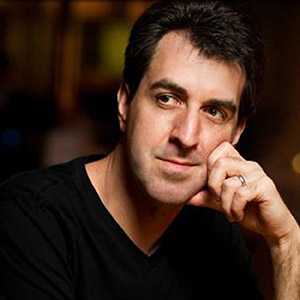
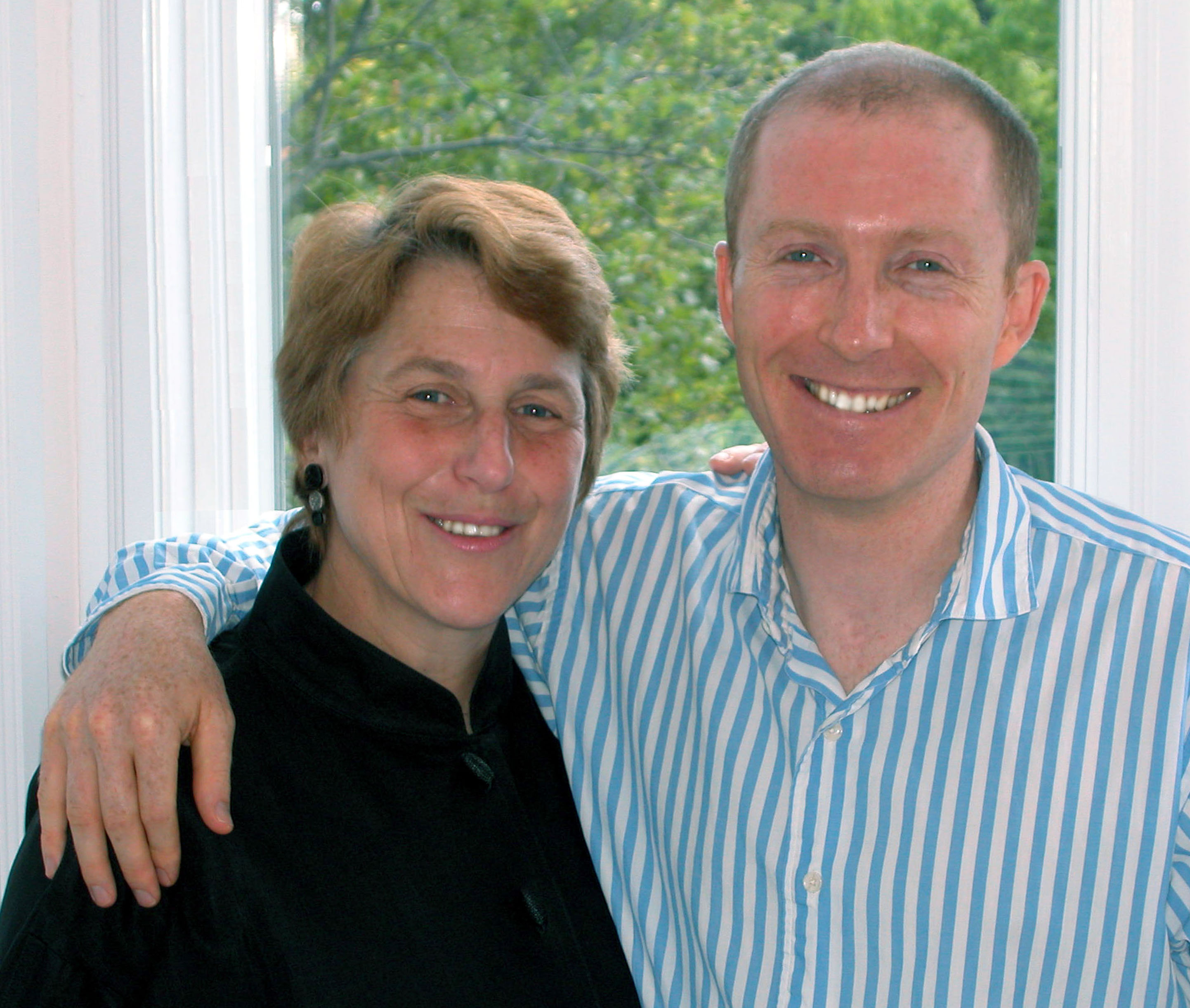
David Friedman is a composer, a songwriter, a conductor, an arranger, a producer, a philosopher, a teacher, AND a dedicated advocate for the singer Nancy LaMott, who died much too young in 1995.
I first became aware of him after hearing one of Nancy’s CDs — and eventually buying all of them because I was so touched by the heartfulness in her voice.
Nancy recorded many of David’s songs, and I fell in love with several of them.
So when David put together a songbook of his original works, I bought it and got to work!
Two of his songs ended up on a CD of songs about love which singer Bobbi Carrey and I recorded with pianist/engineer/producer Doug Hammer, arranger Mike Callahan, and a handful of Boston-area musicians called If I Loved You.
“I’ll Be Here With You” (on the player at the beginning of this blog post) is one of Bobbi’s and my favorite songs with which to end a performance.
And, although I do not know the details of Nancy and David’s musical partnership, I have the sense that this song may have had a strong emotional resonance for them (and might even have been inspired by their friendship…)
Perhaps people who know more about David and Nancy’s history can weigh in using the comments section at the end of this blog post.
I think of David whenever someone says something along the lines of, “They don’t write great standards like they used to…”
There are, in fact, many people who are alive and well on planet earth and who are writing beautiful, wise songs.
But the ways that those songs reach — and touch — the rest of the world have changed significantly since the days of sheet music and singing around pianos in living rooms.
No longer does a new song get recorded by many, many different performers — with different recordings of the same song vying for the top spot on a few national radio networks.
The rise of the singer-songwriter — along with self-contained bands who create their own original material — marked a significant shift in our popular musical culture.
David’s songs have been recorded by pop stars including Diana Ross, Barry Manilow, and Petula Clark — but these days Diana, Barry and Petula are not dominating the charts as they once did…
However, we now have many new ways to share music — such as YouTube, Pandora, Spotify… and even personal blogs like mine.
And there are many singers still devoted to both the Great American Songbook of standards from the 1920s-1960s AND to all of the great songs that have been written since then.
So ripples of music continue to wash around our culture and around our planet…
Thank you to David Friedman for writing songs.
Thank you to Bobbi Carrey for her singing and for her musical collaboration over the past 15 years.
Thank you to Doug Hammer for his piano playing and his engineering and his production skills and his patience and his humor.
Thank you to Mike Callahan for his vocal arrangements.
Thank you to Pixabay for most of the images in this blog post (and to the world wide web for the ones of David and of Nancy).
And thank YOU for making time so that you could read and listen to another one of my blog posts!
I like the idea of a day to celebrate and honor love.
This blog post features two songs written by Steve Sweeting — a jazz pianist, songwriter, teacher, and composer who currently lives in New York City.
“I Carry Your Heart” is a song he wrote while living in Shanghai, when he was commissioned by Chinese choral conductor Jie Yi to write a song — based on an American poem — for a festival in Ningbo.
Steve chose an early poem by ee cummings.
A few years later he and I recorded a non-choral version at Doug Hammer’s studio on the north shore of Boston.
I love the images in ee cummings’ poem, and I love the way that Steve set them to music.
And I love Steve.
He and I have been friends since he lived — with a Yamaha grand piano — in a studio apartment above an ice cream store in Brighton, MA.
He and his wife and two children have lived all around planet earth, but we have remained in contact.
Right now he is working on an original musical with lyricist/librettist Geoffrey Goldberg called Piece of Mind.
It is about an 80-year-old former USO dancer named Robert whose mind is failing him.
If you live in the NYC area, Steve and Geoffrey are having two staged readings — on Monday, March 5th at 6pm and on Tuesday, March 6th at 2:00 pm — at the Davenport Theatre (354 W. 45th Street @ 9th Avenue).
It is by invitation only, but you can click on this Piece of Mind link to find out how to be invited…
The second song — “What Am I Doing Alone?” — was inspired by a phone conversation that Steve’s wife once had with a friend.
When Steve’s wife told him about this conversation, he took notes and then wrote a song inspired by her conversation.
And it took him about an hour!
These two songs represent a yin and a yang perspective on love.
Valentine’s Day is much more pleasant to celebrate when one has a beloved person with whom to share the festivities and hoopla.
And Valentine’s Day can feel rather raw and lonely if one does not have a special someone in one’s life…
I love the story that unfolds in this song.
And the sense of longing and hoping that Steve captured in the music…
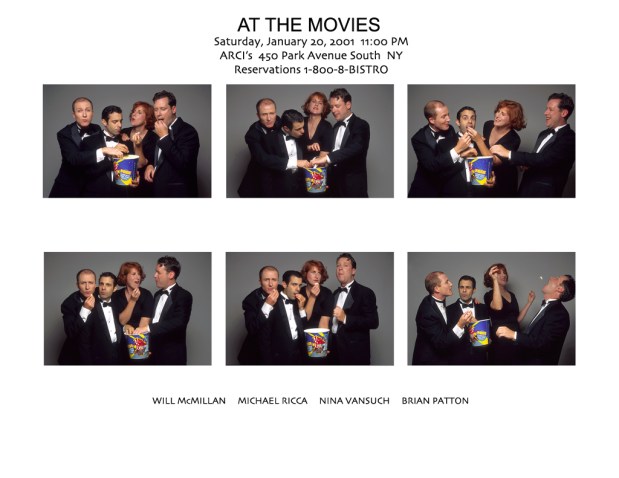
I was looking through a list of past gigs on my web site recently and was surprised to realize that almost 15 years has passed since I was part of a vocal quartet called At The Movies.
Three of us — Nina Vansuch, Michael Ricca and I — had attended a week-long cabaret symposium at the O’Neill Theater Center on the Connecticut coast of Long Island Sound in the summer of 1999.
Our teachers included musical luminaries such as Margaret Whiting and Julie Wilson along with Broadway actress Sally Mayes and a slew of other generous (and mostly inspiring) experts from the worlds of musical theater, jazz and cabaret.
We came back to Boston fired up and ready to sing.
I don’t remember who had the idea that we three would join forces — maybe Nina and/or Michael and/or Brian will weigh in some day with THEIR memories of how we got started using the comments section at the end of this blog post.
I’m pretty sure, however, that it was Nina who brought another wonderful singer AND pianist AND arranger — Brian Patton — into the mix.
For four years we met after work — usually at Nina’s place in Belmont or Brian’s place in Jamaica Plain — to eat dinner and make song choices and work on arrangements and write patter and rehearse, rehearse, rehearse.
I remember many delicious meals cooked by Nina — and also a lot of patience from Brian as we fine-tuned our harmonies.
I had forgotten, however, how much publicity we got.
Thankfully Nina scanned some of it and included it on her web site.
Gradually we added some outside eyes and ears to our creative process, bouncing rough drafts of performances off local directors and working for a while with a warm and loving choreographer/director named Marla Blakey who lived on Martha’s Vineyard.
At one point in her career Marla had worked in this capacity with Bette Midler and also with the vocal group The Manhattan Transfer.
So we were honored and excited to learn from her AND to hear some of her stories about how show business unfolds behind the scenes…
As you can see from the media clippings and hear from the recordings I have included in this blog post, we had a lot of fun together.
Most — or maybe all — of our great photographs were taken by a very talented friend of Nina’s named David Caras.
You can visit his web site by clicking here if you are curious to see more of his work.
After we had sold out Scullers Jazz Club (thank you for booking us, Fred Taylor!) a couple of times, we decided to record a CD, which can still be purchased at CD Baby by clicking here.
We recorded it at Doug Hammer’s studio north of Boston along with additional musicians Gene Roma (drums), Chris Rathbun (bass), and Spartaco John “Sparkie” Miele (saxophone).
In addition to the songs I have included in this blog post, you can find other songs from our CD — “Journey To The Past,” “Wives & Lovers,” and “That’ll Do” — in the right hand column of this blog.
My memory is also hazy as to why we decided to focus on songs written for or performed in movies…
There are so many great songs in existence — just waiting to be sung! — that we probably knew that it would be wise to narrow our focus a bit.
It may also have been related to Michael’s somewhat savante-like knowledge of movie history.
We performed at the Cambridge Center for Adult Education (where I then worked) and also at the Boston Public Library as part of First Night; participated in John O’Neil’s wonderful CabaretFests in Provincetown, MA, Newburyport, MA, and Newfound Lake, NH (thank you, John!); traveled to perform in Providence, RI at the Hi-Hat Club (thank you, Ida Zecco!) and to NYC at a club called Arci’s Place (thank you, Erv Raible — may you rest in peace!) I think our last gig may have been in Quincy for John McDonald (thank you, John!)
One thing I came to appreciate as a result of being part of At The Movies is that an audience doesn’t just enjoy the music when they go to a concert.
Most of us also enjoy observing the relationships we see in action on stage — both the planned and the spontaneous interactions that unfold during a performance.
After four years of working and playing — and dining — together, however, our creative collaboration came to an end.
But thanks to the digital magic of zeros and ones, the songs we recorded at Doug Hammer’s studio for our CD Reel One live on…
And I was able to find these media clippings on Nina’s web site (thank you, Nina!)
Perhaps someday we will dig our harmony practice cassettes out of the basement and do a few more shows together.
Last week jazz pianist Joe Reid and I shared our program of winter holiday songs written or co-written by Jewish lyricists and composers at a retirement community in Newton.
As I have probably noted in previous blog posts, a significant number of great winter holiday songs were written or co-written by Jewish lyricists and composers.
In 1942 Irving Berlin gave us “White Christmas.”
In 1945 Mel Tormé and Bob Wells gave us “The Christmas Song.”
In 1949 Johnny Marks gave us “Rudolph the Red-Nosed Reindeer.”
In 1950 Jay Livingston and Ray Evans gave us “Silver Bells.”
In 1959 Sammy Cahn and Jimmy Van Heusen gave us “The Secret of Christmas.”
In 1966 Jerry Herman gave us “We Need A Little Christmas.”
In 1995 Jason Robert Brown gave us “Christmas Lullaby,”
And the list goes on and on!
In this political moment here on planet earth — when many are working to arouse a righteous sense of “us” versus ‘them” in their followers — I am grateful to be reminded of the folks who bridge cultures/identities and bring people together.
Mel Tormé’s parents were Jewish immigrants who fled Russia for a new life in the United States. Although he is most famous as a jazz vocalist, he also co-wrote 250+ songs, many of them with Bob Wells (born Robert Levinson), who was also Jewish.
According to Tormé, the song was written during a blistering hot summer day in an effort to “stay cool by thinking cool.”
As Mel recalled, he “saw a spiral pad on Bob’s piano with four lines written in pencil: Chestnuts roasting… Jack Frost nipping… Yuletide carols… Folks dressed up like Eskimos. Bob didn’t think he was writing a song lyric. He said he thought if he could immerse himself in winter, he could cool off. Forty minutes later that song was written. I wrote all the music and some of the lyrics.”
The forty minutes that they devoted to creating that song certainly paid off extraordinarily well for Mr. Wells and Mr. Tormé!
Many songwriters aspire to create a holiday standard, which will then be recorded and performed year after year — generating an ongoing stream of revenue.
When I was first putting together a program of winter holiday songs written or co-written by Jewish composers and lyricists, I worked with the wonderful pianist Megan Henderson — who is now the musical director for the Revels organization, which creates the beloved Christmas Revels held at Sanders Theatre each December.
As we were musing about the different reasons that these winter holiday songs came to be written, we came up with the term, “Christmas ka-ching!” to describe the economic motivation that no doubt was driving some of the songwriters.
Several winter holiday songs were created to be performed in films.
One of my favorite holiday standards, “Silver Bells,” was written by Jay Livingston and Ray Evans for a 1950 movie, The Lemon Drop Kid, where it was sung by Marilyn Maxwell and Bob Hope.
I always associate it with my mother’s mother, a hard-working private nurse who lived in the borough of Queens for most of her life and no doubt did a lot of her holiday shopping on “city sidewalks, busy sidewalks — decked in holiday style.”
Jay Livingston, who wrote the music for “Silver Bells,” and Ray Evans, who wrote the lyrics for “Silver Bells,” were a famous Jewish songwriting team with many hits to their credit including “Mona Lisa” and “Que Sera Sera.”
Jay was born Jacob Harold Levison in 1915 in a small industrial suburb of Pittsburgh, PA, and Ray was born Raymond Bernard Evans — also in 1915 — in Salamanca, not far from Buffalo, N.Y.
They met at the University of Pennsylvania when they both joined the university dance band, and their songwriting partnership endured until Livingston’s death in 2001.
I love the verse — not always sung — they wrote for “Silver Bells.”
“Christmas make you feel emotional. It may bring parties or thoughts devotional. Whatever happens or what may be, here is what Christmastime means to me…”
A contemporary Jewish songwriter, Jason Robert Brown, wrote another one of my favorite winter holiday songs — “Christmas Lullaby” — for his first musical revue called Songs for a New World.
Mr. Brown is an extremely gifted human being who sometimes works as music director, conductor, orchestrator, and pianist for his own productions — and has won Tony Awards for his work on the Broadway musicals Parade and The Bridges of Madison County.
“Christmas Lullaby” honors one of the deepest miracles of all — how a woman (with a little genetic input from a man — or, in the case of Jesus’ mother Mary, with the help of the Holy Spirit) can grow an entirely new human being inside her body.
I think about this miracle in my Music Together classes, because I have been teaching long enough for many mothers — who originally attended with their first child — to become pregnant and return for more music with their second (and even third) child.
Neil Postman wrote at the beginning of his book, The Disappearance of Childhood, that “Children are the living messages we send to a time we will not see.”
Although this sentence also appears in a book published the following year by John Whitehead called, The Stealing of America, it appears to have been coined by Postman.
And regardless of who gets credit for it, I LOVE this idea.
One of my sisters-in-law — who has parented two children and worked with hundreds of others in the public schools of Western, MA — incorporated this quotation into a work of art which I see hanging on her wall every time I visit.
Sometimes I remember during my Music Together classes that part of my modest legacy here on planet earth may be the spontaneous and affirmative musical fun I shared with these extraordinary little souls — who will grow up to face unimaginable challenges stemming in part from the ignorant (and at times utterly greedy) choices that we grownups have made during the past 100+ years.
Perhaps some seeds of improvisation and collaboration and harmony and community and inter-connectedness and playfulness and creativity and love and respect will have been sown during our musical time together — which will blossom to help solve/resolve future challenges in a time that I will not see.
And perhaps these wonderful holiday songs will also travel into the future, continuing to touch and guide people’s hearts and minds for generations to come…
Let’s keep singing and humming and whistling and playing them!
Thank you to all of the songwriters who have created such a great legacy of music for us to share.
Thank you to Joe Reid for performing 47 shows with me in 2017 at retirement communities, public libraries, community centers, memory cafes, and synagogues around New England.
If you are curious to see what’s on our calendar for 2018 you can click here.
Thank you to Doug Hammer for recording — while playing the roles of both pianist AND engineer — the songs in this blog post with me.
Thank you to Nate Bloom, a writer who has made it a personal quest to track down and figure out which winter holiday songs have been written or co-written by Jewish lyricists and songwriters.
And THANK YOU for reading and listening to another blog post!
Joe Reid fortuitously called me four summers ago — a few months after I had been laid off from my day job of sixteen years at the Cambridge Center for Adult Education — and asked if I might like to do a gig at a local retirement community with him.
This first gig — an hour of songs co-written by Harold Arlen plus a few stories about how they came to be written — has led to over a hundred performances together at public libraries, coffee houses, and retirement/assisted living communities with programs featuring the songs of Dorothy Fields, Oscar Hammerstein II, Larry Hart, Cole Porter, the Gershwin Brothers, Jule Styne, Jerome Kern, and Hoagy Carmichael as well as a program of songs written (by the Gershwins, Porter, Berlin, Styne/Sondheim, and others) for Ethel Merman to perform and a program of winter holiday songs written or co-written by Jewish songwriters.
It has been a fruitful collaboration with no end in sight. Soon we’ll be debuting a one-hour program of songs co-written by Sammy Cahn, and 2018 will bring a program of songs written (by Porter, the Gershwins, Berlin, Kern, Fields and others) for Fred Astaire to perform.
But so far Joe Reid and I have no recorded evidence of our collaboration because we have not gone into a recording studio together…
Tom LaMark, Mark Shilansky, and Joe Mulholland have all been a pleasure to work with as well, but I similarly have no recordings to document our time together.
Mike Callahan is now a professor at Michigan State (and the person conducting and/or playing piano in the Pops concert clips on YouTube — which he also arranged and orchestrated!) I hope to make music with him some day in East Lansing…
Steve Sweeting currently lives in NYC; so I don’t get to make music with him as much as I would like. I have, however, included many recordings that he and I have made together in past blog posts.
Which brings me to Doug Hammer.
Doug in his backyard with trees and water…
I do not remember exactly when I started working/playing with Doug.
It may have been when Steve Sweeting moved from Brighton, MA to the upper west side of Manhattan (in the mid-1990s?)
I was living as an au pair with a wonderful family on Spring Hill in Somerville, and Doug and his wife were living not far away on the Somerville/Cambridge border.
If I am remembering correctly, Doug had a very intimate but functional recording studio near the back of his apartment — as far away from the traffic of Beacon Street as possible.
He’d come from Chicago to Boston to study at Berklee, had played piano in other countries (which is how he met his stupendous wife, who is French), and then moved back to the Boston area to build a life as a pianist, composer, accompanist, engineer, and producer.
I think our paths crossed because he played with other singers I knew from having taken a class with Mike Oster in the South End.
Maybe some day Doug can read this blog post and correct or fill in some of missing details…
In any case, I loved the way he played the piano and accompanied singers and built a life with his wife (who is an artist and graphic designer).
And I loved that I could walk or ride my bike to his home studio.
But as many wise texts remind us, life is full of changes.
Doug and his wife decided they needed more space and moved to a new home on the north shore of Boston — where Doug built a recording studio in the lower level of the house and where he and his wife began raising a family.
Luckily it is accessible by public transportation (a surprisingly scenic bus ride from Haymarket T station), and Doug has also been kind enough to drive me to the nearest T stop, Wonderland, when the weather is horrible or the hour is late.
And his family is willing to be quiet upstairs when someone is recording downstairs with Doug.
There are two isolation booths to the right of the piano (which you can’t see in the photo above) which is where I usually stand when we are rehearsing/recording.
This is what Doug looks like when we are rehearsing/recording.
One of the many great things about working/playing with Doug is that we are able to record all of our rehearsals in high fidelity.
He is not only a terrific, playful pianist, but he is also a super competent sound engineer and producer.
Over time he has invested in high-quality musical tools — a Schimmel grand piano, great microphones, and endlessly upgraded recording software and hardware (including an Apple computer which almost never misbehaves) — and he is able to switch effortlessly from being an engineer/producer to being a collaborative pianist/accompanist/co-creator and back again.
The songs at the beginning of this blog post are from a show we did called Will Loves Steve, which featured all songs written by people named Steve, Stephen or Stevie. “Love’s In Need Of Love Today” is by Stevie Wonder, and “Everybody’s Got the Right” is by Stephen Sondheim from his extraordinary show Assassins.
They demonstrate how imaginative and improvisational Doug’s accompaniment often becomes when we work together.
He and I have been operating on a very simple guideline — familiar to improv comedians among other creative beings — for many years.
We always say “yes” to each other’s ideas.
Sometimes I have a specific set of images I share with Doug: “Let’s imagine that we are next to the Charles River and someone has started a fire in an old oil drum” or “We’re in a piney woods on the Cape, and a downy woodpecker is hopping up and down one of the tree trunks.”
Sometimes Doug starts playing something interesting on the piano while he is familiarizing himself with the sheet music for a particular song, and I encourage him to pause and hit the record button so that we can start with his fresh idea before either of us has had much time to think about it.
After each take we usually offer each other feedback about what we liked, what we might retain, and what we might like to explore further (“Let’s try going into a Latin feel on the bridge…” or “How about we do it twice as long so that you can take a solo and then we’ll end it with a triple tag at the end?”)
By the third or fourth take we often find ourselves in completely new and unexpected musical terrain.
Then we let that particular song rest and move on to the next one…
I don’t remember what ideas led us to this thoughtful version of “In My Life” by John Lennon.
I think we recorded it when we were rehearsing for a benefit concert (or maybe when we were rehearsing for a show I did at my old high school in Connecticut?)
Doug’s solo on this take is one of my favorite things that we have ever recorded together.
In the past decade Doug has been devoting more and more of his time and energy to composing and recording CDs of original piano — and increasingly orchestral —compositions.
Those of us who love to perform with him have been both excited to see his star as a solo artist rise and also sad because it means that he is less available to perform with singers…
Ahh, yes.
Life is full of changes.
But so far he is willing to continue to work/play with singers in his recording studio.
Hurrah!
He and I are slowly but surely working on a CD of my original songs — which I write using a ukulele and are then transformed by his inspired piano playing.
I do not know when this project will be finished, but I am enjoying the process — one song, one session at a time.
Thank you to Doug Hammer for being born, pursuing a life in music, and working/playing with me on various undertakings for over two decades.
Thank you to Doug’s web site for the photos (probably taken by his talented wife) I have included in this blog.
And thank YOU for reading and listening to yet another post!
One of the things I love most about teaching Music Together is the concept that each person absorbs and processes music in their own way.
Some children — and some adults, too — like to sit still while they soak up the sights and sounds swirling around them.
Others like to move their bodies — swaying, clapping, tapping their toes, nodding their heads, or even jumping up to dance in the center of the circle.
Still others prefer to wander around the room, seemingly oblivious to the musical activity unfolding all around them.
And yet these same children will often start singing their own versions of the songs as soon as they leave class…
I love the respect for different learning styles that is baked into the Music Together pedagogy.
As long as no one is hurting themselves or distracting the rest of the class, whatever she or he wants to do in class is OK.
At times this can make for a somewhat chaotic classroom experience.
But if the teacher and a majority of the adults are able to keep participating — singing, moving, chanting, drumming, dancing, marching, and so forth — the class flows on.
The children copy their accompanying grown up, the teacher, the other grown ups, and the other children.
And I am always looking for movements and ideas from the children and grownups in the class which I can mirror, highlight, and somehow incorporate into the flow of my lesson plan.
It can become a very rich — and fun — environment of “monkey see, monkey do” feedback loops.
I wrote the song at the top of this page, “I’m A Baby Monkey,” before I became a Music Together teacher.
It’s a new show called “In Perfect Harmony” with fellow singer Bobbi Carrey and pianist/composer Doug Hammer — in which all the songs include at least a partial harmony somewhere.
Because we have been performing together for ten years — and since one of our favorite things to do is sing in harmony — we have a lot of material to choose from.
The show also includes quotations and anecdotes about the process of collaboration — which for us has involved a great arranger, Mike Callahan.
From time to time we send Mike recordings from our rehearsals, along with detailed notes about which harmonic ideas we think show promise and which need help.
Bobbi and me after a rehearsal
Invariably he sends charts back to us that both improve our ideas AND surprise us with some great new musical impulses.
At the top of this blog post is our version of the Johnny Mercer/Henry Mancini classic “Moon River” if you are curious to hear the fruits of this collaborative process.
Deep breath in.
And deep breath out.
There is something very intimate and satisfying about singing with someone else — whether in unison or harmony.
And since electricity entered — and in many ways took over — our daily lives during the last century, our patterns and habits of singing have certainly evolved…
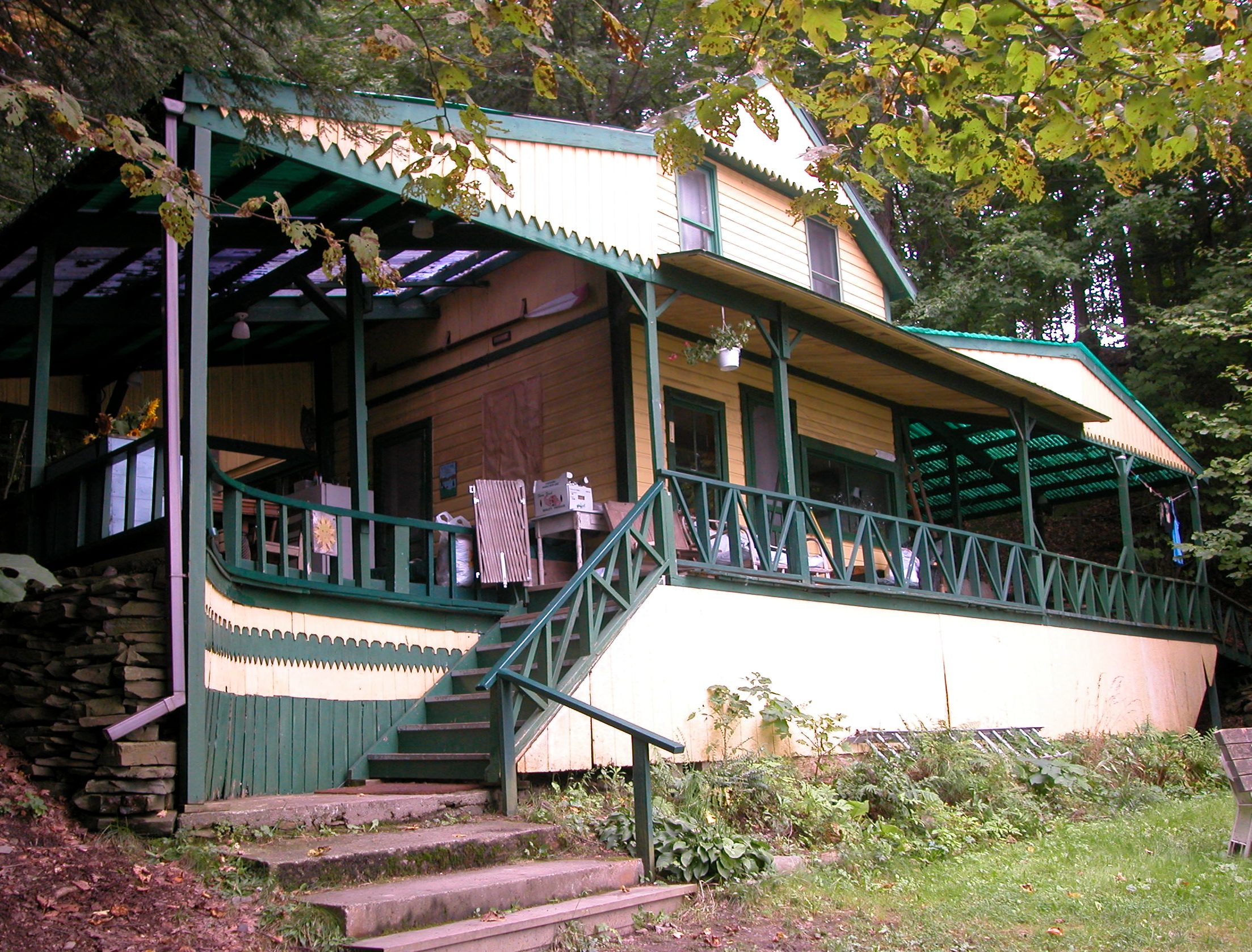
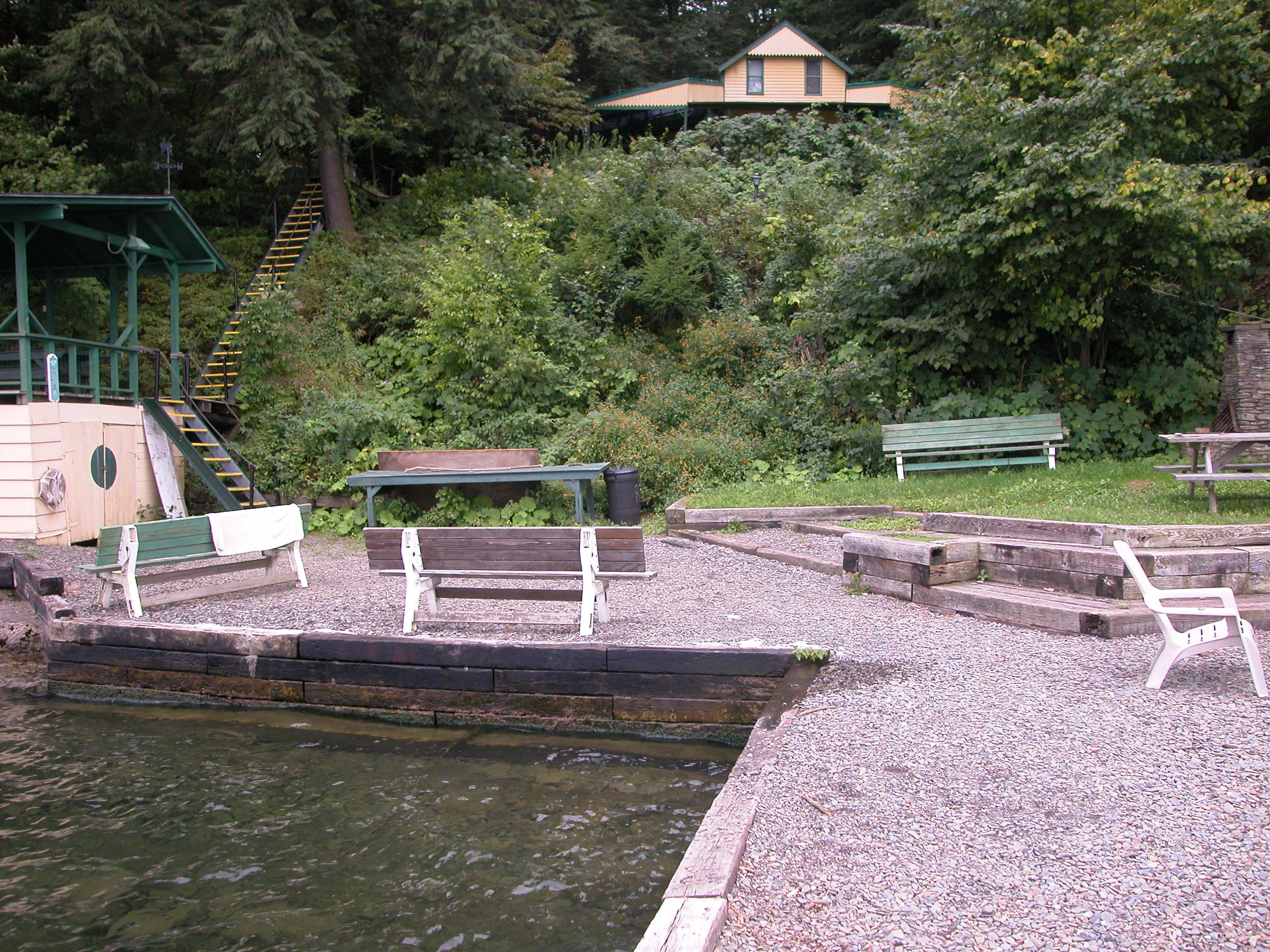
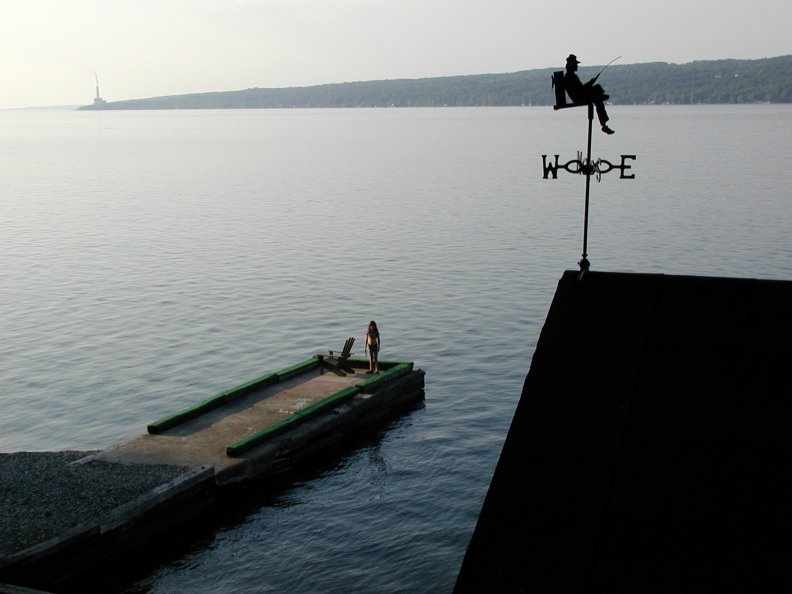
Rice Heritage Cottage
Crooning along with the radio or a CD or a song being streamed on Pandora or Spotify is great — yet it’s very different from singing with another real live human being in the present moment.
My great grandfather James E. Rice bought this cottage (I think from fellow Cornell professors John Henry Comstock and Anna Botsford Comstock — who was the first woman to become a professor at Cornell University).
James E. Rice was a professor of poultry science at Cornell and had a farm — called the Egg and Apple Farm on Rice Road — just up the hill from this cottage in Trumansburg, NY.
The uphill view from dock to cottage…
He and his wife Elsie Van Buren Rice raised six children — three girls and three boys — almost all of whom ended up owning farms, too, when they grew up and married.
Sadly, however, Elsie died when their youngest daughter was still a teenager.
James ended up leaving the family’s cottage — overlooking Cayuga Lake — to his six children plus their descendants.
And many of his descendants continue to take turns staying there each summer in one- and two-week increments of time.
This summer one of my older cousins told me about songs she had heard as a child from her parents and grandparents — some of which were originally sung by people working outside in gardens and fields as a way (according to my cousin) to pass the time and remain connected with their neighbors.
The downhill view of dock and boathouse…
What a different era — and mode — of human connectedness!
Another deep breath in.
And deep breath out.
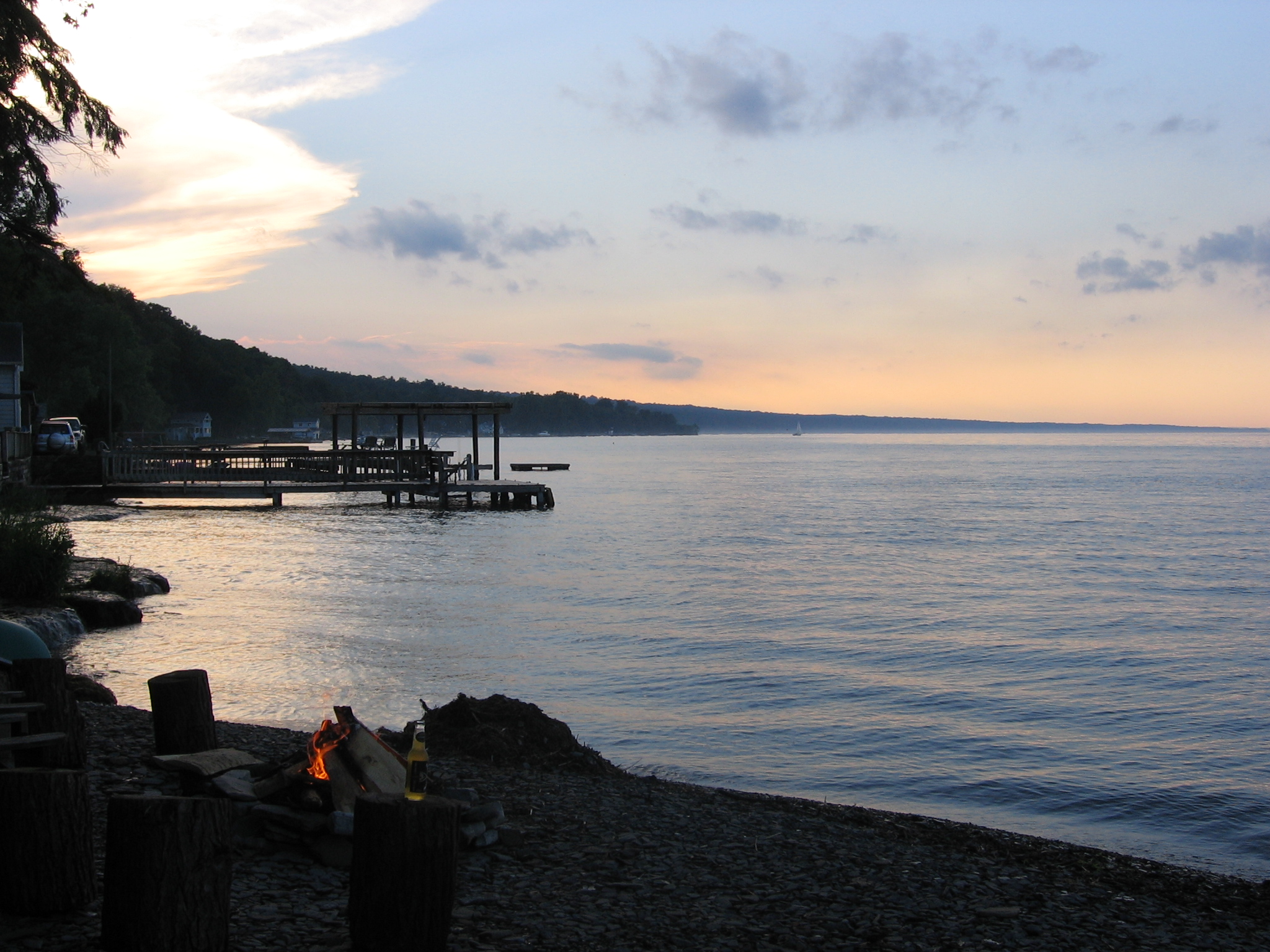
Using my ukulele and the great “Daily Ukulele” songbooks, we sang together most nights on the beach around a camp fire — while the younger members of our family roasted marshmallows and made s’mores for all to eat.
Yum!
I could do this for hours — and in fact on the last night I did play without a break for over three hours.
The beach with campfire at twilight…
Music.
Stars above.
Friends and family all around.
Lake water lapping with low sounds by the shore.
Bliss.
THANK YOU for reading — and listening to — this (recently updated) blog post.
Thank you to my great grandfather and great grandmother for their generous foresight in buying this cottage and then leaving it to their descendants.
And thank you to all of my cousins who have pitched in — decade after decade — to keep the Rice Heritage intact and functional for generations to come.




 And I love Steve.