I was riding my bike home in the rain this week and remembered a song written by a New England author and songwriter named Barbara Baig.
“Rain beats at the window as I stare into the night…”
I recorded it a while ago with Doug Hammer playing piano — and, I think, Chris Rathbun on upright bass and Gene Roma on drums — at Doug’s Dreamworld Studios on the North Shore.
That was when I was hosting a performance series in Harvard Square called “Will & Company.”
Each show featured a local songwriter and a local singer about whom I was excited.
I recently learned that one of the songwriters, Ernie Lijoi, has written lyrics for two songs in a musical called It Shoulda Been You which is opening on Broadway at the Brooks Atkinson Theater in April of 2015 starring Tyne Daly and directed by David Hyde Pierce.
Although a lot — a blessed lot — of stuff is going well in my life these days (a devoted life partner, robust Music Together classes, more performances at retirement communities and libraries, basic health, no debt, a functional bike, a wonderful web of family and friends for whom I am very grateful, and the list goes on and on), I also find myself standing from time to time in deep puddles of fear.
And I berate myself for feeling scared — aware that billions of beings on planet earth are not as fortunate as I am.
What do I have to feel scared about?
Yet I am also aware — without reading the paper, listening to the radio, watching the news, or tapping into various social media — that our human population continues to climb, that more and more species of animals and plants are becoming extinct, that our economic models are based on an advertising-created desire to possess more and more things, etc. etc. etc.
Thinking about these global challenges leaves me feeling scared, or sad, or angry — or all of the above.
How do we not become mired in fear?
How do we keep our hearts open?
How do we change our lives to respect and honor and nurture the amazing web of life currently unraveling on planet earth?
It may not always be easy to feel, but it’s always there somewhere — or perhaps everywhere? — waiting to be tapped into.
In the two years since I was laid off from my day job, I have come to understand that music is one of our most accessible — and brilliant — technologies for re-connecting with love.
I experienced another love-filled gig with pianist Joe Reid last Saturday at a retirement community to the south of Boston.
It was the first time we had been there; so I didn’t know what to expect.
I was also feeling a bit concerned that our choice of “Make Someone Happy: The Songs of Jule Styne” — rather than a program of songs by the more familiar Cole Porter or Gershwin Brothers — might have been too risky for a first visit.
But we were warmly welcomed, ushered to a lovely performance space (not too big, not too small — a “just right” Goldilocks fit) with a small grand piano, a good PA system, and an audience of American Popular Songbook aficionados.
The size of the room — and the lighting in the room — made it possible for me to make eye contact with everyone.
Many audience members knew the words to the songs we were performing — and I, inspired by my Music Together classroom experiences, exhorted everyone to hum, tap, snap, or even dance if the spirit moved them.
There is something about the structure of a well-written song that allows — even encourages — one to put one’s heart into the singing of it.
And knowing that a song has a beginning, a middle, and an end somehow makes it safe for me as a singer to experience a wide range of feelings while I am singing it.
I think I have written in previous blog posts about how amazing subtext can be — how simply changing what or whom one is thinking about as one is singing can completely alter one’s interpretation of a particular song.
I have even begun to wonder — as I sing and make eye contact during performances with as many different audience members as are willing to connect in that surprisingly intimate way — whether I start connecting on an unconscious level with some of THEIR subtext, THEIR history, and THEIR associations with a particular song.
Whatever is transpiring energetically, it certainly opens MY heart — and re-connects me to feelings of joy and heart-ache and love and fear and desire and hope and pain.
Afterwards Joe and I listened to the stories that these songs evoked in the residents — tales of huge summer parties near Westport, CT in the 30s and 40s, or of seeingBarbra Streisand in the original production of Funny Girl, or of listening to these songs on the radio with loved ones in the living rooms of their past.
One woman said something like, “We have to have you and Joe back again right away — your singing reached inside and touched my soul.”
This is what I live for.
This is what music can do.
Two strangers can, in a safe and well-boundaried way, touch each other’s souls.
John Lennon knew that.
He wrote the song “Love Is Real” — which I recorded several years ago with Doug Hammer at his Dreamworld Studio. Then I monkeyed with those tracks using Garageband to create the version at the top of this page.
Thirty four years ago John Lennon was killed as he got out of his car and headed into his apartment in NYC.
According to Wikipedia, he had chosen to get out on 72nd Street (rather than the driving into the courtyard of his building) so that he could chat with any fans who might be waiting to say “hi” and ask for an autograph.
In fact, earlier in the day he had autographed a copy of Double Fantasy — the life-affirming album he had recently released with Yoko Ono — for the man who later shot and killed him.
After I heard the horrible news of John’s death, I remember walking along Massachusetts Avenue in Harvard Square, feeling very sad and upset that this could ever have happened.
One loss often awakens previous losses — like a metal chime rippling and echoing through the layers of one’s emotional body and memory.
So, with hindsight, it is very likely that I was also grieving other deaths, other losses, other assassinations — as I grieve tonight…listening to John’s music and reflecting on his inspiring life.
You can click here for a link to a comforting essay I found online which offers perspective about why so many of us continue to be so deeply moved by John’s murder.
I loved John Lennon.
I continue to love his music — as well as the music of all The Beatles.
Skimming over some of my previous posts, I see that I rarely mention anything about feeling frustrated, unhappy, anxious, or any other “negative” emotional state.
I would like to clearly state that I feel disappointed, scared, envious, disheartened, disgusted, vengeful, upset, discouraged, and cranky on a regular basis.
But I strive — when feeling out of sorts — to remind myself of any number of things in my life that I can be grateful for.
A wonderful life partner. Health. Plenty of food. Lots of family. Lots of friends. A functional bicycle. Employment. A safe place to live. Clean water. No tanks patrolling my neighborhood. Music. Electricity. The children and grown-ups in my Music Together classes. Warm clothing. Two lap top computers. Access to the internet. Great collaborators. Our local network of public libraries. The retirement communities which invite me and my pianist friends back to perform again and again.
Once one gets started, the list can go on and on and on…
The week before Doug Hammer and I performed Songs About Parents & Children at the Third Life Studio in Somerville, MA, I found out that I had been awarded a grant from the newly-created Bob Jolly Charitable Trust to help pay for rehearsals and marketing outreach.
Bob Jolly, who died in 2013, was a beloved actor in the Boston community for 28 years.
Bob Jolly
The Bob Jolly Charitable Trust — established by his will — supports local actors, performers, composers, and theater companies with modest yet very meaningful financial support.
I am very grateful for this grant as well as Bob’s vision to nurture Boston’s creative community for years to come.
His generosity is indeed something good!
The song in the player at the beginning of this blog post was created by Richard Rodgers for the movie version of The Sound Of Music.
To my ears, many of the songs from The Sound of Music are tinged with a bittersweet quality.
This may be because they remind me of my own childhood, and seeing the movie version of The Sound Of Music on a huge screen at a theater in Times Square, NYC.
This may also be because I know now that Oscar Hammerstein was dying from stomach cancer while they were working on this — their last — show.
This knowledge makes songs like “My Favorite Things,” So Long, Farewell,” “Climb Every Mountain,” “Edelwiess,” and “The Sound Of Music” seem especially poignant and intimate — a final gift of wisdom to all of us from Oscar as he approached his own death.
Bob Jolly
Richard Rodgers wrote both the music AND the lyrics for couple of songs which were added to the movie version: “I Have Confidence” and “Something Good.”
He wrote both the music and the lyrics because Oscar died before the movie was made.
Learning more about Mr. Rodgers life — including his challenging relationship with Larry Hart, his own (much more covert) alcoholism, his relationships with various female cast members in his shows — many more layers of complexity to “Something Good,” which Doug and I performed as our final encore at the end of Songs About Parents & Children.
Deep breath in.
Deep breath out.
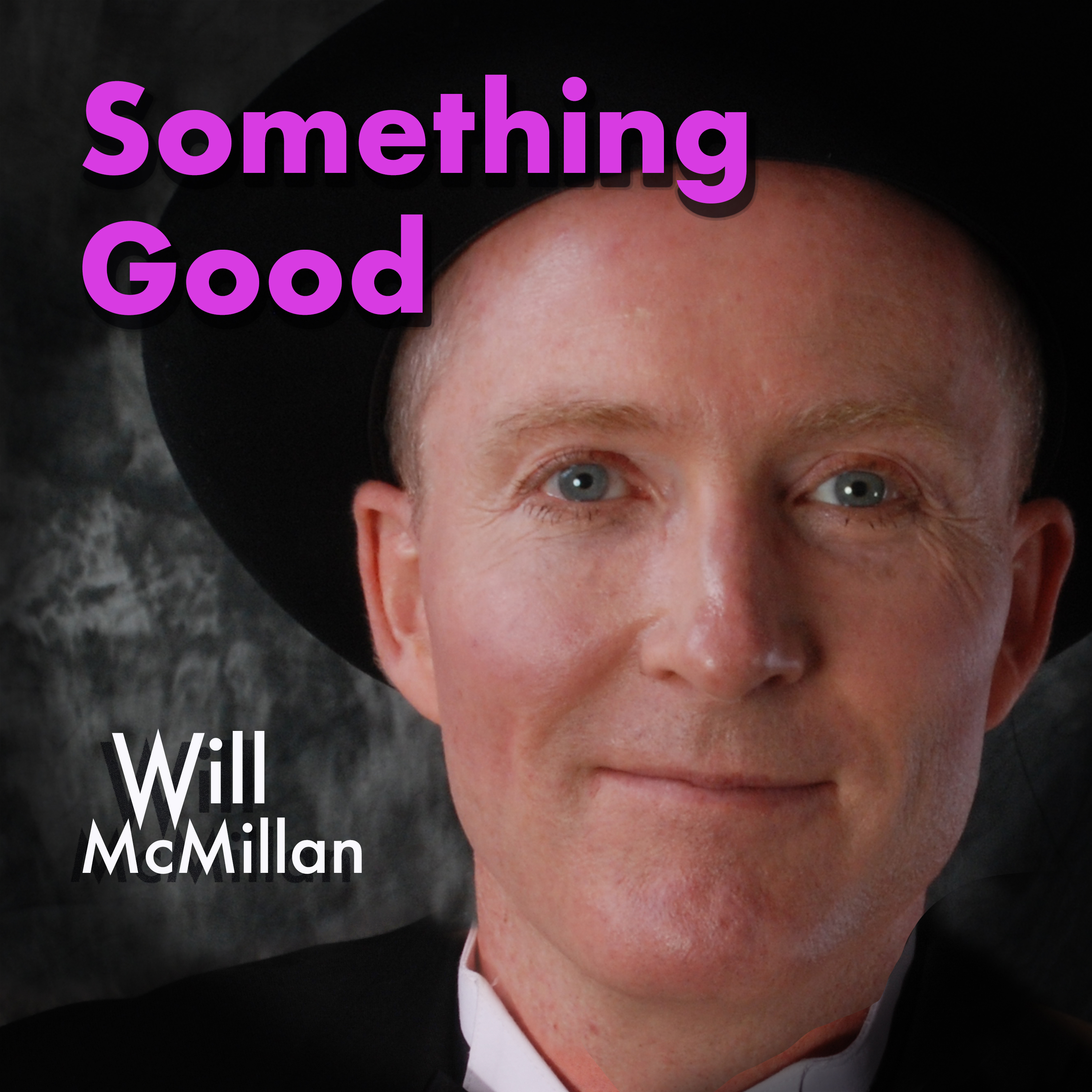
PS: In the years since I published this blog post, I have released “Something Good” to various streaming platforms.
On some it has proven to be surprisingly popular (9375 plays on Pandora, for example) while on others much less so.
I guess this is the result of the mysterious algorithms which affect how much one’s recordings are shared with other potential new listeners…
This past Sunday pianist Joe Reid and I performed an hour of songs with music by Harold Arlen at an independent living center in Quincy, MA.
The residents who showed up were very friendly — and a few of them knew the words to almost every song!
Even if they weren’t singing, I could see that everyone was moving some part of their body — fingers, toes, head, torso — in rhythm with the music.
It was a delightful way to spend an hour of my life.
Afterwards one woman — whose eyes had been closed for much of the time — explained that when these songs had been popular, she and her husband had not had a lot of money, but that they HAD been able to listen to music on the radio.
So even though it may have appeared she was dozing off, she had in fact been remembering that time in her life and imagining that her husband was still sitting next to her.
Deep sigh.
What is this thing called love?
The previous day pianist Doug Hammer and I had performed a 40 minute chunk of my show, “The Kid Inside,” at a benefit for a new organization called OUT MetroWest.
OUT MetroWest has been providing supportive space for LGBTQ teenagers to meet for many years, and this benefit was a big step to expand their services beyond the Unitarian Universalist church in Wellesley where they began.
I originally created “The Kid Inside” to perform for the 10th grade class at my high school. It’s a recollection, using stories and songs, of my high school years — including how conflicted and confused I felt about my sexuality.
At one point I tell a story about when — lacking a gay-straight alliance on campus or even any “out” faculty members to whom I might speak — I sneaked from my dorm one night and knocked on the front door of an apartment belonging to one of the young, unmarried male teachers who lived on campus,
When he answered the door, I was unable to say anything and just stood there — feeling stuck and ashamed and humiliated.
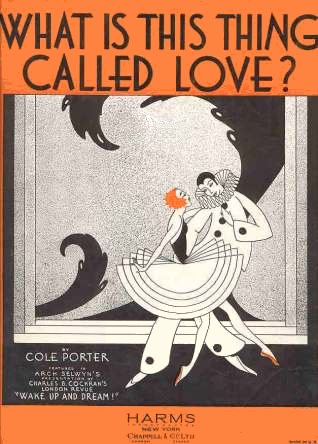
I follow this story by singing the Cole Porter song “What Is This Thing Called Love?” — which is in the player at the top of this post with Doug Hammer on piano, Mark Carlson on bass, and Kenny Wenzel on trombone.
I am happy to know that there are now safe spaces at many high schools to talk about the amazing and powerful and at times perplexing topics of sexuality and identity and relationships — as well as organizations like OUT Metro West.
And I am amazed at how songs can re-connect us with people and places from our past.
Love is a mystery.
How music taps into our memories and opens our hearts is a mystery.
Today I embrace those mysteries and remain grateful for all the music in my life on a daily basis.
“So Many Stars” is a song I have heard performed by many different singers, and I have always thought to myself, “I need to learn that song.”
This past summer I visited a pianist/songwriter friend, Steve Sweeting, and his family while attending a Music Together training session in Manhattan.
One evening we were brainstorming about possible future collaborations, and I mentioned that I have long wanted to do an evening of songs about stars — both the amazing energetic phenomena that we see at night and the human-created idea of “star” — as in “movie star” or “musical theatre star.”
To get us started, he gave me the sheet music for “So Many Stars,” which I promptly began learning.
Pianist Doug Hammer and I recorded the version I have included at the top of this post — and then I went camping for two weeks with family on Cape Cod.
One of the things I love about getting away from the city is gazing at the sky on a cloudless night.
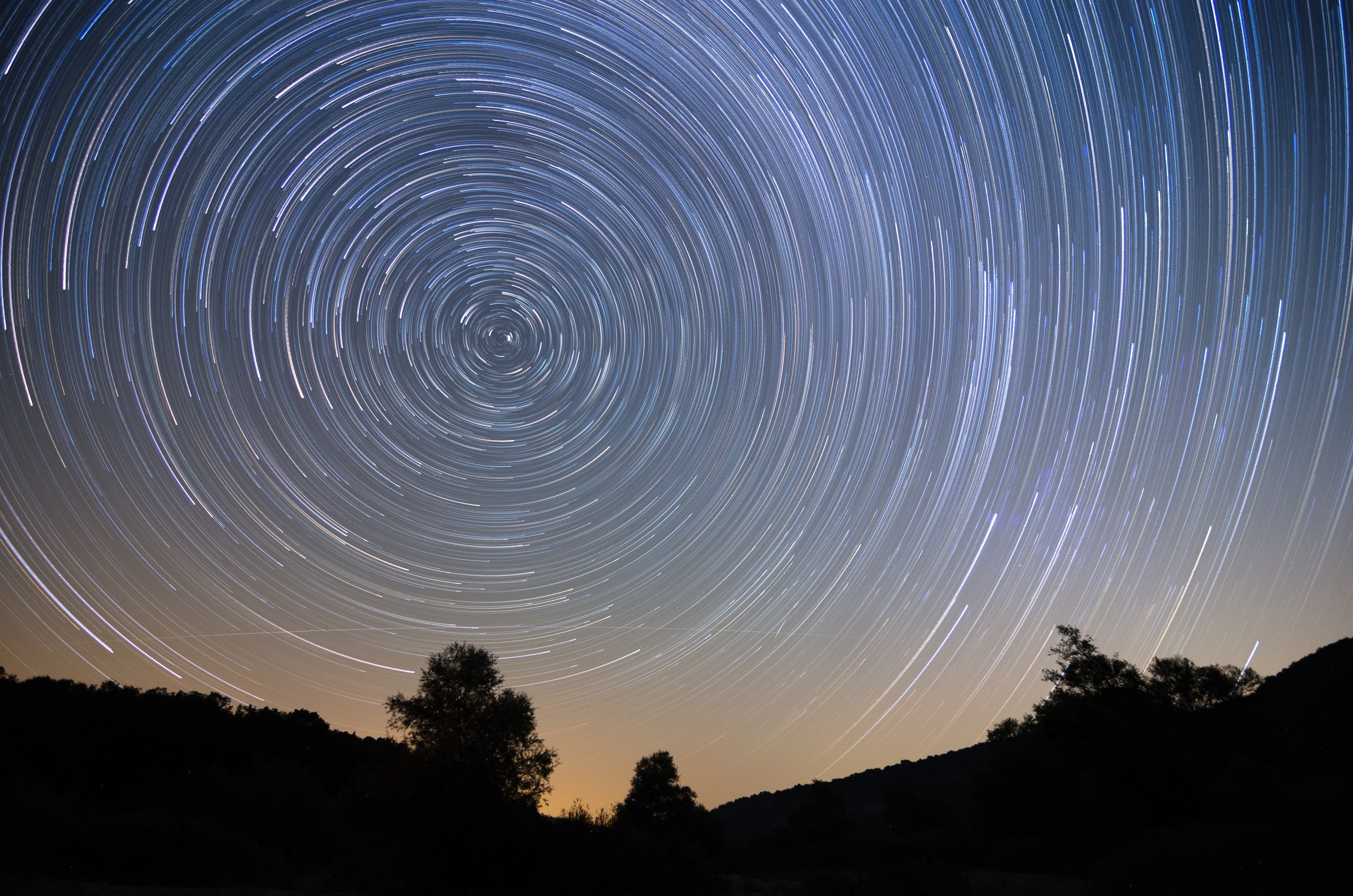
A couple of times I walked down to the beach after dark and sang “So Many Stars” over and over again while the universe beamed light across unimaginably vast distances totrigger the rhodopsin in my eyeballs — and awaken a sense of wonder in my mind, body, and spirit.
The deceptively simple lyrics of “So Many Stars” were written by the wife-and-husband team of Marilyn and Alan Bergman for a wonderful melody by Sérgio Mendes, a Brazilian pianist and songwriter.
The Bergmans created lyrics for a bunch of great songs including “Nice and Easy” (for Frank Sinatra), “The Way We Were” (for Barbra Streisand), “What Are You Doing The Rest of Your Life?” and “You Must Believe In Spring.”
Sérgio Mendes was a founding member of the successful vocal jazz group Brazil ’66 and left behind a 35-album legacy of music when he died from complications of long-term COVID in 2024 (I updated this blog post in 2026…)
There are so many ironies about the lives that we “modern” human beings have created here at the beginning of the 21st century on planet earth.
One of them is how — in the interest of safety and security and advertising — we have erected vast numbers of exterior lights, which means that we are less and less able to experience the truly amazing sight of a starry, starry night — along with the humility and curiosity and mystery that it can evoke in us.
Deep breath in.
Deep breath out.
As someone who has (blessedly) never been mugged, I’d rather have more visible starlit nights and fewer streetlights in my life.
How about you?
Hurrah for rhodopsin, hurrah for music, and hurrah for the vast mysteries of the universe!
I can get so caught up in the human drama unfolding here on planet earth that I forget about the larger — and potentially un-knowable — universal patterns and cycles unfolding all around us at every moment of the night and day.
Another deep breath in.
And deep breath out.
Thank you to the Bergmans and Mr. Mendez for creating this beautiful song.
Thank you to Steve for giving me the sheet music for “So Many Stars” and to Doug for recording it with me.
Thank you to the generous and gifted photographers at Pixabay.
And thank YOU for reading and listening to yet another one of my blog posts.
Today I visited one of my favorite urban yards (near the intersection of Dana and Centre streets in Cambridge, MA) as I was biking home from a visit with my beloved acupuncturist.
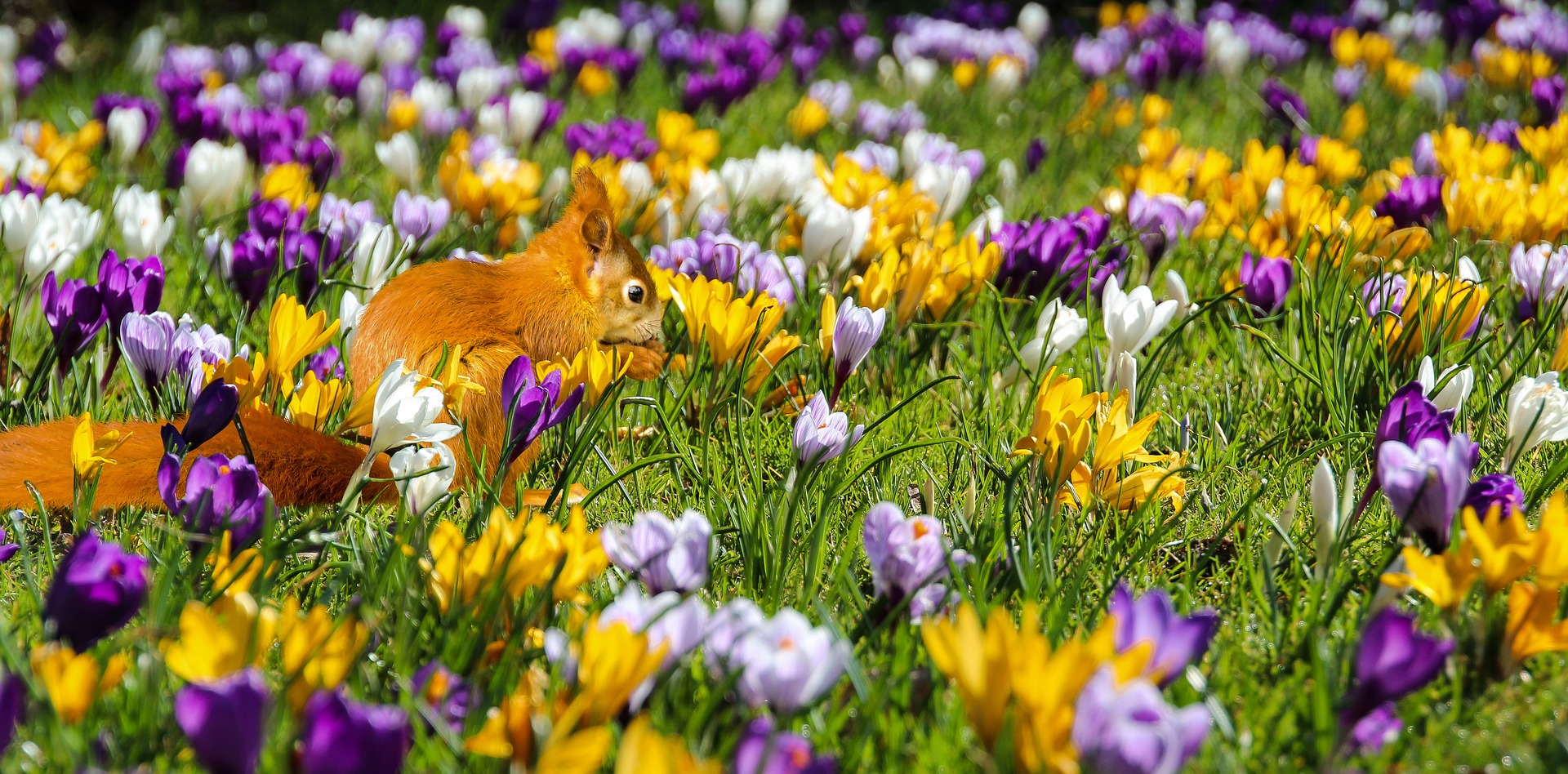
The people who live there have planted an astonishing number of bulbs under a huge beech tree in front of their home.
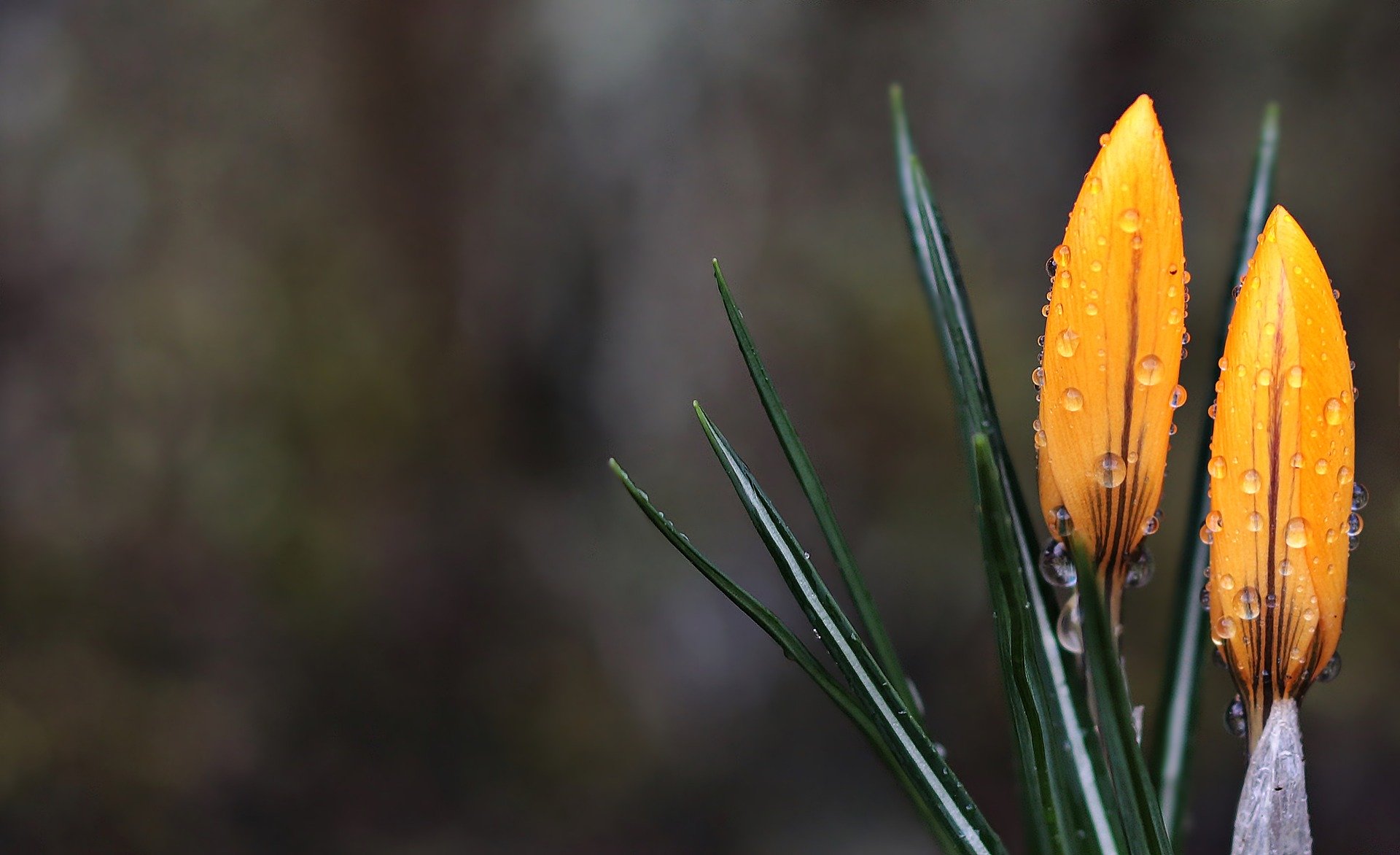
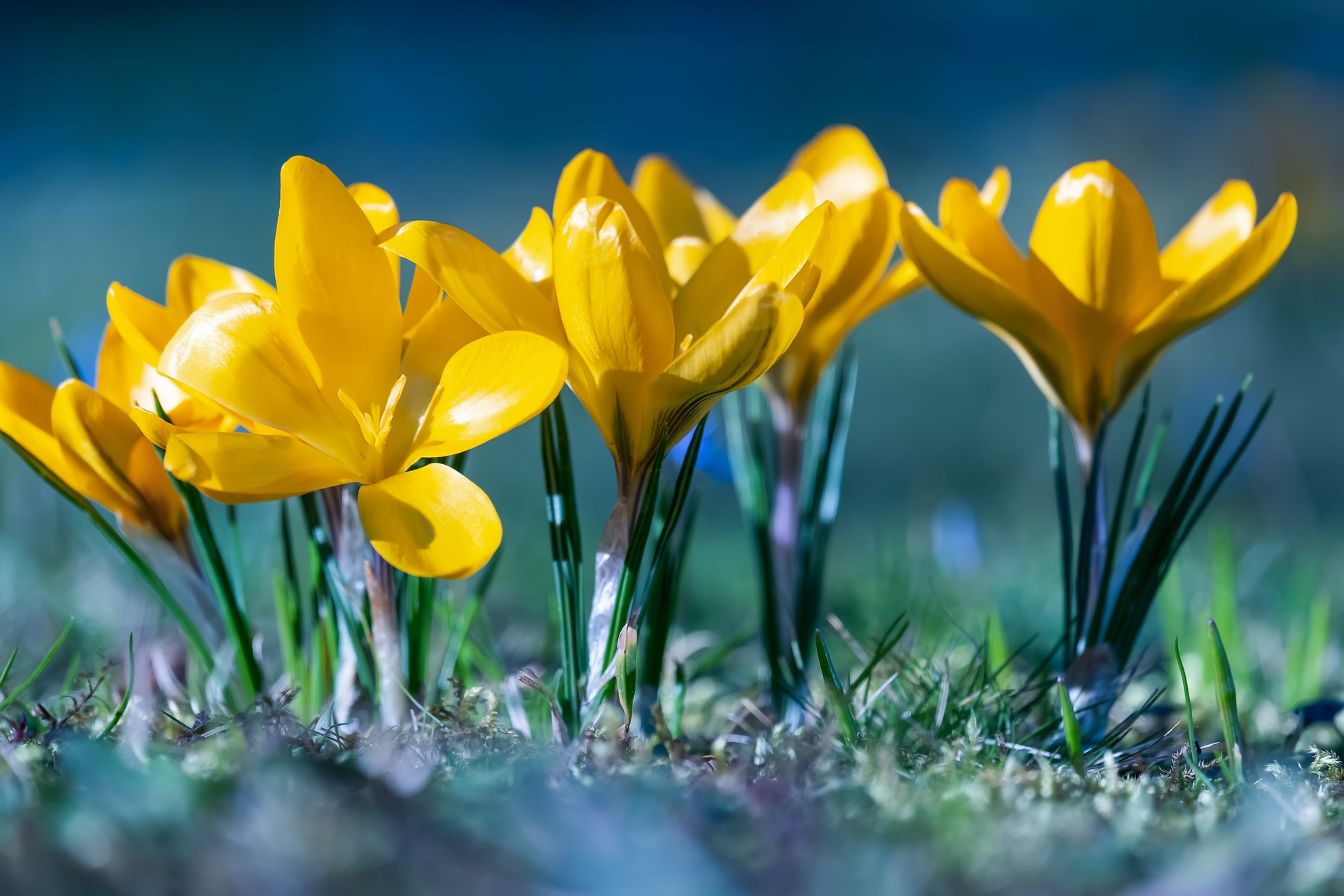
Right now hundreds of snowdrops and crocii are blooming, as well as one tiny Siberian iris.
And even though the temperature was near 32 degrees Fahrenheit, I saw two little bees diligently visiting each crocus flower to gather tiny bits of pollen.
Amazing!
The crocii have inspired me to share two different versions of a song I wrote a couple of years ago, “The Beauty All Around.”
Here’s a version I recorded last week with pianist/composer Doug Hammer.
I think this song originally sprang out of an excited realization that some of my favorite pop songs — such as “Viva La Vida” by Coldplay — were based on only four chords.
I am not sure when I came up with this particular four-chord progression — but I remember sitting at a picnic table next to a lake near Worcester, MA, when I started recording it.
It was a warm autumn afternoon, and I was attending one of my favorite congregations of human beings on planet earth, the Massachusetts Men’s Gathering.
Although I was not having the best time at my day job (as the lyrics attest…), I was happy and grateful to be sitting by the water, surrounded by trees and birds and sky and clouds.
Here is my original version, recorded using my trusty Apple laptop running GarageBand plus my small, blue ukulele.
If you are able to take the time to listen to both versions, you will notice how the lyrics have evolved a bit.
ps: If you are ever feeling down in the dumps and have access to the internet, just do a search for “crocus images.” So many colors! So much beauty! What a planet…
After some delicious food and inspiring conversation — including how the Boston Beer company decided to withdraw its support of the St. Patrick’s Day parade in South Boston — we all moved from the kitchen into the living room.
And then we made music together for three hours.
Sometimes it was one singer accompanied by a pianist.
At one point each of the pianists even accompanied the other — who was uncharacteristically standing to sing.
The daily news from our mainstream media brings so many unhappy stories into our homes and into our hearts — planes which mysteriously crash; snipers who fire on civilians; species being wiped out by poachers; wars being waged over natural resources and political power and religious beliefs…
I often wonder what we human beings are doing here on planet earth — and how music fits into the larger equations and patterns unfolding on a daily basis.
And can bring my energy — for lack of a better word — into harmony with others.
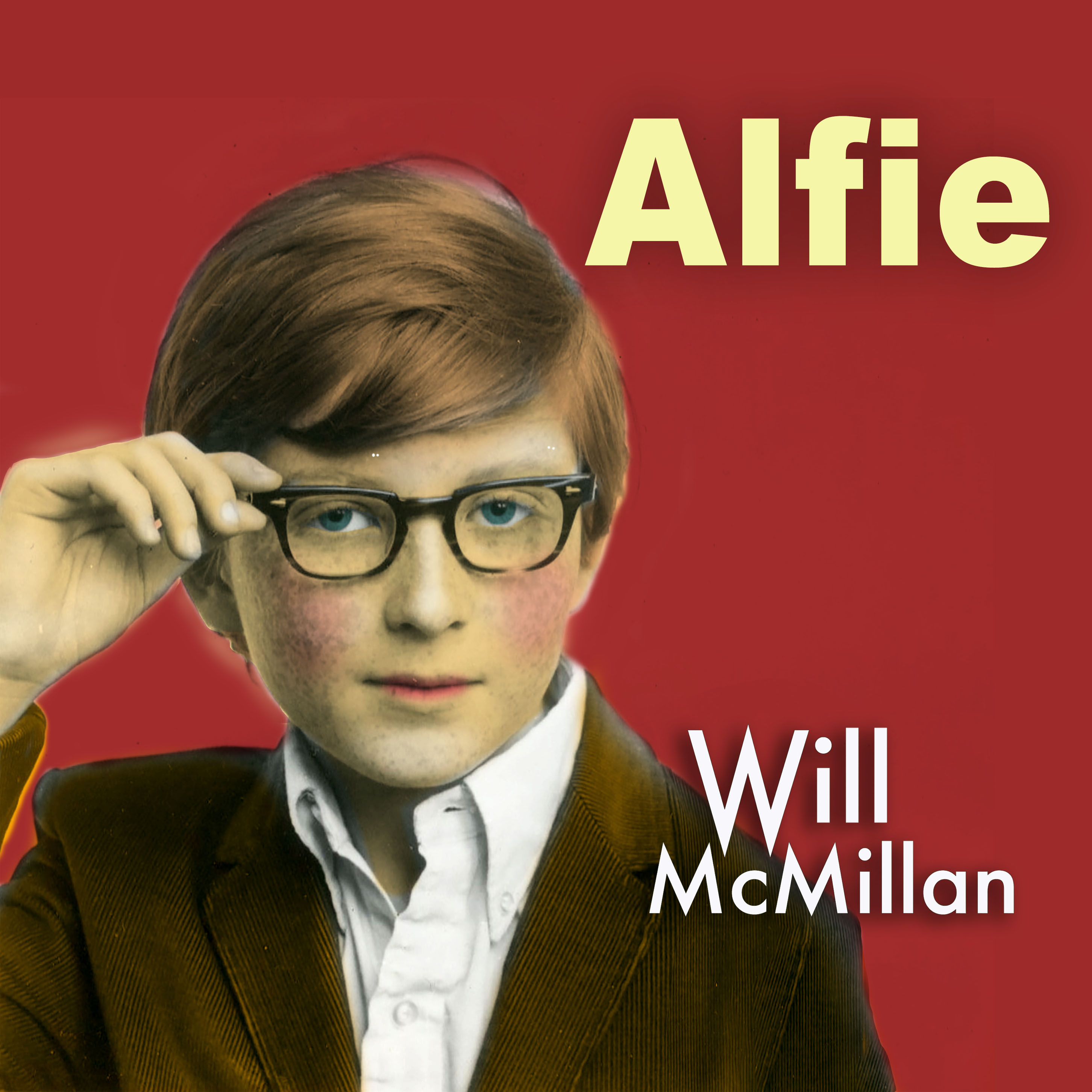
Last night someone at the party sang the great Bacharach/David song “Alfie.”
It reminded me of a recording (embedded at the top of this blog post) which Doug and I made a few years ago at his studio in Lynn.
I am reassured that other human beings, such as Burt Bacharach and Hal David, have pondered similar questions, too.
And I am very, very grateful that my life is now focused on making and sharing music with others.
Thank you for reading — and perhaps listening to — this blog post!
ps: When I wrote this blog post over ten years ago, it included no photos. So in April 2024 I added some from a wonderful photographic resource called Pixabay. THANK YOU to all of the generous photographers and graphic artists at Pixabay!
pps: And when I first recorded this version of “Alfie” with the wonderful pianist Doug Hammer, I knew nothing about digital distribution of music. Now it is available on a bunch of streaming services — and you can click here to stream it.
Last weekend I saw a dad herding two small boys wearing rubber boots.
They were delightedly stomping their way across a very large puddle.
The sun was shining.
Snow was melting everywhere.
The air almost felt warm on my face.
Ahh, the intoxicating approach of spring!
Robins have landed twice on the bushes outside my bedroom window, eating berries that — miraculously — remain on the branches.
Two male cardinals have been jousting in the airspace around our house — flashes of scarlet fluttering from fence to roof to branch and then back to fence — all the while uttering a passionate selection of hormone-infused songs.
Soon tiny frogs will wake up and start peeping in the wetlands behind my friend Doug Hammer’s studio to the north of Boston.
A few years ago Doug found a great sound sample of spring peepers, and we added it to my Snow Flake Song (playable at the top of this post).
Right now the peep frogs are still hibernating under a log or behind the loose bark of a tree.
When they are full grown, spring peepers are only an inch and a half long.
I bought a box of cards at CVS yesterday so that I can hand out child-sized Valentines to the little ones in my Music Together class.
There were cards which featured wrestling action stars and others with garish visual special effects.
There were cards publicizing children’s movies and TV shows.
I showed my final choice — puppies and kittens with accompanying tattoos — to a mom in the card aisle.
She assured me that most parents are OK with temporary tattoos.
We shall see…
I have long admired the song I included at the beginning of this post.
“And So It Goes” is one of Billy Joel’s most beautiful, wise ballads.
I recorded it with Bobbi Carrey — who provided harmony near the end — and Doug Hammer — who played piano and engineered simultaneously — at Doug’s great studio outside Boston.
There are more tracks from that CD in the music player on the right hand column of this blog, including “I’ll Be Here With You,” “What Is This Thing Called Love?” “Dog At The Pound,” and the title track, “If I Loved You.”
I realize — not surprisingly —that almost every song in the right hand column of this blog is about love.
Music has an uncanny power to re-connect us with our hearts.
May you have much music in your life on this — and every — day.
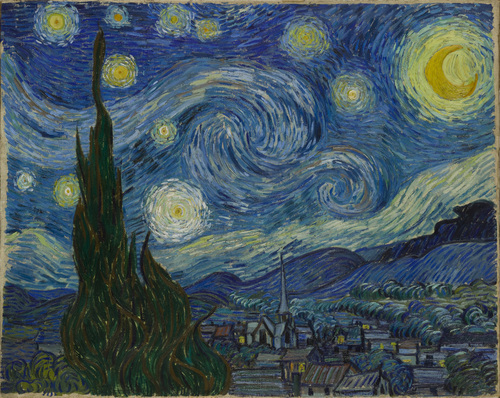
What is it about Vincent Van Gogh’s painting “The Starry Night” that touches so many of our human hearts?
At the end of December I was wandering through the Museum of Modern Art in New York City when I happened upon his masterpiece.
First I noticed the scrum of people who were jockeying for position in front of it.
Then I noticed the guard who had the extraordinary responsibility of making sure that none of the members of the scrum got close enough to damage the painting.
And then I saw it…The Starry Night.
And tears immediately appeared in my eyes.
Even with a crowd of people taking photos of it, taking photos of themselves in front of it, and tweeting and texting their friends about it, “The Starry Night” was serenely, astoundingly beautiful.
I don’t know if I cried partly because I, too, love to gaze at the night sky — amazed at the beauty of the stars and the vastness of the universe — and Van Gogh captures it so well in this painting?
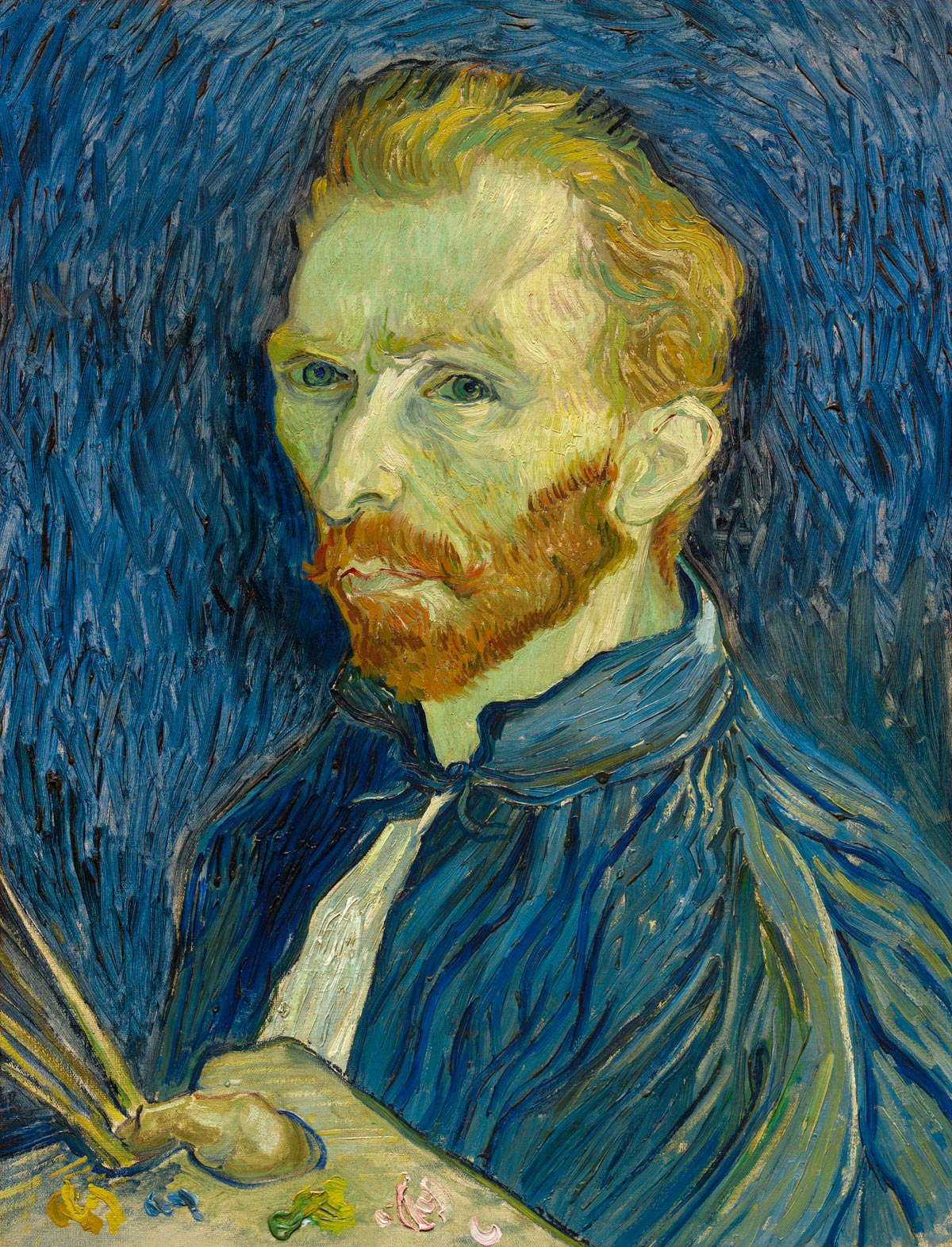
Or if I was reminded of Don McLean’s song “Vincent (Starry, Starry Night),” which speaks so poignantly about how little respect or success Van Gogh earned in his lifetime — as well as his eventual suicide?
The juxtaposition of the clamoring crowd of art-lovers in the 21st century and Van Gogh’s downwardly mobile existence in the 19th century was odd.
And yet we all still share the same huge questions — about how our finite lives relate to the unimaginably vast realms of space, about what happens to us when our bodies die, about how our wonderful blue-green planet fits into the swirling patterns of the universe, about time…and space…and love…and loss.
Ahh, art.
Ahh, music.
Deep breath in.
Deep breath out.
If you are curious to learn more, here is a link to MOMA’s web page for “The Starry Night.”
Special thanks to pianist Doug Hammer, at whose Dream World studio we recorded the version of “Vincent (Starry, Starry Night)” you can hear by clicking at the top of this blog entry.