
We celebrated Patriots’ Day here in Massachusetts earlier this month.
As you probably know, Patriots’ Day commemorates the battles fought nearby in Lexington, Concord, and Menotomy (now part of Arlington) at the start of the American Revolutionary War between colonists and British forces.
All of these events happened quite near where I live — in fact, British soldiers marched past the end of my street (about three houses away) en route to these battles.
And there are historical markers up and down Massachusetts Avenue which document the skirmishes — and often the deaths — which unfolded two hundred and forty eight years ago in my neighborhood.
Deep breath in.
Deep breath out.
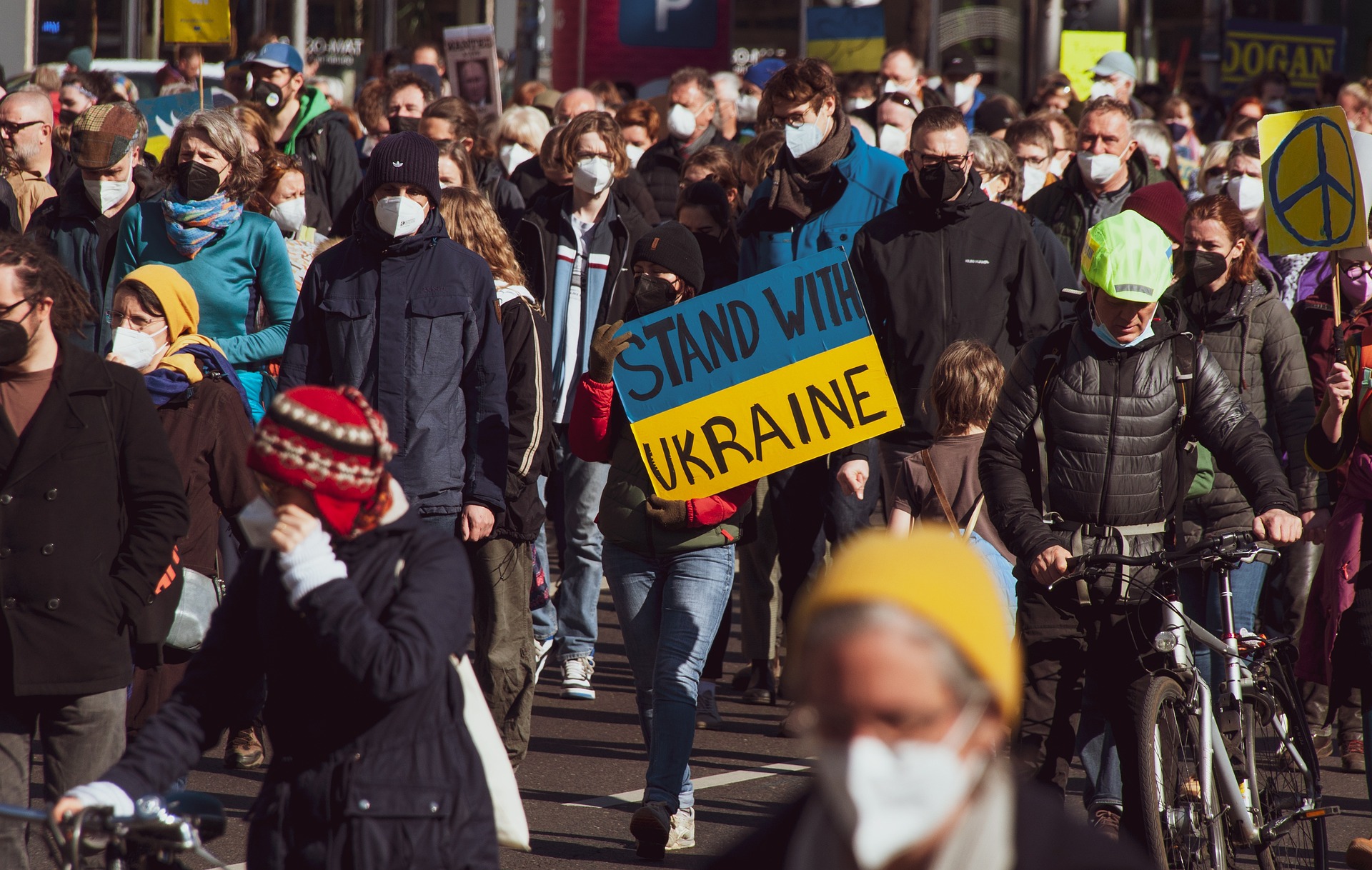
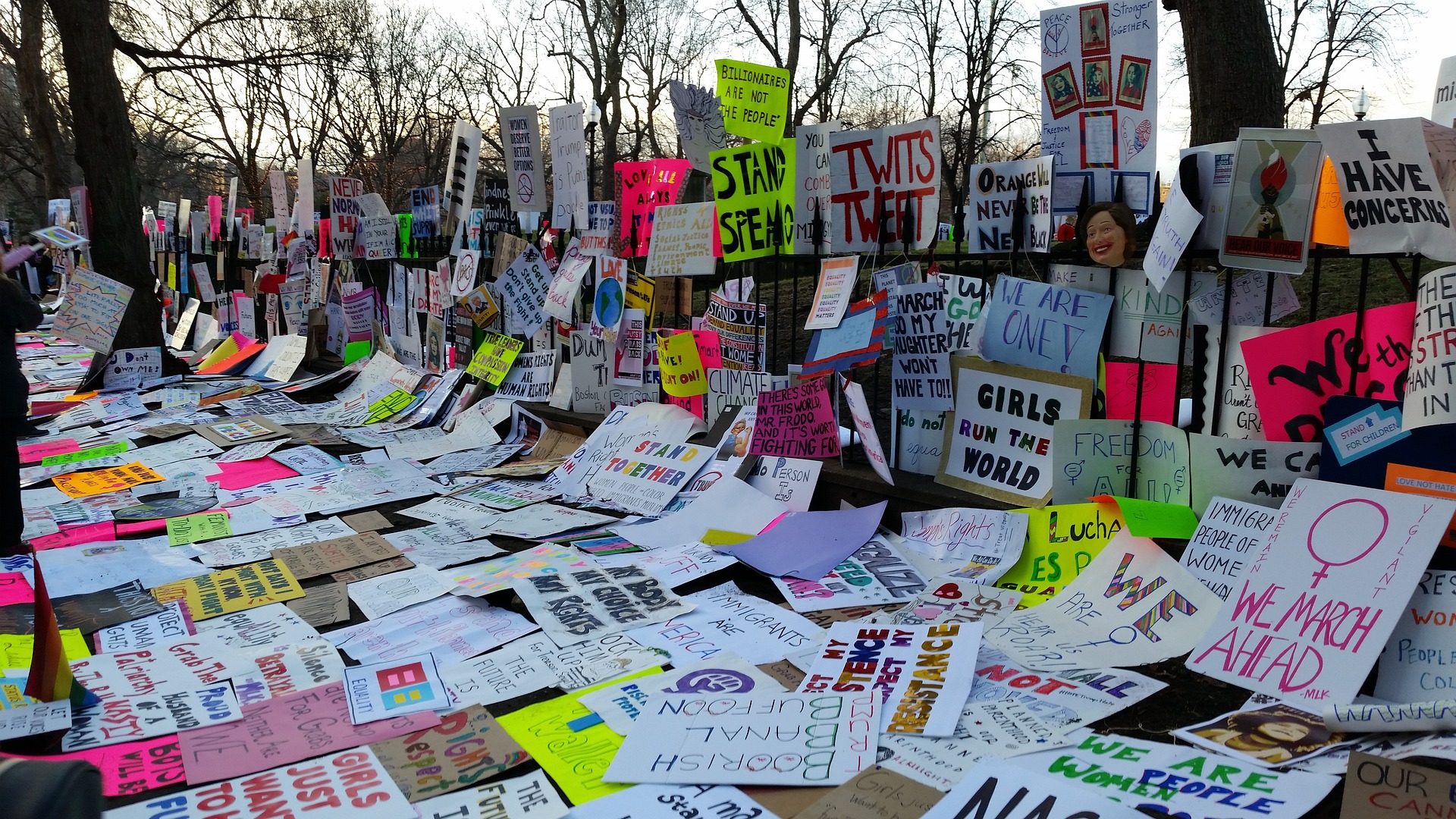
I wrote today’s song, “Democracy Is Under Attack,” a couple of years ago after participating in a big march in Boston.
I was inspired by some of the chants I heard during the course of the day.
I am guessing that most readers of my blog are well aware of the astounding political events unfolding these days in the USA.
I had compiled a long list of them to include in this blog post, but today I realize that I do not need to burden or discourage readers in this manner.
I can let my song speak for itself.
Another deep breath in.
And deep breath out.
The great lyricist Yip Harburg — who co-wrote classic songs such as “It’s Only A Paper Moon,” “Over the Rainbow,” and “Brother, Can You Spare a Dime? — once said the following:
“Words make you think thoughts. Music makes you feel a feeling. But a song makes you feel a thought.”
I love this idea.
He continues: “Songs have been the not-so-secret weapon behind every fight for freedom, every struggle against injustice and bigotry.”
“(Think of) ‘The Marseillaise’ (or) ‘The Battle Hymn Of The Republic’ or ‘We Shall Overcome’ and many more.”
“Songs are the pulse of a nation’s heart — a fever chart of its health.”
“Are we at peace? Are we in trouble? Are we floundering?”
“Do we feel beautiful? Do we feel ugly?”
“Listen to our songs.”
Thank you, Yip!
Another deep breath in.
And deep breath out.
When I am feeling overwhelmed by the news, I often turn to music for comfort, inspiration and balance.
I also turn to two writers: Heather Cox Richardson and Robert Hubbell.
Each of them shares a very thoughtful — and free — essay on an almost-daily basis which reflects upon what is happening in the USA as well as other parts of planet earth.

I am astounded at how many articles each of them is able to read and then synthesize into a cohesive and uplifting essay.
If you are curious, you can sign up for Heather’s newsletter by clicking here.
And you can sign up for Robert’s newsletter by clicking here.
As I mentioned above, one doesn’t need to pay to read their work, but they DO accept financial contributions to support their work if one has the means to do that.
Here’s an example of Ms. Richardson’s writing from 3/23/23:
“In a democracy, the way parties are supposed to win elections is by making a better case for being in power than their opponents do. Losing elections is supposed to make leaders think deeply about how better to appeal to voters.”
“That system keeps all parties constantly honing their policies, thinking through problems, benefiting their constituents.”
“Our election laws are designed to try to hold the playing field level, and a party should want to keep the system fair in order to keep itself healthy.”
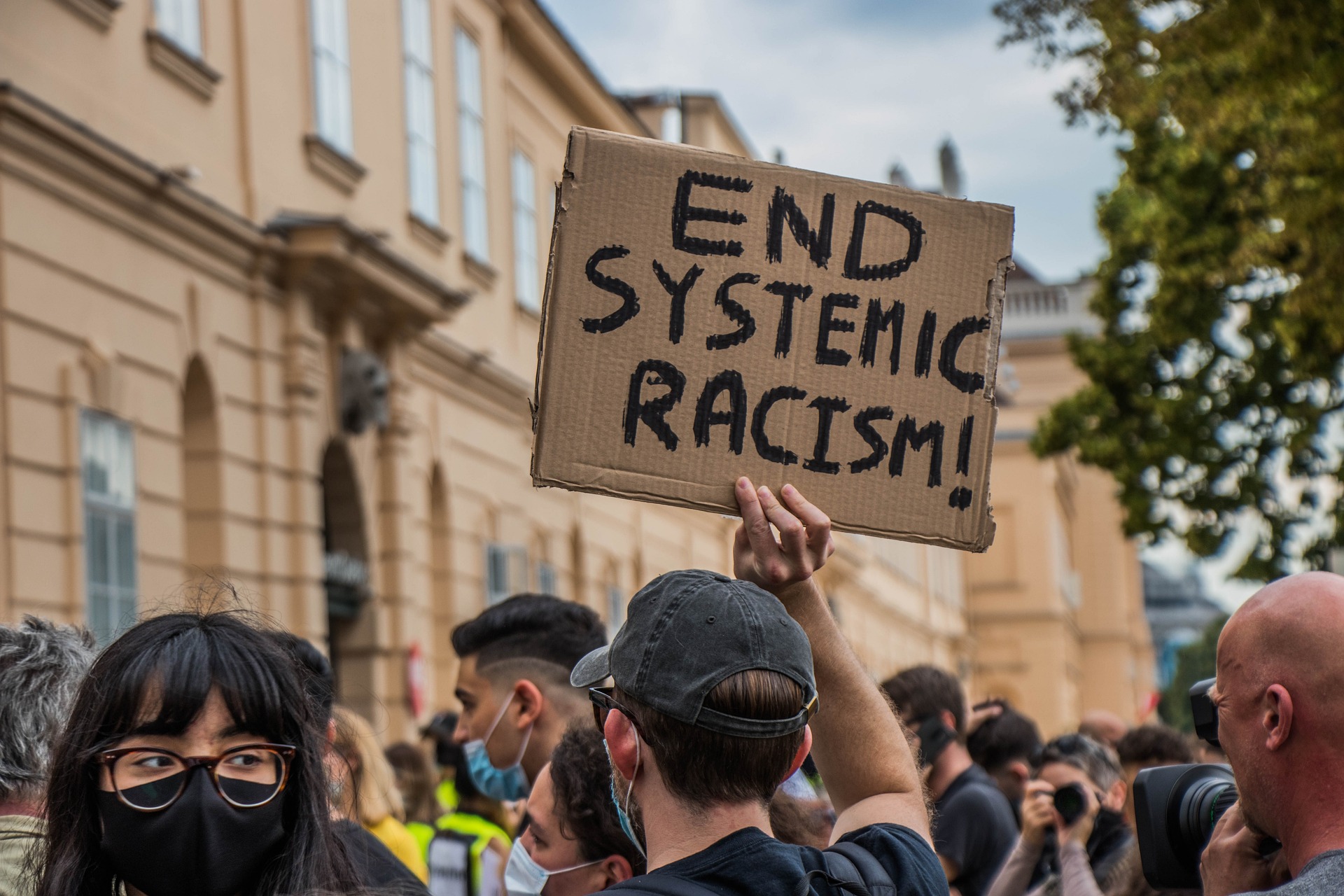
“But if a party is willing to cheat to win, it no longer has to work on policies that appeal to voters; it can simply game the system to dismantle the competition on which democracy depends and instead create a one-party state.”
Another deep breath in.
And deep breath out.
Here are some thoughts from Mr. Hubbell’s post on 4/17/23:
“Americans are fed up.”
“A recent survey by the Navigator Group finds a dramatic increase in the number of Americans who believe gun violence is a top national priority. For tragic reasons, concern over guns is now the third-ranking priority among Americans—behind only inflation and jobs.”

“Strong majorities of Democrats and Independents believe that gun laws should be strengthened — as do 38% of Republicans.”
“The numbers are turning against Republicans on the gun issue. Combined with reproductive liberty, the climate crisis, and attacks on LGBTQ rights, MAGA extremists have picked the wrong side of nearly every major social and political issue challenging America. Although they can control legislation through gerrymandered legislatures, that is a losing game over time.”
“Democrats can win at the statewide and national level—where they can block G.O.P. lawlessness and enact gun reform.”
“We have a path forward — through grass-roots politics. It will be long and arduous, but we have a path forward. Let’s take it.”
Their essays are a welcome antidote to the firehose of information —and seemingly endless speculation — blasted at us by our media
Yet another deep breath in.
And deep breath out.
So what to do?
I keep singing — with my Music Together families, with my friends Carole and Molly, with the residents of retirement communities and assisted living facilities, while I am washing dishes at home, and while I walk around my neighborhood.
And I keep giving tiny amounts of money to politicians — like the two young representatives in Tennessee who were recently kicked out and then reinstated — as well as organizations devoted to preserving/expanding our ability to vote.

And I keep reading my fellow bloggers posts.
And every now and then I write one myself.
I will end with a couple of quotations.
One is by President Joseph R. Biden (and/or one of his speechwriters):
“Our history has been a constant struggle between the American ideal that we are all created equal and the harsh reality that racism, nativism, fear, and demonization have long torn us apart. The battle is perennial, and victory is never assured.”
The other is by Mahatma Gandhi:
“Remember that all through history, there have been tyrants and murderers, and for a time, they seem invincible. But in the end, they always fall. Always.”
Thank you to the photographers at Pixabay for the images in this post.
Thank you to Doug Hammer for his tremendous piano playing and expert engineering skills.
Thank you to anyone and everyone who sings-along — with this blog post, in my Music Together classes, at my gigs, while listening on a streaming platform, etc.
Thank you to Heather Cox Richardson and Robert Hubbell for your ongoing analysis and insights.
And thank you to YOU for reading and listening to this blog post.
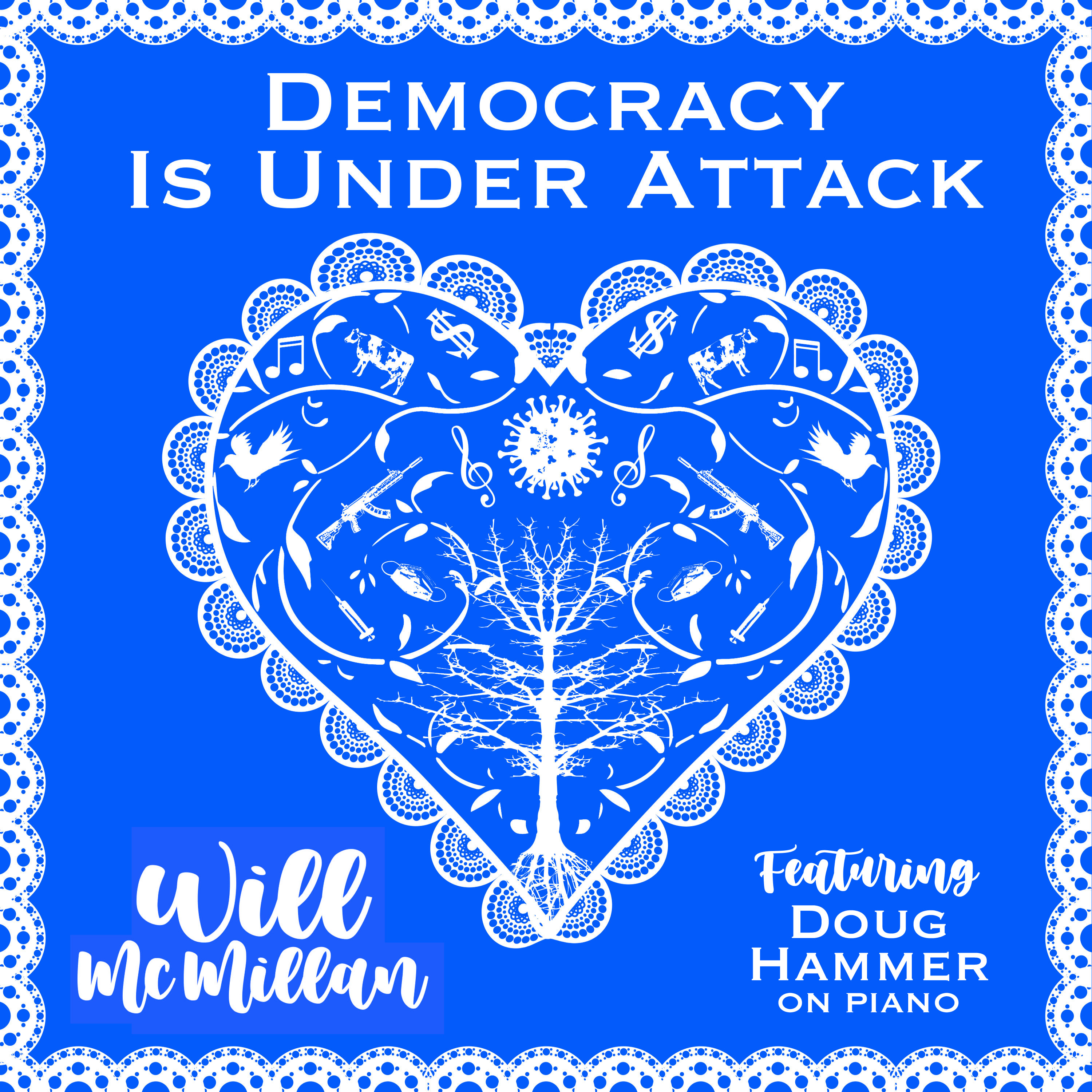
If you are curious to hear more music, you can also find me singing — with Doug Hammer playing his Schimmel grand piano — on Spotify, Pandora, Apple Music, YouTube and other streaming platforms.
And you can stream “Democracy Is Under Attack” by clicking here.
Any song you “like” or “heart” or add to a playlist will improve the algorithmic activity of our music there!
One more deep breath in.
And deep breath out.

