I Walk With Music

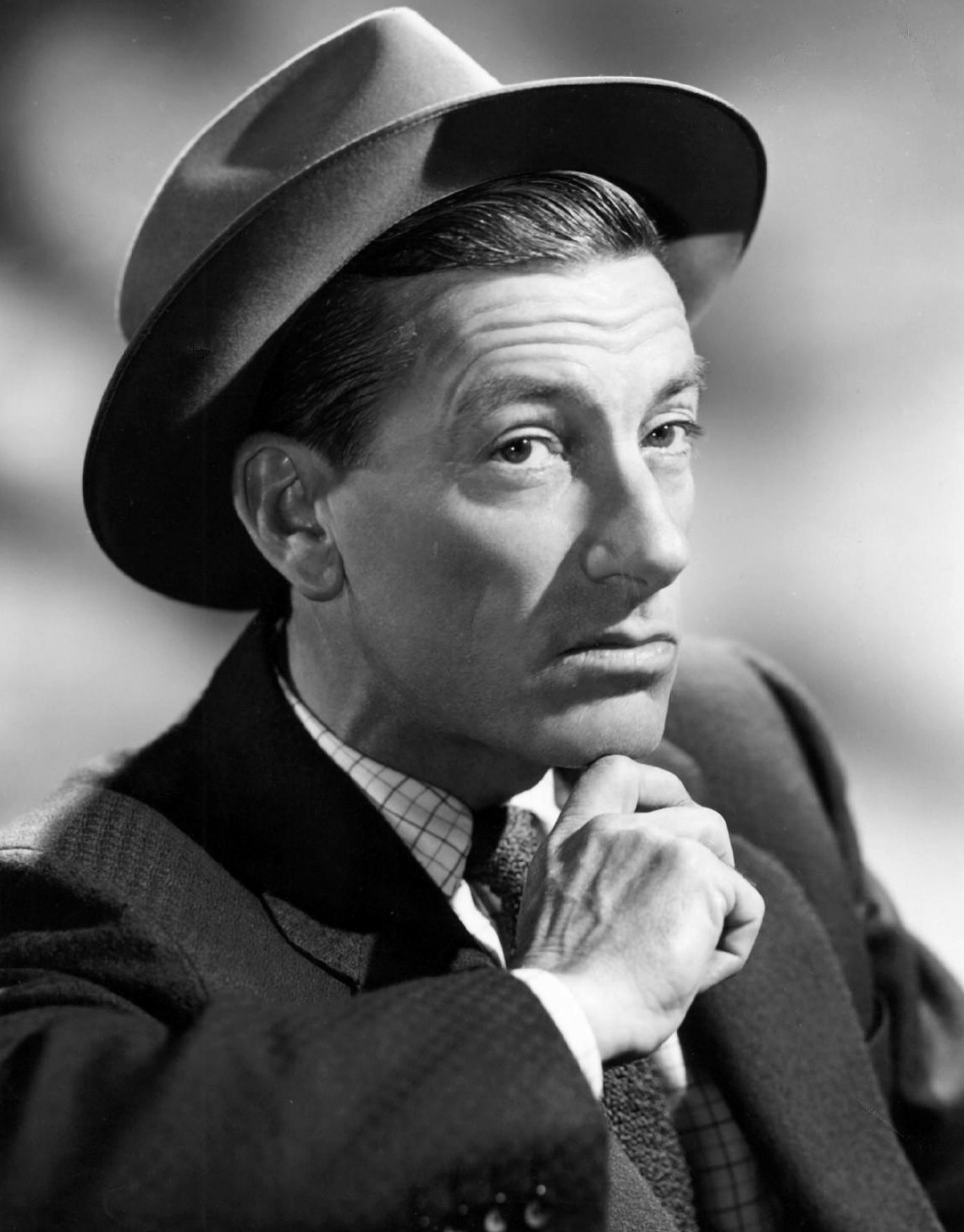
Hoagy Carmichael — NBC Television, Public domain, via Wikimedia Commons

This month’s song is a minor hit from what is sometimes called the Great American Songbook.

Composer Hoagy Carmichael and lyricist Johnny Mercer created it for a Broadway show — I WALK WITH MUSIC — which did not prove to be a success.

But it did give us this sweet song.

I discovered it when I was putting together an hour-long program of songs by Hoagy Carmichael — who also wrote the music for standards including “Georgia on My Mind,” “Stardust,” “The Nearness of You,” and “Skylark” (another song co-written with Johnny Mercer).

Pianist/producer Doug Hammer and I had a lot of fun recording it.

I just re-read the Wikipedia entries for Johnny Mercer and for Hoagy Carmichael.

I learned that — later in his life — Hoagy appeared as a songwriter character on THE FLINTSTONES animated TV show and also participated in a TV special with Fred (Mr.) Rogers.

And I was reminded that Johnny Mercer was a bit of a Jekyll/Hyde personality — beloved during the daytime and then drunk at parties saying mean things during the night — after which he would send flowers and an apology the next morning.
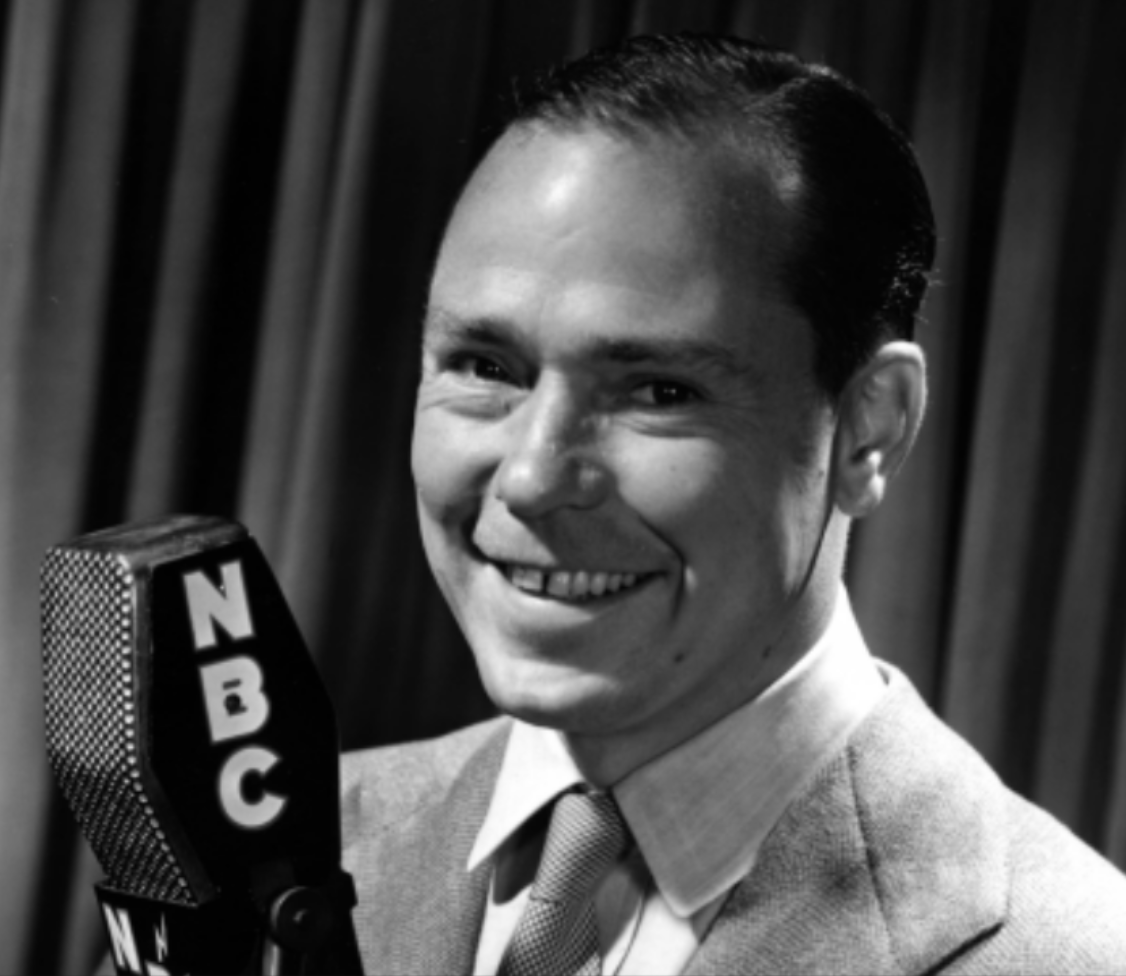
Johnny Mercer (from the Johnny Mercer Foundation website)

In addition to being successful songwriters, Hoagy and Johnny were also successful performers.

Later in his life, Hoagy worked as an actor in movies and TV shows, while Johnny recorded many hit singles over the years — of his own songs and as well as songs written by other people.

Johnny also was one of three men who founded and ran Capitol Records very successfully for many years.

He was mentored early in his career by Yip Harburg (the lyricist who co-wrote “Brother, Can You Spare A Dime?” “Over The Rainbow,” “How Are Things In Glocca Morra?” and “It’s Only A Paper Moon” among many other hits).

And near the end of his own life Mercer became a fan of singer-songwriter Barry Manilow.

In fact one of my favorite Johnny Mercer songs — “When October Goes” — was created after Mr. Mercer died with music by Barry Manilow and unpublished lyrics given to Mr. Manilow by Mercer’s widow, Ginger.

Both Mercer and Carmichael kept writing songs even after rock-n-roll had significantly altered the landscape of popular music — which meant that their work was less and less in demand…
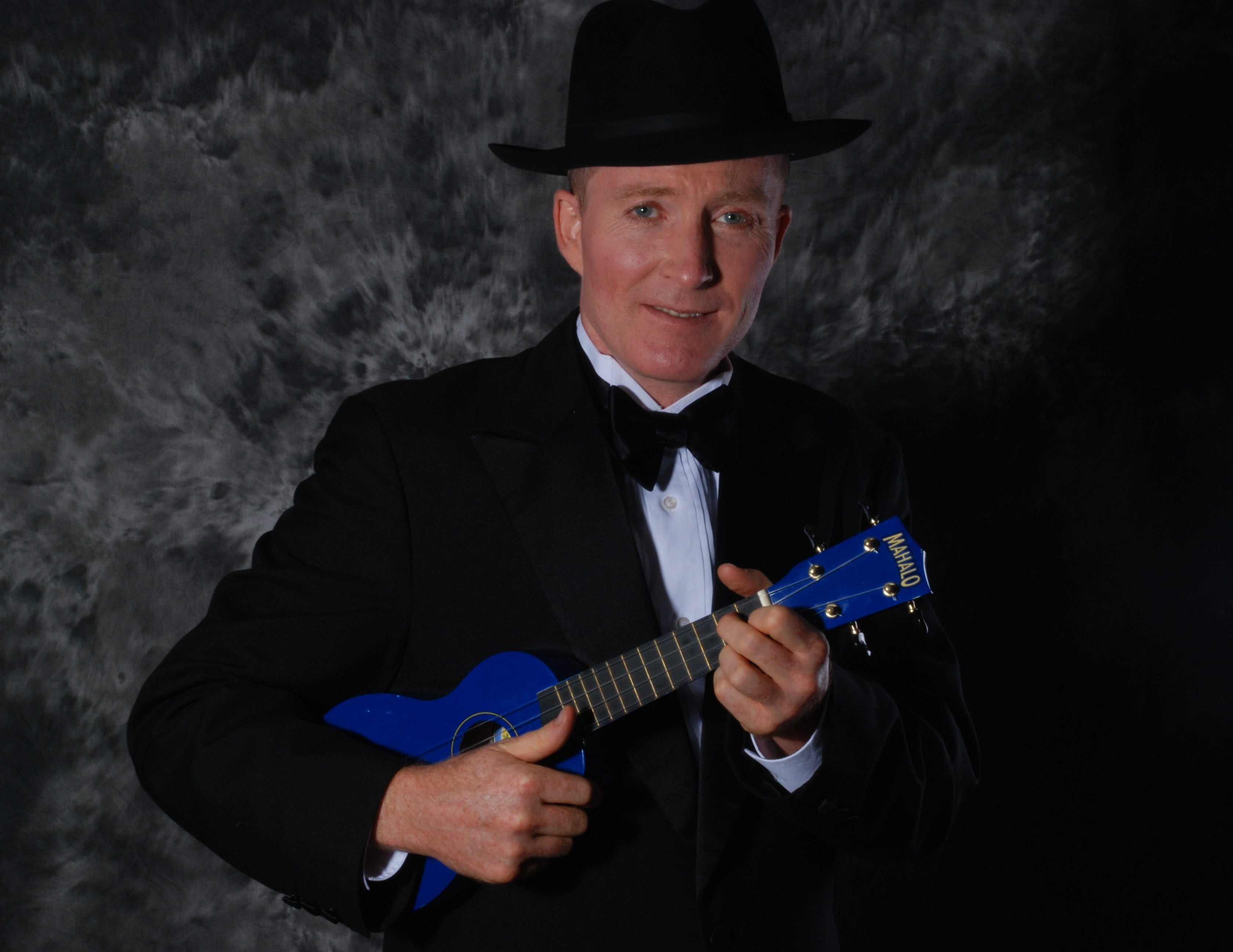
Me (photo by Stephen C. Fischer)

I take inspiration from their creative perseverance as well as from the rich legacy of hit songs they left for all of us to savor.

On a personal note, I have begun attending several open mics on a regular basis, sharing my original songs while accompanying myself on ukulele.

Performing like this has been a good workout for my brain because I now have to remember both lyrics AND chords.

It has also been interesting to see how other regular open mic attendees do (and don’t) welcome one into each musical micro-community.

The key, I think, is simply continuing to show up.

Gradually we reveal ourselves to each other through our song choices and through the things we say between songs (the open mics I attend allow a person to perform 2-3 songs per night).

And trust begins to form…
Graphic Design by Stephen C. Fischer

And curiosity begins to arise…

Deep breath in.

Deep breath out.

All of the venues are also registered with ASCAP, the performing rights organization I joined several years ago.

So after each open mic, I log onto my ASCAP account and enter which of my original songs I performed.

In theory this is supposed to generate a tiny stream of income for me, but I haven’t seen anything yet…

One final thing I have been appreciating about attending open mics is that they give me a chance to fine-tune the lyrics of songs I haven’t yet recorded (but plan to record with Doug Hammer later this year).

If you would like to stream “I Walk With Music,” you are welcome to click here for a link to many different digital music platforms.

Thank you to pianist/composer/producer Doug Hammer for our ongoing — and ofter very playful — musical collaboration.

Thank you to Stephen C. Fischer for his photo and design expertise.

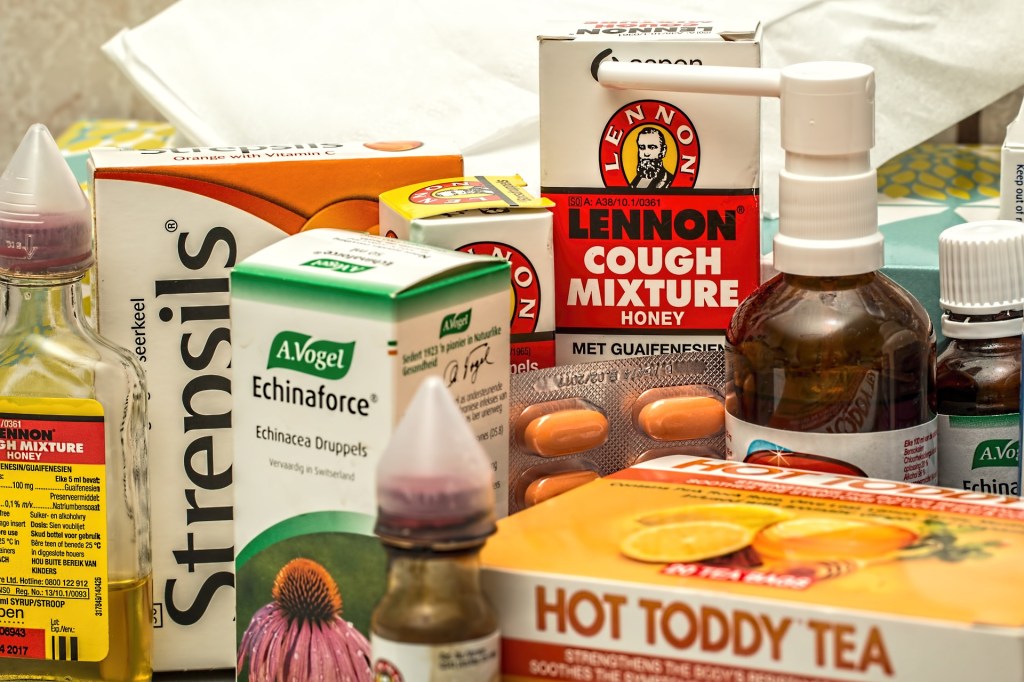
Image by Jenő Szabó from Pixabay

Thank you to Wikipedia (to which I give a tiny financial contribution each month) for being such a useful source of information.

Thank you to all of the terrific songwriters, living and dead, whose work touches our souls and lifts our spirits on a daily basis.

Thank you to Jeno Szabo for his beautiful image from Pixabay.

And thank you, dear reader, for making it through another one of my (now mostly monthly) blog posts.

Fever…

“Fever”

In my last two posts, I have started explaining a little of what I’ve been learning in recent months about the music business.

My musical selection for this post is from a CD I recorded with fellow singer Bobbi Carrey and pianist Doug Hammer — which was then enhanced by arranger Mike Callahan as well as other local musicians.

“Fevered” might be one way to describe my current mental state as I recover from our recent — deeply disrespectful and dangerous — presidential non-debate and THEN make sense out of the news that our president and his wife and many members of his staff have been diagnosed with COVID-19.

Deep breath in.

Deep breath out.

At the very least, this is a stark reminder of how a virus makes its presence felt in every niche of human society — from the folks with (allegedly) daily testing and access to the best (and in the case of our political ruling class, FREE) health care to the folks who have to go to work with very little (or no) protection and very little health coverage in places like meat packing plants.

Deep breath in.

Deep breath out.

Let us all continue — in this time of COVID-19 — to remain aware of our daily temperatures and to continue wearing our blessed face masks!

Now I will attempt to explain a little bit about performance rights organizations.

One thing a songwriter must do is affiliate with a performance rights organization (also known as a PRO).

In the USA, there are two entry-level ones — ASCAP and BMI — as well as two more — SESAC and GMR — which you can be invited to join when you are earning a fair amount of money from your songs and also a (new?) one called Pro Music Rights about which I know almost nothing.

Most other countries around the world only have one PRO.

This is just one example of how things are often done differently in the USA than in the rest of the world…

ASCAP was the first performing rights organization founded in the USA.

A group of composers, lyricists, and publishers (who were selling millions of copies of sheet music on behalf of the songwriters under contract to them) decided it was time for them to get paid for public performances of their songs — which I think was already the norm in many European countries.

It 1914 they formed a not-for-profit organization called the American Society of Composers, Authors and Publishers (ASCAP).

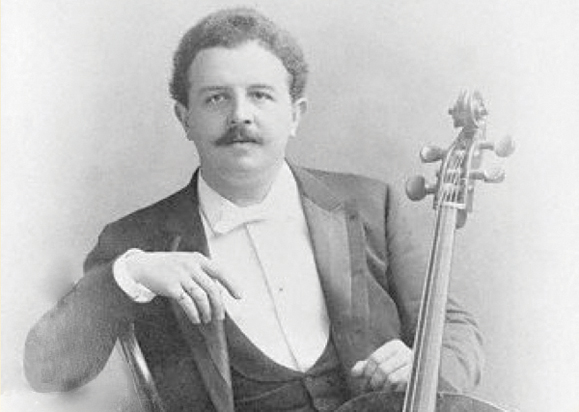
The founders included Victor Herbert — who according to an article in Irish America magazine wrote the music for “forty operettas, 23 musicals, two operas, and several Ziegfeld Follies; did musical scores for motion pictures; and composed for the Paul Whiteman Orchestra” from the 1890s through the 1920s.

Yowza!

Victor Herbert circa 1895

Herbert was himself a transplant from Europe, having been born (out of wedlock) on Guernsey island in the English Channel and raised in England and Germany.

His mother told, him, however, he had been born in Dublin, and he maintained a strong emotional connection to Ireland for his entire life (perhaps jumpstarted by his mother’s and his grandfather’s strong Irish nationalism).

Herbert was also a cellist, conductor AND long-time advocate for the rights of songwriters.

According to Wikipedia he testified before Congress and influenced the formation of the Copyright Act of 1909, which allowed composers to earn royalties from the sale of new-fangled sound recordings.

And then in 1914 he helped found ASCAP to collect money for public performances of musical works in cafes, hotel ballrooms, live-music clubs, and theaters.

Thank you, Victor Herbert, along with your fellow songwriters and political advocates!

As our technologies continued to evolve, public performances grew to include music broadcasts — live or pre-recorded — on radio and TV as well as in elevators, grocery stores, theme parks, and much more…

In 1940 there was a historical turning point.

During the 1930s ASCAP had been increasing the royalty rates they were charging to radio broadcasters for the use of their members’ songs.

So… for many months the radio broadcasters decided to STOP playing any songs affiliated with ASCAP — a period which is mentioned in the biographies of many famous songwriters such as Irving Berlin and Cole Porter as a time when many potential hit songs never got airplay and consequently languished…

In 1940 the radio broadcasters took another huge step and founded a competing PRO called Broadcast Music Incorporated (BMI).

BMI signed up a very different cohort of songwriters, including people from the R&B, gospel, jazz, country, folk and Latin music communities.

And some degree of competition — and diversity — was introduced into this particular segment/function of the music industry (the collection of money due to songwriters and publishers for the use of their songs…)

These days BMI remains a bit more accessible than ASCAP — because BMI is free to join while ASCAP charges $50 to join as a songwriter and another $50 to join as a publisher.

I went with ASCAP partly because my fellow songwriter Steve Sweeting had already joined BMI, and I thought it might be interesting to compare his experiences with mine over time…

There is also a man who has been at ASCAP for decades named Michael Kerker who loves the Great American Songbook and is an avid supporter of new songwriters.

I met him many years ago when I invited him to a Boston-area songwriter showcase I co-produced at the Cambridge Center for Adult Education (where I worked for 16 years).

Then one of my guardian angels, Amanda McBroom — a delightful and generous songwriter whose biggest hit (so far) has been “The Rose” — recommended I reach out to him.

So very shyly, I did.

And he got back to me almost immediately.

We ended up having a long conversation on the phone — and when I had a couple of follow-up questions, he was equally prompt in replying to me.

So I am now an ASCAP member.

And on October 10th, my first recording is scheduled to be released to Spotify, iTunes, Apple Music, and a bunch of other online musical platforms.

I’ll be blogging more about that soon!

Now that I think about it, songs are kind of like viruses — they are not alive and cannot reproduce themselves without the assistance of a living host.

Hmmm…

I’ll also be sharing how people who do NOT write their own music collect money for the use of their unique recordings of other people’s songs.

And I will continue to give tiny amounts of money to as many political candidates who are in close races as I can.

And I will continue wearing a face mask.

And I will continue walking and riding my bike.

And leading my Music Together classes — both outside in a local park and online via Zoom.

And I will continue to be very grateful that I have a roof over my head, and electricity, and a functioning laptop, and food to eat on a daily basis.

Thank you to Bobbi Carrey, Doug Hammer, Mike Callahan, and the other musicians involved with our recording of “Fever” — as well as the original songwriters Eddie Cooley and Otis Blackwell AND Peggy Lee, who added several sets of new lyrics when she recorded her classic version in 1958.

Thank you to Pixabay for wonderful images.

And thank YOU for reading and listening to another blog post!

Let us all remained engaged — and vigilant — during the upcoming days and weeks and months!

ps: Have you gotten a flu shot yet?